作者: admin

  • Nieuwe training moet citrusproductie in Saramacca versterken

    Nieuwe training moet citrusproductie in Saramacca versterken

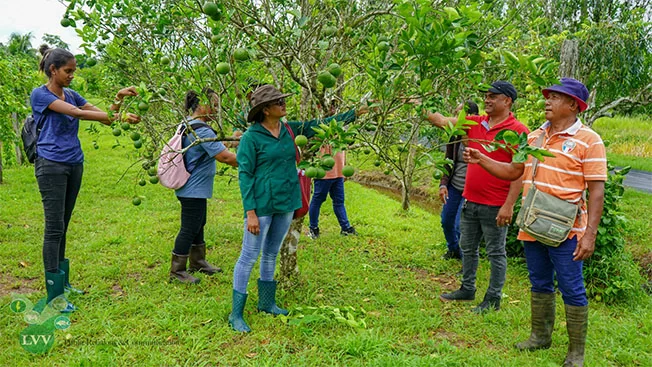
    The Ministry of Agriculture, Animal Husbandry and Fisheries (LVV) has successfully concluded an intensive four-day “Citrus Cultivation Technique” training program in Saramacca, designed to enhance expertise among agricultural extension workers and citrus growers. This comprehensive capacity-building initiative combined theoretical instruction, practical field application, and participant presentations to strengthen competencies throughout the citrus value chain.

    During the initial two days, participants received detailed theoretical training covering crop management techniques, fertilization methods, and identification and control of diseases and pests. The third day featured hands-on field implementation where attendees applied their newly acquired knowledge in real-world conditions. The program concluded with participant presentations and a formal certificate ceremony recognizing the graduates’ accomplishments.

    This training forms part of the broader “Strengthening of Citrus Production” project funded by the Inter-American Development Bank (IDB) and coordinated by LVV’s Directorate of Agricultural Research, Marketing and Processing. The project aims to sustainably increase citrus production while promoting professional development within the sector. Previous interventions under this initiative have included establishing compost facilities and providing specialized training to citrus nurseries.

    Soesila Udit-Ramautar, Head of Fruit Tree Research and IDB Citrus Project Team Leader, emphasized the strategic importance of ongoing investment in citrus cultivation: “Citrus represents the most widely planted fruit variety in Suriname and remains exceptionally suitable for courtyard cultivation practices.”

    Participants responded enthusiastically to the training program. Citrus grower Rolia Sewbarath-Misser noted: “The knowledge gained has significantly expanded my understanding, enabling me to implement improvements throughout my plantation operations.”

    To provide continued support, LVV has developed and distributed digital informational brochures and instructional videos covering pruning techniques, transplantation methods, and pest management strategies. The ministry emphasizes that continuous knowledge enhancement and technical information sharing remain critical priorities for advancing Suriname’s agricultural sector development.


  • Police lay murder charge in case of missing pregnant woman

    Police lay murder charge in case of missing pregnant woman

    Authorities in St. Vincent and the Grenadines have formally pressed murder charges against a suspect in the disappearance of Lyda Adams, a 36-year-old pregnant woman from Barrouallie who vanished under suspicious circumstances on November 8. The development indicates investigators believe Adams is deceased despite the absence of recovered remains.

    The accused, identified as a Byera resident employed in Bequia, was reportedly engaged in what family members described as a “toxic relationship” with the missing woman. Adams was six months pregnant and mother to a 9-year-old son at the time of her disappearance.

    According to familial accounts, Adams departed her home before 7 a.m. on November 8, allegedly stating she was visiting a doctor while wearing brown and deep green attire. Contrary to this explanation, surveillance footage confirmed her disembarkation from a ferry in Bequia at approximately 8:56 a.m. that same day.

    The case escalated from a missing person investigation to a homicide probe under the purview of the Major Crime Unit after several troubling indicators emerged. Adams’ complete cessation of social media activity—uncharacteristic for her—coupled with undelivered WhatsApp messages and her conspicuous absence from both a family funeral on November 23 and the general election on November 27 heightened concerns.

    This case unfolds against a distressing backdrop of violence against women in SVG, where two additional femicides have occurred since November. The national homicide tally has now reached 39 for the year, amplifying calls for enhanced protective measures and more effective interventions in domestic violence cases.

    The accused is scheduled for arraignment before a Kingstown magistrate on Thursday, marking a significant development in a case that has drawn attention to issues of intimate partner violence and investigative procedures in the Caribbean nation.

  • Christmas is almost here

    Christmas is almost here

    As the festive season envelops the globe in its characteristic warmth, the Christmas period emerges not merely as a time of celebration but as a strategic opportunity for profound societal transformation. While traditional carols echo messages of peace and communal harmony, contemporary observers note the striking contrast between seasonal benevolence and persistent year-round societal challenges including economic disparities, systemic injustices, and cultural tensions.

    The holidays create unique conditions for community building, economic stimulation, and personal reflection. With increased volunteerism, heightened consumer activity, and extended family gatherings, this period demonstrates humanity’s capacity for compassion and reconciliation. However, philosophers and social critics observe that this goodwill often functions as a temporary mask for deeper structural issues that resurface once festive decorations are stored away.

    A significant paradox emerges in the collective consciousness: societies enthusiastically embrace ‘peace on earth’ rhetoric during December while tolerating conflict and suffering throughout remaining months. The seasonal emphasis on consumption frequently overshadows genuine human connection, with togetherness sometimes driven more by social obligation than authentic desire.

    Yet within this contradiction lies extraordinary potential. The demonstrated ability to temporarily prioritize generosity over competition reveals that sustainable peace remains achievable through conscious effort. The challenge lies in institutionalizing seasonal compassion into permanent structures, narratives, and coalitions dedicated to lasting harmony.

    Personal transformation mirrors this societal opportunity. For isolated individuals, the holidays can spark creative renewal through writing, painting, or hobby exploration that potentially evolves into professional pathways. The post-holiday period need not represent a melancholic decline but rather a threshold moment for intentional living—a chance to replace festive indulgence with clarity of purpose.

    Forward-thinking communities are reimagining the holiday cycle as an ongoing process rather than a finite event. By extending festive initiatives beyond December, they transform seasonal rituals into year-round commitments to social welfare, economic justice, and cultural understanding. This approach frames Christmas not as a conclusion but as a catalyst for establishing new, sustainable norms centered on continuous improvement rather than cyclical tradition.

    The ultimate significance of the holiday season may reside in its demonstration effect: proving that human societies can choose compassion over conflict, thereby creating a blueprint for permanent positive change when commitment outlasts celebration.

  • Minister Announces Acquisition of Heavy-Duty Equipment to Support Farm Expansion and Soil Work

    Minister Announces Acquisition of Heavy-Duty Equipment to Support Farm Expansion and Soil Work

    In a significant move to transform agricultural capabilities, Agriculture Minister Anthony Smith has unveiled the establishment of a specialized heavy-duty equipment division within the Ministry of Agriculture. The groundbreaking initiative represents a multi-million dollar investment aimed at directly addressing critical infrastructure challenges facing the nation’s farming sector.

    The newly formed department will operate a comprehensive fleet of machinery including excavators, front-end loaders, bulldozers, rollers, and transport trucks. This strategic acquisition eliminates previous dependencies on the Ministry of Works, granting the agriculture sector autonomous control over essential land development operations.

    Minister Smith emphasized the transformative potential of these resources during his parliamentary address. “This modern equipment arsenal will enable us to independently mine construction materials, construct and maintain farm access roads, develop water retention ponds, and execute large-scale land clearing operations,” he stated.

    The infrastructure expansion includes the imminent arrival of four new tractors currently undergoing final preparations. These additions will substantially enhance land preparation services available to farmers nationwide.

    The initiative specifically targets perennial obstacles in agricultural productivity including soil management challenges, transportation limitations, and water accessibility issues. By establishing this dedicated machinery division, the government aims to create foundational infrastructure that attracts private investment while ensuring sustainable sector growth.

    Smith characterized the investment as a cornerstone development for long-term agricultural security. “Building robust infrastructure within agriculture isn’t merely about immediate efficiency gains—it’s about ensuring decades of growth by making strategic investments in our foundational capabilities,” he concluded.

  • Dominican Republic bolsters child protection amid rising vulnerability

    Dominican Republic bolsters child protection amid rising vulnerability

    SANTO DOMINGO – The Dominican Republic is significantly scaling up its national child welfare initiatives through the National Council for Children and Adolescents (CONANI). Current data reveals the institution is providing critical support to more than 1,700 at-risk minors throughout the country. This protective network is facilitated through a collaborative model, with 1,206 children placed in the care of vetted non-profit organizations and another 525 residing in 11 state-administered transition homes.

    The operational backbone of this effort includes 69 residential programs, 59 of which benefit from direct government financial backing. Demonstrating a strong fiscal commitment, CONANI allocated over RD$166.8 million to its non-profit partners in the first ten months of 2025. In a move to further amplify its impact, a substantial budget augmentation of RD$186 million is slated for 2026. These funds are designated to enhance key service areas including child protection mechanisms, nutritional aid, medical services, educational access, and essential psychosocial support.

    Upon entry into CONANI’s system, each child is the subject of an intensive, multi-disciplinary evaluation conducted within a critical 72-hour window. This assessment covers health status, psychological well-being, social circumstances, and educational level, forming the basis for a highly individualized care plan. The transition homes are meticulously organized, grouping children by age, gender, and specific case profile to ensure a supportive environment. A core policy prioritizes keeping sibling groups together, while specialized units cater to victims of severe trauma, abuse, human trafficking, and cases of extreme vulnerability.

    Moving beyond basic sustenance, CONANI’s framework emphasizes holistic development and future readiness. Educational integration is a primary focus, with 284 of the 525 youth in state care currently enrolled in formal schooling. This educational spectrum encompasses early childhood programs, standard K-12 education, and tailored special education curricula. For adolescents aged 14 and older, the council provides extensive vocational training to equip them with marketable skills. Courses in barbering, pastry arts, information technology, culinary arts, and English language are offered, frequently taught by dedicated volunteers from the community, paving the way for sustainable independence.

  • Two New Abattoirs Planned as Government Targets Reduced Meat Imports

    Two New Abattoirs Planned as Government Targets Reduced Meat Imports

    In a strategic move to bolster national food security and reduce dependency on imports, Antigua and Barbuda’s government has unveiled a comprehensive agricultural modernization plan. Agriculture Minister Anthony Smith detailed during his 2026 Budget Debate address a multi-faceted initiative targeting the nation’s substantial annual meat import expenditure, which currently stands at approximately $75 million.

    The cornerstone of this agricultural transformation involves a significant infrastructure investment exceeding $4 million dedicated to revolutionizing the livestock processing sector. This funding will facilitate the construction of two specialized abattoirs alongside a complete renovation of the existing facility. The first new abattoir will exclusively handle poultry processing, while the second will be dedicated to pork and small ruminants. The retrofitted existing facility will transition to focus solely on beef production.

    Minister Smith emphasized the economic rationale behind this strategic investment, revealing that pork imports alone account for $20-25 million of the national import bill. He confirmed that local producers already possess the capacity to scale operations to meet domestic demand, indicating that the infrastructure development represents the missing component in the agricultural value chain.

    Beyond physical infrastructure, the ministry announced complementary support programs for agricultural workers nationwide. These initiatives include mass distribution of solar-powered lighting systems to enhance farm security, provision of seeds and fencing materials for crop farmers, and specialized wire for fisherfolk constructing fish pots.

    Smith, who has served as minister for approximately one year, framed these developments as part of a broader paradigm shift in agricultural policy that prioritizes affordability and sustainability alongside production metrics. The infrastructure expansion is strategically designed to attract private sector investment while creating a more resilient and self-sufficient food production system for the nation.

  • MARAD says US-seized tanker offshore Venezuela falsely used Guyana flag

    MARAD says US-seized tanker offshore Venezuela falsely used Guyana flag

    In a significant maritime incident, the United States Coast Guard has intercepted a large crude oil tanker falsely operating under the Guyana flag in international waters. The vessel identified as SKIPPER (ex-ADISA), IMO Number 9304667, was boarded and seized on Wednesday following coordination between American and Guyanese authorities.

    The Guyana Maritime Administration Department (MARAD) confirmed the vessel had no legitimate registration with their nation. Director-General Stephen Thomas stated that investigation revealed the SKIPPER was unlawfully flying the Guyanese flag, describing this as part of an ‘unacceptable trend’ of unauthorized use of national maritime symbols.

    MARAD officials emphasized their commitment to collaborate with international partners to identify and take firm action against such fraudulent flag representations. The administration noted increasing concerns about vessels attempting to exploit maritime registration systems for potentially illicit activities.

    US President Donald Trump characterized the seizure as a major enforcement achievement, noting it represented the largest crude tanker ever apprehended by American authorities. Video footage released by BBC showed US military personnel conducting the boarding operation.

    The incident has triggered strong diplomatic repercussions from Venezuela, which denounced the seizure as ‘an act of international piracy.’ The Nicolás Maduro administration accused the United States of attempting to illegally control Venezuelan oil resources that ‘belong exclusively to the Venezuelan people.’ Venezuelan officials urged the international community to reject what they termed ‘vandalistic, illegal, and unprecedented aggression’ and called upon citizens to defend national sovereignty.

  • Two Minors and Sixty-year-old Woman Shot in Belize City

    Two Minors and Sixty-year-old Woman Shot in Belize City

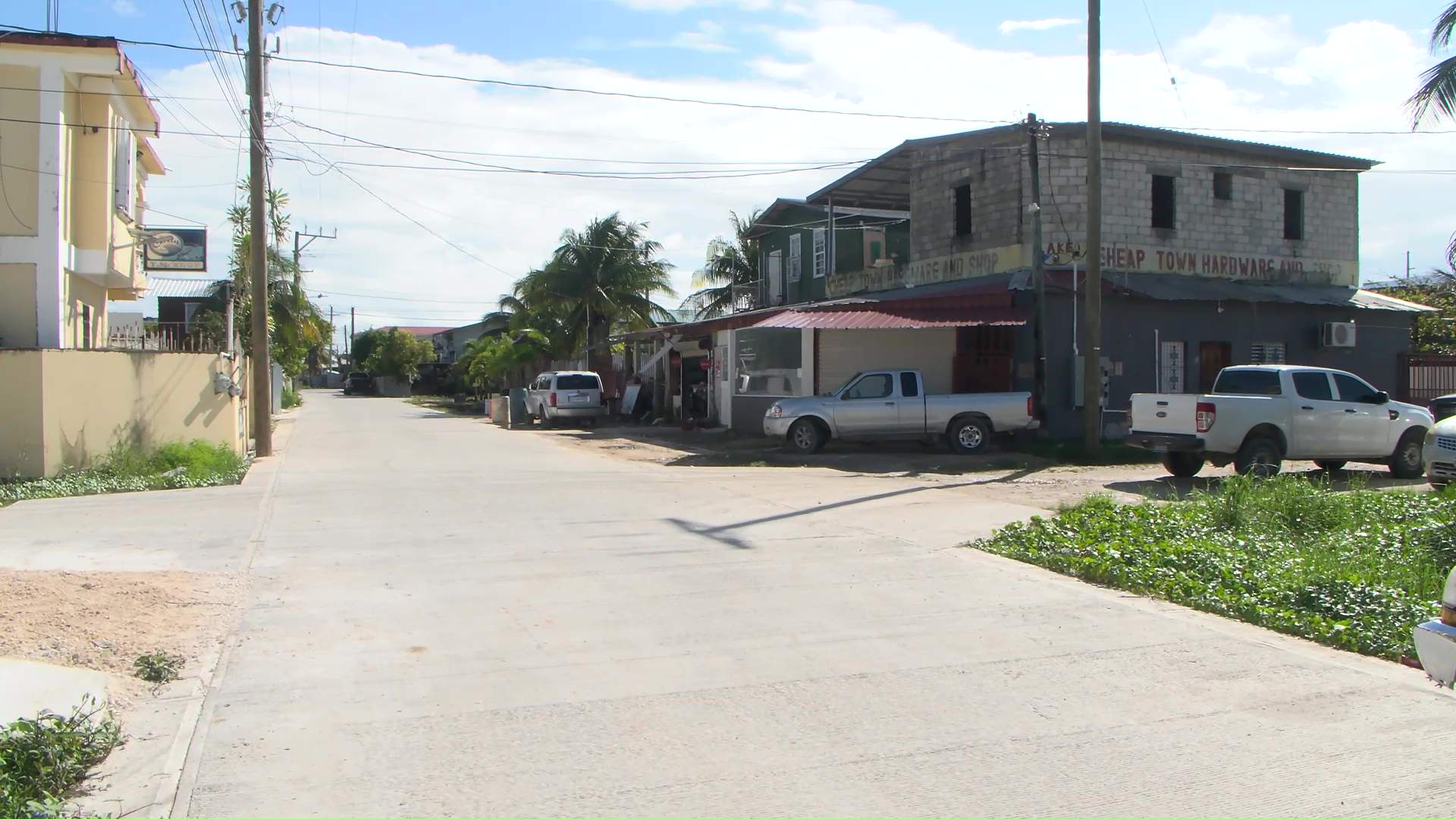
    Belize City confronts a deepening public security crisis following a brazen shooting attack that injured three civilians in the Lake Independence area on Tuesday evening. The incident, occurring at approximately 7:30 PM near the intersection of M & J Street and La Croix Boulevard, marks the latest episode in a troubling pattern of urban violence.

    According to eyewitness accounts, an unidentified assailant opened fire on a small gathering, striking two seventeen-year-old male adolescents and sixty-year-old Julia Vialto. All victims were transported to Karl Heusner Memorial Hospital for emergency treatment. While the teenage victims have been discharged, Vialto remains hospitalized with a gunshot wound to her heel.

    The shooting occurs against a backdrop of escalating concerns regarding public safety, coming merely one week after the fatal shooting of fifteen-year-old Eric Reyes and multiple armed confrontations throughout the city. Vialto, who was en route to church services when attacked, described a sudden eruption of gunfire from multiple directions. ‘I immediately threw myself to the left side of the street, but one of the bullets hit my foot,’ she recounted from her home during recovery.

    Residents report intensified security measures following the incident, with visible deployments of police patrols, Belize Defense Force soldiers, and GI3 tactical officers. However, community members argue these reactive measures insufficiently address root causes. Vialto emphasized the need for legislative reform and youth intervention programs: ‘They have to put a bit more strictness in the country because innocent people will lose their lives. There are too many drugs and firearms out there.’

    Law enforcement authorities have yet to make arrests in connection with the shooting, though police conducted investigative operations at the residence of one male victim. The family characterizes these visits as part of recurring security operations they’ve experienced in recent months. The persistent violence has ignited renewed debate about gang activity, firearm proliferation, and social prevention strategies in urban Belize.

  • Jahreem ‘32’ Staine Heads to Trial January 13, 2026

    Jahreem ‘32’ Staine Heads to Trial January 13, 2026

    Jahreem “32” Staine, a 22-year-old individual facing multiple criminal charges, appeared in Magistrate’s Court today as his case progresses toward trial. The defendant inquired about potential sentencing should he enter a guilty plea for promoting gang-related activities. Judicial authorities clarified that conviction under the Crime Control and Criminal Justice Act could result in a maximum penalty of five years imprisonment and/or a $20,000 fine.

    Staine maintained his not guilty plea, officially scheduling his trial for January 13, 2026. The defendant additionally faces two contempt of judicial order charges related to alleged violations of bail conditions. Law enforcement reports indicate Staine failed to comply with mandatory sign-in requirements at Belama Police Station on September 5 and October 3, 2025, despite court-mandated weekly check-ins every Friday between 6:00 AM and 6:00 PM.

    The judicial proceedings have been accompanied by concerning incidents of public violence. Following Staine’s September 5th court appearance, multiple gunshots were discharged near Buttonwood Primary School, though Staine emerged unharmed. A subsequent ambush occurred near Horizon Primary School on October 4th, resulting in two individuals being shot while Staine again escaped injury.

    In a separate case, Staine and co-defendant Eric Frazer face serious charges including attempted murder, use of deadly means of harm, and dangerous harm against 28-year-old Jimmy Rojas. This alleged incident occurred on May 3, 2025, at the intersection of Tibruce Street and Croton Lane. Currently released on High Court bail, Staine awaits a preliminary inquiry for these charges. A previous motion to dismiss the contempt charges, filed by former attorney Norman Rodriguez on October 9, 2025, was rejected by the court.

  • Briceño Slams Media Coverage, Points to Budna’s Record

    Briceño Slams Media Coverage, Points to Budna’s Record

    BELIZE CITY – Prime Minister John Briceño has launched a vehement defense of his administration amidst growing scrutiny following the abduction of Joseph Budna. During a televised appearance on the ‘Open Your Eyes’ program Wednesday morning, the Prime Minister delivered a blistering critique of media coverage, accusing news outlets of sensationalism while redirecting attention to Budna’s extensive criminal background.

    Briceño employed stark language in characterizing Budna, explicitly referring to him as a ‘monster’ while questioning media priorities. ‘When you live a life of crime then that would happen,’ Briceño stated, though he clarified, ‘I am not suggesting in any way that I would want anything bad to happen to Mr. Budna or any citizen of this country.’

    The Prime Minister’s commentary highlighted several serious allegations from Budna’s past, including a fatal shooting of a sixteen-year-old in Budna’s bedroom and multiple sexual assault cases. ‘I did not see any of you crying out for justice for these people,’ Briceño challenged journalists, ‘yet I see you crying out for justice for Mr. Budna.’

    This extraordinary public statement raises profound questions about governmental responsibility in high-profile criminal investigations and the ethical considerations surrounding victim portrayal based on prior conduct. Briceño further distanced his administration from operational law enforcement matters, stating unequivocally, ‘You can’t hold me responsible for anything happening in Orange Walk Central. I don’t know what criminal activities are going on in Orange Walk Central.’

    The administration’s positioning on this kidnapping case signals a potentially significant shift in how authorities address victims with criminal histories, while simultaneously testing the boundaries of executive commentary on active investigations.