作者: admin

  • Smith Condemns Personal Attacks on His Family During Budget Debate

    Smith Condemns Personal Attacks on His Family During Budget Debate

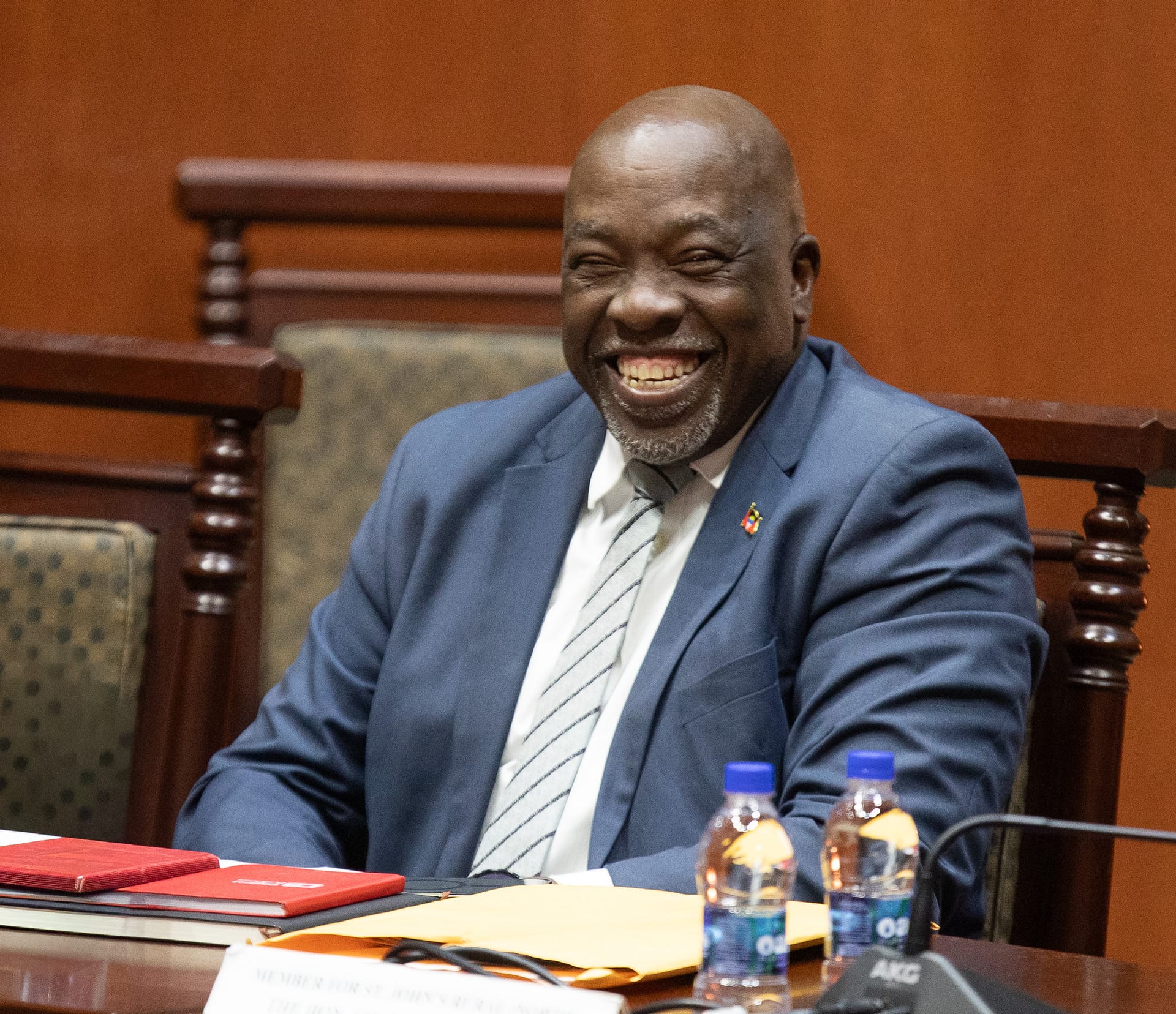
    In a compelling address to Parliament during the Budget Debate, Agriculture Minister and All Saints West MP Anthony Smith issued a stern condemnation of the increasingly personal nature of political criticisms, specifically targeting attacks directed at his family members. The minister articulated his deep concern over the blurring of lines between legitimate scrutiny of public officials and unjustifiable intrusions into private lives of those unrelated to governmental affairs.

    Minister Smith contextualized his remarks within recent political controversies, including the duty-free debacle, noting that discourse had degenerated into deeply personal territory. He emphasized that while public officials must accept professional accountability, family members who hold no political office should remain outside the bounds of political criticism. The minister described these attacks as both hurtful and fundamentally unjustified, creating collateral damage beyond the political sphere.

    Expanding his critique to broader political culture, Smith highlighted a perceptible decline in the quality of public discourse. He warned that when political debate transforms into personal confrontation, it loses substantive value and erodes mutual respect essential for democratic governance. The minister called for a recalibration of political discussions toward matters of policy, governance transparency, and ministerial performance—the legitimate domains of political accountability.

    In his concluding appeal, Smith urged cross-party collaboration to maintain focus on factual and issue-based debate, explicitly requesting that colleagues refrain from targeting family members in future political exchanges. His intervention represents a significant parliamentary moment addressing the ethics of political engagement and the protection of private individuals from public scrutiny.


  • Official opening of Bonair Bridge: A symbol of progress for St Mark

    Official opening of Bonair Bridge: A symbol of progress for St Mark

    Grenada has achieved a landmark infrastructure advancement with the official commissioning of the Bonair Bridge in St Mark parish, a project realized through strategic collaboration between the Government of Grenada and the Caribbean Development Bank (CDB). This initiative, executed under the Basic Needs Trust Fund (BNTF) Cycle X Programme, replaces an obsolete Bailey bridge with a modern, climate-resilient structure designed to withstand environmental challenges.

    The newly constructed bridge spans 16.2 meters in length and 8.4 meters in width, featuring reinforced concrete girder construction, dual sidewalks with handrails, comprehensive river training works, retaining walls, and gabion basket protection. These engineering enhancements significantly improve water flow capacity and flood mitigation capabilities, ensuring reliable community access during severe weather events.

    Despite design modifications that caused minor delays, the project demonstrated exceptional fiscal management. With an approved budget of EC$2.33 million, the actual expenditure totaled just EC$1.9 million, completing the project within budget while maintaining the highest engineering standards. The construction timeline extended from November 1, 2023, to May 31, 2025, encompassing 579 days of development.

    From inception, the project embraced community-centered design principles. Residents, business owners, and local leaders actively participated in consultations and design discussions, ensuring the infrastructure directly addresses local needs. The collaborative effort involved Gilbert & Partners Engineering Co. Ltd. as contractors, FDL Consult Inc. as consultants, and supervision by the Rural Development Unit within the Ministry of Economic Development, Planning and Cooperatives.

    The bridge delivers transformative benefits including reliable connectivity between Bonair, Victoria, Diamond Estate and neighboring communities, reduced transportation costs, enhanced climate resilience, improved agricultural transport efficiency, business growth opportunities, increased property values, and better access to essential services. While fully operational, minor finishing works including landscaping and signage will be completed in the coming weeks.

    O’Reilly Lewis, CDB’s Director of Projects, commended the partnership during the handover ceremony, highlighting the project as a model of sustainable development achieved through government-partner-community collaboration. The BNTF program, active since 1979, has impacted over 3 million people across the Caribbean region through community-led development initiatives funded by the Special Development Fund and beneficiary governments.

  • EcoShores Marks a Year of Major Community Impact Across Antigua and the Caribbean

    EcoShores Marks a Year of Major Community Impact Across Antigua and the Caribbean

    The EcoShores Sustainable Futures Network (ESFN) concludes 2025 with extraordinary achievements in community-driven environmental and social programming across Antigua and Barbuda and the broader Caribbean region. This transformative year marked a significant advancement in the organization’s mission to build equitable, resilient futures through grassroots empowerment and ecological stewardship.

    Under the leadership of Portfolio Manager Britney McDonald, ESFN implemented thirteen groundbreaking initiatives that translated community input into tangible action. The organization’s philosophy centers on deep listening and proactive response to local needs, creating programs that address both environmental conservation and social welfare simultaneously.

    Among the year’s flagship accomplishments was the Endeavour Publication, which gained substantial regional traction by amplifying stories of climate activism, conservation efforts, and youth empowerment. The platform demonstrated how creative storytelling can influence policy decisions and inspire cross-island resilience.

    The organization’s conservation work expanded significantly with enhanced sea turtle protection programs in Antigua and Barbuda and Dominica. These efforts involved close collaboration with local communities, rangers, and conservation networks to safeguard nesting habitats and monitor endangered species.

    ESFN’s innovative Regenerative Tourism Project forged deeper connections between visitors and local ecosystems while directly contributing to conservation initiatives. This approach transformed tourism from a passive activity into an engaged, educational experience that benefits both communities and the environment.

    The network maintained its commitment to social support through targeted programs addressing gender equity, including specialized initiatives for Black men and boys. The Community Swim Programme provided essential survival skills while fostering youth connections to marine environments, creating a foundation for future environmental leadership.

    Professional development received significant attention through the Expeditioner Programme, which equipped four exceptional young people with hands-on experience in project management, environmental conservation, finance, disaster relief, and advocacy. This initiative ensures the next generation of Caribbean leaders possesses the skills necessary to drive sustainable development.

    Financial empowerment emerged as another critical focus area with the Build Your Future Financial Literacy Workshop, which will expand into an extended virtual series in 2026 accompanied by practical workbooks for families and youth.

    ESFN also strengthened regional civil society by providing communications, proposal development, and grant writing support to over ten organizations across the Caribbean. These efforts advanced initiatives in cultural heritage, sustainable finance, and climate-resilient infrastructure.

    The Climate and Care Campaign brought heightened awareness to the gendered impacts of climate change, with plans to expand into on-the-ground programs supporting vulnerable groups through capacity-building and resilience planning in 2026.

    As ESFN looks toward the new year, the organization has committed to expanding environmental research, scaling regenerative tourism experiences, deepening financial education offerings, growing conservation networks, and maintaining community voices at the core of all operations.

  • LETTER TO THE EDITOR: Inter-Caribbean Airways and Inter-Caribbean Tourism – a fatal alliance

    LETTER TO THE EDITOR: Inter-Caribbean Airways and Inter-Caribbean Tourism – a fatal alliance

    A severe crisis in regional air connectivity is threatening the economic foundation of Caribbean tourism, according to a detailed account from traveler Anthony E. Le Blanc. The analysis presents a stark contrast between the historical service of the defunct LIAT and the current operations of its predominant replacement, Inter-Caribbean Airways.

    While LIAT was known for occasional minor delays, the carrier maintained a reputation for overall reliability and affordability. In sharp contrast, Inter-Caribbean Airways has established what the author describes as a near-guarantee of significant delays or outright cancellations. These disruptions frequently extend from several hours into multiple days, creating monumental complications for travelers with tight schedules.

    The consequences of these operational failures are both immediate and severe. Passengers routinely face financial losses from forfeited hotel and car rental reservations, miss critical business meetings, and even fail to attend important family events like funerals. Unlike traditional carriers that assume responsibility for passenger welfare during extended delays, Inter-Caribbean Airways reportedly avoids covering expenses for additional airport transportation, accommodation, or any form of compensation for incurred losses.

    The economic impact extends beyond individual travelers to affect the entire region’s productivity. Airports have transformed into unproductive waiting areas where significant economic potential is lost. Most alarmingly, the credibility of inter-Caribbean travel itself has been severely damaged, dealing what the author characterizes as a ‘near fatal blow’ to regional tourism over the past two years.

    The commentary highlights Caribbean Airlines as a notable exception, describing its service as ‘a breath of fresh air’ and suggesting that expanded operations from this carrier could help salvage the region’s vital tourism industry from the operational onslaught of Inter-Caribbean Airways.

    The author concludes that unless Inter-Caribbean Airways is compelled to bear the financial costs of the inconveniences it creates, the perception of reliable regional air transport will continue to deteriorate, with lasting consequences for the Caribbean economy.

  • Nicholas Pushes Back on Opposition’s ‘Unlimited Rooftop Solar’ Proposal, Warns of Risks to APUA

    Nicholas Pushes Back on Opposition’s ‘Unlimited Rooftop Solar’ Proposal, Warns of Risks to APUA

    In a robust defense of the government’s energy strategy during the Budget Debate, Information Technology Minister Melford Nicholas issued a stern warning against adopting the Opposition’s proposal for unlimited rooftop solar installations. Nicholas characterized the policy push as economically dangerous and technically unviable, emphasizing that such unrestricted solar expansion would jeopardize both grid stability and the financial viability of the Antigua Public Utilities Authority (APUA).

    The Minister revealed that the Opposition Leader had advocated for homeowners to install solar systems reaching 25-30 kilowatts without restrictions. Nicholas systematically dismantled this proposition, highlighting APUA’s binding long-term agreement with Antigua Power Company extending through 2031. This contractual obligation, coupled with the utility’s requirement to maintain consistent power availability regardless of weather conditions, makes uncontrolled solar integration fundamentally problematic.

    Nicholas presented compelling financial data, noting that approximately 67% of APUA’s revenue is allocated to fuel purchases for electricity generation. A sudden influx of oversized private solar systems would create unpredictable power flows into the grid, potentially leaving the utility unable to meet its financial commitments. The Minister painted a vivid picture of the technical challenges: abundant daytime solar generation followed by dramatic nighttime drops would force APUA to maintain full conventional generation capacity regardless of solar availability.

    As a responsible alternative, Nicholas detailed the government’s measured approach to renewable energy adoption. APUA has already implemented a program allowing household systems up to 5 kilowatts, including necessary inverter and battery storage components. This cap, far from being arbitrary, was established based on comprehensive technical assessments to ensure grid reliability while enabling consumer access to clean energy.

    The government’s strategy extends beyond residential solar, with Nicholas highlighting ongoing utility-scale green energy initiatives. These include collaboration with the International Solar Alliance and financing discussions through the Green Climate Fund. The Minister emphasized that Antigua’s energy transformation requires addressing the fundamental challenge of its $200 million annual fuel expenditure, noting that meaningful electricity cost reduction demands structural changes in power generation.

    Pointing to Barbuda’s successful renewable integration experience, where fuel savings have already demonstrated tangible benefits, Nicholas expressed confidence in replicating these results across Antigua through controlled expansion. The government’s balanced approach seeks to harmonize household participation in renewable energy with maintaining national grid security, combining regulated rooftop installations with strategic large-scale investments as the most realistic path toward a sustainable energy future.

  • Derelict vehicle removal continues across Dominica

    Derelict vehicle removal continues across Dominica

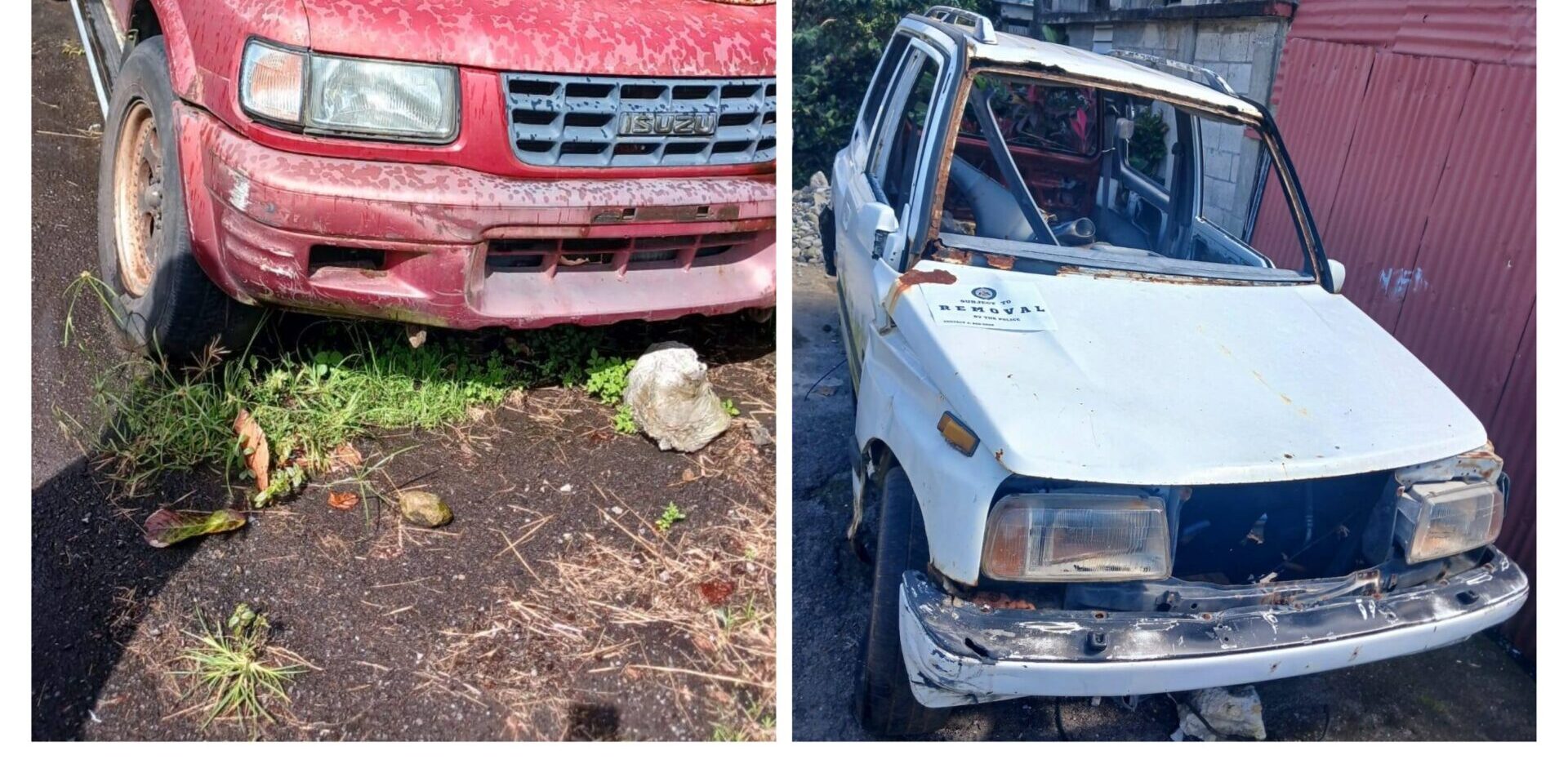
    The Commonwealth of Dominica Police Force (CDPF), in partnership with the Dominica Solid Waste Management Corporation (DSWMC), has escalated its nationwide campaign to remove derelict vehicles from public spaces. This coordinated initiative targets abandoned automobiles across ten strategic locations identified as priority zones for cleanup operations.

    Authorities have conducted systematic tagging operations in Bath Estate, Stockfarm, Under the Canefield Cliff, St. Aroment, Tarish Pit, Cocoa Bottom, Morne Daniel, Trafalgar, Wotten Waven, and Bellevue Chopin. These areas have been identified as containing significant numbers of vehicles that pose environmental and safety concerns.

    Official communications from the CDPF emphasize that vehicle owners must immediately remove their abandoned properties. The government has established clear consequences for non-compliance, including substantial financial penalties and compulsory removal operations conducted at the owner’s expense. Law enforcement officials have affirmed their commitment to rigorous enforcement of municipal regulations regarding public space maintenance.

    Community engagement forms a crucial component of this initiative. The joint statement appealed to citizens’ civic responsibility, stating: ‘Let’s work together to keep our communities clean, safe, and beautiful.’ This campaign represents part of broader environmental and urban renewal efforts across the island nation, addressing both aesthetic concerns and potential public health implications associated with abandoned vehicles.

    The ongoing operation demonstrates the government’s multi-agency approach to urban management, combining law enforcement capabilities with waste management expertise to address complex municipal challenges.

  • US steps up pressure on Maduro, sanctions relatives and backers

    US steps up pressure on Maduro, sanctions relatives and backers

    The Trump administration has significantly intensified its economic and military pressure on Venezuelan leader Nicolás Maduro’s government, implementing sweeping new sanctions targeting the president’s relatives and key supporters. The coordinated action by the US Treasury Department and State Department represents the latest escalation in Washington’s campaign against what it describes as Maduro’s “corrupt and illegitimate regime.

    The newly announced sanctions specifically target four individuals and six entities, while identifying six vessels as blocked property. Among those designated are three of Maduro’s nephews—Efraín Antonio Campo Flores, Franqui Francisco Flores de Freitas, and Carlos Erik Malpica Flores. Two of these family members are convicted narcotics traffickers who were previously granted clemency in a 2022 prisoner exchange involving seven American nationals. According to US authorities, both have since resumed drug trafficking activities.

    The sanctions package additionally focuses on Venezuela’s crucial oil sector, including a prominent businessman and six shipping companies. This economic pressure coincides with heightened US military activity across Caribbean waters, where American forces have conducted multiple strikes on vessels allegedly transporting drugs to the US mainland.

    The recent seizure of an oil tanker illegally flying Guyana’s flag in the Caribbean Sea occurred just hours before the sanctions announcement. Since September, these intensified interdiction efforts have resulted in more than 80 fatalities, generating growing concern among Caribbean nations.

    Dr. Denzil Douglas, Foreign Affairs Minister of St. Kitts and Nevis and Chair of the Council for Foreign Relations, expressed deep apprehension about the regional militarization, noting that the Caribbean hasn’t witnessed this level of military buildup since World War II. During a Fireside Chat, Douglas emphasized his commitment alongside incoming CARICOM Chair, Prime Minister Dr. Terrance Drew, to maintain the region as a “zone of peace” despite escalating tensions.

    The United States, with support from Trinidad and Tobago, maintains that its operations exclusively target drug traffickers, though it has not publicly presented supporting evidence. Dr. Douglas reiterated that while St. Kitts and Nevis remains dedicated to combating drug and human trafficking, regional stability must be simultaneously protected—a position he asserts is shared across CARICOM leadership.

  • New CCTV Cameras Coming to Help Fight Crime, Dumping and Monitor Public Spaces

    New CCTV Cameras Coming to Help Fight Crime, Dumping and Monitor Public Spaces

    Antigua and Barbuda’s national CCTV surveillance system is undergoing a significant transformation, expanding its mandate far beyond criminal investigations into a comprehensive public safety and environmental management tool. Information Minister Melford Nicholas announced this strategic shift during the Budget Debate, revealing that multiple government ministries have requested access to the platform after recognizing its potential extends well beyond law enforcement.

    The cabinet has approved a substantial expansion of the network, with plans to install 200 additional cameras nationwide to widen coverage and enhance system capabilities across various sectors. While criminal investigations have already benefited substantially from existing infrastructure—with officers reporting valuable assistance in detecting crimes and supporting prosecutions—the upgraded system will now address broader national concerns.

    Environmental monitoring and anti-litter enforcement represent major new focus areas. The Minister of Health has specifically requested camera deployment along major highways to combat persistent illegal dumping that challenges environmental management efforts. Additionally, the Development Control Authority will utilize CCTV surveillance to monitor beaches and coastal spaces where unregulated activities have been reported.

    The expansion also addresses regulatory questions surrounding privately-operated surveillance networks, such as the system installed in Pigeon Point following a tourist’s killing. While acknowledging these community-driven initiatives help residents monitor their surroundings, Minister Nicholas announced plans to introduce new regulations requiring private CCTV owners to provide footage to law enforcement during criminal investigations.

    This surveillance enhancement forms part of a broader technological upgrade to the nation’s emergency and communications infrastructure. The government has simultaneously advanced improvements to the E911 platform, including a new Motorola system and distribution of hundreds of radios to police, Defence Force, ONDCP, beach lifeguards and APUA teams. The integrated radio network now provides comprehensive communication coverage across Antigua, Barbuda, and the marine corridor between the islands.

    Together, these technological advancements create a coordinated, technology-driven infrastructure designed to improve emergency response times, strengthen enforcement capabilities, and support holistic public safety and environmental management initiatives across the nation.

  • Teenager charged with murder of uncle

    Teenager charged with murder of uncle

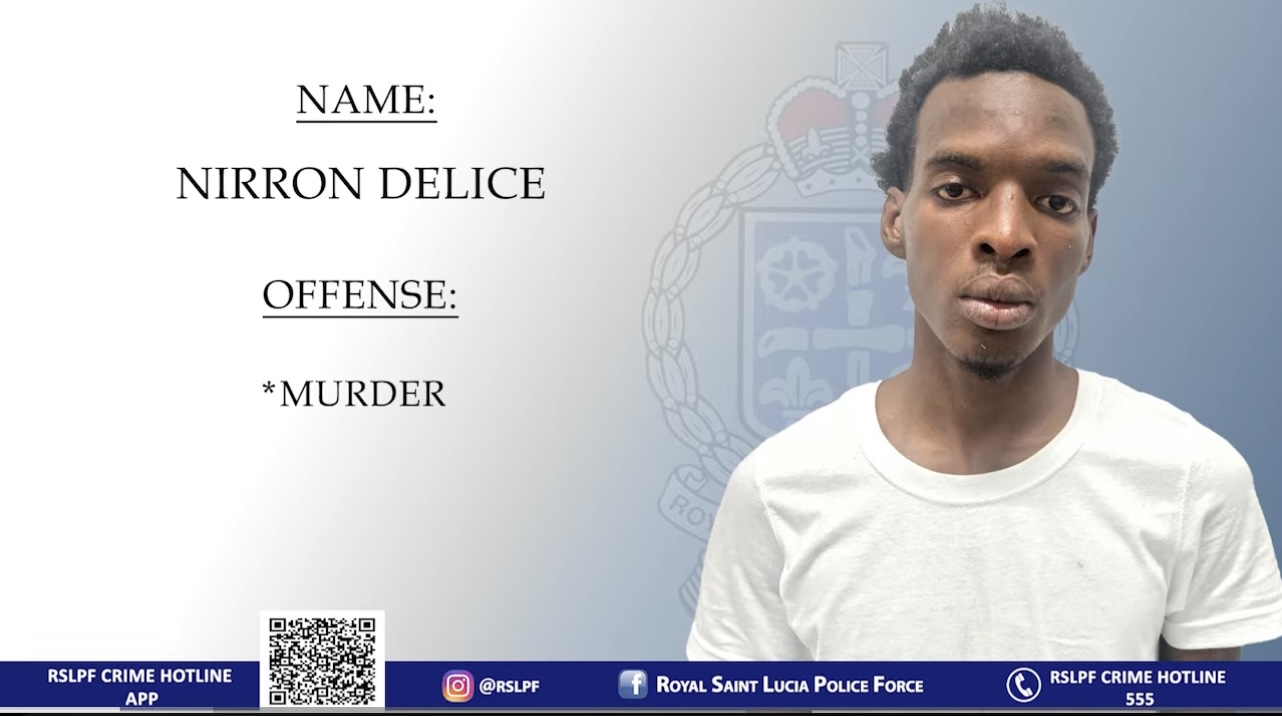
    In a tragic familial incident that has shaken the community of Monchy, an eighteen-year-old stands accused of fatally stabbing his uncle. Nirron Delice now faces a formal murder charge for the death of Linus Delice, which occurred on December 2 near their family residence in Rivière Mitan.

    The Saint Lucia Royal Police Force confirmed the arrest of the suspect on Sunday, December 7, marking a significant development in the ongoing investigation into the violent altercation. While specific motives remain undisclosed as the probe continues, authorities have treated the case with utmost urgency.

    Following his apprehension, Delice was processed through the judicial system, making an initial appearance at the First District Court on December 9. The court ordered his temporary detention at the Bordelais Correctional Facility while awaiting further proceedings. The judicial process will resume with a bail hearing scheduled before the High Court on February 24, 2026, indicating the serious nature of the charges brought against the young defendant.

  • Watts Explains Why His Name Appeared on Duty-Free Document

    Watts Explains Why His Name Appeared on Duty-Free Document

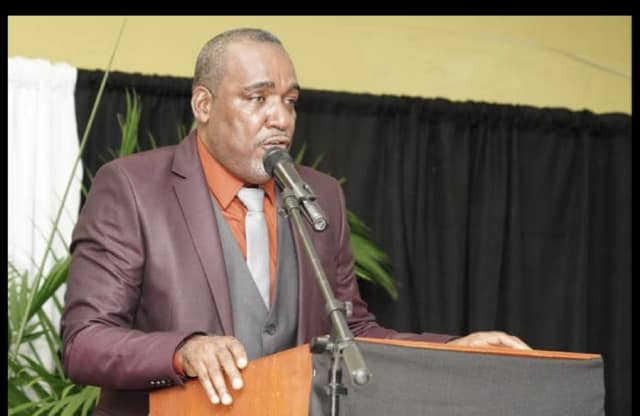
    During his Budget Debate address to Parliament, Opposition MP Algernon “Serpent” Watts presented a detailed defense against allegations surrounding his involvement in a recent duty-free concession controversy. Watts asserted that public accusations stemmed from a fundamental misunderstanding of governmental approval procedures.

    The parliamentarian clarified that his signature appeared on relevant documentation solely as an administrative formality after the concession had already received full approval through established channels. Watts emphasized he possessed no authority to either approve or deny the request at the stage when it reached his desk, characterizing his involvement as a routine procedural step rather than a decision-making one.

    Watts directly challenged narratives suggesting he exercised undue influence or favoritism, maintaining that such claims misrepresented the actual workings of the approval process. He explained that the comprehensive nature of Budget Week provided an ideal platform to address the matter publicly and correct what he termed widespread misconceptions about his role.

    The MP concluded his remarks by firmly stating that he operated entirely within official protocols throughout the process, dismissing suggestions of misconduct as baseless and without evidentiary support.