作者: admin

  • Rockhouse announces Rousseau Sisters as new culinary directors

    Rockhouse announces Rousseau Sisters as new culinary directors

    One of Jamaica’s most celebrated fine dining destinations, Negril’s Rockhouse Restaurant, has announced a major new creative leadership appointment: Kingston-based culinary trailblazers Michelle and Suzanne Rousseau, globally known as the Rousseau Sisters, will step into the role of new culinary directors. The sibling duo, who have built their reputation on centering Jamaican food heritage and cultural storytelling, is set to launch their groundbreaking new culinary program in the first week of June 2026, according to an official press statement from the restaurant.

    The upcoming launch will introduce a fully reimagined menu and a refreshed brand identity for Rockhouse Restaurant, one that leans into bold distinctly Caribbean flavors while weaving in subtle Mediterranean influences. Crucially, the reboot will remain faithful to the venue’s iconic rebellious spirit and decades-long legacy that has made it a favorite among locals and international travelers alike.

    To mark the new era for the restaurant, a special two-day launch celebration has been scheduled for June 5 and 6, 2026, as a centerpiece of the Rockhouse Foundation’s Coastal Culinary Weekend hosted at Rockhouse Hotel within Skylark Negril Beach Resort. The immersive weekend event will bring together a star-studded lineup of Caribbean culinary talent beyond the Rousseau Sisters, including Andre Fowles, Miss Lily’s culinary director and published cookbook author, and India Doris, recipient of the MICHELIN Young Chef Award. Attendees will enjoy a curated schedule of exclusive dinner parties, guided tours of local food and cultural sites, and intimate panel conversations that shine a spotlight on the depth and diversity of Jamaican cuisine and cultural heritage.

    In a move that honors the venue’s existing talent, the Rousseau Sisters will not be replacing the current kitchen leadership. They will partner closely with Rockhouse Restaurant’s beloved executive chef Jermaine “Bagga” Forrester and his entire longstanding culinary team to bring the new vision to life.

    For years, the Rousseau Sisters have been recognized as leading voices in preserving Jamaica’s culinary stories and cultural traditions through their work with the island’s foodways and historic hospitality venues. They have cemented their status as leading authorities on Caribbean cuisine and heritage, having launched fan-favorite dining concepts including Two Sisters Jamaica and the now-closed Summerhouse, both located in the scenic parish of St Ann.

    Per the official release, their collaborative partnership with Forrester and his team will leverage the Sisters’ signature culinary style: elevated yet accessible to all diners. They will center the core elements that have defined Jamaican cooking for generations — warm complex spices, signature smoked flavors, and fresh locally sourced ingredients — while reinterpreting these staples through creative new techniques and unexpected combinations that promise to excite both returning guests and first-time visitors.


  • Cornwall Regional Hospital conducting review after death of baby delivered at hospital

    Cornwall Regional Hospital conducting review after death of baby delivered at hospital

    In St. James, Jamaica, a tragic infant death following a delivery at Cornwall Regional Hospital has triggered an official urgent internal review, after the baby’s mother shared a harrowing account of her care experience on social media.

    The newborn, delivered to high-risk expectant mother Shandale Ballentine on Good Friday, did not survive the delivery. In an official press statement issued Wednesday, the Western Regional Health Authority (WRHA), which oversees the facility, confirmed the tragic outcome and extended its deepest sympathies to Ballentine and her grieving family. The hospital has already arranged dedicated psychosocial support services to help the family cope with their loss, the authority added.

    The official review was announced after Ballentine took to the popular short-video platform TikTok to publicize what she describes as a “horror story” of high-risk maternity care at the facility. Ballentine, who lived with chronic high blood pressure throughout her pregnancy, first checked into Cornwall Regional Hospital on March 24, 2026. After a four-day observation period, she was discharged with prescription medication to manage her blood pressure. She returned to the facility soon after when she developed concerning swelling across her face, feet, and hands, and was readmitted for delivery monitoring.

    According to Ballentine’s account, clinical staff first attempted to induce labor last Thursday, but the attempt failed. A second induction was carried out on Good Friday, after which providers ruptured her amniotic sac. Ballentine recalled that she was in labor alongside another patient who gave birth to her baby at 7:30 a.m. Her own child remained lodged in the birth canal for roughly 30 minutes after the other delivery. In her account, Ballentine begged attending staff to perform an episiotomy – a surgical cut to the vaginal opening to widen the birth canal – but she claims staff responded that their surgical scissors were too dull to cut even old cloth, and refused to perform the procedure. She added that staff even acknowledged the baby had been deprived of oxygen due to the extended entrapment, but still instructed her to push rather than intervening.

    WRHA officials emphasized that the hospital is treating the incident with the highest level of urgency, and has committed to full transparency as the review progresses. The authority reiterated its core mission of upholding patient safety and delivering high-quality care to all community members. It also noted that the facility will update the family on the review’s progress at every step, while upholding strict commitments to patient privacy for all involved parties.

  • Jamaican artist takes Tricia Handmade global

    Jamaican artist takes Tricia Handmade global

    For Jamaican artist Tricia Gordon-Johnston, a 12-year journey starting with self-directed experimentation in handmade jewellery has culminated in a landmark international partnership, bringing her distinct minimalist design vision to a global stage. The founder of independent brand Tricia Handmade is now working alongside Italy-based fine jewellery label MindMink by Octo Jewels, combining the company’s lab-grown diamond expertise with Gordon-Johnston’s signature handcrafted approach.

    Gordon-Johnston shared the details of the new collaboration in an interview with *Observer Online*, noting that the partnership officially launched in late 2023. Under the terms of the joint project, MindMink by Octo Jewels produces ethically grown lab diamonds, while Gordon-Johnston leads all original design and hand-finishing of the finished jewellery pieces.

    The brand’s origins stretch back to a side creative pursuit Gordon-Johnston took up while pursuing formal fine arts training in painting at Jamaica’s Edna Manley College of the Visual and Performing Arts. Though her academic program centered on painting, the artist’s complementary coursework in ceramics and printmaking gave her a broad technical foundation that continues to shape her multi-disciplinary practice today.

    A self-taught jeweller, Gordon-Johnston launched her brand by selling small runs of handmade pieces at local Kingston boutique Gayshel, setting up shop every Saturday to connect directly with customers. Over more than a decade, she steadily grew her reputation and audience, building a distinct brand identity defined by handcrafted quality and understated minimalist aesthetics. In recent years, she has expanded her practice to return to her roots in painting and pick up ceramics again, growing her creative portfolio beyond jewellery.

    Today, her range of original work includes fine jewellery, hand-sculpted ceramic masks, original paintings, and experimental work in clothing and graphic design. Her design aesthetic draws heavily on geometric shapes—triangles, squares, and circles are recurring motifs that echo tribal art traditions. Her recently popular ceramic masks have drawn comparisons to pre-Columbian Taino artistic traditions, a connection that ties her work back to the layered cultural history of Jamaica, even as she retains her minimalist core.

    Gordon-Johnston’s lifelong passion for art has defied conventional expectations: she grew up in a household of accountants, with no family background in creative practice, but art has been a core part of her identity from childhood. She credits a trio of influential Jamaican artistic mentors—Omari Ra, Petrona Morrison, and Norma Harroch—for shaping her creative perspective and supporting her career growth. Over the course of her career, she has shown her work in exhibitions at leading institutions including the National Gallery of Jamaica, as well as international shows in Florida.

    Currently, Gordon-Johnston sells her full range of handmade work every Saturday at Mutambo Indigenous, a local retailer focused on Jamaican craft, and regularly participates in pop-up and cultural events across the island to share her work with new audiences.

  • First ships cross through Strait of Hormuz since ceasefire—monitor

    First ships cross through Strait of Hormuz since ceasefire—monitor

    PARIS, France (AFP) — Just hours after a fragile truce between the United States and Iran was meant to reopen one of the world’s most critical energy chokepoints, shipping activity through the Strait of Hormuz remained severely constrained Wednesday, offering little immediate relief to global energy markets grappling with months of disrupted trade.

    Only three vessels — all bulk carrier cargo ships — had either completed or were nearing completion of their transits of the 21-mile waterway by Wednesday afternoon, according to real-time tracking data from global maritime intelligence service MarineTraffic. The count only accounts for vessels that kept their navigation transponders active, leaving open the possibility that additional unreported crossings occurred with signals turned off.

    The first two crossings were completed early Wednesday, mere hours after the ceasefire agreement was made public. The Liberia-flagged Daytona Beach, which departed the Iranian port of Bandar Abbas at 05:28 UTC, crossed the strait at 06:59 UTC, while Greek-owned bulk carrier NJ Earth completed its passage at 08:44 UTC. A third vessel, the Chinese-owned, Botswana-flagged Hai Long 1 — also departing from Iran — was approaching the end of its transit by mid-afternoon Wednesday.

    Notably, the NJ Earth had already crossed into the Gulf of Oman between Monday and Tuesday before returning through the strait again on Wednesday. Ana Subasic, an analyst with commodities data firm Kpler — which owns MarineTraffic — told AFP that this single transit is an encouraging early signal, but it remains too early to confirm whether it marks the start of a full, ceasefire-driven reopening of the waterway, or merely a one-off exception approved by Iranian authorities before the truce took effect.

    Both the NJ Earth and Daytona Beach used the Iran-approved transit corridor near Larak Island, the only route most vessels have been allowed to use for the past three weeks amid Iran’s access restrictions. While the Daytona Beach listed the United Arab Emirates’ Fujairah port as its destination on its transponder, AFP was unable to immediately confirm the NJ Earth’s final destination. By 16:00 GMT Wednesday, several additional cargo vessels were observed heading toward the same approved corridor for transit.

    The slow resumption of activity comes as shipping industry reports confirm that hundreds of vessels remain stuck in the Gulf region. Shipping industry publication Lloyd’s List reported Wednesday that some shipowners and charterers have begun preparations to move the hundreds of vessels stranded since restrictions took effect, with the outlet estimating that roughly 800 ships are currently held in the Gulf.

    Iran implemented the severe restrictions on access to the strait in late February as a retaliatory measure following coordinated US and Israeli strikes on Iranian assets in the region. Data from Kpler shows that between March 1 and April 7, just 307 commodity-carrying vessels completed crossings of the strait — a 95% drop from pre-restriction traffic levels.

    The strait carries outsized importance for global energy security: in peacetime, roughly 20% of the world’s total daily crude oil and liquefied natural gas supplies pass through the waterway, making even minor disruptions to traffic enough to shift global energy prices and threaten supply chains worldwide.

  • ‘We have a bishop!’ Colin Reid elected Anglican shepherd of Montego Bay

    ‘We have a bishop!’ Colin Reid elected Anglican shepherd of Montego Bay

    In a landmark decision announced this Wednesday, the 155th synod of the Anglican Church in Jamaica and the Cayman Islands has voted to select the Very Rev Colin Reid as the next bishop of Montego Bay.

    Reid, who currently serves as senior Canon of the Cathedral of St Jago de la Vega in Spanish Town, secured a decisive victory in the election, earning 75 votes from participating clergy and 101 votes from lay representatives. The strong cross-faction support reflects broad confidence in his leadership within the regional church community.

    He will step into the role vacated by the Right Rev Leon Golding, who was elected Bishop of Jamaica and the Cayman Islands last year. Outside of his ecclesiastical work, Reid is a family man, married to Carol Reid, and the couple share three children together. The election marks a new chapter of leadership for the Montego Bay diocese as it prepares for Reid’s official installment in the coming months.

  • Ceasefire plan published by Iran not the one agreed by US, says White House

    Ceasefire plan published by Iran not the one agreed by US, says White House

    Just hours after a fragile US-Iran ceasefire took effect to pave the way for new negotiations, confusion and public disagreement have thrown the future of the diplomatic process into question on Wednesday. A senior anonymous United States government official based in Washington told reporters that the 10-point peace framework published by Iranian state media does not match the terms the White House agreed to as the foundation for a temporary halt to hostilities.

    “The document being circulated by news outlets is not the working framework we agreed to,” the official stated, declining to elaborate on the content of the actual agreed framework. The official explained that the US administration has chosen to avoid public negotiations to protect the integrity of the diplomatic process, saying “We’re not going to negotiate in public out of respect for the process.”

    This clarification has amplified existing worries about the stability of the truce, which was announced late Tuesday. The ceasefire came just hours before a harsh deadline set by former President Donald Trump, who had threatened that Iran would face the destruction of its “whole civilization” if it failed to meet US demands.

    When Trump first announced the two-week truce to allow space for negotiations, he indicated that Iran’s submitted 10-point proposal provided a viable foundation for talks. Shortly after that announcement, Iranian state media released the full text of their 10-point plan, which includes several non-negotiable terms that directly contradict Washington’s public stated demands. Key provisions of the public Iranian plan include permanent Iranian sovereignty over the strategically vital Strait of Hormuz, a full lifting of all international economic sanctions imposed on Tehran, and international recognition of Iran’s right to conduct uranium enrichment.

    Later on Wednesday, Trump took to his own social media platform Truth Social to lash out against individuals and outlets spreading what he called false information about supposed agreements and documents that are not part of the actual ongoing negotiation process. “In many cases, they are total Fraudsters, Charlatans, and WORSE,” he wrote in his post.

    Trump stressed that only one set of agreed points is acceptable to the United States, and that those points will be discussed exclusively behind closed doors throughout the 14-day truce period. “These are the POINTS that are the basis on which we agreed to a CEASEFIRE,” he added, offering no further details about the content of the undisclosed framework.

  • Activist warns COI immigration plan threatens constitutional rights

    Activist warns COI immigration plan threatens constitutional rights

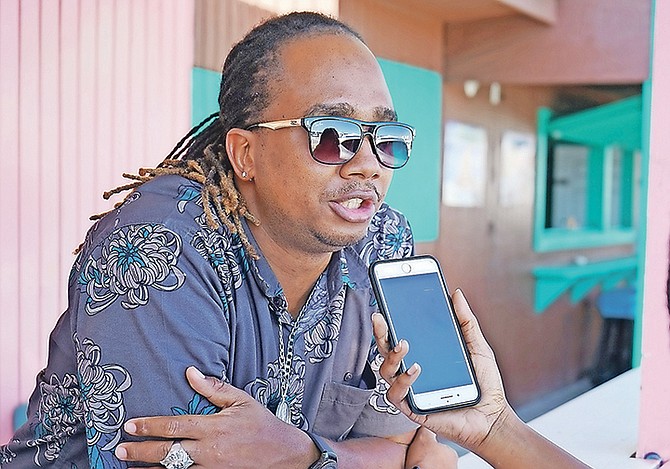
    As the Bahamas gears up for a shift in its political landscape ahead of potential elections, the Coalition of Independents (COI) has put forward an ambitious 100-day immigration overhaul that has quickly drawn sharp criticism from a prominent immigration rights advocate, who argues the proposals threaten core constitutional protections and lack critical operational and budgetary planning.

    Louby Georges, a leading voice on immigration advocacy in the country, has called for rigorous public and legislative scrutiny of the COI’s wide-ranging policy framework, which targets three core priorities: shoring up the country’s border security, expanding immigration enforcement operations, and fundamentally restructuring the nation’s citizenship rules. The most controversial proposal at the heart of the plan is the full elimination of the naturalisation pathway for foreign-born residents seeking Bahamian citizenship.

    Under the COI’s proposed timeline, the party would move to amend the Bahamas Nationality Act in its very first week in office to strike naturalisation provisions, followed by a national referendum on the change within the first 12 months of an incoming administration. However, Georges and constitutional analysts point out a critical procedural flaw: citizenship rules are enshrined in the Bahamas Constitution, meaning any change to naturalisation would require a constitutional amendment before any legislative adjustments can be made, a step the COI’s plan does not explicitly address.

    Beyond the citizenship proposal, the COI’s plan lays out a string of additional policy changes: merging the country’s existing immigration and national security agencies under a single unified cabinet ministry; rolling out a 30-day immigration amnesty program that mandates biometric screening and official immigration status verification for all undocumented residents; and launching a new digital platform that requires employers and private landlords to confirm the legal immigration status of workers and tenants respectively.

    Additional restrictive measures include an immediate moratorium on new work permit approvals for Haitian nationals, a full top-down review of all existing work permits held by Haitian residents, increased resources and patrols for maritime border enforcement, the closure of unregulated informal shanty town settlements, the development of government-authorized regulated housing for migrant communities, and a new mandate requiring all immigrants to hold active private health insurance coverage to reside in the country.

    COI officials have defended the proposal, framing it as a necessary measure to reclaim national control over the Bahamas’ borders and improve overall compliance with existing immigration laws. But the plan leaves major questions unanswered: it does not include clear details on how the sweeping series of reforms would be funded, nor does it lay out a concrete operational roadmap to deliver all the changes within the aggressive 100-day timeline the party has laid out.

    Georges acknowledged that the Bahamas is grappling with genuine, long-standing immigration challenges that demand policy attention. But he argued that the COI’s proposal is rooted less in evidence-based practical governance and more in politically opportunistic fear-mongering to win voter support. He emphasized that immigration cannot be fixed through hasty, overly broad reactionary policies that fail to account for their long-term social and legal ripple effects.

    “Eliminating naturalisation, in particular, is a deeply troubling proposal,” Georges said in comments to local media. “For generations of Bahamian history, countless people who arrived first as migrants, or who are descended from migrants, have gone on to build their lives here as proud, contributing Bahamian citizens. Their work has shaped every sector of our country, from business to education to public service, and that legacy cannot be ignored.”

    Georges described the elimination of a legal pathway to citizenship as profoundly short-sighted, warning that the proposal represents a draconian shift in the country’s immigration framework. “When you start restricting core rights and access to legal pathways at this scale, the negative consequences don’t stay limited to just one migrant community,” he explained. “They undermine the entire structure of our immigration system and the legal protections it is built on.”

    While Georges agreed that improvements to immigration enforcement and accountability for non-compliance are necessary, he stressed that any meaningful reform must be rooted in respect for the country’s existing constitution and backed by detailed, realistic implementation planning. “Good governance depends on balance, not extreme, overreaching policies,” he said. “We have to address our immigration challenges in a way that protects our national borders, while also upholding the rule of law, our constitutional framework, and the inclusive values that have made the Bahamas what it is today.”

    Matt Aubry, executive director of the Nassau-based non-profit Organisation for Responsible Governance, declined to offer a direct endorsement or criticism of the COI’s proposal. Instead, he urged Bahamian voters to carefully evaluate all political campaign pledges ahead of any election, asking whether the promises parties make are actually realistic and achievable within the timelines they propose. Aubry noted that campaign platforms often overlook critical practical constraints, from limited public budget allocations to the lengthy procedural timelines required to roll out large-scale governmental reforms.

  • Court appearance for soldier charged in girlfriend’s murder delayed to Friday

    Court appearance for soldier charged in girlfriend’s murder delayed to Friday

    MANCHESTER, JAMAICA – The first court hearing for a Jamaica Defence Force (JDF) service member accused of murdering his romantic partner in a brutal domestic incident in Manchester last week has been rescheduled for Friday, after a last-minute delay pushed the originally scheduled Wednesday appearance.

    Twenty-seven-year-old Damanice Tyrone Williamson, the accused soldier, was set to face a preliminary hearing at the Manchester Parish Court this week. But when assembled reporters arrived to cover the high-profile case, the defendant’s legal representative, attorney Norman Godfrey, confirmed that proceedings would be pushed back to the end of the week.

    The charges against Williamson stem from the fatal killing of 29-year-old Tanzanya Dunkley, which took place at a residential property in the Three Chains community of Manchester. Authorities confirmed that Williamson has confessed to the killing, which unfolded during a verbal confrontation between the pair. But the details of his confession have sent shockwaves across the island nation: an anonymous police source briefed on the investigation told local media that Williamson claimed an unknown “voice” commanded him to carry out the deadly attack.

    According to the police source’s account of the confession, the confrontation began when Dunkley made the decision to end her relationship with Williamson. In response, the soldier grabbed her mobile phone; when Dunkley held onto him to retrieve the device, Williamson says the voice ordered him to kill her. He then picked up a knife and sliced her throat, the confession alleges.

    Law enforcement has also released additional chilling details about the moments leading up to the killing. Before the attack, they confirmed, Williamson approached Dunkley’s 12-year-old daughter, told her he needed to speak privately with her mother, and directed the child to go upstairs to the upper level of the family home. Moments later, he murdered Dunkley before fleeing the property.

    Neighbors who were in the area that Friday afternoon corroborated the timeline, telling local reporters they heard loud screams coming from the residence around 3 p.m. Shortly after, they saw a man matching Williamson’s description running from the home, his clothing covered in what witnesses described as blood.

    In the aftermath of the killing, a second video has also spread widely across Jamaican social media, adding more fuel to public outcry. The footage, which was reportedly filmed inside the Mandeville Police Station after Williamson was taken into custody, shows a man believed to be the accused holding what looks to be a knife, begging responding officers to shoot and kill him on the spot. The clip has now gone viral, drawing tens of thousands of views and intense public comment.

    The brutal killing has already reignited long-simmering national conversations about the pervasive crisis of domestic violence in Jamaica, a problem that advocacy groups have repeatedly highlighted as requiring urgent systemic intervention. As the public awaits Williamson’s rescheduled court appearance this Friday, community leaders and anti-violence activists continue to call for greater action to address gender-based harm across the country.

  • NWC eases water restrictions on Constant Spring network

    NWC eases water restrictions on Constant Spring network

    KINGSTON, Jamaica — Thousands of residential and commercial customers relying on the Constant Spring water distribution network across Kingston and St. Andrew will soon regain full, uninterrupted water access, after Jamaica’s National Water Commission (NWC) announced it will roll back emergency supply restrictions starting Wednesday, April 8, 2026.

    The policy shift comes after two consecutive weeks of consistent, widespread rainfall across the island’s catchment areas, which has reversed months of declining water reserves at the critical Hermitage Dam. Prior to the rainy spell, storage levels at the dam had dipped below 65 percent, forcing the NWC to implement rolling outages and targeted supply cuts to prevent a total depletion of reserves. Steady inflows over the past fortnight have pushed storage volumes up to roughly 90 percent of total capacity, creating enough of a buffer to resume standard service.

    In an official media statement published this week, NWC’s Acting Vice President for Operations Herman Fagan emphasized that the decision to relax restrictions honors the commission’s public promise to restore normal service as soon as hydrological conditions improved. “This adjustment is not just a response to recent rainfall—it’s a commitment we made to the public that we would act quickly when conditions allowed,” Fagan explained. “The improved inflows have given us the operational buffer we need to return to regular 24-hour supply for all customers connected to the Constant Spring system.”

    While welcoming the end of restrictions, Fagan urged all customers to maintain long-term water stewardship habits to reduce the risk of renewed shortages during the upcoming dry season. Key recommended practices include routine water conservation, immediate reporting of broken infrastructure to NWC teams, and prompt repairs to leaks on private property, which account for a significant share of unaccounted-for water loss across the island.

    The NWC added that it will maintain continuous real-time monitoring of dam storage levels and inflow rates through the coming months. If precipitation drops off sharply and reserves decline again during the projected dry period, the commission did not rule out reintroducing targeted supply restrictions to protect reliable water access for all communities across the service area.

  • Mom not told son’s leg ‘amputated’ at PMH

    Mom not told son’s leg ‘amputated’ at PMH

    A devastating medical negligence case involving a teenage Bahamian national rugby player has taken a critical turn, with the Supreme Court of the Bahamas upholding a default judgment that finds the Public Hospitals Authority (PHA) liable for damages arising from the un-consulted partial amputation of the athlete’s leg. The ruling marks the end of years of procedural delay and clears the path for a formal hearing to determine the size of the compensation package for 19-year-old (at time of ruling) Miguel Russell, who suffered life-altering complications following routine treatment for a sports injury.

    The incident dates back to when Russell, a minor representing The Bahamas in international rugby competition, sustained a dislocated knee during a match and was admitted for treatment at Princess Margaret Hospital (PMH), the country’s leading public healthcare facility. After being placed on dialysis following his initial procedure, Russell’s condition rapidly deteriorated. According to the formal claim filed against the PHA, medical staff at PMH proceeded to amputate a portion of Russell’s leg without notifying or gaining consent from his mother, who was his legal guardian at the time of the procedure.

    As his infection spread and wounds failed to heal, Russell’s family eventually arranged for specialized care in Cuba, where attending clinicians documented extensive tissue necrosis, widespread bacterial infection, and catastrophic open wounds that aligned with the young athlete’s allegations of improper care. What followed after the family filed suit was years of unexplained procedural inaction on the part of the PHA, which has drawn sharp criticism from the court.

    Court records show the initial writ of summons was first filed in December 2017, with an amended complaint submitted just two months later in February 2018. The PHA entered a formal appearance in the case in April 2018, but took no substantive steps to mount a legal defense for more than six years. Russell’s legal team finally submitted a full statement of claim in September 2024, which was served to the PHA shortly after. While the PHA acknowledged receipt of the claim the following month, it still failed to file a formal response or defense.

    By January 2025, Russell’s legal team moved for a default judgment, which was granted by the court during a March 19 2025 hearing. Notably, PHA representatives attended the hearing but made no formal objection or request for an extension of time to prepare their defense. It was only after the default judgment was entered that the PHA attempted to reverse the ruling, filing an application to set aside the judgment and revive its defense.

    In its application, the PHA claimed it had a viable defense to the negligence allegations, blaming its years-long delay on logistical hurdles in obtaining Russell’s medical records from Cuban healthcare providers. The authority also argued that Russell’s severe complications stemmed from the initial severity of his rugby injury, not negligent care, and maintained that he had received appropriate, evidence-based treatment at PMH.

    Russell’s legal team pushed back against the PHA’s claims, noting that the authority already had full access to all relevant domestic medical records and had repeatedly missed opportunities to move the case forward over the preceding six years. They argued the PHA had no substantive defense to the core allegations and had intentionally relied on delay to avoid liability.

    In her ruling, Assistant Registrar Akeira D Martin sided entirely with Russell, applying the country’s Civil Procedure Rules to evaluate whether the PHA met the legal requirements to set aside a default judgment. To successfully reverse a default ruling, defendants must demonstrate they acted promptly after the entry of judgment, provided a credible explanation for their prolonged inaction, and prove they have a genuine prospect of successfully defending the claim at trial. The PHA failed to meet all three criteria, Martin found.

    The ruling specifically notes that the PHA did not act with any urgency to request medical records, with key documentation only being requested years after the PHA first entered the case. The court also confirmed that many of the records the PHA claimed it needed were already in its possession long before the default judgment was granted. Martin further found that the PHA’s proposed defense consisted almost entirely of general denials of negligence, with no substantive response to the core claims: that Russell developed preventable bedsores during his stay at PMH, that the partial amputation was performed without required consent from his mother, and that he was never provided adequate medical guidance about his worsening condition.

    By contrast, the court highlighted that Russell’s account of events was fully supported by independent medical evidence from Cuban clinicians, whose documentation of severe infection and tissue damage aligned perfectly with his allegations of improper care. Martin emphasized that the court was not making a final ruling on the underlying negligence at this procedural stage, but found that the PHA had failed to demonstrate it had a strong enough defense to justify reopening the case. The court also refused to grant the PHA an extension of time to file a defense, dismissing the authority’s application in full and ordering the PHA to pay all legal costs incurred by Russell to date.

    With liability now effectively settled (barring a successful appeal by the PHA), the case will next move to a directions hearing for the formal assessment of damages, where the court will determine how much compensation the PHA must pay Russell for his life-altering injuries and ongoing harm. This phase of the proceedings is expected to include testimony from independent medical experts and a detailed review of the care Russell received at PMH and the progression of his condition following the initial injury.