作者: admin

  • Gales Point Family Alleges Beatings After Late‑Night Arrests

    Gales Point Family Alleges Beatings After Late‑Night Arrests

    A routine law enforcement operation in Gales Point Manatee has escalated into a serious controversy following allegations of police brutality during late-night arrests. The incident, which occurred on March 12, 2026, has prompted an official investigation by the Professional Standards Bureau amid claims of excessive force against detainees and a civilian.

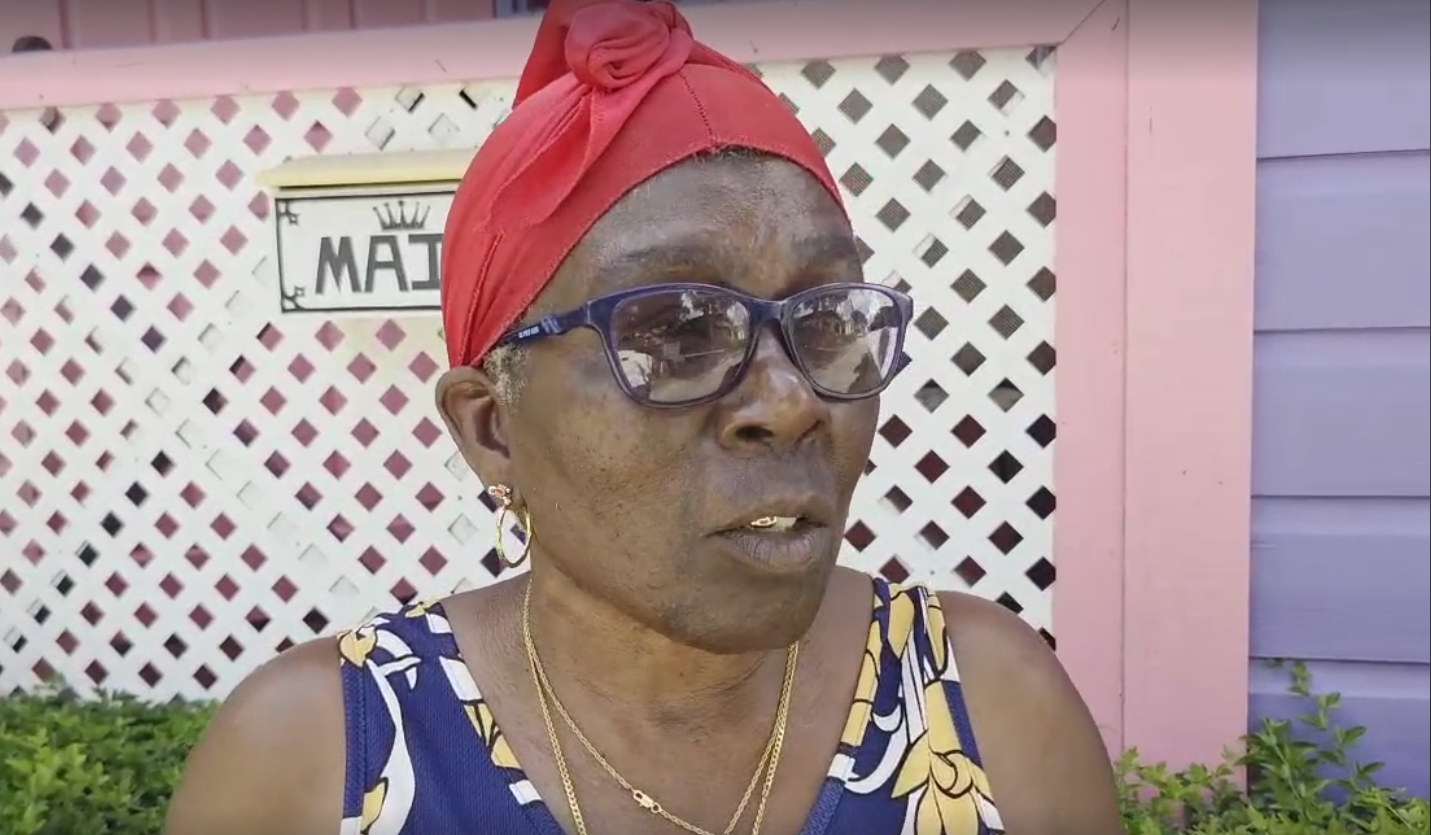
    According to detailed accounts, Norman Bowen sustained multiple injuries including a fractured wrist requiring a cast, alongside damage to his knees, back, and mouth. Bowen alleges the beating was so severe that he lost consciousness during the encounter. Simultaneously, Diana Slusher, Bowen’s sister, reports being physically assaulted when she attempted to intervene, stating she was struck with sufficient force to cause temporary loss of consciousness, necessitating revival with water.

    Attorney Norman Rodriguez, representing the affected family, has identified specific details regarding the operation. His investigation indicates that among five officers present—including two from the Belize Defense Force and three police officers—the alleged physical abuse was perpetrated primarily by a police corporal and a regular officer, while military personnel reportedly maintained a observational role.

    Despite their injuries, both Bowen and Kizan Williams remain in custody with anticipated firearms-related charges pending. Medical concerns have been raised regarding Bowen’s condition, particularly chest pain resulting from alleged boot-based assault, though follow-up hospital treatment has been complicated by the detainees’ fear of their arresting officers.

    The legal narrative emphasizes the fundamental principle that punishment remains the exclusive domain of judicial authority, not law enforcement personnel. Rodriguez acknowledges the officers’ right to due process while simultaneously preparing potential civil litigation against the department pending investigation outcomes.

    This case highlights ongoing tensions between community members and police authorities regarding appropriate use of force protocols and accountability measures within law enforcement operations.


  • Empower Her Symposium Fuels Rising Female Leaders

    Empower Her Symposium Fuels Rising Female Leaders

    BELIZE CITY – A transformative movement is reshaping Belize’s leadership landscape as women increasingly claim their rightful positions in corporate boardrooms, entrepreneurial ventures, and decision-making roles historically dominated by men. The Belize Trade and Investment Development Service (BELTRAIDE) catalyzed this progress through its third annual Empower Her Symposium, convening dozens of pioneering women leaders in Belize City on March 12, 2026.

    The gathering served as both incubator and accelerator for female leadership development, creating intentional spaces for mentorship, skill-building, and strategic networking. Participants ranging from established executives to emerging entrepreneurs engaged in comprehensive programming designed to address both practical leadership competencies and systemic barriers.

    Sarita Bejerano, Manager of the Belize Training and Employment Center, outlined the symposium’s strategic design: “This two-day event covers essential topics for women’s advancement in careers, businesses, and personal endeavors. Our curated agenda addresses emotional intelligence, health and wellness, transformational leadership, and financial empowerment, complemented by powerful dialogue sessions with established leaders like Marleni Cuellar.”

    The symposium’s impact manifested powerfully in participants like Susan Ferguson, Executive Director of the Belize Emergency Response Team (BERT). Her journey from teenage motherhood to master’s degree completion exemplifies the resilience cultivated through such initiatives. “I dropped out of school at seventeen due to pregnancy,” Ferguson shared. “Through determination to transcend statistics, I completed my diploma, earned a degree, and just last week graduated with my master’s degree.”

    Dr. Maxcine McKay, Assistant Professor at the University of Belize, emphasized the critical need for sustained support beyond symbolic recognition: “Women deserve celebration beyond March. We must reignite commitment to female representation across all societal sectors—particularly in government, health, and media where our voices remain essential.”

    Since its inception, the Empower Her initiative has trained approximately 150 women who have subsequently advanced into leadership positions while establishing robust mentorship networks. This growing ecosystem of support continues generating ripple effects throughout Belizean society, ensuring women are prepared not merely to participate in but to fundamentally lead economic and social transformation.

  • Collet Road Fixes Raise Speeding Concerns

    Collet Road Fixes Raise Speeding Concerns

    The Collet Constituency is experiencing a infrastructure transformation that has yielded an unexpected consequence: heightened concerns over vehicular speeding. After years of neglect, multiple streets throughout the constituency have received comprehensive surface and drainage upgrades, a development largely welcomed by local residents.

    Area Representative Devin Daly highlighted the scale of the progress, stating, “In the twelve months I’ve been in office, we’ve completed eight or nine streets, with more currently underway.” This work represents a fulfillment of campaign promises and a significant improvement to the area’s quality of life.

    However, the newly paved roads have attracted dangerous driving behavior. Community activist Bernard ‘Dubu’ Thomas issued a stark warning to motorists, emphasizing the particular hazard of loose gravel still present on some surfaces. “The street come good and it noh got no brakes,” Thomas cautioned, using local dialect. He directly addressed reckless drivers, saying, “Unu wa lose unu own life because ah boasy with unu pretty vehicle and unu stupid thinking.”

    Beyond infrastructure, Representative Daly noted additional community support programs in operation, including land clinics, immigration assistance clinics, and grocery bag distribution initiatives. The situation in Collet demonstrates how civic improvement projects can create complex challenges that require ongoing community dialogue and safety measures.

  • Dominican Republic installs first “Blue Shield” to protect cultural heritage

    Dominican Republic installs first “Blue Shield” to protect cultural heritage

    In a landmark initiative for cultural preservation, the Dominican Republic has officially installed its first Blue Shield emblem at the Fray Antón de Montesinos Monument in Santo Domingo’s Colonial City. This significant undertaking represents a collaborative effort between the nation’s Ministry of Foreign Affairs, Ministry of Defense, and both the International Committee of the Red Cross and Dominican Red Cross.

    The Blue Shield designation constitutes an internationally recognized protective symbol established under the 1954 Hague Convention for the Protection of Cultural Property in the Event of Armed Conflict. Championed by UNESCO, this emblem serves to identify cultural heritage sites requiring special protection during periods of armed conflict, natural disasters, or human-made crises. The Montesinos monument, situated within the Colonial City—designated a World Heritage Site in 1990—now joins a global network of protected cultural properties.

    Government officials have confirmed this installation initiates the first phase of an extensive protection strategy. Subsequent phases will see the Blue Shield emblem deployed across additional historically significant landmarks, including the Cathedral of Santa María la Menor, the Pantheon of the Fatherland, Altar de la Patria, Puerta de la Misericordia, Fortaleza Ozama, Alcázar de Colón, Palacio Consistorial, and Puerta del Conde.

    The ceremonial installation was presided over by Vice Minister Rubén Silié, representing Foreign Minister Roberto Álvarez, alongside representatives from participating institutions and distinguished authorities. This initiative underscores the Dominican Republic’s strengthened commitment to both safeguarding its cultural heritage and reinforcing respect for international humanitarian law, ensuring these historic treasures endure for future generations.

  • Caye Caulker Crocodiles Clash with Rugby Union

    Caye Caulker Crocodiles Clash with Rugby Union

    A dramatic schism has erupted within Belize’s rugby community, culminating in the indefinite suspension of the Caye Caulker Crocodiles Rugby Club by the national governing body. The Rugby Football Union of Belize (RFUB) imposed the sanction after the club refused to comply with an order to remove social media content featuring the ‘Rugby Belize’ logo, which the union claims was utilized without authorization.

    The conflict centers on the intellectual property rights to the branding. Tony Gillings, owner of the privately registered company Rugby Belize and the club’s primary sponsor, asserts his legal entitlement to the logo. Gillings revealed to press that he originally established the organization a decade ago as rugby’s founding body in the nation before formally registering it as a private enterprise upon his departure from the governing structure.

    The RFUB, based in San Ignacio, maintains that its constitution grants it supreme authority as the national governing body and mandates that all registered clubs acknowledge this supremacy. The suspension effectively bans the Crocodiles from all officially sanctioned rugby activities in the country.

    Gillings has condemned the union’s decision as counterproductive, arguing it fosters division when the sport is in dire need of unified support and development. He further contends the RFUB is overstepping its jurisdiction, as it lacks the authority to regulate club sponsorships or prohibit the use of legally registered logos. Defiantly, Gillings announced the club’s intention to proceed with an independent beach rugby tournament in Caye Caulker, highlighting the absence of other active clubs or tournaments in Belize that the union could actually prevent them from joining.

  • Abinader opens 38th National Agricultural Fair focused on technology

    Abinader opens 38th National Agricultural Fair focused on technology

    Santo Domingo has become the epicenter of agricultural innovation as President Luis Abinader joined industry leaders to inaugurate the 38th National Agricultural Fair. The landmark event, hosted at the Julio Antonio Brache Arzeno Livestock City, will showcase cutting-edge farming technologies over its 11-day run, signaling a transformative shift toward mechanization in the Dominican Republic’s agricultural sector.

    Agriculture Minister Francisco Oliverio Espaillat presented compelling economic data during the opening ceremonies, revealing that agriculture constitutes 4.5% of the nation’s GDP and sustains over 365,000 direct employment opportunities—approximately 7% of the national workforce. The minister further highlighted remarkable progress in food security, with malnutrition rates plummeting from 8.7% in 2019 to 3.6% in 2025. The government’s ambitious ‘Zero Hunger’ initiative aims to further reduce this figure to 2.5% by 2028.

    José Manuel Mallén, President of the National Livestock Association, characterized the fair as the premier platform for agricultural exhibition and collaboration among producers, corporations, and institutions. The event commenced with a special tribute to businessman and rancher Julio Antonio Brache Arzeno, recognizing his substantial contributions to the national cattle industry.

    This year’s edition features South Korea as the guest nation, emphasizing international cooperation in agricultural technology and innovation. The expansive fairgrounds host approximately 70 farms exhibiting more than 500 cattle, nearly 400 goats and sheep, and 330 horses competing in traditional disciplines including Paso Higüeyano and Paso Fino. Beyond livestock exhibitions, attendees can experience technological demonstrations, culinary events, cultural activities, and financial programs designed to accelerate the modernization of Dominican agriculture through institutional support and agro-industrial partnerships.

  • The following persons or anyone knowing their whereabouts are asked to make contact

    The following persons or anyone knowing their whereabouts are asked to make contact

    Authorities have formally issued a public notification seeking assistance in establishing contact with specific individuals whose current whereabouts remain unknown. This official communique serves as both an alert and an urgent request for information from the general public.

    While the announcement does not specify the exact number or identities of the persons being sought, it indicates that law enforcement or relevant agencies are attempting to locate them for purposes that may include legal proceedings, safety concerns, or official inquiries. The notice extends to anyone possessing knowledge of these individuals’ locations, emphasizing the importance of coming forward with any potentially relevant information.

    Such public appeals typically represent critical components of investigative processes when conventional methods of locating individuals have been exhausted. The formulation suggests this may be connected to ongoing legal matters, though the precise context remains unspecified in the brief notice. These types of requests are commonly employed in various jurisdictions when attempting to serve legal documents, locate witnesses, or ensure the welfare of missing persons.

    The publication of such notices follows established protocols for public information dissemination during official investigations. Respondents with pertinent information are typically directed to contact designated authorities through specified channels, though these contact details were not explicitly provided in the initial abbreviated message.

  • Neighbour hailed a hero after fatal Two Mile Hill fire

    Neighbour hailed a hero after fatal Two Mile Hill fire

    A devastating house fire in the Bishops Land neighborhood of Two Mile Hill, St Michael, has culminated in tragedy with the death of 98-year-old Marshall, a retired police officer and former Roberts Manufacturing employee. The elderly man, who was visually impaired, succumbed to his injuries at the Queen Elizabeth Hospital (QEH) in the early hours of Thursday morning, days after a rapidly spreading blaze consumed his wooden residence.

    The incident has highlighted an extraordinary act of bravery by 61-year-old neighbor Anderson Brown, a longtime caregiver who risked his own life in a desperate attempt to save Marshall. Brown, who suffers from a chronic hip condition requiring surgical intervention, instinctively rushed into the inferno upon discovering the fire while preparing to deliver the elderly man’s meal.

    According to eyewitness accounts from Brown’s wife, Juliette, the rescue operation became a harrowing race against time. Their son attempted to assist but was forced back by intense heat and suffocating smoke, while Brown pressed forward into the fully engulfed structure. After several agonizing minutes where both men were presumed lost, Brown miraculously emerged from the rear of the property having knocked down fencing, dragging Marshall to relative safety.

    Despite surviving the immediate danger, both men sustained critical injuries. Marshall suffered burns covering approximately 50 percent of his body, ultimately proving fatal. Brown remains hospitalized with burns affecting eight percent of his body, particularly on his hands, legs, back, and head. Medical staff report his condition is progressing slowly, though the news of Marshall’s passing has profoundly impacted his emotional state.

    The community remembers Marshall as a disciplined, quiet man deeply rooted in the neighborhood. In his later years, as his health and vision declined, the Brown family had become his primary caregivers, assisting with daily meals and personal affairs.

    In the aftermath, Juliette Brown has passionately defended her husband’s actions against criticism from some community members who suggested the rescue attempt was unnecessarily risky given Marshall’s advanced age. She emphatically stated that her husband acted heroically to save a living person, contrasting his actions with those who risk their lives for material possessions. The Browns’ dedication to their neighbor underscores a profound community bond that transcends the tragedy’s outcome.

  • Workshop aims to help teachers detect student drug use

    Workshop aims to help teachers detect student drug use

    In response to escalating concerns about drug use among youth, Barbados’ National Council on Substance Abuse (NCSA) has initiated a comprehensive training program for educators to identify and address student substance abuse. The inaugural workshop, titled “Signs and Symptoms of Drug Use,” convened 65 teachers at Erdiston Teachers’ Training College, marking the beginning of a coordinated effort between educational institutions and community stakeholders.

    Makeda Bourne, Substance Abuse Prevention Officer and program coordinator, emphasized the dual objectives of the initiative: enhancing educators’ ability to recognize both physical drug paraphernalia and behavioral indicators of substance use. The curriculum includes practical identification techniques and intervention strategies, featuring live demonstrations by police officers exhibiting actual drugs and related equipment.

    Rudy Lovell, President of the Barbados Union of Teachers, highlighted educators’ unique positioning to observe student challenges, noting that teachers frequently serve as first responders to youth struggling with substance abuse and its ripple effects on academic performance and family dynamics.

    NCSA Board Chairman Hadford Howell proposed expanding prevention efforts through creative competitions for primary students, suggesting art and writing contests to engage younger audiences in substance abuse education. Howell simultaneously called for greater community and parental responsibility, questioning whether homes and neighborhoods should bear primary accountability for child protection.

    The chairman further outlined four emerging challenges complicating drug prevention: proliferation of new synthetic substances, accelerated market penetration bypassing conventional monitoring, increased drug adulteration practices, and evolving distribution and consumption patterns.

  • Zes ambassadeurs  bieden geloofsbrieven aan president Simons aan

    Zes ambassadeurs bieden geloofsbrieven aan president Simons aan

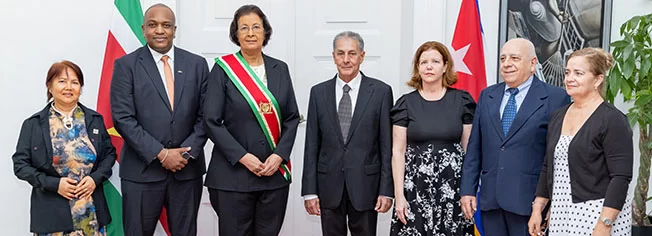
    Suriname’s diplomatic landscape expanded significantly on Thursday as President Jennifer Simons formally received credentials from six ambassadors at the Presidential Palace in Paramaribo. The ceremony marked a pivotal moment in strengthening bilateral relations between Suriname and nations across multiple continents.

    In separate meetings with the head of state, both resident and non-resident ambassadors expressed strong commitment to enhancing diplomatic cooperation. The distinguished diplomats included: Isaac Roberto Torres Barrios (Cuba, accredited from Paramaribo), Mattanya Aharon Cohen (Israel, based in Panama), and four ambassadors accredited from Brazil – Zurab Mchedlishvili (Georgia), Eleonora Dimitrova (Bulgaria), Nii Amasah Namoale (Ghana), and Eleni Lianidou (Greece).

    During substantive discussions, each ambassador outlined specific areas for deepened collaboration. Georgian Ambassador Mchedlishvili expressed honor in representing his nation while identifying potential partnerships in political, economic, and educational domains, including high-level exchanges and formal consultations.

    Bulgarian Ambassador Dimitrova conveyed appreciation for Suriname’s hospitality and emphasized aspirations to fortify the 22-year diplomatic relationship between the nations. Ghana’s representative Ambassador Namoale highlighted historical connections and stressed that future cooperation must prioritize mutual welfare and development.

    Greek Ambassador Lianidou described her reception as exceptionally warm and confirmed both countries’ intentions to expand existing positive relations. Israeli Ambassador Cohen noted the significant milestone of fifty years of diplomatic ties with Suriname, pinpointing agriculture, food security, and energy as key cooperation sectors.

    Cuban Ambassador Barrios reaffirmed his dedication to strengthening bilateral bonds and expanding joint initiatives between Havana and Paramaribo. The Communications Service of Suriname reported that all envoys demonstrated particular enthusiasm for deepening economic and cultural exchanges alongside political diplomacy.