作者: admin

  • New ABPSA Executive Installed as Janela Evanson Takes Over as President

    New ABPSA Executive Installed as Janela Evanson Takes Over as President

    The Antigua and Barbuda Public Service Association (ABPSA), a key advocacy body for the nation’s public sector workforce, has inaugurated a fully new executive leadership team following competitive elections held during its most recent annual general meeting.

    Long-time association insider Janela Evanson, who previously held the senior post of general secretary within the ABPSA, will step into the top leadership role as president. She succeeds outgoing leader Joan Peters, who made the decision not to stand for re-election ahead of the vote.

    In addition to Evanson’s elevation to the presidency, the election results brought several familiar and new faces to key leadership positions. Jannelle Wehner-Watts will retain her position as vice-president, returning to the role for another term. Karis George has been selected to fill Evanson’s former post as general secretary, while Sandra Benta-Richards will take over the critical treasury portfolio, managing the association’s finances and budget.

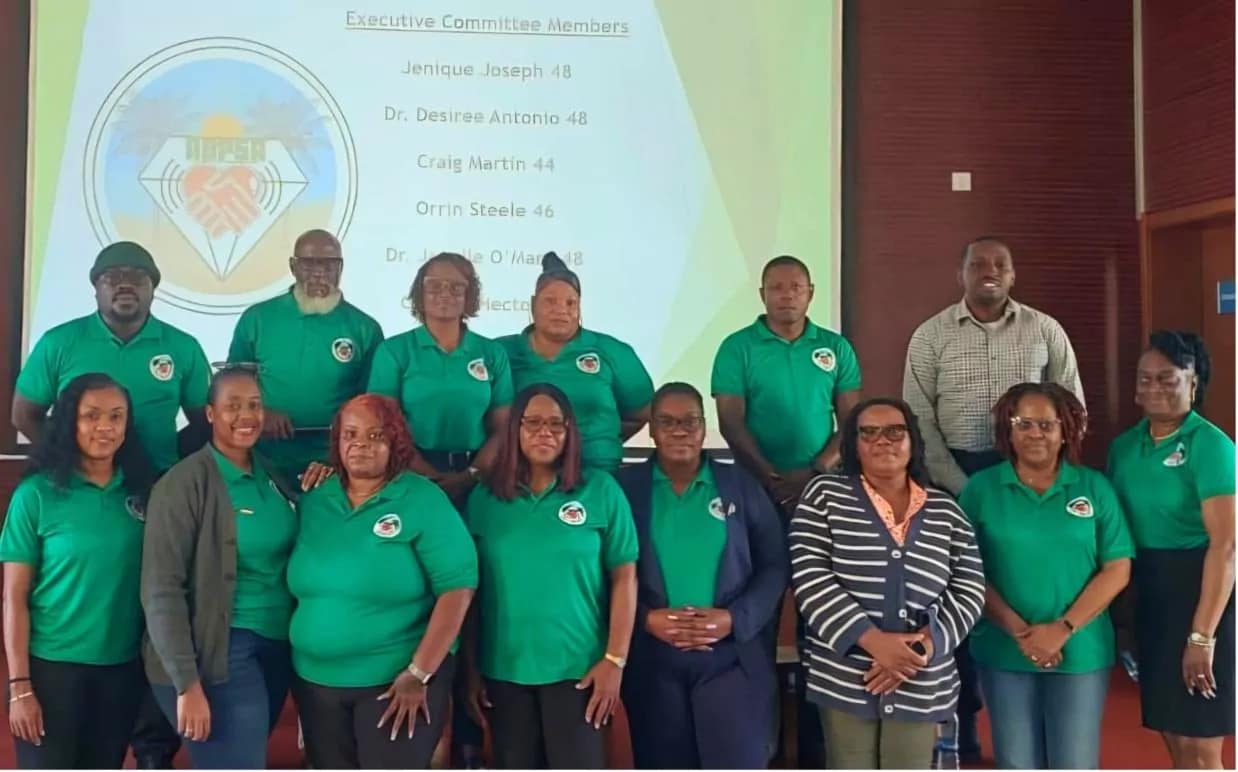
    The broader 9-member executive committee also includes well-known figures from Antigua and Barbuda’s public service sector: Dr. Janelle O’Mard, Dr. Desiree Antonio, Orrin Steele, Jenique Joseph, and Garolyn Cornelius-Hector, who will all support core governance and strategic initiatives over the coming term.

    Six shop stewards, tasked with direct grassroots representation for public sector workers across workplaces, were also elected to their posts. The cohort includes Onesha Elvin, Jeannette Mason, Sabrina Carlisle, Craig Martin, Delma Jules-St. Agnes, and Verlyn Charles, who won re-election to retain her seat. To complete the new ABPSA leadership structure, Kerry-Ann Mussington and Adrian Julian have been appointed as association trustees, responsible for fiduciary oversight.

    The freshly elected leadership team will now take the reins of the organization for a one-year term. Over the next 12 months, the executive will manage all day-to-day ABPSA operations, advance the policy priorities of public sector employees, and act as the official collective voice for the association’s membership in discussions with government and institutional stakeholders.

  • Systeemonderhoud Finabank uitgelopen; diensten pas dinsdag volledig hersteld

    Systeemonderhoud Finabank uitgelopen; diensten pas dinsdag volledig hersteld

    A planned system upgrade at Suriname-based Finabank has hit an unexpected delay, pushing the full restoration of most banking services much later than initially projected, the financial institution announced on Monday, 13 April. What was originally scheduled as a three-day maintenance window running from 10 April to 12 April, part of a broader initiative to improve the bank’s digital and core service infrastructure, will now keep most key services offline until 8:00 a.m. local time on Tuesday 14 April. The extended downtime has left large swathes of the bank’s core offerings limited or completely unavailable for account holders through the end of Monday.

    In a public statement, Finabank confirmed that customers will be unable to access a wide range of routine banking services until service restoration is complete. This includes all withdrawals and deposits via ATMs, point-of-sale (POS) debit payments using local-issued Finabank bank cards, and all online and mobile banking transactions for both domestic and international transfers. The outage has already created tangible disruptions for retail shoppers as well: at local merchants that rely exclusively on Finabank’s POS terminals, standard pin-based debit payments are currently impossible, forcing customers to seek alternative payment methods.

    Not all of the bank’s card services are affected by the outage, however. Credit card transactions using Finabank-issued Visa and Mastercard products remain fully operational, both for in-person POS purchases and online payments.

    For customers needing in-person assistance, Finabank’s physical branch locations will remain open on Monday 13 April for limited, priority services. Account holders can still visit branches to submit product and service applications, make cash deposits, address urgent banking matters, access general customer support, and retrieve or add items to safe deposit boxes held at the branch.

    Finabank has publicly acknowledged the inconvenience that the extended maintenance window creates for its customer base, and has urged account holders to adjust their upcoming financial plans to account for the current service disruptions. The bank has not shared additional details on what caused the maintenance work to run longer than initially forecast, but reaffirmed that the work is intended to deliver long-term improvements to its overall service reliability for customers once completed.

  • Tevaughn Hall ascends to 3rd in NACAC Rankings

    Tevaughn Hall ascends to 3rd in NACAC Rankings

    The 2026 CARIFTA Games, hosted on home soil in Grenada over the Easter holiday weekend, delivered a historic moment for Grenadian athletics as rising teen hurdler Tevaughn Hall secured a podium finish that ended a 25-year medal drought for the nation in the Under-18 400m hurdles.

    The young Inter-Col Under-17 champion, who represents St Andrews Anglican Secondary School (SAASS), delivered a career-defining performance in front of thousands of cheering local spectators. Hall crossed the finish line in a new personal best of 53.45 seconds to claim the bronze medal, marking a dramatic 1.59-second improvement on his previous record of 55.04 seconds set just weeks earlier at the 2026 Inter-Col competition. SAASS went on to claim its 22nd boys’ team title at that same event, with Hall as one of its standout contributing athletes.

    What makes Hall’s achievement particularly significant is its place in Grenadian track and field history. He is the first Grenadian athlete to earn a medal in any CARIFTA 400m hurdles event in 25 years. The nation’s last medal in the discipline came back in 2001, when Rodney George took home silver with a time of 54.39 seconds – a mark Hall’s new personal best already surpasses.

    Following his standout performance at the regional games, the latest NACAC (North American, Central American, and Caribbean Athletics Association) Outdoor Rankings, updated on April 6, 2026, place Hall third overall in the region for the Under-18 400m hurdles. He trails only Jamaican athletes Oniel Lawrence, the CARIFTA gold medallist, and Kavian Minnot, the silver medallist, cementing his status as the highest-ranked athlete in the event outside of Jamaica, a regional powerhouse in track and field.

    For local fans eager to see the young rising star compete again, the wait will be short. Hall is already scheduled to make his next competitive appearance at the 2026 Classique Lighting Communal Invitational, set to take place on April 25 and 26.

  • Strong winds cause structural damage at Malecón Center

    Strong winds cause structural damage at Malecón Center

    On a stormy Monday, intense downpours paired with powerful wind gusts left their mark on one of Santo Domingo’s popular commercial hubs, triggering a partial collapse of a metal framework at the Malecón Center shopping mall in the Dominican Republic’s National District.

    The structural failure sent broken construction debris tumbling into the mall’s adjacent parking lot, where multiple unoccupied parked vehicles suffered visible damage as falling fragments struck their exteriors. Within hours, user-shared footage circulating across major social media platforms captured the raw force of the extreme weather: tall trees lining the property sway violently under sustained wind, while sections of the compromised metal structure tear free from their supports and are hurled across open areas of the mall property.

    Local authorities have confirmed that despite the extensive property damage and widespread debris scattered across the parking zone, there were no reports of personal injuries linked to the incident. The collapse unfolded as the Dominican capital grapples with a period of unseasonably severe adverse weather that has disrupted daily activity across the region. Mall management has not yet released a formal timeline for repairs and full reopening of the affected area.

  • St. Kitts and Nevis tenders major solar-storage project

    St. Kitts and Nevis tenders major solar-storage project

    The Caribbean nation of St. Kitts and Nevis is taking a major step forward in expanding its renewable energy capacity, as the country’s state-owned St. Kitts Electricity Company (SKELEC) has formally launched a competitive tender process for the island’s first utility-scale solar and battery storage development.

    Named the Basseterre Valley project, the proposed facility will be built in the valley that sits just southeast of St. Kitts and Nevis’ national capital, Basseterre. The project is planned to pair 50 megawatts of solar photovoltaic generation capacity with 30.5 megawatts/30.5 megawatt-hours of battery energy storage, creating an integrated renewable power facility that can deliver consistent electricity to the island’s grid.

    Under the current first phase of the tender process, SKELEC is inviting all interested developers, investors, and contractors to register for access to the official request for proposals (RFP) documentation through the utility’s dedicated online bidding portal. The process is open to both international project developers and locally-based stakeholders, who are all encouraged to participate. As of the latest public update, the utility has not yet released a public deadline for the completion of registration.

    As the only public utility responsible for power generation, transmission, and distribution across the island of St. Kitts, SKELEC is wholly owned by the government of St. Kitts and Nevis. Clement Williams, the utility’s general manager, emphasized that the new Basseterre Valley project will deliver long-term strategic benefits to the Caribbean nation: it will strengthen the country’s national energy security and cut its longstanding dependence on costly imported fossil fuels for power generation.

    Current data from the International Renewable Energy Agency (IRENA) shows that as of the end of last year, the entire country of St. Kitts and Nevis held just 5 megawatts of cumulative installed solar capacity, a figure that remained unchanged from the year prior. If completed as planned, the 50 MW project will represent a dramatic 10-fold expansion of the country’s total solar generation capacity, marking a pivotal turning point in its transition to clean energy.

  • Grenada stuns St Lucia in Windward Islands U19 Tournament

    Grenada stuns St Lucia in Windward Islands U19 Tournament

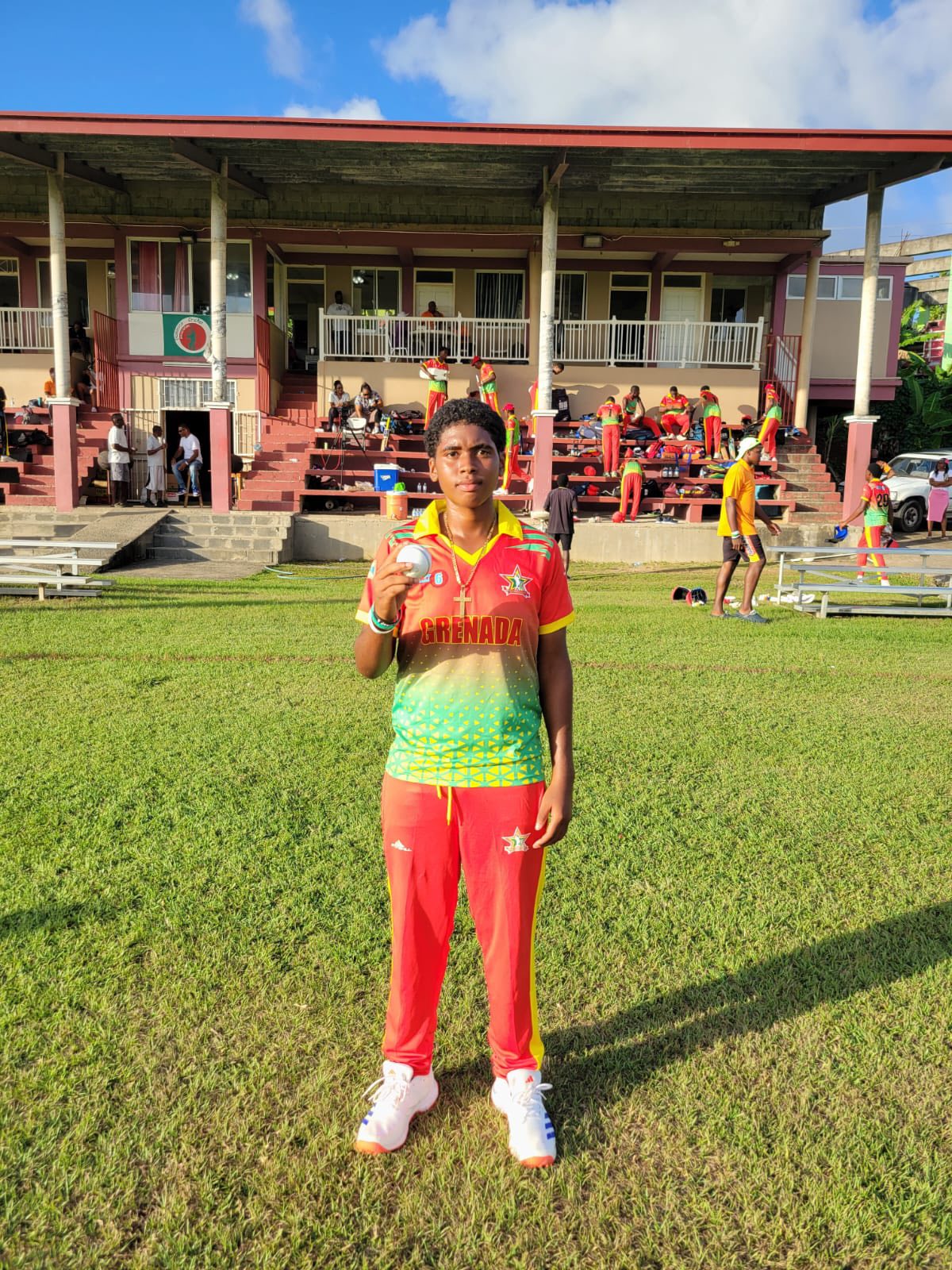
    The WINLOTT Super 6 Windward Islands U19 Tournament served up a thrilling comeback story on Sunday, 12 April 2026, at Dominica’s Benjamin’s Park, where Grenada’s under-19 men’s cricket side pulled off a dramatic win against St Lucia, powered by a career-best performance from young spinner Shamel Hillaire.

    Coming into the fixture, both sides carried contrasting momentum. Grenada was still bouncing back from a underwhelming defeat in their tournament opener, while St Lucia entered the match brimming with confidence after a lopsided win over St Vincent and the Grenadines. A brief rain shower pushed back the start of play, but once the action got underway, Grenada won the pre-match toss and opted to set a target batting first.

    Grenada’s batting innings got off to a disastrous start. The team lost their first wicket with just 8 runs on the board, when opening batsman Jordan John was clean-bowled for 5. Raekeim Lewis Charles followed just overs later, trapped leg before wicket for 11, leaving the Grenada camp reeling at 2 wickets down early. With St Lucia’s bowlers consistently hitting tight lines, runs proved difficult to come by, and Kemile Abraham’s attempt to steady the innings could not halt the wicket column. By the 14th over, Grenada had slumped to 42 runs for the loss of 4 wickets.

    A small but critical recovery followed, as Abraham and Hillaire put together a steady partnership to push the total up to 74 for 5 before another wicket fell. St Lucia’s bowling attack never let up on the pressure, however, and Grenada was eventually bowled out all out for 123 runs. Abraham finished as the team’s top scorer with 24 runs, while the best of the other contributions came from Jayonn Henry (16), Hillaire (12), Lewis Charles (11) and Jeremy Edwards, who finished not out on 11. For St Lucia, Bjorn Fanis led the bowling attack with impressive figures of 3 wickets for just 23 runs, receiving solid support from captain Theo Edward (2 for 20) and Cody Fontenelle (2 for 26), while Nathaniel Joseph and Tyler Venner each picked up one wicket apiece.

    Chasing a modest target of 124 runs to win, St Lucia only needed just over 3 runs per over to secure victory, and the early stages of their innings suggested they would cruise to a comfortable win. But Grenada’s bowlers had other plans, launching a clinical fightback that turned the match on its head.

    Pace bowler Aaron Edwards struck early blows, removing both of St Lucia’s opening batsmen – captain Theo Edward for 15 and Roystan Fannis for 9 – to leave St Lucia at 43 for 2 after 8 overs. Just three balls after Edwards’ second wicket, left-arm spinner Aravinda Bishop extended Grenada’s advantage by dismissing Jonathan Daniel lbw, dropping St Lucia to 43 for 3.

    A brief recovery pushed St Lucia to 73 for 3, but it was not enough to withstand the spin pressure that Grenada brought to bear. Bishop and Hillaire triggered a catastrophic collapse that saw St Lucia lose their final 7 wickets for just 30 runs, folding all out for 103 runs to hand Grenada a 20-run victory.

    Making his first tournament appearance after sitting out the opening match on the bench, Hillaire delivered a match-winning spell, finishing with sensational figures of 6 wickets for 26 runs from just 5.4 overs. The standout performance earned the young bowler well-deserved Man of the Match honours. Edwards backed up Hillaire with 2 wickets for 13 runs from 5 overs, while Bishop claimed 1 wicket for 20 runs to cap a dominant bowling display from Grenada.

    After the match, Grenada captain Khavaughn Bartholomew highlighted his side’s resilience following their opening loss, crediting the team’s adjusted game plan for the win. “I just want to thank the Lord for the opportunity. We didn’t get it right with the batting, but we came through with the bowling. We put the ball in the right areas, got early wickets and put them under pressure. The spinners played a massive role. The man of the match wasn’t with us yesterday, so we made a change, and you can see it worked.”

    Speaking after picking up his award, Hillaire said he had remained confident he would get his chance to contribute after starting the tournament on the bench. “I first want to thank God for the opportunity. We didn’t bat well today, but we came out on the field and fought until we won. I had faith that I would do well. I was on the bench yesterday, but I knew my time would come.”

    The result moves Grenada into third place in the tournament standings, trailing early leaders St Lucia and defending champions Dominica. Up next, Grenada will return to action on Tuesday, 14 April 2026, to take on St Vincent and the Grenadines as the round-robin phase of the tournament continues.

  • UPP Leader Jamale Pringle Promises Tax-Free Water Tanks, Pumps and Pressure Systems Under Water Relief Programme

    UPP Leader Jamale Pringle Promises Tax-Free Water Tanks, Pumps and Pressure Systems Under Water Relief Programme

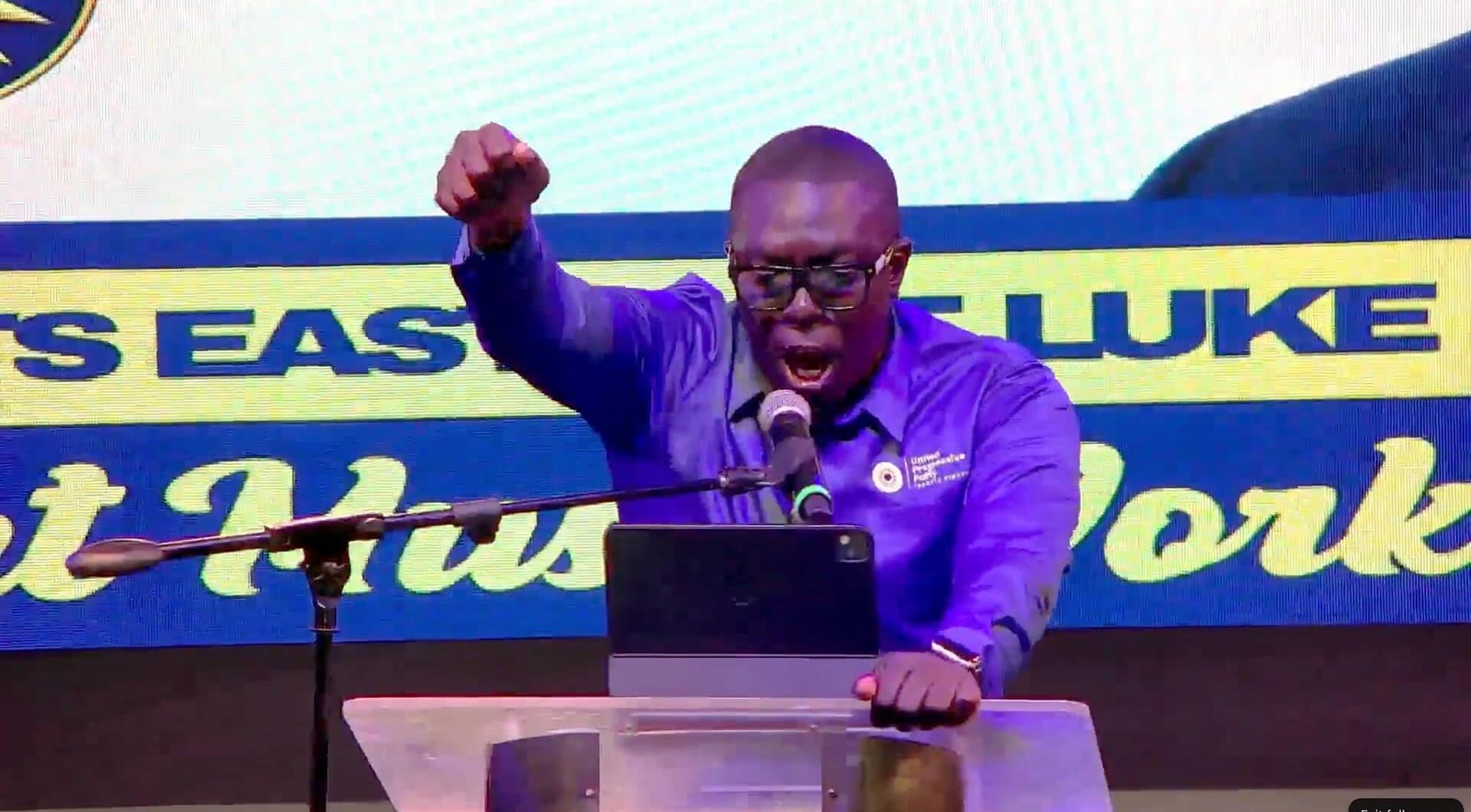
    As Antigua prepares for its upcoming April 30 general election, opposition United Progressive Party (UPP) leader Jamale Pringle has put forward a targeted set of policy proposals aimed at addressing one of the nation’s most crippling domestic issues: chronic, unreliable water access that has left thousands of households struggling to meet basic daily needs.

    Speaking to party supporters at the UPP’s official campaign launch on Sunday evening, Pringle centered his address on the urgent humanitarian impact of ongoing water shortages, framing the crisis not as a mere public inconvenience, but as an affront to basic human dignity for communities across the country. In a bold promise of immediate action if his party secures victory at the polls, Pringle announced that a UPP-led administration would implement an immediate, fully funded Water Tanks and Accessories Relief Program to bring interim relief to affected households while long-term infrastructure overhauls are completed.

    The centerpiece of the interim relief plan is the full elimination of all taxes on critical water storage and distribution equipment, including residential water tanks, pressure tanks, and water pumps. Pringle emphasized that removing these fiscal barriers will lower the cost of essential storage tools for ordinary families, allowing them to maintain access to running water even during frequent supply interruptions that have become the norm under the current administration. He stressed that this stopgap measure is only the first step, designed to deliver tangible help to struggling households in the immediate aftermath of the election while his government works to fix the broken water system at its core.

    Beyond immediate tax relief, Pringle laid out his long-term vision for upgrading Antigua’s water infrastructure, criticizing the incumbent government for leaving billions of dollars in already built infrastructure underutilized. A key plank of his platform is the immediate activation and connection of all pre-installed community water storage tanks that currently sit idle across the nation. “Every single storage tank… will be connected and commissioned,” he affirmed, noting that tapping into existing unused infrastructure can quickly expand water access for underserved communities without the need for years of new construction.

    For sustained, long-term improvement, Pringle also committed his party to accelerating large-scale infrastructure upgrades through the Antigua Public Utilities Authority. These upgrades will include expanding the nation’s water pipeline network to reach more households and reduce delivery interruptions, as well as implementing proactive, regular maintenance for the country’s reverse osmosis desalination plants to boost overall clean water production capacity.

    The water relief plan forms a core part of the UPP’s broader election platform, as the party works to distinguish itself from the incumbent government by positioning itself as a problem-solving administration that can deliver both immediate relief to hurting families and lasting systemic change to address one of Antigua’s most persistent public service challenges.

  • UPP Launches Campaign with Prayer-Focused ‘Ignite’ Event

    UPP Launches Campaign with Prayer-Focused ‘Ignite’ Event

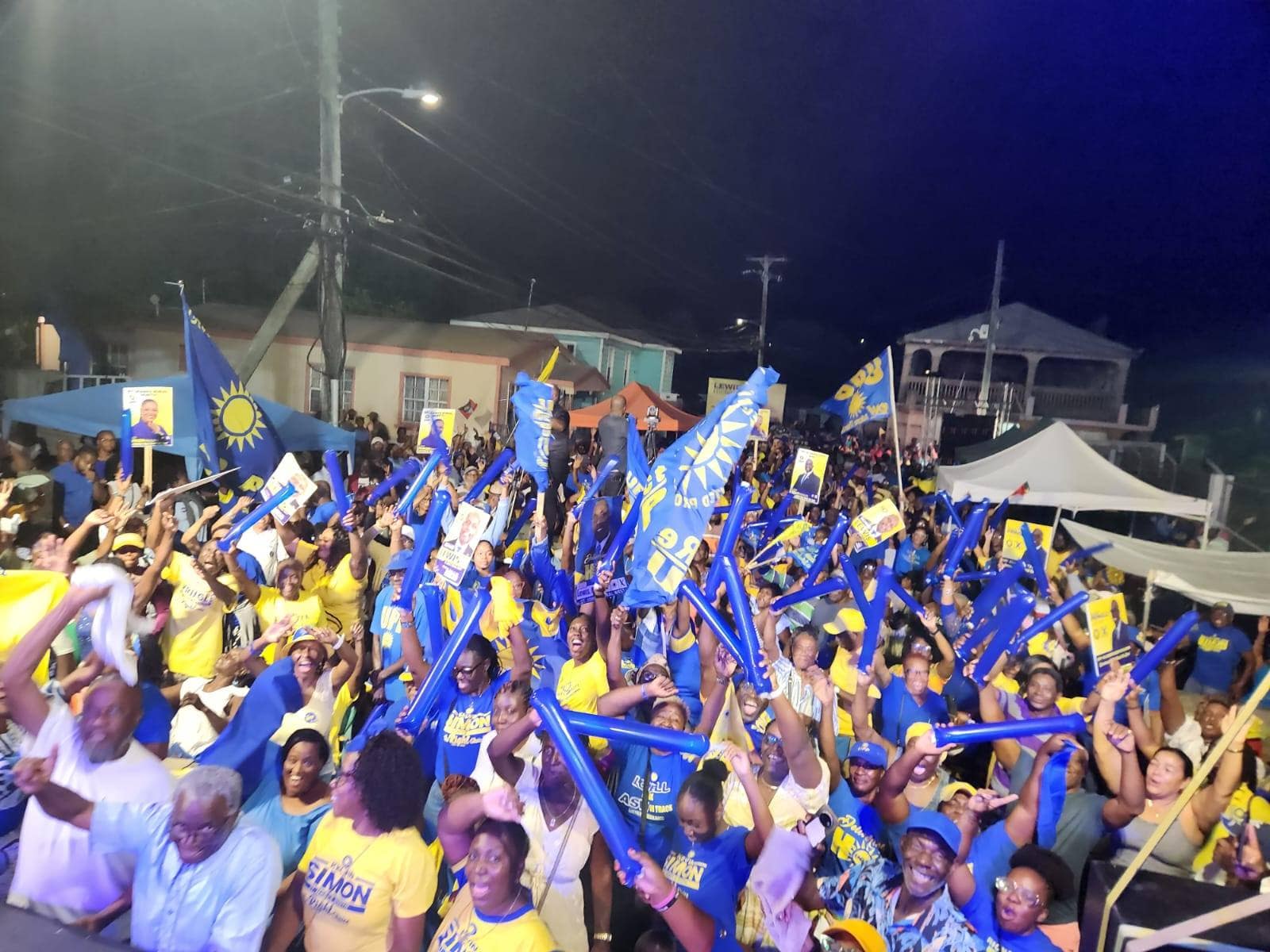
    As Antigua and Barbuda prepares for its April 30 general election, the United Progressive Party (UPP) has formally kicked off its bid to unseat the incumbent government, opening its campaign with a spiritually charged, prayer-centered rally named “Ignite.” The event, which blended Christian worship, policy messaging, and candidate introductions, was framed by party organizers as both a political starting line and a spiritual awakening, built around three core pillars: faith, national unity, and transformative change.

    The kickoff event drew hundreds of gathered supporters, with a live online broadcast extending the rally’s reach to voters across the twin-island nation and abroad. Opening the night, a host set the tone for the campaign, declaring, “Tonight is the night to ignite the campaign… the campaign to victory,” as crowds rallied behind the party’s message.

    Religious elements remained the throughline of the entire gathering, starting with an extended opening session of prayer and praise led by local faith leaders. Religious figures called for divine guidance for UPP candidates and divine intervention in the country’s national affairs. One opening prayer framed the campaign as a moment of national deliverance, declaring that “the wind of change will begin to blow… across the nation of Antigua and Barbuda.”

    Throughout the evening, every political address tied the party’s policy and electoral ambitions back to its faith-centered framing. One senior organizer told the assembled crowd that “there’s no igniting without God,” encouraging attendees to anchor the campaign’s slogan by pairing “Ignite” with calls for widespread national change. Another speaker emphasized the party’s goal of turning over power, stating the UPP aimed to “usher in a new day under the leadership of Jamale Pringle and the United Progressive Party.”

    Toward the end of the rally, all UPP candidates were invited onto the stage to receive a collective blessing from attending pastors. One faith leader told the candidates that “God has chosen each one of you for such a time as this,” praying for unity among the party’s ranks and resilience through the weeks of campaigning ahead. The event also featured live gospel music performances that interspersed the political addresses, keeping the spiritual tone of the rally consistent from start to finish.

    Beyond messaging and blessings, party organizers used the launch rally to mobilize supporters ahead of voting day. Attendees were urged to prioritize turning out to the polls on April 30, encourage friends and family to vote, and actively canvass for UPP candidates in their local communities.

    The rally marks the official start of formal campaign activities for the UPP, which is seeking to end the current tenure of the ruling Antigua and Barbuda Labour Party and take control of the national government in the upcoming election.

  • Peneux: Overheidsapparaat ontregeld door politiek ingrijpen en scheve beloningen

    Peneux: Overheidsapparaat ontregeld door politiek ingrijpen en scheve beloningen

    On April 13, former Surinamese Minister of Education, Science and Culture Robert Peneux outlined deep-rooted systemic failures plaguing the country’s public sector in an exclusive interview with local outlet Starnieuws, tracing most of the current dysfunction to the elimination of the decades-old Functie Informatie Systeem Overheid (FISO) civil service framework.

    Implemented during the administration of former president Ronald Venetiaan, FISO was designed to bring structure and transparency to the sprawling government bureaucracy. Under the system, every public sector role came with clearly defined qualification requirements, creating a clear career progression path that incentivized civil servants to pursue continuous professional development to qualify for senior positions.

    According to Peneux, years of political decision-making and pressure from labor unions gradually eroded the FISO framework until it lost its core function. The dismantling of the system has fully decoupled job roles and civil service ranks from required professional qualifications, creating skewed, unfair dynamics across all levels of government. Unqualified candidates with political connections now hold many senior leadership roles, a reality that has bred deep resentment among career civil servants with the right credentials and directly undermined the quality of national policy development, Peneux explained.

    Beyond the qualification mismatch, Peneux added, the government suffers from a fundamental lack of clear policy domain boundaries between individual ministries. No department has formally documented the exact scope of policy areas it manages, leading to overlapping roles, redundant teams of policy advisors and widespread systemic inefficiency that slows public service delivery.

    Peneux also called out the broken pay structure across both government agencies and state-owned parastatal companies, noting that chief executives at state-owned firms earn drastically higher salaries than the cabinet ministers who oversee their work. At the same time, stagnant low base salaries for rank-and-file civil servants have triggered a mass exodus of skilled, qualified workers from the public sector.

    This brain drain is particularly visible in the education sector, Peneux said. Teacher training instructors at the Instituut voor de Opleiding van Leraren (IOL) are leaving in droves for higher-paying positions at Anton de Kom University of Suriname or for roles abroad, creating a shortage of full-time teaching faculty that is damaging the country’s pipeline of new educators. Peneux emphasized that the scale of the pay gap has made retaining qualified full-time instructors nearly impossible for IOL.

    The former minister stressed that the public sector’s troubles extend far beyond uneven compensation. Ministries now face a chronic shortage of implementation capacity, in large part because political loyalty is routinely prioritized over professional expertise when hiring and promoting public servants.

    “Effective policy can only succeed when the civil service has the right people with the right qualifications in place,” Peneux said. He called for a full, comprehensive audit of the entire public administration apparatus, including a full review of the national pay scale and job evaluation system. Without urgent, large-scale intervention, Peneux warned, the public sector will face further systemic erosion that will undermine its ability to serve Surinamese citizens.

    In closing, Peneux criticized the national policy debate for lacking meaningful depth, noting that while political actors engage in extensive discussion, concrete action plans and long-term structural solutions remain out of reach. “We talk a great deal, but real, tangible results still fail to materialize,” he said.

  • Heads decided on  Barnett at retreat

    Heads decided on Barnett at retreat

    A growing internal dispute has shaken the Caribbean Community (Caricom), centered on the controversial reappointment of Secretary-General Dr. Carla Barnett that has pitted regional leadership against the government of Trinidad and Tobago. In a detailed April 11 statement, Caricom Chairman and Prime Minister of St. Kitts and Nevis Dr. Terrance Drew has pushed back against claims of procedural impropriety, laying out a full timeline of events to defend the February decision made during a closed-door heads of government retreat on the island of Nevis.

    Drew confirmed that Barnett’s reappointment was not explicitly listed on the original public agenda for the retreat, held on February 26 on the sidelines of Caricom’s 50th Regular Conference of Heads of Government. On the day of the closed gathering, regional leaders opted to take up the appointment under the pre-existing agenda topic of “Financing and Governance of the Community”, a procedural path Drew says aligns fully with Article 24 of the Revised Treaty of Chaguaramas, which grants the Caricom Conference authority to appoint and reappoint the Secretary-General for up to five-year terms. Drew also noted that Barnett left the room prior to the discussion of her reappointment to avoid any conflict of interest.

    The core of the dispute stems from objections raised by Trinidad and Tobago Prime Minister Kamla Persad-Bissessar and Foreign Minister Sean Sobers, who argue the decision was procedurally invalid because their nation was not represented at the retreat. They were joined in their objection by leaders of Antigua and Barbuda and The Bahamas, which were also absent from the closed gathering. Trinidad and Tobago has gone as far as stating it will not recognize Barnett’s tenure beyond August 2026, when her original five-year term is set to expire, and has boycotted all Caricom meetings until it receives full access to all correspondence related to the reappointment. A planned April 10, 2026 meeting to address Trinidad and Tobago’s grievances went forward without the nation’s representation after Persad-Bissessar declined to attend.

    Drew pushed back against claims that Trinidad and Tobago was not properly notified of the retreat, noting all member states received detailed advance correspondence outlining the full conference schedule, including the February 26 heads-only retreat, its agenda structure and venue. He added that all head of government offices were updated multiple times on the retreat details both before and during the main conference. Persad-Bissessar had been present in St. Kitts and Nevis for the opening of the conference on February 24, holding bilateral meetings and meeting with U.S. Secretary of State Marco Rubio, but departed the island on the evening of February 25, hours before the retreat was scheduled to begin.

    In a release of private correspondence detailing the lead-up to the retreat, Drew shared exchanges between Sobers, Barnett and himself that he says confirm the foreign minister declined to attend. According to the shared WhatsApp logs, at 10:33 p.m. on February 25, Sobers contacted Barnett to ask if he could attend the retreat in Persad-Bissessar’s absence, and Barnett confirmed foreign ministers could substitute for absent heads. In the same exchange, Sobers mentioned he suffered from seasickness, as the retreat venue on Nevis required a boat ride from the main island of St. Kitts. Barnett replied hours later that the chairman would understand if he opted out due to seasickness, and Drew says Sobers never followed up to confirm he would attend despite the note.

    Sobers has contested this narrative, telling reporters his comment about seasickness was made in jest, and claims a later message from the Caricom Secretariat stated only heads of government were allowed to attend the retreat, leaving him uncertain of his eligibility to join. He has repeatedly described the reappointment process as “surreptitious” and in violation of regional governing treaties.

    After the retreat decision was made, Drew said leaders agreed to delay the official announcement out of courtesy to allow notification of absent heads. Attempts to contact Persad-Bissessar by email and phone were unsuccessful, so officials reached out directly to Sobers instead. In his statement, Drew released all correspondence related to the pre-conference planning and retreat discussions in line with commitments made at the April 10 governance meeting.

    Closing his statement, Drew urged all sides to resolve the dispute through Caricom’s established internal mechanisms, warning that public missteps and erroneous claims could undermine decades of progress toward deeper regional integration that delivers tangible benefits to all Caribbean people. As the crisis stands, the standoff has left the regional body facing an unprecedented leadership dispute just months before Barnett’s original term is set to end.