作者: admin

  • Traffic Officer Charged with Aggravated Assault

    Traffic Officer Charged with Aggravated Assault

    In an early morning incident that has shocked local law enforcement circles, a 33-year-old serving traffic officer with Belize’s transport department has been taken into custody and formally charged with aggravated assault following a violent confrontation outside a popular Belize City nightclub. The event unfolded in the pre-dawn hours of Saturday on New Town Barracks, where the encounter between the off-duty officer and a local resident quickly escalated into a firearms threat.

    According to official police reports, the complainant, 33-year-old Rodney Card, had just exited the nightclub and was making his way to his privately owned vehicle parked in an adjacent parking lot when he spotted two women engaged in a physical altercation. Stepping in to prevent the fight from growing more serious, Card attempted to calm the two parties and de-escalate the tension. It was at this point that Ignatius Peyrefitte, the 33-year-old traffic officer, approached Card and ordered him to stay out of the dispute.

    Witnesses and official statements confirm that Peyrefitte then drew a loaded pistol from his waistband and cocked the weapon directly toward Card, a move that put Card in immediate fear for his life. Luckily for all parties involved, uniformed police officers were already patrolling the nearby area and responded to the disturbance within seconds. The responding officers quickly intervened to defuse the situation, disarmed Peyrefitte, and took him into custody without further incident.

    Following standard processing procedures at the local police precinct, Peyrefitte was formally arrested and slapped with a single count of aggravated assault. As of the publication of this report on April 13, 2026, no additional information has been released regarding a potential court date, whether Peyrefitte has retained legal representation, or if he has been suspended from his official position with the Belize transport department pending the outcome of the case. Local community leaders have already called for a full internal review of the incident to determine if any departmental policy violations occurred, underscoring growing concerns about off-duty conduct among public safety officials in Belize City.

  • Free Health Expo Brings Team of 100 American Doctors to Belize City

    Free Health Expo Brings Team of 100 American Doctors to Belize City

    From April 14 through April 16, 2026, Belize City’s Belize Civic Center is playing host to an unprecedented free public health expo, bringing nearly 100 licensed American medical professionals to provide no-cost care to local residents. Organized through a three-way partnership between international Christian evangelistic ministry Amazing Facts, the Belize Union Mission Seventh-Day Adventists, and Belize’s national Ministry of Health, the initiative marks the largest cross-border free health outreach the country has ever hosted, per local government officials.

    The four-day event offers a full spectrum of essential medical services that address key gaps in accessible care for many Belizean communities. Attendees can access general medical consultations, pediatric care for children, comprehensive women’s health and gynecological services, and general dentistry, all completely free of charge with no out-of-pocket costs for participating patients. On the opening day of the expo, hundreds of Belizean residents arrived early and waited patiently to receive the much-needed services, highlighting the strong demand for accessible healthcare in the region.

    Speaking at the expo’s official opening ceremony, Belize’s Minister of Immigration Kareem Musa emphasized that the scale and scope of the collaboration are unmatched in Belize’s recent public health history. “I believe it’s the first of its kind, at least on this very large-scale level,” Musa told attendees. “As you could see, hundreds of Belizeans patiently awaiting this service, a very critical service.”

    Dr. Javier Canul, a representative from Belize’s Ministry of Health, framed the expo as a reflection of a more holistic approach to public health aligned with global standards. Citing the World Health Organization’s official definition of health, he noted that complete well-being extends far beyond simply treating illness. “If we go back to the World Health Organization’s definition of health, it’s not merely the absence of disease, but it goes to well-being, whether it be physical, spiritual, mental, and social,” he explained.

    For its part, lead organizing partner Amazing Facts traces its roots back to 1965, when it launched as a simple radio program that shared educational facts paired with approachable biblical teachings. Over nearly 60 years, the organization has grown into a global evangelistic ministry that runs community outreach programs across the world, combining faith-based engagement with tangible public service initiatives that support underserved populations.

  • Nicaraguan pilot dies in crash in Guyana’s jungle

    Nicaraguan pilot dies in crash in Guyana’s jungle

    On Monday, April 13, 2026, Guyana’s Civil Aviation Authority (GCAA) officially confirmed the death of a Nicaraguan pilot whose small commercial aircraft vanished three days prior in the country’s unforgiving interior landscape. The pilot has been identified as Captain Ryder Castillo, a former serviceman in Nicaragua’s military, who was at the controls of a Cessna 208 owned by local carrier Air Services Limited (ASL).

    The plane, registered under the call sign 8R-YAC, lost all contact with air traffic control during a routine domestic shuttle flight between the towns of Mahdia and Imabaimadai on the morning of Friday, April 10. Search and rescue teams were able to locate the wrecked aircraft from the air within hours of it going missing, but the remote location of the crash — nestled in steep, jungle-covered mountains — made an immediate on-site recovery impossible. Aerial access to the crash zone was deemed too high-risk for rescue crews, prompting command to deploy a team of Guyana Defence Force (GDF) Special Forces, who landed their helicopter at a more accessible clearing miles away and hiked over multiple days to reach the site.

    Upon arriving at the wreckage, the Special Forces team recovered Captain Castillo’s remains, and is now arranging logistics to move the body out of the remote backcountry to a population center for official processing. In the wake of the tragedy, Guyana’s Aviation Minister Deodat Indar has already appointed a dedicated accident investigator to lead a full inquiry into what caused the crash.

    This incident comes amid a period of heightened engagement between GCAA leadership and domestic aviation operators. Just days before the crash, GCAA’s Director-General, Retired Lt. Col., held a meeting with active pilots operating in Guyana, though it remains unclear if representatives from all domestic carriers including ASL were in attendance. ASL, the operator of the crashed Cessna, had only recently received regulatory approval to restart flights to the community of Matthews Ridge, with the approval restricted exclusively to the airline’s most experienced pilots. The company is already cooperating with an ongoing GCAA probe into a separate incident involving another of its aircraft, and has confirmed it will share all relevant data and internal records with investigators working on this latest crash.

  • OPEN LETTER: Gregor Nassief – An open response to my ‘endorsement’ used at a Massacre DLP political meeting (with video))

    OPEN LETTER: Gregor Nassief – An open response to my ‘endorsement’ used at a Massacre DLP political meeting (with video))

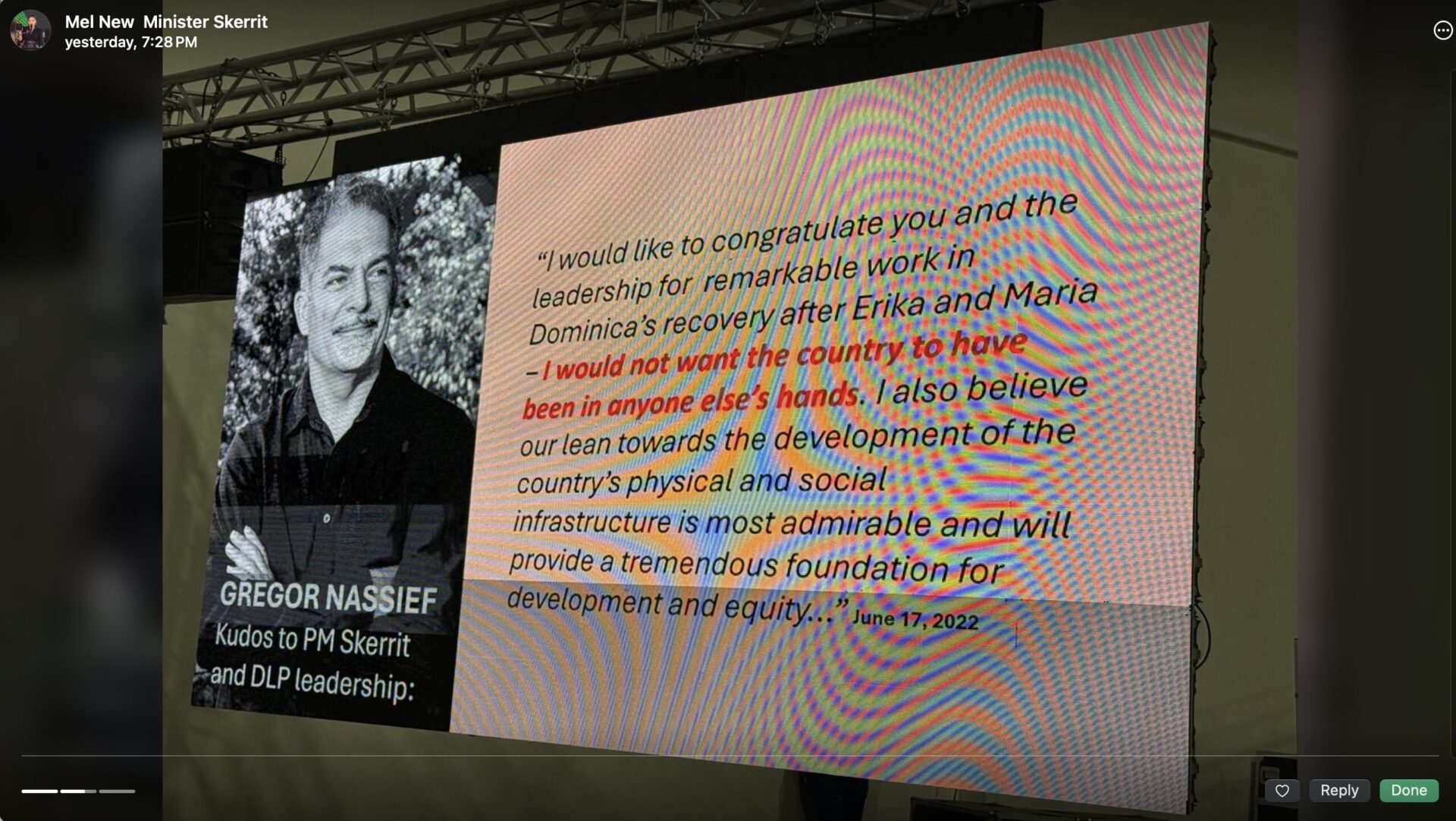
    A public dispute over political campaign tactics has emerged in Dominica after local figure Gregor Nassief published an open letter formally pushing back against the use of what the event organizers framed as his endorsement at a political meeting for the Dominica Labour Party (DLP) held in Massacre.

    The letter opens with a standard mandatory disclaimer that clarifies all perspectives and claims contained within the open letter are exclusive to Nassief himself, and do not reflect the official stances of Duravision Inc., Dominica News Online, any of DNO’s affiliated subsidiary brands, or their respective teams.

    Nassief notes in the letter that he has become aware that event organizers circulated and presented a truncated excerpt of his previous comments, taken out of their original context, to create the false impression that he had publicly endorsed the DLP or specific candidates connected to the party at the Massacre gathering. The letter, paired with accompanying video footage to corroborate his claims, marks a formal public correction of the misrepresentation of his position in the local political arena.

    The incident spotlights the ongoing tensions around campaign messaging and the unauthorized appropriation of private or public comments from non-party-affiliated public figures for political gain ahead of local political activities in Dominica.

  • Football administrators benefit from Concacaf workshop

    Football administrators benefit from Concacaf workshop

    Barbadian football administrators have stepped away from a one-day professional development workshop with new skills, resources and actionable strategies to strengthen their day-to-day operations, after the regional football governing body Concacaf hosted the specialized training session at the Barbados Football Association Technical Centre on April 11.

    The workshop drew a diverse cross-section of football leadership from across the island, bringing together senior leaders from top-flight local clubs alongside national team managers and coaches to collaborate and share insights. In an interview with local outlet Barbados TODAY, Horace Reid, Director of the CONCACAF Caribbean Office, laid out the core mission of the training: to disseminate industry-leading best practices and build capacity among the administrators who drive both national football programs and elite club competition in Barbados.

    Reid explained that the workshop curriculum covered a broad spectrum of critical administrative topics designed to address the most common pain points for regional football leaders. Attendees walked through modules on core operational functions including long-term financial planning, annual budgeting, pre-tournament logistics coordination, match day management and post-tournament evaluation and wrap-up. The agenda also prioritized foundational governance topics that are increasingly central to ethical sports management: institutional ethics, competitive integrity and athlete safeguarding, all of which were framed as non-negotiable elements of sustainable football development.

    Unlike larger, better-resourced national federations in other parts of the world, smaller Caribbean football associations face a unique set of structural challenges that can hinder consistent growth and organizational capacity. Reid acknowledged these gaps, but emphasized that the region has already made significant strides in recent years. “We have seen tremendous improvement across the football family within the region. The member associations are becoming more organised, they are more football focused, which is good news,” he said. Even with this progress, Reid noted that ongoing investment in administrative capacity remains critical. “However, we have to continue to provide them with the tools, as they go about their day to day administration of the sport,” he added.

    Reid pointed out that strong administrative fundamentals have long been an underprioritized area across Caribbean football for decades. “One of the things that for too long, for many decades we have not paid sufficient attention to is how important it is to be well organised. The plan to have strategic objectives and to just follow through on some basic fundamentals in terms of administration, to make sure that we are ticking all the right boxes as we continue to develop the players and grow the sport within the region,” he outlined.

    While the region has already recorded measurable growth at both the youth and senior competitive levels, Reid said Concacaf remains committed to supporting further expansion of the sport across the Caribbean. The workshop, he added, is part of a broader ongoing push to ensure every member association has access to the knowledge and tools needed to succeed. “The objective really is to make sure that all of the information that we can bring to bear on the member associations within the region, that we share those best practices with them,” Reid said.

  • LETTER: It’s Time We Kiss “Town” Goodbye

    LETTER: It’s Time We Kiss “Town” Goodbye

    Decades after serving as the functional capital of Antigua, St. John’s has fallen into a state of such severe disrepair that local observers argue it can no longer meet the basic standards expected of a national capital. What was once a thriving urban center has decayed into a maze of accessibility barriers, outdated infrastructure, and unaddressed maintenance failures that harm both long-term residents and visiting tourists alike.

    For pedestrians, navigating downtown St. John’s has become a grueling, obstacle-filled experience rather than a routine task. Outside the limited, upgraded area of Heritage Quay, continuous, even sidewalks are almost impossible to find. Crumbling pavement, inconsistent step heights, and unmarked hazards force pedestrians to constantly weave and adjust their path to avoid injury. This is far more than an inconvenience: it creates a fundamentally exclusionary environment for people with mobility impairments.

    The scope of this accessibility failure was laid bare in a recent firsthand observation: a visitor attempting to navigate the streets with a loved one in a wheelchair faced constant, insurmountable barriers. Onlookers described the scene as painful to watch, noting that any visitor experiencing these barriers would likely abandon their exploration of the city and return immediately to their cruise ship, cutting off potential revenue for local businesses. The incident makes clear that meaningful accessibility for disabled people is simply non-existent in St. John’s today.

    Mobility issues are not the only pressing problem. Persistent, unpleasant odors permeate multiple neighborhoods throughout the city, traced back to open drainage systems and aging, overcapacity trash receptacles. What were once functional, practical infrastructure solutions for a smaller city have long been outdated by growing population and tourism volumes, leaving them to become public nuisance that requires urgent replacement.

    The broader built environment of St. John’s tells the same story of neglect. Commercial and residential buildings show clear signs of structural deterioration, while many retail storefronts make little to no effort to create welcoming, appealing spaces for customers. Basic merchandising planning that draws in foot traffic is often an afterthought, if it is considered at all, further eroding the city’s ability to support local commerce.

    Parking management adds another layer of frustration for anyone trying to visit or do business in the capital. Informal parking space claiming, enforced by traffic cones from business owners, local organizations, and individual operators including car wash services, has locked out the general public from most convenient spots. This unregulated system sends a clear message: visitor convenience is not a priority for stakeholders in the city. For potential customers considering a trip into the capital to shop or support local businesses, this barrier alone is often enough to discourage them from coming at all.

    Even when municipal repairs are initiated, they often leave the city in worse shape for months. When the Antigua Public Utilities Authority completes road excavation work for utility upgrades, the excavated sections are regularly left unrepaired for extended periods of time, leaving roads partially or fully impassable. Community members argue these delays are entirely unreasonable and avoidable with proper project planning.

    At its core, the crisis facing St. John’s boils down to a simple, unavoidable truth: no city can maintain itself without consistent investment, strategic planning, and regular reinvestment in infrastructure. Just as ongoing care is required to maintain any valuable asset, St. John’s has been starved of the consistent attention it needs to function, and the visible decline across the city makes that neglect impossible to ignore.

    This critique is not an attack on St. John’s rich historic identity. Supporters of change emphasize that acknowledging the capital’s current collapse is not about dismissing the city’s past, but about being honest about its future. The current state of St. John’s is not sustainable, and continuing to pretend otherwise does a profound disservice to residents who rely on capital services, business owners who depend on visitor traffic, and tourists who come to the island expecting a functional, welcoming capital.

    For proponents of dramatic change, the conclusion is unavoidable: St. John’s has deteriorated past the point of cost-effective rehabilitation. To give residents, businesses, and visitors the functional, comfortable urban environment they need, core commercial and government activity must be relocated to a new, properly planned urban center.


  • Antigua and Barbuda High Commission Welcomes Participants of The King’s Foundation Building Craft Programme

    Antigua and Barbuda High Commission Welcomes Participants of The King’s Foundation Building Craft Programme

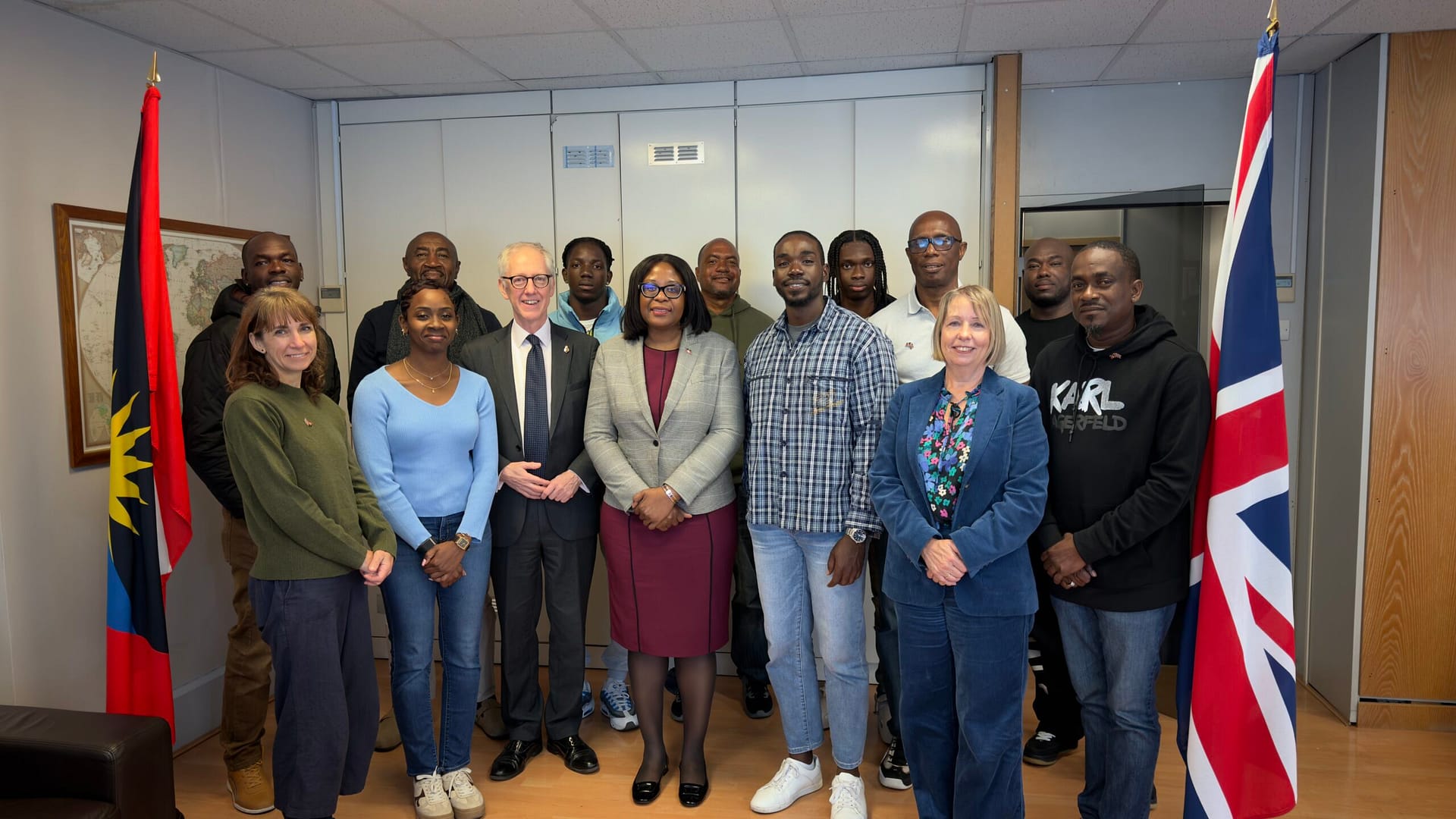
    LONDON, April 13, 2026 – A milestone moment for skills development and heritage preservation in Antigua and Barbuda unfolded this week, as the nation’s High Commission in London opened its doors to welcome the first group of local participants taking part in the transformative King’s Foundation Building Craft Programme.

    The innovative training initiative is the product of years of collaborative planning between three key partners: The King’s Foundation, the Antigua and Barbuda High Commission in London, and the Antigua and Barbuda Centre for Advanced Studies. Over the course of the programme, participating craft professionals will gain immersive, specialized instruction in both time-honored traditional construction methods and modern sustainable building practices, with a particular focus on heritage site restoration and conservation.

    For the small Caribbean nation, the programme carries far-reaching long-term benefits beyond individual professional growth. It is designed to bolster domestic technical expertise, create a framework for protecting Antigua and Barbuda’s unique cultural and architectural heritage, and equip a rising generation of skilled local workers to lead future restoration projects and national development initiatives across the islands.

    Addressing gathered participants and partners at the reception, Antigua and Barbuda High Commissioner Karen-Mae Hill encouraged the cohort to seize the once-in-a-lifetime learning opportunity, joking lightly about the group’s likely adjustment to Britain’s cooler spring temperatures. Hill reflected on her own early involvement in building the programme, recalling a trip to Dumfries House in Scotland to meet with The King’s Foundation team during the conceptual development phase.

    “This is a truly unique opportunity for learning, cross-cultural exchange, and professional advancement,” Hill told the group. “I urge every one of you to embrace this experience with discipline, open minds, and creative thinking. As you build new skills, consider not only how this will advance your own careers – but how you can bring this expertise home to lift up our entire nation.”

    Jeremy Cross, Director of International Engagement for The King’s Foundation, also spoke at the event, expressing his organization’s enthusiasm for the new partnership. “We are delighted to welcome these exceptionally talented individuals to our training sites, as they hone their craft in heritage building and climate-resilient construction,” Cross said. “We are looking forward to working alongside each participant throughout the programme, and to the mutual exchange of knowledge and approaches that this collaboration will bring.”

    In closing, the High Commission recognized the behind-the-scenes work that made the welcome event and participant arrangements possible, singling out Brent Scotland, Second Secretary, and Caleb Gardiner, Third Secretary, for their instrumental coordination efforts that brought the initiative to its official launch.

  • Northern Zone football finalists booked

    Northern Zone football finalists booked

    The road to the Saint Lucia Football Association Northern Zone Under-20 Men’s District Tournament title is down to two finalists, as Gros Islet and La Clery secured their spots in the championship match with vastly different semifinal results played Sunday at Marchand Grounds. The matchups capped a busy weekend of regional preliminary and playoff action across the island-nation’s four zonal competitions, with results coming in from Eastern, Western and Southern Zone fixtures as well.

    Gros Islet entered the semifinal off a dominant 7-0 preliminary round blowout of Babonneau at Grande Riviere Playing Field, and the team picked up right where it left off against the same opponent. By halftime, Gros Islet had already built an insurmountable 6-0 lead, and never let up through the final whistle to finish with a lopsided 10-0 victory.

    The first-half scoring binge was led by Rickelme Lionel, who notched a quick hat-trick in the final five minutes of the opening period, finding the back of the net in the 35th, 38th, and 40th minutes. Thierry Morille opened the scoring for Gros Islet with strikes in the 21st and 31st minutes, before Niyel Fontenelle closed out the first-half scoring with a goal in the 43rd minute.

    Even after Babonneau made a goalkeeper change at halftime to stem the tide, Gros Islet’s attack continued to click. Just minutes after the restart, Morille completed his hat-trick, and added a fourth personal goal in the 52nd minute. Devonte Howell got in on the scoring with a 69th-minute strike, and Mehki Stanislaus rounded out the double-digit result with an 80th-minute penalty.

    In contrast to Gros Islet’s easy pathway to the final, previously unbeaten La Clery fought a hard battle to claim its spot, requiring a penalty shootout to overcome a resilient Marchand side. Justice Germaine put La Clery up 1-0 in the 38th minute, and the side held that lead deep into the second half. But with just seven minutes left on the clock, Jalen Pamphile found an equaliser for Marchand, pushing the semifinal to penalties to decide a winner. After a tightly contested shootout, La Clery emerged with a 5-4 win on penalties to advance.

    Across the island, the Eastern Zone completed its preliminary round action Saturday at Micoud Playing Field, with two teams picking up wins to advance. Dennery secured a 3-1 victory over Desruisseaux, behind second-half and late-game goals that broke a first-half tie. Corin Hunte put Dennery up in the 24th minute, only for Al Thomas to equalize for Desruisseaux just four minutes later. Bourne Innocent restored Dennery’s lead in the 72nd minute, and Tafari Martin sealed the three points with a stoppage-time goal in the 90th minute. Hosts Micoud earned a narrow 1-0 win over Mabouya Valley, with Mareus Aubert scoring the match’s only goal late in the 85th minute.

    At Anse La Raye Playing Field in the Western Zone, Canaries pulled out a hard-fought 3-2 win over host side Anse La Raye. Kyron Sydney got Canaries off to a fast start, scoring twice in the opening 35 minutes to put his side up 2-0. Anse La Raye fought back before halftime, with Joshua Fevrier cutting the deficit to one in the 44th minute, and Andriano Auguste equalizing just after halftime in the 63rd minute. It was Derry John who had the final say, netting the game-winner for Canaries in the 74th minute to secure the victory.

    The Southern Zone kicked off its tournament Friday at the Phillip Marcellin Grounds in Vieux Fort, with two opening matches delivering contrasting results. Vieux Fort North and Choiseul played out an eventful 2-2 draw, with the lead changing twice over the course of the game. Asheim Joseph put Vieux Fort North up just before halftime in the 43rd minute, and Devin Philip equalized for Choiseul five minutes after the break. Lenus Johnny restored Vieux Fort North’s lead five minutes later, only for Nahim Attirnne to lock in the draw with a 67th-minute equalizer, splitting the points between the two sides. In the other Southern Zone opening match, Soufriere picked up a 2-0 shutout win over Vieux Fort South, with second-half goals from Cassian Jn Baptiste (70th minute) and Sherquan Joseph (80th minute) securing the three points.

  • ‘We Are Exercising That Right for You’: MOHW Defends Contraceptive Enforcement Policy

    ‘We Are Exercising That Right for You’: MOHW Defends Contraceptive Enforcement Policy

    A public controversy over contraceptive access has erupted in Belize after the Ministry of Health and Wellness (MOHW) moved to enforce a long-dormant prescription requirement for birth control products, spurring widespread confusion and pushback from communities across the country, particularly in underserved rural regions.

    During a public press briefing held on the morning of April 13, 2026, Dr. Melissa Diaz Musa, Director of Public Health and Wellness, pushed back against growing criticism, framing the policy as a measure that protects rather than infringes on women’s reproductive rights. She emphasized that the government has not implemented any new laws or regulatory changes related to contraceptive access – the prescription requirement is already outlined in existing national drug policy, and the recent enforcement action has only reignited long-unapplied rules.

    Dr. Musa addressed widespread misinformation that spread across social media over the past week, where many critics framed the new enforcement as a direct attack on women’s bodily autonomy. “I am uncertain where the many views on social media over the last week regarding women’s rights have surfaced from, and why there is a perception that asking for a prescription equates to the violation of a woman’s right,” she stated.

    In her defense of the policy, Dr. Musa argued that mandatory pre-purchase consultations with doctors or nurses actually strengthen reproductive autonomy by ensuring women make fully informed decisions about their birth control. “The request for a prescription for contraceptives after having a proper doctor’s or nurse’s consultation ensures that your rights have been fully exercised as you have determined the safest, the most effective, and the best birth control method for you,” she explained. “You are now an informed and consenting woman. We are exercising that right for you.”

    She did, however, acknowledge critical missteps in the rollout of the enforcement: public outreach and education fell far short of what was needed to help communities understand the change, and distinguish between over-the-counter and prescription-only medications. Dr. Musa admitted that MOHW failed to pair its discussions with retail pharmacy operators and the Belize Pharmacy Association with a large-scale public health sensitization campaign that could have prevented much of the current confusion.

    She also noted that the updated national drug list actually expands access to a range of other medications, and that contraceptives remain widely accessible through multiple existing channels, including free public healthcare services, repeat prescription programs, and rural health clinics.

    Despite the ministry’s reassurances, critics of the enforcement warn that the on-the-ground reality for many women will create new, unnecessary barriers to reproductive care. For people living in remote rural regions of Belize, obtaining a prescription requires additional time, costly travel to urban or central clinics, and often out-of-pocket fees for medical appointments that did not exist when contraceptives were available over the counter, leading to delayed or denied access for low-income and geographically isolated women.