作者: admin

  • Detective allegedly shot miner during cutlass attack

    Detective allegedly shot miner during cutlass attack

    In an incident that has sparked official scrutiny in Guyana, a serving detective sergeant with the Guyana Police Force has been taken into close custody following a shooting that left a local gold miner injured on Sunday afternoon, law enforcement officials confirmed in a public statement released Monday. The update, first published by Demerara Waves Online News on April 13, 2026, details a sudden confrontation that unfolded just after 5 p.m. local time at Chanta Creek, located along the Soesdyke-Linden Highway.

    According to official police accounts, the off-duty detective was visiting the popular creek-side location with members of his family when a verbal misunderstanding escalated into physical conflict. Multiple men involved in the dispute attacked the officer, with at least one assailant wielding a cutlass — a large, sharp machete-style blade common in the region. Facing the ongoing assault, the detective drew his service-issued 9mm pistol and fired a single round toward the group.

    The bullet struck a 37-year-old gold miner who resides in the nearby Yarrowkabra Creek community, hitting him in the right leg. Emergency response efforts began immediately after the confrontation: the injured miner was located by his relatives, who coordinated with arriving police officers to transport him quickly to Mackenzie Hospital for urgent medical care. As of the latest official update, the miner remains admitted for treatment and is listed in stable condition, with no immediate threat to his life.

    In line with standard police protocol for on and off-duty officer-involved shootings, the detective has been placed under close arrest pending a full, transparent investigation into the circumstances of the confrontation. Authorities have not yet released additional details about whether any other charges will be filed, or when the investigation is expected to be concluded. The incident comes as Guyana continues to grapple with public scrutiny of police use of force, alongside ongoing industry activity in the country’s artisanal gold mining sector.

  • Saint Lucia into top 8 at CAC Seniors

    Saint Lucia into top 8 at CAC Seniors

    The Central American and Caribbean (CAC) Senior Table Tennis Championships is currently underway at the newly renovated Table Tennis Pavilion in Santo Domingo’s Parque del Este, delivering high-stakes competitive action and surprise breakthroughs from underdog teams across the region.

    Heading into the knockout stage, only one English-speaking nation managed to secure a spot in the elite final eight: Saint Lucia. The Caribbean island’s men’s team navigated a challenging Group 2 draw to earn their place in the quarterfinals, marking an impressive milestone for the country’s table tennis program.

    Saint Lucia’s road to the knockout rounds started with a tight contest against regional powerhouse Cuba. While the team fell to Cuba overall, it produced a historic individual victory: star player DeAndre Calderon outlasted Cuban Adrian Perez in a five-set thriller, winning 12-10, 7-11, 8-11, 11-5, 11-2. This win marks the first time any senior men’s player from Saint Lucia has defeated a Cuban opponent in international competition. Calderon notched another win in the group stage against Jorge Campos, taking the match 3-1 after dropping the opening set, though Cuba ultimately claimed the group win with victories in the remaining two rubbers.

    Saint Lucia bounced back from the Cuba loss to secure a critical 3-1 team victory over Trinidad & Tobago, cementing their second-place group finish and knockout spot. The tie began with Calderon sweeping Josiah Joseph in straight sets, before Trinidad & Tobago’s Malik Gopaul leveled the score with a 3-0 win over Manie Eleuthere. Leshon Francis restored Saint Lucia’s lead with a hard-fought 3-1 win over Anson Lowkie, and Calderon closed out the match with a second straight straight-set win over Gopaul to punch Saint Lucia’s ticket to the quarterfinals.

    In the quarterfinal matchup, Saint Lucia drew eventual tournament champions Puerto Rico, ultimately falling 3-1 to the dominant Puerto Rican squad. Calderon once again delivered a highlight win for Saint Lucia, rallying from two sets down to defeat Puerto Rico’s Enrique Rios 3-2, with set scores of 2-11, 6-11, 11-9, 11-9, 11-5. However, Puerto Rico’s depth proved too much for the Saint Lucian side: Eleuthere fell 3-0 to Angel Naranjo, Francis lost 3-0 to Jadbiel Torres, and Naranjo sealed the Puerto Rican win with a victory over Calderon in the final rubber.

    Following their quarterfinal exit, Saint Lucia competed in placement rounds, dropping a 3-0 result to Guatemala and a narrow 3-2 decision to El Salvador, with Calderon picking up two more individual wins in these matches. For Saint Lucia’s women’s team, the tournament served as a valuable developmental opportunity, though the side failed to take a set against group opponents Cuba and Guatemala, finishing at the bottom of their qualifying group.

    Puerto Rico left the team competition as the undisputed top performer, claiming both the men’s and women’s team titles with consistent, strong play across all rounds.

    Following the conclusion of the team competition, tournament play shifted to the group stages of singles and doubles events on Monday. The 2026 CAC Senior Table Tennis Championships is scheduled to conclude on Wednesday in Santo Domingo. This event is the second of three back-to-back table tennis competitions hosted in the Dominican capital, coming after the 2026 CAC Games qualification tournament and preceding the Caribbean Youth Championships, which will run from March 17 to 23.

  • Nalatenschap van Claudetta Toney: klein van gestalte, groot in daden

    Nalatenschap van Claudetta Toney: klein van gestalte, groot in daden

    Suriname’s beloved public advocate Claudetta Nita Toney, who passed away at 88, was cremated on Sunday, with hundreds of mourners filling the service to celebrate her decades of tireless work advancing cultural preservation, community development, and institutional reform across the South American nation.

    Described by loved ones and colleagues as small in stature but giant in impact, Toney leaves behind a legacy defined by fearlessness, relentless drive, and a rare balance of sharp business acumen and deep social commitment. Attendees gave a standing ovation to honor the late leader, remembered as a dignified figure who commanded respect through the consistent respect she extended to every person she met.

    Speakers at the funeral highlighted Toney’s far-reaching, often underreported influence across multiple sectors of Surinamese society. When proposed government cost hikes threatened to put mining rights holders out of business, Toney stepped forward immediately to advocate on the association’s behalf, rallying support and pushing back against harmful policy changes. She also dedicated years of work to mending strained relationships between natural resource concession holders and local Indigenous and community populations, working to build mutually beneficial partnerships that protected both economic opportunity and local livelihoods.

    A core pillar of Toney’s life’s work centered on lifting up marginalized community members. She firmly rejected the idea that success was reserved for a small privileged elite, arguing instead that every person deserved access to opportunity – and often only needed a small helping hand to reach their potential. To turn that belief into action, she created skills training programs for local residents, and helped countless people secure critical official documentation that opened doors to education, employment, and formal participation in public life.

    Another central focus of Toney’s advocacy was preserving, elevating, and formalizing Afro-Surinamese culture and traditional knowledge. She did not only push for cultural conservation – she argued for rigorous academic study and intentional development of these traditions to ensure they would thrive for future generations. Most notably, Toney organized traditional healers across Suriname into a unified collective, and her decades-long campaign for formal legal recognition and protection of traditional medicine resulted in the drafting of three landmark pieces of draft legislation.

    Toney often emphasized that Suriname’s own indigenous natural resources contained all the raw materials needed to build a robust, innovative traditional medicine sector. She frequently reminded her community: “Don’t discard your traditional knowledge – the Western world uses those same natural ingredients to make the pills you buy at the pharmacy.”

    To further embed traditional medicine in scientific practice, Toney championed the upcoming launch of the Claudetta Toney University of Suriname for Chemistry, Engineering & Research, set to open its doors in September. The institution will combine rigorous scientific research with the study of traditional healing practices to give evidence-based backing to traditional medicine, while also dedicating specialized research capacity to Suriname’s mining, oil, and gas sectors.

    Kortencia Sumter-Griffith, Toney’s close associate and long-time right hand, summarized her lifelong impact in a tribute at the service. “She was an incredibly important catalyst for both the economic advancement and cultural consciousness of people of African descent in Suriname,” Sumter-Griffith said. “Socially committed, culturally aware, business-minded, extraordinarily wise and loving, her presence radiated both warmth and authority. Her legacy is one of strength, compassion, perseverance, and courage.”

    Toney would have celebrated her 89th birthday in May.

  • Woman charged with murder of 7-year old daughter

    Woman charged with murder of 7-year old daughter

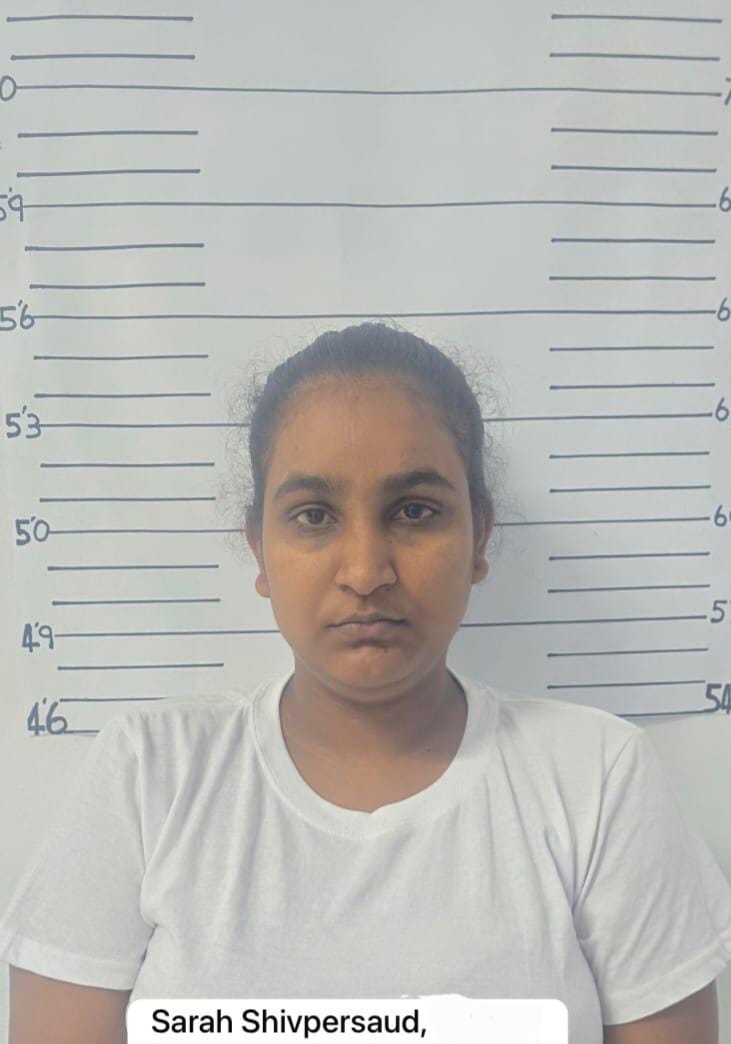
    On Monday, April 13, 2026, a 26-year-old domestic worker from Guyana was formally arraigned on a murder charge in connection with the alleged death of her 7-year-old daughter, law enforcement authorities confirmed. Sarah Elizabeth Shivpersaud, a resident of Fyrish Village on the Corentyne in Berbice, made her first court appearance at the New Amsterdam Magistrate’s Court, where the indictment against her was read by presiding Magistrate Michelle Mathias.

    Under standard judicial procedure for indictable offences, Shivpersaud was not required to enter a formal plea during the hearing. Following the presentation of the charge, the magistrate ordered that the defendant be remanded into state custody, and adjourned all further proceedings in the case to May 12, 2026, when the matter will resume for additional legal processing.

    The charge stems from an incident that unfolded at Shivpersaud’s home, where responding police officers first discovered the unresponsive body of 7-year-old Isabella Dabidyal, a student at the local Cropper Primary School. Alongside the deceased child, officers found the defendant’s 21-month-old son in a semi-conscious state, and observed self-inflicted knife wounds on the back of Shivpersaud’s heels.

    All three individuals were immediately transported to a nearby medical facility for urgent care. The toddler received treatment for his condition and was subsequently released to care, while Shivpersaud was admitted for observation and treatment of her injuries before being discharged into police custody to face legal action.

    According to official statements from investigators, the defendant told authorities she had been driven to desperation after being abandoned by her husband, leaving her and her two children without financial resources or access to food. The tragic case has drawn attention to widespread challenges of economic insecurity and unaddressed mental health support for vulnerable households in rural Guyanese communities, as the judicial process moves forward toward a full resolution of the murder charge.

  • Health minister on first Dr Carissa Etienne Primary Health Care Week (with audio)

    Health minister on first Dr Carissa Etienne Primary Health Care Week (with audio)

    The Caribbean island of Dominica has launched its first ever Dr. Carissa Etienne Primary Health Care Week, a new commemorative initiative designed to honor the legacy of one of the region’s most influential public health leaders and expand access to community-centered care across the country.

    In a keynote address to mark the launch of the inaugural event, Honourable Cassanni Laville, the island’s Minister for Health, Wellness and Social Services, highlighted the urgent and ongoing need to strengthen primary health care infrastructure as the foundation of national public health systems. Laville’s address, which was recorded for broadcast to communities across the nation, outlined the core goals of the commemorative week, which centers on bringing critical health services directly to underserved populations, raising public awareness of preventive care, and training local health workers to deliver more responsive, patient-first treatment.

    The week is named for Dr. Carissa F. Etienne, a trailblazing Dominican public health expert who served for over a decade as Director of the Pan American Health Organization (PAHO), becoming one of the most respected voices on regional public health. Throughout her career, Etienne repeatedly emphasized that robust primary health care is the most effective path to achieving universal health coverage and reducing health inequities across the Americas. Her work guiding the region through multiple public health emergencies, including the COVID-19 pandemic, cemented her reputation as a leader who prioritized accessible, community-rooted care.

    Throughout the five-day initiative, a full slate of planned activities will roll out across urban and rural communities across Dominica. These include free community health screenings for chronic conditions such as hypertension and diabetes, educational workshops on mental health wellness and maternal care, outreach campaigns to encourage routine vaccination, and consultation sessions to gather public input on how to improve local primary health services. Organizers note that the initiative is not just a one-time commemoration, but a catalyst for long-term improvements to primary care delivery across the island, aligned with the global movement toward universal health coverage that Dr. Etienne championed throughout her career.

    In her lifetime of work, Dr. Etienne consistently pushed for Caribbean nations to invest in primary care as a cost-effective, equitable way to improve population health outcomes. By naming this annual week in her honor, Dominica has formalized a commitment to carrying forward that vision, while creating a recurring platform to address gaps in local care and celebrate the work of frontline primary health workers who serve communities every day.

  • How Online Is the Antigua and Barbuda, the Caribbean?

    How Online Is the Antigua and Barbuda, the Caribbean?

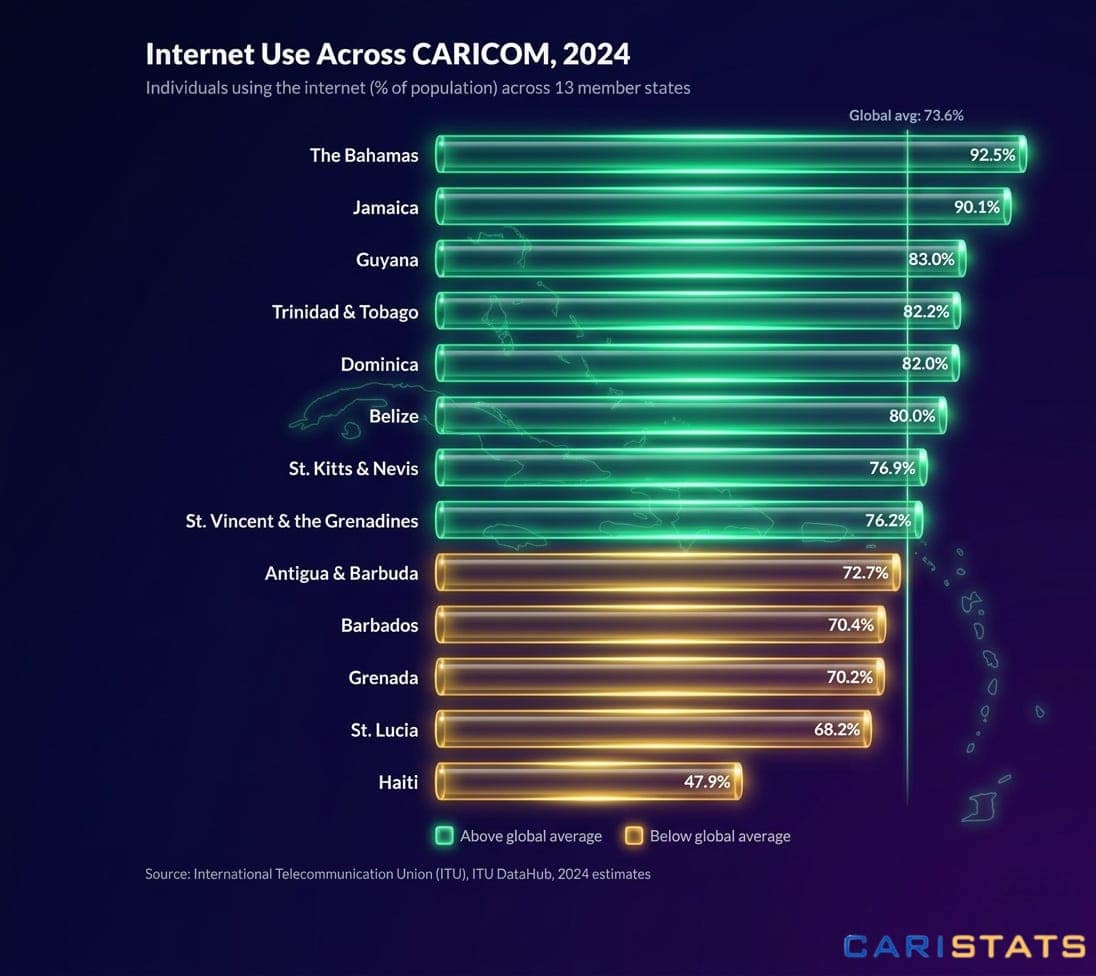
    New 2024 estimates published by the International Telecommunication Union (ITU) have laid bare a dramatic gap in internet adoption rates across member states of the Caribbean Community (CARICOM), with penetration ranging from more than 90% to less than half of the national population.

    According to the ITU’s standardized indicator, which counts any individual that accessed the internet from any location, on any electronic device, at least one time over the previous three months, the Bahamas leads the regional ranking with a 92.5% internet usage rate. At the opposite end of the spectrum sits Haiti, where just 47.9% of the population meet the threshold for measured internet use. For global context, the worldwide average internet usage rate currently stands at 73.6%, meaning the CARICOM region includes both nations that far outpace global standards and those that fall well short.

    While a majority of CARICOM member states fall into a mid-range cluster, with usage rates between 68% and 83%, the data holds several unexpected outcomes that challenge assumptions based on national income classification. Two upper-middle-income economies, Guyana and Belize, posted stronger internet usage results than some wealthier high-income counterparts in the region: Guyana notched an 83.0% penetration rate, and Belize hit 80.0%, compared to 70.4% in Barbados and 72.7% in Antigua and Barbuda—both of which are categorized as high-income economies by the World Bank.

    Regional analysts point to a mix of interconnected factors that drive these divergent outcomes, beyond just national gross domestic product per capita. The affordability of mobile and fixed data, the geographic reach of digital communications infrastructure, the age breakdown of national populations, and the level of competition in domestic telecom markets all play key roles in determining how many people actually go online on a semi-regular basis across the Caribbean.

    This analysis, compiled by regional data initiative CARISTATS, draws on official 2024 figures from the ITU DataHub’s “Individuals using the Internet” dataset. CARISTATS currently offers this public data analysis for free, and encourages readers who value their work to commit to a future subscription; no charges will be applied until the organization formally activates its payment system.

  • There’s a fuel shortage but supplies are coming tonight- Pres Ali

    There’s a fuel shortage but supplies are coming tonight- Pres Ali

    Guyanese President Irfaan Ali has publicly confirmed a temporary national fuel shortage on Monday, 13 April 2026, attributing the disruption to an unexpected logistics incident affecting major fuel importer SOL. The issue emerged after one of SOL’s cargo vessel anchorages sustained damage, forcing the fuel-laden ship to turn back from port, cutting off planned incoming supply to the South American nation.

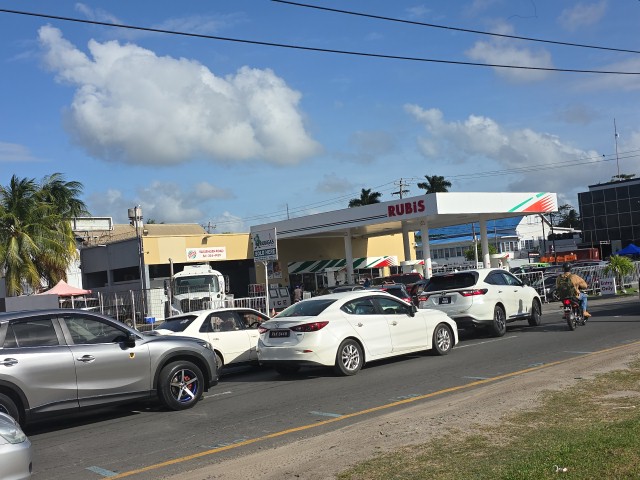
    The announcement comes as photos circulated online showing lengthy queues of motorists waiting to refuel at RUBIS gas station on Vlissengen Road, highlighting the immediate public impact of the supply crunch. Following an emergency meeting with all major fuel suppliers operating in Guyana, President Ali shared updates on the government’s response via his official Facebook page.

    “I met with fuel importers today to address the current fuel shortages. I’ve been assured that shipments are expected as early as tonight, with additional supplies already being sourced to meet national demand,” the President wrote.

    In subsequent comments to Demerara Waves Online News, President Ali clarified that fuel supplies for Guyana Power and Light (GPL), the country’s primary public electricity provider, would remain fully unaffected by the supply disruption, easing fears of widespread power outages across the nation.

    According to President Ali’s briefing, state-owned fuel operator Guyana Oil Company (GUYOIL) currently holds adequate stock to meet demand, while competitor RUBIS has confirmed it is positioned to supply as much fuel as the country requires, with new shipments already en route. He added that RUBIS is already moving to boost its on-ground distribution to ease short-term tightness.

    To proactively prevent further supply issues, President Ali announced he has issued an order directing GUYOIL to utilize 100% of its available storage capacity to build up reserve stocks. He emphasized that the national administration is maintaining close, continuous monitoring of the fuel supply situation to ensure market stability and consistent flow of product to consumers, noting that officials will follow through to verify that all supplier commitments for incoming shipments are met.

    “RUBIS and GUYOIL said that they don’t foresee a challenge and they have orders in line and some of it will arrive as early as tonight (Monday) night. Well, we are monitoring it to ensure that the assurances given are followed through with,” the President stated.

  • COMMENTARY: Geothermal and EVs: Dominica’s fastest route to energy sovereignty

    COMMENTARY: Geothermal and EVs: Dominica’s fastest route to energy sovereignty

    This is the second installment of a three-part series exploring the transformative intersection of geothermal energy development and transport electrification in Dominica, with all opinions belonging solely to the author. At its core, the argument frames geothermal energy as the foundational enabling infrastructure for widespread electric vehicle (EV) adoption, addressing one of the most common criticisms of EV transition: that powering EVs with diesel-generated electricity does little to cut reliance on imported fossil fuels. When transport electrification is paired with domestic, stable renewable geothermal power, it evolves from a simple transport policy to a full-scale economic transformation for small island nations like Dominica.

    Unlike decades-old hypothetical plans for geothermal development in Dominica, the energy source is now moving from promise to tangible delivery. The country has already established a public commissioning timeline for its first geothermal plant, with the 10 megawatt facility on track to be fully integrated into the national grid by June 2026. This milestone is not just a win for clean energy; it clears the path for transport electrification that does not increase the country’s exposure to volatile global fossil fuel markets.

    Critically, this strategy is far more than an energy policy—it is a core foreign exchange (FX) strategy critical to Dominica’s economic stability. As a small open economy, Dominica relies heavily on scarce foreign exchange reserves, and its 2023 mineral fuel import bill reached a substantial $56.3 million U.S. dollars. This foreign currency outflow is inherently unstable: it spikes when global oil prices rise, when freight and insurance costs increase, and when geopolitical conflict disrupts global supply chains. As a small player in global energy markets, Dominica cannot outcompete larger economies for limited oil supplies. The only meaningful, long-term solution is to cut the volume of imported fuel the country must purchase.

    A key lesson drawn from the late-2025 surge in imports of used internal combustion engine (ICE) vehicles is that clear policy deadlines and aligned incentives drive rapid market change. Rather than lamenting this unplanned shift, the author argues that policymakers should structure the next phase of transition to guide market movement toward EV adoption, with four non-negotiable priorities: simplifying and standardizing EV import processes, expanding accessible EV financing, building out reliable public charging infrastructure, and accelerating geothermal energy expansion.

    Full national fleet electrification will not happen overnight. With roughly 40,000 licensed vehicles already on Dominican roads and standard vehicle lifespans spanning more than a decade, the transition requires a phased, results-focused approach that delivers rapid fuel import cuts without forcing premature turnover. The proposed three-phase roadmap prioritizes fast impact over immediate full conversion:
    – Phase 1 (2026–2029): Electrify high-mileage commercial and public fleets first, including taxis, buses, government vehicles, rental fleets and delivery vehicles. These vehicles consume massive amounts of fuel daily, so electrifying them delivers the fastest possible national import savings while providing visible, public proof that EV technology works reliably in Dominica.
    – Phase 2 (2028–2032): Shift the default for new passenger vehicle imports to EVs, with narrow exemptions only for specialized heavy equipment where electrification is not yet practical. This ends the long-standing assumption that imported ICE passenger vehicles will remain the norm indefinitely.
    – Phase 3 (2032 onward): Let market economics accelerate private vehicle turnover, rather than relying on government mandates. As geothermal expansion brings down electricity costs and EV charging becomes routine, the dramatic operating cost advantage of EVs will drive widespread voluntary adoption.

    The author argues that the Dominican government has a critical role to play in making EV incentives tangible and accessible for ordinary citizens, removing unnecessary barriers that are slowing adoption. Drawing from personal experience, the author notes that switching from an ICE to an EV revealed a surprising gap in the market: many local insurance providers refused to cover EVs, with only one out of five contacted providers willing to issue a policy. To fix this, the government should quickly introduce or amend legislation to require all licensed motor vehicle insurers to end discrimination against EVs immediately, noting that policymakers should prioritize insuring the future, not protecting the fossil fuel past.

    Another common barrier cited by prospective EV owners is the lack of local mechanics trained in EV maintenance and repair, a legitimate concern with a straightforward solution. According to recent remarks from China’s Ambassador to Dominica, China is now the world’s largest EV producer. Leveraging Dominica’s existing education and training partnerships with China, the author proposes that a diplomatic request can quickly arrange high-quality, short-term training for local mechanics and automotive instructors. This training can address the perceived skills gap in roughly six months, without requiring four-year university degrees for entry-level technicians.

    While the government has already outlined duty and VAT exemptions for EVs, public clarity and speed of implementation remain major gaps. Every month of policy confusion locks in another round of ICE vehicle imports that will operate on Dominican roads for decades. The author calls for three simple, immediate publishing changes to resolve this: a one-page public guide to all available EV incentives, a standard transparent checklist for EV import approvals, and a clear, accessible financing pathway for fleet operators, particularly those serving the general public.

    For ordinary Dominican drivers, the cost benefits of EV adoption are tangible and easy to measure, even before geothermal power fully reduces electricity generation costs. A head-to-head comparison between a 2012 Toyota RAV4 (one of the most popular compact ICE SUVs on Dominican roads) and a comparable modern EV, the BYD Atto 3, demonstrates the scale of savings. Calculations based on March 2026 petrol prices of EC$4.14 per liter show that the RAV4 costs between EC$65.82 and EC$67.39 per 100 miles to operate. By contrast, the BYD Atto 3 costs roughly EC$30 per 100 miles, even accounting for 10% charging losses and using the 2023 conservative residential electricity tariff of US$0.39 per kilowatt-hour. This works out to annual savings of EC$2,100 to EC$2,200 for a driver covering 6,000 miles per year, not including additional savings from lower EV maintenance requirements. Once geothermal expansion eliminates the fossil fuel component of electricity prices, these savings will grow even larger.

    In the upcoming third and final installment of this series, the author will connect this national strategy to unfolding global energy shocks, including war risks and critical shipping chokepoints, explaining why expanded geothermal development is not just a climate policy—it is a form of critical national insurance for small island economies like Dominica.

  • Ministry Pushes Back: ‘BFLA Is a Clinic, Not an Excluded Stakeholder’

    Ministry Pushes Back: ‘BFLA Is a Clinic, Not an Excluded Stakeholder’

    A public debate over the enforcement of Belize’s new national prescription regulations has intensified in recent days, centered on a growing rift between the Ministry of Health and Wellness and key reproductive health stakeholders over transparency and inclusive decision-making. At the heart of the disagreement is the status of the Belize Family Life Association (BFLA), a leading reproductive health organization that has raised sharp questions about whether it was sidelined during policy drafting.

    Dr. Melissa Diaz Musa, Director of Public Health and Wellness, pushed back against claims of exclusion in an official statement, clarifying that the Ministry recognizes BFLA as a registered clinical entity integrated into the country’s broader public health ecosystem, not an outsider to regulatory discussions. “BFLA operates as a clinical care provider within our existing national health framework, so it is by no means an excluded stakeholder,” Diaz Musa affirmed.

    Despite the Ministry’s reassurance, the lack of clear documentation around pre-policy consultations remains a major point of contention. Speaking on the local current affairs program *Open Your Eyes*, BFLA Executive Director Joan Burke questioned the transparency of the policy development process, pointing out that the list of invited consultation participants has never been made public.

    Burke outlined the range of groups that should have a seat at the table for reproductive health regulation: the Belize Medical and Dental Association, the Nurses Association, the Pharmacy Association, national women’s advocacy organizations, BFLA itself, and representatives from the National Health Insurance scheme. “I really don’t know who was at the table during these consultations… Was this an informed decision that draws on the on-the-ground expertise of groups that work directly with patients every day?” Burke asked.

    The BFLA executive director warned that cutting frontline reproductive health organizations out of decision-making carries serious risks for patient access. Instead of improving care, Burke argued, the current opaque policy process could create unnecessary barriers that limit Belizeans’ ability to get affordable, timely contraceptive care. She emphasized that BFLA respects the Ministry of Health’s mandate as the national regulatory body and is committed to collaborating on public health goals, but cannot back a policy that erects barriers to care.

    “Our shared mission as public health actors is to deliver the highest standard of affordable care and expand access to essential services for all Belizeans,” Burke said. “We have to ask: does this proposed regulation actually advance that mission, or does it work against it?”

    For its part, the Ministry of Health and Wellness acknowledged that it fell short in clearly communicating the details of the new enforcement framework to stakeholders early in the process. Ministry representatives reiterated that the core goal of the new prescription regulation is to strengthen the safety and consistent regulation of contraceptive access within the national public health system, aligning with the government’s commitment to improving public health outcomes.

  • OWOS schort beraad op na constructief overleg met EBS-directie

    OWOS schort beraad op na constructief overleg met EBS-directie

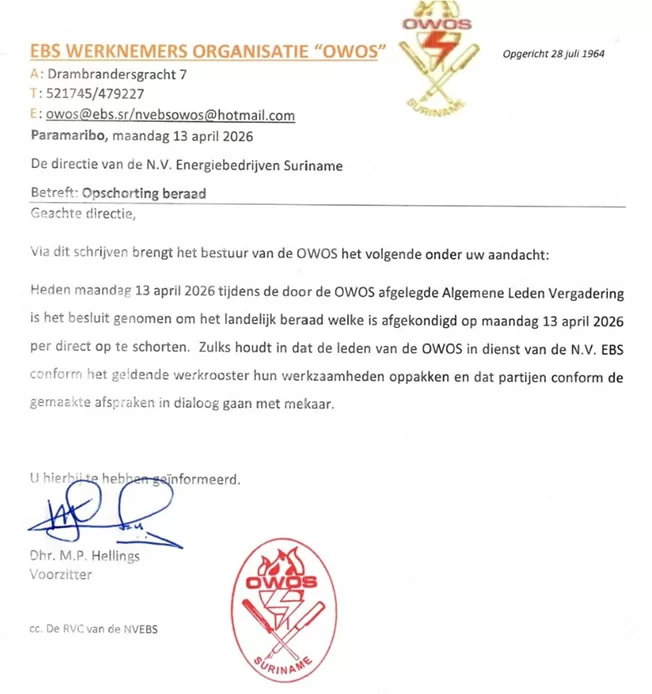
    A major breakthrough has been reached in labor tensions at Suriname’s primary energy provider, De Energie Bedrijven Suriname (EBS), after the company’s recognized employee union, OWOS, announced it would suspend previously announced industrial action. The decision came following a productive round of talks between union leadership and EBS senior management, OWOS chair Marciano Hellings confirmed in an interview with local outlet Starnieuws.

    The negotiation session was led by EBS Chief Operating Officer Robert Pancham, with Technical Director Rishidath Mathoera and Chief Financial Officer Felicia Zerp also in attendance. This meeting marked the first constructive dialogue between the two sides after a lengthy period of deadlock, according to Hellings, who emphasized that the tone of the talks marked a positive shift in labor relations at the firm.

    Both sides signed off on a clear set of binding agreements during the discussion. A key deadline has been set: by the end of this week (Thursday), the parties are expected to finalize negotiations on the 2025 collective labor agreement, and will immediately launch talks on the 2026 agreement once that milestone is completed.

    Another critical commitment reached during the talks requires EBS management to publish an official position on the controversial 40K allowance by April 30, with the principle of pay equity mandated as the core starting point for the stance. The agreement also specifies that all other outstanding personnel issues must either be fully resolved or officially placed on the formal processing track by the same end-of-April deadline.

    Following the negotiation, the full set of outcomes was presented to OWOS’s general membership assembly, which voted to approve a temporary suspension of the planned industrial action. Hellings explained that the membership body chose to grant both the union leadership and EBS management sufficient time and space to implement all agreed-upon measures within the set deadlines.

    A follow-up general assembly has already been scheduled to convene after April 30 to review progress on all commitments. At that meeting, members will vote on whether to end the industrial action threat permanently or resume the planned work stoppage if the agreed terms are not met.