作者: admin

  • DPP orders inquest into Adriana Younge’s death

    DPP orders inquest into Adriana Younge’s death

    More than a year after 11-year-old Adrianna Younge’s body was recovered from a Tuschen, East Bank Essequibo hotel pool, Guyana’s Director of Public Prosecutions has greenlit a formal inquest to fully examine the circumstances of her April 2025 death, law enforcement officials confirmed Tuesday. The inquest will specifically probe the root cause and contextual details surrounding the child’s death, which occurred between April 23 and 24, 2025 at the Double Day Hotel property.

    The Guyana Police Force announced Tuesday that it has received the DPP’s formal direction and is moving forward with all required procedural steps aligned with local law. In a statement accompanying the announcement, the agency emphasized its commitment to maintaining public trust in sensitive death investigations, noting it will uphold strict standards of professionalism, accountability and integrity throughout the inquest process.

    Younge’s body was first discovered in the Double Day Hotel swimming pool on April 24, 2025. By May 26 of that same year, police had announced that a final postmortem examination conducted by three internationally recognized forensic pathologists had officially ruled the child’s death a drowning, with no evidence of foul play.

    To address public and family concerns surrounding the death, the autopsy was a collaborative effort involving multiple independent experts. Two pathologists—Dr. Glenn A. Rudner and Dr. Shubhakar Karra Paul—were commissioned by the Guyana government to conduct the initial examination on May 3, 2025. Younge’s family and their legal representative, Darren Wade, arranged for an additional independent expert: Dr. Gary L. Collins, the Trinidad and Tobago-born Chief Medical Examiner for the U.S. state of Delaware, who also joined the examination.

    The full forensic report released by police outlined a series of consistent findings all aligned with a drowning ruling. The examination confirmed no evidence of sexual assault: an external examination found the child’s hymen intact and no abnormal changes to genital tissue. No traumatic injuries were detected across soft tissue or skeletal structures, and all injuries observed on the skin were confirmed to have occurred after death, caused by prolonged submersion in water.

    Key forensic markers consistent with drowning were documented during the examination: a residual foam cone was found in Younge’s nostrils and oral cavity—dispelling widespread online rumors that cotton wool had been placed in the child’s nose. Characteristic “washerwoman” wrinkling of the skin on both hands and the soles of the feet, a common change caused by prolonged immersion in water and consistent with drowning, was also noted. Forensic experts found approximately 1 milliliter of fluid in the sphenoid sinus, an air-filled cavity at the base of the brain that is a common marker of drowning, and additional fluid was detected in the lungs, another consistent indicator of death by drowning.

    Comprehensive supplementary testing, including toxicology screening and DNA analysis, further supported the ruling of drowning with no foul play. Toxicology results found low levels of ethanol that were consistent with natural postmortem decomposition, not pre-death consumption. Testing conducted as part of a sexual assault investigation and DNA analysis for potential suspects returned negative results. There was also no evidence of restraint, a struggle, or that the child’s body had been moved and returned to the pool after death.

    The new inquest ordered by the DPP will open a formal public inquiry into the death, marking the next step in the legal process following the initial postmortem findings.

  • Bajan golfers dominate Golf Championships

    Bajan golfers dominate Golf Championships

    The Caribbean International Optimist Junior Golf Championship wrapped up its 2024 edition on April 10, with host nation Barbados claiming the majority of divisional titles after four days of competitive play at the Barbados Golf Club in Durants, Christ Church. Young golfers from across the region, including squads from Trinidad and Tobago and Antigua and Barbuda, traveled to the island to compete for top honors and a coveted qualifying spot for this summer’s global Optimist tournament.

    In the girls’ divisions, Barbados secured clean sweeps in two age brackets. Kyria Small and N’kah Mayers finished on top of the 10-12 flight leaderboard, while Mariella Young claimed first place in the 15-18 division, leading fellow Barbadians Kiara Wilson and Neffertari Alleyne who took second and third. On the boys’ side, the host nation also notched two early wins: Connor Proudfoot earned first place in the 12-13 age group, finishing ahead of Trinidad and Tobago’s Varin Singh, while Joshua Sambrano took the top spot in the 14-15 division, outperforming Ayo Dells of Antigua.

    Visiting golfers claimed victory in the remaining two boys’ divisions. Marquise George of Antigua finished first in the 16-18 senior boys’ flight, beating Barbados’ Aiden Buchanan by a narrow margin, and Christophe Ramnarine of Trinidad and Tobago secured first place in the 10-11 bracket, ahead of Antigua’s Taylon Matthew.

    Organizing committee chair Faye Wharton-Paris praised the smooth execution and broad participation of this year’s tournament in an interview with Barbados TODAY. She highlighted that while Barbados dominated the prize standings, the event celebrated rising golf talent from across the entire Caribbean. Wharton-Paris also emphasized the stakes of the regional competition: top qualifying players will earn the opportunity to compete at the prestigious Optimist International Junior Golf Championship, held this July at Florida’s famous Trump Doral Golf Course.

    Tournament Director Trenton Weekes noted that the event has seen steady growth and incremental improvements year over year, with organizers constantly refining operations to deliver a better experience for all participants.

    “We keep making adjustments to ensure the tournament runs as efficiently as possible,” Weekes explained. “The players are always happy with the results and excited to compete on the high-quality course here at Barbados Golf Club. Competing alongside top peers from around the region makes this a truly valuable experience for every young golfer that participates.”

    Weekes also spotlighted the exceptional condition of the venue’s playing surfaces, calling the Barbados Golf Club’s greens some of the finest in the entire Caribbean. He added that visiting players consistently express surprise and satisfaction with the course quality, with many committing to return for future editions of the tournament.

    While Weekes expressed satisfaction with the current state of junior golf development in Barbados, he stressed that there is always room to expand the sport’s reach and nurture more emerging talent. The tournament director noted that organizers aim to grow both local participation year after year, and help more young Barbadian golfers break into international competitive circuits, with the goal of developing the next generation of homegrown golf stars. He pointed to recent standout performances by local golfer Emily Odwin, who made national headlines just weeks before the championship, as an example of the success the regional community aims to replicate.

  • Coco Point Trust partners with school to open sports complex in Barbuda

    Coco Point Trust partners with school to open sports complex in Barbuda

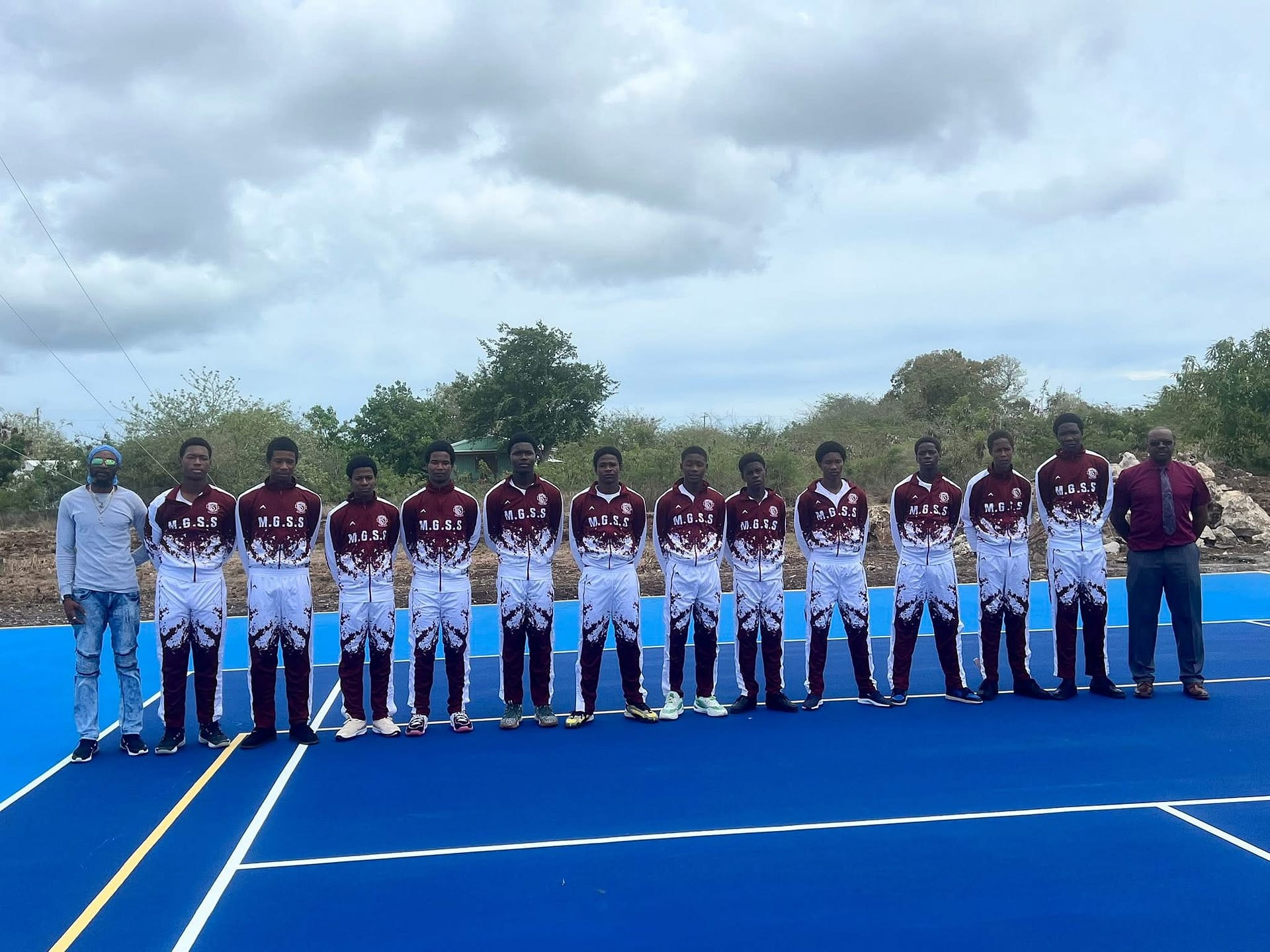
    Barbuda’s youth athletic community has gained a transformative new hub, following the official opening of a multipurpose sports complex developed through a collaborative partnership between the Coco Point Trust and McChesney George Secondary School. The facility delivers a purpose-built, dedicated space where local students and young emerging athletes can refine their physical skills and nurture their sporting potential, filling a long-standing gap in accessible athletic infrastructure on the island.

    In an official statement shared after the opening ceremony, Barbuda’s Ministry of Sport outlined the core mission driving the project: to foster sustainable grassroots sports growth across the island by expanding access to modern, fit-for-purpose training and competition spaces. For years, young athletes in Barbuda have lacked standardized facilities to train consistently, a barrier that the new complex is designed to eliminate entirely.

    “The Coco Point Trust, working hand-in-hand with the leadership and teaching staff of McChesney George Secondary School, has turned this long-awaited community vision into a tangible reality,” the ministry affirmed in its announcement.

    Local sporting officials project that the complex will do more than just serve local recreational needs. It is expected to elevate the profile of Barbuda’s young athletes, equipping them with the resources and training environment needed to compete at higher competitive tiers – from national tournaments to regional and international sporting events. Beyond elite athletic development, the facility is also designed to encourage broader community participation in physical activity, inviting young people of all skill levels to engage with regular sports.

    The ministry also took the opportunity to recognize the critical support of external sponsors who backed the project, emphasizing that their contribution extended far beyond funding the construction of physical infrastructure. The statement framed the investment as a long-term bet on Barbuda’s next generation, noting: “This is not just an investment in concrete and bleachers. It is an investment in the future of Barbuda’s youth, and in the ongoing, inclusive growth of sports across our island.”

  • Five Detained in Suspected Kidnapping of Indian Creek Alcalde

    Five Detained in Suspected Kidnapping of Indian Creek Alcalde

    A high-profile missing person case has sent shockwaves through the small community of Indian Creek Village in Toledo District, with local authorities confirming five detentions connected to the suspected abduction of 41-year-old Marcos Canti, the community’s First Alcalde. The incident unfolded on a Monday afternoon in 2026, when Canti left his family residence shortly after 2 p.m. to carry out routine work on his agricultural plot located near neighboring Pine Hill Village.

    When Canti failed to return home by early evening, concerned family members and a close friend launched an immediate search. Their search effort uncovered a troubling scene: Canti’s bicycle, working machete, and a basket he had filled with freshly harvested tomatoes were all left abandoned on the ground. Investigators also documented clear evidence pointing to a potential struggle at the site, but there was no sign of Canti himself.

    In statements to law enforcement, Elfina Canti, the missing alcalde’s wife, emphasized that her husband’s unexplained disappearance was completely out of character. She revealed that Canti had received explicit threats just one day before he went missing, and she told investigators she is convinced the incident is directly tied to long-simmering land conflicts that have divided the Indian Creek Village community for months.

    As news of Canti’s disappearance spread, already high tensions within the village boiled over into public unrest, culminating in a riot that forced authorities to intervene to restore order. In the wake of the unrest, police confirmed that five individuals have been taken into custody as part of the ongoing investigation into Canti’s suspected kidnapping. Local law enforcement has not yet released further details about the detainees or any potential charges they may face, and the search for Marcos Canti remains an active priority for investigating officers.

  • Mental health experts call for united front as youth calls dominate national hotline

    Mental health experts call for united front as youth calls dominate national hotline

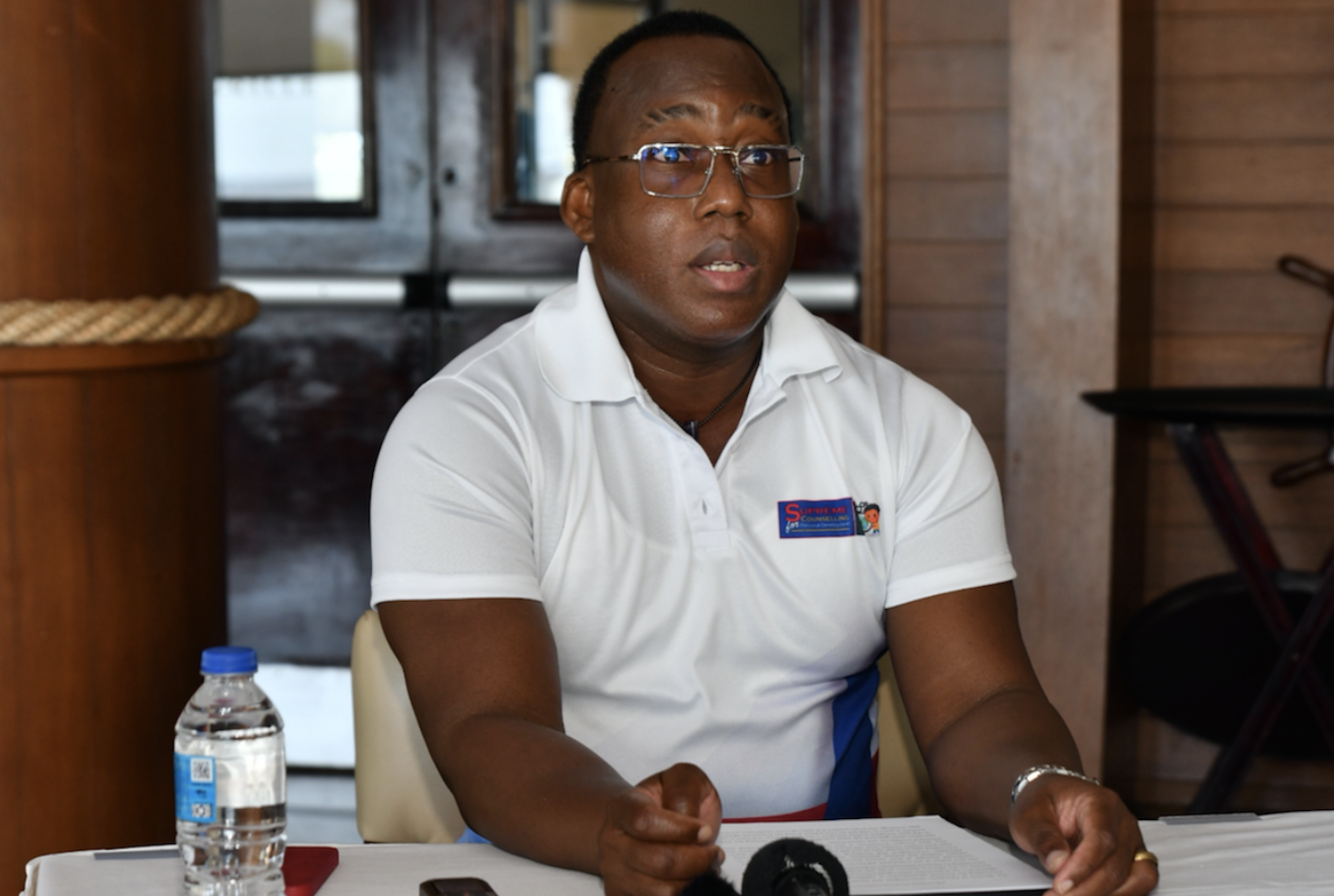
    Following an alarming disclosure from the Barbados Union of Teachers (BUT) that children and adolescents make up 40 percent of all incoming contacts to the country’s national mental health helpline, leading local mental health practitioners and academics are pushing for immediate systemic change, urging a shift from remote digital support to dedicated in-person “safe spaces” for vulnerable young people.

    Shawn Clarke, chief executive officer of Supreme Counselling for Personal Development, and Dwayne Devonish, a behavioral scientist and lecturer at the University of the West Indies Cave Hill Campus, have both drawn attention to a critical tension at the heart of the current mental health landscape: while the surge in youth calls signals a promising generational shift toward greater openness about mental distress, existing support infrastructure is at severe risk of being overwhelmed by unmet demand.

    Clarke framed the 40 percent statistic as a clear double warning. On one hand, it reveals that a large share of Barbados’s young population is grappling with unaddressed mental distress; on the other, it demonstrates that today’s youth are far more self-aware and willing to seek support than previous generations. He explained that many young people first turn to anonymous hotlines because of the comfort that anonymity offers, but that this accessibility comes with significant tradeoffs.

    “It tells me that we have a cohort of young people who know something is wrong, who know they are not functioning the way they should, and who are ready to reach out for help,” Clarke said. “The nature of a hotline means you talk to someone you never meet, which tells me that while they want help, many are not yet ready for face-to-face one-on-one support from an in-person professional.”

    Clarke emphasized that while the national hotline serves as an invaluable first point of contact for at-risk youth, the long-term goal of Barbados’s mental health system must be to build trusted physical environments where young people feel secure enough to pursue in-person therapeutic intervention. “I am glad young people are reaching out, but as a society we have to go a step further,” he added. “We need dedicated physical safe spaces staffed by trusted adults who can hold these face-to-face conversations and deliver the ongoing in-person support young people need to work through their struggles.”

    When asked about the root causes driving the surge in youth mental health distress, Clarke pointed to a wide range of interconnected challenges, from intense academic pressure to pervasive community violence that creates a constant backdrop of stress across the island. He noted that the still-developing brains of children and adolescents are far more susceptible to chronic societal stress than those of adults. “Many young people face bullying that they cannot cope with, and many live in constant fear of the violence unfolding around them,” he explained. “Every day brings news of another shooting, another killing. These events weigh on adults, so imagine how they impact young, developing impressionable minds.”

    These stressors, Clarke added, create measurable disruptions in academic performance, with mental health struggles often showing up in the classroom as difficulty concentrating, disengagement, or sudden angry outbursts. “If a child is dealing with crisis at home – whether that’s food insecurity, a sick parent, or chronic stress at home – they will zone out in class. When things go wrong, anger is the easiest, fastest emotion people reach for, so it is common for struggling young people to lash out. A depressed child cannot focus on schoolwork, full stop,” he noted.

    Devonish offered a complementary perspective, framing the 40 percent statistic not just as a sign of deep crisis, but also as evidence of a positive cultural shift around mental health awareness in Barbados. He explained that younger generations have actively broken down the social taboos that stopped previous generations from speaking openly about mental distress and seeking help. “Young people today are far more willing to seek support than older generations were in decades past,” he said. “Higher call volumes don’t just mean more young people are struggling – it also means there is far more openness around mental health, and young people are comfortable reaching out instead of turning to maladaptive or destructive coping mechanisms. That’s a positive change we should recognize.”

    Devonish credited national public wellness policies and widespread social media campaigns with normalizing help-seeking behavior, making it far more accessible and acceptable for young people to reach out for support. He added that the hotline’s popularity itself proves its value, as it delivers the immediate, psychologically safe support that modern students want.

    Despite this positive shift, both experts agree that the unprecedented volume of youth demand has exposed critical gaps in Barbados’s current mental health system. Devonish warned that existing professional resources will eventually be outstripped by demand if action is not taken immediately, calling for a rapid expansion of the number of licensed mental health professionals embedded in the national education system. He also issued a strong warning against using unqualified laypeople or artificial intelligence tools as a substitute for trained professional counseling.

    “We have to be careful not to direct young people to unqualified providers, because bad advice can have devastating, even fatal consequences,” Devonish said. “We have seen this in other countries, where young people have died by suicide after receiving harmful guidance from unqualified people. We have also seen harm from AI tools – there have already been cases where young people turned to tools like ChatGPT for mental health support, and the outcomes were severely damaging.”

    For his part, Clarke called for a cross-sector, collective approach, bringing together professional organizations across the island to support overstretched schools and families. “This is no longer just a school problem, just a problem for the Ministry of Education, or just a family problem – this is everyone’s problem,” Clarke said. “Fixing this requires collective action; we all have to work together. The Ministry of Education cannot solve this crisis alone. We have to come together as one united team to protect and support our young people.”

  • Butcher set to receive prestigious award

    Butcher set to receive prestigious award

    Two of British sport’s most influential barrier-breaking figures, former England cricketer Roland Butcher and rugby legend Maggie Alphonsi, are set to be honored with Special Lifetime Achievement Awards from Sporting Equals at the organization’s upcoming ceremony on April 18.

    Sporting Equals, a leading UK-based nonprofit dedicated to advancing racial equity, diversity and inclusion across all areas of sport and physical activity, has previously bestowed this prestigious award on household names of British sport including Olympic gold medalist Denise Lewis, former England footballer Sol Campbell, rugby star Jason Robinson and sprint champion Linford Christie. The award recognizes athletes and sports figures whose careers have created long-lasting change, broken long-standing systemic barriers, and built a more accessible, inclusive landscape for future generations of athletes.

    Roland Butcher carved his name into cricket history in 1980 when he became the first Black cricketer to represent England at the Test match level. Born in Barbados, Butcher built a celebrated 16-year domestic career with Middlesex County Cricket Club from 1974 to 1990, and was a core contributor to the team’s dominant era that saw them claim six County Championship titles. After retiring from competitive play, Butcher remained deeply committed to cricket, serving as a coach, administrator, and mentor to young emerging players from underrepresented backgrounds. His 2022 autobiography *Breaking Barriers* details his pioneering journey and the challenges he overcame to open doors for Black cricketers that came after him.

    Expressing his reaction to the honor, Butcher said he was deeply grateful for the recognition. “I’m delighted and truly honoured to be nominated for a Special Lifetime Achievement Award by Sporting Equals, and to receive this recognition alongside Maggie Alphonsi,” he stated. “I’m really looking forward to attending the 2026 Sporting Equals Awards, and joining a prestigious group of past recipients.”

    Maggie Alphonsi, widely regarded as one of the most transformative figures in the history of women’s rugby, boasts an extraordinary competitive resume: she earned 74 international caps for England, scored 28 tries, and played a pivotal role in the England team that won an unmatched seven consecutive Six Nations titles. Alphonsi was also a key member of the 2014 England Women’s Rugby World Cup winning squad, which went on to claim the BBC Sports Personality Team of the Year award for their historic victory. Off the pitch, she has been a leading advocate for greater investment, visibility and equity for women’s rugby, expanding opportunity for female athletes across the UK.

    Nik Trivedi, acting chief executive officer of Sporting Equals, emphasized that both Butcher and Alphonsi are fully deserving of the honor. “Roland Butcher and Maggie Alphonsi are true pioneers whose influence extends far beyond their on-field sporting achievements,” Trivedi said. “They have inspired generations, challenged long-entrenched established norms and helped create a more inclusive future for sport across the United Kingdom. We are incredibly proud to recognize their extraordinary contributions to British sport.”

  • Community centre needed to service Haynesville community

    Community centre needed to service Haynesville community

    Even as youth programs in the Haynesville St James community of Barbados rack up impressive wins across cultural, sporting and academic spaces, one critical gap continues to hold back further progress: a permanent, fully operational community centre. That is the clear message from Peter Skeete, founder and president of the Haynesville Youth Club, who made the appeal during an ongoing cultural exchange trip to Suriname with 18 members of the organization.

    Skeete began by welcoming recent upgrades to the local Barbados Police Service outpost, a facility that has been the backbone of community organizing for two decades. Calling the renovation a positive step forward, he highlighted the decades-long collaborative partnership between local law enforcement and the Haynesville community. For 20 years, the community police outpost has been integral to the growth of local youth initiatives—including the youth club’s signature drumming programs, which got their start within the outpost’s walls.

    Skeete also paid public tribute to the late Constable Mark Wood, whom he remembered as one of the most forward-thinking community policing officers Barbados has ever had. Wood left a lasting mark on the community through his unwavering support for youth development and his deep investment in local cultural initiatives. Beyond the space the outpost provided, Skeete added, the Barbados Police Force has also donated more than 90 percent of the drums the youth club uses for its programs, underscoring just how central the facility has been to the club’s ability to operate.

    “Without the usage of that post, I do not know where we would be, because we do not have a community centre,” Skeete explained. Currently, the only public gathering spaces available to the community are the Melbourne Cricket Club pavilion and the Desmond Haynes Sports Complex at Holder’s Hill. Both were built primarily for cricket activities, Skeete noted, and are not available for regular, broad community use by groups like the youth club.

    While the return of a consistent police presence to the renovated outpost has been widely celebrated, Skeete pushed back against the assumption that the renewed deployment is a response to growing crime in the area. On the contrary, he emphasized, the community’s consistent youth programming has driven down delinquent and antisocial behavior among local young people, a trend that law enforcement has formally acknowledged. “For a number of years we were able to provide meaningful opportunities for our young people that actually limited their participation in deviant and antisocial behaviour,” he said.

    Skeete stressed that the role of police in the community extends far beyond crime response and arrests. A proactive, consistent police presence that collaborates with local organizers, he argued, is key to keeping the community stable and supporting the positive changes that have already taken root. He called for continued cross-sector collaboration between the youth club and local law enforcement to build on the area’s recent gains.

    Despite these significant wins for the community, the lack of a dedicated community centre remains a major barrier to long-term growth. The Haynesville Youth Club has already compiled an impressive track record of success: it produced the most recent winner of the prestigious Richard Stoute Teen Talent competition, and claimed four consecutive championship titles in the Ministry of Youth’s national block draughts tournament. Local athletes from the community have excelled across nearly every major sporting discipline, Skeete noted—yet there is no permanent facility to nurture emerging young talent.

    Skeete suggested that the club’s outsize success despite severe space limitations may have led local decision-makers to underestimate the urgency of the community’s request for a centre. “Because of the success there probably is the belief that we don’t need one… if you can be so successful with a small space, then why should we need a facility?” he questioned.

    The youth club has already stepped up to invest in shared public space, Skeete noted: the organization contributed financially to the recent repainting of the police outpost, and collaborated with the National Cultural Foundation to create custom artwork for the facility during the recent CARIFESTA regional cultural festival.

    Reiterating his call for targeted infrastructure investment, Skeete emphasized that Haynesville’s track record of excellence in sports, culture and education proves the community is ready for a larger, dedicated facility. “Haynesville is an outstanding community… we really need a much larger space,” he said.

  • Kings stay top of basketball table

    Kings stay top of basketball table

    The KFC National Basketball League’s current standings have the two-time defending champions Soufriere Kings perched firmly in first place, following a dominant pair of victories over the weekend that extended their early season form to five wins from six outings. With a superior point differential over nearest competitors Bonne Terre Blazers, the Kings have cemented their status as the team to beat in this year’s tournament.

    The first of the Kings’ two wins came on Friday night, when they delivered a lopsided 28-point defeat to Courts Jets, the league’s most historically successful franchise. The final scoreboard read 71-43 in favor of the league leaders, with standout performances across the starting lineup. Sydney Didier anchored the team’s defensive effort and offensive efficiency, topping the first half scoring with 15 total points, six steals, and a 47% field goal percentage. The season’s leading overall scorer, Jayzee Saltibus, put up an impressive double-double of 22 points and 16 rebounds, while Rayquan Francis joined him in double-digit stat lines on both ends of the court with 12 points and 14 rebounds. For the losing Jets side, Marcian Calderon turned in a strong individual performance, recording 15 points and 11 rebounds to lead his team.

    Just 24 hours later, the Kings faced a far tighter contest against second-ranked Morne Gladiators, walking away with a heart-stopping one-point win that kept their hold on first place secure. The 64-63 result could have swung the other way: the Gladiators held possession with just 12 seconds remaining on the clock, trailing by a single point, but failed to convert the game-winning opportunity, allowing the Kings to escape with the victory.

    Linzell Alcee stepped up as the Kings’ go-to scorer in the tight matchup, pouring in 16 points and grabbing four rebounds, including a number of timely late-game buckets that kept his side ahead. Saltibus notched another double-double with 18 points and 13 rebounds, while Didier added 11 points and five rebounds to the winning effort. For the Gladiators, Shamoir JnBaptiste led all scorers with 11 points, and Jayxan Justin logged a double-double of 10 points and 14 rebounds.

    Across other matchups held over the weekend, the Bonne Terre Blazers claimed a narrow four-point win over South Coast Basketball, finishing 62-58. Troy Louison notched the highest scoring total of the game with 18 points, while Orin Thomas rounded out a strong performance with a double-double of 12 points and 13 rebounds. South Coast was led by Kurt “Bawse Cartel” Raphael, who scored 14 points, and Tim Baptiste, who added 13 of his own.

    Friday’s losers Courts Jets quickly bounced back from their heavy defeat to the Kings, pulling off a dominant 61-point win of their own against Firedup Fitness. The final score ended 104-43, with Ryan Philogene turning in an all-around elite performance: he led all scorers in the game with 28 points, while adding nine rebounds and eight steals. Tristan James contributed 14 points and seven rebounds, and Garick George chipped in 16 more points for the winning side.

    The KFC National Basketball League action is set to resume this Wednesday, with the next round of games scheduled to tip off at the Beausejour Gymnasium.

  • Labour Department Confirms $11.50 Minimum Wage Effective April 1

    Labour Department Confirms $11.50 Minimum Wage Effective April 1

    A landmark policy update to Antigua and Barbuda’s labor regulations has officially been announced, with a new national minimum basic wage set to take effect across the twin-island nation starting April 1, 2026.

    Issued as Statutory Instrument No. 30 of 2026 by the nation’s Attorney General and Minister of Labour, the new wage order is rooted in amended provisions of the Antigua and Barbuda Labour Code Cap. 27, specifically Section C21 subsection (10), which grants the minister the authority to adjust national wage standards. Under the new regulation, all eligible workers in Antigua and Barbuda will be entitled to a minimum hourly base wage of $11.50, a formal mandate that binds all employers operating within the country’s jurisdiction.

    The Labour Department has issued a formal reminder to all business owners and hiring managers regarding additional compliance requirements laid out in existing labor legislation. Per Section C22 subsection (5) of the amended Labour Code, employers are legally obligated to display the updated official national minimum wage rate on a clearly accessible notice board in every workplace, ensuring all staff have full, transparent access to information about their wage entitlements.

    Non-compliance with the new wage mandate carries formal legal consequences. The department confirmed that failure to pay the mandated national minimum basic wage constitutes a criminal offense, which can result in a financial penalty following a summary conviction.

    For employers and workers seeking clarification on the new regulation, compliance protocols, or wage entitlements, the Labour Department has opened multiple channels for public inquiry. Interested parties can visit the department’s physical office located at the intersection of Long and Thames Streets, or contact the administrative team directly via telephone at 462-9200 for assistance. The office of the Labour Commissioner has urged all stakeholders to familiarize themselves with the new rules ahead of the 2026 implementation date to ensure a smooth transition to the updated wage structure.

  • Hormuz-blokkade: risico’s en kansen voor Iran

    Hormuz-blokkade: risico’s en kansen voor Iran

    A new U.S. naval blockade targeting Iran has entered into force, as the Trump administration ramps up pressure on Tehran to force the Iranian government to accept Washington’s terms to end the ongoing conflict by squeezing the country’s already strained economy. The blockade launched at 11 a.m. Suriname time on Monday, drawing immediate condemnation from Iran’s military, which has labeled the move an “illegal act of piracy.”

    While Iran has acclimated to decades of U.S. sanctions and has sustained its position through the war to date, analysts warn this full-scale maritime blockade could inflict severe, unprecedented damage on the Iranian national economy.

    ### How the Blockade Hits Iran’s Core Oil Revenue
    Iran’s oil and gas exports rely almost exclusively on its coastal ports. Shortly after the U.S.-Israel coalition launched its offensive against Iran on February 28, Tehran responded by closing the Strait of Hormuz—the only maritime outlet from the Persian Gulf through which roughly 20% of the world’s daily oil and gas supplies normally flow. The near-total closure of this critical global chokepoint triggered an immediate spike in global energy prices, while Iran retained full operational control of the strait, only granting passage to vessels from a small number of countries that had negotiated bilateral transit agreements with Tehran.

    Notably, Iran continued to export its own energy through the Strait of Hormuz even after the closure announcement. Roughly 80% of Iran’s total crude oil exports move through the waterway, and trade analytics firm Kpler data shows exports actually rose in the early months of the conflict: Iran averaged 1.84 million barrels per day (bpd) of crude exports in March, and 1.71 million bpd through the first half of April, up from a 2025 full-year average of 1.68 million bpd.

    Between March 15 and April 14 alone, Iran exported 55.22 million barrels of crude. Prices for Iran’s three primary export crude grades — Iranian Light, Iranian Heavy, and Forozan Blend — have held above $90 per barrel for the past month, and frequently topped $100. Even at the conservative $90 per barrel benchmark, Iran earned nearly $5 billion from oil exports in that 30-day window. For comparison, in early February before the war began, Iran earned roughly $115 million per day, or $3.45 billion per month — meaning Iranian oil revenues jumped 40% in the month before the blockade took effect.

    Experts agree that this streak of elevated revenue will come to an abrupt end now that the U.S. has blocked access to Iran’s ports and the Strait of Hormuz, hitting export capacity directly and dramatically.

    “Iran will almost certainly not be able to maintain oil exports at their current level,” said Mohamad Elmasry, a senior analyst at the Doha Institute for Graduate Studies. Elmasry added that Iran will also lose critical revenue from transit tolls charged to non-Iranian vessels passing through the strait, which will now disappear.

    Frederic Schneider, a regional expert with the Middle East Council on Global Affairs, echoed that assessment, noting the past six weeks of strong oil revenues have been an unexpected windfall for Iran — a trend the blockade will immediately reverse. He pointed out that Iran has built up a buffer of stored oil, holding an estimated 127 million barrels in floating storage on “parked” tankers as of February. Maritime intelligence firm Windward data puts total Iranian oil held at sea at roughly 157.7 million barrels as of Monday, 97.6% of which is bound for China. But Schneider warned that even this large stockpile will not insulate Iran from long-term harm, and all of this cargo is now at risk of being impacted by the U.S. blockade.

    ### Broader Disruption to Non-Oil Trade
    Beyond energy exports, the U.S. blockade of Iranian ports will also disrupt the country’s trade in other key goods. Iran’s top non-oil exports include petrochemicals, plastics, and agricultural products, most of which are shipped to China and India. Major imports include industrial machinery, electronics, and food, primarily sourced from China, the United Arab Emirates, and Turkey.

    Data from a February Tehran Times report shows Iran’s total non-oil trade between March 21, 2025, and January 20, 2026, hit $94 billion, with the country running a trade deficit as imports outpace exports. Analysts confirm the blockade will drag down total trade volume and cause broad economic damage across sectors.

    Schneider warned that disruptions to non-energy trade will not only cut off additional government revenue, but also exacerbate product shortages inside Iran, which has already been grappling with supply strains from pre-war U.S. sanctions. “The open question is whether this additional hardship will force Iran to concede to defeat, or if it will harden public and government resolve and lead to further escalation,” he said. “I doubt, however, that this blockade will be fully enforced or sustained over the long term.”

    ### Can Alternative Transit Routes Offset Maritime Disruptions?
    To reduce its reliance on critical maritime chokepoints like the Strait of Hormuz and the Strait of Malacca, Iran has developed a cross-border rail link in partnership with China. The route uses existing Central Asian rail networks through Kazakhstan, Uzbekistan, and Turkmenistan, and the first commercial freight train from China arrived in Iran in 2016. Just this past May, according to Iranian state news agency Tasnim, the first freight train from China’s Xi’an arrived at Iran’s Aprin dry port, formally opening the dedicated direct rail connection.

    Geopolitical consulting firm SpecialEurasia notes that this rail link helps reduce the risk of Western maritime blockades, particularly for oil that has historically been moved via Iran’s “ghost ships” — tankers that disable their automatic identification systems to avoid detection and evade sanctions. Multiple such vessels have been spotted operating in the region during the ongoing conflict.

    Even so, analysts stress that moving large volumes of crude oil via rail presents massive logistical hurdles that cannot be easily overcome. To date, there is no credible evidence that Iran has actually moved large-scale oil shipments to China via this rail corridor.

    ### Uncertain Future for the Blockade
    Schneider confirmed that if the blockade is maintained, it will undoubtedly cause significant harm to Iran’s economy. At the same time, major questions remain about how committed the U.S. is to enforcing the measure, how long it will stay in place, how it will end, and what comes next.

    “It is difficult to predict whether the U.S. will actually follow through on full implementation of the blockade, how long it will remain in place, and what scenario will unfold next,” Schneider said.

    One major wild card is China, the top destination for Iranian crude. “Most Iranian tankers are headed to China, and I do not see China complying with this blockade,” Schneider said. “I also do not expect the U.S. Navy to intercept or sink these Chinese-bound vessels.”

    That leaves the current situation highly unstable, with two very different possible outcomes: “The situation could quickly move in one of two directions: either a ceasefire and de-escalation, or a major escalation that sees a resumption of bombardment and missile attacks,” he added.