作者: admin

  • Roberto Rosario warns against Dominican Republic joining Inter-American Court of Human Rights

    Roberto Rosario warns against Dominican Republic joining Inter-American Court of Human Rights

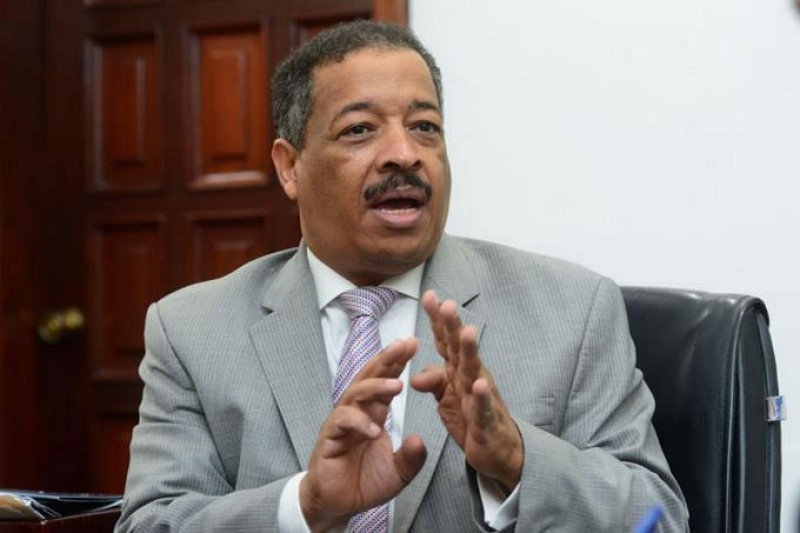
    SANTO DOMINGO – A significant political controversy has emerged in the Dominican Republic regarding the nation’s potential accession to the Inter-American Court of Human Rights (IACHR). Roberto Rosario, former president of the Central Electoral Board (JCE), has issued a stern warning against such a move, characterizing its proponents as “enemies of the homeland.” This declaration comes amid reports that the Ministry of Foreign Affairs is considering regularizing the country’s status before the international human rights body.

    Rosario referenced his involvement in a high-level Dominican delegation that visited the Inter-American Commission on Human Rights in Washington following Constitutional Court ruling 168-13. The delegation, headed by former President Danilo Medina and comprising senior government officials, aimed to clarify the implications of the domestic court’s decision. According to Rosario, representatives of the Court explicitly stated that the Dominican Republic would be required to amend its Constitution to comply with the Court’s rulings concerning citizenship access provisions.

    This position triggered a robust rebuttal from then-presidential legal adviser César Pina Toribio, who vehemently defended national sovereignty and rejected what he perceived as external interference in the country’s internal affairs. Drawing from this diplomatic encounter, Rosario concluded that any initiative for the Dominican Republic to join the Inter-American Court of Human Rights constitutes a direct threat to national sovereignty and must be categorically opposed by patriotic citizens and government institutions alike.

  • Column: Vragen om transparantie is geen aanval

    Column: Vragen om transparantie is geen aanval

    A burgeoning controversy surrounding the accompaniment of President Jennifer Simons’ spouse on official state missions has ignited a crucial debate about governmental transparency and accountability. What began as a simple inquiry about travel protocols has evolved into a complex discussion about the essential boundaries between private and public roles in high-level governance.

    The core issue centers on the fundamental necessity for clarity when family members join official delegations. Legitimate questions regarding capacity of participation, funding sources, and access to diplomatic meetings represent not media intrusion but essential components of proper democratic oversight. The situation escalated when social media imagery depicted the president’s husband actively participating in official engagements, despite subsequent claims of his ‘private’ attendance status.

    Concerningly, the public discourse has shifted from examining transparency requirements to questioning media motives, particularly targeting Starnieuws for raising these valid inquiries. This deflection strategy mirrors previous administrations’ approaches when similar scrutiny was applied to First Lady Mellisa Santokhi’s extensive travel with former President Santokhi—a subject that received substantial critical media coverage despite current suggestions otherwise.

    The essential principle remains unchanged: transparency operates prospectively, not retrospectively. Each administration bears independent responsibility for maintaining clear boundaries and disclosure practices. In democratic systems, transparency constitutes an obligation rather than a concession, with higher offices demanding greater clarity due to their profound impact on public trust.

    Critical journalism serves as democracy’s necessary counterbalance rather than an adversary to power. The media’s function involves ensuring governability through accountability, not maintaining official comfort. Personalizing these inquiries risks undermining press freedom’s vital role in democratic societies.

    This situation requires simple preventive measures: advance disclosure of delegation composition, purposes, capacities, and cost allocations. Such transparency wouldn’t eliminate criticism but would ensure it remains fair, measurable, and proportionate—ultimately benefiting all stakeholders, especially the public.

  • Government successfully tests floodgates at Monte Grande Dam

    Government successfully tests floodgates at Monte Grande Dam

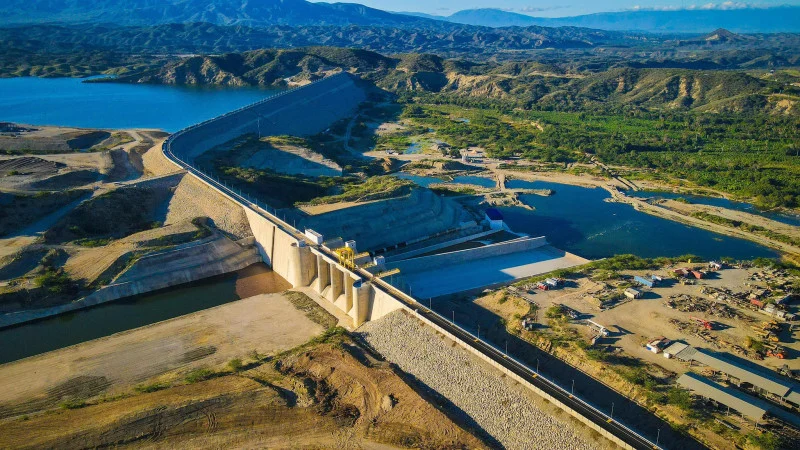
    BARAHONA, Dominican Republic – The Dominican government has successfully completed critical operational testing of the Monte Grande Dam’s emergency floodgate system, marking a significant advancement in national disaster preparedness. Under the supervision of Olmedo Caba Romano, Executive Director of the National Institute of Hydraulic Resources (INDRHI), engineers conducted comprehensive functionality tests on all four main spillway gates to verify their water discharge capacity during potential weather emergencies.

    The testing protocol included a simulated total electrical blackout to assess the automated gates’ emergency response capabilities without primary power. INDRHI technicians, working alongside the dam’s construction consortium, confirmed the system performed flawlessly during the drill. Director Caba Romano emphasized that the successful exercise demonstrates the dam’s operational readiness and fulfills President Luis Abinader’s commitment to completing this vital infrastructure project for the Enriquillo region.

    Local officials highlighted the dam’s transformative impact on community safety and economic development. Barahona Provincial Governor Oneida Féliz Medina noted the structure’s dual purpose in supporting agricultural irrigation while providing critical flood control, evidenced during the recent Tropical Storm Melissa. Engineering expert Osiris De León provided technical confirmation that the four-gate system can discharge approximately 8,800 cubic meters of water per second, providing unprecedented flood protection for previously vulnerable communities including Tamayo, Vicente Noble, and Jaquimeyes along the Yaque del Sur River basin.

  • Consumers’ group accuses businesses, government over rising food prices

    Consumers’ group accuses businesses, government over rising food prices

    The Barbados Consumer Empowerment Network (BCEN) has issued a scathing critique of both corporate entities and government institutions for their inadequate response to escalating living costs, asserting that citizens bear the full brunt of economic shocks without meaningful protection. Executive Chairman Maureen Holder characterized the situation as a systemic failure where every external cost increase is automatically transferred to consumers without absorption or restraint.

    Holder dismissed recurring justifications for price surges—including global inflation, insurance premiums, shipping disruptions, and geopolitical tensions—as deflection tactics. She particularly condemned the recent trend of blaming minimum wage increases for price hikes, labeling this narrative as ‘deeply unfair’ to low-income workers who have faced years of eroding purchasing power.

    ‘The fundamental issue isn’t imported inflation alone but a local policy failure and absence of market governance,’ Holder stated. ‘In our concentrated import market, consumers lack meaningful choice to discipline prices, while transparency tools like price-checking apps provide visibility without affordability.’

    The consumer advocate detailed how costs move seamlessly through the supply chain—from freight and port charges to wholesale and retail margins—with no evidence of temporary margin compression or efficiency gains. This ‘pass-through economy’ structure leaves households spending substantial portions of income on groceries while reducing quality and nutritional standards.

    BCEN proposed a comprehensive food price shock strategy featuring time-bound tax relief on essential items, voluntary margin restraint during crises, and robust enforcement against unjustified price increases. The organization emphasized that global tensions and wage improvements should not serve as excuses for inaction, calling for shared burden-bearing during economic stress.

    ‘What’s occurring represents policy failure, not inevitability,’ Holder concluded. ‘Barbadians require fairness, accountability, and leadership—not just explanations—as prices rise uniformly across the nation without corresponding relief measures.’

  • Historic upgrade ends years of hardship for Belle, Bellevue, Bayley Alley folk

    Historic upgrade ends years of hardship for Belle, Bellevue, Bayley Alley folk

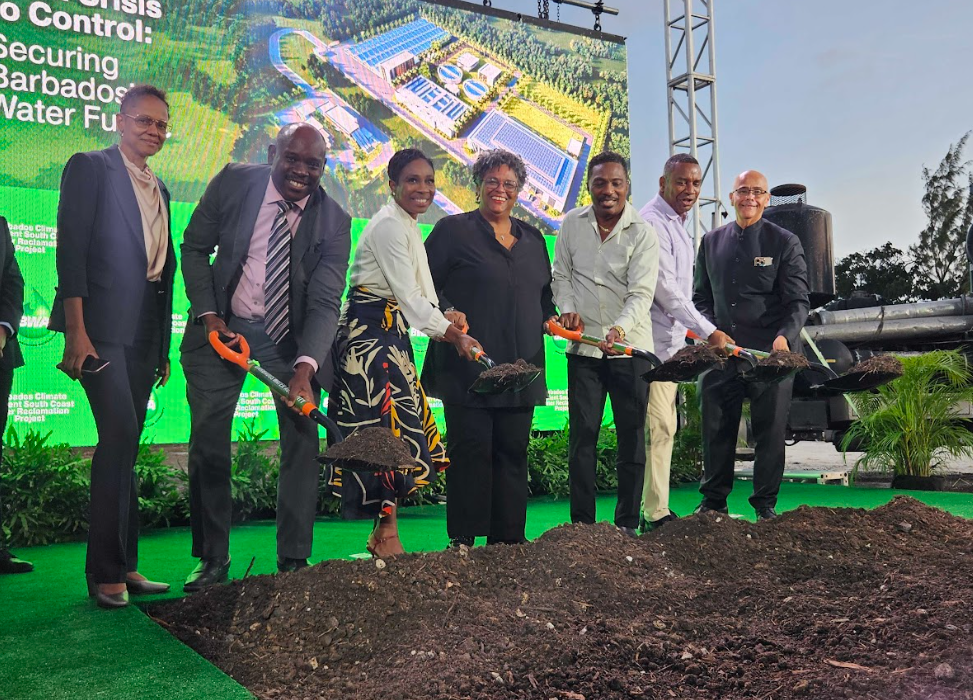
    In a landmark development for social equity, the Barbados government has initiated a transformative water infrastructure project that will bring piped water for the first time to three historically marginalized communities. Prime Minister Mia Mottley announced the breakthrough during the launch ceremony of the Climate Resilient South Coast Water Reclamation Project at Harmony Hall, Christ Church.

    The communities of Belle and Bellevue in St Michael and Bayley Alley in St George have endured decades of infrastructural neglect that prevented residents from securing home financing or properly developing their properties due to the absence of reliable water access. Mottley emphasized that this project represents more than just utility installation—it signifies a fundamental shift in these citizens’ relationship with their nation and their ability to participate fully in Barbadian society.

    The Prime Minister contextualized this initiative within broader national efforts to modernize what she described as a structurally inadequate water system, much of which dates back to the 19th century. The Barbados Water Authority has already completed over two kilometers of the required 3.7 kilometers of mains replacement needed to serve these communities.

    The project’s next phase, scheduled to commence in March, will involve installing sewer infrastructure in Belle and Bellevue, with a customized technological solution planned for Bayley Alley due to its unique layout. Mottley projected that within twelve months, the water access hardships that have long defined daily life for these residents would become “a conversation for our history books.”

    Senior Minister of Infrastructure and Planning Dr. William Duguid highlighted that the upgraded South Coast sewage treatment plant represents a turning point from the disruptive 2018 sewage crisis. The project resulted from extensive coordination involving more than 270 stakeholder meetings with international partners including the European Investment Bank, the Green Climate Fund, and the Inter-American Development Bank.

    The enhanced facility will employ advanced tertiary treatment processes, including reverse osmosis technology, enabling wastewater reuse for agricultural purposes and aquifer recharge—a critical sustainability measure for the island nation.

  • Trough associated with frontal system to affect weather across the country

    Trough associated with frontal system to affect weather across the country

    Meteorological authorities in the Dominican Republic have issued a comprehensive weather advisory as a significant trough system approaches the Caribbean nation. The Dominican Institute of Meteorology (INDOMET) indicates that weather patterns throughout Friday will be predominantly influenced by an advancing frontal system currently positioned over Cuba, which is expected to extend northwestward across the island nation.

    The interaction between this frontal boundary and abundant moisture from the Caribbean Sea is forecast to produce extensive cloud coverage and persistent precipitation across multiple regions. Initial weather monitoring indicates scattered morning showers will develop over La Altagracia, La Romana, and Barahona provinces during early hours.

    Meteorologists anticipate a substantial intensification of conditions as daylight progresses, with moderate to heavy rainfall expected to develop across numerous provinces. The enhanced precipitation will be accompanied by gusty winds and isolated thunderstorm activity, particularly during afternoon and evening hours. Affected regions include San Pedro de Macorís, Monte Plata, Hato Mayor, Sánchez Ramírez, Duarte, Espaillat, Monseñor Nouel, La Vega, Santiago, Santiago Rodríguez, Valverde, Dajabón, San Juan, Puerto Plata, Greater Santo Domingo, San Cristóbal, and adjacent areas, with precipitation potentially persisting overnight.

    Despite the unsettled conditions, INDOMET reports that seasonal temperature patterns will remain consistent with pleasant readings, particularly across elevated terrain and interior valleys. Additional early morning visibility concerns include the development of fog and mist patches, especially throughout the Cibao Valley, San Juan, and sections of Monte Plata. Transportation authorities have consequently urged heightened caution for motorists and residents in impacted zones.

  • They died as they lived, with their heads held high

    They died as they lived, with their heads held high

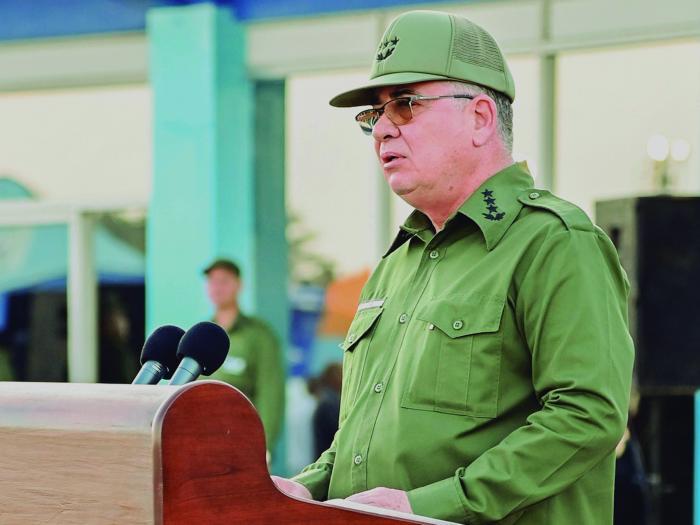
    In a solemn ceremony marked by revolutionary fervor, Cuba welcomed home the remains of 32 military personnel who perished during duty in Venezuela. Army Corps General Lázaro Alberto Álvarez Casas, Political Bureau member and Minister of the Interior, delivered an emotionally charged address honoring the fallen combatants while delivering a stark message against imperialism.

    The ceremony, attended by grieving family members and government officials, transformed mourning into a powerful display of nationalist pride. General Álvarez Casas framed the soldiers’ deaths not as tragedy but as heroic sacrifice, emphasizing that they “fell fighting and ascended forever into history” while defending Cuba’s internationalist principles.

    Drawing direct parallels to historical struggles, the Minister connected the fallen soldiers to Cuba’s revolutionary legacy—from the mambises independence fighters to the barbudos of the Sierra Maestra and internationalist combatants across Latin America. He explicitly characterized the January 3 incident in Venezuela as “aggression and treacherous attacks,” though specific operational details remained undisclosed.

    The address contained significant political messaging, asserting that Venezuela represents “a natural extension of the homeland” and invoking the symbolic unity of revolutionary figures Simón Bolívar, José Martí, Hugo Chávez, and Fidel Castro. General Álvarez Casas made clear that Cuba maintains unwavering commitment to its overseas missions despite losses, stating emphatically: “Cuba does not abandon its children. Cuba does not renounce its principles.

    In direct confrontation with geopolitical adversaries, the Minister contrasted enemy claims of “high-precision operations and elite troops” with Cuba’s narrative of human sacrifice and familial loss. The speech culminated with a reaffirmation of revolutionary values over material wealth, declaring that imperialism “will never be able to buy the dignity of the Cuban people.”

    The ceremony established the fallen soldiers as permanent national symbols, with General Álvarez Casas promising they would “continue to march at the forefront of every battle” and inspire future generations of revolutionaries.

  • March of the Fighting People

    March of the Fighting People

    Cuban President Miguel Díaz-Canel Bermúdez has declared a nationwide day of remembrance and patriotic demonstration through his official social media account. The First Secretary of the Central Committee of the Communist Party articulated a threefold commitment: “We are going to sing our anthem to the heroes. We are going to thank them for their courage. We are going to march so that those who do not yet understand us can get to know us better.”

    The commemorative activities include a formal ceremony at Havana’s Anti-Imperialist Tribune, followed by a March of the Fighting People designed to demonstrate national unity and reaffirm commitment to the Cuban homeland. Simultaneously, across all municipalities nationwide, ceremonies will be conducted to pay posthumous tribute to martyrs whose remains will be interred in local pantheons dedicated to those who fell in defense of their communities.

    This coordinated national event represents both a memorialization of historical sacrifices and a contemporary political demonstration aimed at reinforcing national identity and revolutionary values. The activities appear designed to strengthen domestic solidarity while communicating Cuba’s perspective to international observers.

  • Dominican Embassy to the Holy See showcases culture, art, and faith in Rome

    Dominican Embassy to the Holy See showcases culture, art, and faith in Rome

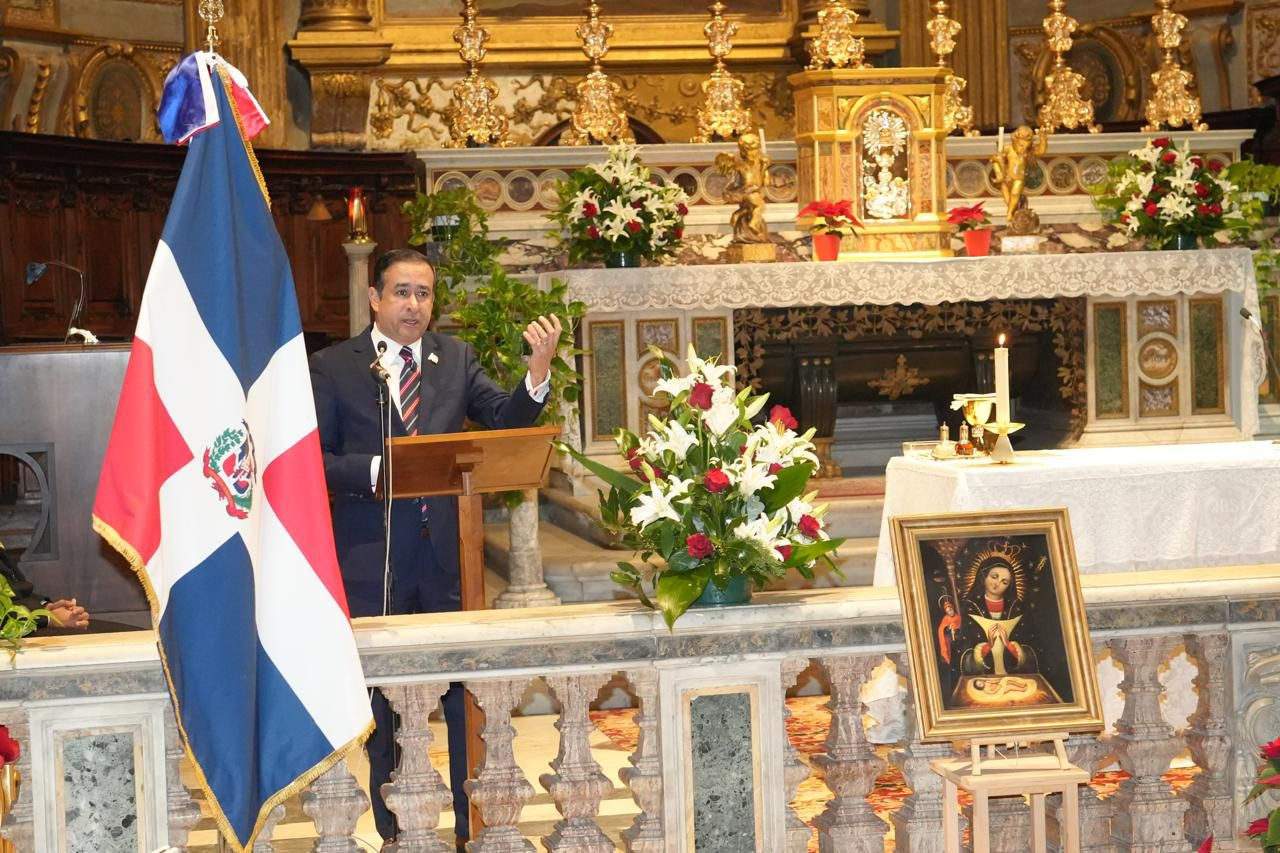
    ROME – The Embassy of the Dominican Republic to the Holy See orchestrated a distinctive multicultural celebration at Rome’s historic San Marcello al Corso Church, presenting a vibrant tapestry of the nation’s cultural, artistic, and spiritual legacy. Ambassador Víctor Suárez Díaz inaugurated the proceedings by presiding over a special Mass, emphasizing the importance of faith as a foundational element preceding an evening dedicated to artistic showcases.

    The Eucharistic gathering united members of the Dominican diaspora residing in Italy with ambassadors and diplomatic corps representatives accredited to the Vatican. This confluence fostered an atmosphere of contemplative prayer and gratitude, mirroring the profound spiritual ethos inherent to Dominican society. The solemnity of the religious ceremony established a thoughtful preamble for the subsequent cultural presentations.

    The event transitioned to a musical performance featuring Janette Márquez, a visually impaired opera singer from the Dominican Republic, whose emotionally resonant vocals left a lasting impression on all attendees. Her performance was complemented by the virtuosic piano accompaniment of Samuel García, a young musician acclaimed for his prodigious talent. A pivotal moment occurred when Dominican visual artist Melanio Guzmán executed a live painting, creating a work emblematic of unity and solidarity among the nation’s diplomatic missions worldwide.

    The proceedings culminated in the ceremonial farewell of the pilgrim Virgin of Altagracia. The sacred icon is scheduled to return to the Dominican Republic to participate in the traditional Mass at the Basilica of Higüey on January 21, thereby reaffirming the nation’s enduring devotion to its patron saint.

  • Finance : «Haiti doesn’t suffer from a lack of capital» (video)

    Finance : «Haiti doesn’t suffer from a lack of capital» (video)

    In a recent installment of the United Nations Development Programme’s (UNDP) series “Wi, Ayiti Kapab” (Yes, Haiti is Capable), financial expert Robert Jr. Paret presented a paradigm-shifting analysis of Haiti’s economic challenges. As CEO of ProFin Group and founder of Haiti’s inaugural licensed investment bank, Paret contends that the nation’s fundamental issue isn’t capital deficiency but rather capital fragmentation.

    Paret’s assessment reveals that Haiti receives over $4 billion in diaspora remittances annually alongside substantial domestic savings. However, the country lacks the necessary infrastructure to effectively consolidate, intermediate, and productively deploy these financial resources. “This isn’t a problem of resources,” Paret emphasized. “It’s a problem of market design.”

    The financial expert outlined four critical strategies for addressing Haiti’s capital utilization challenges: transforming frequent remittances into patient, long-term capital; designing investment vehicles that connect diaspora wealth with local opportunities; reducing entrepreneurial risks through structured capital allocation; and building institutional trust within frontier markets.

    ProFin Group serves as a practical case study in bridging the gap between capital sources and users within complex operational environments. Rather than offering theoretical solutions, Paret provides concrete methodologies for constructing financial markets from foundational levels.

    The UNDP’s “Wi, Ayiti Kapab” series continues to showcase innovative approaches to Haiti’s development challenges, with this episode focusing specifically on financial system restructuring as a pathway to sustainable economic growth.