作者: admin

  • OP-ED: Beyond passports & visa pauses – Why the Caribbean must reclaim the narrative power in Washington

    OP-ED: Beyond passports & visa pauses – Why the Caribbean must reclaim the narrative power in Washington

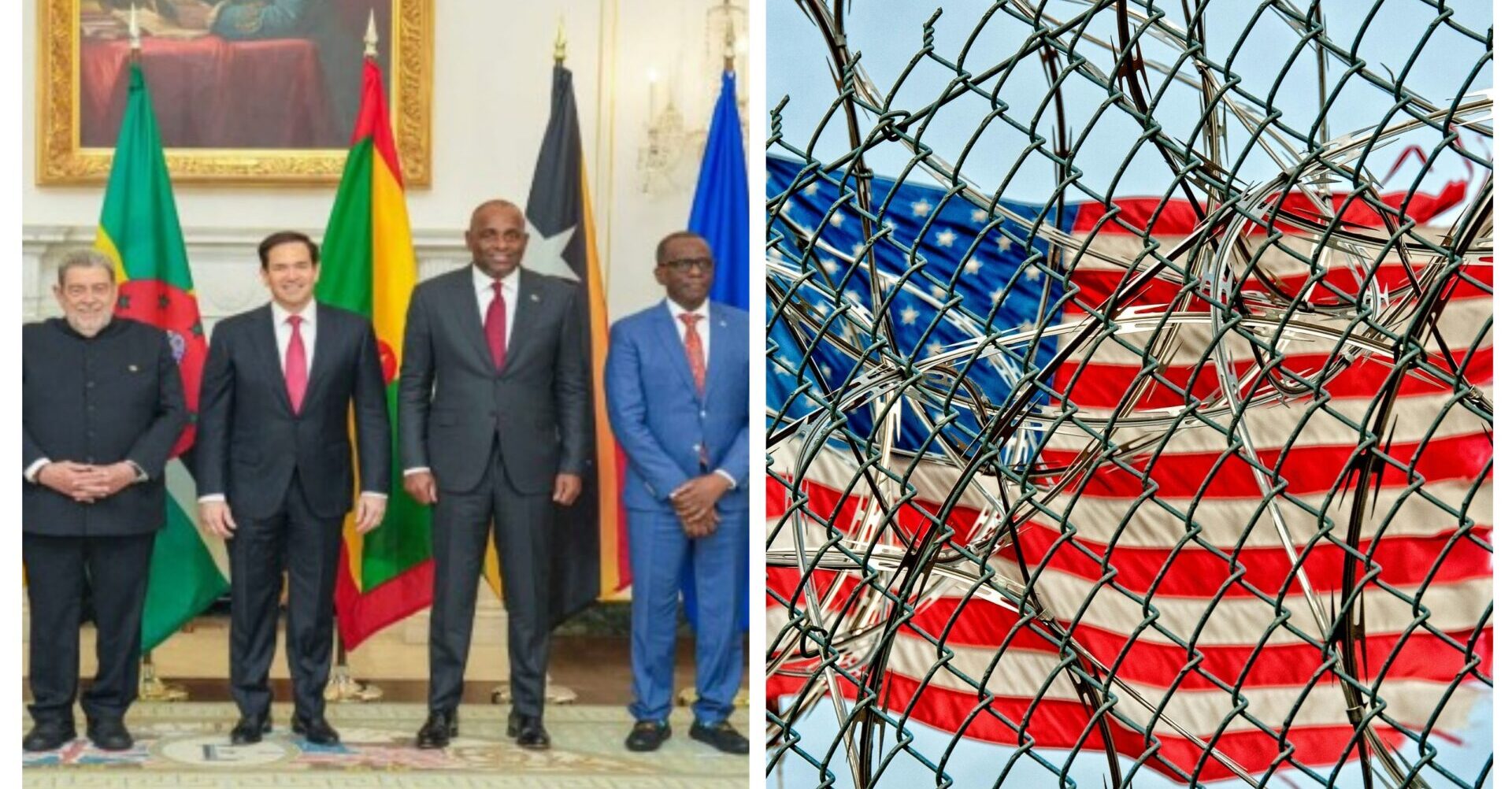
    The Caribbean’s ongoing Citizenship by Investment (CBI) program crisis reveals a fundamental power imbalance in international relations that extends far beyond superficial discussions about due diligence and security compliance. At its core, this confrontation represents the region’s systemic loss of narrative control within Washington’s policy ecosystem, where Caribbean nations are being defined through standards they didn’t create and judged in forums where they lack representation.

    This pattern of economic reclassification—where once-viable activities are progressively recast as risky or non-compliant—has historical precedents from banana exports to banking services. The outcome consistently demonstrates economic disqualification through regulatory means rather than market failure, with CBI representing merely the latest manifestation.

    The traditional diplomatic approach—relying on ambassadors, foreign ministries, and multilateral appeals—has become inadequate in today’s policy landscape. Contemporary legitimacy frameworks are increasingly shaped outside formal diplomatic channels within Congressional offices, regulatory agencies, think tanks, and policy advocacy networks where narratives are established long before Caribbean representatives are consulted.

    The region’s critical deficit lies in its absence from Washington’s idea economy. While the United States benefits from established idea engines like the Heritage Foundation, Brookings Institution, and CSIS that systematically cultivate and normalize policy concepts, the Caribbean lacks equivalent institutional presence. This idea infrastructure gap leaves the region perpetually defensive, explaining itself against narratives it didn’t author.

    The convergence of heightened U.S. and EU CBI scrutiny, visa bond regimes, immigrant visa pauses, and disproportionately applied public-charge doctrines signals how Caribbean economies are being systematically ranked within the global system. Simultaneously, CARICOM faces internal strains as geopolitical pressures test regional unity.

    A strategic pivot requires expanding engagement beyond traditional diplomacy into narrative formation—engaging Congressional committees alongside executive desks, addressing regulatory agencies that shape outcomes, investing in idea production rather than mere negotiation, and repositioning the Caribbean as a strategic region rather than a compliance problem.

    The fundamental question isn’t whether CBI survives in its current form, but whether the Caribbean will continue allowing external actors to define legitimacy parameters for small states’ economic survival. Without claiming space in Washington’s idea economy, every sector—from finance and mobility to education and digital services—remains vulnerable to similar reclassification and exclusion cycles.

    The Caribbean possesses its most valuable export not in passports or commodities but in intellectual talent—thinkers, diplomats, technocrats, and policy professionals who understand global systems and Caribbean realities. The existing diaspora represents an untapped resource that requires institutional harnessing through establishments like the Institute for Caribbean Studies in Washington, D.C.

    This transformation demands a fundamental shift in how CARICOM, OECS, and individual governments engage with diaspora expertise—moving beyond transactional relationships toward trust-based, sustained collaborations. Modern sovereignty defense requires not just borders and diplomacy but ideas and the capability to shape them, presenting the region with an opportunity to build idea infrastructure worthy of its talent and adequate to contemporary challenges.

  • IDB launches new Barbados strategy to drive growth, resilience

    IDB launches new Barbados strategy to drive growth, resilience

    The Inter-American Development Bank Group (IDB Group) has formally initiated a comprehensive five-year strategic framework for Barbados, designed to propel economic advancement while simultaneously fortifying social and climate resilience. The 2025–2030 strategy, officially endorsed in May 2025, was developed following rigorous economic analysis led by Cloe Ortiz de Mendivil, the IDB’s Country Economist for Barbados and The Bahamas.

    Unveiled at a stakeholder briefing held at the Bank’s Oistins offices, the strategy is structured around three foundational pillars. The first is dedicated to fostering sustainable economic growth, while the subsequent two focus on building social resilience and climate-related resilience. Carina Cockburn, IDB Country Representative for Barbados, emphasized the interdependence of these goals, stating that resilience, while necessary, is not by itself sufficient for achieving broader economic development objectives.

    In a significant departure from conventional presentation formats, the IDB employed an innovative dissemination approach to enhance public accessibility. The launch event featured an interactive session led by Neil Waithe and the Leggo Theatre Company, who utilized improvisational performance to translate complex policy terminology into engaging and relatable messaging for a diverse audience.

    Concurrently, the IDB introduced the BOLD Catalyst Board, an 18-member civil society advisory body operational across all IDB member countries. This board will provide critical feedback during the project design phase, ensuring initiatives avoid harmful practices and adequately incorporate stakeholder perspectives. The board will also assist in information dissemination and help maintain alignment with local needs throughout the implementation process.

    Cross-cutting themes of innovation, diversity, and institutional strengthening will be mainstreamed across all initiatives. Specific programs already in development include an Enhanced Credit Guarantee Fund with the Central Bank under the economic growth pillar, and a pipeline replacement project aimed at securing Barbados’ potable water supply as part of climate resilience efforts.

    Beyond financial lending, the IDB’s engagement encompasses substantial technical cooperation, providing expertise, analytical support, and advisory services to assist Barbadian policymakers. Reflecting on the enduring partnership, Kay McConney, Minister of Economic Affairs and Investment, highlighted that the relationship between the Government of Barbados and the IDB Group remains rooted in shared vision, mutual trust, and open communication.

  • Rafael Correa: Outrage against Venezuela seeks to save oil deals

    Rafael Correa: Outrage against Venezuela seeks to save oil deals

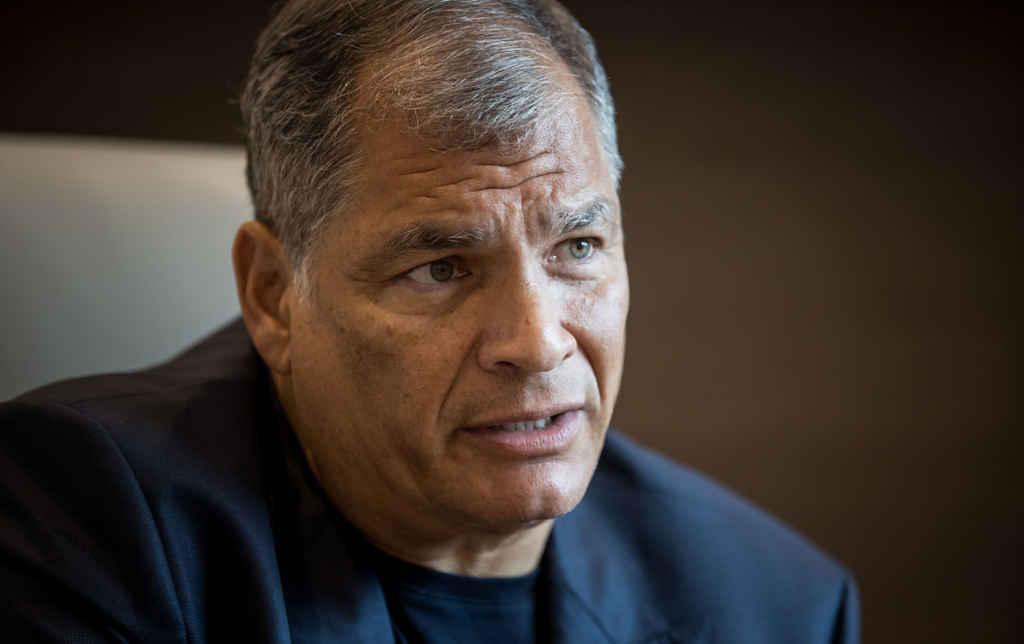
    In a comprehensive social media analysis, former Ecuadorian President Rafael Correa has delivered a scathing critique of United States foreign policy toward Venezuela, characterizing recent actions as both economically unsustainable and strategically flawed. The former head of state asserted that the Trump administration had reached a critical realization about the ineffectiveness of its Venezuelan blockade strategy, recognizing that the approach was proving prohibitively expensive while failing to achieve its intended objectives.

    Correa detailed the multifaceted costs burdening American interests, highlighting how maintaining naval assets along Venezuela’s coastline generated substantial operational expenditures. More significantly, he emphasized that major US petroleum corporations—key financial supporters of the administration—were simultaneously missing out on highly profitable business opportunities within the South American nation’s energy sector.

    The former Ecuadorian leader suggested that facing this strategic impasse, the White House required a face-saving measure and consequently resorted to what he termed the ‘kidnapping’ of Venezuelan President Nicolás Maduro as a supposed ‘final solution.’ Correa referenced the January 3rd military incursion into Venezuelan territory, noting that contrary to US expectations, this intervention produced neither regime change nor any substantial political transformation within the Bolivarian Republic.

    According to Correa’s analysis, Washington’s genuine objective revolves around securing favorable terms for American oil conglomerates, despite Venezuela’s historical openness to foreign investment. He contended that the very sanctions imposed by the United States have paradoxically prevented such economic engagement from occurring.

    The former president further speculated about additional motivations behind US actions, suggesting Washington aims to manipulate global oil prices ahead of critical midterm elections while simultaneously demonstrating unilateral power to the international community. This combination of economic and geopolitical objectives, Correa concluded, reflects an assertion that the United States can operate without meaningful constraints in pursuing its interests.

  • Cuban state mission in Chile honors combatants killed in Venezuela

    Cuban state mission in Chile honors combatants killed in Venezuela

    The Cuban Embassy in Santiago, Chile, conducted a solemn memorial ceremony to honor combatants who fell in defense of their nation’s sovereignty. The tribute coincided with emotional farewell proceedings in Havana, where citizens lined Rancho Boyeros Avenue to witness horse-drawn carriages transporting the remains to the Ministry of the Revolutionary Armed Forces headquarters.

    Embassy staff observed a minute of silence in a ceremony characterized by its simplicity and profound emotional resonance. First Secretary for Political Affairs Rosario Rodriguez delivered an excerpt from revolutionary leader Fidel Castro’s historic speech during the Playa Girón martyrs tribute, invoking the poetic words of Nicolás Guillén: “Let us not call them dead, but rather say they live more than ever, eternally present in every Cuban’s heartbeat.”

    Cuban Ambassador to Chile Oscar Cornelio Oliva referenced Castro’s 1976 eulogy for victims of the Barbados bombing, emphasizing the multiplier effect of national grief. “Pain is not shared—it is multiplied,” Oliva reiterated, noting that when a resilient people mourn, “injustice trembles.” The ambassador clarified these statements constituted neither empty rhetoric nor exaggerated pronouncements, but rather a definitive warning to adversaries of the Revolution that Cuba remains prepared to defend its independence and sovereignty against all threats.

  • Fatal stabbing in Castries marks third homicide for 2026

    Fatal stabbing in Castries marks third homicide for 2026

    Saint Lucia’s violent crime tally for the new year has risen with police confirming the island nation’s third homicide of 2026. The victim has been identified as 25-year-old Soufrière resident Leeval Albert, who sustained fatal stab wounds during a violent confrontation in the capital city of Castries.

    Assistant Commissioner of Police Luke Defreitas disclosed these developments during the Royal Saint Lucia Police Force’s monthly media briefing. According to preliminary investigations, the altercation occurred earlier today, though investigators are still working to pinpoint the exact location where the stabbing transpired.

    Following the attack, Albert managed to travel to the Jeremie Street Plaza commercial area before collapsing from his injuries. Emergency services were promptly alerted and transported the critically wounded man to a medical facility. Despite intensive resuscitation efforts by medical personnel, Albert was subsequently pronounced dead.

    ACP Defreitas noted that while first responders initially encountered the victim near the DAX vicinity on Victoria Street, forensic teams are still reconstructing the sequence of events leading to the fatal assault. The police spokesperson declined to provide additional information regarding potential suspects or motives, confirming that no arrests have been made in connection with the incident at this preliminary stage of investigation.

    The homicide marks continued challenges for Saint Lucian authorities addressing violent crime, with two previous homicides already recorded within the first weeks of 2026. Police have urged anyone with relevant information to come forward as investigations continue.

  • $800,000 for New Shelters for the Homeless

    $800,000 for New Shelters for the Homeless

    The Belizean government has unveiled a comprehensive $800,000 initiative to address the nation’s escalating homelessness crisis. Prime Minister John Briceño confirmed the cabinet-approved plan following its presentation by Minister of Human Development Thea Garcia-Ramirez on Wednesday.

    The strategic program will establish new shelter facilities and support services across four key districts: Belize City, Orange Walk, Cayo, and Stann Creek. This multi-regional approach recognizes the widespread nature of the problem that officials describe as both “serious” and “tragic” in its social impact.

    Prime Minister Briceño emphasized the government’s moral obligation to intervene, noting that many homeless individuals struggle with underlying mental health challenges. While families often attempt to care for relatives initially, they frequently become overwhelmed by the complex needs involved, ultimately requiring institutional support.

    Funding mechanisms for the initiative remain under development, though Briceño identified enhanced Boledo revenues as a potential financing source. Collections have dramatically increased from approximately $2.5 million under the previous UDP administration to a projected $25 million in profits this year—representing a tenfold improvement that could substantially support social programs.

    The Prime Minister acknowledged that the new shelters may not completely eliminate homelessness but stressed that even incremental capacity improvements would provide critical relief to vulnerable populations. The government’s intervention marks a significant step toward addressing what has become one of Belize’s most pressing social welfare challenges.

  • Cuba updates Government Program after public consultation

    Cuba updates Government Program after public consultation

    In a significant governmental session presided over by President Miguel Diaz-Canel, Cuban Prime Minister Manuel Marrero Cruz detailed substantial enhancements to the nation’s governance framework. The high-level meeting marked a pivotal development in Cuba’s ongoing administrative restructuring efforts, incorporating extensive feedback from multiple national institutions and public consultations.

    The revised Government Program represents a synthesis of diverse inputs, including outcomes from nationwide public consultations, resolutions from the 11th Plenum of the Central Committee of the Communist Party, and substantive conclusions derived from the sixth ordinary session of the National Assembly of People’s Power. Further contributions emerged from specialized deliberations within the Commission on Economic Affairs, creating a comprehensive policy roadmap.

    First-quarter implementation priorities include the formal publication of the updated program document, consolidation of previously approved measures, and systematic identification of territorial potential to reinforce the national Economic Plan. A key focus remains on enhancing budget revenues through optimized regional resource allocation.

    Prime Minister Marrero emphasized the critical role of extraordinary sessions of Provincial Councils of People’s Power, describing them as mechanisms for evaluating implementation efficiency at local levels. These sessions enable assessment of additional capacity for achieving program objectives through decentralized governance structures.

    Concurrently, the Council of State conducted rigorous evaluation of compliance with Law No. 158 concerning the Comptroller General of the Republic. This audit incorporated recommendations from the accountability report presented to the National Assembly in December 2022, reflecting ongoing efforts to strengthen institutional transparency.

    The Council recommended intensified oversight in several strategic sectors including deficit reduction, external revenue generation, agricultural production enhancement, and reinforcement of state-owned socialist enterprises. These measures aim to address economic challenges while maintaining Cuba’s socialist development model.

  • Venezuelan teachers demand freedom for Maduro and Cilia in the street

    Venezuelan teachers demand freedom for Maduro and Cilia in the street

    In a powerful display of political solidarity, educators from across Venezuela converged for a militant Teachers’ Day march, demonstrating unwavering support for interim President Delcy Rodríguez and the current administration. The gathering transformed from a traditional celebration into a robust political rally, with participants voicing their absolute commitment to the ruling government.

    From the main platform, one teacher delivered a passionate declaration: ‘We stand resolute in our defense of the Constitution, our homeland, President Nicolás Maduro, and First Lady Cilia Flores.’ The educator further emphasized their dedication to ‘protecting free, quality education for all Venezuelans.’

    Another representative issued a call for unity among Bolivarian teachers, urging collective efforts to strengthen the nation’s educational system. ‘We will raise the banner of peace and political determination,’ the spokesperson stated, adding that they were prepared to ‘defend the Revolution with our lives if necessary.’

    A teacher from Aragua state made an emotional appeal: ‘We educators demand the release of Maduro and Cilia; we want them back with us,’ though the exact nature of their absence remained unspecified in the proceedings.

    Education Minister Héctor Rodríguez provided grave context, revealing that on January 3rd, educational and scientific institutions including the National Experimental Polytechnic University of the Bolivarian Armed Forces had suffered bombings, resulting in more than 108 fatalities to date.

    Despite Venezuela’s ongoing challenges, Minister Rodriguez emphasized that millions of children and youth maintain fully guaranteed access to education at all academic levels, completely free of charge, demonstrating the government’s commitment to educational accessibility during turbulent times.

  • Peruvian Party condemns US threats against Cuba

    Peruvian Party condemns US threats against Cuba

    A prominent political faction in Peru, led by former Supreme Court President Duberli Rodríguez, has issued a formal declaration vehemently condemning recent statements from the United States administration targeting Cuba. The document characterizes the U.S. President’s approach as a form of ‘hegemonic tyranny’ that has unjustly placed Cuba in its crosshairs.

    The statement further accuses the U.S. of perpetrating an ‘assault and kidnapping in Venezuela,’ actions it deems to be in direct violation of established international norms. It posits that the current U.S. strategy, marked by what it calls ‘extortionate threats,’ is a deliberate attempt to subdue the Cuban Revolution by force—a revolution the document celebrates as heroic for its resilience over more than six decades against numerous attempts to destabilize it.

    Crucially, the Peruvian party’s communique serves as a stark warning, asserting that threats directed at Cuba resonate profoundly across Latin America. This identification, it notes, transcends mere solidarity and represents a deep-seated connection felt by the people of the region. The statement concludes with an urgent appeal for the restoration of reason and peaceful dialogue, while staunchly advocating for the fundamental principles of national sovereignty and the unequivocal right to self-determination for all nations.

  • Portsmouth mayor condemns violence ahead of community’s ‘ Possie Town Mas’

    Portsmouth mayor condemns violence ahead of community’s ‘ Possie Town Mas’

    Portsmouth Mayor Kerry Breedy-Prince has issued a firm condemnation of gun violence while assuring residents and visitors of enhanced security measures for the upcoming ‘Possie Town Mas’ carnival celebrations. The mayor’s statement comes in direct response to escalating community concerns following a recent shooting incident in the Lagoon area last week.

    Addressing public anxieties head-on, Mayor Breedy-Prince acknowledged the legitimate fears surrounding the spike in firearm-related incidents but emphasized that criminal behavior would not be allowed to define the community’s identity. “Violence has no place in our community, and it would never define who we are as a people,” she declared, reinforcing Portsmouth’s historical reputation as a town built on cultural pride, unity, and peaceful coexistence.

    The municipal government has implemented a comprehensive security strategy through coordinated efforts with multiple stakeholders. This collaborative approach involves the Dominica Police Force, community leadership representatives, and event organizing committees working in unison to bolster safety protocols. These measures are specifically designed to create a protected environment where participants can engage in carnival activities without apprehension.

    Mayor Breedy-Prince passionately described the essence of Possie Town Mas as a celebration of life, musical tradition, and communal solidarity. She explicitly rejected the notion that fear should suppress cultural expression or erase longstanding traditions. The festivities are scheduled to commence at 3:00 PM on Saturday, January 17, with officials encouraging full public participation in what promises to be a vibrantly secure cultural experience.