作者: admin

  • Owner of looted store chooses kindness over blame

    Owner of looted store chooses kindness over blame

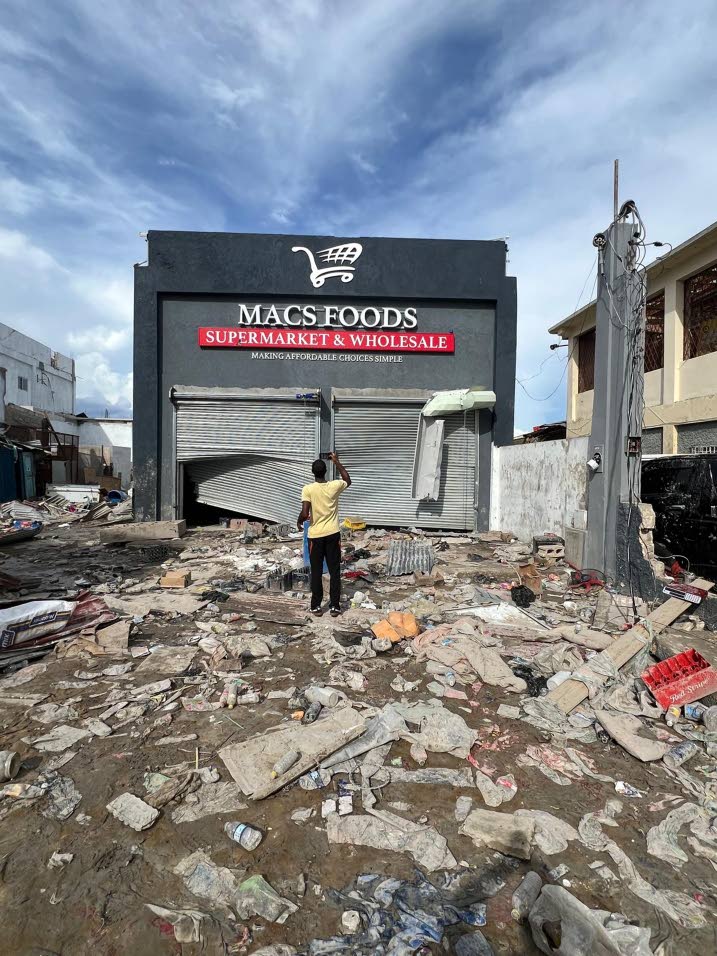
    In the wake of Hurricane Melissa’s devastating path through Jamaica in October 2025, Macs Foods Supermarket and Wholesale owner Carl Bailey faced a dual catastrophe: catastrophic structural damage followed by widespread looting of his establishment. Yet four months later, his business stands operational in Black River, St. Elizabeth, representing both resilience and radical compassion.

    Bailey’s supermarket suffered complete destruction of its ground floor and storeroom from six feet of floodwater, followed by the systematic removal of surviving inventory and equipment from upper levels by desperate residents. The total losses reached hundreds of millions of dollars, including specialized hurricane-preparedness stock Bailey had credited in anticipation of post-disaster demand.

    Rather than condemning those who emptied his store, Bailey contextualized their actions as survival necessities. ‘When I looked at everything, I said it was just survival mode,’ he explained. ‘In their mind, they were just trying to get something for tomorrow.’ His perspective transformed the incident from criminal looting to community sustenance during unprecedented crisis.

    The business owner’s response exemplifies extraordinary empathy amid personal devastation. Bailey consciously chose not to intervene as residents gathered supplies, recognizing that many had lost homes entirely—including members of his own staff whose houses were completely destroyed.

    Now navigating significant debt through payment plan negotiations with suppliers, Bailey remains committed to both his business and community. Since reopening on December 17, 2025, the supermarket has experienced strong support from grateful residents who return as paying customers, many expressing appreciation for his compassion during their most desperate hours.

    Bailey’s philosophical approach extends beyond business continuity. He draws inspiration from nature’s resilience, noting that ‘the plants around are already green again’ despite the hurricane’s destruction. His outlook emphasizes daily progress, forward thinking, and finding gratitude amidst adversity—a mindset he encourages fellow business owners and residents to adopt as Black River continues rebuilding.


  • Before buying a house as a couple…

    Before buying a house as a couple…

    In Jamaica’s competitive real estate market, where residential properties now command prices ranging from $18 million to over $150 million, couples face critical decisions regarding joint property ownership that could have lasting financial implications. The distinction between joint tenancy and tenancy in common represents a fundamental choice that many partners overlook during the initial excitement of property acquisition, yet this legal distinction determines inheritance rights and property division outcomes should relationships deteriorate.

    Joint tenancy arrangements provide automatic survivorship rights, meaning the surviving partner inherits the entire property upon their partner’s death. Conversely, tenancy in common establishes defined ownership percentages that can be willed to other heirs, creating different succession planning considerations. With mortgage commitments typically spanning 20-30 years, these decisions effectively bind couples financially for decades, regardless of how their personal relationships evolve.

    The Property (Rights of Spouses) Act frequently surprises Jamaican couples by establishing presumptive equal entitlement to the family home, regardless of individual financial contributions. This legal framework often contradicts common assumptions about property control based on financial investment, leading to complex disputes during separations. Common conflict points include disagreements about selling preferences, financial contribution assessments, renovation investments, and child custody considerations that affect housing arrangements.

    Legal resolution processes for property disputes frequently become protracted affairs, requiring both signatures for property sales and potentially escalating into costly court proceedings. During these periods, properties often remain in limbo while mortgage payments and maintenance costs continue accumulating. The presence of children further complicates these situations, as courts prioritize household stability, potentially extending the financial and emotional impact of property disputes beyond the immediate couple.

    Real estate experts emphasize the importance of pre-purchase discussions about long-term values, parenting expectations, and contingency planning for changing circumstances. While potentially uncomfortable initially, these conversations prove significantly more manageable than resolving disputes after relationships deteriorate and substantial assets are at stake.

  • Double murder convict loses Privy Council appeal

    Double murder convict loses Privy Council appeal

    The Judicial Committee of the United Kingdom Privy Council has delivered a significant ruling in the case of Rayon Williams, a Jamaican man serving concurrent life sentences for two separate murders committed in 2009 and 2010. While dismissing Williams’ challenge to his convictions, the court has granted leave for his sentence to be reconsidered by Jamaica’s Court of Appeal.

    Williams received two life sentences with stringent parole eligibility requirements: 35 years for the 2009 murder of Hugh Cover and 45 years for the 2010 killing of Geraldo Campbell. His legal journey began with initial convictions in the St Catherine Circuit Court in 2013 and 2014 respectively, followed by unsuccessful appeals in Jamaica’s appellate system that ultimately led to the Privy Council hearing.

    The Council’s March 10, 2026 determination found no merit in challenging the convictions, stating that “it is not arguable that there has been a serious miscarriage of justice.” However, the sentence appeal will now return to Jamaican jurisdiction for fresh consideration.

    Both convictions relied heavily on testimony from Williams’ aunt, who served as the prosecution’s primary eyewitness. In the 2009 case, she testified to witnessing Williams and accomplices brutally murder Cover with a pickaxe stick and sword before decapitating the victim and disposing of the body in Cover’s own vehicle.

    The 2010 conviction involved testimony that Williams shot Campbell in a Spanish Town shop. The case took dramatic turns when the aunt later submitted a 2018 affidavit recanting her testimony, claiming police coercion, only to subsequently file a 2021 repudiation affidavit alleging that Williams and his associates had forced her to retract her original statements.

    The legal proceedings have involved multiple layers of contradictory evidence, including disputed letters and allegations of police misconduct versus witness intimidation. Williams’ defense team argued numerous procedural issues, including alleged failures in jury direction and character assessment, but these arguments failed to persuade the Privy Council to overturn the convictions.

  • Digital tax battle

    Digital tax battle

    Jamaica has plunged into a vigorous international debate with its decision to implement a General Consumption Tax (GCT) on digital services, a move that has drawn both staunch support and sharp criticism from business leaders and political figures. Finance Minister Fayval Williams introduced the measure during the 2026/27 Budget Debate, framing it as essential for correcting a growing competitive imbalance between local businesses and foreign digital providers.

    The government projects substantial revenue gains from the tax—approximately $300 million in fiscal year 2026/27 and $4.2 billion the following year. The levy will apply to overseas digital services consumed within Jamaica and is slated to take effect in the fourth quarter of the current fiscal year. Minister Williams emphasized that the policy aims not merely to generate income but to address what she described as ‘the silent closure of small retail businesses’ due to tax-free online competition.

    Garnett Reid, President of the Small Business Association of Jamaica (SBAJ), strongly endorsed the tax, noting that many local retailers—particularly in clothing, cosmetics, and fragrances—have been driven to closure by untaxed online shopping. He highlighted the cascading economic impact on employees, security personnel, cleaning crews, and utility providers when stores shut down.

    However, opposition voices emerged from multiple quarters. Julian Robinson, Opposition spokesman on finance, criticized the government’s contradictory stance, pointing to its previous decision to raise the de minimis value for imports to US$100—a move that actively encouraged online shopping. Meanwhile, Gavin Lindsay, CEO of ipCourier, expressed skepticism about the tax’s impact on consumer behavior but called for clarity in its application. He argued that while retail stores might be declining, the shipping and support industries are experiencing significant growth and employment.

    The debate extends beyond Jamaica’s borders, reflecting a global pattern identified in a 2024 Tax Foundation report. The analysis notes that numerous countries have adopted unilateral digital tax measures amid ongoing multilateral discussions. Social media reactions in Jamaica have been mixed, with some users condemning local retailers for excessive markups that initially drove consumers online. Writer O’Neil Madden articulated this perspective in a letter to the editor, stating that online shopping didn’t create Jamaica’s retail problems but rather ‘exposed’ longstanding issues with unfair pricing practices.

    The government now faces the complex challenge of balancing tax equity, economic protectionism, and consumer interests in an increasingly digital global marketplace.

  • Where is the money?

    Where is the money?

    A comprehensive government audit has revealed widespread financial irregularities throughout Jamaica’s public sector, exposing critical weaknesses in fiscal management and internal controls. The findings, documented in the Government of Jamaica Audit Committees’ Annual Report for FY2024/25, were presented to the House of Representatives last Thursday, painting a concerning picture of financial governance across multiple ministries.

    The Ministry of Education, Youth, Skills, and Information emerged as particularly problematic, with auditors identifying $185 million in salary overpayments resulting from payroll system failures and administrative control breakdowns linked to salary restructuring. Additionally, $23 million in funds remained completely unaccounted for, while $21.03 million in payments were processed without adequate supporting documentation, raising serious questions about financial oversight mechanisms.

    The Ministry of Economic Growth and Infrastructure Development (formerly Economic Growth and Job Creation) faced scrutiny over $99.28 million in unverified project expenditures and $50.43 million spent on incomplete projects. The report cited deficient project and contract management leading to significant delays, cost overruns, and unexpended project funds exceeding $136 million. Auditors also flagged $69 million in payments processed without proper verification.

    Even the Ministry of Finance and Public Service itself demonstrated vulnerabilities, specifically in asset management where $91.9 million in IT equipment and furniture lacked proper documentation. Manual asset registers contained numerous inconsistencies and errors, while IT disaster recovery procedures failed to meet global standards, potentially jeopardizing government operations.

    Other affected entities included the Ministry of Culture, Gender, Entertainment and Sport with $1.35 million in salary overpayments and the Passport, Immigration and Citizenship Agency (PICA) with $2.6 million in overpayments and $2 million in short payments.

    The audit committees attributed these issues to systemic weaknesses in internal controls, particularly in cash management, procurement procedures, asset tracking, and supervisory oversight. Compounding these concerns, the report noted a significant decline in management responsiveness to audit findings, dropping from 52% to 33% year-over-year.

    The Internal Audit Directorate emphasized the urgent need for senior management intervention to implement corrective measures and strengthen financial governance systems across all government entities.

  • From grief to giving

    From grief to giving

    Transforming personal tragedy into a catalyst for community aid, a Jamaican-American couple has established a charitable foundation to support regions devastated by Hurricane Melissa. Tameka and Donovan Case, alongside Tameka’s cousin Crystal Jones, officially launched the Golden Heartz Foundation in January 2026 as a direct response to the catastrophic damage witnessed in Jamaica’s Westmoreland parish.

    The initiative originated during a December 2025 visit to Jamaica for the funeral of Tameka’s father, who had passed away two months earlier. While initial impressions suggested normalcy in urban centers, their perspective shifted dramatically upon viewing a television report about Little Star Achiever Basic School in Savanna-la-Mar. The Category 5 hurricane had severely compromised the educational facility, forcing both students and teachers to operate in dangerously substandard conditions.

    Moved by the coverage, the Cases contacted the school’s principal to determine how best to provide assistance. This outreach evolved into a formalized humanitarian effort, culminating in last week’s delivery of 79 care packages containing essential school supplies alongside a substantial monetary donation to the institution.

    Tameka Case, serving as foundation president, revealed the deeply personal motivations behind the endeavor: ‘This foundation represents something that’s been in my heart for as long as I’ve known myself. My father was deeply committed to charity work through his Seventh-day Adventist church, and my late friend Audley Clark—who originally hailed from Westmoreland—had always aspired to establish such an initiative.’

    The foundation’s initial operations were funded through personal resources, though additional family members and friends subsequently contributed to expand their humanitarian capacity. During their assessment visit, the team discovered that despite preliminary damage assessments and promises of assistance, many residents remained in desperate circumstances five months post-hurricane.

    Donovan Case emphasized their philosophical approach: ‘We recognized we couldn’t solve everything, but believed we could chip off a small piece. It’s better late than never—people forget that long after the initial crisis, communities still need substantial support.’

    The foundation leadership plans to return to Jamaica in the coming months to host a back-to-school event and is developing additional aid strategies. They passionately encourage other diaspora Jamaicans to contribute regardless of perceived scale, noting that even modest assistance generates significant impact in struggling communities.

    Tameka concluded with an earnest appeal: ‘Give what you have without hesitation. The smallest contribution can transform someone’s circumstances, and the gratitude we received was overwhelming. Proper planning eliminates concerns about safety—the need here is genuine and urgent.’

  • U.S. Maintains Belize at Level 2 in Updated Travel Advisory

    U.S. Maintains Belize at Level 2 in Updated Travel Advisory

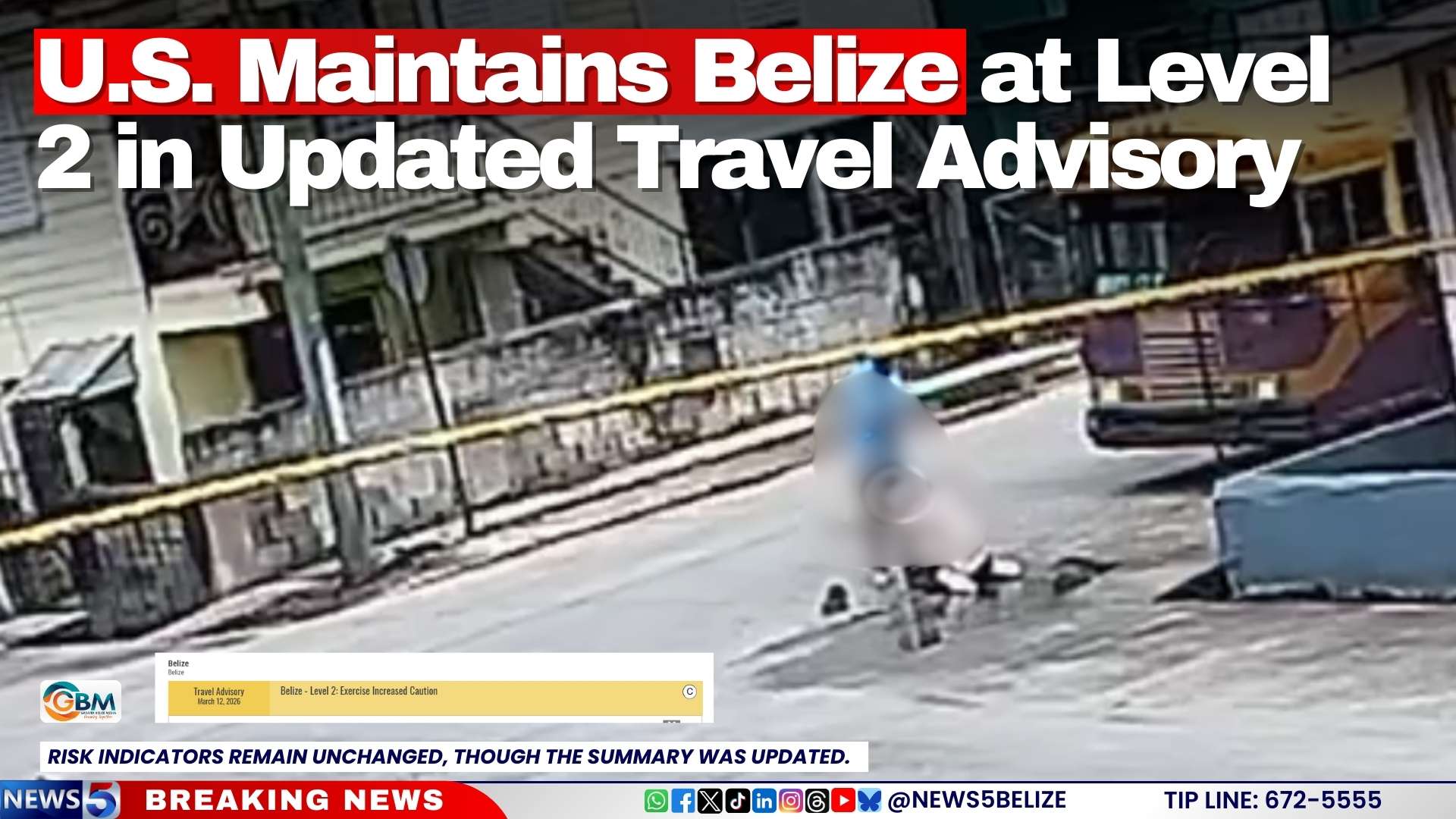
    The United States Department of State has reaffirmed its travel advisory for Belize, retaining the Central American nation at a Level 2 classification, which urges travelers to ‘Exercise Increased Caution.’ This assessment, reissued on March 12, 2026, continues to identify criminal activity as the predominant risk for visitors.

    The advisory underscores that while violent incidents can transpire in zones frequented by tourists, the epicenter of such crime remains concentrated on the south side of Belize City. The spectrum of offenses highlighted encompasses sexual assault, armed robbery, residential break-ins, and homicide, with a significant portion of this violence being attributed to ongoing gang conflicts.

    Compounding these security challenges, the update points to systemic issues within local infrastructure. Belizean law enforcement agencies are noted to operate with constrained resources, which frequently impedes criminal investigations and often results in cases remaining unsolved. Furthermore, the capacity for emergency medical response is characterized as limited. In instances of severe injury, medical evacuation to another country is frequently necessitated due to inadequate local treatment facilities.

    A distinct and more severe Level 3 advisory—’Reconsider Travel’—is applied specifically to the south side of Belize City. Consequently, U.S. government personnel are under strict directives to avoid travel south of the Haulover Creek Canal to Fabers Road. An additional security protocol prohibits them from inter-city road travel after nightfall.

    The advisory concludes with standardized safety recommendations for all visitors, which include avoiding walking or driving during nighttime hours, being discreet with valuables to not attract attention, and complying with assailants without physical resistance in the event of a robbery.

  • LOO Demands Explanation for Fuel Price Increase

    LOO Demands Explanation for Fuel Price Increase

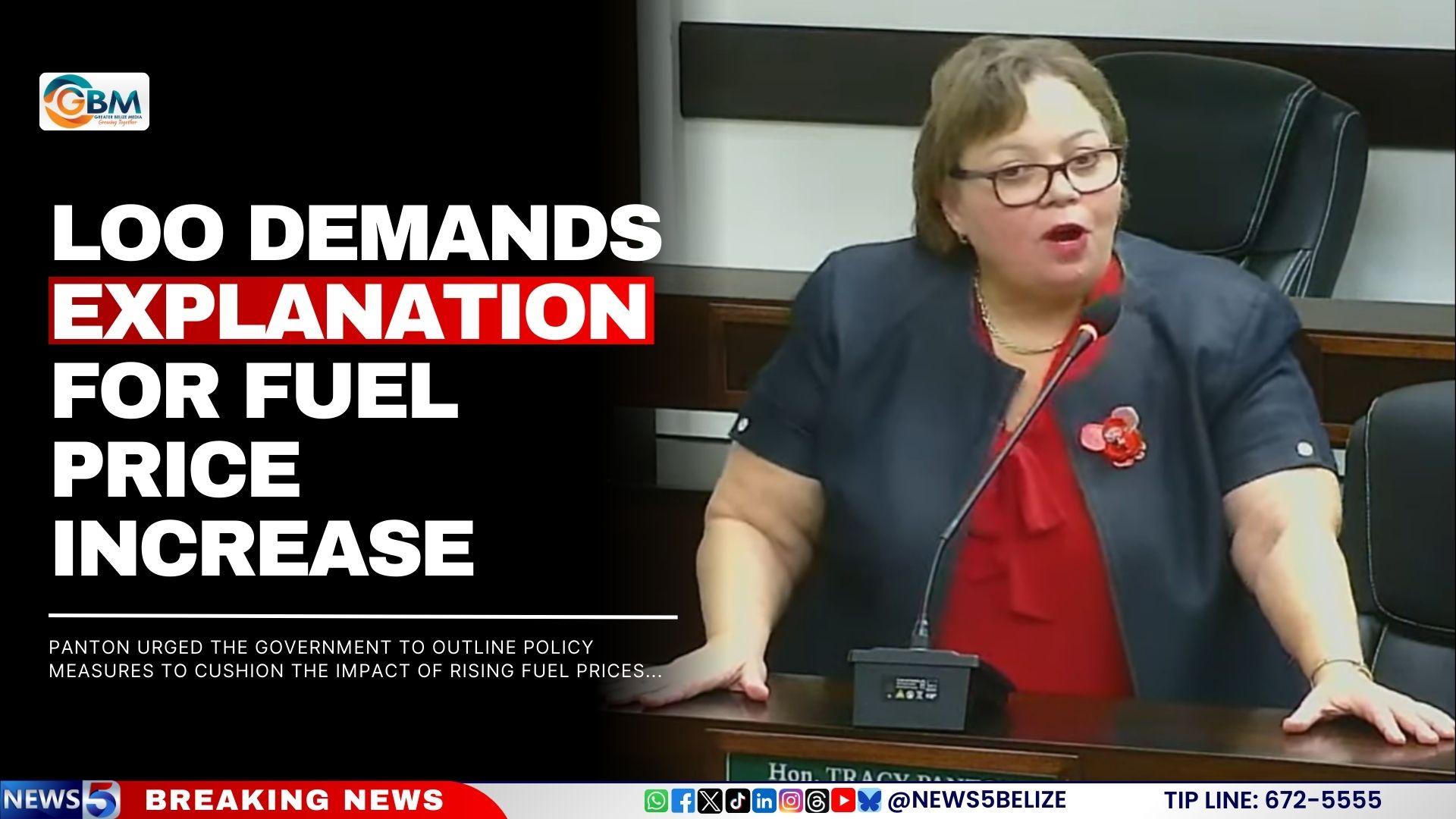
    BELIZE CITY – Opposition Leader Tracy Panton has issued a forceful demand for the Briceño administration to deliver a comprehensive explanation for the recent abrupt escalation in domestic fuel prices, challenging the government’s reference to international market conditions as insufficient justification.

    Prime Minister John Briceño previously attributed the price hike to escalating global fuel costs, specifically referencing the closure of the Strait of Hormuz following unexpected Middle East conflict developments. “This should surprise no one,” Briceño stated on Friday. “We’ve observed considerable price increases in the United States, and with twenty percent of global oil supplies transiting through the Strait of Hormuz now disrupted, Belizeans have been anticipating this adjustment.”

    Panton countered that such geopolitical explanations lack transparency for a government that once pledged exemplary accountability standards. She emphasized that Belize primarily imports refined petroleum products from Mexico and the United States rather than directly from conflict zones currently affecting global markets.

    The Opposition Leader highlighted that global crude oil prices have remained relatively stable within the $95-$100 per barrel range, questioning the mathematical correlation between international headlines and domestic price increases. Panton further pressed the administration to disclose whether it has pursued regional energy partnerships, specifically noting recent diplomatic engagements with Guyana—CARICOM’s largest oil producer—and Venezuela, which maintains the world’s largest proven oil reserves and historical ties with Belize.

    Panton concluded by urging the government to implement previously proposed policy measures, including reducing the fuel intake tax by at least $2 per gallon—a solution the current administration had advocated while in opposition.

  • Cletus Abraham band leader of Belles Combo better known as ‘Halibut’ has passed

    Cletus Abraham band leader of Belles Combo better known as ‘Halibut’ has passed

    The Caribbean music community is mourning the profound loss of legendary Dominican musician Cletus Andrew, universally celebrated by his stage name ‘Halibut,’ whose passing was confirmed by regional media outlets. An instrumental figure in the evolution of Creole music, Andrew cemented his legacy as the frontman and creative force behind the seminal cadence-lypso ensemble Belles Combo during the 1970s. His band’s innovative fusion of traditional cadence rhythms with calypso sounds defined a generation of Dominican music.

    Andrew achieved widespread acclaim with his iconic hit single ‘PAWABOL,’ a track that transcended its era to become a perennial anthem at cultural celebrations and remains a cornerstone of the genre. His recent artistic engagement included a celebrated appearance alongside the Midnight Groovers at the prestigious 2025 World Creole Music Festival, demonstrating his enduring vitality and connection to audiences.

    Dominica News Online, in formally announcing his death, has conveyed profound sympathies to Andrew’s grieving family, his wide circle of friends, and the entire musical fraternity across the island nation and the wider Caribbean. His departure signifies the loss of a genuine cultural architect whose contributions laid a foundational pillar for the Creole music scene. Tributes from fellow artists, historians, and fans are pouring in, commemorating a man whose work ensured the preservation and vibrant continued life of Dominican musical heritage.

  • Treasure Hunter Released After 10 Years; 500 Gold Coins Linked to Belize Still Missing

    Treasure Hunter Released After 10 Years; 500 Gold Coins Linked to Belize Still Missing

    After serving a ten-year prison term for contempt of court, renowned deep-sea explorer Thomas G. “Tommy” Thompson has been released from custody. The 73-year-old treasure hunter, who achieved fame in 1988 by locating the historic SS Central America shipwreck, completed his sentence on March 4, 2026.

    The SS Central America, famously known as the “Ship of Gold,” met its tragic end during a hurricane in 1857 while transporting substantial quantities of California gold. The maritime disaster claimed over 400 lives. Thompson’s groundbreaking discovery of the wreck off the South Carolina coast yielded treasure valued at tens of millions of dollars.

    Thompson’s release concludes one chapter of a complex legal saga that began when expedition investors filed lawsuits in 2005. These investors claimed they were denied their rightful shares from an estimated $50 million gold sale. The legal confrontation intensified when Thompson failed to appear in court proceedings in 2012, resulting in an arrest warrant.

    Following his capture in 2015, Thompson was held in contempt for refusing to disclose the whereabouts of 500 gold coins described as commemorative “restrikes” from the recovered treasure. Throughout legal proceedings, Thompson maintained that these coins were transferred to a trustee in Belize around 2009 and that he possesses no knowledge of their current location.

    Although the contempt order against Thompson was lifted in 2024, he remained incarcerated to complete a separate two-year sentence for his failure to appear in court. His release conditions include one year of supervised release and $250,000 in fines. The mystery of the missing gold coins, potentially linked to Belizean interests, remains unresolved.