作者: admin

  • $13 Million Worth of Drugs Destroyed

    $13 Million Worth of Drugs Destroyed

    In a major milestone for local anti-narcotics enforcement, law enforcement officials have carried out the destruction of one of the largest drug hauls seized in recent years, with an estimated total street value of $13 million. The operation, carried out in accordance with national drug control regulations, followed weeks of coordinated seizure activity across two key districts earlier this month. Police Commissioner Dr. Richard Rosado confirmed that the destroyed contraband included cocaine intercepted in Neuland, Corozal, and cannabis seized in the Lords Bank area.

    Under the framework of the Misuse of Drugs Act, law enforcement submitted a formal application to the local magistrate’s court to obtain approval for the destruction of the controlled substances. Rosado explained that the court granted the order after verifying that eliminating the narcotics would not compromise any ongoing criminal investigations or pending legal proceedings against suspects connected to the seizure. In total, authorities disposed of approximately 1,215.6 pounds of cocaine and 1,176.5 pounds of cannabis, marking one of the largest single-volume drug destruction operations in the region in recent memory.

    To ensure the operation went off without incident, heavy security protocols were implemented across every stage of the process. Assistant Commissioner Gualberto Garcia noted that uniformed officers were deployed at multiple locations along the transport and destruction route to secure the contraband and prevent any diversion or tampering. Garcia emphasized that large-scale destruction operations are a core part of the police force’s anti-drug strategy, even though this particular haul stood out for its unusually large volume.

    Despite the successful destruction of the narcotics, law enforcement investigations into the smuggling network behind the haul are far from over. Rosado confirmed that the probe is still ongoing and progressing as planned, with investigators now turning their attention to 15 containers of suspected aviation fuel and lighting equipment discovered in the Neuland area. Law enforcement officials suspect the equipment was intended to support cross-border drug smuggling operations, and additional arrests and seizures are expected as the investigation unfolds.

  • Forde stresses public’s child protection role as laws takes effect

    Forde stresses public’s child protection role as laws takes effect

    In a public briefing this week following the passage of new elder abuse legislation in Barbados’ Parliament, Social Services Minister Adrian Forde has issued a urgent, nationwide call for all Barbadians to serve as the frontline “eyes and ears” for child protection, clarifying that mandatory abuse reporting requirements have long been codified in the nation’s laws, and are not a new provision limited to the recently passed elder protection act.

    Speaking exclusively to Barbados TODAY, Forde outlined that the government is currently rolling out three landmark pieces of protection legislation covering vulnerable groups across the island – children, elder adults, and domestic abuse survivors. In the wake of public confusion sparked by the passage of the new elder abuse law this week, the minister took the opportunity to clear up widespread misinformation: similar mandatory reporting obligations already exist in existing child protection and domestic violence statutes, and the responsibility to safeguard at-risk community members does not fall solely on professional caregivers.

    Forde explained that while current law already requires designated professionals, particularly those working in healthcare and child services, to report suspected cases of abuse – with legal penalties for non-compliance – the government is now launching a broad public sensitization campaign to expand awareness of existing obligations among the general population.

    Under Barbados’ current child protection legislation, legal accountability is clearly established for any adult with custody, charge or ongoing care of a child. The law covers both intentional harm and failure to provide the basic care a child needs to thrive, and criminalizes a wide spectrum of abusive or neglectful actions. This includes direct physical or emotional abuse, exposing children to dangerous or harmful environments, failing to shield children from external threats, abandonment, desertion, chronic neglect, and any pattern of mistreatment. In essence, any action or inaction that leaves a child in need of formal state protection qualifies as a criminal offense under the law.

    Legal penalties for violations are intentionally steep to reflect the gravity of child cruelty. Offenders convicted through summary proceedings face a fine of up to $100,000, a 10-year prison sentence, or both. Crucially, the law imposes a proactive duty on caregivers to prioritize child safety, meaning that inaction when a child is in danger carries the same legal consequences as committing an intentional act of abuse.

    To address public concerns about wrongful reports, Forde emphasized that good-faith reports made by community members carry no legal risk. “If you make a report and it turns out your observation was incorrect, there are no repercussions. You will not face legal action,” he confirmed.

    When asked about unaddressed gaps or perceived “grey areas” in the current legal framework for child and vulnerable person protection, Forde acknowledged that no legislation is perfect from its rollout, and committed that the government will remain agile to adjust rules as implementation progresses. After the three landmark protection acts are fully enacted and rolled out, the government will collect on-the-ground data and feedback to identify areas for revision.

    “If additional protections are needed to address unforeseen edge cases or gaps, regulatory adjustments will be made to address those idiosyncrasies,” Forde said. “We are a listening government. We do not claim to be perfect. We will not get everything 100 percent right on the first attempt, but once we identify areas for review after rolling out the legislation, that is exactly what this government will do.”

    Closing his remarks, the minister struck a somber but resolute tone on the necessity of these strengthened protection measures. He acknowledged that the government would prefer to operate in a world where such strict protective legislation is completely unnecessary, but current societal realities require a firm legal foundation to safeguard vulnerable groups.

    “The journey of a thousand miles begins with a single step,” Forde noted. “As a government, we would far prefer not to bring Barbadians to court for violating legislation designed to protect the basic human rights of children. We would welcome a day when we no longer need this legislation at all – because that would be a day when there is no abuse. But we do not live in a perfect world.”

    Once all three protection laws are fully implemented, the government will conduct a full review of the framework based on real-world data and community feedback, and commit to taking targeted action to close any gaps that emerge.


  • Police Destroy 86 Cannabis Plants Discovered by Drone Surveillance

    Police Destroy 86 Cannabis Plants Discovered by Drone Surveillance

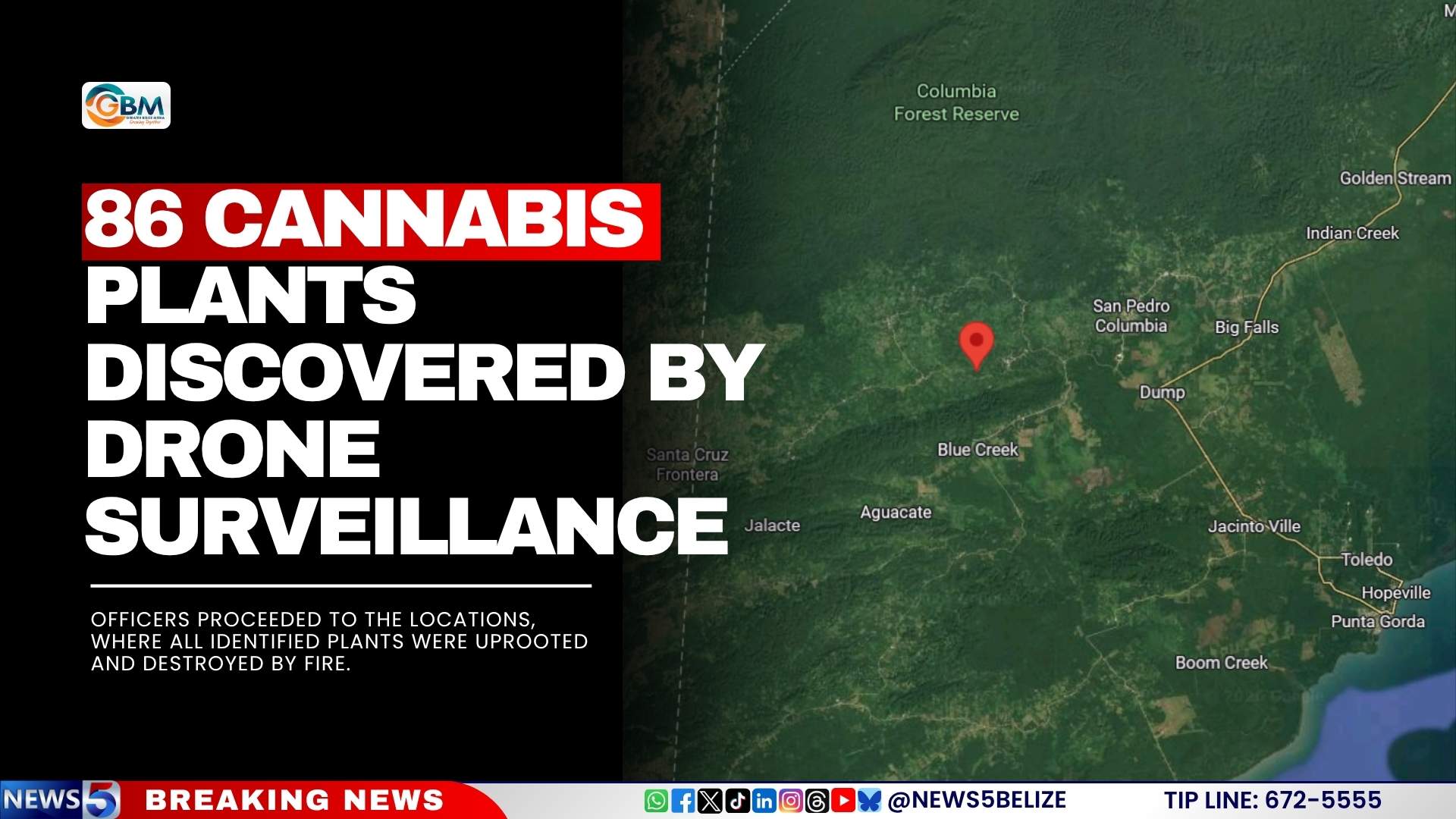
    In a targeted anti-narcotics operation carried out in Toledo District, law enforcement agencies have successfully eradicated nearly 90 illegal cannabis plants, thanks to modern aerial surveillance technology.

    The operation, launched by the Special Branch office, relied on drone reconnaissance to scan the remote, hard-to-reach rural areas of the district where unauthorized cannabis cultivation is often hidden from ground patrols. The unmanned aerial device quickly picked up unusual vegetation activity in a privately owned corn field, guiding the on-ground enforcement team to the first site.

    Upon arriving at the location, officers found dozens of harvested cannabis plants hanging to dry under a makeshift zinc-roofed shelter, tucked away out of sight from nearby roads and settlements. A systematic sweep of the surrounding terrain uncovered a second, separate plot where mature cannabis plants were still growing in the ground.

    Following standard operational protocols, officers uprooted all standing plants and removed the stored harvested crop before destroying the entire illegal haul by controlled fire. A post-operation count confirmed that a total of 86 plants were eliminated, with the mature specimens measuring between three and seven feet in height when they were seized.

    The successful operation highlights how integrating drone technology into rural anti-drug enforcement efforts helps law enforcement overcome the challenges of monitoring vast, remote terrain, cracking down on unauthorized cannabis cultivation that often goes undetected by traditional patrol methods.

  • BelCan Bridge Works to Displace Businesses, Mixed Reactions Emerge

    BelCan Bridge Works to Displace Businesses, Mixed Reactions Emerge

    The long-planned replacement project for Belize’s BelCan Bridge is entering its final preparatory phase, and the immediate impacts of the massive infrastructure upgrade are already disrupting commercial activity along the busy Phillip Goldson Highway. Local business owners, vehicle dealership operators, and taxi service providers that have set up operations in the project zone have recently received official eviction notices, requiring them to vacate their current locations to make space for a temporary crossing that project organizers say is indispensable to maintaining traffic flow through Belize City throughout the main construction period.

    Officials from Belize’s Ministry of Infrastructure Development and Housing have publicly confirmed that pre-construction work is now underway, addressing public concerns over potential gridlock once the original bridge is closed for replacement. Chief Engineer Evondale Moody explained that the temporary structure is a carefully planned mitigation measure designed to cut down on crippling traffic congestion that would otherwise paralyze movement within Belize City during the months-long construction window. While the solution addresses longstanding public worries about travel disruptions, it has imposed unplanned costs and uncertainty on the local commercial operators that have built their businesses along the highway corridor.

    Responses to the relocation order have been deeply divided across the affected community. Many operators are already making reluctant preparations to move their operations, while others have openly pushed back against the timeline and the lack of transitional support. Critics warn that the sudden, unplanned relocation could deliver a devastating financial blow to small, local livelihoods that operate on thin profit margins, with many unable to absorb the cost of moving or afford premium rents in alternative commercial locations. Still, the project does not face universal opposition: one long-tenured car dealer operating in the area expressed a pragmatic acceptance of the disruption, noting that “It is fine, there is no issues with that… we will move on.”

    Full construction work on the bridge replacement is scheduled to kick off in early May, and as the start date approaches, lingering questions remain about the long-term outcomes for the most vulnerable affected businesses, as well as potential adjustments to the project timeline that could reshape impacts on the local community. Belize News 5 will air a full in-depth report with additional details, interviews, and official updates during its 6 p.m. live broadcast tonight.

  • Who Will Pay More Under New Bus Fares?

    Who Will Pay More Under New Bus Fares?

    A pending adjustment to Belize’s public bus fare system is set to roll out at the start of next week, with varying impacts on daily commuters across different regions of the country depending on which service provider they rely on for travel.

    Following weeks of advocacy from the Belize Bus Association (BBA) and formal discussions held by the national Cabinet on Tuesday, government officials have given final approval to a new set of maximum allowable fares for intercity highway bus routes. The BBA, which first proposed the regulatory changes to standardize pricing across all bus operators and create fairer competitive conditions, had repeatedly highlighted mounting financial pressure driven by skyrocketing fuel costs that has strained operator budgets in recent months.

    Under the newly approved fare framework, three distinct service tiers will have set per-mile rate caps: regular commuter services will be capped at $0.18 per mile, express services at $0.20 per mile, and a newly introduced premium service tier will be allowed to charge up to $0.22 per mile. Individual operators retain the right to set prices below these caps, but cannot charge more than the approved maximum rates. The new rules are scheduled to go into full effect on Monday, April 27, just three days after the Cabinet signed off on the changes.

    The country’s largest bus operator, the National Bus Company (NBC), has announced it will not implement immediate fare changes in line with the new caps, stating in an official public statement released Friday that “Fares will remain unchanged at this time. Any future adjustments will be phased and carefully managed to reduce the burden on the travelling public.”

    Current route market share data from NBC shows the company dominates national highway commuter services, holding roughly 65% of the total market across the country. Its footprint is heavily concentrated in the southern and western corridors of Belize, where it controls 95% and 85% of the market respectively. By contrast, the NBC only holds 20% of the commuter market in the northern corridor, meaning most daily bus commuters in northern Belize rely on smaller BBA-affiliated operators that have pushed for the higher standardized fares. This lopsided market split means that commuters who rely on daily bus service in the northern region will be far more likely to face higher fares following Monday’s regulatory change, while most commuters in the south and west will see no immediate change to their bus travel costs thanks to NBC’s current freeze on pricing.

    Local outlet News 5 plans to air a full in-depth report on the new fare structure and its projected impacts during its 6 p.m. News 5 Live broadcast Friday evening.

  • Night Roadworks to Disrupt Traffic Between FADI and Fresh and Eazy on All Saints Road

    Night Roadworks to Disrupt Traffic Between FADI and Fresh and Eazy on All Saints Road

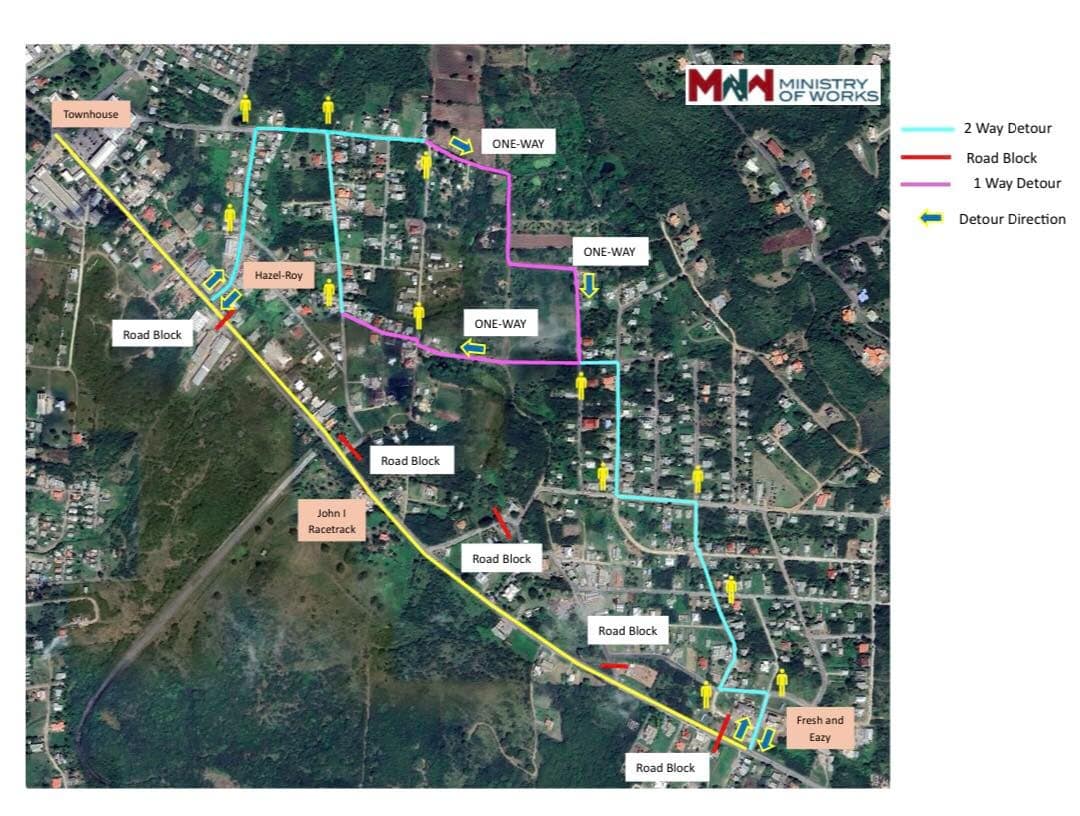
    Residents and commuters in Antigua and Barbuda are being alerted to upcoming overnight infrastructure rehabilitation works on a key stretch of All Saints Road, set to kick off next year. The Ministry of Works has confirmed that construction activities will resume between the FADI Building Supplies and Fresh and Eazy Supermarket junctions, with a formal traffic diversion set to take effect starting at 7:00 pm on Thursday, April 24, 2026, running through to 7:00 am the following day.

    To minimize travel disruption, transportation officials have outlined a clear directional detour for all road users. For motorists traveling out of the city center, the route requires a left turn at the Hazelroy’s intersection on All Saints Road, before following marked signage and the official project map to bypass the work zone. For those heading into town, drivers will turn right at Fresh and Eazy Supermarket and continue along the pre-marked alternative route.

    On-site traffic marshals, also known as flag persons, will be stationed at key points along the detour to help guide vehicle flow and prevent congestion. Officials have emphasized that specific sections of the diversion route will operate as temporary one-way traffic zones, with all restrictions clearly marked on the official project map and physical signage posted along the route to assist commuters traveling in both directions.

    Local residents who live adjacent to the work zone will still be granted access to their properties throughout the construction period. However, authorities are urging all people moving through the area to exercise extra caution when passing near the site, as large heavy-duty construction equipment will be active in the work zone overnight.

    Crucially, all commercial businesses located along the affected stretch of road will remain open for normal operations during the works. This rehabilitation forms part of the broader government-led All Saints Road infrastructure upgrade project, overseen by the Government of Antigua and Barbuda.

    Project stakeholders and regular road users are strongly encouraged to adjust their upcoming travel plans in advance to account for potential delays along the route. Any questions or inquiries about the works or detour can be directed to the Project Implementation Management Unit via phone at 562-9173 during regular operating hours.

  • Markoesaproject moet impuls geven aan nationale landbouwproductie

    Markoesaproject moet impuls geven aan nationale landbouwproductie

    On April 24, Suriname’s President Jennifer Simons launched the transformative Markoesa (Passion Fruit) Outgrowers Project in Groningen, Saramacca, kicking off a national initiative designed to strengthen domestic agricultural output and drive inclusive economic development across the South American nation.

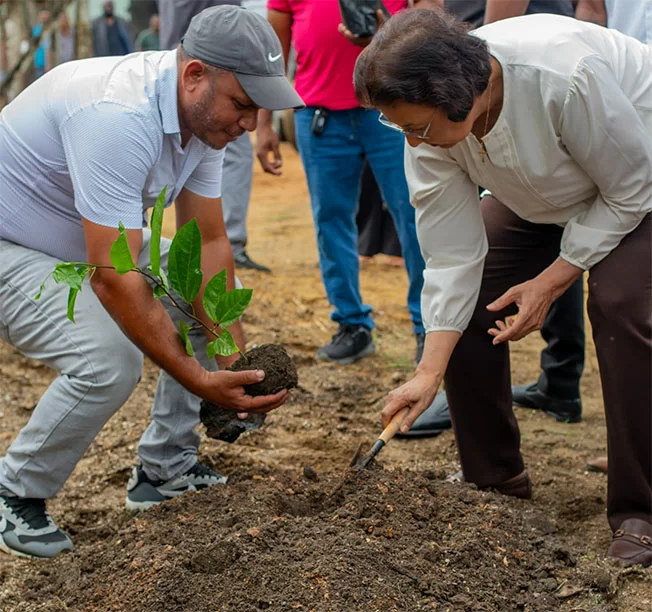
    At the launch event, President Simons planted the first passion fruit vine to mark the project’s start, emphasizing that expanding local agricultural production remains a core pillar of Suriname’s long-term economic growth strategy. She framed the initiative as a landmark step in the country’s new national development direction, which centers on increasing meaningful participation of local Surinamese residents in domestic production sectors.

    The project, developed through a partnership between the Ministry of Agriculture, Livestock and Fisheries (LVV) and the Suriname Labour Intelligence Platform, is specifically designed to advance two key national priorities: poverty reduction and job creation. President Simons noted that sustainable poverty alleviation can only be achieved when communities are given accessible opportunities to generate their own independent incomes. By creating new formal jobs and encouraging small-scale agribusiness entrepreneurship, the passion fruit project directly advances these goals, she said.

    In her remarks, the president extended particular encouragement to young Surinamese to explore careers and business opportunities in the agricultural sector. “Food security is a permanent national need. The agricultural sector will always remain vital, and it offers real, sustainable opportunities to build a stable income,” Simons stated, according to official remarks from the Suriname Communication Service. She also expressed public appreciation for the farmers who have already joined the project, and called on more Surinamese to consider entering the agribusiness space.

    To expand access to the sector for new entrants, the Surinamese government is currently working with LVV to develop frameworks that will make unused agricultural land available to aspiring farmers who do not yet own their own plots. For current project participants, who already hold land rights, the initiative provides targeted guidance and training to help them maximize productivity on their existing parcels. President Simons also emphasized that strict oversight will be enforced to ensure productive use of all allocated land: “If allocated land is left unplanted, the contract will be terminated so that other aspiring producers can get the opportunity to use it,” she clarified.

    Beyond passion fruit cultivation, the Surinamese government plans to scale this outgrower model to other high-potential agricultural products in the coming months. President Simons linked the push for expanded local production to the country’s rapidly growing oil and gas sector, noting that as domestic demand for food rises alongside broader economic growth, it is critical that Surinamese producers capture the benefits of this increased demand. She warned that failing to scale up local output would lead to greater reliance on food imports and higher consumer prices for domestic households. At the same time, Simons highlighted untapped export opportunities for Surinamese agricultural products, particularly in regional Caribbean markets.

    The passion fruit outgrower project will eventually be expanded to other districts across Suriname, according to government plans. Beyond hands-on agricultural training, the initiative provides participating farmers with a key guarantee: a secured market outlet for their harvest, ensuring they can reliably generate income from their production.

  • Unidentified Decomposed Body Found Behind Port of Belize

    Unidentified Decomposed Body Found Behind Port of Belize

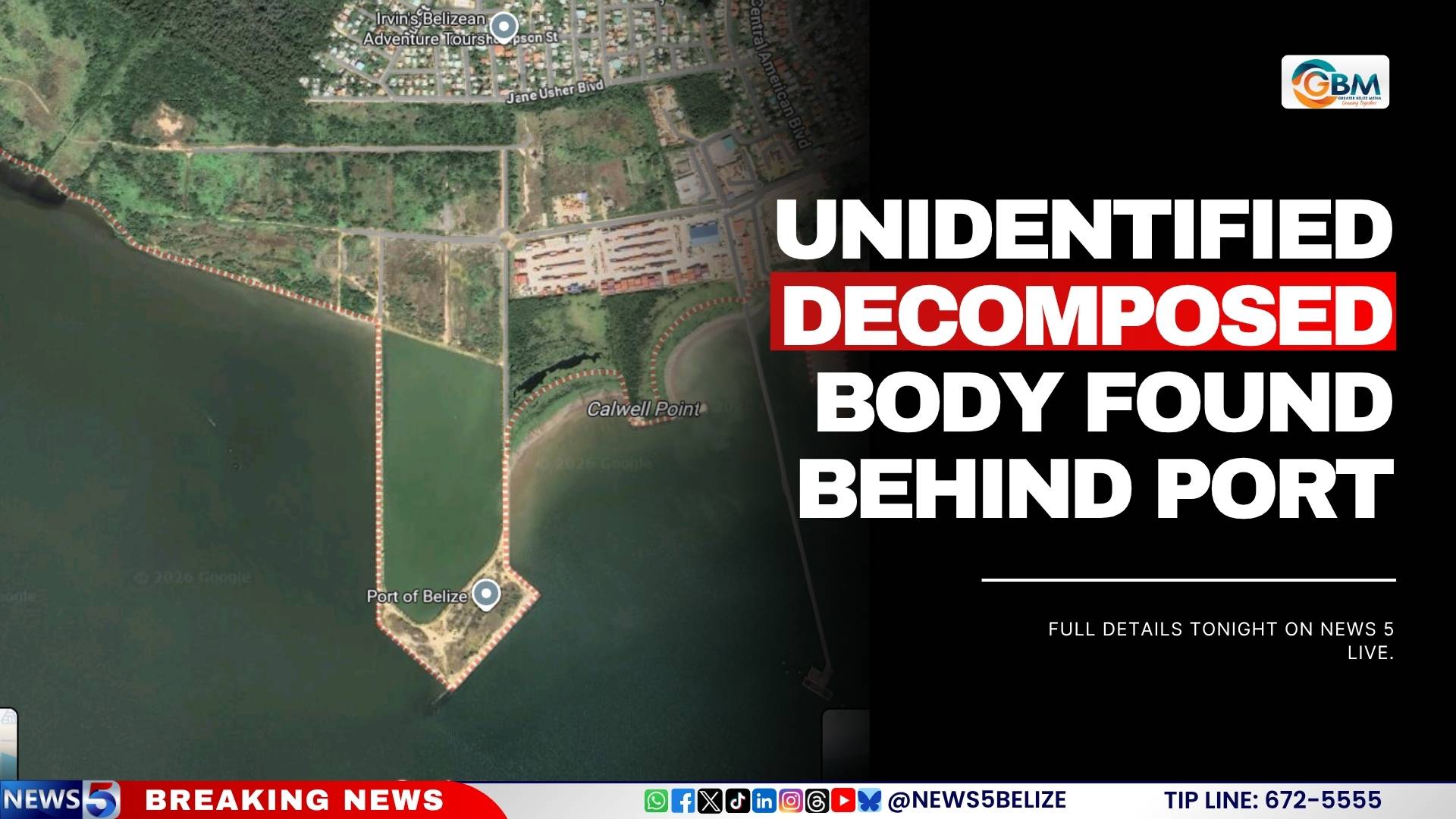
    On April 24, 2026, law enforcement officials in Belize confirmed the recovery of an unidentified decomposed male body found earlier that day in a location behind the Port of Belize, situated in the country’s old capital city.

    When first responders arrived at the scene to process the discovery, they documented that the remains were found wearing casual clothing: a plain black T-shirt, khaki trousers, and a pair of black-and-white Nike athletic sneakers. No forms of identification were located near the body to help confirm the individual’s identity immediately.

    Since the deceased cannot be linked to a known person at this stage of the process, investigators have officially registered the case under the placeholder name John Doe. The remains have already been moved to the morgue operated by the Belize National Forensic Services Laboratory, where a full post-mortem examination is scheduled to take place. Forensic pathologists will conduct a thorough analysis to pinpoint the exact cause and time of death, key details that will guide the ongoing criminal investigation.

    Local law enforcement has confirmed that they are actively working to uncover the full circumstances leading up to the man’s death, and have not released any further updates on potential persons of interest or case leads at this time. As the investigation progresses, additional information will be made public once it is cleared for release by investigative teams.

  • More Aviation Fuel Found in Neuland

    More Aviation Fuel Found in Neuland

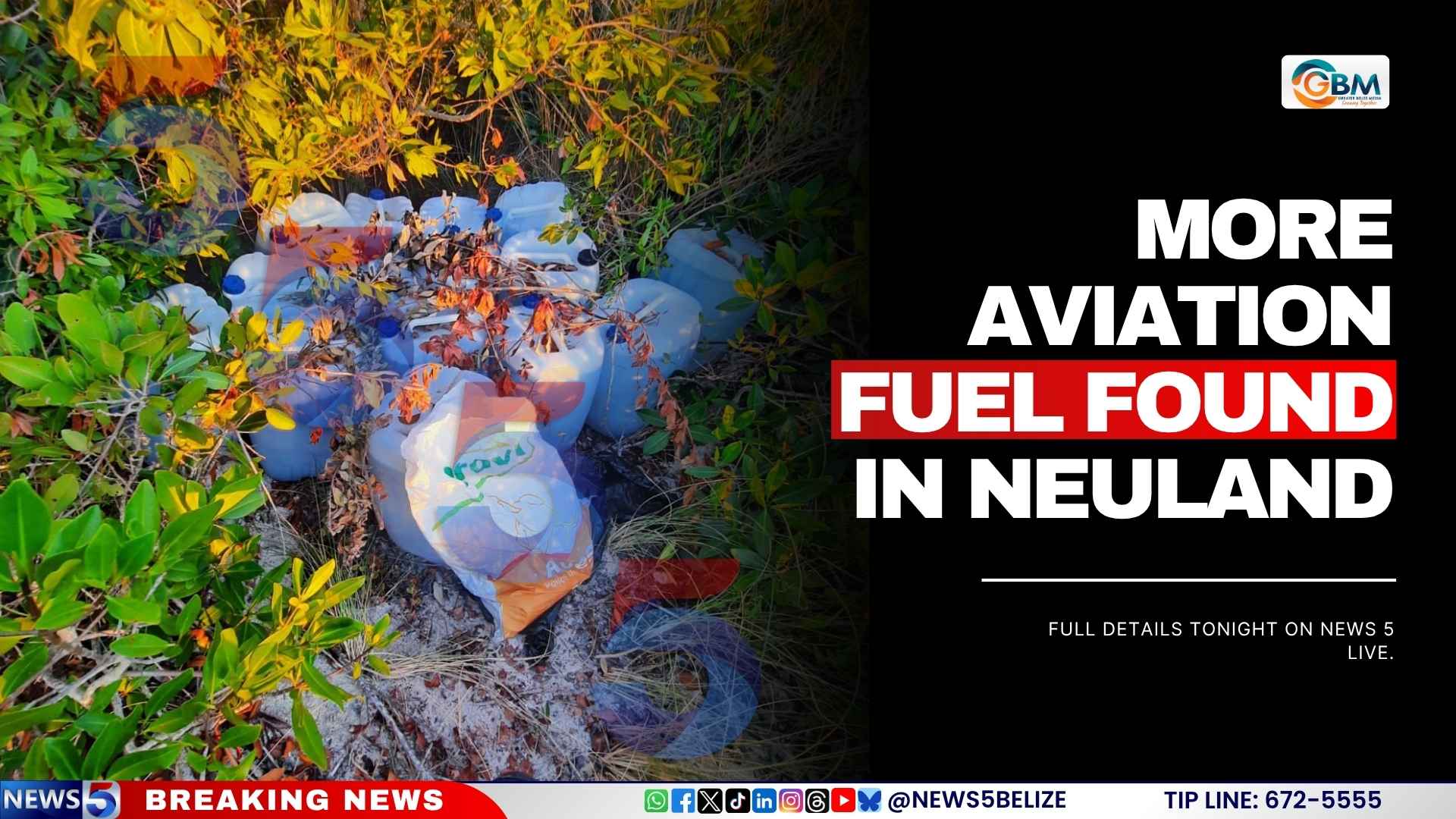
    In a developing investigation into international drug trafficking activity in northern Belize, authorities have uncovered a stockpile of suspected contraband aviation fuel that points to a far larger, ongoing smuggling operation than initially thought. Belize Police Commissioner Dr. Richard Rosado publicly confirmed Wednesday that law enforcement teams discovered 15 containers holding what is believed to be illicit aviation fuel during a patrol of the Neuland community in Corozal District on Tuesday. Alongside the fuel cache, investigators also found an unauthorized lighting system set up in the remote area, which they say was intentionally installed to facilitate unregulated nighttime aircraft landings in the region. The discovery comes just weeks after a landmark joint anti-drug operation between Belizean law enforcement and global partner agencies intercepted a drug-carrying narco-plane in the same general area. That operation seized more than 1,000 pounds of high-purity cocaine, with an estimated street value of approximately $11 million, and led to the immediate arrest of the aircraft’s two crew members: Mexican nationals Edgar Aguilar and Paul Valenzuela, identified as the plane’s pilot and co-pilot respectively. The pair remain in custody awaiting trial on charges of drug importation and violations of Belizean immigration law, with court proceedings ongoing. Investigators say the latest find of pre-staged fuel and landing lighting confirms their early hypothesis that the intercepted narco-flight was not an isolated incident. Instead, the cached supplies indicate that trafficking groups had planned multiple drug shipments via air into Belize, with the fuel and infrastructure prepared to support repeated landing operations. Full updates on the expanding investigation will be broadcast during tonight’s primetime broadcast of News 5 Live.

  • Football clubs to receive financial tips

    Football clubs to receive financial tips

    In an innovative, first-of-its-kind initiative led by the Barbados Football Association (BFA), amateur football clubs across the Caribbean island are on the cusp of sweeping improvements to their long-troubled financial and administrative operations. BFA General Secretary Nicholas Branker shared details of the groundbreaking project in an interview with local outlet Barbados TODAY, just days ahead of the association’s much-anticipated Club Development Clinic, scheduled to take place this Saturday at the BFA’s Technical Centre.

    Unlike traditional one-off informational workshops that often leave clubs without actionable follow-through, this clinic is the product of a collaborative partnership between the BFA and key private sector stakeholders, including the business development agency Business Barbados, as well as multiple commercial banks and credit unions across the country. Branker explained that the move directly addresses repeated pleas for help from local clubs, which have long struggled to meet the legal requirements for formal operation and stable financial management.

    The core goal of the initiative is to guide participating clubs through two critical foundational steps: formal registration as non-profit entities, and the successful establishment of dedicated club bank accounts. What sets this program apart from past outreach efforts is its hands-on, on-site completion model. Rather than leaving clubs to navigate complicated bureaucratic processes on their own after a general presentation, organizers are bringing all necessary resources directly to the clinic. Business Barbados will deploy mobile registration servers to the venue, allowing clubs to complete their entire registration process during the event itself, cutting through red tape and eliminating the common problem of unfinished applications that get lost in bureaucratic backlogs.

    Branker noted that local clubs have already responded with overwhelming enthusiasm to the initiative, with many reaching out ahead of the event to ask which representatives they should send to get the most out of the workshop. To clear up common confusion, Branker clarified that rather than sending coaching staff, clubs should dispatch the individuals who will act as official bank signatories and hold the documentation required for non-profit registration. These are the decision-makers that can complete the process on-site and carry forward the new governance framework after the clinic.

    Branker extended public gratitude to all participating partners for their commitment to the project, noting that the representatives from Business Barbados, financial institutions, and the Prime Minister’s Cup are volunteering their time on a weekend, when they would otherwise be focused on their regular operations. This cross-sector collaboration marks a significant turning point for local football governance, with the potential to create a more transparent, sustainable foundation for club growth across Barbados.