作者: admin

  • Feinstein Fails to Reopen Stake Bank Appeal Case with New Report

    Feinstein Fails to Reopen Stake Bank Appeal Case with New Report

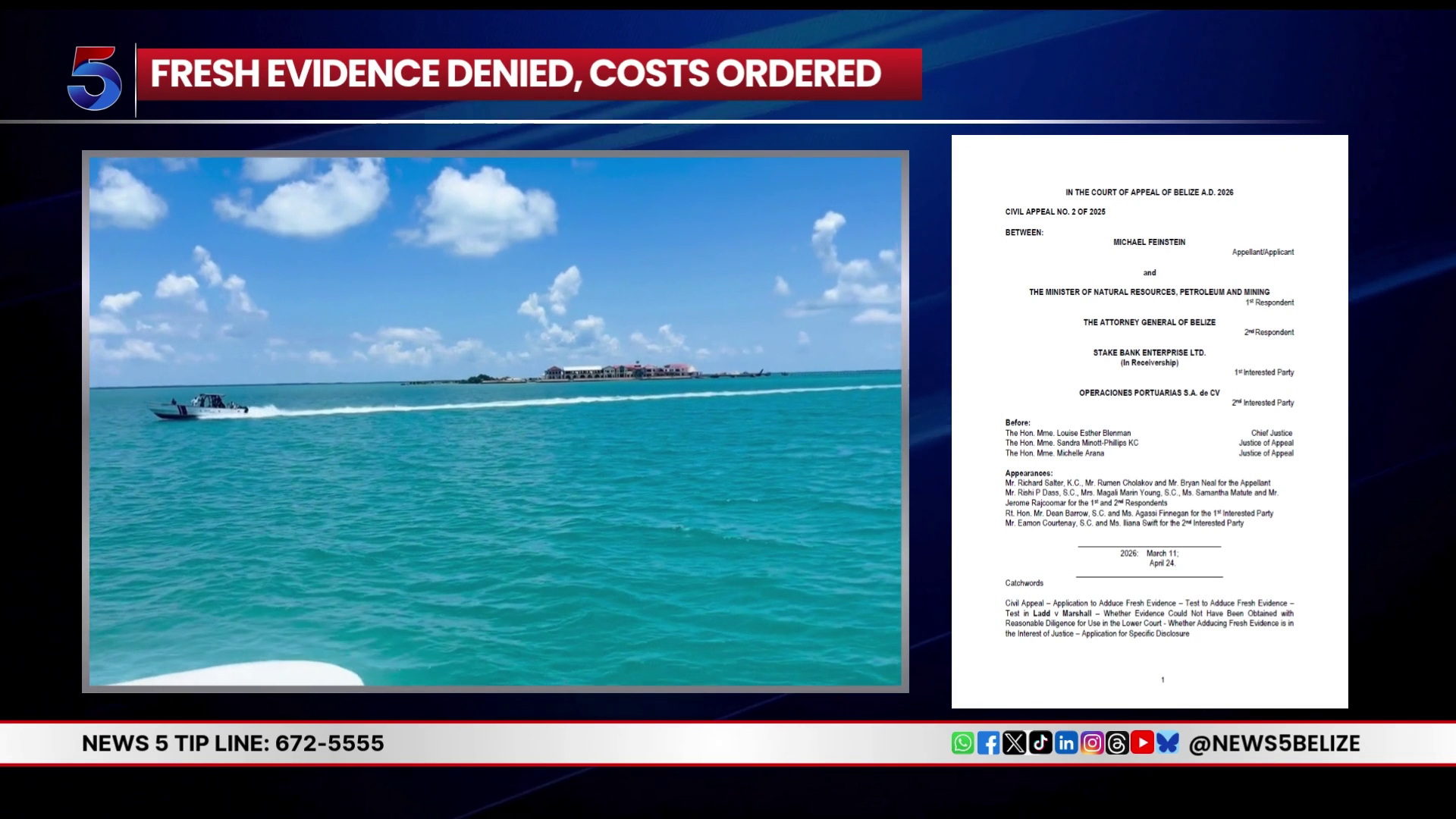
    A key legal battle over Belize’s high-profile Stake Bank Extension cruise port project took a decisive turn last week, when the Court of Appeal ruled against local businessman Michael Feinstein’s bid to reopen his appeal case with newly submitted evidence.

    Feinstein has been challenging the compulsory acquisition of his land for the infrastructure development, arguing that the government’s justification for seizing the property was legally flawed. To bolster his appeal, he sought court permission to introduce a fresh analysis from an independent tourism consultant that compares competing cruise port development options across Belize. He claimed the report would provide new context to prove the government’s original reasoning for the land acquisition was unfounded.

    However, the appellate judges delivered a clear rejection of both his request to submit the new evidence and his separate demand for additional internal document disclosure from the government. In their written ruling, the court outlined that Feinstein could have secured and submitted the consultant’s report during the original trial if he had exercised reasonable professional diligence. Judges further emphasized that even if the report had been considered, it would not have altered the final outcome of the initial case.

    The ruling also reinforced a core principle of appellate procedure: appeals are not intended to give litigants a second opportunity to construct an entirely new case using evidence that was omitted from the original trial proceedings. On the matter of document disclosure, the court labeled Feinstein’s request for additional government records as unnecessary at this late procedural stage, noting that granting the order would not serve the public interest of justice.

    The outcome of this procedural hearing clears a major path for the government, removing a key barrier that threatened to delay the ongoing appeal process. As a consequence of the ruling, Feinstein was also ordered to cover the legal costs incurred by the government and all other parties involved in responding to his application. Moving forward, the substantive appeal will proceed to a full hearing based solely on the evidence that was already entered into the court record during the original trial, with the core question remaining whether the initial judgment upholding the compulsory land acquisition was legally valid.

    Legal and development observers note that this ruling sets a clear precedent for procedural conduct in appellate land dispute cases in Belize, while the final outcome of the substantive appeal will have long-lasting implications for the future of the Stake Bank cruise port project, a major development initiative expected to boost the country’s tourism sector. News outlets will continue to cover the case as it moves toward its full substantive hearing.

  • Abinader reopens National Museum of History and Geography after renovation

    Abinader reopens National Museum of History and Geography after renovation

    Santo Domingo, Dominican Republic – A landmark moment for the country’s cultural heritage sector unfolded this week, as President Luis Abinader presided over the official reopening of the Emilio Cordero Michel National Museum of History and Geography. The venue, located at the iconic Juan Pablo Duarte Cultural Plaza, underwent a months-long comprehensive renovation project that upgraded its infrastructure and reimagined its public exhibition spaces, designed to better protect and showcase the Dominican Republic’s centuries of shared history. The opening ceremony drew a cross-section of prominent attendees, including senior national cultural authorities, directors of leading regional museums, high-ranking government officials, and special guests from academic and heritage organizations across the country.

    The renovation initiative addressed both interior and exterior upgrades to the museum’s aging facilities, with key focus areas including expanded accessibility for visitors with disabilities, improved climate and storage conditions to preserve fragile historical artifacts, and a complete overhaul of the visitor journey to create a more engaging, educational experience for guests of all ages. As part of the project, seven fully renovated galleries were unveiled to the public, each curated to highlight pivotal periods and transformative figures that shaped modern Dominican identity. Curated exhibitions cover a range of critical historical topics, from the 1965 April War and the legacies of key national leaders to the decades of the Trujillo dictatorship and the enduring impact of Francisco Caamaño.

    Speaking at the reopening ceremony, President Abinader emphasized that investing in robust cultural institutions is foundational to protecting national collective identity and providing high-quality historical education for coming generations of Dominicans. Roberto Ángel Salcedo, the country’s Minister of Culture, framed the renovated museum as a major milestone for advancing national historical reflection and formal civic education across the country. Museum leadership further noted that the updated institution is positioned to better serve its core audience of school groups, academic researchers, and domestic and international tourists eager to learn more about Dominican history.

    Originally founded in 1981, the museum was formally renamed to honor prominent Dominican historian Emilio Cordero Michel in 2023. Today, it stands as one of the most important and comprehensive repositories of the Dominican Republic’s collective historical memory, a role that the renovation project has positioned it to fill for decades to come.

  • Thirteen Homes Lost as Flames Sweep San Pedro Columbia

    Thirteen Homes Lost as Flames Sweep San Pedro Columbia

    A rapidly spreading wildfire has left a small Belizean community reeling from destruction after it swept through San Pedro Columbia, located in the Toledo District, on April 28, 2026. The blaze, which ignited inside a kitchen attached to a local church, was fanned by strong gusts of wind that carried flames across nearly a quarter mile of densely packed residential area, ultimately destroying 13 traditional thatch homes and displacing roughly 10 families who called the structures home.

    Village Chairman Abner Cal shared details of the incident in an interview with local outlet News Five, crediting quick-thinking community members with halting the fire’s advance before it could claim more property. Villagers formed a coordinated chain at strategic points across the affected area, dousing surrounding structures and brush with water to cut off the fire’s path. While strong winds continue to pose a minor risk of reignition, Cal confirmed that the blaze has been fully contained as of the initial report.

    Cal confirmed that all 13 destroyed structures have been accounted for, and explained that the all-thatch construction of most village homes made containment particularly difficult, as dry thatch ignites instantly and allows flames to jump quickly between adjacent properties. In the wake of the destruction, the village chairman has issued a public appeal for emergency assistance to support the 10 displaced families, who face an urgent need for shelter, basic supplies and resources to rebuild their lost homes. Interested donors or aid organizations can reach Cal directly at his contact number 625-0099 to offer support, he said.

    This report is adapted from a transcript of an evening television newscast originally published by the local outlet.

  • Caribbean Leaders Push for Regenerative Tourism

    Caribbean Leaders Push for Regenerative Tourism

    As global tourism rebounds to record-breaking heights, injecting trillions of dollars into the world economy, industry and government leaders from across the globe have gathered in Belize for a pivotal conversation about the sector’s future. Against a backdrop of soaring international visitor arrivals, the gathering centers on a urgent, long-unresolved question: how to expand tourism without overwhelming local communities and destroying the irreplaceable natural and cultural assets that draw travelers in the first place. Moving beyond the decades-long focus on sheer visitor volume, the summit is pushing for a paradigm shift toward balanced, long-term growth—an approach industry innovators have dubbed “better tourism.”

    For the Caribbean region, this conversation is far from theoretical. Tourism contributes an average of 32% of total gross domestic product across Caribbean nations, with some island economies relying on the sector for as much as 90% of their annual output. In 2025 alone, the region welcomed an estimated 70 million international visitors, a figure that underscores both the economic power and the existential risk of mass tourism. The natural landscapes, biodiverse coastal ecosystems, and unique cultural heritage that make the Caribbean a top global destination are increasingly at risk from the very growth that drives the region’s economy.

    “What we protect sustains us,” explained Evan Tillett, Director of the Belize Tourism Board, in remarks at the summit. “That lesson did not arise from theory but from recognition that our natural and cultural assets are finite and, once compromised, are not easily restored. The question, therefore, was never whether we pursue growth, but how we grow without forfeiting the very foundation that makes growth possible.”

    The environmental costs of traditional mass tourism are impossible to ignore: the sector accounts for roughly 10% of global greenhouse gas emissions, and unchecked tourism-driven development has accelerated pollution that threatens fragile coastal ecosystems across the globe. Anthony Mahler, Belize’s Minister of Tourism, outlined the stark consequences of inaction facing small island nations.

    “The pollution crisis is real, and it threatens everything we need to protect our environment, our public health, and most of all, our people,” Mahler said. “It is driven by inadequate waste management and unchecked coastal development. The ocean absorbs an estimated 8 to 12 million metric tons of plastic waste every single year. Approximately 80% of all wastewater worldwide is discharged into our waters without adequate treatment. The consequences are visible all across our region. Our beaches are eroding, our coral reefs are experiencing bleaching, and sargassum is relentlessly pounding our coastlines.”

    This tension between short-term economic gain and long-term environmental and community health is not unique to the Caribbean. Leaders from tourism economies around the world shared their own experiences of the harm caused by prioritizing volume over sustainability. Pania Tyson-Nathan, Chief Executive of New Zealand Māori Tourism, noted that conventional tourism models have often failed to deliver equitable benefits to local and Indigenous communities.

    “Tourism has been very good for growth. It has been less good at respect to care, protection, and importantly, giving back. And even less effective at ensuring that local businesses, communities, and peoples are the ones that benefit from it,” Tyson-Nathan said. “That is the tension we are all navigating, and one of the reasons we are all here. Low value jobs creating low value economies, and I dislike this one immensely, gentrification, where locals can no longer afford to live in their homes or in their tribal lands because policies and consents have favored developers who turn our homelands into playgrounds or holiday homes.”

    To address these gaps, regional leaders are calling for a step beyond basic sustainable tourism, which focuses primarily on reducing harm. Instead, they are advocating for regenerative tourism, a model that actively improves the places and communities that host visitors. “We must move toward regenerative tourism,” said Ian Gooding-Edghill, Minister of Tourism for Barbados. “Our efforts go beyond minimizing harm to actively restoring ecosystems, strengthening communities, and preserving and celebrating our cultures. It is about shifting from doing less damage to creating a net positive impact for our people, our environments, and of course our economies.”

    As the summit progresses, the core consensus that has emerged is clear: the future of global tourism does not depend on how many visitors the industry can attract, but on how well it serves people, preserves culture, and protects the natural environment. Reporting for News Five, Zenida Lanza contributed to this report from Belize City.

  • Scientist Defends Croc After Pre-dawn Caye Caulker Attack

    Scientist Defends Croc After Pre-dawn Caye Caulker Attack

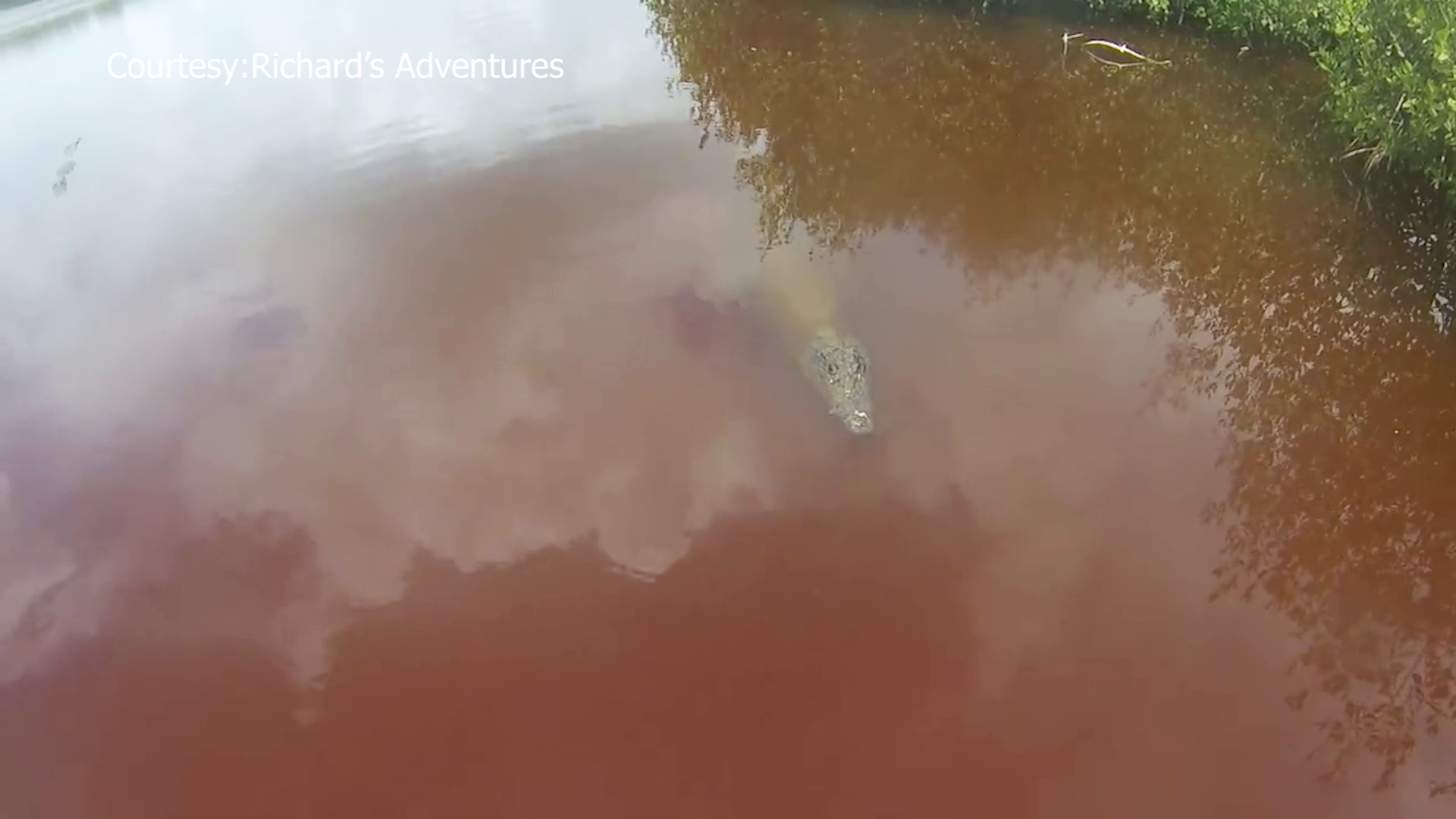
    A pre-dawn crocodile attack on Caye Caulker that left an American tourist with severe arm injuries has ignited fierce public backlash, with local residents demanding the animal be captured and killed immediately. However, a leading crocodile researcher is pushing back against these calls, arguing that the incident was a defensive reaction rather than unprovoked aggression, and that human behavior is the root cause of the conflict.

    The attack, which occurred in early morning hours before sunrise, sent the 52-year-old American woman to a local hospital for urgent treatment of serious arm wounds, as confirmed in initial reports published Monday evening. In the wake of the frightening incident, frustrated residents have launched growing pressure on local authorities to track down and eliminate the crocodile, framing the reptile as a dangerous threat to community safety.

    But Dr. Marissa Tellez, executive director of the Crocodile Research Coalition, is stepping forward to defend the animal and educate the public on crocodile behavior ahead of any drastic action. Tellez emphasized that the attack was not an attempt by the crocodile to hunt or kill the swimmer, but rather a defensive warning driven by two key seasonal and environmental factors.

    “When an attack happens, usually the root of the problem is not the bad behavior of the crocodile, it is usually the bad behavior or maybe some misinformation or miseducation by some humans,” Tellez explained in an interview following the incident. She pointed to key differences between a predatory attack and a defensive bite to back up her assessment: American crocodiles, which hold the strongest bite force of any animal on Earth, do not release their prey if they intend to kill. In this case, the crocodile bit the woman and immediately let go, a clear sign it was only issuing a warning to protect itself or its nest.

    Tellez noted that this time of year brings a predictable increase in human-crocodile conflicts across the Caye Caulker region, as it falls squarely in the American crocodile’s nesting season. Female crocodiles become far more defensive during this period as they guard their nests and newly hatched young, and historical research on Caye Caulker’s crocodile population confirms that the northern stretch of the island — where the attack occurred — is a primary nesting site for local females.

    A second contributing factor, Tellez added, aligns with the timing of the incident: crocodiles naturally hunt and feed during the pre-dawn hours, the exact same time the American woman entered the water to swim. This overlap in activity increased the likelihood of an unexpected encounter between the reptile and the human swimmer.

    Tellez’s public comments come as Belize grapples with ongoing tensions between coastal development, ecotourism, and the conservation of native predator species like the American crocodile, which is listed as a vulnerable species by the International Union for Conservation of Nature. Her call for public education and coexistence contrasts with widespread public anger over the attack, which has put local wildlife officials in a difficult position between conservation goals and community safety demands.

    This report is adapted from a transcribed evening television newscast originally published online following the attack.

  • Cross Border Effort Clears Tons of Garbage from Mopan River

    Cross Border Effort Clears Tons of Garbage from Mopan River

    In a landmark demonstration of transboundary environmental cooperation, community leaders and volunteers from Belize and Guatemala have joined forces to clear more than two tons of accumulated garbage from the Mopan River, a critical shared waterway that runs along the two countries’ shared border. The April 2026 initiative was organized quickly after viral social media footage exposed the severe pollution buildup along the riverbank just meters from the Belize-Guatemala dividing line, mobilizing nearly 40 local volunteers in less than a week. Spearheading the effort was Jorge Rosales, mayor of the Belizean town Benque Viejo del Carmen, who partnered directly with municipal counterparts from the adjacent Guatemalan town Melchor de Mencos to coordinate logistics and access for the cleanup team.

    Equipped with just two canoes and hand tools for waste retrieval, the joint volunteer crew worked along the polluted border stretch of the riverbank to collect 95 full bags of discarded waste, ultimately totaling approximately 2.35 tons of removed debris. Due to the site’s geography — the Guatemalan side’s public road is only 100 feet from the riverbank, compared to a much longer distance to the nearest road on the Belizean side — the team transported all collected waste to the Guatemalan side for proper disposal, a practical arrangement both municipalities agreed to streamline the effort. In an interview following the cleanup, Rosales emphasized the urgent need for action, noting that unaddressed waste would have been washed into the river and carried downstream to the Caribbean Ocean off the coast of Belize City during upcoming rainy seasons.

    Beyond the immediate removal of harmful debris, the project’s leaders say the cross-border collaboration sends a clear message: environmental stewardship does not stop at national borders. Rosales highlighted the fundamental importance of protecting shared water resources, closing his remarks with a simple, powerful reminder: “Water is life.” He extended gratitude to all participating volunteers and community members who contributed time and resources to the effort, and shared before-and-after photos of the cleanup site to the town’s official Facebook page to showcase the impact of the joint work and raise public awareness about ongoing pollution prevention. Local organizers on both sides of the border have already begun discussing plans to make the cross-border Mopan River cleanup an annual event, aiming to address ongoing waste accumulation and encourage long-term habits of proper waste disposal among communities along the river.

  • Abinader to represent Dominican Republic at Madrid Ibero-American Summit

    Abinader to represent Dominican Republic at Madrid Ibero-American Summit

    During an official diplomatic visit to the Dominican Republic’s capital of Santo Domingo, Spanish Foreign Minister José Manuel Albares has formally confirmed that Dominican President Luis Abinader will join the upcoming Ibero-American Summit, set to take place in Madrid on November 4 and 5. The confirmation was delivered following a closed working meeting between Albares and his Dominican counterpart, Roberto Álvarez, where the two top diplomats also walked through detailed preparations for the high-profile regional gathering of leaders.

    Albares clarified that he carried the official invitation to the summit on behalf of the Spanish monarchy, and received direct confirmation from Dominican leadership that Abinader intends to participate in the two-day event. This year’s summit, which will draw heads of state and government from every corner of the Ibero-American community, centers on a unifying theme: “Ibero-America. Together we build our community. Together we project it toward the future and the world.”

    The stop in the Dominican Republic marks one segment of a broader Latin American diplomatic tour that Albares is undertaking, which also includes scheduled stops in Puerto Rico and Mexico. The core objectives of this tour are twofold: to strengthen long-standing bilateral diplomatic ties between Spain and its regional partners, and to secure broad participation from eligible nations for the Madrid-hosted summit. Albares emphasized that Spain is adhering to long-established diplomatic protocols as it extends formal invitations to all countries eligible to participate in the annual gathering.

  • Spain reaffirms support for Haiti stabilization during visit to Dominican Republic

    Spain reaffirms support for Haiti stabilization during visit to Dominican Republic

    In a high-stakes bilateral gathering held in Santo Domingo, top diplomatic leaders from the Dominican Republic and Spain have converged to address a range of pressing regional and bilateral issues, anchored by discussions on the ongoing instability in neighboring Haiti. Dominican Foreign Minister Roberto Álvarez and his Spanish counterpart José Manuel Albares used the official meeting to align on international strategy for Haiti, while deepening long-standing cooperative ties between their two nations. During the session, Albavers reiterated Spain’s unwavering commitment to contributing to multilateral international efforts working toward long-term stabilization in Haiti, emphasizing that sustained coordinated global support is non-negotiable to reverse the country’s deteriorating security and humanitarian situation. The Spanish minister’s remarks underscored the European nation’s role as a engaged partner in Caribbean regional security. Moving past the urgent crisis in Haiti, the two diplomats turned their attention to the robust bilateral relationship that has evolved between the Dominican Republic and Spain. Both leaders highlighted the steady progress of ongoing collaboration across key sectors, including cross-border trade, foreign direct investment, and joint sustainable development projects that have delivered mutual benefits to both populations. Álvarez took the opportunity to draw attention to the critical role of the Dominican diaspora in Spain, noting that the community, which numbers more than 200,000 people, stands as the second-largest Dominican expatriate population in any country worldwide. For his part, Albares praised the successful social and economic integration of Dominican residents into Spanish society, and revealed that new regularization programs led by the Spanish government could open pathways to legal status for additional Dominican migrants moving forward. These programs are structured to ensure that all participating migrants receive full legal rights and state protections while residing and working in Spain. To cap off the official bilateral meeting, Albares formally extended an invitation on behalf of the Spanish government to Dominican President Luis Abinader to attend the XXX Ibero-American Summit, which is scheduled to be hosted in Madrid this coming November. The upcoming summit will bring together heads of state from across the Ibero-American community to discuss shared political, economic, and social priorities for the region.

  • OPEN LETTER: To The Labour Commissioner

    OPEN LETTER: To The Labour Commissioner

    As polling day approaches, a formal open letter has been addressed to the local Labour Commissioner, raising urgent alarms over proposed scheduling changes by Jumby Bay Island Company that allegedly violate statutory employee voting rights protections.

    According to the complaint laid out in the letter, the resort company has imposed a rigid, work-prioritized schedule that strips employees of their legally guaranteed time to cast a ballot. For employees scheduled to clock in for a 9:00 a.m. shift, management has ordered them to vote as early as 6:00 a.m. before catching a 10:45 a.m. ferry to reach the work site on time. Meanwhile, workers whose shifts end at 5:30 p.m. are barred from leaving the workplace earlier than 2:00 p.m. to make time for voting.

    Under local labor and electoral law, the letter notes, all employees are explicitly entitled to four consecutive hours of paid, uninterrupted time off during work hours to exercise their right to vote, with no permitted pay deductions, penalties or employer interference. The proposed arrangement from Jumby Bay Island Company directly contradicts this legal requirement, the author argues, by prioritizing the company’s daily operational needs over workers’ fundamental democratic rights.

    Three key harms are highlighted in the complaint. First, the forced timing denies workers the flexibility to vote at a time that works for their own schedule, forcing them to rush through the process. Second, the top-down scheduling creates indirect pressure on employees to prioritize work demands over their voting rights out of fear of disciplinary action. Third, workers who cannot meet the company’s strict timing requirements face tangible risks: lost pay and negative workplace consequences for falling outside the imposed schedule.

    The letter argues that these practices raise clear red flags for two potential violations: unlawful pay deductions and improper employer interference with workers’ electoral rights. Given the proximity of polling day, the matter carries significant urgency. The author formally calls on the Labour Commissioner’s office to launch an immediate investigation into the company’s proposed arrangements, clarify and enforce existing employer obligations around voting time off, and take proactive intervention to stop any violation of worker rights before polling day arrives. The letter concludes with an expression of confidence that the commission will prioritize the matter and take all necessary steps to ensure full legal compliance.

  • Pride rout Scorpions to stay in playoff hunt

    Pride rout Scorpions to stay in playoff hunt

    The West Indies Championship’s playoff race has been thrown into dramatic new chaos after a stunning three-day innings victory for Barbados Pride, who crushed Jamaica Scorpions by an innings and 11 runs to completely flip the script on regional cricket’s domestic first-class competition. Heading into the third day of play, Jamaica Scorpions sat comfortably in third place in the standings, holding an almost 10-point advantage over Barbados Pride that seemed likely to secure their place in the final three-team playoff. But that advantage is now in serious jeopardy, leaving the Jamaican side waiting on other results to find out if their early-season form will be enough to advance. Across the other two match venues in Antigua, tense unfinished encounters leave two more playoff spots still up for grabs as the tournament heads into its final day of round-robin play.

    At Kingston’s Sabina Park, Barbados Pride’s spin attack once again proved unplayable, with the slow bowlers sharing nine second-innings wickets to wrap up a clinical victory on Tuesday. Forced to follow on after falling 297 runs short of Barbados Pride’s first innings total, the Scorpions produced a far improved performance in their second turn at bat, but still fell well short of forcing the visitors to bat again. They were bowled out for 286 across 70.4 overs, handing Barbados Pride the decisive victory.

    Left-arm spinner Joshua Bishop was the undoubted star of the match, adding a five-wicket haul in the second innings to his four first-innings wickets to finish with nine match wickets as the primary architect of Jamaica’s collapse. Jomel Warrican chipped in with two more wickets, while off-spinners Roston Chase and Kraigg Brathwaite picked up one wicket apiece to round out the spin-driven victory.

    Resuming the third day at 22 for one wicket, the home side was on the back foot from the first ball. Fast bowler Jediah Blades removed opener Kirk McKenzie for 12 early, and Bishop’s dismissal of Javelle Glenn left the Scorpions reeling at 65 for 3. Brad Barnes made 16 before being cleaned up by Chase, and Romaine Morris chipped in with 17 before offering a return catch to Brathwaite, leaving the score at a precarious 128 for 5. Warrican then trapped Brandon King leg before wicket to end his patient 63-run knock off 144 balls, leaving the Scorpions at 158 for 6 and all but ending their resistance.

    Lower-order batters offered a late fightback, led by a devastating half-century from Odean Smith. After Bishop removed Peat Salmon for 28, Smith and Abhijai Mansingh put on an 86-run eighth-wicket stand that looked set to force Barbados Pride to bat again. But Warrican dismissed Mansingh for 35, and six runs later Bishop outfoxed Smith to end his blistering 73-run knock off just 45 deliveries – which included seven sixes and five fours – leaving the Scorpions at 286 for 9. The final wicket fell on the very next ball, with Bishop bowling Khari Campbell for a first-ball duck to end the match. Bishop finished with second-innings figures of 5 for 72, while Warrican ended with 2 for 39.

    At the Antigua Recreation Ground, Trinidad and Tobago Red Force are on the cusp of victory over Leeward Islands Hurricanes heading into the fourth and final day on Wednesday. Despite putting on their best batting performance of the entire tournament, the Hurricanes are fighting to avoid defeat after being forced to follow on in response to the Red Force’s mammoth first innings total of 522 for 9 declared. The Hurricanes were bowled out for 345 in their first turn at bat, even with a dogged century from Jahmar Hamilton and a 90-run knock from Karima Gore.

    Red Force pacer Anderson Phillip tore through the Hurricanes’ top order in the second innings, leaving the home side at 160 for 4 by the close of play, giving the Red Force an overall lead of just 17 runs. Phillip removed Kofi James for 3, Gore for 2 and Mikyle Louis for 20 to reduce the Hurricanes to 55 for 3 early in the innings. Keacy Carty, who ended the day unbeaten on 84, stemmed the wicket collapse with a 42-run stand with Jewel Andrew, before Andrew was dismissed by Bryan Charles for 27, leaving the score at 97 for 4. Carty and Hurricanes captain Justin Greaves then put on an unbroken 63-run stand to force the Red Force to bat a second time. Phillip has so far taken 3 wickets for 30 runs in the second innings, and 7 wickets overall for the match.

    In the first innings, Hamilton hit a blistering 121 off just 119 balls, including nine sixes and nine fours, while Gore’s 90 off 98 balls included 16 fours to anchor the Hurricanes’ batting effort. Lower-order contributions from Rahkeem Cornwall (38) and Cameron Pennyfeather (29) helped push the first innings total past 300. For the Red Force, Phillip finished with 4 for 92 and Terrance Hinds took 3 for 49 in the first innings.

    At Coolidge Cricket Ground, also in Antigua, table-topping defending champions Guyana Harpy Eagles are well-positioned to claim a third consecutive victory against Windward Islands Volcanoes heading into the final day on Wednesday. Resuming play on Tuesday at 44 for 2 in their second innings, the Harpy Eagles recovered from a mid-innings collapse that saw them slip to 129 for 6 to post a total of 299, setting the Volcanoes a target of 318 runs to win. By the close of play on Tuesday, the Harpy Eagles had already removed opener Ackeem Auguste, leaving the Volcanoes at 17 for 1 at stumps.

    The Harpy Eagles’ recovery was led by opener Tagenarine Chanderpaul, who anchored the second innings with an unbeaten 117 off 297 balls to drag his side past the 300-run lead mark. The Volcanoes looked set to take control of the match early in the second innings, removing Harpy Eagles captain Tevin Imlach (32), Kemol Savory (12), Keemo Paul (11) and Richie Looknauth (1) to collapse the score to 129 for 6. But Chanderpaul and Gudakesh Motie turned the tide of the match with a 91-run partnership. Motie scored a crucial 53 off 66 balls, including eight fours and one six, before being dismissed by Kavem Hodge. After that, Chanderpaul added a further 52 runs with veteran bowler Veerasammy Permaul, who made 29, and a useful 17 from Shamar Joseph helped push the total past the 300 target mark. For the Volcanoes, Kenneth Dember took 3 for 52 and Ryan John took 3 for 58, with Gilon Tyson picking up 2 for 53.