作者: admin

  • Questions raised over Fox’s conduct in campaign clash

    Questions raised over Fox’s conduct in campaign clash

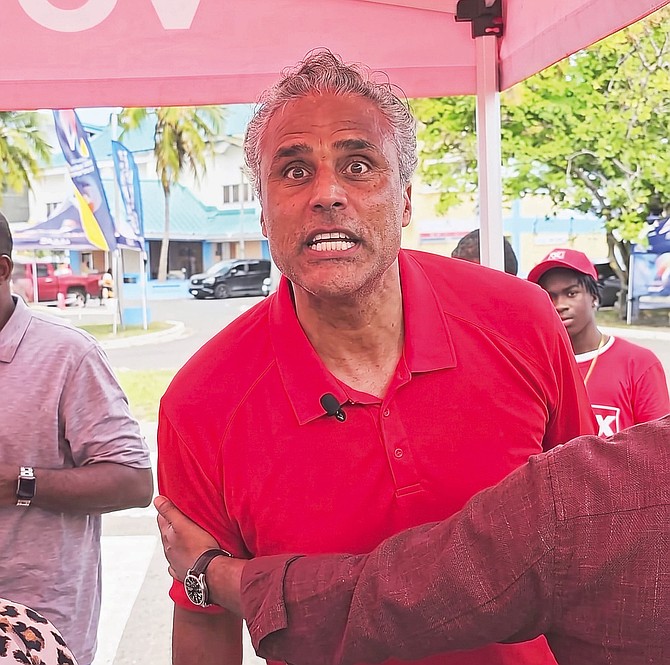
    A viral campaign-season clash has put former NBA player turned parliamentary candidate Rick Fox under intense public and political scrutiny, after circulating footage showed him lunging at a local man during a heated dispute over public space for campaign tents. The confrontation, which unfolded on Wednesday in Garden Hills where Fox is running for a seat as Member of Parliament, sparked widespread debate online after the footage was picked up by major U.S. entertainment outlet TMZ, drawing international attention to the altercation.

    The widely shared video, which circulated publicly one day after the incident, captures the moment tensions boiled over during a disagreement over a pre-reserved spot for a campaign tent. The man involved, wearing a blue-and-yellow long-sleeve shirt, told Fox’s campaign team that he had already claimed the location for his own use. When Fox questioned whether his claim followed local event guidelines, the man dismissed the rules outright with an expletive-laden rejection. In response, Fox moved aggressively toward the man, forcing his campaign manager Carlyle Bethel to physically step in and restrain him as the situation escalated.

    Even as Bethel struggled to hold him back, Fox broke free of his manager’s grip, shouting that the opposing group were nothing but bullies. He then turned toward the person recording the video, flexed his muscles, and issued a public challenge, saying he was “right here for y’all, all day long.” Throughout the rest of the footage, Fox repeatedly labels those involved in the disagreement as bullies, as shouting matches continue between members of both groups.

    In the aftermath of the video going viral, Fox addressed reporters to push back against criticism of his actions, arguing that the circulating footage omitted critical context that preceded the confrontation. He claimed the incident was triggered by the man making violent threats against him, his campaign team, and Bethel specifically, framing his outburst as an act of self-defense and protection for the people working with him. “If you’re going to swear and threaten people’s lives, then I’m going to react. I’m going to defend my team, I’m going to defend myself, I’m going to defend anybody who is in the area,” Fox told reporters, adding that some local actors are accustomed to acting as bullies during campaign season, and that his campaign would not tolerate intimidation tactics. He also claimed that law enforcement had responded to the scene and charged the man involved with criminal offences related to the threats.

    However, official police statements directly contradict Fox’s account of the incident. Chief Superintendent Sheria King, a police department spokesperson, confirmed that no arrests or charges were filed in connection with the confrontation, and no evidence has been brought forward to support Fox’s claim that death threats were made against him or his campaign manager.

    The incident has raised urgent questions about Fox’s temperament and ability to serve in public office, as voters and political observers assess his conduct ahead of the upcoming election. What began as a local dispute over campaign logistics has quickly become a high-profile controversy that could shape voter perceptions of the candidate in the tightly contested Garden Hills race.

  • Long wait times and scenes of confusion plague advanced poll

    Long wait times and scenes of confusion plague advanced poll

    Long queues, multi-hour wait times, and widespread confusion during the Bahamas’ recent advance poll have thrown the Parliamentary Registration Department (PRD)’s preparedness into sharp question, stoking growing fears that the far larger and more complex general Election Day could face similar catastrophic dysfunction.

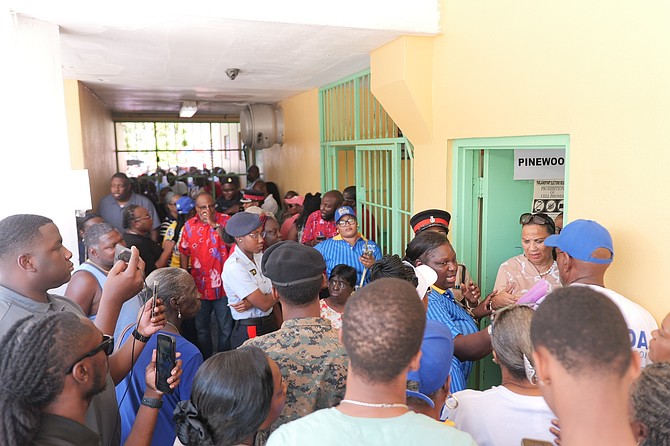
    The final ballot of the day was not cast until 10 p.m. – a full four hours after the official scheduled closing time of 6 p.m., marking a dramatic breakdown of the electoral process that unfolded against a backdrop of weeks of criticism from the opposition Free National Movement (FNM). Prior to the advance poll, the ruling government had repeatedly dismissed opposition concerns, defending the PRD’s ability to manage the election. This week’s voting, however, laid bare severe operational strain across polling stations nationwide: some electors waited more than five hours to cast their ballots, while countless others abandoned the process in frustration, and multiple locations kept voting open far past the official close to clear massive backlogs. Even some candidates from the ruling Progressive Liberal Party (PLP) were forced to acknowledge major shortcomings in the advance poll’s organization.

    Prime Minister Philip “Brave” Davis was visibly agitated during a visit to the Sadie Curtis polling location and declined to answer questions from press corps. Former PLP Cabinet minister and MP Leslie Miller, who accompanied Davis, told reporters he waited two and a half hours to vote at the Doris Johnson site, and called for a doubling of available polling space ahead of the general election. “It took me two and a half hours to vote today, okay, tremendous,” Miller said. Several other high-ranking PLP figures including Sebas Bastian, McKell Bonaby, Myles Laroda and Mario Bowleg echoed Miller’s call, noting that more space was urgently needed to reduce crowding, particularly for elderly and disabled voters. Bastian added that the problematic advance poll experience would guide necessary adjustments before Election Day.

    Operational issues were apparent from the moment polls opened at many locations. At Kendal Isaacs Gym, a site serving three major constituencies, delays began immediately when the exit door remained locked at opening, creating a massive bottleneck that sent lines swelling out into surrounding areas. Voter Tavia McIntosh said the check-in process inside the station functioned smoothly, but described the outdoor crowding as totally disorganized. “You see the crowd? It is unorganised,” she said. “I hope it [the general election] doesn’t be like this.” Commissioner of Police Shanta Knowles ultimately traveled to the site to intervene and restore order.

    At Thelma Gibson Primary School, voters reported widespread confusion over directional guidance, with many being sent to multiple wrong locations before finding their correct polling station. Seventy-six-year-old voter Cynthia Sealy told reporters she was redirected twice before reaching the correct spot. Other common complaints across sites focused on a lack of basic amenities for waiting voters, with many electors forced to stand for hours in direct sun without adequate shelter. At the CV Bethel polling location, FNM chairman Dr Duane Sands highlighted extreme overcrowding, noting that one advance polling room had been assigned to nearly 1,200 registered voters. “Perhaps one of the worst situations of the day is Bamboo Town has 1,200 people on the advanced poll, and one room,” Sands said. “One. One. One. So people have been waiting four, five, six hours. Okay?”

    Tensions boiled over at the HO Nash polling site after multiple people were permitted to cut in line, sparking loud protests from waiting voters who decried the process as unfair. Multiple elderly voters suffered medical distress amid the heat and long waits, with at least one voter fainting. A 75-year-old elector abandoned the line after just 45 minutes, saying he could not physically tolerate the conditions, and noted he had never seen such dysfunction in decades of voting. “This ain’t the first election these people been through,” he said. “They been through many and I ain’t never seen it like this.” Another voter, Michelle Dames of Mount Moriah, also left without casting a ballot, calling for systemic changes to better accommodate vulnerable groups. “Somebody just fell out over there from standing so long,” she said. “Even though some persons are trying to provide chairs, that ain’t cutting it.”

    Beyond basic operational management, FNM legal advisor Khalil Parker raised more serious procedural concerns. He pointed to reports of pre-signed ballots and completed counterfoils found before voters arrived at stations, the lack of a properly segregated voter list for advance poll participants, and a last-minute decision to allow electors with approved applications to vote even if their names did not yet appear on the official register. “So now, we have to deal with the fact that there’s going to need to be a reconciliation between those who voted, but were not on the register, and those who voted and were on the register to make sure that when we begin on election day, there is a mitigation or a correction or an updating of the official records at PRD, so that duplicating voters isn’t a substantive concern in that event,” Parker explained. He added that the FNM would demand an urgent meeting with PRD leadership to resolve all outstanding issues before the general election.

    Despite widespread cross-party criticism, the PRD has maintained it remains fully prepared for the upcoming general election, noting that Election Day will feature more polling stations, additional staffing, and expanded logistical support compared to the advance poll. The department acknowledged the delays and confusion, attributing the issues to an “unprecedented” level of voter turnout that outstripped official projections. “This is the first time in Bahamian history that this number of persons has participated in the advance poll, with especially strong participation among elderly voters,” the PRD said in a statement. The department added that it has launched an internal review to identify bottlenecks and will implement targeted adjustments to improve voter flow and inter-agency coordination before Election Day.

    Critics have already pushed back against the PRD’s turnout explanation, however, pointing out that all advance poll participants were required to pre-register, giving election officials an exact, advance count of how many voters were expected to cast ballots on advance polling day.

  • Golding congratulates Gaston Browne on general election victory in Antigua

    Golding congratulates Gaston Browne on general election victory in Antigua

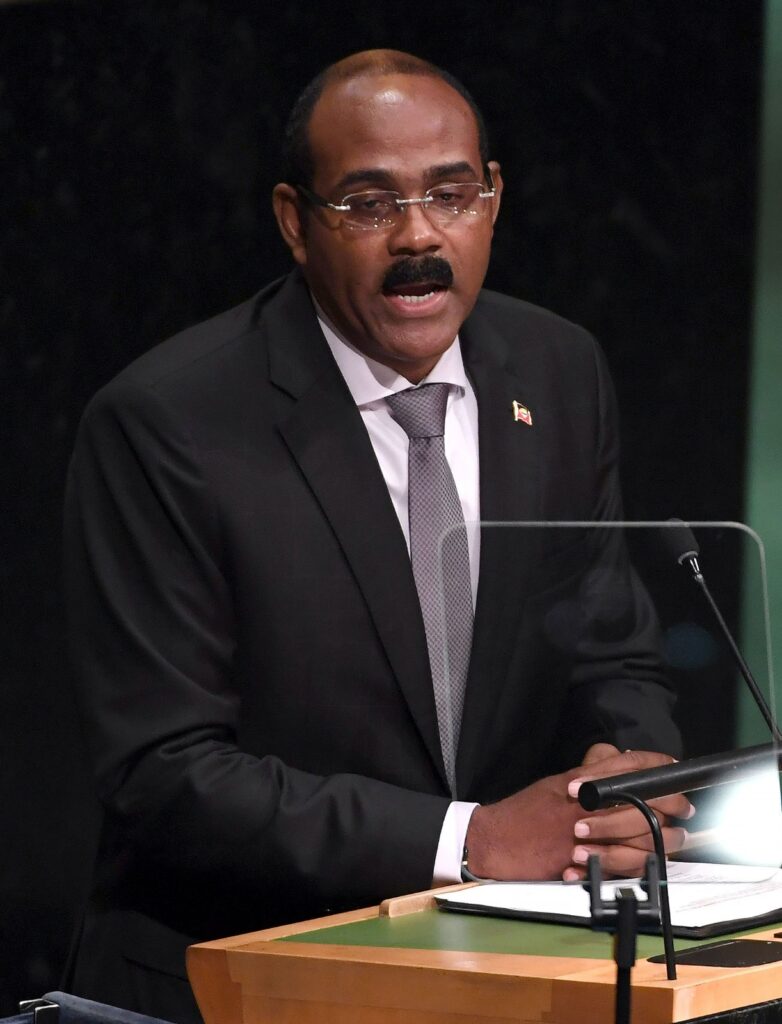
    In a landmark outcome that has reshaped the political landscape of the Eastern Caribbean, Gaston Browne and his ruling Antigua and Barbuda Labour Party (ABLP) have secured a historic fourth consecutive term in office, following a decisive landslide victory in the country’s general election. Preliminary vote counts confirm the scale of ABLP’s triumph, with the party claiming 15 of the 17 contested parliamentary seats — a dramatic expansion of its narrow 9-7 majority won in the 2023 January polls.

    This unprecedented win cements Browne’s place in Antigua and Barbuda’s political history: he is the first prime minister of the nation to secure four straight general election victories since the country gained independence. The main opposition United Progressive Party (UPP) was left with only a single seat, which will be retained by party leader Jamale Pringle. On the island of Barbuda, the Barbuda People’s Movement held onto its local seat, with incumbent Trevor Walker retaining his position.

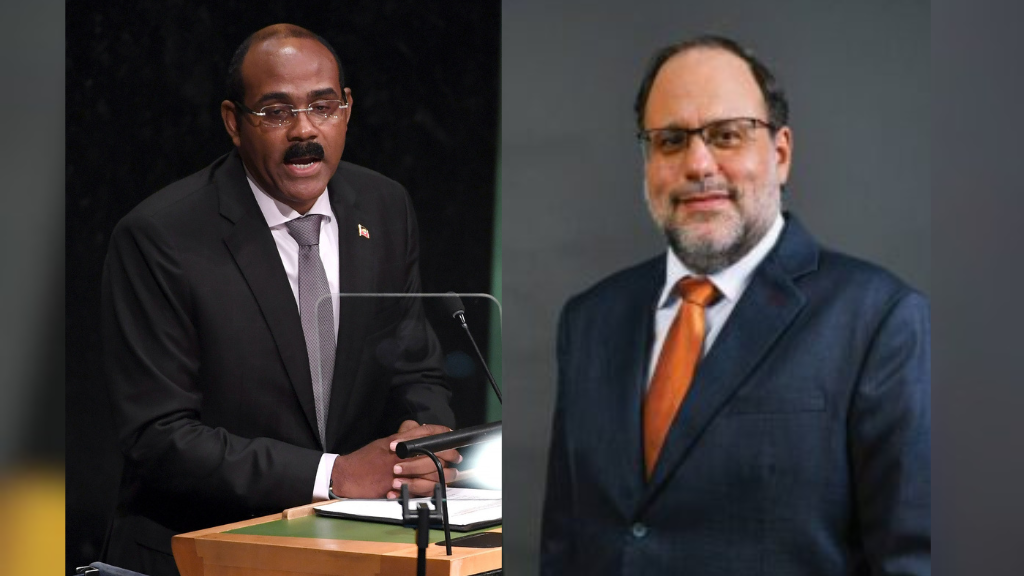
    Following the confirmation of the results, Mark Golding, Opposition Leader of neighboring Jamaica, issued a formal statement of congratulations shared via the social platform X. Golding extended warm wishes to both Browne and the entire ABLP for their successful campaign, noting that Browne’s return to office — a post he has held since first assuming leadership in 2014 — is a clear reflection of the ongoing trust and confidence the people of Antigua and Barbuda place in his leadership. Golding also shared his expectation of productive collaborative work with Browne’s new administration in the coming term, concluding his statement by wishing the incoming government success in delivering on its new mandate.

  • Seiveright welcomes passage of NaRRA

    Seiveright welcomes passage of NaRRA

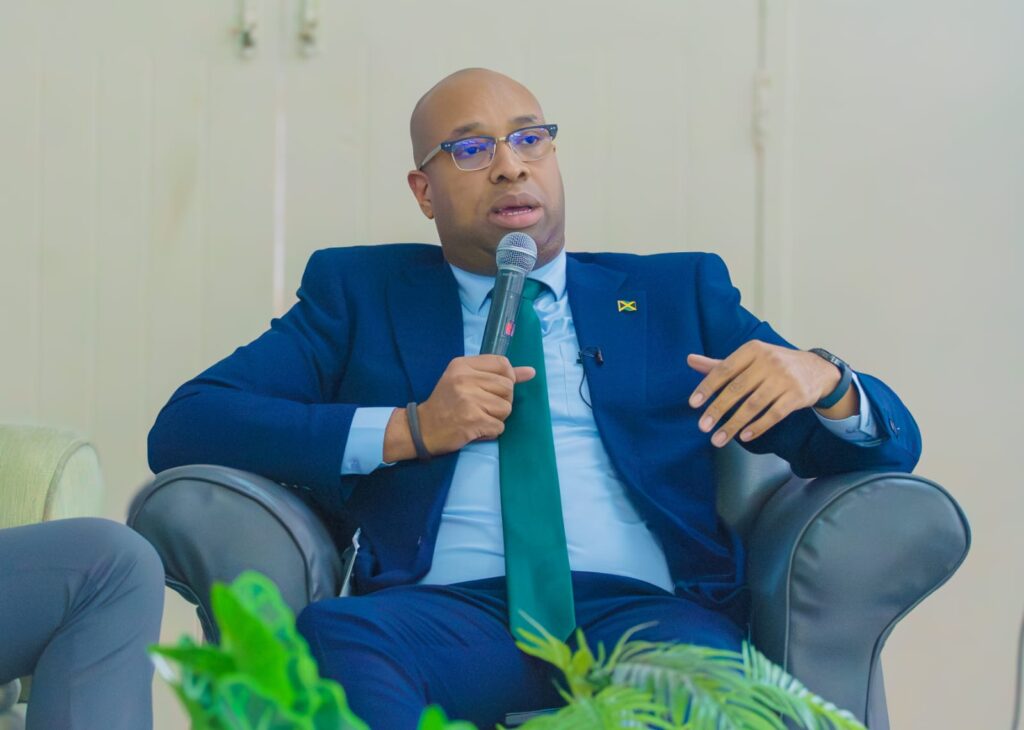
    In the wake of catastrophic damage left by Hurricane Melissa, Jamaica has moved one step closer to a coordinated, accelerated recovery effort after the House of Representatives approved legislation establishing the National Reconstruction and Resilience Authority (NaRRA). Senior government official Delano Seiveright, Jamaica’s State Minister, has framed the bill’s passage as a transformative milestone for the island nation, which is grappling with one of the costliest natural disasters in its recent history.

    Early damage assessments put total losses from the storm at an estimated US$12.2 billion. More than 215,000 structures across the country suffered damage or complete destruction, and critical public services including schools, hospitals, and core transportation and utility infrastructure were knocked offline across wide swathes of the island. Coastal communities like Black River bore the brunt of the storm’s impact, facing near-total disruption to daily life and local economies.

    Seiveright emphasized that the unprecedented scale of destruction rules out a business-as-usual response. “This is not a normal situation. The scale of the destruction demands a structured, coordinated and urgent response,” he told lawmakers, warning that bureaucratic gridlock poses a far greater threat to effective recovery than procedural concerns. “After a disaster of this scale, the greater risk is paralysis,” he said.

    To address concerns about transparency and accountability, Seiveright outlined multiple layers of built-in safeguards designed to prevent misuse of funds and mismanagement. All NaRRA-led projects will require formal approval from the national Cabinet, and the Auditor General’s office will maintain continuous independent oversight. The authority is also mandated to submit public annual reports to Parliament, and a fully searchable public electronic register will list all approved projects to enable public scrutiny. Seiveright stressed that the new body is not intended to bypass standard governance processes, but rather cut through crippling bureaucratic red tape while retaining full accountability.

    The framework for NaRRA draws on hard lessons learned from major disaster recovery efforts around the world over the past 15 years. Seiveright specifically referenced slow, fragmented recovery efforts following the 2010 Haiti earthquake, Hurricane Katrina in the United States, and Hurricane Maria across the Caribbean, where uncoordinated systems left communities waiting years for core services to be restored.

    To date, the Jamaican government has already secured roughly US$6.7 billion in international and domestic financing for recovery efforts, and initial work to restore critical infrastructure has helped stabilize public and investor confidence. Seiveright added that NaRRA is not a permanent new government body: it is established as a time-limited entity, overseen by a multi-stakeholder national committee chaired by leading economist Professor Peter Blair Henry.

    “Jamaica cannot afford delay. We must act, and we must deliver,” Seiveright said. The NaRRA Bill now advances to the Jamaican Senate for its final vote before it can be signed into law.

  • Landslide victory for Antigua and Barbuda Labour Party in general election

    Landslide victory for Antigua and Barbuda Labour Party in general election

    In a high-stakes political gamble that paid off spectacularly, Gaston Browne and his ruling Antigua and Barbuda Labour Party (ABLP) secured a historic landslide victory in an early general election held Thursday, granting Browne an unprecedented fourth consecutive term as prime minister. The snap poll, called almost two full years before the country’s constitutional deadline for elections, delivered a resounding mandate to the ABLP that dramatically expanded its narrow hold on parliament from the 2023 vote.

    Preliminary official results from the Antigua and Barbuda Electoral Commission (ABEC) confirm the ABLP won 15 of the 17 contested parliamentary seats, a stark reversal of the razor-thin 9-7 majority the party scraped together just 18 months prior in January 2023. The overwhelming win marks a defining moment in the nation’s political history, as Browne becomes the first head of government in Antigua and Barbuda to win four straight general election contests.
    Browne, who easily retained the St John’s City West constituency he has represented since 1999, struck a unifying tone in post-victory remarks to supporters and the public. In a statement posted to the ABLP’s official Facebook page, he acknowledged the magnitude of the public’s trust, writing, “We are humbled and honoured by your support and confidence. Now is the time to move forward together, build on our gains and continue our work on this long journey toward the betterment of our society and the upliftment of our people.”

    Addressing gathered supporters, Browne emphasized that his administration would prioritize inclusive growth and equal access to opportunity for all residents, regardless of political affiliation. “We are here to serve all the people of Antigua and Barbuda. Education, jobs, business opportunities will be open to all who are prepared to seize them,” he said. “No one will be left behind who is willing to move forward. And notwithstanding your political persuasion, this is not a time for laggards. This is a time for all of us to perform, to increase our productivity and to make sure that Antigua and Barbuda becomes one of the most productive small island states globally.”

    Browne noted that infrastructure and community development projects were already underway across the twin-island nation, and his incoming administration would build on that existing progress to advance new initiatives that improve quality of life and national pride. “We must remain a dignified people. We must not cower to anyone. We must not be timid. We must stand tall in every forum, every regional, and every international forum as Antiguans and Barbudans,” he added, rejecting calls for triumphalism after the landslide win. “So just in case anyone expected me to gloat, at the end of the day, the contest is over. From all indications, the people who have supported us to get between 15 of the 17 seats, that in itself is a resounding mandate for which we are eternally grateful.”

    Only two seats escaped ABLP control in the contest. Jamale Pringle, leader of the main opposition United Progressive Party (UPP), managed to defend his constituency, defeating ABLP candidate Anthony Smith to retain the party’s only seat in the new parliament. On the smaller sister island of Barbuda, incumbent Trevor Walker of the Barbuda People’s Movement (BPM) held onto his seat, earning 609 votes to defeat Kendra Beazer, a former BPM member running on the ABLP ticket, who earned 398 votes.

    Pringle congratulated the ABLP on their victory in a brief post-election statement, acknowledging the outcome while pledging the UPP would remain an active opposition force moving forward. “I want to thank all Antiguans and Barbudans who have supported the United Progressive Party. We’re indeed grateful and you will hear from us in a short time,” he said. Noting that “there’s no second place in politics,” Pringle added, “Just as we did in 2018, we’ll still be standing. We can’t get enough of the United Progressive Party. We’ll still be there.”

    Several high-profile candidates fell to defeat in the ABLP wave, including former finance minister Harold Lovell, who had come out of a brief retirement from active politics following his 2023 election loss only to lose again to Anthony Smith in the All Saints West constituency. Browne’s wife, incumbent Public Works Minister Maria Browne, also won her contest, handily defeating UPP candidate Ashworth Azille to take the St John’s Rural East seat. All three independent candidates running in the election failed to gain traction, losing their electoral deposits after falling well below the required vote threshold.

    Browne had framed the snap election as a necessary step to secure a new mandate to continue the socio-economic progress the ABLP has overseen since the party first took power in 2014, calling the campaign a “renaissance” for the nation. That strategic bet has now delivered one of the most lopsided election results in the country’s modern history, clearing the way for the ABLP to implement its full policy agenda over the coming term.

  • CDB holding discussions with Canada to provide additional funding for the Caribbean

    CDB holding discussions with Canada to provide additional funding for the Caribbean

    During a high-profile G7 finance event held in Paris, the Barbados-headquartered Caribbean Development Bank (CDB) has announced a series of groundbreaking financial collaborations and policy initiatives aimed at expanding its lending capacity and accelerating climate resilience investment across the Caribbean region.

    At the core of the new announcements is a landmark $200 million first-loss portfolio guarantee launched in partnership with the Government of Canada. Once all administrative and regulatory formalities are completed, this guarantee is projected to cut credit risk weighting on CDB’s balance sheet, unlocking a minimum of $400 million in additional lending capacity for the bank’s regional development projects.

    CDB President Daniel Best presented these initiatives to global finance leaders gathered at the Finance in Common G7 Special Event, framing the moves as part of the institution’s ongoing work to pioneer innovative financing models among multilateral development banks (MDBs). Speaking on the event’s theme “Instruments to Lower the Cost of Capital”, Best emphasized the unique structural challenges smaller MDBs face, and outlined how targeted balance sheet adjustments can overcome these barriers to expand support for borrowing member nations.

    One of the most notable existing success stories highlighted by Best is the bank’s pioneering Exposure Exchange Agreement (EEA), a $450 million transaction completed in partnership with the Central American Bank for Economic Integration. As the first agreement of its kind in the multilateral development space, the EEA has dramatically lowered concentration risk in CDB’s sovereign loan portfolio. Best reported that within just 12 months of the transaction’s completion, the bank’s concentration ratio for its top five borrowers fell from 61% to 38% — all without requiring any new capital injection from existing shareholders. For a small MDB where concentration limits often cap total lending volume, this adjustment immediately translated to expanded capacity to serve member countries across the Caribbean, he added.

    Best also used the Paris platform to showcase CDB’s collaborative leadership in tackling the region’s most pressing dual challenge: soaring national debt levels paired with extreme climate vulnerability. The bank is currently developing a multi-guarantor debt-for-resilience swap initiative alongside four major regional and global development institutions: the Inter-American Development Bank, the World Bank, and the Development Bank of Latin America and the Caribbean (CAF).

    By combining guarantee support from partner MDBs and private sector investors, Best explained, the initiative will create much-needed fiscal space for Caribbean nations to invest in proactive climate resilience infrastructure before extreme weather events strike — all without increasing countries’ net debt levels. The core objectives of the framework are to cut borrowing costs for participating nations, extend debt maturities, and enable long-term, forward-looking climate investment that protects vulnerable communities.

    To further strengthen its long-term financial stability and lending capacity, CDB is also developing a new innovative loss-absorbing tool: the Contingent Capital Facility (CCF), which is structured to qualify as regulatory tier two capital for the bank. Under this mechanism, highly credit-rated CDB shareholders will commit pre-agreed capital that will only be called upon if predefined economic or financial stress scenarios occur. The bank notes that this structure ensures capital support is contractually available exactly when systemic stress hits, strengthening CDB’s own financial resilience while protecting its investment-grade credit rating.

  • Barnaby back to best with dominant Legal Light Trophy romp

    Barnaby back to best with dominant Legal Light Trophy romp

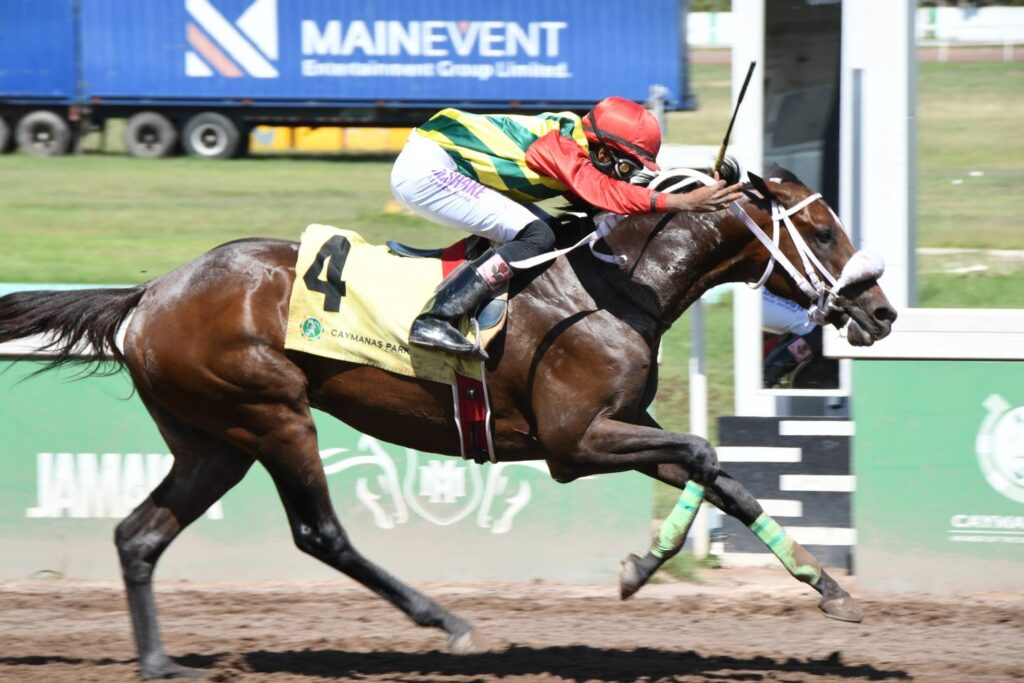
    Three weeks after a underwhelming showing that left his form in question, American-bred Thoroughbred colt Barnaby cemented his comeback with a dominant, record-backed win at Jamaica’s iconic Caymanas Park on Sunday, April 26, 2026.

    Heading into the $1.4-million Legal Light Trophy, a 1,820-meter (nine furlongs and 25 yards) Open Allowance feature race, Barnaby carried plenty of doubt with him. His only prior attempt at this exact distance back in August 2025 ended in a fourth-place finish as the heavy 4-5 favourite, and just three weeks prior, he crossed the line in third place at the record-shattering 1,700-meter Ian Levy Cup, trailing front-runners Rideallday and Supernatural Power. What many wrote off as a sign of Barnaby’s true ceiling, however, was just prep work for his headline performance.

    Sent out under jockey Raddesh Roman for trainer Anthony Nunes, Barnaby turned the competitive feature race into a solo display of racing class. Breaking cleanly from the gate, he settled into a steady, comfortable pace through the first half of the race, with split timings of 25.3 seconds for the first quarter, 49.3 for the half, 1:14.1 for six furlongs, and 1:40.2 for the first mile. When Roman gave the colt just a light nudge at the 600-meter (three-furlong) marker, Barnaby accelerated away from the field effortlessly, crossing the finish line a full 7¼ lengths ahead of the competition with a final time of 1:54.2.

    Speaking on behalf of Anthony Nunes’ stable in the winners’ enclosure, Nigel Burke, the trainer’s nephew, confirmed that the dominant win was no happy accident – it was the result of a carefully planned training strategy tailored to the colt’s unique needs.

    “Today was a test to see if he could get back to his true form, and he showed up with outstanding class,” Burke told the Jamaica Observer’s *Supreme Racing Guide*. “He had trained really well coming into this race, we expected this performance. He logged a 49.1 breeze in maintenance training, which is just business as usual for a horse of his calibre.”

    Burke explained that high-class horses like Barnaby do not need grueling dawn workouts to stay race-ready. “With horses like him, you don’t push them too hard in morning training. You just keep them happy, keep them fit, and they show up on race day,” he said.

    The April 6 Ian Levy Cup, run over 8 ½ furlongs in a blistering new track record of 1:41.4, was a learning experience for the stable. While Barnaby finished third, he was never disgraced, beaten by two of the top Thoroughbreds in the country. The decision to drop back to Open Allowance company and stretch the race out to nine furlongs and 25 yards proved to be the perfect combination to unlock the colt’s potential, erasing the memory of his poor 2025 run at the distance. Where his first attempt at the trip fell flat, this second outing was nothing short of emphatic.

    Sunday’s victory makes one thing clear: the Ian Levy Cup was never Barnaby’s ceiling – it was his warm-up. His form is now validated, his competitive confidence is fully restored, and his racing trajectory looks clear. “Once he stays healthy and sound, I think he will only keep improving from here,” Burke added.

    In the final results, Girvano, ridden by Robert Halledeen, claimed second place, while Nunes’ second entry, Neo Star, ridden by Tajay Suckoo, rounded out the top three.

  • IMAGE PLUS TARGETS GROWTH AFTER FLAT YEAR

    IMAGE PLUS TARGETS GROWTH AFTER FLAT YEAR

    IMAGE Plus Consultants Limited (IPCL), a Jamaica-based diagnostic imaging firm listed on the Junior Market, has announced a transformative double strategic move: it will acquire the only private MRI and bone densitometry provider in central Jamaica while absorbing its largest competitor on the country’s north coast. The deal marks the company’s bet that this industry consolidation will finally convert years of heavy capital investment into meaningful bottom-line growth after a prolonged period of stalled revenue expansion.

    Under the terms of the agreement, IPCL will take ownership of all assets and the established brand of Island Radiology, which currently operates full branches in Mandeville and Ocho Rios, plus an underutilized agency outlet in Santa Cruz. Once finalized, the transaction will grant Image Plus an exclusive private hold on high-margin diagnostic imaging services across central Jamaica, while bringing the entire existing patient base of its top Ocho Rios competitor into the IPCL network. The acquisition price has not been publicly disclosed, with CEO Kisha Anderson confirming that full financial breakdowns will be released at the company’s upcoming annual general meeting, scheduled to take place on July 14. This deal was first teased in July 2025, coming months before IPCL completed its November 2025 purchase of women’s health provider The Woman’s Place.

    The push for consolidation comes against a backdrop of underwhelming financial performance, even as IPCL has poured hundreds of millions into expanding capacity and capabilities. Audited results for the 12-month period ending February 2026 show only marginal top-line growth: total inched revenue up to JMD $1.092 billion, from $1.081 billion the prior year. Operating profit slipped slightly to $77.2 million from $79.8 million, though net profit did see a small uptick to $48.7 million, up from $43.9 million a year earlier.

    In an interview with the Jamaica Observer on Thursday, Anderson acknowledged the company’s slow growth trajectory, admitting, “Growth levels have been modest, more flat, if I’m going to be a little bit more accurate.”

    The audited financial statements released Wednesday outline two overlapping challenges that held back performance over the past year. The first was extreme weather disruption: Hurricane Melissa caused roughly three weeks of reduced patient volumes at IPCL’s Ocho Rios location, not due to infrastructure damage or power loss at the facility itself, but because widespread community dislocation left local patients unable to travel to keep scheduled appointments. Anderson noted, “We powered the location in St Ann by generator even when the rest of the parish was down,” underscoring that the disruption stemmed from broader community impact rather than operational failure at the clinic.

    The second, more structural challenge came from a shift in government health policy. Jamaica’s Ministry of Health cut subsidy rates for patients accessing diagnostic services at private providers, which shrank the steady stream of government-linked referrals that had long supported IPCL’s revenue base. The company has had to pivot to attracting more self-paying patients to offset the lost volume from the policy change.

    This strategic shift is clearly reflected in the company’s balance sheet: trade and other receivables dropped sharply to $150.7 million from $369.8 million year-over-year, a change that reflects both reduced exposure to delayed government payments and improved collection rates from private paying patients. Even so, the policy shift has forced the company to focus on stabilizing revenue rather than pursuing growth, while rising costs have continued to pressure margins. Administrative expenses climbed to $520.8 million, depreciation hit $114.3 million, and finance costs remained elevated at $38.5 million over the reporting period.

    Over the past year, IPCL has also maintained aggressive capital investment: the company spent $132.8 million on new diagnostic equipment and an additional $52.4 million on prior acquisitions. These outlays have expanded the company’s overall capacity, but have yet to generate a corresponding lift in earnings. The end result is a business that has expanded its geographic footprint and service offerings, but has failed to deliver the profit growth that investors have been waiting for.

    Anderson and the IPCL leadership team believe the Island Radiology acquisition will reverse this trajectory. The CEO projects that the company will see a measurable lift in both revenue and net profit by the third quarter of the current financial year, as the newly acquired operations are integrated and patient volumes build across the combined network. She added that debt servicing for the acquisition is already covered by Island Radiology’s existing patient volume, even before factoring in planned growth, and that combined operational scale will improve IPCL’s purchasing power with suppliers, creating additional room for margin expansion beyond the base case. Anderson explained, “With Island Radiology… we’ll be able to open for longer hours and… take more capacity in terms of patient appointments.”

    A key advantage of the deal is the ability to leverage IPCL’s existing team of more than 20 radiologists across the acquired locations. This additional staffing will allow the combined network to extend operating hours and handle a higher daily volume of cases than Island Radiology could support with its smaller, under-resourced team.

    The consolidation is particularly impactful in Ocho Rios, where IPCL will operate two complementary locations once the deal closes. Anderson noted, “In Ocho Rios, Island would have been our largest competitor… we now are able to consolidate.” She added that the acquired Island Radiology facility at Eight Rivers, located near central Ocho Rios, draws patients from a different geographic catchment area than IPCL’s existing White River North clinic, creating minimal overlap and maximum incremental volume.

    Outside of Ocho Rios, IPCL plans to reactivate the dormant Santa Cruz agency, which Island Radiology was unable to operate consistently due to a shortage of radiologists. Anderson projects the site will reopen around June, once additional staffing is deployed, and will serve patients across St Elizabeth parish extending all the way to the Westmoreland border. “We’re going to have the capacity… to have more throughput per day,” she said.

    The acquisition will be initially funded through new borrowings, but Anderson argues that the deal is structured to be self-sustaining, with no drag on existing IPCL profit levels. “We’re going to initially fund it in debt… the acquisition can pay for itself… so that there’s no pull on our existing profit levels,” she said, noting that the operational improvements IPCL will bring to the combined network will generate enough additional cash flow to service the debt.

    Anderson acknowledged that the deal carries some risk, noting, “The biggest risk could be that we don’t manage a transition well… or any disruption to relationships… or any unforeseen breakdown in equipment.” To mitigate these risks, IPCL plans to retain core parts of Island Radiology’s existing operation, including key medical staff and elements of the established brand, while folding back-office and administrative functions into the larger IPCL group to cut redundant costs.

    Following the close of the Island Radiology deal, Anderson confirmed that IPCL’s acquisition spree will come to an end. With The Woman’s Place acquisition completed in November 2025 and the Island Radiology deal agreed in principle (pending finalization of a definitive sale and purchase agreement), the company’s top priority will now shift to integrating existing assets and unlocking value from the expanded footprint. “We don’t plan on acquiring anything else right now… what we’re going to do now is just extract value,” she told BusinessWeek.

    To date, IPCL has expanded its geographic reach, absorbed its largest north coast competitor, and secured exclusive private MRI capability in central Jamaica, but its financial results make clear that scale alone has not delivered stronger earnings. The company is now betting that increased patient volume and operational efficiencies will close the gap between its expanded footprint and profit growth, with the third quarter of the current fiscal year marked as the first milestone to prove the strategy works. Markets reacted positively to the acquisition announcement on Thursday: IPCL shares closed trading at $0.90, up $0.16, a gain of 21.62 percent. The company listed on the Junior Market in January 2023 at an initial price of $2.00 per share. Anderson argued that the market has yet to price in the full value of the company’s transformed position, saying, “I don’t think the share price reflects the value of the entity.”
  • Porsche Cayenneback in black

    Porsche Cayenneback in black

    On April 28, an exclusive invitation-only preview event at Kingston’s AC Hotel brought a fresh addition to Jamaica’s luxury automotive market, as Porsche Jamaica officially pulled the curtain back on its latest variant of the brand’s top-selling SUV: the Cayenne Coupé Black Edition. Speaking to assembled attendees and media at the launch, Shauwn Gracey, Sales Manager at Porsche Jamaica, framed the new model as a deliberate fusion of two core Porsche identities, highlighting that “the Porsche Cayenne Coupé Black Edition is bold, refined, and unmistakably confident. It brings together the practicality of a luxury SUV with the soul and spirit of a true sports car.”

    Unlike the traditional custom ordering process that Porsche has long offered its customers, the new Black Edition is structured as a pre-packaged set of popular premium features that come standard as a single bundled offering. Historically, buyers building a Porsche from the ground up start with a base model and add individual options incrementally, which often drives up the final purchase price significantly as more upgrades are included. With the Black Edition bundle, Gracey explained, the German automaker has reimagined this process to let buyers access a full suite of high-end luxury components for one transparent all-inclusive price, without sacrificing the brand’s signature customization flexibility. The Black Edition package can even be applied to any existing Cayenne trim level or body style, preserving opportunities for further personalization while locking in the core curated upgrades at a predictable cost.

    The Black Edition’s signature aesthetic starts not with exterior paint, as many special editions do, but with targeted badging and trim modifications that create a distinct, aggressive visual identity. Multiple key exterior elements receive a sleek high-gloss black treatment, including the Porsche logo, model name badging, and side mirror housings, among other accents. Beyond cosmetic upgrades, the package includes a number of performance and comfort features as standard: 21-inch wheels come fitted to every Black Edition, alongside exhaust tips pulled from the brand’s sports exhaust system and adaptive air suspension for a refined, dynamic ride.

    Inside the cabin, the upgraded experience continues with a suite of premium comfort and tech features. Buyers of the Black Edition get standard 14-way power-adjustable front seats with both heating and cooling functionality, plus a factory-fitted BOSE surround sound audio system for an elevated in-car entertainment experience. Throughout all of these bundled upgrades, Gracey emphasized, the model retains the core performance capability and luxurious build quality that has made the Cayenne line a staple of Porsche’s global and local offerings.

    For the Jamaican market specifically, the Cayenne line holds outsized strategic importance for the brand. “The Cayenne is very important to the Porsche Jamaica model line-up, especially in this market where Jamaica is seen as an SUV market,” Gracey noted, reflecting consumer preferences that skew toward high-riding, practical luxury vehicles in the region. The launch event was attended by the full local Porsche Jamaica leadership team, including Marketing and PR Manager Nicole Hamilton, Concierge & Sales Administrator Analeice Dixon, Sales Consultant Brian Johnson, and Senior Sales Consultant Rashida Gopie, with on-site photography captured by Rory Daley documenting the reveal.

  • I-T Rockaz goes solo

    I-T Rockaz goes solo

    Just over a year ago, the three-member reggae collective Rockaz Elements, hailing from Spanish Town, dropped their third extended play (EP) *Sup’m Bout Reggae*, a project distributed by US-based label Berta Records. The four-track release, featuring standout cuts *My Pain*, *Twenty Dollars*, *Believe I*, and the Chino McGregor-assisted collaboration *Jamaica World*, earned steady airplay across local Jamaican FM radio stations, marking one of the group’s most successful runs to date.

    Now, on the heels of that breakout momentum, founding core member I-T Rockaz is embarking on a new creative chapter: launching a solo career while remaining anchored to the collective he helped build. His debut solo offering, *Thankful*, is a soul-stirring reggae anthem rooted in themes of gratitude, personal resilience, and authentic lived experience. Far more than just a track, it serves as a gentle but powerful rallying cry for anyone navigating hardship, reassuring listeners that temporary struggles will eventually give way to better days.

    What makes the single’s backstory even more compelling is its unexpected evolution. I-T Rockaz penned the track long before he survived a near-fatal motor vehicle crash. After walking away from the traumatic incident, he revisited the lyrics, and the song took on a deeper, more urgent meaning, transforming into a visceral reminder that life itself is a gift that deserves constant appreciation.

    In a recent interview with the *Jamaica Observer*, the artist opened up about the core inspiration behind his solo debut. “Well, it really was an inspiration from life itself and me being a true soul of gratitude. It is totally relatable to me and from the feedback so far others can resonate as well as it encourages everyone to be thankful through good and bad days,” he explained.

    One of the most common questions surrounding his new project has centered on his status with Rockaz Elements: is he leaving the group for good, or is this a side venture? I-T Rockaz made his position clear, emphasizing that his solo work is an expansion, not an exit. “I am forever Rockaz. I’ve been encouraged to step out and represent, so I’m a representation of Rockaz Elements. I’ve been a builder of the group over the years and I will always be. New music is still being released by the group as well. This is just more channels to showcase good music, but more from my personal view now,” he shared.

    Music has been a constant through every stage of I-T Rockaz’s life, rooted in a upbringing surrounded by artistic family members. “I started out at a tender age just loving the music and growing up in a musical family. I journeyed out on my bicycle back in time and met U-B, one of the other members of Rockaz Elements, at Angels Grove while pursuing the craft and from there I’ve been into the music entirely,” he recalled.

    Reflecting on his decades-long journey in the reggae industry, I-T Rockaz framed his career as a deliberate, growth-filled progression. “My musical journey can be defined as challenging, but successful through obstacles; a growing journey of greatness is what I’d call it as nothing great comes without hurdles,” he said. “I bring a soulful and truthful vibe to the table, I’m a happy creative soul, so I express that through my music, and I love playing instruments, so it’s a love for music in a person. The world needs good music to vibe to and so I’m here to give them good music to dance to and also to motivate others through music.”