作者: admin

  • FM Four Pillars dominate BFA Youth Awards

    FM Four Pillars dominate BFA Youth Awards

    The Barbados Football Association’s annual Youth Awards ceremony, held this past weekend, saw one academy emerge as the undisputed standout of youth football across the country: FM Four Pillars. The program claimed top honors in two of the three age-group divisions, sweeping a majority of individual accolades alongside its team titles.

    In the Under-15 division, FM Four Pillars took home the overall championship title, and dominated the individual awards category for the age bracket. Nikolai Mapp earned the distinction of Best Goalkeeper, while Leemar Murray claimed Best Defender. Azario Stoute of the academy secured two of the night’s most coveted honors: the award for Most Goals and the overall Most Valuable Player (MVP) title. The only individual Under-15 award to go to another club was Best Midfielder, which went to Dimiko Jordan of Kickstart Premier.

    FM Four Pillars repeated its winning streak in the Under-17 division, earning the crown of league champions. Mavericks Heat took second place in the division, while Technique rounded out the top three. Once again, FM Four Pillars players claimed nearly all individual awards for the age group. Jarrell Prescod was named Best Goalkeeper, with teammate Kiron Padmore taking home Best Defender. Fellow academy member Ashaun Grecia earned two honors: Best Midfielder and MVP. The only non-Four Pillars award went to Jamarco Johnson of Kickstart Rush, who claimed the Most Goals title.

    The Under-13 division saw a different club take the top spot, with Whitehall claiming the overall age-group title. Kickstart Premier finished in second place, while the National Sports Council team secured third. Whitehall also dominated the individual awards for the division: Jelani Sealy was named Best Goalkeeper, Andre Spencer claimed Best Defender, and Zion Green took home both Best Midfielder and MVP. The Most Goals award went to Tabarry Chandler of United Stars Alliance.

    In an interview with Barbados TODAY following the awards sweep, FM Four Pillars Academy head coach Fabian Massiah attributed the program’s successful year to collective effort across the entire organization. “I was happy with this success, but kudos to all the coaches, the players and the management teams,” Massiah said. Looking ahead to 2026, the coach noted that the academy’s core priority remains long-term player development rather than trophy collection. “We just plan to continue developing. I always tell the boys that if they continue to do the right things, the success will come and it’s not always matched by trophies; we set our eyes on getting to a particular level,” he explained.

    Massiah also shared that the academy has adjusted its traditional summer programming for this year, canceling its planned summer tour. The trip, which was scheduled to go through the United States, was scrapped due to overlapping with the FIFA World Cup and spiking travel costs. “There is no summer tour this year because of the football World Cup and ticket prices to the US were pretty high. We have postponed everything till either later in the year, probably December and if not December, then next summer,” he added.


  • Police Investigate Homicide at Mirabeau, St Andrew

    Police Investigate Homicide at Mirabeau, St Andrew

    The Royal Grenada Police Force (RGPF) has launched an active investigation into the unexplained death of 66-year-old Melva Wharwood, whose body was discovered in the St Andrew parish community of Mirabeau earlier this month. According to official details released by the Office of the Commissioner of Police, law enforcement officers received an anonymous tip relating to the incident on Sunday, 3 May 2026. Acting on the provided intelligence, officers were immediately dispatched to the Mirabeau area, where they located Wharwood’s unresponsive body on open ground. Once at the scene, a licensed medical professional conducted an on-site examination of the remains and formally pronounced Wharwood dead at the location. To advance the ongoing probe, law enforcement officials are issuing a public appeal for community assistance. Any member of the public who holds even minor information that could help investigators piece together the circumstances surrounding Wharwood’s death is strongly encouraged to reach out to authorities. Tips can be submitted directly to the Criminal Investigation Department via the dedicated phone line 440-3921, the Grenville Police Station at 442-7224, the national 911 emergency police line, or any closest local police precinct. All reports can be made anonymously, and law enforcement has confirmed that any incoming information will be handled with strict confidentiality as the investigation progresses. In a formal statement following the discovery, the Commissioner of the RGPF and all serving members of the force extended their sincere condolences to Wharwood’s family, friends, and loved ones as they navigate this devastating loss. This update was issued as part of official police communications, with NOW Grenada disclaiming responsibility for third-party contributed content and inviting users to report any abusive or inappropriate content via its designated reporting portal.

  • For My Children

    For My Children

    As thousands of Barbadian students prepare to sit for a range of critical national and regional exit examinations this assessment cycle, the Group of Concerned Parents of Barbados has extended its solidarity and well-wishes to young test-takers and their families, while pressing for long-overdue reforms to address deep-rooted systemic inequities in the country’s education sector.

    The group’s spokesperson and coordinator Paula-Anne Moore extended targeted encouragement to the youngest cohort of examinees, who are currently undertaking the 11-Plus Barbados Secondary Schools’ Entrance Examination, alongside students completing vocational qualifications, Caribbean Examinations Council (CXC) Caribbean Secondary Education Certificate (CSEC) and Caribbean Advanced Proficiency Examination (CAPE) assessments, and students at the Barbados Community College (BCC).

    To 11-Plus candidates, Moore extended a message of comfort, urging young people to approach their exams with calm focus and steady confidence. She also acknowledged the intense stress felt by parents and guardians across the country, advising caregivers to avoid transferring their own anxiety to their children during this high-stakes period. Reminding students that their worth extends far beyond a single test score, she emphasized that these assessments represent just one milestone in a lifelong journey, not a final judgment of their potential. “Your success does not depend on these results alone,” Moore said in her message. “Trust that your best effort is enough, and that the best chapter of your story is still ahead of you.”

    Beyond extending well-wishes, Moore used the moment of national exam season to shine a light on structural failures that have created unfair barriers for low-income students across Barbados. As the government moves forward with national education transformation initiatives, she argued that resolving systemic inequities must be at the top of the policy agenda. Most notably, she called out the widespread expectation that families must pay for private tutoring — whether for 11-Plus preparation or CXC assessments — to secure strong exam results. This norm, Moore argued, is inherently unjust: it places disproportionate, crippling financial burdens on low-income households and deepens the disadvantages that marginalized students already face. “Privileged families take access to extra support for granted, but our education system should not compound the unfairness that already shapes life for children born into poverty,” she said.

    Moore also addressed the proposed transition to digital and hybrid CXC exam formats, noting that the shift to e-testing for multiple-choice Paper 1 sections and hybrid testing for Paper 2 must be paused until full infrastructure readiness is achieved across all Barbadian schools. She said it is unreasonable to push forward with digital testing until every school has sufficient WiFi connectivity, functional devices, and robust IT capacity, and until all students and teachers have completed adequate training to use the new systems. Any rushed transition, she warned, would only create new barriers for under-resourced schools and deepen existing inequities.

    Finally, Moore highlighted a key demographic shift that could create an opportunity for targeted education improvement: this year’s 11-Plus cohort is nearly 300 students smaller than the 2024 cohort, a decline that the group attributes to Barbados’ falling national birth rate. If this downward trend continues, Moore said, it will free up unused school capacity that can be reallocated to provide targeted learning support for students who require extra assistance, a shift that would help advance equity across the system.

    Closing her statement, Moore reiterated the group’s prayer for all Barbadian students, urging them to approach their exams with confidence and reminding them that the entire community is rooting for their success.

  • 22 Electric Vehicles handed over to public sector – What comes next

    22 Electric Vehicles handed over to public sector – What comes next

    A landmark step in sustainable transport development is underway in the Caribbean island nation of Saint Lucia, as 22 new electric vehicles have been fully allocated to key government and public sector institutions, marking the official operational launch of a demonstration pilot under the Nationally Determined Contributions Technology (NDC-TEC) Project.

    The core mission of the initiative is to showcase the practical benefits and real-world feasibility of integrating electric vehicles into public sector operations, while advancing the country’s nationally mandated targets for low-carbon economic and social development. Vehicle distribution, which kicked off in early March, concluded last week with the final batch of EVs assigned to 12 critical public service entities, including the Saint Lucia Postal Service, Customs and Excise Department, Royal Saint Lucia Police Force, National Fire Service, ministries of Education and Health, the Ministry of Infrastructure, Air and Sea Ports Authority, and Sir Arthur Lewis Community College.

    Dr. Madgerie Jameson-Charles, Principal of Sir Arthur Lewis Community College, emphasized the dual value of the institution’s newly received electric vehicle. Beyond meeting daily operational needs, she noted, the EV acts as a hands-on learning tool that connects classroom climate education to real-world action. She also commended the Government of Saint Lucia and its implementing partners for translating national climate policy into tangible on-the-ground action, adding that the inclusion of an educational institution in the pilot underscores the critical role of learning and research institutions in the country’s just transition to a low-carbon future.

    The first wave of handovers, held on March 4, delivered four EVs to the Ministry of Infrastructure, the Water and Sewerage Company (WASCO), and the national police force. The entire pilot initiative is financed by Germany’s International Climate Initiative (IKI) and implemented by the Deutsche Gesellschaft für Internationale Zusammenarbeit (GIZ), in close partnership with Saint Lucia’s Department for Sustainable Development, with additional regional backing from the Caribbean Community (CARICOM).

    Ina de Visser, Head of the NDC-TEC Programme for GIZ in Saint Lucia, highlighted that the entire vehicle selection process was rooted in collaborative consultation with public sector stakeholders. “We are grateful for the close cooperation and openness of the government services, who shared detailed operational data to help us source the most suitable vehicles aligned with their specific needs,” de Visser explained. She emphasized that this pilot extends far beyond simply replacing gasoline-powered vehicles; it forms a core pillar of broader efforts to embed sustainability across the country’s transport and energy sectors, while also advancing collective climate action goals across the CARICOM region.

    De Visser added that the pilot will generate critical practical experience that brings the government’s formal target of 30% electric vehicles in the national public fleet by 2030 closer to reality. An official public commissioning ceremony for all 22 EVs is scheduled to take place later this year.

    GIZ officials note that the pilot also holds global significance: even with Saint Lucia’s challenging mountainous terrain, which demands high performance from vehicles on high-mileage routes, the project will prove that electric vehicles can meet these operational demands without compromising on functionality. Beyond the core vehicle rollout, the initiative outlines four key strategic objectives that set a replicable model for small island developing states.

    First, the project projects significant long-term fiscal benefits for the government. Compared to comparable internal combustion engine (ICE) vehicles, the EV fleet is expected to cut combined fuel and maintenance costs by a minimum of 30%. The data collected over the pilot period will be used to quantify exact savings and build a scalable model for national fleet electrification.

    Second, the pilot leverages data to inform evidence-based future planning. Every one of the 22 EVs is fitted with advanced telematics systems that track real-time energy use, battery performance and health, and total mileage. GIZ and the Saint Lucia government will analyze this data to produce actionable insights, including projected national greenhouse gas emission reductions, required grid capacity upgrades to support broader EV adoption, and refinements to the national fleet transition strategy.

    Third, the initiative invests in local technical capacity and green job growth. Alongside the vehicle handovers, specialized training programs have already been delivered to local automotive mechanics, emergency first responders from the police and fire departments, and public fleet managers. This training builds the local expertise needed to maintain a growing electric fleet, while creating new skilled job opportunities in the emerging green economy.

    Finally, the project prioritizes circular economy principles to address end-of-life battery sustainability. Aligned with Saint Lucia’s national commitment to circular economic development, the initiative has developed a framework for second-life repurposing of EV batteries. Once batteries can no longer power vehicles, they will be repurposed for secondary energy storage applications before being exported for professional recycling, ensuring no hazardous battery waste is left on the island.

    The NDC-TEC project draws on support from a broad network of regional and international development partners. Beyond GIZ and the Government of Saint Lucia, implementing partners include the Caribbean Centre for Renewable Energy and Energy Efficiency (CCREEE), a CARICOM specialized institution focused on sustainable energy, the Caribbean Development Bank (CDB), the University of the West Indies (UWI) which provides research and analytical support, and Climate Analytics, a global science and policy organization focused on climate action.

  • Placencia’s Sargassum Battle: ‘It Keeps Coming’

    Placencia’s Sargassum Battle: ‘It Keeps Coming’

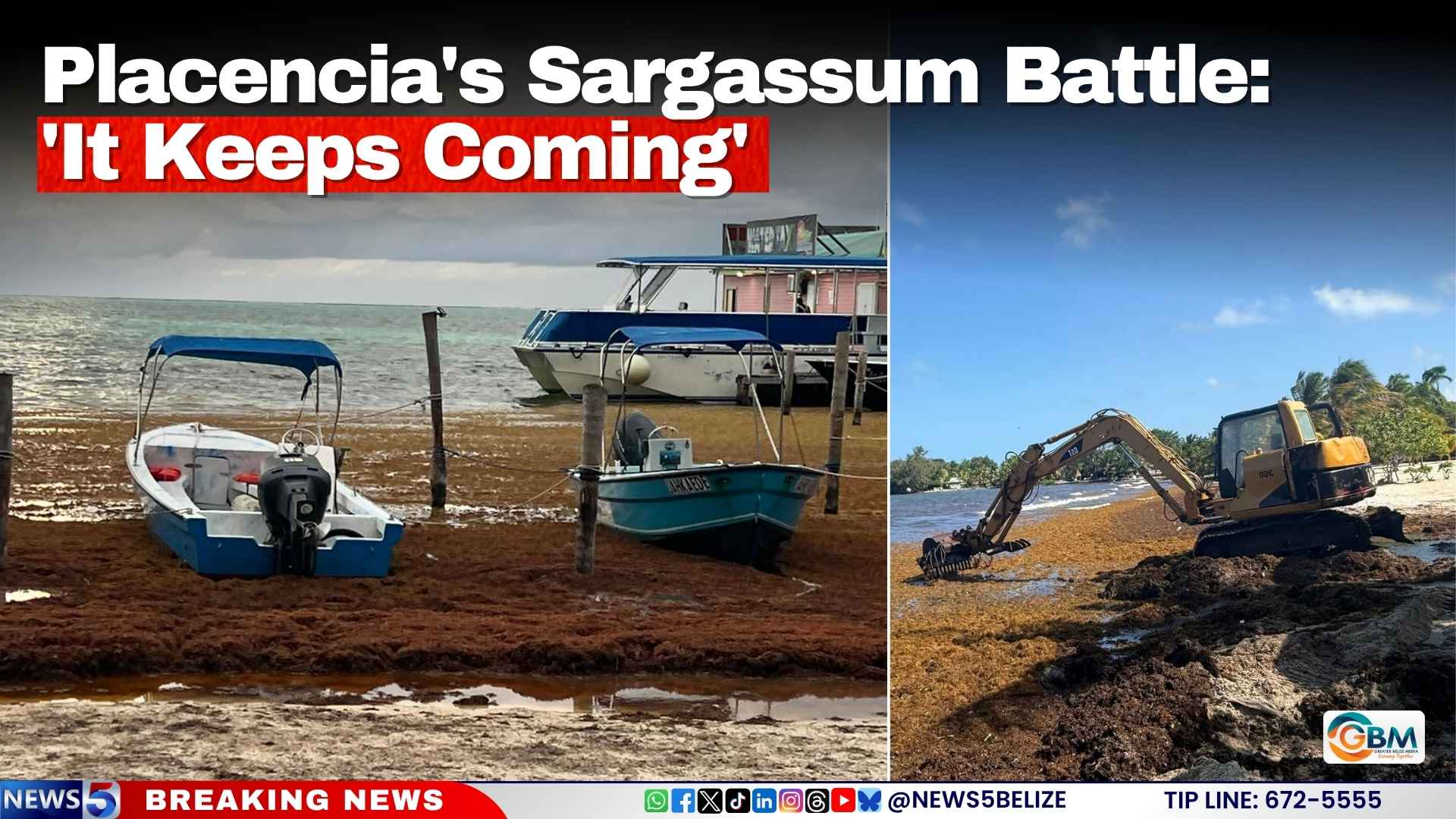
    As the 2026 Caribbean tourist season approaches, coastal communities across Belize are locked in a grueling, uneven battle against an unprecedented surge of sargassum that continues to roll in from open waters, overwhelming local cleanup efforts and threatening the region’s critical tourism industry.

    By mid-April, crews working on Placencia Beach had already hauled away 15 full dump truck loads of the dense brown seaweed from the popular shoreline. Yet despite consistent daily cleanup work, vast mats of sargassum still cover nearly the entire stretch of beach, with new batches washing ashore with every high tide. Local municipal council officials confirmed that the influx shows no sign of slowing, stating that cleanup teams will continue working around the clock to remove as much of the seaweed as possible, even as the volume outpaces their capacity.

    Placencia is far from alone in facing this crisis. Neighboring Hopkins Village has also seen massive sargassum accumulations on its shores, while popular island destinations Ambergris Caye and Caye Caulker have reported entire shorelines blanketed by the invasive seaweed. The sargassum surge is not an isolated issue for Belize: the entire Caribbean basin is facing an extraordinary spread this season, with sargassum mats battering coastlines from Mexico’s Yucatan Peninsula all the way down to Belize’s 240-mile shoreline.

    For local residents, the constant influx has become a daily nuisance and public health concern. Many have taken to social media to vent their frustration, highlighting the putrid, rotten odor that lingers over coastal neighborhoods as decaying sargassum builds up on beaches. One Placencia resident noted that the smell has been unbearable, calling for long-term solutions to prevent the recurring crisis from devastating the community.

    The biggest impact of the sargassum invasion falls on Belize’s tourism sector, which drives a large share of the national economy and supports tens of thousands of local jobs. Tourists visiting high-traffic coastal destinations have cut back on water activities, with many reporting that dense mats of seaweed make swimming and snorkeling nearly impossible. A visitor to Placencia who traveled to the region last month shared that her party only managed to enter the ocean twice during their trip due to the severe sargassum bloom, though she added that the group still enjoyed their time in Belize despite the disruption.

    Local cleanup crews say they are fighting a losing battle against the seaweed. Daily manual removal efforts barely put a dent in the constant incoming volumes, and communities report they lack the specialized tools, trained staff, and heavy equipment needed to process the thousands of tons of sargassum washing ashore this season.

    Belize’s national government has already taken initial steps to address the crisis. Earlier this year, authorities allocated BZD$250,000 in emergency cleanup grants to coastal communities to support immediate removal efforts. Officials also launched an ambitious BZD$50 million long-term project that aims to convert collected sargassum into usable fuel, turning a costly environmental nuisance into an energy resource. Despite these interventions, climate and ocean scientists are forecasting record-breaking sargassum levels across the Caribbean by the height of summer 2026, leaving coastal communities bracing for even more severe inundation in the coming months.

  • Suriname, diaspora en de toekomst: drie lijnen voor duurzame ontwikkeling

    Suriname, diaspora en de toekomst: drie lijnen voor duurzame ontwikkeling

    At the PSA Diaspora and Investor Dialogue held in Amsterdam on Sunday, Ashwin Adhin, Speaker of the National Assembly of Suriname, laid out a comprehensive, long-term vision for strengthening ties between the South American nation and its global diaspora community, outlining three interconnected pillars to guide Suriname’s development through 2050.

    Decades of institutional disconnection have shaped the relationship between Suriname and its diaspora: since the country gained independence from the Netherlands in 1975, hundreds of thousands of Surinamese people living abroad have fallen outside Suriname’s formal legal framework, losing their official citizenship status despite retaining deep cultural and emotional connections to their homeland. Adhin argues this long-standing gap requires a fundamental shift in policy framing.

    For generations, Adhin noted, Suriname has approached its diaspora primarily through the lens of potential investment, rather than recognizing community members as full members of the Surinamese nation. To reverse this dynamic, Adhin proposed four legislative priorities he will bring back to the capital Paramaribo for formal consideration. These include practical adjustments such as extending existing PSA resident status and expanding residency rights, as well as more sweeping reform: a new Law of National Connection that would allow Surinamese people living abroad to restore their formal legal ties to Suriname without being forced to renounce their current citizenship. Additional proposals include a new “PSA-plus” status that grants broad rights to diaspora members without full citizenship, and a constitutional amendment to permanently enshrine the relationship between Suriname and its diaspora, preventing future governments from weakening these protections.

    The second pillar of Adhin’s vision centers on economic development, with a specific focus on the country’s emerging oil and gas sector. Suriname is preparing to enter a transformative new phase, with commercial oil production from the country’s large GranMorgu field slated to begin in 2028. Projected revenues from the sector are expected to reach billions of dollars, representing an unprecedented opportunity for national growth.

    Despite this potential, Adhin issued a clear warning against overreliance on fossil fuel extraction. Oil is not an end goal, he emphasized, but rather a tool to finance broad-based economic transformation. Overdependence on the sector would leave Suriname dangerously vulnerable to global oil price volatility and growing international pressure to transition away from fossil fuels.

    To avoid this trap, Adhin introduced the “Oil & Gas Plus” strategy, which would channel oil revenues into developing six key non-extractive sectors to build a diversified economy: agriculture and food production, water economy, gold value chain expansion, carbon credit development and forest management, medical tourism, and ecotourism. Adhin added that the diaspora is uniquely positioned to drive growth in these new sectors, as many Surinamese people living abroad hold specialized expertise in high-demand fields including healthcare, information technology, finance, and education.

    The third and final pillar lays out Adhin’s 2050 long-term vision, which aims to reposition Suriname from a commodity-dependent economy to a strategic regional hub. This shift would move Suriname from a “resource-based” national identity to a “network-based” identity, with four core focus areas: a regional financial hub with modern banking regulation and a regional stock exchange, a logistics hub with upgraded ports, aviation infrastructure and cross-border connections, a digital hub with investments in data centers, cybersecurity and digital infrastructure, and an educational hub that serves as a regional center for advanced training and higher education. Under this plan, the services sector would become the largest contributor to Suriname’s GDP by 2050, creating thousands of new jobs in technology, consulting, and financial services.

    A core throughline of Adhin’s address was the recognition that the Surinamese diaspora is already a major economic force, not just a potential source of future investment. Diaspora members currently send hundreds of millions of dollars in remittances back to Suriname each year, making them current financial partners in the country’s development rather than distant future investors. Adhin called for expanded structural support to grow this role, highlighting existing opportunities including tax incentives and access to international financing through institutions such as Afreximbank for diaspora entrepreneurs looking to launch businesses in Suriname.

    As Speaker of the National Assembly, Adhin emphasized that his role is not to implement policy directly, but to advance these priorities through legislative action, pushing for long-stalled dossiers to finally receive parliamentary consideration and enshrine the diaspora relationship in permanent law. He also stressed the critical importance of bilateral cooperation with the Netherlands, including updates to existing bilateral treaties, noting that mutually agreed bilateral arrangements are the only way to reach a sustainable, widely accepted solution to nationality and rights issues for diaspora members.

    Closing his address, Adhin framed Suriname’s future as a collective choice for all Surinamese, whether they live within the country’s borders or abroad. The country must decide whether to remain dependent on finite natural resources, or build a resilient, diverse economy rooted in knowledge, strong institutions, and cross-community collaboration. The diaspora, he emphasized, is not just a source of capital – it is a core partner in building Suriname’s future for generations to come.

  • US–Iran Tensions Flare as Fighting Resumes in Strait of Hormuz

    US–Iran Tensions Flare as Fighting Resumes in Strait of Hormuz

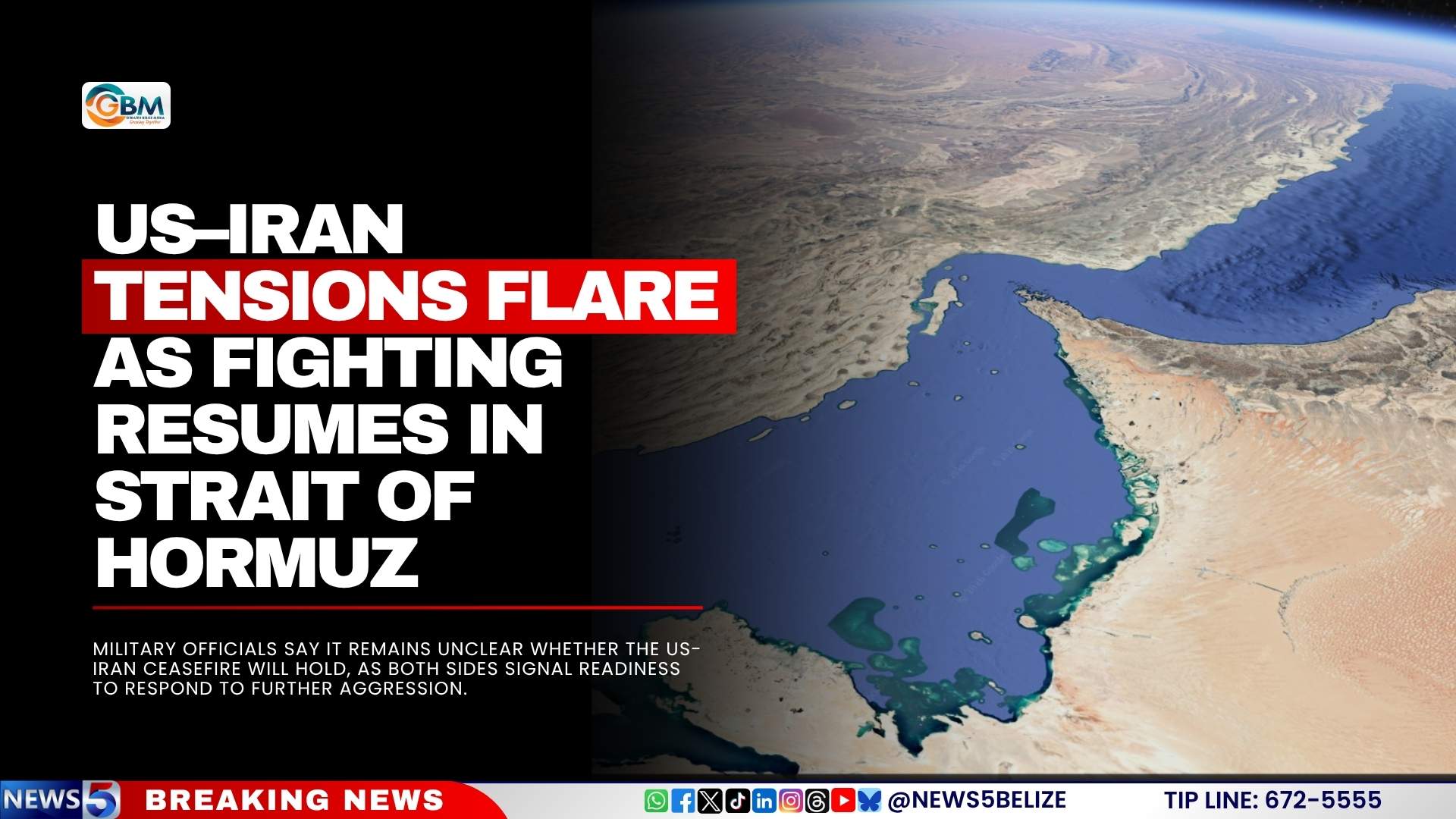
    The narrow Strait of Hormuz, one of the world’s most critical chokepoints for global energy trade, has once again become a flashpoint for escalating confrontation between the United States and Iran, as resumed fighting has thrown a previously negotiated fragile ceasefire into serious jeopardy. The outbreak of hostilities has sparked urgent international alarm over both regional stability and the security of global energy supply chains that millions of consumers and businesses depend on daily.

    According to statements released by US Central Command, the clash unfolded when Iranian forces launched a coordinated attack involving cruise missiles, unmanned aerial drones, and fast-attack small craft targeting US naval vessels and passing commercial shipping transiting the waterway. In response, the US military says it destroyed six Iranian boats involved in the assault, framing the operation as a purely defensive measure designed to safeguard free and open maritime navigation through the strait. Tehran has immediately pushed back against the US account, dismissing the claims of Iranian aggression as entirely baseless in official statements.

    The return of open hostilities has already sent ripples through global financial and commodity markets. Investors rushed to price in heightened risk of a full-blown disruption to shipping through the strait, which carries roughly 20% of the world’s daily oil consumption. By early trading following the incident, benchmark oil prices had climbed sharply, while major global stock indices dipped on the news. Energy market analysts warn that if security conditions in the strait continue to deteriorate, consumers around the world could face dramatic spikes in retail fuel prices in the coming weeks.

    Tensions have already spilled beyond the immediate confines of the Strait of Hormuz into other parts of the Gulf region. In the United Arab Emirates, national security authorities confirmed they intercepted incoming missiles, and a drone attack targeting an Emirati oil facility left three people injured. Multiple commercial vessels have also sustained damage in nearby Gulf waters. In a development that highlights the deepening web of regional security cooperation, an Israeli-built air defense system deployed in the UAE successfully intercepted an incoming Iranian missile during the attack.

    The broader regional cold war between Iran and Western-aligned states continues to simmer across multiple front lines. Along the Lebanon-Israel border, clashes have resumed between the Israeli military and Iran-backed Hezbollah, even though a fragile ceasefire had largely held the area for months.

    As of the latest updates, military officials from both sides have issued stark warnings that they stand ready to respond forcefully to any further acts of aggression from the opposite camp. There remains significant uncertainty over whether the original US-Iran ceasefire can be salvaged, with many regional analysts warning that the current escalation could be the final blow to the already shaky truce.

  • Caribbean Court of Justice strengthens judicial cooperation through high-level European knowledge exchange visit

    Caribbean Court of Justice strengthens judicial cooperation through high-level European knowledge exchange visit

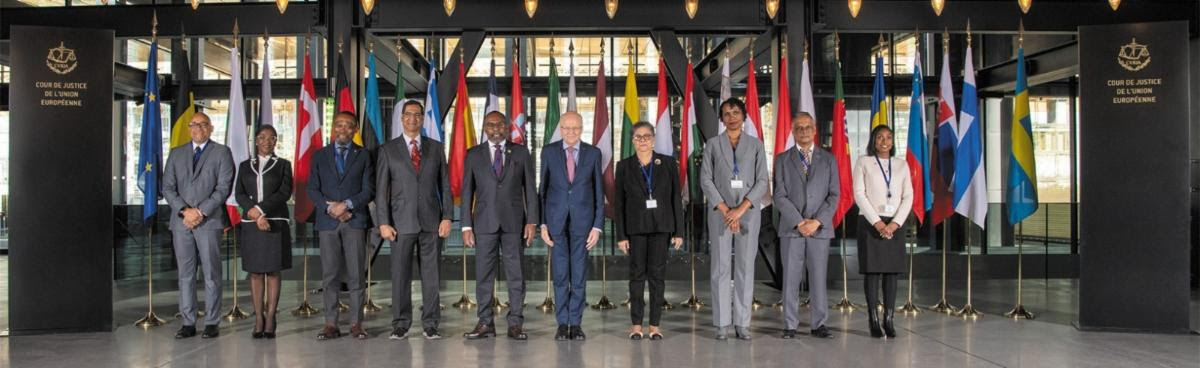
    Between April 27 and 30, 2026, a delegation led by Caribbean Court of Justice (CCJ) President Winston Anderson wrapped up a high-impact four-day knowledge-sharing and collaboration tour of key European judicial institutions, built to strengthen cross-regional judicial capacity and foster long-term institutional partnerships. Funded by the European Union through the 11th European Development Fund, the mission marked a deliberate step to connect two major regional judicial systems and exchange actionable insights on modern court operations.

    The CCJ delegation’s itinerary centered on three of Europe’s most influential international legal bodies, starting with the Court of Justice of the European Union (CJEU) based in Luxembourg. There, the team was officially received by CJEU President Koen Lenaerts and Vice President Marc van der Woude, holding structured high-level discussions before observing ongoing court proceedings. Beyond formal dialogues, the delegation gained exclusive behind-the-scenes access to the CJEU’s core administrative functions, from digital case management infrastructure and communications protocols to specialized judicial library services. This hands-on exposure allowed the CCJ team to study the CJEU’s tested approaches to boosting operational efficiency and embedding innovation into daily court work.

    From Luxembourg, the delegation traveled to Strasbourg, France—a global hub recognized for advancing international human rights law and intergovernmental legal cooperation—to meet with leadership from the European Court of Human Rights (ECtHR) and the Council of Europe. The CCJ team held judicial dialogues with ECtHR judge Arnfinn Bårdsen and members of the court’s Section V registrar team, and President Anderson also paid a formal courtesy call to Council of Europe Secretary General Alain Berset.

    Across all Strasbourg engagements, participants centered talks on three defining priorities for modern regional courts: upholding unwavering judicial independence, advancing effective regional integration through law, and clarifying the critical role that supranational judicial bodies play in defending democratic values, the rule of law, and fundamental human rights. For the CCJ, these dialogues reinforced its long-standing commitment to continuous institutional improvement and mutually beneficial global judicial collaboration.

    Unlike one-off diplomatic visits, this mission was designed as a two-way exchange: while the CCJ delegation drew on decades of European experience in supranational judicial governance to identify opportunities for refining its own operations, CCJ officials also shared their unique perspective on adjudicating disputes within a developing regional integration framework. The EU’s funding for the initiative underscores the bloc’s ongoing investment in strengthening rule of law institutions across the Caribbean, and lays the groundwork for future joint initiatives, training programs, and collaborative research between the CCJ and its European partner institutions.

  • Guyana Battles Venezuela at World Court Over Oil-Rich Essequibo

    Guyana Battles Venezuela at World Court Over Oil-Rich Essequibo

    The decades-long territorial dispute between Guyana and Venezuela over the resource-rich Essequibo region has moved into formal public hearings at the United Nations’ highest judicial body, the International Court of Justice (ICJ), opening in The Hague this week. The proceedings mark a major turning point in a conflict that has simmered for more than a century, with energy reserves at the heart of rising geopolitical tensions in South America.

    Guyana’s Foreign Affairs Minister Hugh Todd opened his country’s arguments before the 15-judge panel on Monday, framing the case as a straightforward yet high-stakes battle for the nation’s core sovereignty. At issue is the legal fate of the 1899 boundary arbitration award that first established the modern border between the two neighboring countries, granting Guyana control over the 159,000-square-kilometer Essequibo region. This territory makes up more than 70% of Guyana’s current total land area and holds massive untapped reserves of oil, gold, and timber—resources that have driven major foreign investment and economic growth in Guyana over the past decade.

    Todd emphasized that the 1899 ruling has enjoyed international recognition and formal acceptance from both states for more than 100 years. Under established principles of international law, he argued, Venezuela’s decades-late challenge to the award is legally invalid. He also called out Venezuela for escalating tensions in recent years, pointing to increased military deployments along the shared border and repeated attempts by Caracas to assert administrative and economic control over parts of the disputed territory.

    Venezuela, for its part, has rejected Guyana’s framing and maintains that the 1899 agreement was inherently flawed and legally void from its inception. Caracas points to a 1966 bilateral treaty signed with Guyana ahead of the country’s independence, which requires both nations to pursue a negotiated solution through direct talks rather than binding arbitration at the ICJ. Hearings are scheduled to run through May 11, with Venezuela set to lay out its full legal arguments starting midweek.

    The ICJ previously ruled that it holds formal jurisdiction to adjudicate the dispute, rejecting Venezuela’s preliminary challenges. While the court’s final rulings are legally binding under international law, it lacks an independent enforcement mechanism to compel compliance from either state. A final decision on the merits of the case is expected to be issued in the coming months.

    The Guyana-Venezuela dispute is one of two active high-profile territorial conflicts being adjudicated by the ICJ involving Latin American states. The court is also processing a long-running territorial, maritime, and insular dispute between Belize and Guatemala. In a recent development in that case on March 19, 2026, the ICJ ruled that Guatemala may participate as a non-party intervener in a separate ongoing dispute between Belize and Honduras over the Sapodilla Cayes, after the court recognized that Guatemala holds a legitimate legal interest in the outcome of that case. The court has since set procedural deadlines for Guatemala to submit its formal position, while the main Belize-Guatemala border dispute continues to move forward, with a final judgment expected in the next few years.

  • Jules scores late winner for defending champs

    Jules scores late winner for defending champs

    The Barbados Football Association Premier League delivered another riveting weekend of action Sunday, as defending champions Weymouth Wales pulled off a last-gasp 2-1 victory over their long-time rivals Ellerton, courtesy of a stoppage-time winner from former national captain Rashad Jules. The dramatic result came after title challenger Paradise had earlier rocketed to the top of the table with a lopsided 11-2 destruction of bottom-side Wotton, putting immediate pressure on Wales to respond at the BFA Technical Centre ground.

    Wales got off to a flying start inside the opening 10 minutes, when Ellerton’s Javon Austin was called for a foul on Jules just inside the 18-yard box. Midfielder Ackeel Applewhaite stepped up to take the spot kick, slotting a low shot into the left corner beyond the reach of Ellerton goalkeeper Kerry Holder to put his side ahead 1-0. For the next hour, Wales dominated possession and territorial control, but neither side managed to carve out a clear-cut goalscoring chance until the 66th minute. That was when Ellerton captain Shakille Belle latched onto a precision through ball, shrugged off a challenge from defender Rashad Smith, and rounded Wales goalkeeper Kishmar Primus to slot home the equalizer, setting up a frantic final stanza.

    The closing 25 minutes saw both teams throw bodies forward in search of a winning goal, and Ellerton came agonizingly close to snatching the win in the 90th minute. Belle delivered a pinpoint cross from the right wing that beat Primus, leaving substitute Anson Barrow with a simple tap-in from just five yards out. In a moment that would ultimately cost Ellerton all three points, Barrow failed to make any contact with the ball, wasting the golden opportunity. Just three minutes into stoppage time, Jules made no mistake for the second match running. The former captain powered his way through Ellerton’s defensive line, turned quickly outside the penalty area, and fired a thunderous left-footed strike that flew into the back of the net, sparking wild celebrations among the Wales squad and supporters. Remarkably, this was the second consecutive match that Jules netted a 93rd-minute winning goal, having also hit a late winner against Brittons Hill in the previous round of fixtures.

    Speaking to reporters from Barbados TODAY after the final whistle, Jules credited his teammates and coaching staff for the result, noting that he had endured a challenging season by his own high standards. “It was a relatively productive night. Like you guys would have seen for the whole season, we just need to do a little better in the final third, but for the most part the guys have been keeping the ball, and at least trying to play a Wales style of football, regardless of the results that we’ve been getting,” he said. “I feel as though coming to Wales the staff put a lot of confidence and support in me. They know I’ve been struggling all season, but they kept me on and I just think that I had to prove them right.”

    The opening match of the matchday brought its own decisive result, as Eyre’s Meatshop Pride of Gall Hill secured a critical 1-0 win over UWI Blackbirds to move further clear of the relegation zone. Shakarie Mottley scored the game’s only goal in the 86th minute, lifting Gall Hill to sixth place in the table on 15 points, while UWI Blackbirds stayed in seventh position three points behind.

    In the headline early match, Paradise put on a goalscoring masterclass against Wotton, who were forced to play the entire 90 minutes with club president Rasheed Belgrave standing in as goalkeeper. Paradise ran riot in the first half, taking a 7-0 lead into halftime before making a raft of substitutions that disrupted their attacking rhythm in the second half. Despite the one-sided scoreline, Wotton refused to let their heads drop and grabbed two late consolation goals from Tre Byer and Jayden Benjamin, marking the most lopsided result of the 2024 season so far. Tyrel Rayside Demendonca and Shamari Harewood both scored hat tricks for Paradise, while Sheran Hoyte and Kamol Griffith added two goals each, and Christian Gill rounded out the scoring with one goal.

    The 11-2 win put Paradise temporarily top of the league on 33 points, boosting their goal difference considerably and piling the pressure on Weymouth Wales to respond later in the day. Paradise head coach Mario Harte expressed satisfaction with the three points and the goals, but conceded he was disappointed to concede two soft goals. “Yeah great result, always good to get some goals on the board, but conceding two rubbed me a little on the wrong side, but yeah grateful for the three points most of all,” Harte said. “While I would rather we held onto the top spot, I can’t complain about where we are right now in the table.” Jules’ late winner ultimately saw Wales retake the top position by a single point, keeping the title race finely poised as the BFA Premier League approaches its business end.