作者: admin

  • CARICOM Saddened by passing of former LIAT Managing Director Dr Warren Smith

    CARICOM Saddened by passing of former LIAT Managing Director Dr Warren Smith

    The Caribbean Community (CARICOM) has announced with profound sorrow the passing of Dr. William Warren Smith, CD, the esteemed former President of the Caribbean Development Bank (CDB) and a revered figure in regional economics. Recognized as a visionary development economist, Dr. Smith’s career was characterized by an unwavering dedication to the advancement of the Caribbean region.

    His distinguished service included transformative leadership roles at the helm of the Caribbean Development Bank and LIAT (1974) Ltd., in addition to holding several high-level governmental positions in his native Jamaica. Colleagues and contemporaries consistently highlighted the intellectual rigor, unwavering integrity, and profound commitment to social betterment that defined his professional ethos. Dr. Smith was widely regarded as a source of thoughtful counsel and a paradigm of principled governance, leaving an indelible mark on the institutions he served.

    In an official statement, CARICOM expressed its deep condolences, extending sympathies to Dr. Smith’s bereaved family, friends, and his former colleagues across the numerous organizations he uplifted with his expertise. His legacy is enshrined in the continued pursuit of economic resilience and improved quality of life for the people of the Caribbean, a mission he championed throughout his illustrious career.


  • OPINION: Caribbean Corporal Punishment

    OPINION: Caribbean Corporal Punishment

    A recent judicial caning in Indonesia, where a couple received 140 lashes for sex and alcohol offenses, has reignited global discourse on corporal punishment practices. This incident casts a revealing light on the Caribbean’s complex relationship with physical punishment, where such practices persist despite formal prohibitions.

    Historical records indicate that Caribbean nations under colonial rule frequently employed caning, particularly for sexual offenses, with incidence rates potentially reaching astronomical figures. The cultural persistence of these practices demonstrates the limitations of international efforts, including those by the European Union, to standardize global human rights approaches.

    Jamaican cinema provides perhaps the most visceral depiction of this practice through Perry Henzell’s classic film ‘The Harder They Come,’ which features a brutal tamarind switch caning scene that remains difficult to watch decades after its production. This artistic representation mirrors the lived experiences of many Caribbean residents who recall educational caning as creating not reform but rather sophisticated evasion techniques and lasting resentment toward authority figures.

    The psychological dimension of corporal punishment often proves as significant as the physical aspect, with the anticipation of pain and the humiliation of the experience creating lasting trauma. While girls historically faced fewer floggings, exceptions occurred, particularly in cases of ‘wilding’ where palms were typically targeted.

    Jamaica formally ceased prison whipping in 2012 under the order of the current Opposition Leader, though school corporal punishment remains widespread across age groups including very young children. Despite government discussions about implementing a total ban on child corporal punishment in 2024, concrete legislative action has yet to materialize, suggesting political considerations may be delaying progress.

    International attention focused on Jamaica in 2021 when Forbes highlighted a program addressing teacher violence against students. This spotlight represents an opportunity for meaningful reform and distance from what many consider an unsavory cultural heritage.

    The progressive stance of many South and Central American nations, which prohibit corporal punishment across domestic, educational, and penal institutions, stands in stark contrast to the Caribbean’s slower pace of reform. As the Indonesian case demonstrates, the continued practice of judicial corporal punishment anywhere maintains a global conversation about punishment, culture, and human rights that particularly resonates in regions with their own complex histories of physical discipline.

  • This Weekend, Guyana Comes to Belize

    This Weekend, Guyana Comes to Belize

    Belize prepares to welcome Guyanese President Dr. Mohamed Irfaan Ali this Sunday afternoon, marking an unprecedented diplomatic moment as the first-ever official visit by a Guyanese head of state to the Central American nation. The three-day state visit signifies a notable shift in regional dynamics, largely driven by Guyana’s extraordinary economic transformation through its burgeoning oil sector.

    Prime Minister John Briceño articulated Belize’s strategic approach to this new regional partnership, emphasizing practical cooperation beyond energy resources. “Our primary focus involves establishing concrete agreements across agriculture, tourism, and educational exchange,” Briceño stated during a Thursday briefing. “While petroleum represents a broader regional discussion, we envision multifaceted collaboration that extends far beyond hydrocarbon resources.”

    The Belizean leader highlighted the ironic reversal in Guyana’s regional standing, noting, “Previously perceived as an overlooked destination, Guyana now commands international attention due to its substantial petroleum discoveries and consequent economic metamorphosis.”

    President Ali’s itinerary includes addressing the ceremonial opening of Belize’s National Assembly session and conducting high-level meetings with Governor General Froyla Tzalam. The visit symbolizes how energy-driven prosperity is recalibrating diplomatic relationships within the Caribbean Community and Central American regions.

    News organization Channel 5 Belize will provide comprehensive live coverage of the presidential arrival through its News 5 Live broadcast platform, with additional updates available via social media channels including Facebook and TikTok.

  • Have you made plans yet? This is what the weather will be like this weekend

    Have you made plans yet? This is what the weather will be like this weekend

    Meteorological authorities in the Dominican Republic have issued warnings about a significant temperature drop expected to commence this Sunday, with unusually cold conditions predicted to persist for nearly a week across most territories. According to meteorological analyst Jean Suriel, who made the announcement on Friday, this weather phenomenon results from the combined impact of two approaching cold fronts and an extensive polar air mass currently moving toward the Caribbean region.

    The cooling pattern represents indirect effects of winter storms that have recently affected the United States. Suriel indicated that the polar air mass would begin influencing Dominican territory by Saturday night, with the most dramatic temperature decreases anticipated in mountainous regions and the Cibao area. Forecast models suggest possible frost conditions and sub-zero temperatures in elevated zones including Valle Nuevo, Valle del Tetero, Valle de Bao, and Valle de Lilís.

    Current weather patterns show a trough system affecting the nation alongside cold front number 23 positioned north of the Caribbean. Meteorological models indicate potential moderate to heavy rainfall developing this afternoon across northern, northeastern, northwestern, and eastern regions, including the Central Mountain Range.

    While precipitation is expected to diminish Friday as the initial trough moves away, isolated showers may still occur. Saturday forecasts predict partly cloudy conditions with moderate rainfall developing during late afternoon hours in southern and southeastern areas.

    The weather system will intensify Sunday with the approach of cold front number 24 and a new trough system, potentially increasing shower activity throughout morning, afternoon, and evening hours. Meteorological authorities have highlighted concerns about urban flooding potential due to expected significant rainfall accumulation.

  • More than 360,000 vehicles still haven’t renewed their registration stickers; less than 24 hours remain before the deadline expires.

    More than 360,000 vehicles still haven’t renewed their registration stickers; less than 24 hours remain before the deadline expires.

    With the January 31, 2026 deadline rapidly approaching, Dominican Republic authorities report that approximately 17.4% of the nation’s vehicle fleet remains non-compliant with mandatory registration renewal requirements. According to the General Directorate of Internal Taxes (DGII), only 1,723,342 out of 2,086,756 eligible vehicles have obtained their 2025-2026 circulation tax stickers, leaving 363,414 vehicles operating without proper documentation.

    The tax administration agency has collected RD$2.887 billion through the renewal process thus far, with the majority of compliant vehicle owners (1,514,115) utilizing traditional banking and financial institutions for payment processing. Digital channels have shown significant adoption, with 167,496 renewals completed through the DGII’s online portal and mobile application, while 41,731 transactions were processed in-person at agency offices.

    The virtual renewal period officially concluded on January 18, 2026, though the standard compliance window remains open until month’s end. Beginning February 1, 2026, substantial financial penalties will be imposed on delinquent vehicle owners. Penalty structures include a RD$2,000 surcharge for current-year non-renewals, escalating to RD$2,100 for vehicles that failed to renew during the 2023-2024 period, and RD$3,100 for those with outstanding renewals from 2022-2023 or previous years.

    To complete the mandatory registration process, vehicle owners must present a legible, current copy of their vehicle registration documentation along with a valid identification card. The DGII anticipates collecting approximately RD$3.434 billion upon full compliance across the vehicle fleet.

  • Cold Front Bringing Chilly Weekend Temperatures

    Cold Front Bringing Chilly Weekend Temperatures

    Meteorological authorities in Belize have issued advisories for significantly colder than average conditions expected throughout the weekend and into early next week. Chief Meteorologist Ronald Gordon confirmed that a sequence of two distinct cold fronts will traverse the nation, bringing notably low temperatures particularly unusual for the region.

    Gordon indicated that the most severe cold spell will manifest from Sunday night through Monday morning. Coastal regions should anticipate temperatures plunging into the lower 60s Fahrenheit, while inland population centers including San Ignacio and Belmopan will experience more pronounced cold in the lower to mid-50s. The elevated terrain of Pine Ridge and similar mountain areas face the most extreme conditions, with forecasts suggesting temperatures could drop into the upper 40s.

    The meteorological phenomenon driving these temperatures involves radiational cooling, a process where heat escapes rapidly into the atmosphere under clear nighttime skies. Gordon emphasized that despite the unusual cold, these temperatures do not represent record-breaking lows for Belize. Historical records indicate significantly colder episodes, including a February 1978 event when inland areas recorded 46°F and the international airport registered 52°F.

    Precipitation associated with these frontal systems will be minimal, with predominantly clear conditions expected throughout the cooling period. Meteorological models project a gradual temperature recovery beginning midweek as the frontal influence weakens and typical weather patterns reestablish.

  • Murder Case Against ‘Easy Glen’ Adjourned

    Murder Case Against ‘Easy Glen’ Adjourned

    The judicial proceedings against Goldburne Glenford Adolphus, colloquially known as ‘Easy Glen,’ encountered another postponement during today’s hearing at the Belize City Magistrate’s Court. The 55-year-old defendant, who remains without legal representation, faces charges for the alleged murder of school warden Shaniele Faber, a 42-year-old mother of four children.

    Court authorities confirmed the adjournment occurred after prosecutors disclosed the unavailability of the official case file, pushing subsequent proceedings to March 26, 2026. Adolphus has been detained since his initial arraignment on October 7, 2025, following police investigations that connected him to the crime through surveillance evidence and physical materials recovered from a neighboring residential unit.

    The victim’s partially decomposed remains were discovered on October 4, 2025, concealed within a blue refuse container near the intersection of Amandala Drive and Cemetery Road. The case has drawn significant public attention due to the brutal nature of the crime and the victim’s role as a community education worker.

    Legal observers note the repeated delays highlight systemic challenges within Belize’s criminal justice framework, particularly regarding evidence processing and representation for indigent defendants. The court has maintained Adolphus in custody pending further developments in the prosecution’s preparation.

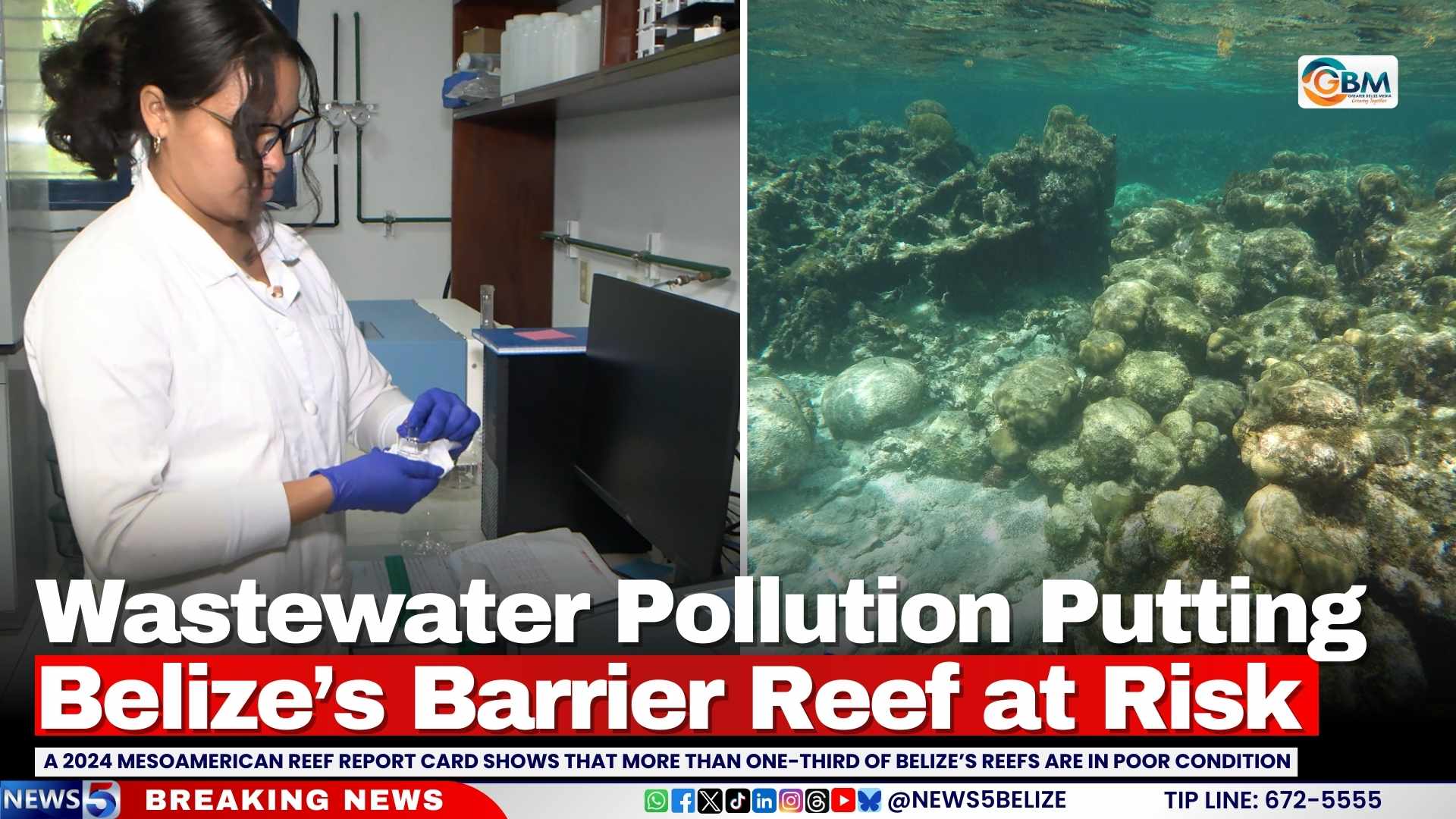
  • Wastewater Pollution Putting Belize’s Barrier Reef at Risk

    Wastewater Pollution Putting Belize’s Barrier Reef at Risk

    Scientific assessments reveal alarming degradation across Belize’s marine ecosystems, with the 2024 Mesoamerican Reef Report Card indicating over one-third of the nation’s reefs now classified as poor quality. An additional twenty percent have reached critical condition, primarily due to contamination from sewage waste and agricultural runoff.

    The organization Healthy Reefs for Healthy People, which coordinates regional monitoring efforts, identifies untreated wastewater as a persistent threat to coral systems. This pollution introduces excessive nutrients and pathogens into marine environments, triggering accelerated algae growth, oxygen depletion, and increased stress on vulnerable coral formations.

    At the University of Belize’s Hummingbird Analytical Laboratory, daily water testing provides concrete evidence of pollution sources. Laboratory Officer Zeida Franco-Leon notes that household products leave detectable traces in marine waters. “Phosphates indicate soap suds runoff from domestic use, alongside contamination from agricultural activities,” she explained.

    Environmental Officer Kenrick Gordon emphasizes that wastewater management extends beyond municipal systems, encompassing industrial and tourism sectors. “The banana and citrus industries, along with hotels and resorts, must all comply with environmental standards,” Gordon stated.

    While governmental agencies including the Department of the Environment and Belize Water Services are implementing improved wastewater management strategies, conservation groups argue that individual responsibility remains crucial. The Belize Fund for a Sustainable Future highlights how domestic sewage treatment and consumer product choices collectively impact reef health and the communities dependent on these ecosystems.

  • Former CDB President Dr Warren Smith Dies

    Former CDB President Dr Warren Smith Dies

    The Caribbean Development Bank (CDB) community is grieving the passing of its fifth President, Dr. William Warren Smith, who died on January 30, 2026. The distinguished Jamaican development practitioner led the regional financial institution from 2011 to 2021, steering it through a decade of significant global and regional challenges.

    Dr. Smith’s transformative leadership saw CDB strengthen its position as a crucial partner for Caribbean nations, particularly in mobilizing resources for sustainable growth and resilience building. His presidency emphasized climate resilience, disaster risk management, and innovative financing mechanisms that enabled Caribbean states to better withstand natural disasters and external economic shocks.

    Beyond his technical contributions, Dr. Smith was remembered as a principled leader who championed good governance, sound economic management, and institutional strengthening as foundations for inclusive development. Current CDB President Daniel M. Best described his predecessor as “a mentor and guide” who demanded excellence while maintaining an unwavering belief in the Bank’s regional mission.

    Dr. Smith’s service earned him numerous honors, including Jamaica’s Order of Distinction (Commander Class). The Bank announced plans to work with his family on arrangements to celebrate his life and contributions, with a condolence book available at its Wildey Headquarters starting February 2, 2026.

    The CDB leadership extended heartfelt sympathies to Dr. Smith’s wife, family, and colleagues, recognizing his legacy as both an institutional builder and a dedicated advocate for Caribbean development.

  • Suriname en China zetten stap richting verlichting schuldenlast

    Suriname en China zetten stap richting verlichting schuldenlast

    In a significant diplomatic and financial development, Suriname and China have solidified their economic partnership through the signing of a supplementary framework agreement on concessional loans. The ceremony, held at Suriname’s Ministry of Foreign Affairs, International Business, and International Cooperation (BIS) on Friday, marks a pivotal step in restructuring Suriname’s debt obligations while creating fiscal space for sustainable development initiatives.

    The agreement was formally executed by Suriname’s Foreign Minister Melvin Bouva and Chinese Ambassador Lin Ji, with Finance and Planning Minister Adelien Wijnerman presiding as witness. This strategic financial arrangement emerges as both nations commemorate five decades of diplomatic relations, highlighting their continued commitment to mutual respect, equality, and mutually beneficial cooperation.

    Ambassador Lin Ji emphasized that the framework establishes a robust foundation for addressing debt-related challenges, enabling Suriname to alleviate fiscal pressures, reallocate resources toward development projects, and bolster international confidence in its economic stability. The agreement reflects China’s ongoing support for Suriname’s economic sovereignty and long-term prosperity.

    Minister Wijnerman underscored the framework’s role in providing structural clarity and shared understanding for future financial cooperation phases. The arrangement demonstrates both nations’ dedication to sustainable and responsible financial engagement, with long-term planning aligned with Suriname’s national development objectives.

    According to Minister Bouva, the agreement consolidates three existing concessional loans into a single structured facility with modified terms, representing a comprehensive approach to careful debt management and enhanced debt sustainability. This consolidation will generate additional fiscal space, support macroeconomic stability, and safeguard developmental targets.

    The signing ceremony signifies a new chapter in bilateral cooperation based on mutual trust and strategic partnership. Both nations expressed appreciation for their constructive collaboration, noting that the agreement contributes to sustainable development and mutual economic benefit while strengthening international financial cooperation paradigms.