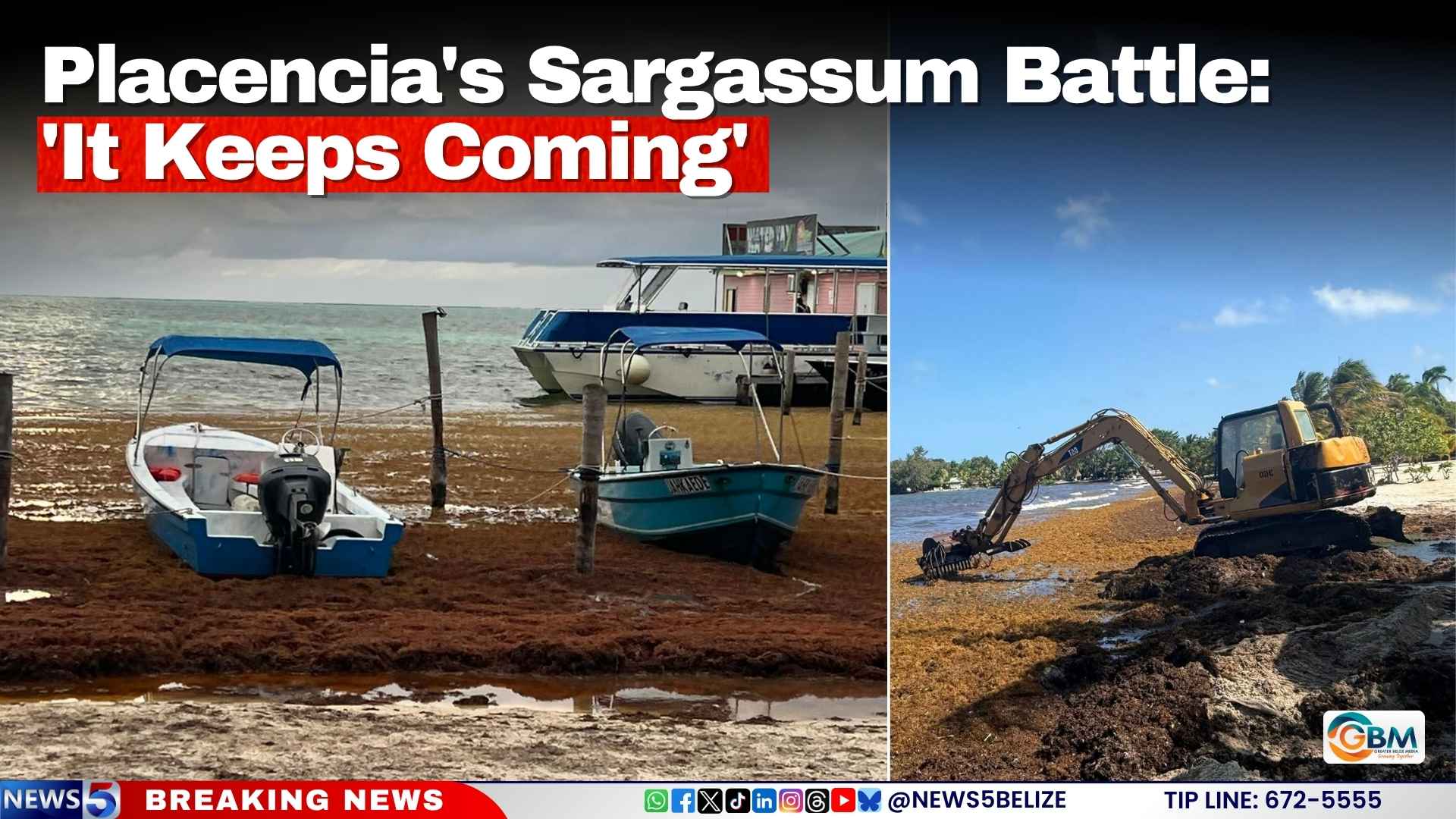
As the 2026 Caribbean tourist season approaches, coastal communities across Belize are locked in a grueling, uneven battle against an unprecedented surge of sargassum that continues to roll in from open waters, overwhelming local cleanup efforts and threatening the region’s critical tourism industry.
By mid-April, crews working on Placencia Beach had already hauled away 15 full dump truck loads of the dense brown seaweed from the popular shoreline. Yet despite consistent daily cleanup work, vast mats of sargassum still cover nearly the entire stretch of beach, with new batches washing ashore with every high tide. Local municipal council officials confirmed that the influx shows no sign of slowing, stating that cleanup teams will continue working around the clock to remove as much of the seaweed as possible, even as the volume outpaces their capacity.
Placencia is far from alone in facing this crisis. Neighboring Hopkins Village has also seen massive sargassum accumulations on its shores, while popular island destinations Ambergris Caye and Caye Caulker have reported entire shorelines blanketed by the invasive seaweed. The sargassum surge is not an isolated issue for Belize: the entire Caribbean basin is facing an extraordinary spread this season, with sargassum mats battering coastlines from Mexico’s Yucatan Peninsula all the way down to Belize’s 240-mile shoreline.
For local residents, the constant influx has become a daily nuisance and public health concern. Many have taken to social media to vent their frustration, highlighting the putrid, rotten odor that lingers over coastal neighborhoods as decaying sargassum builds up on beaches. One Placencia resident noted that the smell has been unbearable, calling for long-term solutions to prevent the recurring crisis from devastating the community.
The biggest impact of the sargassum invasion falls on Belize’s tourism sector, which drives a large share of the national economy and supports tens of thousands of local jobs. Tourists visiting high-traffic coastal destinations have cut back on water activities, with many reporting that dense mats of seaweed make swimming and snorkeling nearly impossible. A visitor to Placencia who traveled to the region last month shared that her party only managed to enter the ocean twice during their trip due to the severe sargassum bloom, though she added that the group still enjoyed their time in Belize despite the disruption.
Local cleanup crews say they are fighting a losing battle against the seaweed. Daily manual removal efforts barely put a dent in the constant incoming volumes, and communities report they lack the specialized tools, trained staff, and heavy equipment needed to process the thousands of tons of sargassum washing ashore this season.
Belize’s national government has already taken initial steps to address the crisis. Earlier this year, authorities allocated BZD$250,000 in emergency cleanup grants to coastal communities to support immediate removal efforts. Officials also launched an ambitious BZD$50 million long-term project that aims to convert collected sargassum into usable fuel, turning a costly environmental nuisance into an energy resource. Despite these interventions, climate and ocean scientists are forecasting record-breaking sargassum levels across the Caribbean by the height of summer 2026, leaving coastal communities bracing for even more severe inundation in the coming months.