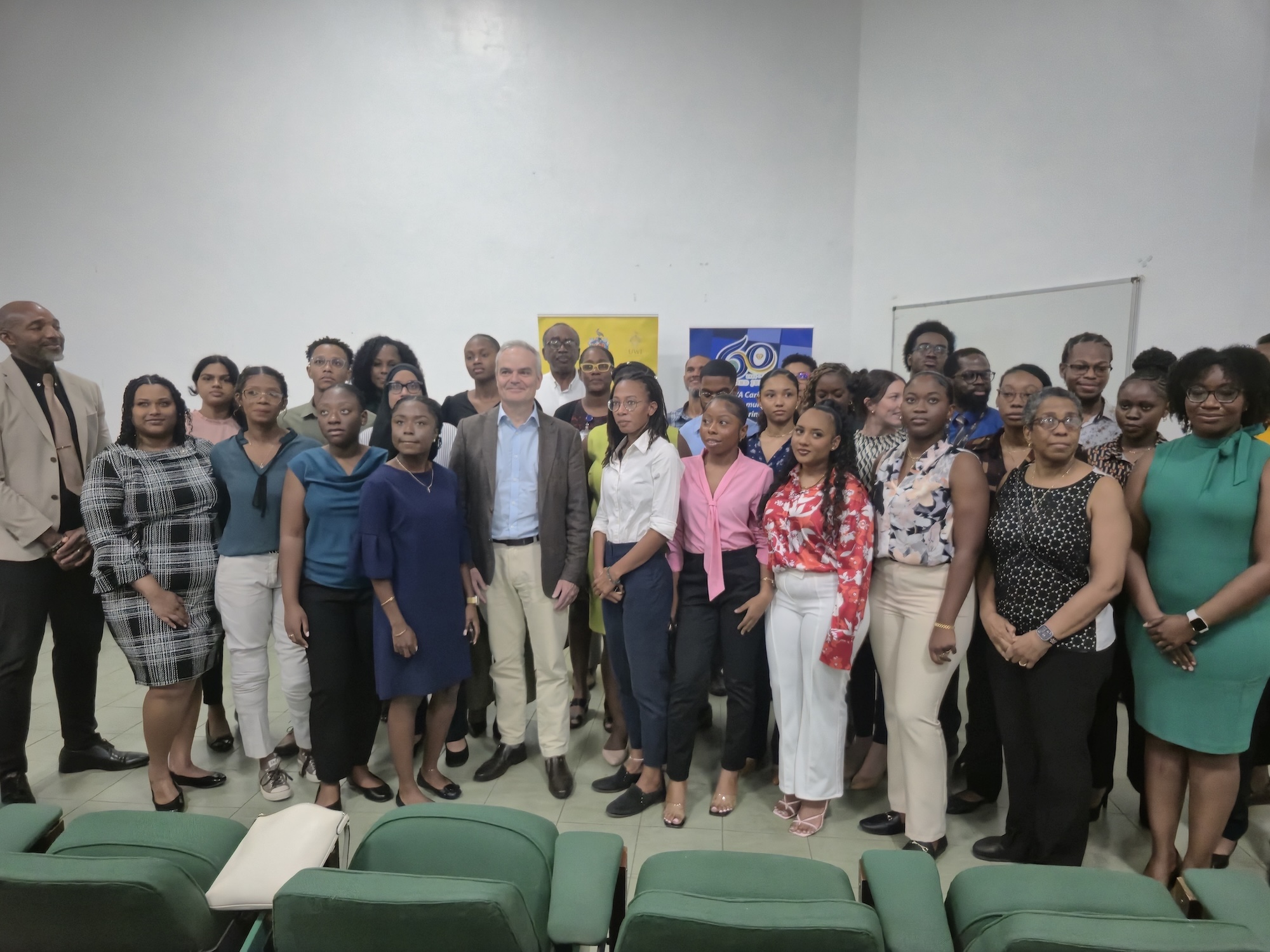
The 2025 graduating class of the Faculty of Medical Sciences at The University of the West Indies (UWI), Cave Hill Campus, has set a new benchmark for academic excellence, achieving the best results in five years. Out of 37 students, 36 successfully passed their final clinical exams, with 14 earning honours and four receiving distinctions. The remarkable achievement was celebrated during the Hippocratic Oath Taking Ceremony held at the Queen Elizabeth Hospital Auditorium on Thursday. Dr. Damian Cohall, Dean of the Faculty, lauded the performance as one of the most outstanding in recent memory. He noted that 36 out of 38 candidates passed, with one granted a medical exemption. The ceremony marked the culmination of a rigorous five-year journey, including three years of pre-clinical studies and two years of clinical rotations in local hospitals and health centres. The final assessment, the unified Bachelor of Medicine, Bachelor of Surgery (MBBS) clinical exam, took place on May 30. While the event celebrated academic success, it also emphasized the deeper responsibilities of the medical profession. Dr. Cohall reminded the graduates that medicine is not just about knowledge but also about compassion and ethical practice. He highlighted the evolving landscape of healthcare, shaped by artificial intelligence, biotechnology, and robotics, but stressed that the human touch remains irreplaceable. ‘ChatGPT may become your medical colleague, but your humanity, judgement, and compassion cannot be programmed,’ he said. Dr. Anthony Harris, Director of Medical Services at Queen Elizabeth Hospital, echoed this sentiment, urging the graduates to focus on patient care in an era of rapid technological advancement. ‘Medicine remains a personal profession,’ he said. ‘At the end of the day, it’s a human being in front of you who needs care.’ The Hippocratic Oath, a centuries-old tradition, served as a solemn reminder of the ethical and moral responsibilities that come with the title of doctor. The Class of 2025 was encouraged to prioritize patient care and uphold the noble values of the profession, even as the medical field continues to evolve.
作者: admin
-
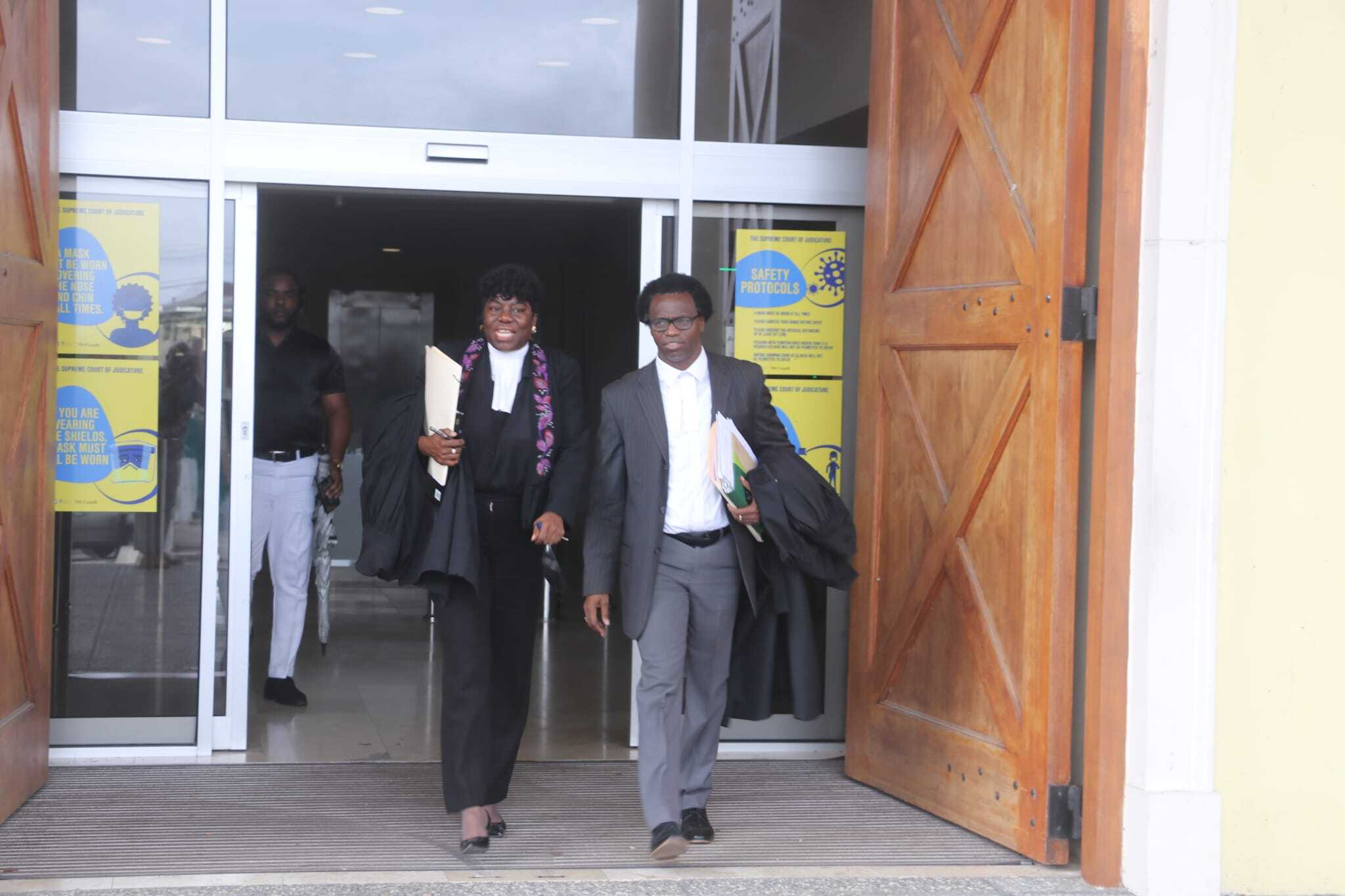
Vonda Pile can no longer practise law in Barbados
In a decisive ruling, the Court of Appeal has mandated the immediate removal of Vonda Minerva Pile from the roster of licensed attorneys. The appellate board, comprising Chief Justice Leslie Haynes and Justices of Appeal Francis Belle and Margaret Reifer, issued the verdict following the Barbados Bar Association Disciplinary Committee’s recommendations. This action stems from Pile’s prior conviction and imprisonment for criminal misconduct during her legal practice. The court has also ordered that all client files under Pile’s management be transferred to the Registrar within a seven-day period. Pile was convicted on June 5, 2019, for embezzling $191,416.39 from her former client, Anstey King, between April 29, 2009, and October 26, 2010. Although she faced additional charges of money laundering, she was acquitted on that count. After serving a three-year sentence for theft, Pile had resumed her legal career, a move now definitively halted by this ruling.
-

System for design: a road travelled and still to be travelled
The Cubaindustria 2024 event, currently underway, features a dedicated Design Forum focusing on the recently approved industrial design policy, its environmental implications, and its alignment with the circular economy. This forum highlights the progressive economic transformations in Cuba, which have paved the way for new opportunities and challenges in the design sector. The cornerstone of these advancements is Decree 88, approved by the Council of Ministers in 2023, which established the National System for Industrial Design and Visual Communication.
Gisela Herrero García, Director of the National Design Office (ONDI), emphasized the historical significance of this development. ‘We were pioneers in creating an office that itself represents the first public policy in design. Thanks to Fidel Castro’s vision, an organization was established in 1980 to evaluate, develop, train, and promote design. This was a bold initiative,’ she remarked. The journey to this milestone included the creation of the Evaluation System and the Registry of Designers, culminating in nearly 45 years of dedicated effort.
The newly approved policy and system are the result of collaborative efforts involving professionals from various disciplines. Given its dynamic nature, the system requires continuous updates to adapt to evolving technologies and methodologies. ‘The National System is a work in progress, constantly reinventing itself. As disciplines evolve and new technologies emerge, designers must be equipped with the tools to address contextual challenges,’ Herrero García added.
Although the design policy is relatively new within the industry sector, it has a cross-cutting influence on other areas such as industrial development, automation, maintenance, recycling, and packaging. This integration, according to Herrero García, strengthens the national economy. ‘Design must serve the economy. It’s crucial to position design as an investment rather than a cost, ensuring it adds value to processes and outcomes,’ she explained.
The policy’s implementation has already yielded tangible results, including enhanced partnerships with various entities and a deeper understanding of the strategic importance of design evaluation. For instance, the Cuban Apiculture Enterprise (Apicuba) underwent significant transformations following an evaluation, leading to improved product quality and organizational efficiency. ‘Even small improvements can have a profound impact, enhancing both the product and the organization’s strategic management,’ Herrero García noted.
Looking ahead, the priorities for the design sector are extensive, ranging from introducing design concepts at an early age to creating solutions for the elderly. ‘Design and communication must be recognized as key drivers of company development,’ Herrero García stressed. The systemic approach to design emphasizes collaboration and process-oriented thinking, ensuring that design continues to play a pivotal role in Cuba’s economic resilience.
Herrero García concluded, ‘Without political will, we wouldn’t have reached this point. The design policy is a strategic tool for training and development, and with a systemic approach, it will continue to enhance our economy.’
-

Biomodulin T to be part of primary health care
Cuban President Miguel Díaz-Canel Bermúdez emphasized on Tuesday the importance of integrating Biomodulin T into primary health care across Cuban communities. During a meeting with health experts at the Palace of the Revolution, he urged that medical professionals be adequately trained to prescribe this innovative treatment. The discussion highlighted the significant role of Biomodulin T, a bovine thymus extract-based drug, in addressing immune dysfunction and recurrent infections, particularly among the elderly. Clinical trials involving nearly 9,000 nursing home residents demonstrated a remarkable reduction in acute respiratory infections (ARI) by over five times, and a 50% decrease in mortality risk compared to those outside such facilities. The drug also showed a 70% reduction in respiratory infection incidence among the elderly, a leading cause of death in Cuban nursing homes. Additionally, Biomodulin T has proven effective in oncology, rejuvenating patients’ immune systems when combined with chemotherapy and immunotherapy. It has also been successful in treating thymic hypoplasia in children, with 83% of treated children achieving normalized thymus size and function, and 71% showing clinical improvement. Given these promising results, President Díaz-Canel called for expedited efforts to incorporate Biomodulin T into national health strategies, especially in light of Cuba’s aging population. The drug, which gained prominence during the COVID-19 pandemic with over 1.9 million units distributed and more than 238,000 patients treated, has been recognized with two awards from the Academy of Sciences in 2022 for its efficacy in treating lung cancer and its immunomodulatory effects in older adults.
-
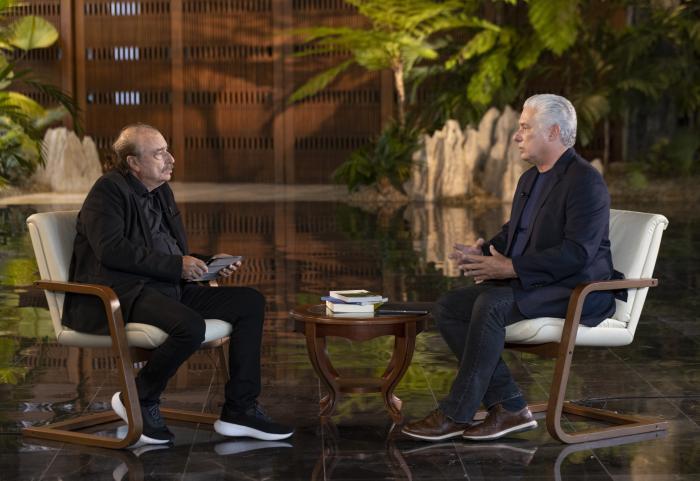
Cuba has never stood idly by
In a comprehensive interview with Spanish journalist Ignacio Ramonet, Cuban President Miguel Díaz-Canel addressed the pressing economic challenges facing Cuba, the impact of the U.S. blockade, and the nation’s efforts toward regional integration. The discussion, held at the Palace of the Revolution on May 11, 2024, delved into three key areas: domestic policy, the economy, and international relations.
**Domestic Policy and Economic Hardships**
Díaz-Canel acknowledged the severe difficulties faced by Cuban families, including food shortages, inflation, and public service deficits. He attributed these issues primarily to the U.S. economic blockade, which has been in place for over six decades. The President emphasized that the blockade has intensified under recent U.S. administrations, particularly with the inclusion of Cuba in the U.S. list of state sponsors of terrorism. This has further restricted Cuba’s access to international financial systems and foreign investment.The President highlighted Cuba’s resilience and creative resistance in the face of these challenges. Despite the blockade, Cuba has managed to maintain social programs and economic activity, albeit at a reduced capacity. Díaz-Canel pointed to the COVID-19 pandemic as a critical moment when Cuba prioritized saving lives, diverting limited resources to healthcare and vaccine development.
**Economic Measures and Future Plans**
Díaz-Canel outlined Cuba’s Macroeconomic Stabilization Program, aimed at addressing inflation, exchange rate issues, and fiscal imbalances. The program, which extends to 2030, focuses on stimulating domestic production, particularly in agriculture, to achieve food sovereignty. The President also discussed the role of micro, small, and medium-sized enterprises (MSMEs) in diversifying the economy and fostering innovation.**International Relations and Regional Integration**
On the international front, Díaz-Canel criticized the U.S. government for maintaining the blockade despite widespread global condemnation. He expressed Cuba’s willingness to engage in dialogue with the U.S. on equal terms but stressed that the blockade must be lifted unilaterally. The President also highlighted Cuba’s participation in regional alliances, such as the Eurasian Economic Union and its aspirations to join the BRICS group, as part of its strategy to counter U.S. hegemony and foster South-South cooperation.**Regional Challenges and Solidarity**
Díaz-Canel addressed the political and economic crises in Latin America and the Caribbean, emphasizing Cuba’s commitment to regional solidarity and integration. He condemned U.S. interference in the region and reaffirmed Cuba’s support for progressive governments and movements. The President also highlighted Cuba’s contributions to regional health and education, including the deployment of medical brigades to Haiti and other countries.In conclusion, Díaz-Canel expressed optimism about Cuba’s future, emphasizing the nation’s resilience, creativity, and commitment to social justice. He called for greater international cooperation and solidarity to overcome the challenges posed by the U.S. blockade and to build a more equitable world.
-
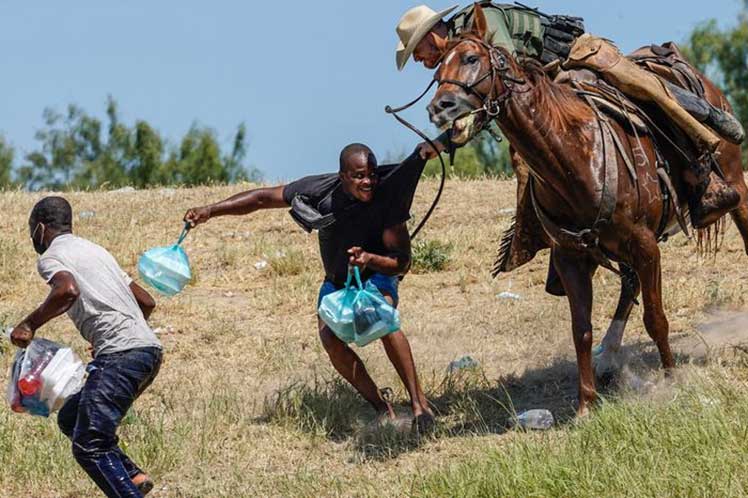
Cuba criticizes inhumane treatment of migrants on US southern border
The United States is confronting widespread international criticism following the emergence of disturbing images showing border patrol agents on horseback aggressively pursuing Haitian migrants near the Texas-Mexico border. The incident has sparked diplomatic protests and raised serious questions about America’s treatment of asylum seekers.
Cuban President Miguel Díaz-Canel launched a sharp critique via social media, posting photographs of the border operations with the pointed question: “Who spoke of Human Rights?” This sentiment was echoed by Cuban Foreign Minister Bruno Rodríguez, who characterized the treatment of Haitian migrants as demonstrating “racist contempt” among US border enforcement personnel.
The controversy centers around the Del Río sector where approximately 500 Haitian nationals had established a makeshift camp beneath the international bridge connecting Acuña, Mexico with Del Río, Texas. Following a significant border crossing attempt last Sunday, US authorities initiated mass deportations of the predominantly Haitian migrants.
The visual documentation of mounted border officers charging toward migrants triggered immediate international repudiation, with critics condemning the operation’s apparent brutality. Haiti’s state Office for Citizen Protection formally criticized the treatment and urged US authorities to collaborate with involved governments to develop humane solutions.
In response to the expulsions, a coalition of US-based Haitian lawyers announced plans to pursue legal action to halt what they characterize as summary removals that potentially violate asylum protocols.
The current migration surge stems from Haiti’s severe multidimensional crisis as the poorest nation in the Western Hemisphere. A combination of recent natural disasters, political instability following President Jovenel Moïse’s assassination, and pandemic-related economic collapse has created desperate conditions driving population displacement.
-
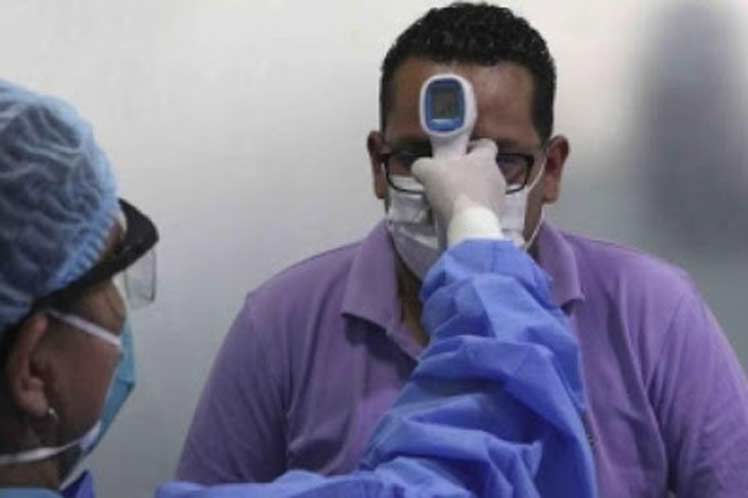
Cuba reported 7,151 Covid-19 cases and 59 deaths
Cuban health authorities have provided a comprehensive update on the nation’s COVID-19 situation, revealing significant epidemiological data since the pandemic’s onset. Dr. Francisco Durán, the National Director of Epidemiology at the Ministry of Public Health, delivered the latest statistics during his regular televised briefing, offering a detailed breakdown of the country’s pandemic response.
According to the official figures, Cuba has recorded a cumulative total of 825,351 confirmed coronavirus cases since March 11, 2020, with the pandemic claiming 6,978 lives on the island nation. The current hospitalization numbers present a complex picture of the pandemic’s status, with 90,027 individuals receiving medical care in hospitals across the country.
The hospitalization data reveals three distinct patient categories: 46,548 individuals are classified as suspected cases undergoing observation and testing; 3,162 people are under formal epidemiological surveillance due to confirmed exposure risks; and 40,317 are confirmed active patients receiving treatment for COVID-19.
Testing capacity remains a critical component of Cuba’s pandemic response. Health officials reported that 53,249 laboratory samples were processed this Tuesday alone to detect the SARS-CoV-2 virus. This daily testing effort contributes to a substantial national total of 9,165,377 real-time PCR tests conducted since the pandemic began, demonstrating the country’s extensive diagnostic capabilities.
The regular briefings by Dr. Durán have become a cornerstone of Cuba’s public health communication strategy, providing transparent data to citizens and international observers alike. These updates offer valuable insights into both the historical progression and current status of the pandemic within Cuba’s unique healthcare system.
-
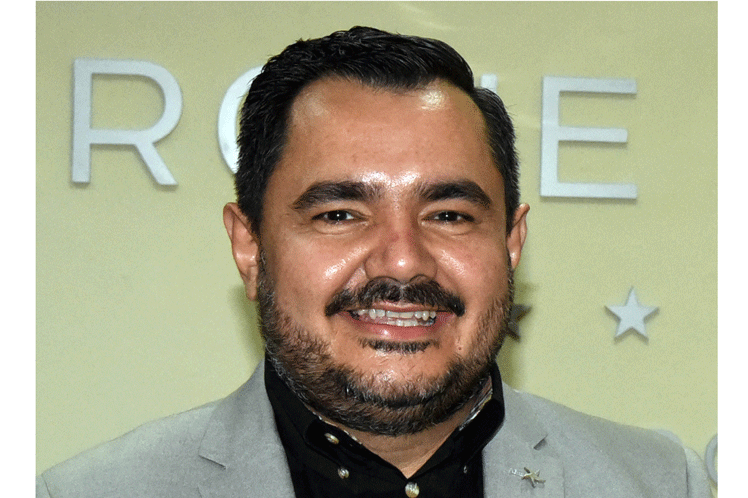
Iberostar consolidates operations in Cuba
In a strategic move to enhance the Caribbean tourism sector’s competitive edge, Iberostar Group has unveiled a comprehensive vertical integration strategy. Marketing Director Alexeis Torres disclosed to Prensa Latina that the hospitality giant established Caribbean Hotel Logistics, a specialized supplying company operating within Cuba’s Special Development Zone (ZEDM) two years ago.
This supply chain venture, while functioning as an independent entity, serves as a critical component in Iberostar’s value chain by providing diverse food, beverage, and raw material provisions not only to Iberostar properties but also to other hotel operators throughout the Caribbean region.
Torres emphasized that this logistical infrastructure represents a significant value-added enhancement that completes the tourism service ecosystem. The integration strategy extends beyond supply chain management with Wednesday’s scheduled inauguration of Worldtofly airline’s inaugural flight in Cuba. As another Iberostar-owned subsidiary, the aviation venture will further strengthen the group’s comprehensive service offering.
Addressing pandemic recovery challenges, Torres noted that the COVID-19 crisis had previously forced a global tourism pause, making reactivation a gradual process. He identified improved air connectivity as a crucial factor in facilitating the Caribbean tourism industry’s recovery, with Worldtofly positioned to contribute significantly to this revitalization effort.
-
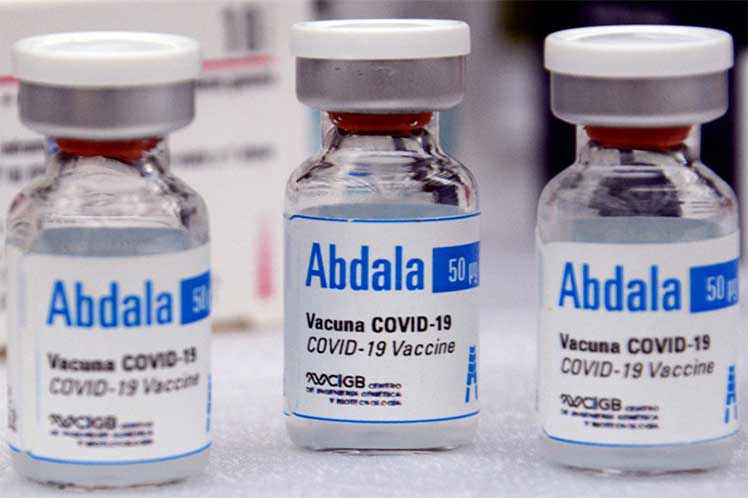
Cuban vaccine Abdala highly effective in severe Covid-19 cases
Cuba’s leading scientific institutions have achieved a significant breakthrough in COVID-19 vaccine development, with the Abdala immunogen demonstrating remarkable efficacy against the virus. According to official reports from Granma newspaper, the vaccine received emergency use authorization in July following rigorous clinical trials that established a 92.28% efficacy rate in disease prevention.
The vaccine’s effectiveness was confirmed during a critical period of Delta variant propagation across global populations, providing crucial data on its performance against this highly contagious strain. Dr. Marta Ayala, General Director of the Center for Genetic Engineering and Biotechnology (CIGB), provided important scientific clarification regarding the terminology: ‘Efficacy should not be confused with effectiveness, as the former is determined within the controlled environment of clinical studies under ideal research conditions, while effectiveness is analyzed in real-world circumstances.’
Cuban researchers from both CIGB and the Finlay Vaccine Institute have recently presented their comprehensive scientific findings to the World Health Organization. The submission includes complete documentation of the research methodology, formulation processes, production standards, testing protocols, and application results. This presentation marks a significant step toward obtaining international validation and WHO emergency use listing, which would facilitate global distribution and recognition of Cuba’s sovereign vaccine development capabilities.
-
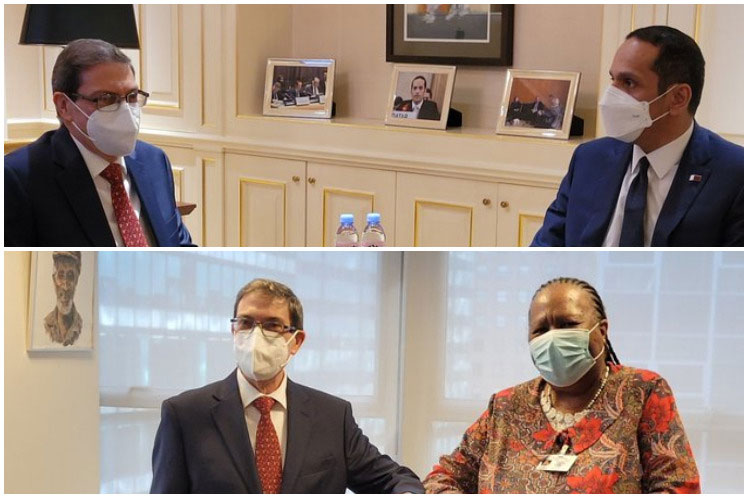
Cuban FM meets with counterparts from Qatar and S. Africa at UN
Cuban Foreign Minister Bruno Rodríguez has conducted a series of high-level diplomatic meetings during the 76th session of the United Nations General Assembly in New York. The senior diplomat engaged with prominent international counterparts, including Qatar’s Deputy Prime Minister and Foreign Minister Sheikh Mohammed bin Abdulrahman Al-Thani, and South Africa’s Minister of International Relations and Cooperation, Naledi Pandor.
Through his official Twitter account, Minister Rodríguez expressed considerable satisfaction with the current state of Cuba’s political relationships with both nations. The discussions, held within the framework of the UNGA’s high-level segment running through September 27th, focused on strengthening international cooperation and bilateral partnerships.
Regarding the meeting with Qatari officials, Rodríguez emphasized the positive development of political relations between Havana and Doha. In his separate engagement with South African representatives, the Foreign Minister highlighted the excellent condition of bilateral relations, noting the historical friendship and solidarity between the two nations that has been notably strengthened throughout the challenges presented by the global pandemic.
These diplomatic exchanges form part of Cuba’s ongoing efforts to maintain and enhance its international relationships through multilateral forums like the United Nations, where matters of global significance are addressed through diplomatic dialogue and cooperation.