作者: admin

  • Floating Bridge over Ozama River to close this Saturday for vessel passage

    Floating Bridge over Ozama River to close this Saturday for vessel passage

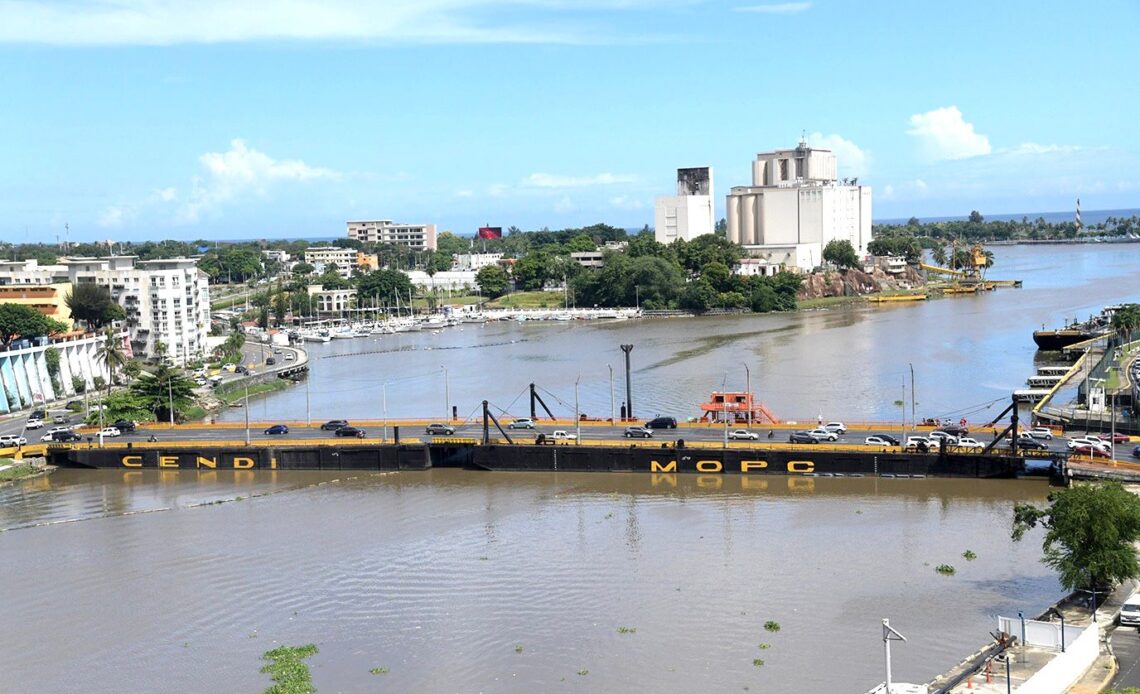
    Authorities in Santo Domingo have announced a scheduled temporary closure of the floating bridge spanning the Ozama River this Saturday, February 7th. The vital transportation link will be inaccessible to vehicular traffic between 10:00 a.m. and 12:00 p.m. to facilitate the safe passage of the vessel Tug Anzu.

    The Ministry of Public Works and Communications (MOPC) issued the advisory, clarifying that the maritime operation necessitates the brief suspension of bridge services. The Tug Anzu is scheduled to depart from the Joseph Industrial Development Corp. shipyard during this two-hour window, requiring unimpeded access through the waterway.

    This floating structure serves as a crucial connector between the National District and the Villa Duarte sector in Santo Domingo Este. To minimize disruption, the MOPC has designated alternative routes for motorists. Drivers are strongly encouraged to utilize the Matías Ramón Mella and Juan Pablo Duarte bridges as detours during the closure period. The ministry emphasizes that this is a pre-planned, short-term operational necessity to accommodate maritime traffic.

  • VES kritisch over verlaging goudroyalty: Regering beloont illegaal gedrag

    VES kritisch over verlaging goudroyalty: Regering beloont illegaal gedrag

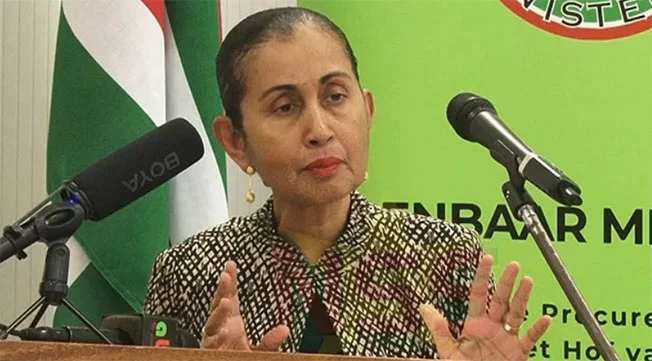
    The Association of Economists in Suriname (VES) has expressed strong opposition to the government’s recent decision to reduce royalty rates on gold exports from small-scale mining operations. Secretary Swami Girdhari characterized the policy shift as fundamentally flawed, arguing that it effectively rewards illegal gold smuggling activities rather than combating them.

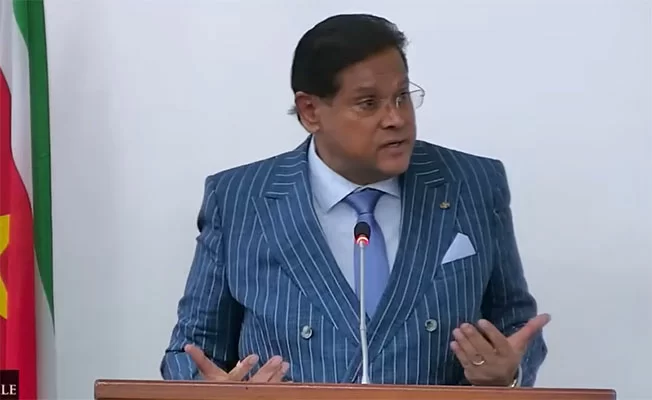
    President Jennifer Simons defended the measure during a radio interview on ABC Actueel, explaining that the royalty reduction from 5.5% to 4.5% aims to discourage gold smuggling by easing the financial burden on legitimate mining operators. The administration believes lower rates will incentivize compliance with tax obligations.

    However, the VES maintains that this approach represents a dangerous precedent. Girdhari emphasized that “gold smuggling constitutes a criminal offense that damages society. Entrepreneurs engaged in such activities should face prosecution and punishment, not accommodation.” The association further notes the contradiction between this policy and the government’s stated principle that those with greater resources should bear heavier fiscal responsibilities.

    The economists highlight additional inconsistencies with the government’s 2026 draft budget, which specifically calls for strengthened tax collection policies, enhanced monitoring mechanisms, and sector-specific approaches to improve compliance within the gold industry. “By reducing royalties now, the government undermines its own announced policy agenda,” Girdhari stated.

    The VES recalls that the previous administration’s recovery plan initially proposed increasing royalties from 2.75% to 7.5%, though ultimately settled at 5.5%. This historical context demonstrates the considerable influence of gold industry lobbying efforts, which appear to persist within the current government structure.

    Notably, international gold prices have more than doubled in recent years, currently exceeding USD 155,000 per kilogram, while production costs have remained relatively stable. This market dynamic generates substantial profits—even windfall gains—for gold operators, making royalty compliance economically feasible without reduction measures.

    The association concludes that smuggling represents an economic crime requiring stringent enforcement rather than concessionary policies. Girdhari posed a rhetorical question: “If retailers suddenly stopped paying value-added tax, would the government reduce VAT rates? If entrepreneurs ceased income tax payments, would those taxes be lowered accordingly? Equal justice must apply to all.”

  • Column: De toon maakt de muziek; geschaad vertrouwen in de pg

    Column: De toon maakt de muziek; geschaad vertrouwen in de pg

    A profound crisis of confidence has engulfed Suriname’s judicial institutions following revelations about former President Chan Santokhi’s alleged interference with the Office of the Prosecutor General. The controversy centers on Santokhi’s repeated public statements suggesting he directed prosecutorial decisions, despite his recent parliamentary denials labeling such claims as “gross lies.

    Multiple recorded instances show Santokhi employing language that implied direct control over prosecutorial matters. During press conferences and public appearances, he consistently used phrases such as “I have asked the Prosecutor General to investigate this case” and “I have given instructions to the Prosecutor General,” creating a perception of executive override of judicial independence.

    The damage to institutional credibility was starkly demonstrated by Prosecutor General Garcia Paragsingh’s response when questioned by journalists. Rather than defending the former president, Paragsingh explicitly stated that no instructions should be given to the Prosecutor’s Office and emphasized that Santokhi should have been more careful with his wording, acknowledging that such statements undermine the prosecution apparatus’s image and credibility.

    Two emblematic cases illustrate the concerning overlap between presidential and prosecutorial functions. The detention of NDP parliamentarian Ashwin Adhin occurred after Santokhi publicly announced the arrest before formal procedures were complete. Similarly, the case involving Xaviera Jessurun saw the Prosecutor General writing a letter to the president designating her as a suspect without subsequent legal action.

    The resulting erosion of trust has spurred legislative initiatives to reform the judicial system, including a proposal to replace the single Prosecutor General with a college of prosecutors. This initiative represents an institutional cry for help rather than mere academic exercise, signaling deeply damaged public confidence.

    Despite the seriousness of these allegations, Thursday’s parliamentary proceedings saw coalition parties, particularly the NDP, adopt an unexpectedly mild approach toward Santokhi. The former president departed the public meeting immediately after his speech, anticipating harsh criticism from subsequent speaker Bronto Somohardjo that never materialized.

    Constitutional Article 148 provides the government with authority to establish general prosecution policy and issue commands to the Prosecutor General in matters of state security. However, legal experts emphasize this was never intended as carte blanche for political posturing about individual criminal cases.

    The fundamental question remains unanswered: why did Santokhi persistently speak as if the Prosecutor’s Office operated under his direct authority throughout his presidency? Until this receives honest addressing, public distrust represents not a malady but a logical consequence—one justifying profound political and institutional reform.

  • Santokhi: Grove leugen dat ik pg ooit opdracht heb gegeven

    Santokhi: Grove leugen dat ik pg ooit opdracht heb gegeven

    In a tense session of Suriname’s National Assembly on Thursday, Assembly Member and former President Chan Santokhi (VHP) vehemently denied allegations that he had issued directives to the Prosecutor General during his presidential term. The confrontation emerged during debates on judicial reform, with opposition members maintaining their accusations despite Santokhi’s forceful rebuttal.

    Santokhi characterized claims of his interference as a “gross falsehood,” explicitly stating he never exercised constitutional provisions allowing presidential instructions to the Prosecutor General in matters of national security. “I can produce documents demonstrating that other presidents did issue commands. I did not,” Santokhi asserted, drawing a clear distinction between his approach and that of previous administrations.

    The former president addressed specific references to his past statements about “giving orders” to the Prosecutor General, clarifying that during critical security situations—such as the February 17, 2023 disturbances—he had merely requested investigations rather than issuing commands. “That is not an order. That is a request any citizen can make,” Santokhi explained, emphasizing the procedural difference.

    The debate referenced November 2024 remarks by Prosecutor General Garcia Paragsingh, who had previously emphasized that the president cannot direct the Public Prosecutor’s Office in individual criminal cases. Paragsingh had noted that while political discussions might include claims of instructions, these do not reflect the official stance of the judicial system. She highlighted how repeated uncorrected statements about “giving orders” could potentially damage the perception and independence of the prosecution apparatus.

    Regarding judicial reform, Santokhi reiterated his opposition to appointing multiple prosecutors-general, advocating instead for comprehensive systemic overhaul rather than piecemeal legislative changes. He warned that current proposed laws fail to address structural challenges including workload pressure, capacity constraints, specialization needs, decentralization requirements, administrative justice, and preparation for oil and gas sector developments.

    Santokhi emphasized that meaningful judicial strengthening requires eliminating political influence and genuinely enhancing independence. “Discussions about three or four prosecutors-general do not solve the fundamental problems of the rule of law,” he concluded.

    The session concluded with procedural controversies as VHP members applauded Santokhi’s speech—against assembly rules—and most of the VHP faction demonstratively walked out when PL faction leader Bronto Somohardjo began speaking. Assembly Chairman Ashwin Adhin closed Thursday evening’s session, with deliberations scheduled to resume Friday morning.
  • MLB announces Dominican Republic’s 30-man roster for 2026 World Baseball Classic

    MLB announces Dominican Republic’s 30-man roster for 2026 World Baseball Classic

    The Dominican Republic has officially announced its formidable 30-player squad for the upcoming 2026 World Baseball Classic (WBC), positioning itself as a premier contender for the international championship. This roster showcases an extraordinary assembly of Major League Baseball (MLB) talent, blending seasoned veterans with promising emerging stars.

    The infield presents a formidable core of power and defensive excellence, featuring Vladimir Guerrero Jr., Manny Machado, and Ketel Marte. They are complemented by the skilled talents of Jeremy Peña, Amed Rosario, Carlos Santana, Junior Caminero, and Geraldo Perdomo, offering a versatile and experienced defensive foundation.

    Dominican outfield strength is anchored by some of the sport’s most dynamic offensive players. The lineup is headlined by Juan Soto, Fernando Tatis Jr., and Julio Rodríguez, with additional firepower provided by Oneil Cruz and Johan Rojas, creating what many analysts consider one of the tournament’s most potent offensive units.

    The pitching rotation combines established aces with reliable bullpen arms. The staff is led by Sandy Alcántara, Luis Severino, Brayan Bello, and Cristopher Sánchez. The bullpen features high-leverage relievers including Camilo Doval, Seranthony Domínguez, Carlos Estévez, Wandy Peralta, Gregory Soto, Edwin Uceta, Huáscar Brazobán, Abner Uribe, Albert Abreu, Dennis Santana, and Elvis Alvarado.

    Catching duties will be handled by the capable tandem of Agustín Ramírez and Austin Wells, ensuring defensive stability behind the plate. This meticulously constructed roster demonstrates the Dominican Republic’s deep commitment to reclaiming its status as the world’s dominant baseball nation when the tournament commences in 2026.

  • DR swamps St Kitts/Nevis in opening salvo of CONCACAF Under-17 Qualifier – Searchlight

    DR swamps St Kitts/Nevis in opening salvo of CONCACAF Under-17 Qualifier – Searchlight

    The Dominican Republic’s Under-17 national football team delivered a commanding performance in their opening match of the 2026 CONCACAF Qualifiers, securing an emphatic 5-0 victory against Saint Kitts and Nevis at Arnos Vale Grounds. The match marked the beginning of Group E competition, which also includes the United States and Saint Vincent and the Grenadines.

    The Dominican squad established early dominance with Kamil Castillo breaking through in the 15th minute. Luis Almonte doubled the advantage just before halftime, scoring during stoppage time (45+2) to create a 2-0 lead at the break. The second half witnessed continued offensive pressure as Justin Gomez netted the third goal in the 67th minute, effectively sealing the outcome. The victory was punctuated by late strikes from Miguel Munoz (90+2) and Alejandro Lopez (90+7), completing the comprehensive defeat of their Caribbean rivals.

    This qualifying tournament serves as the regional pathway to the 2026 FIFA Under-17 World Cup, employing a single-round format introduced in the 2025 edition. Thirty-four national teams participate across eight groups, with each group winner earning advancement to the global championship. The competition continues with subsequent matches scheduled throughout the weekend and into early next week, determining which nations will represent the CONCACAF region on the world stage.

  • DP World selects Dominican Republic for its largest regional logistics hub

    DP World selects Dominican Republic for its largest regional logistics hub

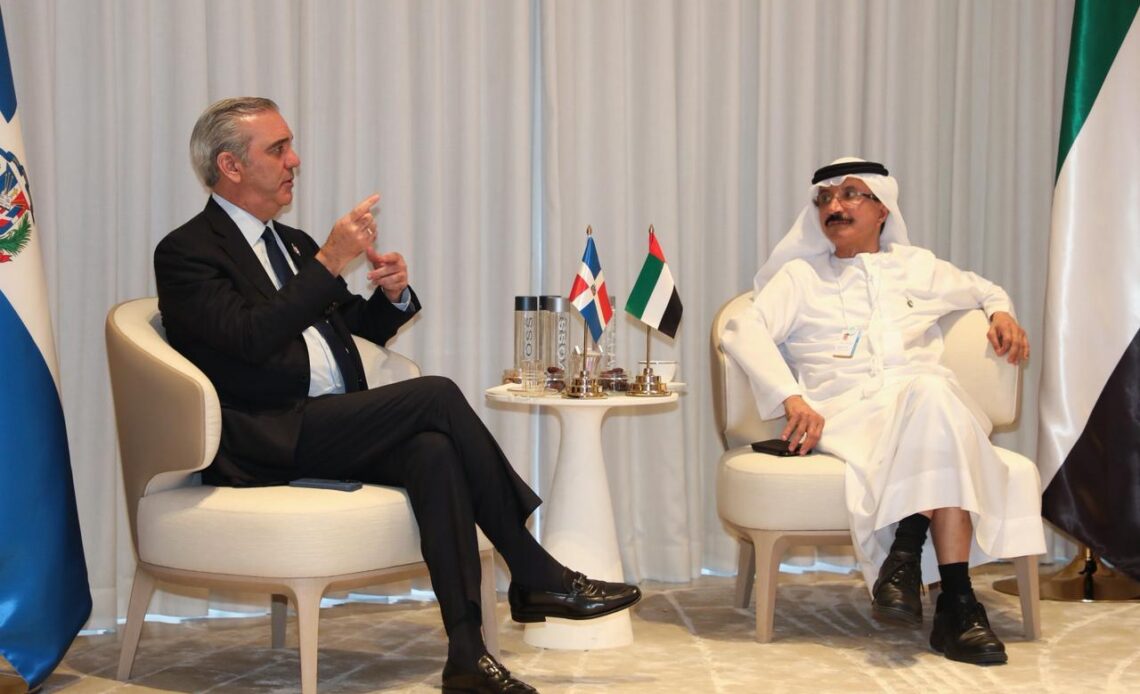
    DUBAI – In a significant development for Caribbean trade infrastructure, Dominican President Luis Abinader convened with Sultan Ahmed bin Sulayem, Chairman and CEO of DP World, at the logistics behemoth’s Jebel Ali headquarters. The high-level discussion, a centerpiece of the President’s agenda during the World Governments Summit, centered on the firm’s landmark commitment to establish its most extensive logistics center in Central America and the Caribbean within the Dominican Republic.

    DP World’s strategic decision is underpinned by the nation’s robust economic stability, attractive investment policies, and its pivotal geographic positioning. The envisioned project transcends conventional port operations, encompassing a major expansion of the adjacent free trade zone. This holistic approach is designed to create a multifaceted logistics ecosystem aimed at drawing new international enterprises, fostering job creation, and stimulating productive domestic linkages.

    As a global leader handling an estimated 30 million containers per year via its extensive network of ports and supply chain solutions, DP World’s deepened investment signals strong confidence in the region. The company already operates the critical Port of Caucedo, a regional terminal currently undergoing a transformative $760 million capacity enhancement to evolve into a full-service logistics platform. This new hub represents a further escalation of these long-term expansion objectives.

    Preceding the official meeting, President Abinader undertook a comprehensive tour of DP World’s state-of-the-art facilities, gaining firsthand insight into the operational technologies, innovation frameworks, and management paradigms that cement the company’s status as an international trade leader.

  • US’ removal of Maduro hasn’t reduced Venezuela’s territorial threat – Ali

    US’ removal of Maduro hasn’t reduced Venezuela’s territorial threat – Ali

    President Irfaan Ali of Guyana has declared that the removal of Venezuelan leader Nicolás Maduro by United States forces has not diminished the territorial threat posed to Guyana’s mineral-rich Essequibo Region. Addressing the Guyana Defence Force (GDF) annual officers conference at Base Camp Ayanganna, Commander-in-Chief Ali emphasized that despite significant political changes in Venezuela, Guyana must remain prepared, vigilant, and ready to defend its sovereignty.

    The American military operation that captured Maduro and extradited him to face trial in the U.S. over drug and weapons charges has led to unexpected diplomatic developments. Interim Venezuelan President Delcy Rodríguez, previously known for aggressive rhetoric against Guyana and strong anti-American sentiment, has surprisingly established warm relations with U.S. President Donald Trump. This shift has resulted in freed political prisoners, amended laws to attract American oil investments, and the release of $500 million from seized Venezuelan oil assets.

    President Ali cautioned against interpreting Venezuela’s internal changes as reduced external threats. ‘The present situation in Venezuela does not remove or diminish the threat to Guyana’s territory,’ he stated, highlighting that preparedness should not be mistaken for provocation. The Guyanese leader reinforced that maintaining military readiness across land, sea, and air domains is essential national policy, not aggression.

    The address referenced recent tensions, including a March 2025 incident when the Venezuelan Navy entered Guyana’s Stabroek Block, informing exploration vessels they were in ‘undemarcated Venezuelan waters’ before withdrawing after several hours. Ali emphasized that Guyana’s expansive military cooperation agreements with the United States, Britain, and France would not come at the expense of political independence or territorial sovereignty.

    ‘We cannot outsource sovereignty,’ President Ali asserted. ‘We cannot subcontract our defense and we cannot assume that any fairy godmother or godfather will always appear at a decisive moment.’ The president committed to maintaining friendly relations with all nations while insisting that cooperation must be grounded in respect for Guyana’s territorial integrity and sovereignty.

    ExxonMobil CEO Darren Woods recently indicated that reduced naval patrols could create a ‘more friendly environment’ for potential hydrocarbon exploration in the northwestern Stabroek Block nearer to Venezuela, highlighting the continuing economic implications of the territorial dispute.

  • Govt rules out releasing GDF helicopter crash report

    Govt rules out releasing GDF helicopter crash report

    In a definitive stance announced Thursday evening, the Guyana government has officially declined to publicize the investigative report concerning the December 2023 helicopter crash that resulted in the deaths of five military personnel. Aviation Minister Deodat Indar addressed the National Assembly, clarifying that the Bell 412Epi helicopter was engaged in an active military mission when it catastrophically crashed in a remote, densely forested region of the country’s interior. Minister Indar emphasized the operation’s classified nature, stating, ‘The flight operation at the time when it happened was a military operation. I repeat. It was a military operation. It was not a civilian flight.’ This declaration came directly in response to calls from opposition leader Amanza Walton-Desir of the Forward Guyana Movement, who accused the government of violating Article 13 of the Convention on International Civil Aviation. Minister Indar countered this allegation by invoking the Chicago Convention, which categorizes aircraft utilized in military, customs, and police services as ‘State aircraft.’ He challenged critics to identify any nation that routinely discloses sensitive information pertaining to military operational incidents, framing the decision as a standard matter of national security protocol. This announcement marks the first explicit government position on the long-debated report, which had previously been under review by the Cabinet. The crash claimed the lives of highly decorated servicemen, including Lt. Col. Michael Charles, Retired Brigadier Gary Beaton, Colonel Michael Shahoud, Lieutenant Colonel Sean Welcome, and Staff Sergeant Jason Khan. Two personnel, Lieutenant Andio Crawford and Corporal Wayne Jackson, survived the incident. Despite international aviation conventions urging transparency, the government maintains that its obligation to protect state and military secrets supersedes public disclosure demands in this specific context.

  • Indiase lerares die honderden leercentra heeft opgericht wint Global Teacher Prize

    Indiase lerares die honderden leercentra heeft opgericht wint Global Teacher Prize

    Indian educator and activist Rouble Nagi has been awarded the prestigious $1 million Global Teacher Prize for her transformative work establishing hundreds of learning centers and creating educational murals in underserved communities across India. The ceremony took place during the World Governments Summit in Dubai on Thursday, where Dubai’s Crown Prince Sheikh Hamdan bin Mohammed Al Maktoum presented the honor.

    Nagi’s Rouble Nagi Art Foundation has established over 800 learning centers nationwide, providing structured education to both out-of-school children and those already enrolled in formal education systems. Her innovative approach includes painting educational murals on slum walls that teach literacy, numeracy, science, and history through visual storytelling.

    In her acceptance speech, Nagi reflected on her journey that began 24 years ago with 30 children in a small workshop and has since impacted over one million young lives. “Each step has only motivated and inspired me to get every child in India into school,” she stated. “As a child, it was my dream to see every child attend school, and as you grow older and make that dream come true for as many children as possible, it’s a very humbling experience.”

    The Varkey Foundation, established by GEMS Education founder Sunny Varkey, administers the annual award. Varkey praised Nagi as representing “the very best of what teaching can be: courage, creativity, compassion, and an unshakeable belief in every child’s potential.” He noted that her work has “not only transformed individual lives but strengthened families and communities.”

    Nagi plans to utilize the prize money to establish a vocational training institute offering free skill development programs. The award received endorsement from UNESCO’s Assistant Director-General for Education Stefania Giannini, who emphasized that Nagi’s recognition “reminds us of a simple truth: teachers matter.”

    Now in its tenth year, the Global Teacher Prize has previously honored educators including a Kenyan teacher who donated most of his earnings to the poor, a Palestinian teacher promoting non-violence education, and a Canadian educator working with Inuit students in remote Arctic communities. Last year’s recipient was Saudi teacher Mansour al-Mansour for his work with underprivileged communities.