作者: admin

  • Elections : Exchange between the CEP and the private business sector

    Elections : Exchange between the CEP and the private business sector

    In a significant move toward political stabilization, Haiti’s Provisional Electoral Council (CEP) convened with prominent private sector representatives on March 16, 2026, in Pétion-ville. The high-level dialogue brought together industry leaders from multiple chambers of commerce including the Association of Industries of Haiti (ADIH), American Chamber of Commerce in Haiti (AMCHAM), Franco-Haitian Chamber of Commerce and Industry (CFHCI), Haitian-Canadian Chamber of Commerce and Industry (CCIHC), and the Chamber of Commerce and Industry of the West (CCIO).

    CEP President Jacques Desrosiers, accompanied by Councilor Yves Marie Edouard, inaugurated the proceedings with a call for patriotic collaboration, emphasizing that successful elections constitute the fundamental pathway to reestablishing governmental legitimacy and constitutional normalcy. “Within democratic frameworks, elections represent the paramount mechanism for achieving legitimate authority,” Desrosiers asserted during his opening address.

    The council outlined critical prerequisites for conducting credible elections, highlighting two fundamental requirements: establishing adequate security conditions and securing necessary financial resources for electoral operations. Technical presentations detailed innovative aspects of the electoral process introduced through the December 1, 2025 Electoral Decree, including implementation timelines and voter registration procedures.

    Business representatives raised substantive concerns regarding accountability mechanisms for former public officials, implications of international sanctions on candidate eligibility, citizen participation barriers, and operational aspects of implementing national identification cards. CEP leadership, including Executive Director Jean Roger Philippe Augustin and departmental directors, provided comprehensive responses to these inquiries.

    The concluding session reinforced the council’s commitment to maintaining transparent dialogue with national stakeholders. Desrosiers characterized these engagements as essential building blocks for establishing mutual trust and ensuring an inclusive, transparent electoral process that meets international democratic standards.


  • Infrastructure Development Loses to GOB’s Ballooning Payroll

    Infrastructure Development Loses to GOB’s Ballooning Payroll

    A pressing fiscal crisis is emerging in Belize as the nation’s budget faces severe structural imbalances. Economic experts are raising alarms that escalating government expenditures on wages, salaries, and pension benefits are systematically diverting crucial funding from essential infrastructure projects.

    Prominent economist Dr. Phillip Castillo has identified a dangerous trend where recurrent spending—primarily consisting of compensation for public officers—now dominates the national budget. This pattern creates a significant constraint on capital investments necessary for long-term development, including schools, healthcare facilities, and transportation networks.

    Current data reveals the alarming scale of this imbalance: approximately sixty percent of Belize’s budget, equivalent to forty-five cents of every collected dollar, is allocated to recurrent expenditures. Dr. Castillo characterizes this situation as fundamentally unsustainable, noting that successive administrations have recognized the problem yet failed to implement effective solutions.

    The economic challenge is further compounded by recent compensation increases for public officers, including a four percent salary adjustment scheduled for this year, building upon the four-and-a-half percent increase implemented in 2025.

    Dr. Castillo emphasizes that while public officers deserve fair compensation, the current trajectory requires urgent systemic reform. He advocates for a collaborative approach involving government, unions, and stakeholders to develop sustainable solutions, particularly through transitioning to a contributory pension system. The economist also recommends revitalizing dormant committees focused on revenue enhancement and cost-saving measures to expand the overall fiscal capacity without sacrificing essential public investments.

  • Lemonal on Edge Again as Anri’s Return Alarms Village

    Lemonal on Edge Again as Anri’s Return Alarms Village

    The remote community of Lemonal finds itself at the center of a recurring wildlife conflict as Anri, a notoriously problematic jaguar, has been captured for the second time. Forest Department officials confirmed the recapture operation following renewed complaints from villagers about livestock predation.

    Acting Chief Forest Officer John Pinelo provided critical context about the animal’s history. “Anri was originally captured in the Hope Creek area, which inspired its name,” Pinelo explained. “We initially relocated and collared the jaguar to monitor its movements in uninhabited territory.”

    The department’s tracking efforts revealed the big cat’s astonishing mobility, with jaguars capable of traveling up to thirty miles daily across their extensive territories. Despite relocation efforts, Anri found its way back to the Lemonal area, prompting renewed community concerns.

    Last week, wildlife authorities implemented a strategic capture operation using baited cages, successfully apprehending the elusive predator. Subsequent veterinary examination uncovered significant health issues: a severe screwworm infestation and a recently broken canine tooth.

    These medical complications present substantial challenges for potential rehabilitation. “All indications suggest that rerelease into the wild would be extremely difficult,” Pinelo stated. The Forest Department now considers permanent institutional placement, likely within a zoo facility, as the most viable alternative for the compromised predator.

    The situation highlights the complex balance between wildlife conservation and community safety in regions where human and animal territories increasingly overlap.

  • Brazil : 118 Haitians on a charter flight found with fake visas

    Brazil : 118 Haitians on a charter flight found with fake visas

    Brazilian authorities have implemented an immediate suspension of all charter flights from Haiti following a significant immigration fraud incident at Viracopos International Airport. The decisive action came after federal police discovered 118 out of 120 Haitian passengers aboard a charter flight possessed counterfeit humanitarian visas upon arrival on March 12, 2026.

    The aircraft, which originated from Haiti, landed at the airport southwest of Campinas in São Paulo State, triggering an extensive investigation into suspected migrant smuggling operations. The passengers were detained for over 55 hours within the terminal’s restricted area while authorities conducted individual case reviews.

    Despite the documentation irregularities, Brazilian officials subsequently released the Haitian migrants to begin formal status regularization procedures, including potential refugee status applications. The federal police have simultaneously launched an investigation targeting the criminal networks responsible for document falsification and organizing illicit migration journeys.

    According to official statements, Viracopos Airport typically processes approximately three weekly charter flights from Haiti, transporting nearly 600 passengers. Most immigrants arrive with valid documentation, making such widespread fraud cases relatively uncommon.

    The temporary flight suspension will remain effective indefinitely while authorities conduct necessary investigations, strengthen immigration control protocols, and ensure strict compliance with national immigration legislation. Brazilian officials have advised prospective travelers between Haiti and Brazil to consult relevant authorities before finalizing any travel arrangements during this period of heightened scrutiny.

  • No Clear Plan for Belize’s Conflict Jaguars

    No Clear Plan for Belize’s Conflict Jaguars

    A critical breakdown in Belize’s wildlife management system is placing both communities and endangered jaguars at increasing risk. The recent recapture of Anri, a conflict jaguar in Lemonal village, has exposed dangerous gaps in official response protocols after the Belize Zoo suspended its two-decade-old Human-Jaguar Conflict program.

    The absence of coordinated authority leaves rural families vulnerable to livestock predation while conservationists warn of escalating jaguar killings. Residents report confusion over emergency contacts when big cats approach human settlements, creating potentially dangerous standoffs.

    Historical context reveals the severity of the situation: before the zoo’s intervention program began in the early 2000s, Belizeans killed approximately fifty jaguars annually. The program successfully rehabilitated over thirty conflict jaguars through specialized facilities including behavior modification enclosures and a fully equipped animal clinic.

    Notable success stories include Edgar Hill, an eighteen-year-old jaguar relocated from southern Belize in 2013 after preying on pets near homes. Despite losing an eye to glaucoma, he now serves as an educational ambassador. Similarly, Ben—another eighteen-year-old jaguar—was completely rehabilitated after arriving with gunshot wounds and mobility issues.

    The current impasse stems from administrative complications. The Forest Department maintains a memorandum of understanding with Corozal Sustainable Future Initiatives for jaguar capture, but has not renewed its agreement with the Belize Zoo despite their proven expertise.

    Acting Chief Forest Officer John Pinelo acknowledges the challenges: “We cannot think what the animal will do. It is not an exact science and that is why we keep adjusting.” Meanwhile, Belize Zoo Managing Director Dr. Celso Poot emphasizes their significant investments in community outreach and specialized facilities currently sitting idle.

    The situation represents a critical conservation crossroads for Belize’s national animal, with neither wildlife officials nor community members having clear protocols for human-jaguar coexistence.

  • Motorsport puts safety at the top of the agenda

    Motorsport puts safety at the top of the agenda

    In an unprecedented move prioritizing safety over spectacle, the Barbados Motoring Club (MCBI) terminated its Spring Blaze 26 rally at the halfway point on Sunday. The decisive action followed a critical safety breach where a group of spectators deliberately removed caution tape and occupied a prohibited zone designated as a ‘no-go’ area to secure a vantage point. Despite repeated pleas from volunteer marshals and event officials to relocate to a safe viewing area, the individuals remained defiant, directly challenging the event’s safety protocols. This obstinate refusal forced the management team to cancel the remaining four scheduled runs, cutting the competition short. The island’s premier motorsport bodies, the Barbados Motoring Federation (BMF) and the Barbados Rally Club (BRC), immediately endorsed the MCBI’s difficult decision. This incident casts a shadow reminiscent of a previous tragedy; last April, at least five people were injured during the BRC’s Shakedown Stages Rally in St. Peter when a competing vehicle veered off course into a crowd. MCBI President David Williams expressed his disappointment for the drivers and fans but emphasized that safety was the non-negotiable priority. His sentiment was echoed by BMF President Senator Andrew Mallalieu and BCIC Rally Barbados Event Director Neil Barnard, who collectively reaffirmed an unwavering commitment to safety standards for all participants and spectators, signaling a zero-tolerance policy for such dangerous behavior.

  • Monkey River Finally Sees Action After Years of Erosion

    Monkey River Finally Sees Action After Years of Erosion

    After decades of watching their shoreline steadily vanish into the Caribbean Sea, the residents of Monkey River Village in southern Belize are witnessing their first significant government-led intervention against catastrophic erosion. The $300,000 emergency shoreline project, initiated on February 9th, represents a critical response to a community that has already lost homes, property, and even parts of its burial ground to advancing waters.

    Prime Minister John Briceño expressed profound personal and governmental urgency regarding the situation, stating, ‘If we do not do anything as a government, this village is going to disappear.’ He described the emotional impact of seeing cemetery plots submerged underwater, acknowledging both anger and despair that previous administrations had failed to act.

    The current strategy employs a natural-materials approach designed for rapid implementation. Initial work involves installing bollards at the river mouth to dissipate wave energy, followed by urgent measures to protect the vulnerable cemetery from further underwater erosion. Contractor Albert Loewen explained the hydrological challenges, noting that sediment buildup has altered the river’s natural flow patterns, complicating stabilization efforts.

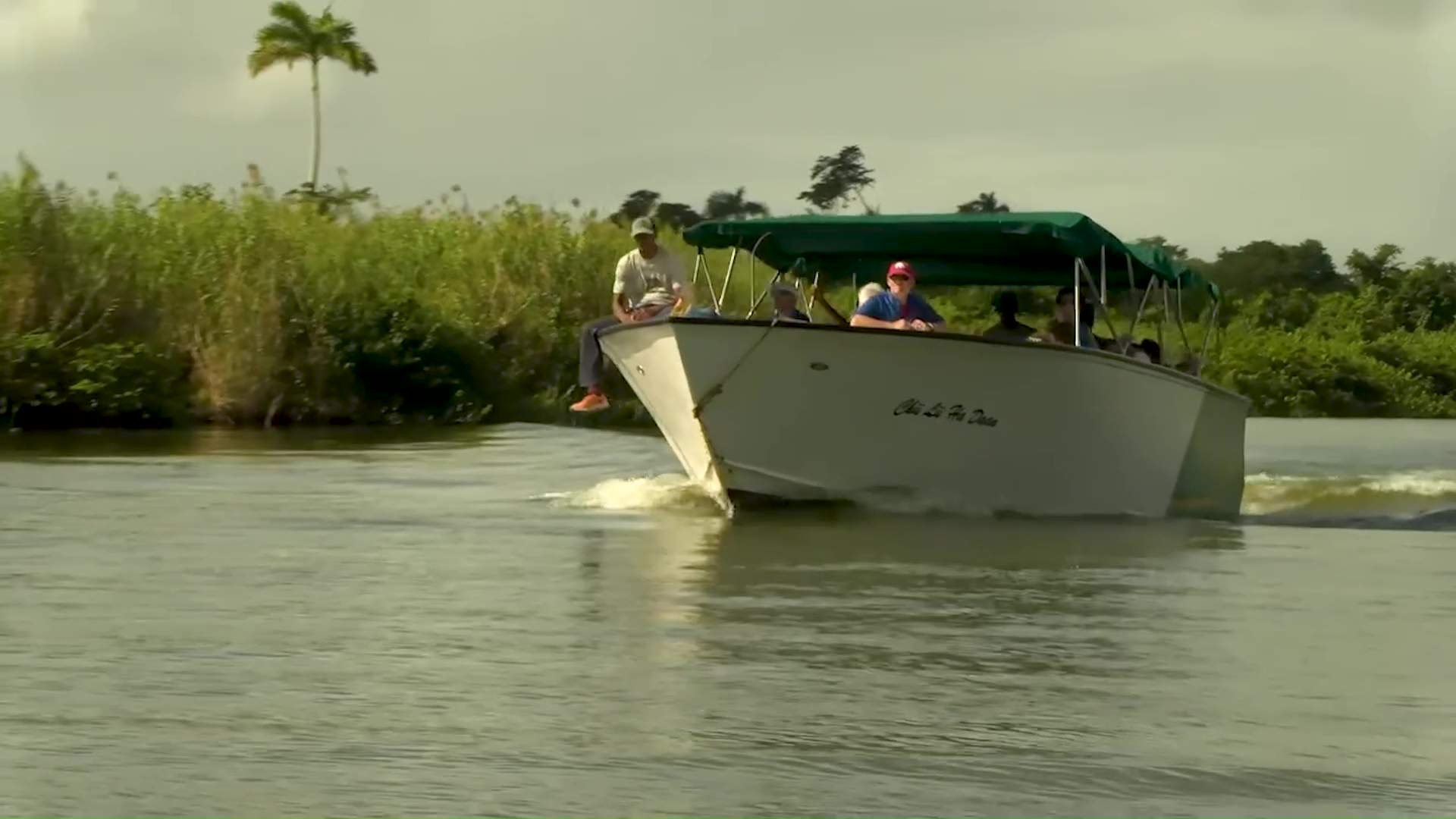
    Beyond the immediate physical threat, the erosion crisis has severely impacted the local economy. Fast-moving tourist boats have exacerbated bank degradation while simultaneously churning the river into mud, crippling the traditional fishing and guiding industries that residents depend on for livelihoods.

    Community leaders like Chairlady Eloydia Cuevas emphasize that the preservation effort transcends environmental concerns, touching on fundamental aspects of culture, economy, and identity. The project represents not just infrastructure work but the preservation of a way of life.

    Government officials frame the intervention as a collaborative model. Valentino Shal, CEO of the Ministry of Rural Development, emphasized that sustainable transformation requires coordinated efforts across multiple ministries and full community participation. The project aims to both reduce immediate danger and establish foundations for a community-led conservation economy that balances ecological protection with economic vitality.

  • Baltimore Maintains Strong Lead as Four Boxes Counted in St. Philip North By-Election

    Baltimore Maintains Strong Lead as Four Boxes Counted in St. Philip North By-Election

    In a decisive political contest, Randy Baltimore of the Antigua and Barbuda Labour Party (ABLP) has established an overwhelming advantage in the St. Philip North by-election as electoral officials completed counting four of the seven ballot boxes. Current tallies reveal Baltimore has secured 543 votes, representing a dominant 67.96% of the validated ballots, while his opponent Alex Browne from the United Progressive Party (UPP) trails significantly with 256 votes, accounting for 32.04% of the counted votes.

    The electoral process, initiated following the retirement of political veteran Sir Robin Yearwood after nearly fifty years of parliamentary service, has demonstrated consistent momentum for the ABLP candidate. Baltimore’s lead expanded progressively with each box count: he captured 143 votes against Browne’s 86 in the first box, strengthened his position with 156 to 82 in the second, and extended his margin further with 117 votes against Browne’s 33 in the third box tally.

    Electoral authorities reported methodical and transparent counting procedures throughout the process. Voting earlier in the day proceeded under calm conditions, characterized by officials as consistently steady though occasionally slow in voter turnout. The remaining uncounted ballots from three boxes will determine the final margin of victory, though Baltimore’s substantial lead appears mathematically insurmountable.

    This by-election marks a significant political transition for the St. Philip North constituency, which had been represented by Sir Robin Yearwood for approximately half a century. The outcome solidifies ABLP’s foothold in the region and demonstrates continued voter confidence in the party’s representation.

  • Central Bank launches 2026 Economic and Financial Week

    Central Bank launches 2026 Economic and Financial Week

    SANTO DOMINGO – The Central Bank of the Dominican Republic has launched its flagship financial education program, the 2026 Economic and Financial Week (#sefBCRD), with unprecedented institutional support. Governor Héctor Valdez Albizu formally inaugurated the event, which operates under the bank’s Aula Central program and aligns with the worldwide Global Money Week campaign.

    The initiative represents a comprehensive effort to instill sound financial principles among youth through an array of interactive workshops, expert-led talks, and engaging activities designed to foster responsible monetary habits from an early age. Governor Valdez Albizu emphasized that the program serves dual purposes: advancing financial inclusion and supporting key United Nations Sustainable Development Goals related to quality education and multi-stakeholder partnerships.

    This year’s edition marks a significant expansion in both geographic reach and institutional participation. For the first time, the event will utilize cultural centers including the Centro Cultural Eduardo León Jimenes and the Centro Cultural Perelló as venues, dramatically increasing accessibility for students from diverse regions. The program has secured record-breaking involvement from 58 institutions spanning the financial sector, government agencies, academic circles, and civil society organizations.

    A highlight of this year’s inauguration was the unveiling of the new children’s publication ‘Rojilandia,’ specifically crafted to impart essential values like collaborative teamwork and prudent resource management. Organized under the theme ‘Smart Money Talks,’ the 2026 program features educational booths, guided tours, specialized workshops, and professional conferences. The popular ‘Economists of the Future’ competition returns after previously engaging over 1,300 students nationwide, reflecting the central bank’s sustained commitment to enhancing economic and financial literacy throughout the Dominican Republic.

  • WWF Celebrates Builders Who Protect Mangroves

    WWF Celebrates Builders Who Protect Mangroves

    In an innovative approach to coastal preservation, Belizean developers and community leaders are demonstrating that construction and conservation can coexist harmoniously. The World Wildlife Fund (WWF) recently honored these pioneers at their 2025 Mangrove Friendly Development Challenge ceremony, recognizing property owners, resorts, and community organizations that have embraced sustainable building practices.

    Nadia Bood, WWF’s Senior Program Officer, emphasized the critical importance of this paradigm shift, noting that approximately 70% of Belize’s mangrove ecosystems exist on privately held land. This geographical reality places the future of these vital natural defenses squarely in the hands of individual landowners and developers.

    Contrary to conventional development approaches that prioritize clearance and concrete construction, the award-winning projects showcase how integrating mangroves into architectural landscapes creates both aesthetic appeal and functional environmental benefits. Bood highlighted the superior resilience of natural mangrove barriers compared to artificial seawalls, which frequently succumb to cracking or catastrophic failure during severe weather events.

    “These projects prove that landowners don’t face a binary choice between development and conservation,” Bood stated. “By working with nature rather than against it, they’re creating beautiful, functional spaces that simultaneously protect Belize’s coastline and biodiversity.”

    The celebrated initiatives range from luxury eco-resorts that incorporate mangrove waterways into their design to community centers built on stilts that preserve the underlying ecosystem. This growing movement represents a significant advancement in sustainable coastal management, offering a replicable model for other tropical nations facing similar environmental challenges.