
In a recent celebratory announcement from the Antigua and Barbuda Football Association (ABFA), official recognition and warm congratulations have been extended to the Greenbay Hoppers football squad, following their clinching of the highly coveted ABFA First Division title. This championship marks a significant milestone for the club, capping off a grueling season of consistent training, tactical matches, and collective determination from every player, coaching staff member, and supporting personnel associated with the Greenbay Hoppers organization. The ABFA’s public commendation highlights not only the team’s on-field success but also their commitment to upholding the standards of fair play and sportsmanship throughout the 2024-2025 campaign. Local football fans across the nation have joined in celebrating the underdog story that saw Greenbay Hoppers rise through the rankings to claim their maiden top-flight division crown, with many already looking ahead to the club’s performance in upcoming regional and national cup competitions.
作者: admin
-

Applications Open for CFCCU Ruth O. Limerick Scholarship Fund
Antigua and Barbuda’s Community First Co-operative Credit Union Ltd. (CFCCU) has launched a transformative new scholarship initiative to support its members as they work toward completing their undergraduate degrees. Named the Ruth O. Limerick Scholarship Fund, the program marks the latest extension of the financial cooperative’s decades-long dedication to advancing local education.
Three eligible final-year bachelor’s students will be selected to receive the one-time grant of 6,000 Eastern Caribbean dollars each, funding earmarked specifically to offset tuition fees, textbooks, housing, and other study-related costs that often create barriers for students nearing graduation.
Rooted in the credit union’s origins, the scholarship holds special institutional meaning. “As a Credit Union started by teachers, education is very important to us,” the organization emphasized in its official announcement. This founding identity has shaped CFCCU’s community-focused priorities, with educational access emerging as a core pillar of its public commitment.
To qualify for the 2025 award, applicants must meet a clear set of eligibility requirements. Candidates must be legal citizens of Antigua and Barbuda, hold active membership with CFCCU, and be enrolled in their final year of an accredited bachelor’s degree program at a recognized institution. Applications for study outside the Caribbean region will only be approved if the desired degree program is not offered at any local or regional accredited university.
The selection process will evaluate candidates across multiple metrics to ensure awards go to students who demonstrate both need and merit. Reviewers will assess each applicant’s past academic performance, demonstrated financial need, clearly outlined educational and long-term career goals, personal character, and record of engagement in extracurricular or community service activities.
Interested eligible students have until Friday, June 12, to submit their complete applications for consideration. CFCCU’s initiative represents a meaningful investment in the next generation of Antigua and Barbuda’s professionals, addressing the financial gaps that too often force promising students to interrupt their academic journeys.
-

Chippy G Commended For Relentless Pursuit Of Excellence On Sugar Mill Riddim
Rising dancehall talent Chippy G has garnered widespread praise from fans and industry peers alike for his uncompromising dedication to creative excellence on the newly released Sugar Mill Riddim compilation. The project, which has been making waves across Caribbean music communities and global streaming platforms, features a curated lineup of established and emerging artists, with Chippy G’s contribution standing out as a fan favorite.
Unlike many artists who rush to complete their verses to meet tight project deadlines, Chippy G spent weeks refining his flow, adjusting lyrical phrasing, and re-recording sections to ensure his track aligned with his own high artistic standards. Multiple producers involved in the Sugar Mill Riddim project have spoken publicly about the artist’s relentless work ethic, noting that he turned down initial mixes that he felt did not live up to the collective vision for the compilation.
Industry analysts point to this kind of commitment to quality as a breath of fresh air in an era where many dancehall artists prioritize releasing quick content to stay relevant on social media. Fans have taken to streaming platforms and social media to celebrate Chippy G’s work, with the track amassing hundreds of thousands of streams in its first week of release alone. Many listeners have highlighted the thoughtful lyricism and dynamic delivery that came from the artist’s iterative creative process, noting that it adds a unique layer of depth to the overall Sugar Mill Riddim project.
This recognition marks a key milestone in Chippy G’s growing career, as he continues to build a reputation as an artist who prioritizes craft over quick visibility. Early indicators suggest the track will continue to climb regional and international dancehall charts in the coming weeks, solidifying both the artist’s status and the success of the Sugar Mill Riddim compilation as a whole.
-
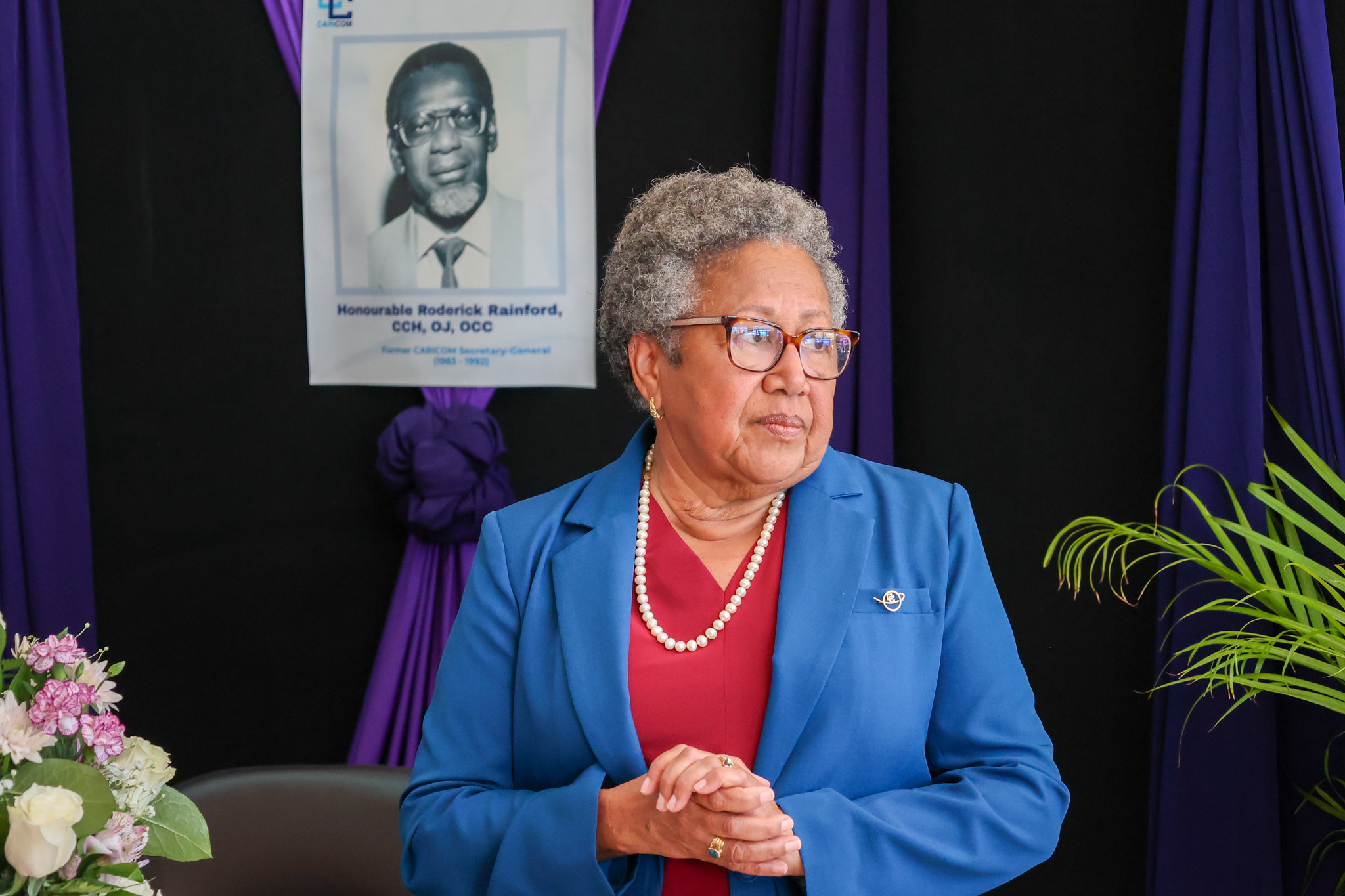
CARICOM SG calls for unity amid global geopolitical shifts
Against a backdrop of escalating global uncertainty and rapidly shifting geopolitical tides, the top leader of the Caribbean Community (CARICOM) has reaffirmed that regional solidarity is the bloc’s most critical tool to navigate evolving international dynamics and protect small-state interests on the global stage.
Speaking at the opening of the 29th Regular Meeting of the Council for Foreign and Community Relations (COFCOR) hosted in Paramaribo, Suriname, CARICOM Secretary General Dr. Carla Barnett told attending foreign ministers and delegate delegations that current regional challenges across the Western Hemisphere are inextricably linked to larger global shifts that touch every corner of the 15-nation bloc.
These global transformations, Barnett explained, carry both immediate disruptions and long-term consequences for CARICOM member states, touching every core area of national policy from domestic economic stability and bilateral trade relationships to sovereign foreign policy positioning. The bloc has faced mounting uncertainty since the return of a U.S. administration led by Donald Trump, which has restructured global trade frameworks and reoriented international diplomacy around its signature “America First” policy agenda.
Against this volatile landscape, Dr. Barnett outlined that CARICOM is continuing to deepen its global engagement both by strengthening long-standing partnerships with traditional allies and expanding its diplomatic reach to new strategic partners. For the two-day COFCOR meeting, high-level diplomatic representatives from Japan’s Foreign Ministry, Singapore’s Foreign Minister, and a senior delegation from the United Arab Emirates traveled to Suriname’s capital to participate. Barnett framed this guest participation as a valuable opportunity to hold open, in-depth discussions on shared strategic priorities between CARICOM and its international partners.
Looking ahead, the CARICOM leader highlighted a packed schedule of major multilateral events on the coming global agenda, including the 81st Session of the United Nations General Assembly, the 56th General Assembly of the Organization of American States, and the 31st UN Climate Change Conference (COP31). To advance the bloc’s core regional goals across these high-stakes forums — which include securing reparatory justice for colonial harms, stabilizing crisis-stricken Haiti, advancing climate action, unlocking access to much-needed climate finance, and upholding global peace and security — active, aligned coordination between all CARICOM member states will be non-negotiable, Barnett emphasized.
She stressed that Caribbean nations must maintain forceful, unified advocacy on these issues while working collectively to reform the global multilateral system into one that is equitable and responsive to the needs and interests of small developing states. “One of our Caribbean Community’s greatest strengths is our ability to project a united voice,” Dr. Barnett told delegates. “For us, this is a vital mechanism for ensuring we can be heard and can influence global decision-making.”
Acknowledging that aligning on common policy positions across member states with distinct national interests is rarely a straightforward process, Barnett noted that CARICOM has a long track record of successfully coordinating unified foreign policy stances when it matters most. She issued a clear warning: no individual Caribbean nation has the capacity to tackle the complex, cross-border challenges of the current era alone. In closing, she reminded delegates that every decision reached at COFCOR, the Conference of Heads of Government, the Community Council, and other regional governing bodies directly shapes the economic prospects and social well-being of hundreds of millions of Caribbean people across the bloc.
-

PM hails IMF report
Trinidad and Tobago’s Prime Minister Kamla Persad-Bissessar has issued a firm statement asserting that the twin-island nation has placed itself on a positive developmental trajectory, reversing 10 years of economic mismanagement and instability under the previous People’s National Movement (PNM) administration. Her remarks came in response to questions from the Express in the wake of the International Monetary Fund’s completion of its 2026 Article IV consultation with the Caribbean nation, a routine assessment that delivered a glowing review of the current government’s policy agenda. For Persad-Bissessar, the IMF’s positive assessment is far more than a third-party review—it is a powerful, independent validation of her administration’s leadership, cautious fiscal stewardship, and relentless commitment to rebuilding the country after a decade of sustained economic decline. She framed the PNM’s tenure as a prolonged period of “doom and gloom” that her government has begun to reverse, urging Trinidad and Tobago’s citizens to maintain patience and hope as pro-growth policies are rolled out to drive long-term national progress. The successful conclusion of the IMF consultation, the prime minister emphasized, confirms the country is once again “moving in the right direction” and has restored its standing and credibility among the global community. Under her leadership, Persad-Bissessar noted, the nation has transitioned from a phase of steady economic deterioration inherited from the PNM to a new era focused on reconstruction, systemic transformation, and renewed forward momentum. The IMF’s report explicitly highlighted a series of tangible achievements the current administration has delivered in just over one year in office: contained, low inflation, a stable and sufficiently capitalized domestic banking sector, a robust external financial position, and healthy international reserves backed by the country’s Heritage and Stabilisation Fund. Persad-Bissessar stressed that these wins carry even greater weight given the severe economic challenges her government inherited when it took office, including dwindling foreign currency reserves, rapidly growing national debt, eroded fiscal buffers, and years of unaddressed fiscal mismanagement. From the first days of her administration, she explained, leaders have taken bold, accountable action to stabilize the national economy, rebuild trust among international and domestic investors, and roll out evidence-based fiscal reforms designed to lay the foundation for long-term sustainability, economic resilience, and inclusive growth. The IMF’s findings, she argued, directly confirm that the tough but necessary policy choices her government has made to restore economic stability, strengthen public institutions, and reposition Trinidad and Tobago on a sustainable development path are already delivering results. “I have said repeatedly that we could not repair the damage and disorder we inherited overnight,” Persad-Bissessar said. “However, through discipline, competence, sound governance and strategic planning, we have succeeded in restoring confidence both locally and internationally.” Crucially, the prime minister noted, these stabilizing economic gains have been achieved without abandoning core commitments to the Trinidad and Tobago public. Her administration has followed through on campaign promises including delivering a 10 percent wage increase to public sector employees and reviving key social programs such as the universal laptop initiative for school-aged children. Persad-Bissessar acknowledged the IMF’s formal caution regarding the potential economic spillover effects of the ongoing conflict in the Middle East, a global risk that could impact small open economies like Trinidad and Tobago. Even so, she highlighted the IMF’s own observation that faster implementation of structural reforms outlined in the government’s Revitalisation Blueprint, paired with sustained domestic and foreign investment, could boost the country’s medium-term growth outlook. “We remain focused on revitalizing the energy sector, diversifying the economy, improving the investment climate, reducing bureaucracy and accelerating national development,” the prime minister said. As foreign direct investment continues to climb, and both public and private sector partners advance critical infrastructure and development projects, Persad-Bissessar projected that expanded opportunity and new jobs will follow for local citizens. “My Government remains fully committed to protecting the vulnerable, empowering businesses and young people, expanding opportunities and ensuring that Trinidad and Tobago achieves sustainable growth, lasting prosperity and renewed national pride,” she added.
-
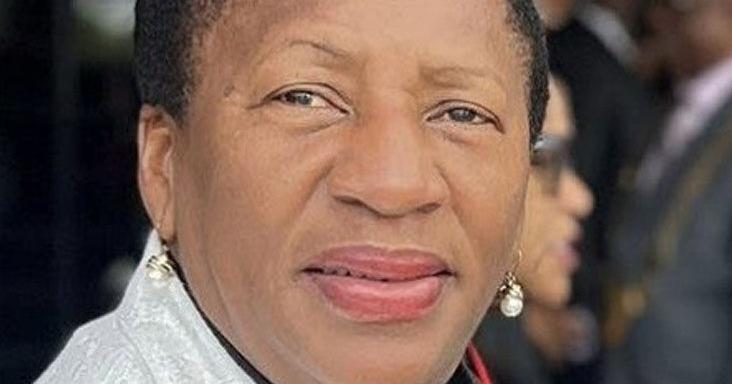
PM trying to distract from ‘failing govt’, says Penny
A sharp political feud has erupted in Trinidad and Tobago this week, as Opposition Leader Pennelope Beckles launched a blistering counterattack against Prime Minister Kamla Persad-Bissessar, calling on the ruling government head to prioritize answering to the public instead of meddling in the makeup of the Opposition’s Senate delegation.
The back-and-forth began Sunday at a People’s National Movement (PNM) Sport and Family Day gathering hosted at Port of Spain’s Nelson Mandela Park. During the event, Beckles made public claims that multiple current members of Persad-Bissessar’s ruling United National Congress (UNC) government have questionable personal and professional backgrounds. These allegations surfaced amid growing pressure from the government on Opposition Senator Janelle John-Bates, who remains in her parliamentary seat despite stepping down from the Public Administration and Appropriations Committee (PAAC) following accusations of professional misconduct.
Persad-Bissessar hit back at Beckles in comments published by a local daily newspaper on Monday, arguing that the Opposition Leader was the last person qualified to raise questions about politicians with questionable reputations within the UNC. The Prime Minister’s remarks did not go unanswered, with Beckles firing back within 24 hours via a public Facebook post, framing the Prime Minister’s critique as a deliberate distraction tactic.
In her statement, Beckles accused Persad-Bissessar of steering a failing administration that has increasingly lost the confidence of Trinidad and Tobago’s citizens. She outlined a list of grievances against the ruling government, including a lack of empathy for the public, no accountability for the awarding of more than $4 billion in public contracts, failure to jumpstart sustained economic growth, and the absence of a actionable plan to address rising crime across the nation.
Beckles went on to argue that Trinidad and Tobago is currently mired in a national crisis under the leadership of the UNC government, which she claims is populated by figures of questionable character – including individuals currently out on bail and others facing serious criminal charges in court.
“It is shamelessly oxymoronic that Kamla Persad-Bissessar seeks to lecture me on integrity, accountability, or leadership when she herself has dozens of unanswered questions hanging over her administration,” Beckles said in her post. “She has been permanently absent from key policy debates and notoriously impotent in delivering on her promises, having over-promised and delivered precisely nothing to the people of Trinidad and Tobago.”
She added that the current UNC government is on the brink of political collapse, and that Persad-Bissessar’s attacks are just a desperate effort to cling to power. “Trying to disparage me will not resolve her administration’s failures. I say again to Kamla: leave me alone,” Beckles said.
The Opposition Leader also emphasized that the Prime Minister’s recent comments are designed to draw public attention away from two high-profile ongoing controversies: the LandmarkTT corruption scandal and the so-called HDC Gate affair. Despite the government’s attempts to shift focus, Beckles insisted the distraction tactic is already failing.
-

Police: Samaroo shooting file to move to DPP
Months after a fatal police shooting left one man dead and his partner permanently disabled in Trinidad and Tobago, law enforcement authorities have confirmed the long-awaited forensic analysis into the incident is finally complete, clearing the way for the case file to be sent to the country’s top prosecutorial official for next steps.
The deadly encounter dates back to January 20, when 31-year-old Joshua Samaroo and his common-law wife Kaia Sealy were shot multiple times at a street intersection in St. Augustine, following a high-speed chase that began when the couple reportedly attempted to evade a police stop in Maloney. According to initial police accounts, officers attempted to pull the pair over, but Samaroo sped off, triggering the pursuit that ended when the couple’s vehicle crashed into a roadside drain. At that point, officers opened fire on the car.
Surveillance footage that emerged publicly after the shooting contradicted key parts of the official narrative, showing Samaroo with his hands raised outside the vehicle moments before officers fired. Both Samaroo and Sealy were hit multiple times and rushed to the Eric Williams Medical Sciences Complex in Mt Hope, where Samaroo was pronounced dead on arrival. Sealy survived the attack but suffered life-altering injuries: she is now partially paralyzed and has lost the ability to walk.
The incident sparked immediate outrage among Samaroo’s relatives and Sealy’s friends, who launched sustained public protests demanding accountability. Demonstrators called for the resignation of Police Commissioner Allister Guevarro and pushed for criminal charges to be filed against the officers involved in the shooting. While protest crowds shrank in the months following the incident, demonstrations continued nonethelss, as organizers pressed authorities to move forward with the investigation.
Back in March, Guevarro had announced that the probe was nearly finished, with only a single outstanding document delaying the submission of the full case file. On Wednesday, police issued a formal statement confirming that the forensic report, the final outstanding document, had been received from the Forensic Science Centre located in Federation Park. As part of standard investigative procedure, multiple pieces of evidence from the shooting scene had been submitted to the center for forensic testing, and investigators had held up progress on the case while waiting for the results of that analysis.
“Now that the forensic report is in hand, investigating officers will next submit the full case file to the Office of the Director of Public Prosecutions for review,” the police statement noted. “Once reviewed, the DPP will issue formal guidance on what legal steps will be taken moving forward.”
-
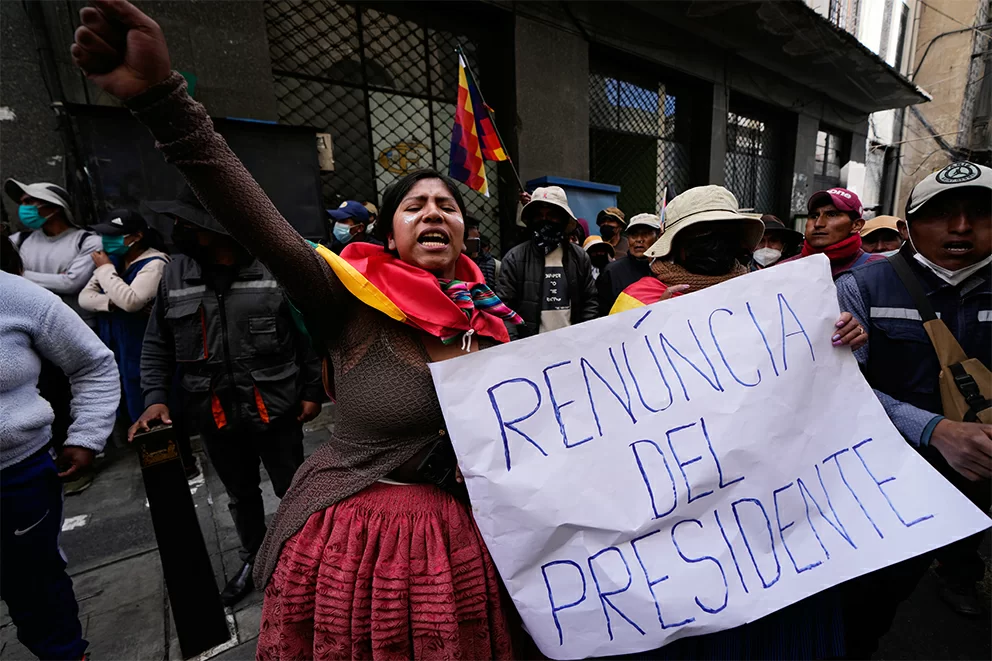
Escalatie van protesten in Bolivia: duizenden eisen aftreden president Paz
Bolivia has been rocked by rapidly escalating mass anti-government demonstrations that have swept the nation in recent days, bringing the administrative capital La Paz to a near-standstill. Thousands of protesters drawn from across Bolivian society – including small-scale farmers, artisanal miners, teachers, public sector workers and Indigenous communities – have shut down key arterial routes surrounding the city, creating critical shortages of food, fuel and life-saving medications for local residents.
The unrest first erupted weeks ago, targeting the administration of center-right President Rodrigo Paz, who took office less than six months ago, ending nearly two decades of continuous socialist rule in the South American nation. Demonstrators are demanding Paz’s immediate resignation, citing skyrocketing living costs, persistent widespread economic instability, and controversial plans to privatize state-owned enterprises as core grievances.
Bolivia is currently grappling with its most severe economic crisis in four decades. Official data puts annual inflation at 14% as of April, a figure that has gutted household purchasing power and amplified public discontent across all income groups. For many protesters, the crisis has reached an unmanageable breaking point. “Paz is unfit to govern, and our country is spiraling into chaos,” said 60-year-old farmer Ivan Alarcon, who traveled 90 kilometers to join the demonstrations in La Paz.
Artisanal small-scale miners, another key bloc of protesters, have marched through the city to demand expanded access to mining territories, escalating tensions in already volatile streets. Clashes have broken out between demonstrators and riot police in central La Paz, with tear gas deployed to disperse crowds attempting to reach the main city square, which houses major government administrative buildings. Protesters have thrown stones and homemade explosive devices, with at least two demonstrators confirmed injured. Local media reports more than 100 arrests have been made, and on-the-ground footage shows protesters entering government office buildings and removing property from the sites.
A major flashpoint for the unrest was Paz’s recent decision to cut long-standing national fuel subsidies, a move his administration defended as necessary to reverse the depletion of the country’s foreign currency reserves. Far from stabilizing energy supplies, however, the policy triggered immediate fuel price hikes and worsened existing supply shortages, giving new momentum to the growing protest movement.
The escalating political crisis has drawn international attention, with the United States formally weighing in on the unrest. U.S. Deputy Secretary of State Christopher Landau expressed deep concern following talks with President Paz, framing the mass demonstrations as an attempted coup partially funded by what he called an “unholy alliance between political actors and organized crime” in the region. Landau called for international support for Bolivia’s democratically elected government, warning that prolonged political instability would have damaging ripple effects across the entire South American region. He added that the U.S. is actively working to prevent anti-government and anti-institutional factions from seizing power.
Amid the ongoing street violence and political uncertainty, multiple commercial banks across La Paz have temporarily suspended operations, closing their doors to the public out of caution for staff and customer safety.
-
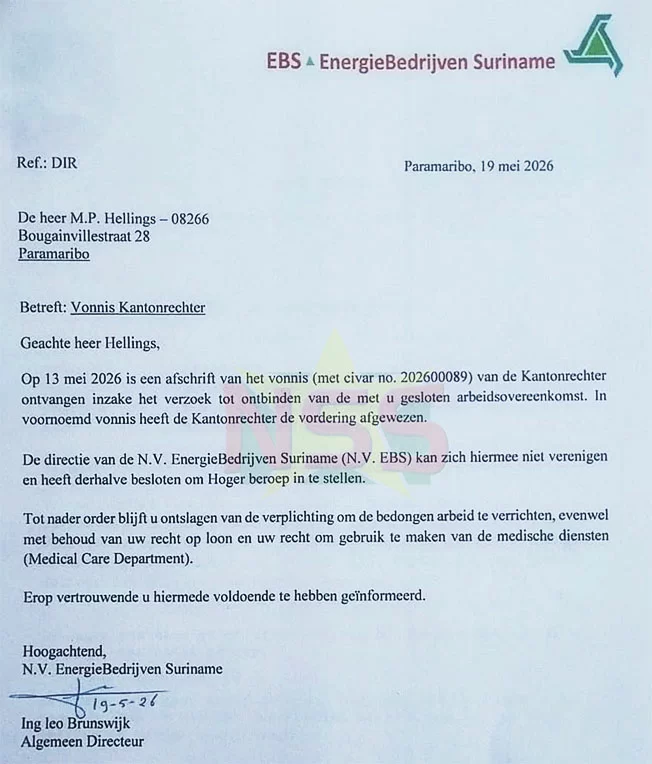
Brunswijk zet strijd tegen bondsvoorzitter Hellings voort met hoger beroep
A long-running high-profile labor conflict at Suriname’s state-owned energy utility Energiebedrijven Suriname (EBS) has entered a new phase, after EBS General Director Leo Brunswijk launched an appeal against a lower court ruling that favored Marciano Hellings, chair of the EBS employees’ union. The formal notice of appeal was officially served to Hellings on Tuesday, court documents confirm. In the notification, Brunswijk states that EBS leadership rejects the cantonal court’s earlier decision, which dismissed the utility’s request to terminate Hellings’ employment contract.
Per the terms outlined in the appeal notice, Hellings will remain temporarily relieved of his work duties while retaining full access to his regular salary and all medical benefits through the duration of the appellate process. The contentious dispute between EBS executive leadership and the union chair first emerged in July of the previous year, and has since grown into one of the most widely discussed labor controversies at any state-owned enterprise in Suriname. Prior to the cantonal court’s ruling, EBS had already lost previous procedural challenges brought before the Labor Inspectorate, marking the second consecutive setback for the utility in the conflict.
When contacted for comment by local outlet Starnieuws, Hellings responded calmly to the news of the appeal, saying he had fully anticipated the move from EBS leadership. “This doesn’t keep me up at night,” the union leader told reporters. He added that it had been clear for months that EBS intended to push the case to appellate court regardless of the lower court outcome.
Hellings also echoed a observation the cantonal judge made in the initial ruling: the conflict has primarily been driven by a single individual within EBS’s executive leadership. The union chair expressed full confidence in the appellate process, saying he expects the lower court’s ruling will be upheld. “I am convinced that when this case is heard on appeal, we will get the same outcome,” he said.
In additional comments, Hellings pointed out that the prolonged legal battle has already incurred substantial public costs, including fees for attorneys, court procedures and process servers. “The lawyer gets paid again, the process server gets paid, and all of that comes at the expense of state-owned NV EBS,” he noted.
-

Leisure : Did you know ? #25
In the 25th installment of HaitiLibre’s popular ‘Did You Know?’ leisure series, published May 20, 2026, readers are invited to explore the little-known history and unique culinary character of sumac, a versatile ancient spice with deep roots in Mediterranean and Middle Eastern food traditions.
Sumac is harvested from the berries of wild shrubs that thrive in the rugged rocky terrain spanning the Mediterranean basin and the Middle East. What sets this spice apart from common acidic seasonings is its bright, lemony-forward profile paired with a subtle astringent bite, which adds fresh, tangy depth to dishes without requiring liquid additives like vinegar or freshly squeezed lemon juice. It has long been a staple in the national cuisines of Lebanon, Syria, and Turkey, and serves as a core component of the iconic Za’atar spice blend—an aromatic mix that also includes dried thyme, toasted sesame seeds, and salt.
The historical reach of sumac stretches back far earlier than many modern home cooks realize. Long before lemons were introduced to European markets, ancient Romans already relied on sumac for both its medicinal benefits and culinary versatility. This long legacy offers a powerful reminder: regional biodiversity shaped unique culinary identities centuries before the globalization of food ingredients homogenized modern diets. In highlighting sumac’s story, the feature also issues a quiet call to action: to honor distinct regional terroirs, and recognize that every corner of the world holds one-of-a-kind natural treasures that deserve protection from conflict and the gradual erasure of ancient cultural traditions.
This fun, educational fact comes straight from the HaitiLibre Quiz platform, an interactive general knowledge hub designed to challenge and engage learners across a wide range of topics. The platform caters to casual knowledge seekers and trivia enthusiasts alike, covering everything from Haitian current affairs and culture to global general knowledge. For users ready to test their expertise, the platform’s expert menu, hosted at https://quiz.haitilibre.com/en, offers a diverse array of specialized, challenging themes.
Currently, the platform hosts 119 unique interactive quiz games, with new content added on a monthly basis. As part of the May 2026 monthly update, 30 brand-new quizzes were added to the library on May 4, expanding the platform’s offerings for all audiences. All HaitiLibre Quiz games are exclusive, completely free to access, and require no account registration to play. They are designed to be accessible to all age groups and knowledge levels, with three difficulty tiers—easy, intermediate, and hard—available for every quiz, and full support for both French and English languages.
Readers are invited to visit the quiz hub at https://quiz.haitilibre.com/en to explore the full collection of content, test their own general knowledge, share the platform with family and friends, and send feedback to the HaitiLibre team to help improve future updates. This ‘Did You Know?’ entry is pulled from the platform’s International Cuisine 2.1 themed quiz, and previous installments of the series dating back to the 21st entry are also archived on the HaitiLibre website for interested readers to explore.