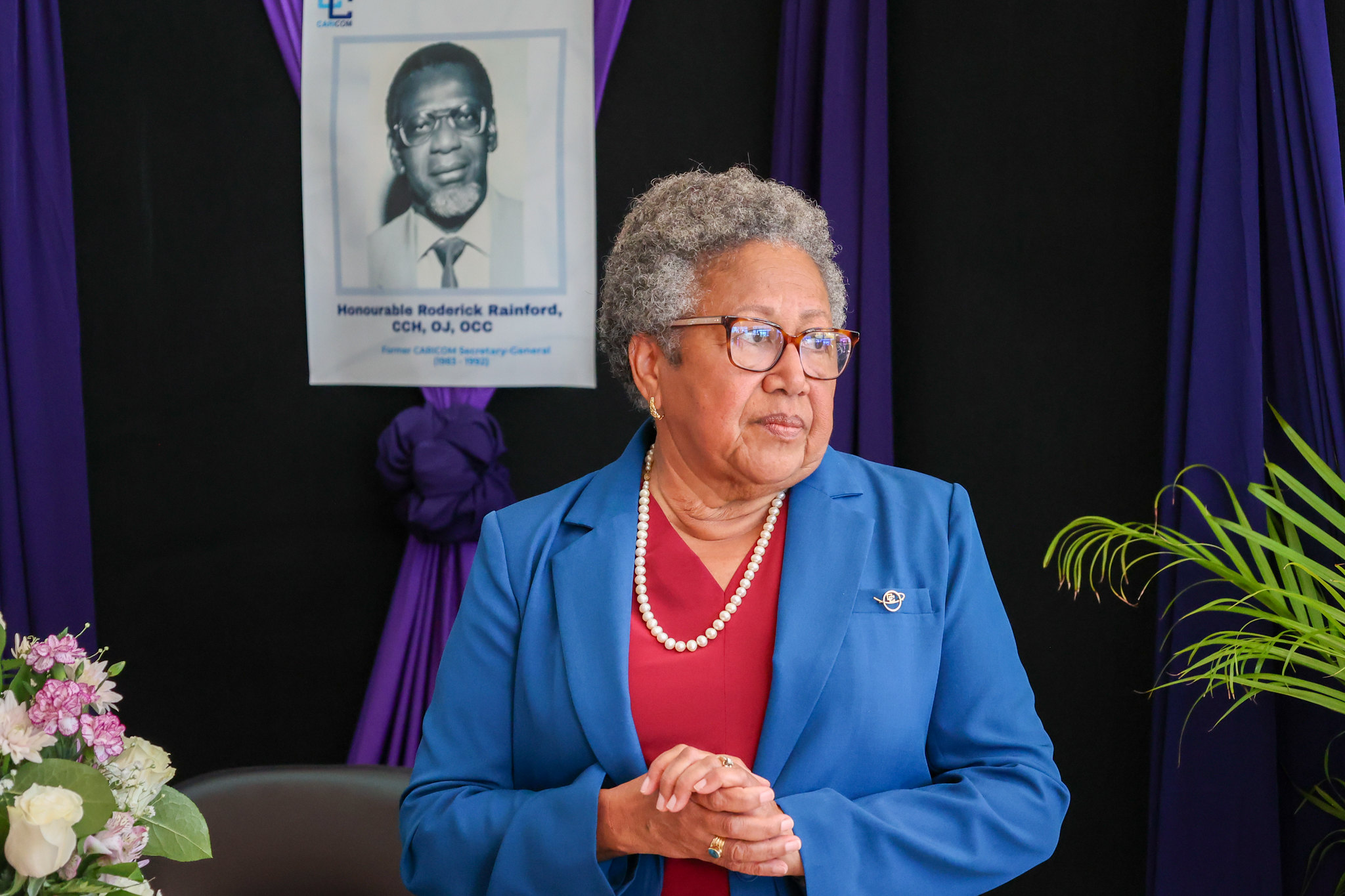
Against a backdrop of escalating global uncertainty and rapidly shifting geopolitical tides, the top leader of the Caribbean Community (CARICOM) has reaffirmed that regional solidarity is the bloc’s most critical tool to navigate evolving international dynamics and protect small-state interests on the global stage.
Speaking at the opening of the 29th Regular Meeting of the Council for Foreign and Community Relations (COFCOR) hosted in Paramaribo, Suriname, CARICOM Secretary General Dr. Carla Barnett told attending foreign ministers and delegate delegations that current regional challenges across the Western Hemisphere are inextricably linked to larger global shifts that touch every corner of the 15-nation bloc.
These global transformations, Barnett explained, carry both immediate disruptions and long-term consequences for CARICOM member states, touching every core area of national policy from domestic economic stability and bilateral trade relationships to sovereign foreign policy positioning. The bloc has faced mounting uncertainty since the return of a U.S. administration led by Donald Trump, which has restructured global trade frameworks and reoriented international diplomacy around its signature “America First” policy agenda.
Against this volatile landscape, Dr. Barnett outlined that CARICOM is continuing to deepen its global engagement both by strengthening long-standing partnerships with traditional allies and expanding its diplomatic reach to new strategic partners. For the two-day COFCOR meeting, high-level diplomatic representatives from Japan’s Foreign Ministry, Singapore’s Foreign Minister, and a senior delegation from the United Arab Emirates traveled to Suriname’s capital to participate. Barnett framed this guest participation as a valuable opportunity to hold open, in-depth discussions on shared strategic priorities between CARICOM and its international partners.
Looking ahead, the CARICOM leader highlighted a packed schedule of major multilateral events on the coming global agenda, including the 81st Session of the United Nations General Assembly, the 56th General Assembly of the Organization of American States, and the 31st UN Climate Change Conference (COP31). To advance the bloc’s core regional goals across these high-stakes forums — which include securing reparatory justice for colonial harms, stabilizing crisis-stricken Haiti, advancing climate action, unlocking access to much-needed climate finance, and upholding global peace and security — active, aligned coordination between all CARICOM member states will be non-negotiable, Barnett emphasized.
She stressed that Caribbean nations must maintain forceful, unified advocacy on these issues while working collectively to reform the global multilateral system into one that is equitable and responsive to the needs and interests of small developing states. “One of our Caribbean Community’s greatest strengths is our ability to project a united voice,” Dr. Barnett told delegates. “For us, this is a vital mechanism for ensuring we can be heard and can influence global decision-making.”
Acknowledging that aligning on common policy positions across member states with distinct national interests is rarely a straightforward process, Barnett noted that CARICOM has a long track record of successfully coordinating unified foreign policy stances when it matters most. She issued a clear warning: no individual Caribbean nation has the capacity to tackle the complex, cross-border challenges of the current era alone. In closing, she reminded delegates that every decision reached at COFCOR, the Conference of Heads of Government, the Community Council, and other regional governing bodies directly shapes the economic prospects and social well-being of hundreds of millions of Caribbean people across the bloc.