作者: admin

  • A Costly Ride: Will Electric Buses Save NBC’s Bottom Line?

    A Costly Ride: Will Electric Buses Save NBC’s Bottom Line?

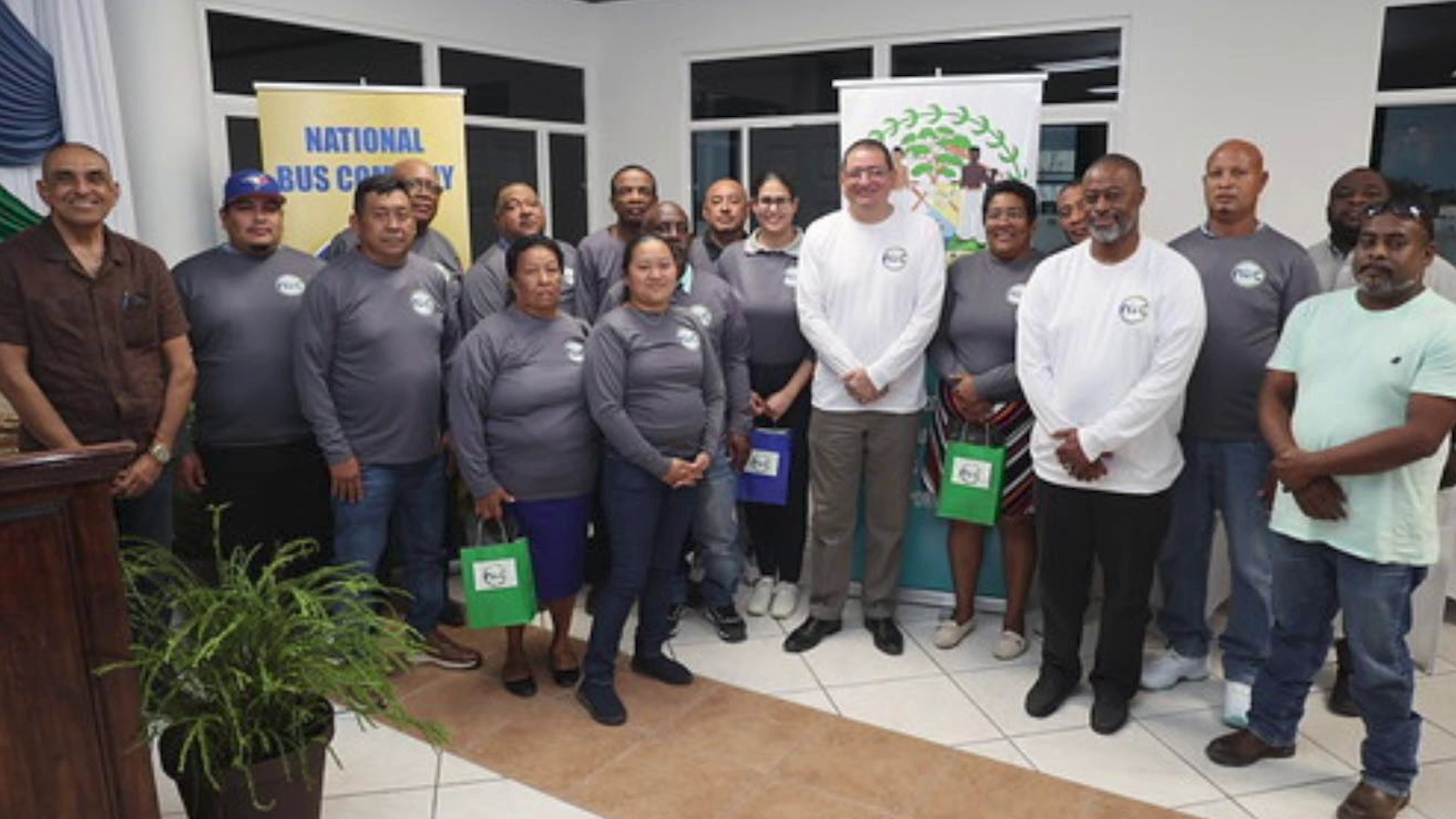
    Belize’s National Bus Company (NBC), a relatively new public-private transit venture, is on track to meet its early financial projections – and that means operating firmly in the red, company leadership confirms. Months after launching the partnership, which brought private operator Sergio Chuc and his Westline Bus Company into the venture, leadership says early losses were always part of the long-term growth strategy, with profitability targeted by the close of 2026.

    When the partnership was first structured, Chuc and other stakeholders knew the initial operating period would bring financial headwinds. Chuc, a key shareholder in NBC, emphasized that the current negative cash flow is no surprise to the project’s leadership team. “It has been going, just as the plan showed it would be going. In the first six months, it is going to be rough. The company will continue losing money initially, however as the phase of introducing the electric buses starts coming in, we will be leveling in,” Chuc explained in an interview.

    The core linchpin of NBC’s path to profitability is a planned transition to an all-electric bus fleet, a shift that Chuc says will slash operating costs by cutting expensive fuel expenses and ultimately widen profit margins. Unlike traditional diesel fleets that carry ongoing high fuel and maintenance costs, electric buses are expected to deliver long-term cost savings that will stabilize the company’s finances.

    “Our projections show that by the end of the year we should be afloat. Actually, we were prepared for this. We knew it was going to start bumpy and all in all it was no surprise. We know what we are doing. I think the board of directors has some very good people that are extremely knowledgeable in the industry and so they are steering the company in the right direction,” Chuc added.

    For Chuc and other investors, NBC is explicitly structured as a long-term play, prioritizing sustained growth and future returns over quick short-term profits. “I am ok with it. I think my investment is fairly safe. It is a long-term investment. I definitely did not think I was going to make money immediately, but when all the chips fall in place, I think it is going to be very welcoming for myself and extremely welcoming for the commuters,” Chuc said.

    Beyond financial gains, Chuc noted that the electric bus transition will also deliver tangible improvements to Belize’s public transit network, upgrading service quality and bringing world-class equipment to local riders. “The service is getting better. The equipment will be world class but for that we need a few months for those buses to start rolling in,” he explained.

    Belize’s Minister of Transport Dr. Louis Zabaneh has confirmed the timeline for the new fleet, stating that the first electric buses are on track to arrive in the country by the end of 2026, matching the company’s internal projections for financial stabilization.

  • Belizean Workers Gain Global Support as UN Backs Right to Strike

    Belizean Workers Gain Global Support as UN Backs Right to Strike

    In a landmark decision that has sent ripples through global labor advocacy circles, the International Court of Justice (ICJ), the United Nations’ highest judicial body, has formally affirmed that the right to strike is protected under the core International Labour Organization (ILO) Convention 87, delivering a critical boost to Belizean workers who have long pushed for clearer legal protections for collective action.

    Dated May 22, 2026, the ruling clarifies a long-debated interpretation of global labor standards, cementing the link between the fundamental right to freedom of association enshrined in ILO Convention 87 and workers’ ability to withdraw labor as a collective bargaining tool. For the Central American nation of Belize, the international decision carries particular local weight. While Belize’s national constitution already enshrines the rights to freedom of assembly and association, the ICJ’s ruling adds an authoritative, binding layer of international legal protection that reinforces domestic labor rights.

    Dean Flowers, president of Belize’s Public Service Union, framed the decision as a transformative victory for workers both in Belize and across the globe. He noted that while Belize has not historically blocked workers’ right to strike, countless workers in other regions have faced violent repression, imprisonment, and legal bans when they have taken collective action after reaching an impasse with employers or governments. “This solidifies our right here in Belize to continue withdrawing our labor when government believes that they can ignore us,” Flowers explained in an interview following the ruling. “It gives us the assurance that we can act when government tries to impose policy decisions on the people we represent without meaningful consultation.”

    Flowers emphasized that Belizean workers do not use strike action arbitrarily; strikes are only called when core constitutional rights to engagement, consultation, and transparent communication have been breached by authorities. Looking ahead, he called on Belizean policymakers to update domestic legislation to explicitly codify the right to strike in the revised Trade Unions Registration and Recognition Act, arguing that the formal legal alignment with the international ruling would strengthen labor protections for all Belizean workers.

    Legal analysts have cautioned that the ICJ ruling does not serve as a blanket “free pass” for unregulated work stoppages, nor does it outline specific rules governing when and how strikes may be conducted. Instead, the decision’s core contribution is its clear, formal confirmation that the right to strike falls under the protection of freedom of association guaranteed by international labor law, setting a binding precedent for labor rights disputes across all ILO member states.

    This report is adapted from a transcript of a televised evening newscast focused on Belizean current affairs.

  • Citizen security council to be reconstituted amid rising crime

    Citizen security council to be reconstituted amid rising crime

    As firearm-linked homicides continue their upward trajectory across Barbados, the Mia Mottley-led administration is moving to reactivate the National Advisory Council on Citizen Security, a key anti-crime body that has not convened since the February general election, multiple sources close to the process have confirmed to Barbados TODAY.

    The council was first established in 2024, born from urgent public outcry after a devastating wave of gun violence that culminated in a mass shooting in Bridgetown’s Nelson Street. That attack left three men dead, eight others injured, and two additional children wounded in separate connected incidents, prompting Prime Minister Mottley to label the shootings a shocking, reckless string of attacks targeting vulnerable Barbadian citizens. At the time of its launch, Mottley tasked the body with developing evidence-based, comprehensive solutions to the island’s growing crime crisis, with a core focus on advising the government on updated anti-gang legislation and a national gun amnesty program.

    Over its initial tenure, the council made notable progress, contributing to draft crime legislation and submitting policy recommendations across a range of public safety related areas. But the body faced early structural turmoil when its founding chair, law professor Velma Newton, stepped down just over a year into her post, citing deep-rooted operational flaws that hampered the council’s ability to deliver results.

    In her resignation letter to the prime minister, Newton outlined that she had delayed her own long-term professional commitments to take the role, drawn by a commitment to addressing national violence, but fundamental planning oversights undermined the work from the start. She criticized the original 24-member structure as unwieldy, noting that a large share of appointed members were unable to attend regular meetings or contribute to the baseline research needed to map existing social support services for at-risk youth, disabled people, and affected families. Adding to the dysfunction, Newton revealed that no dedicated administrative secretary was allocated to the council, even after a formal budget was submitted to the responsible ministry shortly after launch. For nearly nine months, she wrote, the chair and one non-council volunteer were solely responsible for all data collection and member correspondence.

    Just days after the council’s initial formation, the Prime Minister’s Office announced an expansion that added three lay community members and an additional stakeholder group, after a wide range of civil society organizations and individual experts reached out offering to contribute. Mottley noted at the time that she sought to avoid overburdening the full council with excessive membership, but planned to co-opt additional specialists to join smaller working sub-committees focused on specific policy areas.

    The scale of Barbados’s violence crisis has grown increasingly alarming in the years since the council was launched. In 2024, the island recorded an initial count of 49 murders, representing a 158% jump from the prior year, with an additional manslaughter case bringing the final total to 50 – the highest number of annual homicides ever recorded in Barbados’s history. That record high remained unchanged last year, and five months into the current year, the island has already recorded 25 killings, the vast majority linked to gun violence.

    The council is currently chaired by Senate President Reginald Farley, and the Mottley administration is preparing to formally reconstitute the body to resume its work on addressing the national violence crisis.

  • Camalote Man Loses Leg In Motorcycle Crash

    Camalote Man Loses Leg In Motorcycle Crash

    A devastating single-vehicle motorcycle crash on the George Price Highway in Belize’s Cayo District has left a local man with life-altering injuries, authorities confirmed. The incident, which occurred on Wednesday near Teakettle Village, has been identified as involving 29-year-old Adrian Gerald Banner, a resident of Camalote Village.

    According to official investigative updates from local law enforcement, Banner was operating a black Lifan dirt bike heading westbound between the 52 and 53-mile markers of the highway when he made the decision to overtake three separate vehicles that were traveling in the same direction as he was. Trouble arose as the motorcyclist attempted to merge back into his original lane ahead of an upcoming curved section of road. In that moment, he lost full control of his motorcycle, veered off the travel lane, and crashed violently into an iron guardrail positioned along the right shoulder of the highway.

    The force of the high-speed impact inflicted catastrophic damage to Banner’s body. His right leg was completely severed in the crash, and he also sustained multiple painful abrasions across his arms, chin, and head. First aid arrived on scene quickly: local police officers, members of the Belize Defence Force who were operating in the nearby area, and ordinary bystanders all rushed to the motorcyclist’s aid immediately after the crash. They provided urgent preliminary care before an ambulance could arrive to transport the seriously injured man to the Western Regional Hospital for emergency treatment.

    As of the latest update from law enforcement, investigators are still working to piece together all of the contributing circumstances surrounding the crash to determine a full official cause. This report is adapted from a transcribed broadcast evening newscast, with formatting and original phrasing adjusted for clarity in online reading.

    In other trending local news, construction work on the new Caye Caulker Police Station is set to resume in the near future.

  • Belize Football Faces FIFA Reality Check

    Belize Football Faces FIFA Reality Check

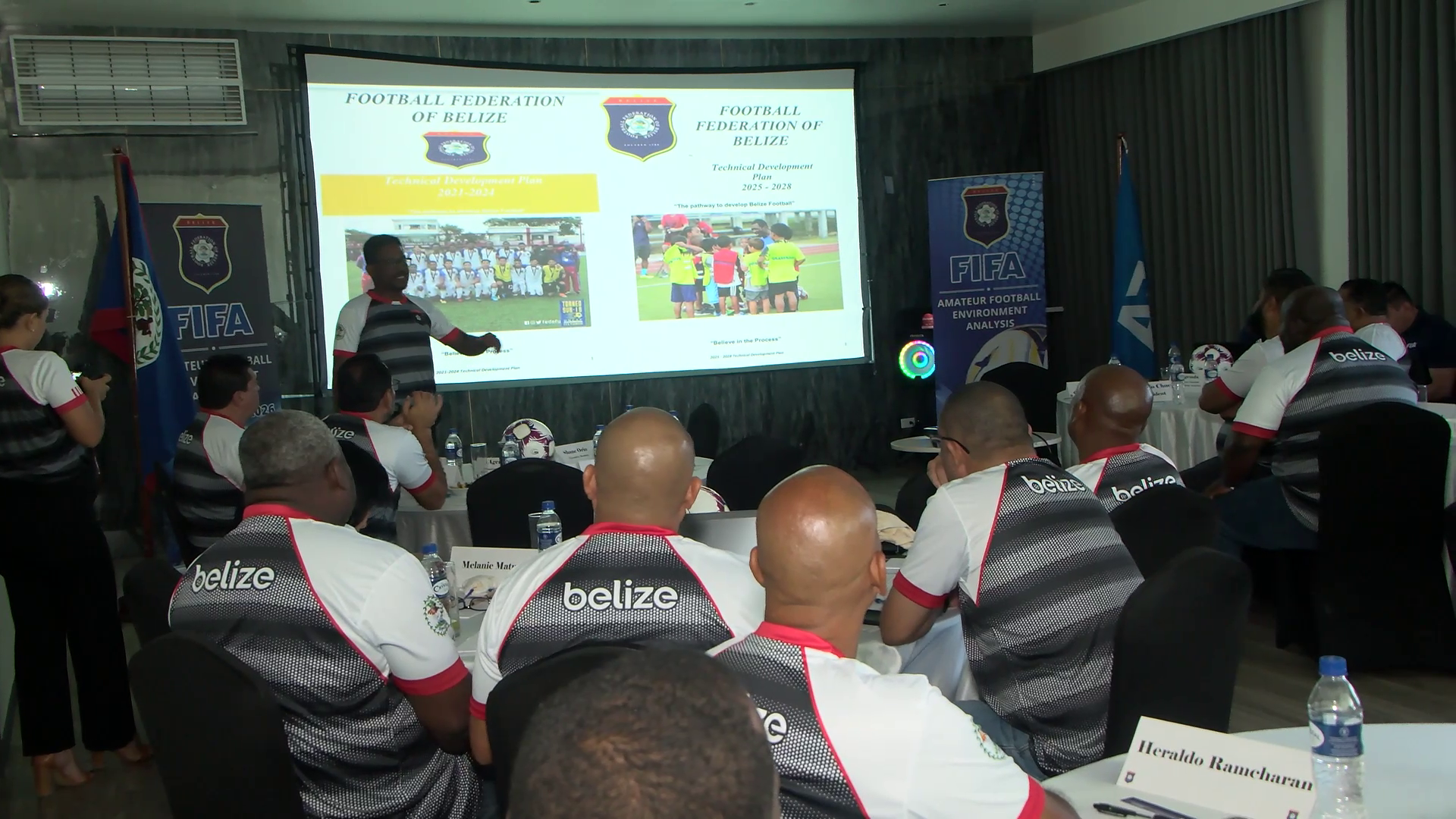
    In a landmark step for football development in the small Central American nation of Belize, national governing body the Football Federation of Belize (FFB) has partnered with FIFA to conduct a landmark comparative analysis of the country’s amateur and grassroots football ecosystems. The review, which draws on 2023-2024 survey data collected across 106 countries worldwide, is designed to deliver a clear, data-backed assessment of Belize’s standing in global community football development, and lay the groundwork for future growth that supports all players, not just those on track for elite competition.

    The collaborative assessment was presented at a national workshop bringing together certified football coaches from every region of Belize, where stakeholders broke down key findings and actionable recommendations for expanding access to the sport. Speaking at the event, FFB President Sergio Chuc emphasized that the analysis has delivered tangible, documented insights into Belize’s current progress, allowing leaders to benchmark the country’s work against international peers. Early findings suggest Belize’s existing grassroots and amateur framework is well-organized and aligned with global best practices, though Chuc noted that consistent, ongoing work will be critical to driving further improvement.

    Javier Sanchez, FIFA’s Amateur Football Manager, outlined the dual global goals that guided the analysis: boosting broad-based participation in football across all demographics, and growing the sport to be inclusive of players of all skill levels and aspirations. Unlike elite-focused assessments that center only on top-tier professional and national team performance, this project prioritizes the massive segment of players who participate in football for community, recreation, and personal development rather than professional advancement.

    FFB Technical Development Director Phillip Marin echoed this priority, noting that globally, fewer than 1% of grassroots players ultimately advance to elite competitive levels. That reality makes targeted investment in amateur pathways not just a nicety, but a core responsibility for football governing bodies at every level – from the FFB to regional confederation CONCACAF and global governing body FIFA. Without structured, supported opportunities for the vast majority of players who will not go pro, Marin argued, the sport misses out on widespread community buy-in and the broad base of participation that ultimately nurtures the rare elite talent that does emerge.

    This collaborative review marks one of the most comprehensive third-party assessments of Belize’s national football structure in recent years, reflecting a growing global shift toward prioritizing inclusive grassroots development alongside high-performance elite programs. For Belize, the findings will shape future funding, coaching training, and infrastructure investment decisions as the country works to expand access to football and solidify its position on the global football landscape.

  • Bogotá : Haiti proposes a regional system for the recognition of professional skills

    Bogotá : Haiti proposes a regional system for the recognition of professional skills

    Against a backdrop of growing regional migration pressures and shifting labor market dynamics across Latin America and the Caribbean, Haiti has put forward a bold proposal for cross-border cooperation at the region’s highest-level gathering of labor ministers. The Conference of Ministers of Labor of Latin America and the Caribbean, hosted in Bogotá, Colombia from May 21 to 22, 2026, brought together top labor and social affairs officials to address shared challenges spanning migration, inclusive economic growth, and climate-linked labor disruption.

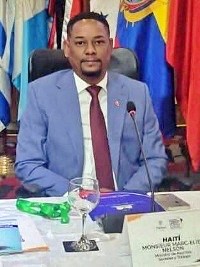
    Leading Haiti’s delegation to the conference, Marc-Elie Nelson, Minister of Haiti’s Ministry of Social Affairs and Labor (MAST), introduced a landmark initiative: the creation of a standardized regional system for the recognition of professional skills. Nelson argued that such a coordinated mechanism would unlock tangible benefits for the entire region, from encouraging cross-border entrepreneurship to expanding equitable access to public employment support services. Most critically, he emphasized, the framework would advance the financial and digital inclusion of migrant workers, a group that often faces systemic barriers to formal economic participation across the region.

    “Investing in these areas is investing directly in the stability, prosperity, and cohesion of our region,” Nelson told conference attendees. Alongside his call for the skills recognition system, Nelson urged regional partners to establish a dedicated regional innovation fund focused on expanding professional inclusion for marginalized and mobile worker populations.

    Beyond labor market reform, Nelson called for unified, coordinated action from regional governments to tackle two of the most pressing shared challenges: irregular migration patterns and climate change impacts on labor systems. He also made a forceful stand against exclusion in workplaces across the region, stating, “We must raise our voices together strongly against xenophobia, discrimination, and all forms of exclusion in the world of work.”

    By the close of the two-day conference, participating officials advanced regional cooperation through two key multilateral agreements: a memorandum of understanding and a joint policy statement titled the Bogota Declaration on Dignified Labor Migration and Rights-Based Mobility in Latin America and the Caribbean. Both documents were initialed by attending delegations, laying the groundwork for future coordinated action.

    For Haiti, signing onto the agreements reaffirms the country’s long-standing commitment to building a regional governance model that centers human dignity as a core priority of public policy, aligning with the nation’s proposal to center marginalized migrant workers in regional labor reform efforts.

  • Social : Launch of the first shelters for women victims of violence

    Social : Launch of the first shelters for women victims of violence

    In a landmark step forward for gender justice in Haiti, top government officials officially opened the nation’s first dedicated safe shelters for women and girls who have survived gender-based violence on Friday, May 22, 2026. The launch ceremony, led by Prime Minister Alix Didier Fils-Aimé alongside Pédrica Saint-Jean, Haiti’s Minister for the Status of Women and Women’s Rights, drew attendance from representatives of UN Women, international technical and financial partners, and members of the diplomatic corps based in Port-au-Prince.

    Across the country, four such shelters will be constructed across four key departments: West, Grand’Anse, Central, and Artibonite. The first completed facility, located in the West Department’s Vivy-Mitchell district, was the site of Friday’s inauguration. Purpose-built to prioritize survivor safety, dignity and holistic healing, the shelter comes equipped with modern amenities including eight private dormitories, dedicated reception zones, a communal cafeteria, an on-site infirmary, a recreation space, and segregated secured areas designed to protect residents. Unlike many temporary support projects in Haiti that rely on international donor funding, this entire initiative is financed directly by the Haitian national government.

    For countless Haitian women who have endured gender-based violence in silence for decades, the opening of these shelters represents more than just a new infrastructure project—it is a tangible demonstration of the state’s commitment to protecting its most vulnerable citizens. Marie Gorreti Nduway, UN Women’s country representative to Haiti, spoke emotionally at the ceremony, praising the launch as a transformative milestone for women’s rights in the country. She called the initiative a concrete victory for Haitian women, and reaffirmed UN Women’s long-term commitment to partnering with the Haitian government to sustain and expand the shelter program.

    Minister Saint-Jean also shared her moving reaction to the completion of the first facility, framing the shelters as an indispensable turning point in the national fight to defend women’s dignity and guarantee their protection. She highlighted that beyond physical safety, the shelters will provide survivors with confidential, individualized psychosocial support tailored to each person’s unique healing journey.

    In his address to attendees, Prime Minister Fils-Aimé framed the project as a powerful act of national solidarity, justice, and collective hope. “Faced with violence, we choose light,” he said. “These houses will be spaces for rebuilding, rebirth, and dignity. Women have the right to protection, to be heard, and to receive support.” To ensure the long-term stability of the program, the prime minister announced that sustained funding for all four shelters will be written into the upcoming national supplementary budget, locking in government support for years to come.

  • Consultations on modernising copyright and intellectual property laws to be held- Ali

    Consultations on modernising copyright and intellectual property laws to be held- Ali

    GEORGETOWN, Guyana – May 22, 2026 – For nearly 60 years after gaining independence from Britain, Guyana has relied on outdated 1956 colonial-era copyright legislation to govern intellectual property rights. Now, amid growing pressure from local creators, innovators, and international stakeholders, President Irfaan Ali has announced that broad public consultations on updating the country’s IP framework will launch in the near term. The announcement comes just one day after the administration identified creative and digital industries as priority growth areas for new public financing, spotlighting the gap between economic development ambitions and outdated legal protections.

    Speaking to reporters from Demerara Waves Online News on Friday, Ali confirmed that the government would prioritize stakeholder input to shape the future of copyright regulation in the South American nation. He specifically highlighted a desire to center perspectives from Guyana’s artistic community, and suggested initial discussions could open on social media platforms to expand accessibility. “Maybe, we should move this up on the agenda and start the consultation on that,” Ali stated.

    The president’s commitment follows remarks Tuesday from Government Efficiency Minister Zulfikar Ally, who named creative and digital sectors among the key industries that will access financing from the upcoming Guyana Development Bank during an address to the Guyana Manufacturing and Services Association (GMSA) business luncheon. When pressed for details on how the government would address widespread gaps in creative work IP protection, Ally only acknowledged the sector is under active review, offering no concrete timeline or policy details.

    Guyana’s failure to modernize intellectual property law stretches back decades. The country has never replaced the 1956 British Copyright Act it inherited at independence in 1966. Previous efforts to pass updated IP legislation in the 2000s collapsed due to lack of political will. While the ruling People’s Progressive Party Civic promised copyright reform as a core 2025 election pledge, no legislative action has been taken to date. The opposition coalition A Partnership for National Unity (APNU) has already tabled a motion calling for a bipartisan select committee to advance reform with a clear legislative timeline, but the National Assembly has yet to take up the proposal.

    International pressure for reform has also mounted in recent weeks. During an official visit to Guyana on May 13, 2026, U.S. Under Secretary of State for Economic Affairs Jacob Helberg emphasized that strong intellectual property protections, as a component of private property rights, are critical to unlocking private investment and realizing Guyana’s goal of becoming one of the Western Hemisphere’s most prosperous economies, driven in large part by its emerging oil sector.

    “In order to do that, certain conditions have to be met, including the right to private property, including respecting intellectual property, including different kinds of principles of governance that the private sector necessarily needs in order to have the confidence, the predictability, and the certainty to deploy and invest a lot of money. And so we focused on the goal. We agreed on the goal,” Helberg told reporters following meetings with Guyanese leadership.

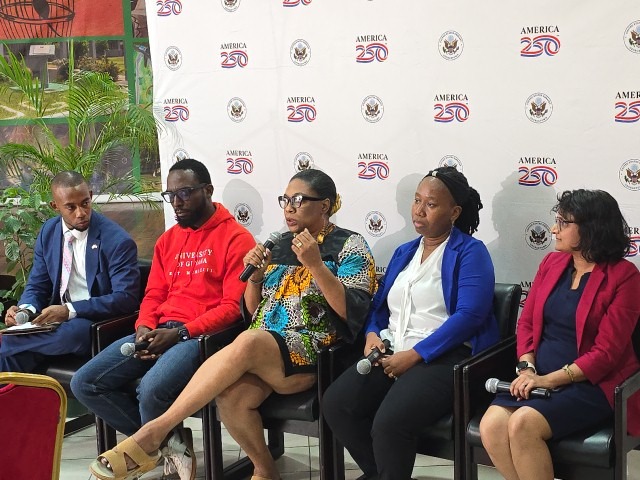
    Local innovation leaders have echoed these calls, warning that weak IP protections are stifling homegrown creativity and technological development. Dr. Karen Abrams, founder and executive director of STEM Guyana, outlined the risks of the current legal framework during a U.S. Embassy-hosted panel on STEM education and innovation held at the University of Guyana.

    Abrams described Guyana’s current innovation ecosystem as a shallow market constrained by a small population, widespread poverty, and no legal guardrails to protect original literary, artistic, and technological creations. “For innovators, the minute you throw out an innovation, there’s no protection, no IP protection. It’s co-opted by the powerful entities,” she told attendees.

    To address gaps in the current system, Abrams proposed the creation of a national science foundation that would provide dedicated research funding for university faculty and students, while establishing clear IP frameworks for publicly supported work. She also advised local innovators to pursue IP protection in foreign jurisdictions in the near term, noting that “there’s not a whole lot of protection for ideas in Guyana but wherever you look overseas, those markets do offer protection for your ideas.”

    Beyond legal reform, Abrams emphasized that long-term innovation capacity depends on addressing foundational gaps in Guyana’s education system. She noted that half of Guyana’s children struggle with basic math and literacy, and 50 percent drop out of secondary school by the ninth grade. “You can’t develop an innovative ecosystem if you lose half of your children in a tiny country where you need them to not only develop the oil industry, you need them to be thinking in 2046, what are those industries?” she said.

    The opposition’s reform plan, tabled earlier this year by APNU parliamentarian Nima Flue-Bess, mirrors many of these stakeholder priorities. Flue-Bess’s motion calls for a special select committee to audit the existing 1956 copyright law, map gaps in digital rights and enforcement, and hold targeted consultations with creative industry stakeholders to ensure new legislation reflects on-the-ground needs. Under the opposition proposal, a draft updated copyright bill would be submitted to the 65-seat National Assembly for debate within six months of the committee’s work concluding.

  • Man found dead in Sunny Acres apartment

    Man found dead in Sunny Acres apartment

    Law enforcement agencies have opened a homicide investigation following the gruesome discovery of 31-year-old Darrion Roberts, a trained volleyball player and active tennis coach, at his residential apartment in the Sunny Acres neighborhood on Wednesday afternoon. First responder accounts and local law enforcement confirm Roberts was found with multiple stab wounds when his roommate returned to the shared accommodation around 2:00 p.m. local time.

    As of the latest update from investigative teams, no further details surrounding the circumstances of Roberts’ death — including potential motives, suspects, or the exact timeline of the incident — have been released to the public. Multiple official sources familiar with the case confirmed the basic details of the discovery to local St. Lucia-based publication St Lucia Times, but investigators have declined to comment on unconfirmed speculation while the case remains in its early active phase.

    Community members in the Sunny Acres area have already begun expressing shock over the violent death of the young sports coach, who worked with local athletic programs and emerging young tennis players in the region. Investigators have noted that they are processing evidence from the apartment scene and conducting interviews with witnesses and people who knew Roberts in the days leading up to his death, with updates expected as new information becomes available.

  • Dodental bendegewel Honduras stijgt tot minstens 25

    Dodental bendegewel Honduras stijgt tot minstens 25

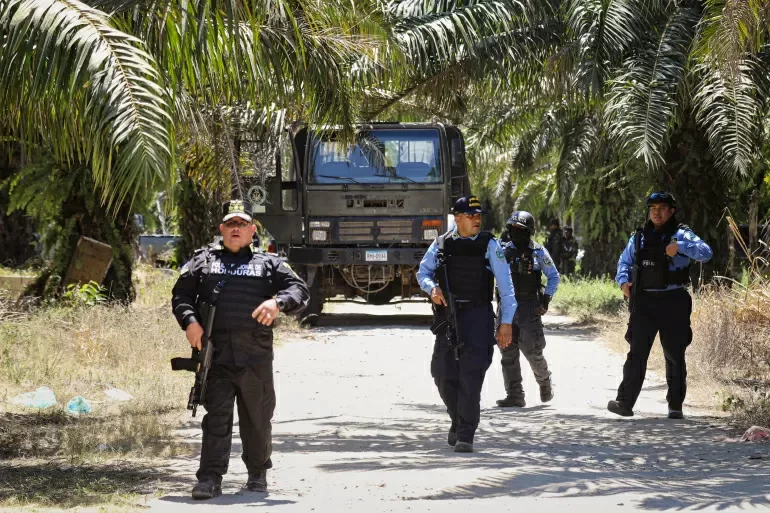
    On a single deadly day that ranks among the bloodiest in Honduras in recent years, two separate coordinated attacks have killed at least 25 people, including six law enforcement officers, shattering fragile hopes that new government policies could curb the country’s long-running crisis of organized gang violence.

    The deadliest assault unfolded on a palm oil plantation in Trujillo, a city in northern Honduras, where 19 people were shot dead. A leader of one local armed faction claimed the victims were all affiliated with a rival group that controls the commercial plantation, but local media reports indicate the attackers opened fire indiscriminately on on-site workers. The oldest victim was identified as a 61-year-old laborer, and graphic photos from the attack scene show lifeless bodies scattered across the plantation grounds, many still wearing their work boots.

    Hundreds of kilometers away, in the western municipality of Omoa near the Honduras-Guatemala border, six police officers carrying out an anti-gang operation were ambushed and killed by heavily armed gunmen. In the immediate aftermath of both attacks, national law enforcement announced a swift intervention in the affected regions, vowing to track down all responsible parties, protect vulnerable local communities, and deliver justice to the families of the victims.

    Honduras has struggled with endemic gang-related violence for decades. Starting in 2022, a national state of emergency was imposed across most of the country to combat criminal groups, but the measure was lifted in January following the inauguration of right-wing president Nasry “Tito” Asfura, an ally of former U.S. President Donald Trump who has campaigned on an aggressive hardline security agenda for the region. Since taking office, Asfura’s administration has passed new legislation allowing authorities to classify gangs and drug trafficking organizations as terrorist groups, and launched a specialized new unit dedicated to dismantling organized criminal networks.

    The Trujillo attack took place in the Aguan River Valley, a region that has been plagued by inter-faction violence for decades, as competing armed groups fight for control over territory used for both illegal narcotics trafficking and commercial palm oil production. National police chief Carlos Rojas explained that armed gangs have seized and illegally operated large-scale palm oil plantations in the area, using revenue from the crop to fund weapons purchases and expand their criminal operations.

    Local small-scale farmers have long accused multinational agribusiness firms of colluding with criminal gangs to seize land, preventing indigenous and local communities from reclaiming their legally held property rights. Since the conflict over land in the valley began, more than 150 people have been killed or disappeared, with environmental and land rights activists consistently targeted as high-priority victims. Honduras is currently ranked one of the most dangerous countries in the world for environmental defenders; just earlier this month, multiple individuals including a local mayor were arrested over an alleged plot to assassinate a prominent high-profile environmental activist in the country.