
The Barbados Association of Retired Persons (BARP) has expressed measured approval of the government’s 2026 Budget initiatives targeting pensioners, while simultaneously cautioning that temporary measures cannot address the systemic erosion of retirees’ purchasing power. The organization acknowledged the immediate value of a newly introduced $100 monthly cost-of-living cash credit for pensioners earning under $50,000, describing it as timely assistance amid persistent inflationary pressures. This one-year payment program, effective April 1 and administered through the National Insurance and Social Security Service, demonstrates notable inclusivity by extending beyond contributory pensioners to encompass non-contributory recipients, survivors’ benefit beneficiaries, retired public officers, welfare recipients, and citizens over 65 without pension income. BARP recognized this broad eligibility as reflective of government understanding toward diverse circumstances affecting elderly citizens. The association additionally welcomed the elevation of the pension tax-free allowance from $50,000 to $75,000 as a substantive structural improvement that will alleviate tax burdens on retirees relying on modest incomes. For members remaining in the workforce, BARP acknowledged the one percent reduction in income tax rates and expanded reverse and compensatory tax credits as meaningful recognition of financial pressures facing pre-retirement workers. Despite these positive developments, BARP President Marilyn Rice Bowen emphasized that sustained intervention remains imperative. “Temporary measures cannot resolve permanent problems,” she stated, characterizing the decline in pensioners’ purchasing power as an enduring challenge rather than a transient issue. Rice Bowen indicated that BARP would actively engage government authorities as the credit period concludes to determine whether economic conditions warrant continuation, expansion, or permanent institutionalization of the benefit. The association further highlighted implementation concerns, urging authorities to ensure efficient and inclusive rollout given members’ limited digital access and mobility constraints. While endorsing responsible fiscal management, BARP reaffirmed its commitment to advocating for policies that safeguard the financial security and dignity of Barbados’ aging population.
作者: admin
-

UPDATE: Donald Michael Dorival charged with murder of Everton Sabin
Dominican authorities have formally charged Donald Michael Dorival with murder in connection with the death of Everton Sabin, a Bath Estate resident. The accused, an adult male from the Elmshall area, appeared at the Roseau Magistrate Court on March 17, 2026, where the capital charge was formally presented. Magistrate court proceedings resulted in Dorival’s remand to State Prison without entering a plea, as murder qualifies as an indictable offense within Dominica’s judicial system. The court has scheduled the preliminary inquiry commencement for June 29, 2026.
According to official police reports, the investigation began when Sabin was discovered with critical injuries on March 14, 2026, in the Elmshall vicinity. Emergency responders transported the victim to Dominica-China Friendship Hospital for urgent medical intervention. Despite receiving comprehensive trauma care, Sabin succumbed to his injuries on March 15, 2026, prompting the homicide investigation.
In a separate criminal development, law enforcement officials are investigating another homicide case involving Rasaan Griffith of Goodwill, who died on March 13, 2026. The prime suspect, identified as 32-year-old Anselm Florent from Castle Bruce, voluntarily surrendered to the Criminal Investigation Department on March 17, 2026. Florent remains in police custody as detectives continue their investigation into Griffith’s death.
-

CPSO applauds adoption of Caricom Industrial Policy and Strategy (CIPS)
In a historic move signaling regional economic integration, Caribbean Community (CARICOM) leaders have unanimously adopted the CARICOM Industrial Policy and Strategy (CIPS) 2035 during their 50th Regular Meeting held in St. Kitts and Nevis. This comprehensive framework represents a strategic blueprint designed to reshape the region’s economic landscape through enhanced industrial development and competitive positioning.
The CARICOM Private Sector Organisation (CPSO), having played an instrumental role in the policy’s formulation, celebrated this development as a transformative milestone. The organization emphasized that CIPS 2035 establishes a robust foundation for strengthening industrial capabilities, boosting intra-regional commerce, and generating substantial economic opportunities across member states.
This pioneering policy framework facilitates private sector-led industrial expansion while promoting innovation and fostering interconnectedness among diverse industries within CARICOM. By adopting a coordinated regional approach, the strategy aims to position Caribbean nations as more competitive participants in global value chains for both goods and services.
Dr. Patrick Antoine, CPSO Chief Executive Officer and Technical Director, characterized the policy’s adoption as a critical advancement for regional economic development. He emphasized that CIPS 2035 enables CARICOM to pursue industrial development through deliberate, synchronized measures that enhance productive sectors and create new avenues for business growth. Dr. Antoine stressed the imperative of translating policy into actionable initiatives, including establishing a Competitiveness Council to expand regional supply networks, support innovation ecosystems, and empower Caribbean enterprises for global market competition.
The CPSO acknowledged the leadership of Suriname’s President, who holds the Industrial Policy portfolio within the CARICOM Quasi-Cabinet, along with contributing governments for steering the policy through development and approval processes. The organization reaffirmed its commitment to collaborate with the CARICOM Secretariat, member states, and regional partners to ensure the swift realization of CIPS objectives into tangible economic outcomes.
-

Govt to launch digital academy for public service
The Barbadian government has unveiled plans to establish a groundbreaking Digital Academy specifically designed for public servants, marking a strategic move to address critical competency gaps within the nation’s workforce. This initiative, a cornerstone of the recently announced national budget, aims to bolster digital capacity and modernize governmental operations.
Kay McConney, Minister of the Public Service and Talent Development, articulated the pressing need for this intervention during a parliamentary debate. She revealed that a comprehensive digital readiness survey identified a significant shortfall not in technical recruitment, but within existing management and supervisory echelons across both public and private sectors. “The problem was not the people being hired… the problem was the people already within government,” Minister McConney stated, pinpointing the core issue hindering digital transformation.
The academy, to be operationalized with support from the National Transformation Initiative, will develop tailored training programs for various ministries. Its primary objective is to cultivate a new breed of digitally fluent leaders capable of driving efficiency and ensuring public sector systems are “fit for purpose” in the modern era.
Minister McConney framed this effort as part of a broader modernization agenda, noting parallel budgetary provisions to assist private businesses in digitizing their operations. However, she issued a stark warning: even the most well-crafted policies are doomed to fail without a fundamental shift in organizational culture and execution. The success of high-profile budget measures, including a new beneficial ownership registry and justice system reforms, is presented as being entirely contingent on the effective implementation by a newly skilled public service.
Ultimately, the minister positioned the budget’s overall efficacy as a shared national responsibility. While outlining opportunities for homeowners, farmers, and community organizations, she emphasized that its success hinges on active engagement from every sector of society, requiring a workforce that is “equipped, accountable, and ready to deliver.”
-

Sir Lester Bird Medical Centre Adds Ophthalmologist Dr. Carlos Rojas Guédez
In a significant enhancement to its medical services, the Sir Lester Bird Medical Centre has strengthened its ophthalmology department with the appointment of Dr. Carlos Rojas Guédez as a consultant ophthalmologist. This strategic addition to the physician roster marks a pivotal step in the hospital’s ongoing initiative to broaden specialized healthcare access for the community. Dr. Rojas Guédez will provide expert consultations exclusively through the Outpatient Clinic, operating on a referral-based system to ensure coordinated patient care. Individuals seeking to utilize these new specialist services or requiring further details are encouraged to reach out to the medical facility directly. This development is a core component of the institution’s broader agenda to augment clinical capabilities and fortify its infrastructure across various medical specialties, thereby improving overall healthcare delivery and addressing specialized patient needs more effectively within the nation’s primary healthcare institution.
-

West Indies Sail Heritage Foundation Announces Winners of the Global Recycling Day Essay Writing Competition
The West Indies Sail Heritage Foundation has officially unveiled the victors of its inaugural Global Recycling Day Essay Writing Competition, marking a significant stride in merging cultural preservation with contemporary environmental advocacy. This pioneering initiative, launched to coincide with the internationally recognized day on March 18th, engaged young minds across the Caribbean and beyond to articulate innovative solutions for sustainable waste management.
Targeting secondary school and university students, the competition garnered hundreds of submissions exploring themes of circular economy, marine conservation, and the critical role of recycling in mitigating climate change. An esteemed panel of judges comprising environmental scientists, renowned educators, and cultural historians evaluated entries based on originality, research depth, and practical applicability of proposed ideas.
The foundation, traditionally dedicated to preserving maritime history and sailing traditions, has strategically expanded its mission to address pressing ecological challenges threatening the region’s coastal ecosystems. This essay contest represents a core component of their broader educational outreach, designed to foster a new generation of environmentally conscious leaders who can bridge cultural heritage with future-facing sustainability practices.
Winning entries proposed groundbreaking approaches to repurpose marine debris, develop community-based recycling micro-economies, and integrate traditional knowledge with modern environmental science. Beyond monetary awards, winners will receive mentorship opportunities and see their ideas potentially implemented through the foundation’s community partnership programs. The Foundation has announced plans to institutionalize this competition as an annual event, significantly amplifying its impact on youth engagement in environmental conservation.
-

Two women and two children hit after driver blackout in Clark’s Hill
A sudden medical emergency behind the wheel resulted in a collision at a Clark’s Hill bus stop, where a woman and two children were struck by an errant vehicle. The incident unfolded when the driver of a jeep reportedly experienced a sudden blackout, causing the vehicle to deviate from its path and crash into the sheltered waiting area.
According to eyewitness accounts, the driver lost consciousness moments before the jeep veered off the road. The three pedestrians, who had been seeking refuge from the elements under the bus stop canopy, were directly in the vehicle’s path when the collision occurred.
Emergency response teams promptly arrived at the scene following reports of the accident. Preliminary assessments from authorities indicate that despite the frightening nature of the incident, none of the pedestrians sustained life-threatening injuries. The driver involved in the accident is also reported to be in stable condition and recovering from the medical episode that preceded the collision.
Local law enforcement officials have launched a full investigation into the circumstances surrounding the event. While the investigation remains ongoing, authorities have confirmed that all parties involved are expected to make full recoveries. No additional details regarding the driver’s medical history or potential charges have been disclosed at this time.
-

Chantel Crump Murder Case Committed to High Court
The murder case against Angela Mejia, charged with the killing of nine-year-old Chantel Crump, has been formally transferred to the High Court following the submission of supplemental evidence by prosecutors. This decisive development occurred during Wednesday’s session at St John’s Magistrates’ Court, concluding nearly twelve months of judicial postponements that kept Mejia detained at His Majesty’s Prison since her initial arrest.
The protracted legal process had previously drawn strong objections from defense attorney Wendel Alexander, who vigorously advocated for either proceeding with the case or dismissing it entirely. Alexander contended that his client’s indefinite incarceration without trial violated fundamental legal principles, particularly as prosecutors continued refining their evidentiary package. The defense team escalated their efforts by filing a formal application for dismissal due to want of prosecution after the case encountered multiple adjournments.
Despite these challenges, a second attempt to secure bail for the accused was denied by the court, ensuring Mejia remained in custody throughout the pre-committal phase. Judicial authorities had previously indicated that the Director of Public Prosecutions was conducting an exhaustive review of the case file, necessitating what was characterized as a final adjournment prior to this week’s critical hearing.
The tragic circumstances underlying the charges date back to March 15, 2025, when Chantel Crump’s body was discovered in the Weatherills area. The discovery followed reports that the child had been taken by a woman in a vehicle near her residential neighborhood several days earlier. With the case now elevated to the High Court, judicial proceedings will determine Mejia’s legal accountability for the alleged crime.
-

Soniya Jones to represent Antigua at World Indoor Championships in Poland
Antiguan track and field athlete Soniya Jones is poised for international competition after being officially selected to represent her nation at the upcoming World Athletics Indoor Championships. The prestigious global event is scheduled to take place in Poland, drawing elite athletes from across the globe to compete in various indoor disciplines.
Jones’s qualification marks a significant achievement in her athletic career, underscoring her dedication and performance in her respective events. Her participation not only highlights individual excellence but also shines a spotlight on Antigua and Barbuda’s growing presence in international track and field. Competing on such a prominent stage provides invaluable experience against world-class competition and serves as a crucial stepping stone for future competitions, including potential outdoor world championships and other major games.
The selection is a testament to the support system behind the athlete, including national coaching staff and athletic associations that have fostered her development. For the Caribbean nation, having representation at a tournament of this caliber is a moment of national pride and an inspiration for aspiring young athletes at home. The championships will offer a platform for Jones to gauge her skills against the best, potentially setting new personal and national records in the controlled environment of an indoor arena.
-
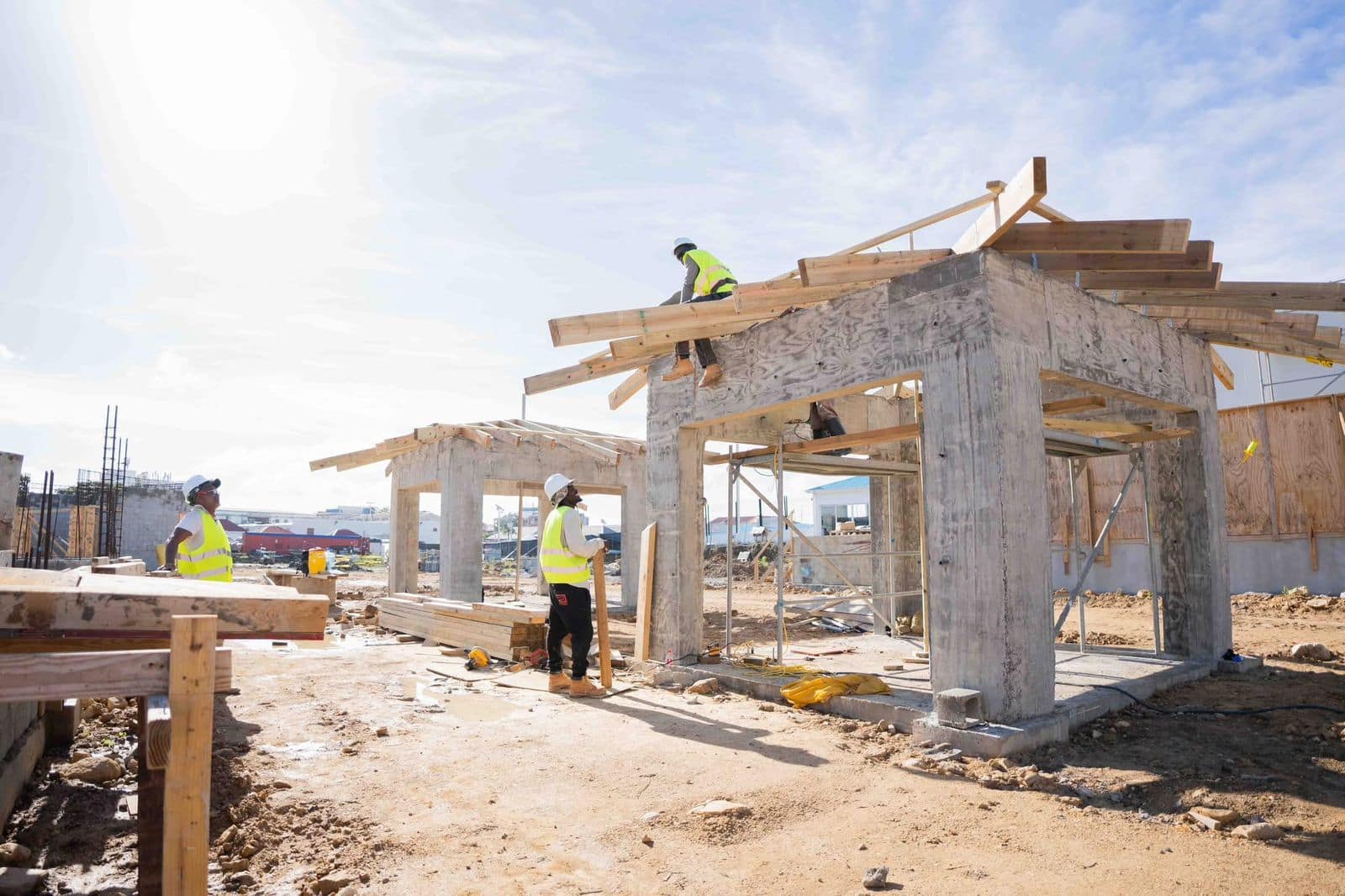
Roofing work advances on Antigua Cruise Port upland development
The ambitious upland development project at Antigua Cruise Port has reached a pivotal construction milestone with significant progress on roofing installations. This transformative infrastructure initiative, representing a multimillion-dollar investment in the nation’s tourism sector, is advancing according to its strategic timeline despite global supply chain challenges.
Construction teams are currently implementing advanced roofing systems across multiple structures within the expansive upland development zone. The roofing phase incorporates weather-resistant materials specifically engineered for the Caribbean climate, ensuring long-term durability against tropical conditions. This critical stage follows the successful completion of foundational work and structural framing that began earlier this year.
The upland development project forms an integral component of Antigua’s broader vision to establish itself as the Caribbean’s premier cruise destination. Upon completion, the facilities will substantially enhance passenger processing capabilities while providing state-of-the-art amenities for both visitors and cruise line operators. The development includes retail spaces, hospitality venues, and cultural exhibition areas that showcase Antigua’s heritage.
Port authorities have confirmed that construction remains on schedule for its projected completion date, with the roofing milestone representing one of the final major construction phases before interior work commences. The project has generated substantial local employment opportunities while utilizing domestically sourced materials where feasible, providing an economic boost to the community.
Industry analysts anticipate the enhanced infrastructure will significantly increase passenger throughput capacity during peak season operations, potentially elevating Antigua’s position in the competitive Caribbean cruise market. The port’s expansion aligns with growing cruise industry demand for improved destination experiences and operational efficiency.