作者: admin

  • Gajadien positief over college van bestuur OM, maar kritisch op termijn pg

    Gajadien positief over college van bestuur OM, maar kritisch op termijn pg

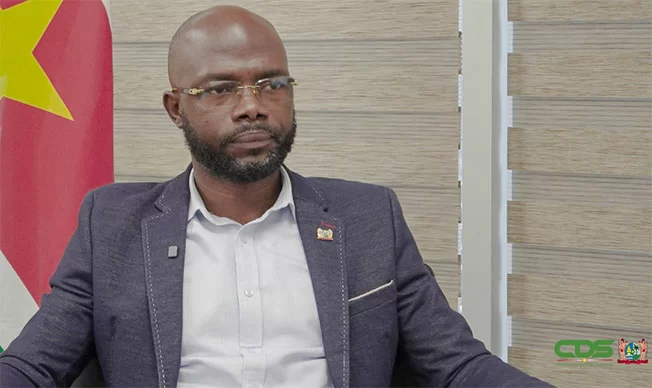
    Suriname’s National Assembly is poised to deliberate on significant judicial reforms this afternoon, with VHP parliamentary leader Asis Gajadien expressing measured support for key proposals while raising constitutional concerns about others.

    In an exclusive interview with Starnieuws, Gajadien endorsed the establishment of a supervisory board for the Public Prosecutor’s Office (OM), characterizing the move as potentially strengthening organizational effectiveness and prosecutorial authority. “A properly functioning Public Prosecutor’s Office is fundamental to our rule of law,” Gajadien stated, emphasizing that the proposed governance college could reinforce structural integrity within the judicial institution.

    The parliamentarian simultaneously voiced strong support for implementing cassation jurisprudence in Suriname’s legal system, noting that such appellate mechanisms would enhance legal certainty, foster judicial development, and provide improved protection for citizens against potential judicial errors.

    However, Gajadien struck a cautionary tone regarding proposed five-year term appointments for the Prosecutor-General. He articulated constitutional concerns that fixed-term mandates could compromise the office’s independence, which he described as “a crucial safeguard within our criminal justice proceedings.” The VHP leader emphasized that “the rule of law is not a laboratory where we experiment with its foundations,” indicating his party’s intention to scrutinize this particular aspect of the reform package.

    Gajadien advocated for methodical implementation of judicial reforms, stating: “We can improve the system, but we must not disrupt it simultaneously. Reform yes, but without shocks.” The parliamentarian is expected to elaborate further on these positions during his scheduled address in the National Assembly later today.

  • Dominican Republic highlights gender equality progress at UN Forum

    Dominican Republic highlights gender equality progress at UN Forum

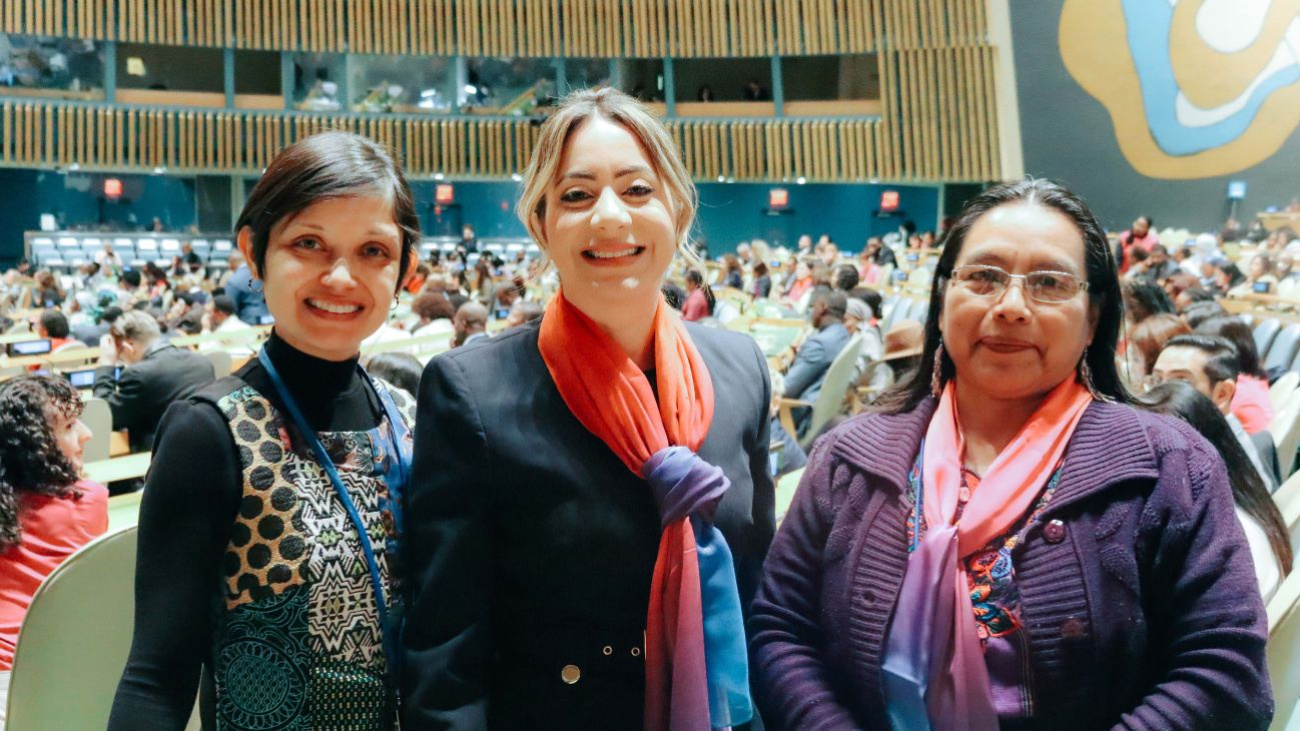
    NEW YORK – At the 70th session of the UN Commission on the Status of Women, Dominican Republic representative Gloria Reyes presented the nation’s significant advancements in gender equality and women’s empowerment. The high-level forum, convened at United Nations headquarters, served as a platform for Reyes to outline the country’s institutional reforms and policy achievements in creating more equitable justice systems.

    Reyes framed her address within the historical context of Minerva Mirabal’s centenary birth anniversary, noting how Mirabal’s legacy inspired the International Day for the Elimination of Violence against Women. While acknowledging these symbolic milestones, the minister confronted the persistent global challenges of gender-based violence and discrimination, urging strengthened institutional protections for women and girls worldwide.

    The Dominican justice system’s innovative approaches received particular emphasis, including the Judiciary’s Gender Equality Policy, the Justice and Gender Observatory, and enhanced legal aid services for violence survivors. These institutional mechanisms represent the government’s comprehensive strategy to embed gender sensitivity throughout the legal framework.

    Preceding the international forum, the Ministry of Women conducted extensive domestic consultations with approximately 3,800 women to assess rights awareness and justice accessibility. Reyes also highlighted protections for older women through Law 352-98 and programs administered by the National Council for the Elderly, revealing that 59,000 solidarity pensions had been distributed between 2020-2024, with an additional 7,925 subsidized pensions—predominantly to women—issued in early 2025.

    Economic empowerment initiatives featured prominently in the delegation’s presentation, particularly the Supérate program benefiting 1.5 million families alongside specialized training and entrepreneurship programs that have supported over 30,000 women. During interactive sessions, the Dominican delegation engaged with international partners including the European Union and Canada on policies regarding care systems, violence prevention, and political participation. Reyes concluded by reaffirming the nation’s commitment to expanding economic opportunities and strengthening inclusive justice systems.

  • Football : Towards strengthened collaboration between the MJSAC and the FHF

    Football : Towards strengthened collaboration between the MJSAC and the FHF

    In a significant development for Haitian football, Minister of Youth, Sports and Civic Action Pythagore Dumas convened with Haitian Football Federation (FHF) leadership on March 13, 2026, marking the beginning of a strengthened institutional collaboration. The high-level meeting at FHF headquarters established frameworks for enhanced cooperation between governmental sports authorities and the nation’s football governing body.

    Minister Dumas, accompanied by his Chief of Staff Innocent Joseph and Sports Centers Coordinator Jean Roland Dartiguenave, engaged in substantive discussions with FHF Normalization Committee member Gally Amazan and Secretary General Patrick Massenat. The dialogue centered on comprehensive support mechanisms for Haiti’s national football programs across all competitive levels.

    The government formally committed to optimizing preparation for the senior men’s squad’s participation in the 2026 FIFA World Cup, with Minister Dumas conveying Prime Minister Fils-Aimé’s ambition for the Grenadiers to surpass group stage expectations. “Our collective aspiration extends beyond preliminary round participation—we envision a profound World Cup journey potentially culminating in final stage contention,” Dumas declared.

    Operational enhancements include establishing a dedicated communication channel for streamlined coordination between the Ministry and FHF, ensuring responsive support for all national teams. The government additionally pledged to facilitate the under-17 team’s month-long training camp in Brazil ahead of the FIFA U-17 World Cup Qatar 2026.

    The Federation disclosed FIFA’s advancement of the FIFA Arena initiative, which will establish four children’s football pitches across selected Haitian departments. This global project promotes equitable sporting access through construction of over 1,000 mini-pitches worldwide, with location identification proceedings currently underway.

    Minister Dumas concluded by emphasizing the government’s ongoing commitment to restoring national security, recognizing this as fundamental to enabling future home matches for Haitian national teams on domestic soil.

  • Politic : Strengthening consumer protection

    Politic : Strengthening consumer protection

    In commemoration of World Consumer Rights Day on March 15, Haitian Commerce and Industry Minister James Monazar has announced comprehensive measures to strengthen consumer protection frameworks and market oversight mechanisms. The observance, themed ‘Safe Products, Confident Consumers,’ served as a platform to highlight critical gaps in product safety and labeling practices throughout Haiti’s national market.

    The Ministry of Commerce and Industry (MCI) identified concerning patterns of non-compliant products circulating in Haitian markets, including items lacking proper labeling, origin identification, and clear expiration dates. Minister Monazar characterized consumer protection as both a public health imperative and an economic development priority, emphasizing that market transparency directly impacts national wellbeing.

    A cornerstone of the enhanced protection framework is the March 11, 2020 Decree, which establishes legal requirements for product safety, service quality, fair business practices, and consumer rights enforcement. The legislation specifically mandates that suppliers guarantee product quality and safety, with particular emphasis on foodstuffs and essential commodities.

    Operational improvements include the swearing-in of new inspection personnel, deployment of technical training programs, modernization of inspection tools through digital solutions, and establishment of a quality control laboratory. These measures aim to strengthen market surveillance capabilities and enhance citizen protection mechanisms.

    The initiative gained urgency following a recent study by the Directorate of Quality Control and Consumer Protection (DCQPC) that identified significant quality deficiencies in commercially distributed treated water within the Port-au-Prince metropolitan area. In response, the Ministry engaged suppliers in corrective discussions and convened an inter-institutional workshop that produced a joint circular establishing stringent water quality and compliance standards.

    While affirming that primary responsibility for product safety rests with suppliers and economic operators, the government reiterated its commitment to implementing robust regulatory frameworks. The Ministry urged citizens to report market irregularities while calling on merchants, distributors and manufacturers to strictly adhere to applicable laws and regulations.

    Minister Monazar concluded that ‘consumer protection constitutes a fundamental pillar of both healthy economies and equitable societies,’ emphasizing that informed consumers, responsible businesses, and committed public institutions collectively foster markets built on trust, quality and transparency.

  • Study finds Dominicans have the strongest family ties worldwide

    Study finds Dominicans have the strongest family ties worldwide

    A groundbreaking global mental health study has identified the Dominican Republic as the world leader in familial cohesion and support networks. The Global Mind Health 2025 report, compiled by research organization Sapiens Labs, placed the Caribbean nation at the pinnacle of its international rankings after comprehensive evaluation of mental health conditions across more than 80 countries.

    The extensive research utilized 40 distinct indicators to assess psychological well-being worldwide, with Dominican society demonstrating exceptional strength in family connectivity. According to the findings, an impressive 72% of Dominicans reported experiencing strong closeness and consistent support within their family structures. This percentage significantly surpasses the global average of 61%, positioning the nation 11 points above worldwide norms.

    Finland and Argentina shared second position in the rankings, both registering 70% in family connectivity metrics. Research analysts emphasized that robust family connections represent a characteristic feature across numerous Spanish-speaking societies, serving as crucial infrastructure for mental health maintenance. These intimate social relationships function as vital protective barriers against stress and psychological challenges, particularly valuable in regions experiencing economic volatility or social instability.

    Cultural elements including spiritual practices and deeply ingrained community values were additionally recognized as fundamental components contributing to Latin American resilience. The report further illuminated substantial international disparities in family cohesion, with Taiwan, Benin, and Mozambique documenting considerably weaker family ties ranging between 46-48% – markedly lower than the Dominican Republic’s exemplary performance.

    This comprehensive analysis underscores the enduring significance of familial networks as foundational pillars of social well-being within the Dominican Republic, offering valuable insights for global mental health strategies and cultural understanding.

  • Canapé-Vert : Exceptional popular and medical success of mobile clinics

    Canapé-Vert : Exceptional popular and medical success of mobile clinics

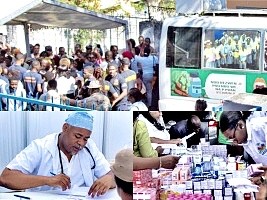
    In a significant public health achievement, Haiti’s mobile medical initiative has delivered exceptional results during a two-day healthcare event in Canapé-Vert. Organized by the Ministry of Health with support from Port-au-Prince City Hall, the mobile clinics marked International Women’s Day by providing comprehensive free medical services to thousands of residents.

    The healthcare drive witnessed an overwhelming response with 2,200 individuals, predominantly women and girls from the municipality, receiving vital medical attention. This substantial participation underscores both the critical need for accessible healthcare services and growing public confidence in Haiti’s health system infrastructure.

    The medical services encompassed a wide spectrum of care including general consultations, pediatric services, gynecological examinations, breast cancer screenings, psychological support, laboratory diagnostics, and pharmaceutical distribution through a community pharmacy. Specialized care was extended to vulnerable groups, with 15 pregnant women receiving prenatal consultations and children suffering from malnutrition obtaining necessary treatment.

    A dedicated team of 70 healthcare professionals and support staff demonstrated remarkable resilience in addressing logistical challenges while maintaining high standards of medical care. The initiative successfully referred two patients with complications to specialized medical facilities for advanced treatment.

    Prime Minister Alix Didier Fils-Aimé emphasized the government’s commitment to healthcare accessibility, stating: ‘Providing quality care to Haitian women represents an investment in our nation’s future. These mobile clinics demonstrate our administration’s determination to reach vulnerable populations with dignified and effective healthcare solutions.’

    Dr. Sinal Bertrand, who played a pivotal role in the initiative, praised both the medical teams and the community’s response: ‘The overwhelming turnout of thousands of women seeking care brings both immense satisfaction and profound responsibility. Each consultation and medical interaction reinforces our commitment to strengthening Haiti’s healthcare infrastructure.’

    Building upon this success, the Ministry of Health plans to expand collaboration with local authorities to establish regular mobile clinic services in highly vulnerable regions, ensuring sustainable implementation of this community-focused healthcare model across Haiti.

  • Government reviews fuel supply risks amid Middle East crisis

    Government reviews fuel supply risks amid Middle East crisis

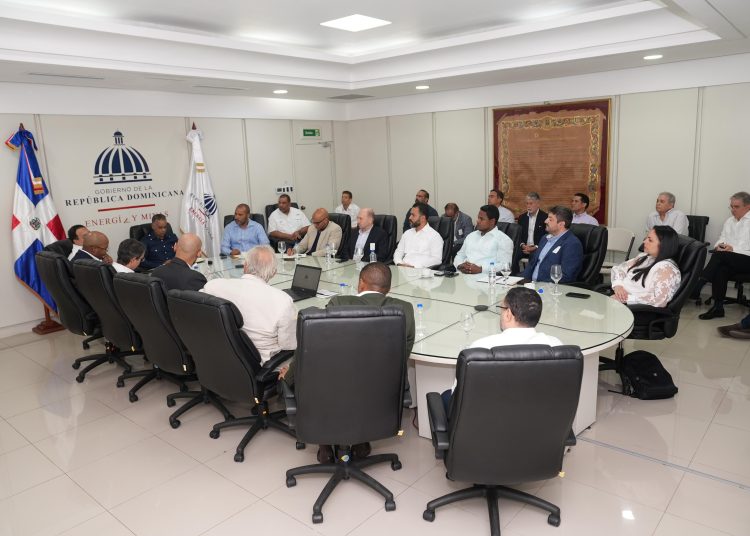
    Santo Domingo – In a strategic move to safeguard national energy security, top Dominican energy officials convened an emergency meeting with thermal power generation executives to assess potential ripple effects from the ongoing Middle East crisis on fuel supplies. Energy and Mines Minister Joel Santos and Electricity Superintendent Andrés Astacio led the high-level discussions organized by the Ministry of Energy and Mines as part of the government’s proactive monitoring of geopolitical developments.

    The comprehensive dialogue focused on developing contingency measures to maintain operational stability within the country’s electricity sector. Minister Santos emphasized that the meeting constituted a critical component of the government’s preparedness strategy, designed to foster coordinated responses with industry leaders and formulate integrated solutions for potential systemic challenges.

    Major energy producers including AES Dominicana, Empresa Generadora de Electricidad de Haina, Empresa Generadora de Electricidad Itabo, and Empresa de Generación Eléctrica Punta Catalina participated in the assessment. Company representatives indicated adequate coal and natural gas inventories to sustain uninterrupted operations through year-end, providing significant reassurance regarding grid stability.

    The session facilitated detailed technical exchanges regarding fuel stockpiles, supply contract arrangements, and contingency protocols for international market volatility. Edward Veras of the National Energy Commission reiterated the government’s commitment to continuous global situation monitoring and stakeholder coordination to ensure energy security and stable power delivery nationwide.

  • United States defeats Dominican Republic, advances to the WBC Final

    United States defeats Dominican Republic, advances to the WBC Final

    In a dramatic semifinal clash at LoanDepot Park in Miami, Team USA secured their third consecutive World Baseball Classic championship appearance with a contentious 2-1 victory over the Dominican Republic on Sunday. The game’s outcome hinged on a controversial strike call that ended the match, leaving Dominican players and fans in disbelief.

    The Dominican squad established an early advantage in the second inning when Junior Caminero connected with a solo home run off American starter Paul Skenes. This early breakthrough positioned the Caribbean team favorably, but their offensive momentum stalled against increasingly effective American pitching.

    The game’s pivotal moment arrived in the fourth inning when Gunnar Henderson equalized with a powerful home run against Dominican pitcher Luis Severino. Roman Anthony immediately followed with a decisive go-ahead blast off reliever Gregory Soto, abruptly shifting the game’s dynamics in Team USA’s favor.

    Despite fielding an impressive roster featuring superstars Fernando Tatis Jr., Vladimir Guerrero Jr., and Juan Soto, the Dominican Republic struggled to generate additional scoring opportunities against a resilient American bullpen. Skenes delivered a solid performance over 4.1 innings, surrendering just one run on six hits before turning the game over to relief pitchers who effectively contained the potent Dominican lineup.

    The contest reached its dramatic climax in the final at-bat when a disputed strike call against switch-hitter Geraldo Perdomo on a pitch from Mason Miller immediately ended the game. This controversial decision sparked intense debates among players, analysts, and fans regarding the accuracy of the game-ending call.

    Team USA now advances to face the winner of the Italy-Venezuela semifinal, positioning themselves to potentially capture their second World Baseball Classic title following their 2017 championship victory.

  • Sedale drops Insane: A soca tribute to Edwin Yearwood ahead of Carnival 2026

    Sedale drops Insane: A soca tribute to Edwin Yearwood ahead of Carnival 2026

    Saint Lucian soca sensation Sedale Simei has ignited the Caribbean music scene with his explosive new release “Insane,” generating substantial buzz ahead of the 2026 Saint Lucia Carnival season. The track strategically incorporates samples from Edwin Yearwood’s iconic Krosfyah classic “Wet Me,” creating a powerful homage to the Barbadian legend’s enduring musical legacy.

    The artist’s innovative social media strategy played a pivotal role in the song’s development and authorization process. Through his Instagram series “Dash It or Drop It,” Sedale presented the track to his followers, who subsequently tagged Yearwood over 100 times to secure permission for using the sampled chorus. This grassroots approach culminated in Yearwood’s official endorsement via Instagram comment, where the Krosfyah frontman explicitly granted permission to release the track.

    The accompanying music video has demonstrated remarkable traction on YouTube, accumulating 3,500 views within just 48 hours of its release. Early indicators suggest Sedale has positioned himself for a dominant 2026 Carnival season, with the track receiving widespread acclaim across multiple social media platforms and digital music communities. The strategic fusion of contemporary soca production with classic elements demonstrates the evolving nature of Caribbean music while respecting its foundational artists.

  • Investeringen moeten regionale ziekenhuizen betere rol geven in zorg

    Investeringen moeten regionale ziekenhuizen betere rol geven in zorg

    The Surinamese government has initiated a comprehensive strategy to strengthen regional healthcare infrastructure, targeting three key hospitals outside the capital to improve medical accessibility and reduce dependence on Paramaribo’s Academic Hospital. Health Minister André Misiekaba announced active investments in Wanica Regional Hospital (RZW), Marwina District Hospital, and Atjoni District Hospital as part of this decentralization effort.

    Minister Misiekaba acknowledged that these facilities currently operate with financial government support as they haven’t achieved full operational independence. The administration remains committed to ongoing development assistance to enhance their capabilities.

    A particular controversy involves RZW’s outsourcing arrangement with private company TMS Global, which currently manages laboratory, pharmacy, and radiology services—departments the minister considers essential revenue-generating components that should be under hospital control. The government plans to terminate this contract and will engage legal counsel if TMS Global proves uncooperative.

    Meanwhile, Marwina District Hospital is undergoing significant modernization through a €5 million loan from the French Development Agency (AFD). This funding will expand basic services and medical specializations, including the placement of two pediatric specialists. Additional enhancements include an operational optician service, plans for a diabetes clinic, and temporary medical support from French specialists. These improvements aim to reduce patient referrals to the Centre Hospitalier de l’Ouest Guyanais in French Guyana.

    Atjoni District Hospital, functioning with basic equipment and laboratory facilities, requires improved coordination with Medical Mission services. Minister Misiekaba observed that critically ill patients from the Upper Suriname region (population approximately 20,000) often bypass Atjoni for direct transport to Paramaribo. The minister advocates for Atjoni to serve as a primary reception center, with its current staff of four Cuban doctors handling all but the most complex cases requiring transfer to the Academic Hospital.

    This regional strengthening initiative ultimately seeks to provide residents of Sipaliwini, Brokopondo, Para, and Wanica districts with quality healthcare closer to home while alleviating pressure on Paramaribo’s central medical facility.