作者: admin

  • Middle management plays critical role in police service, says ACP

    Middle management plays critical role in police service, says ACP

    In a significant address to newly graduated police officials, Assistant Commissioner of Police Barry Hunte underscored the indispensable function of middle management within Barbados’ law enforcement framework. Speaking at the graduation ceremony for 20 officers who completed the International Leadership Middle Management course, Hunte articulated the transformative potential of effective mid-level leadership in contemporary policing.

    The two-week intensive program, conducted at the Regional Police Training Centre from March 2-13, equipped participants with advanced leadership capabilities essential for navigating today’s complex security landscape. Hunte emphasized that middle managers serve as crucial intermediaries who must not only comprehend and implement organizational policies but also effectively communicate strategic vision throughout the ranks.

    Central to Hunte’s address was the imperative for these managers to cultivate positive organizational cultures while motivating subordinates toward exemplary professional conduct. He highlighted the necessity of leading with unwavering integrity, fairness, and respect regardless of circumstances, noting that such qualities form the foundation of community trust and effective policing.

    The Assistant Commissioner specifically identified commitment, honesty, and professionalism as non-negotiable attributes for officers engaging with the public. He stressed that building and maintaining trust among both colleagues and community members represents a critical component of modern law enforcement effectiveness.

    Hunte further addressed the evolving challenges facing police services, describing the current operational environment as increasingly hostile, dynamic, and unpredictable. He urged graduates to embrace technological advancements and develop adaptability skills while using the Barbados Police Service’s policing plan as their guiding framework when confronting unforeseen challenges.

    Emphasizing the symbiotic relationship between leadership development and organizational success, Hunte concluded that invested middle management represents the cornerstone of effective law enforcement delivery in contemporary society.

  • Airline CEO’s call on US congress to pay 50,000 unpaid TSA workers to prevent further flight disruptions

    Airline CEO’s call on US congress to pay 50,000 unpaid TSA workers to prevent further flight disruptions

    In an unprecedented industry-wide appeal, chief executives of America’s leading passenger and cargo airlines have demanded immediate congressional action to resolve the ongoing federal government shutdown, now entering its 29th day. The stalemate has left approximately 50,000 Transportation Security Administration (TSA) employees working without pay, creating cascading disruptions across the national aviation system during one of the busiest travel periods of the year.

    The partial government shutdown has triggered operational crises at airports nationwide as hundreds of TSA screeners have resigned due to financial hardship. This exodus has forced the closure of critical security screening lanes, significantly reduced processing capacity, and created extensive passenger wait times that threaten to overwhelm terminal facilities.

    Major carriers including American Airlines, United Airlines, Delta Air Lines, Southwest Airlines, JetBlue Airways, and Alaska Airlines have united with cargo giants FedEx, UPS, and Atlas Air in warning that the situation threatens both passenger safety and economic stability. The aviation coalition emphasized that the shutdown’s timing during spring break—typically characterized by surging passenger volumes—has magnified its negative effects substantially.

    Airlines are now advising travelers to arrive at airports three to four hours before scheduled departures, build extra buffer time into connecting flight itineraries, and monitor flight status notifications continuously. Industry analysts project approximately 171 million passengers will pass through U.S. airports during this spring break season, representing a 4% increase over the same period in 2025 according to Guardian reports.

    The deteriorating airport conditions have already manifested in widespread flight delays, missed connections, extended security processing times, and rising operational costs that may ultimately impact ticket prices. Aviation executives warn that without immediate resolution, the situation could escalate into a full-blown aviation crisis with significant economic repercussions.

  • Trinidad en Tobago verlengt noodtoestand met nog eens drie maanden

    Trinidad en Tobago verlengt noodtoestand met nog eens drie maanden

    The Trinidad and Tobago government has secured parliamentary approval to extend its state of emergency for an additional three months, continuing its controversial approach to combating violent crime. The House of Representatives voted 26-12 on Saturday to prolong the emergency measures that grant security forces expanded powers while suspending key civil liberties.

    This extension marks approximately 10 of the past 14 months that the twin-island nation has operated under emergency provisions. Initially declared in December 2024 following a surge in gang violence, the state of emergency enables authorities to arrest individuals based on “suspicion of criminal activity” and suspends constitutional protections against government searches in both public and private properties.

    Prime Minister Kamla Persad-Bissessar recently informed parliament that 373 individuals have been detained under the emergency framework, while the country has recorded over 60 homicides this year alone. Opposition lawmakers argue that despite these extensive measures, the government has failed to effectively control violent criminal activities.

    The move reflects a broader regional trend where Latin American and Caribbean governments increasingly employ emergency powers to address security challenges. Nations including El Salvador and Honduras have implemented similar measures with varying degrees of success, often extending temporary provisions multiple times despite international concerns.

    Human rights organizations have raised alarms about potential abuses under such frameworks. Last year, the UN High Commissioner for Human Rights called on Honduras to terminate its state of emergency after approximately 17 extensions. Recent findings presented by international legal experts at a UN Human Rights Council side event suggest the Salvadoran government under President Nayib Bukele may have committed crimes against humanity during its emergency period.

    Activist groups allege that emergency powers in El Salvador have been weaponized to threaten and imprison dissidents and human rights defenders. The country prepares to mark the fourth anniversary of its emergency declaration on March 27, highlighting the prolonged nature of these security measures across the region.

  • Ministers pledge support to Kingdom Academy youth programme

    Ministers pledge support to Kingdom Academy youth programme

    In response to escalating concerns regarding youth violence, Barbados has inaugurated a groundbreaking faith-based educational initiative designed to empower young adults through comprehensive values-based training. The Kingdom Academy program, formally launched at the Power in the Blood Assembly church in Bank Hall, represents a collaborative effort between religious institutions and government authorities to address systemic challenges facing the island’s younger generation.

    The innovative curriculum will deliver instruction through six foundational modules: Faith, Faithfulness, Flourish, Family Life, Finance, and Future. Participants will be segmented into two distinct cohorts—young adults aged 18-25 navigating early adulthood transitions and those aged 26-35 focusing on stability and long-term objectives. The program explicitly integrates spiritual principles with practical life skills development.

    Senator Shane Archer, Minister of State for Youth and Culture, emphasized the critical importance of community engagement during the launch ceremony. He highlighted the concerning decline in volunteerism and communal spirit, noting that contemporary society increasingly prioritizes individual gain over collective welfare. Senator Archer specifically identified mentorship programs for young men as an area requiring immediate attention and resources.

    The initiative has garnered substantial ministerial support, with both Senator Archer and Minister of Educational Transformation Chad Blackman pledging institutional collaboration through existing government programs including the Youth Entrepreneurship Scheme and Pathways initiative. Minister Blackman concurrently revealed ambitious educational reforms scheduled for implementation beginning September 2024.

    These transformative changes will mandate all secondary students to participate in uniformed organizations, civic groups, or team sports as core curriculum requirements—marking the first such compulsory inclusion in Barbadian educational history. Minister Blackman further challenged program organizers to expand their outreach to include children as young as nine years old, asserting that early intervention is essential for addressing root causes of societal challenges.

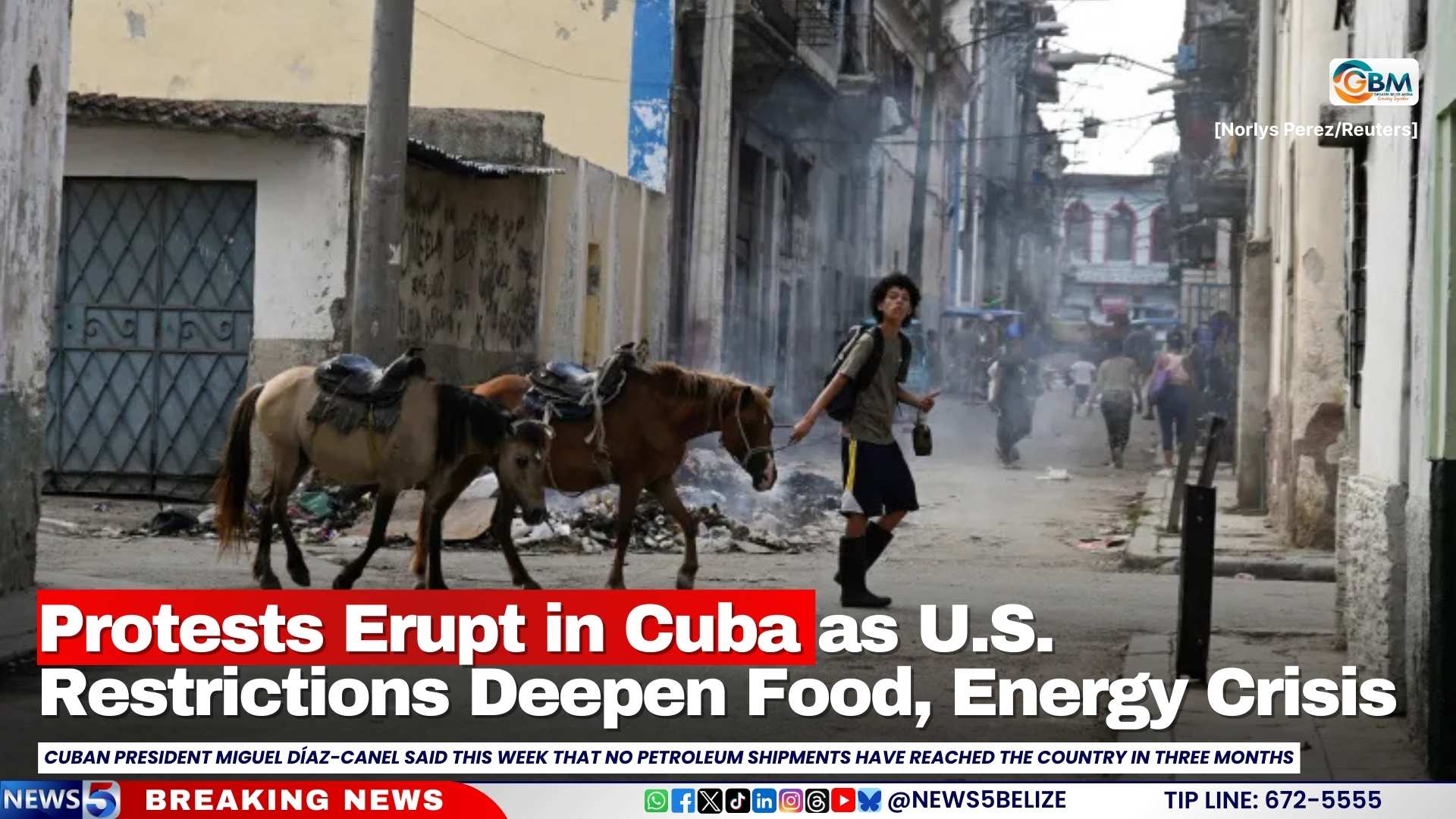
  • Protests Erupt in Cuba as U.S. Restrictions Deepen Food, Energy Crisis

    Protests Erupt in Cuba as U.S. Restrictions Deepen Food, Energy Crisis

    Cuba is experiencing rare waves of civil discontent as mounting economic pressures trigger widespread resource shortages. In the central city of Morón, demonstrators set ablaze a local Communist Party headquarters, marking one of the most significant anti-government protests in recent history.

    State media reported five arrests following what authorities characterized as ‘acts of vandalism.’ According to government-run newspaper Invasor, the demonstration initially manifested as a peaceful gathering before escalating into direct attacks on municipal government facilities. Unverified social media footage appears to show protesters hurling stones at the burning building while chanting calls for liberty.

    Additional government installations reportedly sustained damage during overnight unrest. While no injuries have been officially confirmed, human rights organization Justicia11 alleged audible gunfire and potential shooting victims—claims promptly denied by state media outlet Vanguardia de Cuba.

    The protests represent a notable departure from Cuba’s typically subdued political landscape, where dissent traditionally faces immediate government response. However, public frustration has reached critical levels following weeks of intensifying rolling blackouts and food scarcity. Residents have increasingly resorted to ‘cacerolazos’—nocturnal pot-banging demonstrations—while University of Havana students recently staged sit-ins after energy rationing suspended academic activities.

    This deterioration directly correlates with intensified U.S. sanctions initiated under the Trump administration. January 2026 witnessed Washington halting Venezuelan oil transfers to Cuba, followed by an executive order threatening penalties against nations supplying fossil fuels to the island nation. Cuban President Miguel Díaz-Canel confirmed this week that no petroleum shipments have reached the country in ninety days, crippling the nation’s aging power grid and devastating electricity generation capabilities.

    President Trump recently indicated potential escalation, suggesting Cuba would be ‘next’ in line for increased pressure following U.S. actions in Venezuela and Iran.

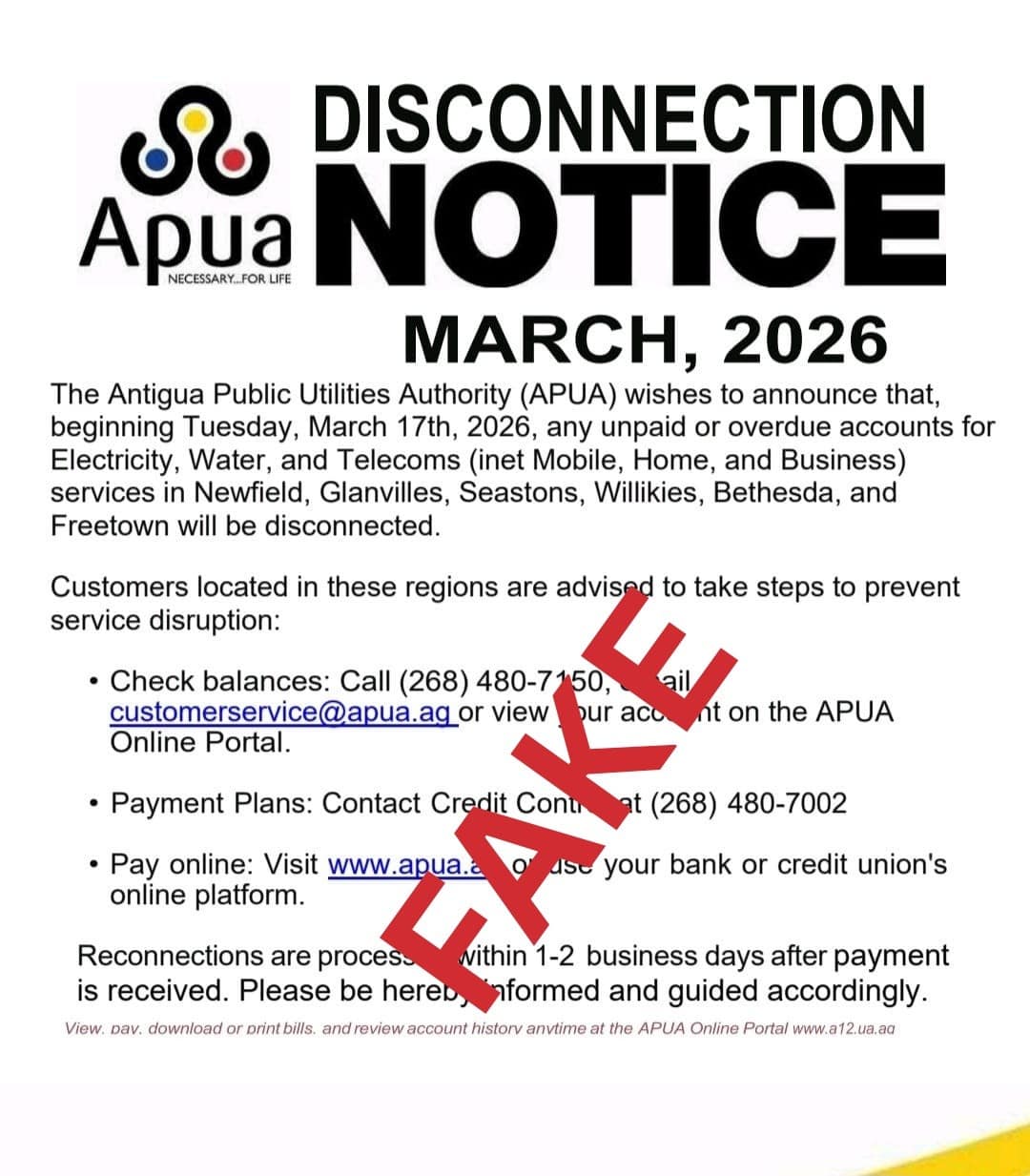
  • Opposition Behind Fake Disconnection Notice, PM says

    Opposition Behind Fake Disconnection Notice, PM says

    Prime Minister Gaston Browne has publicly denounced the opposition United Progressive Party (UPP) for allegedly circulating a counterfeit utility disconnection notice during the heated St. Philip’s North by-election campaign. The Antiguan leader characterized this act as part of a deliberate misinformation strategy designed to manipulate voter sentiment.

    The Antigua Public Utilities Authority (APUA) swiftly confirmed the fraudulent nature of the circulating document, clarifying that their authentic communications never target specific communities. While APUA routinely issues monthly reminders for accounts exceeding 30 days overdue, the authority emphasized that the disputed notice contained unauthorized specificity that contradicted their standard procedures.

    During his weekly ‘Browne and Browne’ broadcast, the Prime Minister elaborated on the serious implications of such deceptive practices. He asserted that these easily verifiable falsehoods not only undermine the electoral process but also erode public trust in essential institutions. Browne warned that disseminating provably false information represents a dangerous escalation in political tactics that could have lasting detrimental effects on democratic integrity.

    The incident has sparked broader discussions about the ethical boundaries of political campaigning and the increasing challenge of combating misinformation in the digital age, particularly during sensitive electoral periods when public anxiety may be heightened.

  • CARIBBEAN-EDUCATION- Online learning gains momentum as students reconsider studying abroad

    CARIBBEAN-EDUCATION- Online learning gains momentum as students reconsider studying abroad

    ROSEAU, Dominica – A significant educational transformation is underway across the Caribbean region as digital learning platforms gain substantial traction among students reconsidering traditional overseas study options. This shift comes amid growing uncertainties surrounding international education, particularly in destinations like the United States.

    Wendy Williams, Deputy Dean of Academic Affairs at a prominent regional institution, has observed that online education is rapidly evolving into an attractive alternative for Caribbean scholars. The trend marks a fundamental rethinking of higher education pathways as students increasingly opt to pursue academic qualifications from their home countries.

    Several factors are driving this educational migration toward digital platforms, including changing immigration policies, rising tuition costs at foreign universities, and enhanced technological infrastructure throughout the Caribbean. The region’s academic institutions have responded by expanding their digital offerings, creating robust online programs that maintain academic rigor while offering greater flexibility.

    This transition to virtual classrooms represents more than just a temporary solution—it signals a permanent restructuring of Caribbean educational preferences. Students are discovering that remote learning eliminates numerous barriers traditionally associated with international study, including visa complications, cultural adjustment challenges, and substantial financial burdens.

    The proliferation of high-quality digital education resources has enabled Caribbean universities to compete more effectively with international counterparts. Regional institutions are now developing specialized programs tailored to local economic needs while maintaining global academic standards.

    This educational shift carries significant implications for Caribbean brain drain patterns, potentially encouraging more graduates to remain in the region while still obtaining world-class qualifications. The trend also stimulates local economies by retaining educational spending within Caribbean nations and creating new opportunities for academic professionals.

    As technology continues to advance and global educational landscapes evolve, Caribbean students are positioned to benefit from increasingly sophisticated online learning platforms that offer international-quality education without the complexities of overseas study.

  • Ishika Rigpal  en Chayenn Thakoer winnen Miss India Suriname en Miss Teen India Suriname 2026

    Ishika Rigpal en Chayenn Thakoer winnen Miss India Suriname en Miss Teen India Suriname 2026

    In a spectacular ceremony held at Ballroom Prince on Saturday, Ishika Rigpal was crowned Miss India Suriname 2026 while Chayenn Thakoer earned the title of Miss Teen India Suriname. The prestigious event featured an impressive showcase of talent, personality, and stage presence as contestants navigated multiple competitive rounds before an enthusiastic audience.

    The newly crowned winners will now embark on a year-long journey representing Suriname on international platforms. Both titleholders will serve as ambassadors for empowerment, cultural promotion, and social engagement throughout their reign.

    The competition recognized exceptional talent across multiple categories. Shristie Mahabier received the Miss People’s Choice Award 2026, while Shayann Persaud was honored as Miss Photogenic 2026. Shivani Debi earned the Miss Congeniality 2026 title, and Malika Boedoe was recognized as Miss Best Talent 2026.

    In the Miss India Suriname finals, the top five contestants included Lisa Nobibux as 4th Runner-Up, Chayenne Dhanai as 3rd Runner-Up, Shristie Mahabier as 2nd Runner-Up, and Malika Boedoe as 1st Runner-Up before Ishika Rigpal was announced as the ultimate winner.

    The Miss Teen India Suriname competition similarly celebrated outstanding young contestants. Chayenn Thakoer captured both the Teen People’s Choice Award 2026 and Teen Congeniality 2026 titles. Komal Gobind was named Teen Photogenic 2026, and Rashika Rampersad received the Teen Best Talent 2026 honor.

    The teen division’s top five featured Rashika Rampersad as 4th Runner-Up, Priti Bekaroe as 3rd Runner-Up, Aimeca Tjon-Ahin as 2nd Runner-Up, and Dimple Yzer as 1st Runner-Up prior to Chayenn Thakoer’s coronation as Miss Teen India Suriname 2026.

  • OECS aligns with global movement to promote safe products, confident consumers

    OECS aligns with global movement to promote safe products, confident consumers

    March 15, 2026, marks a significant observance as the Organisation of Eastern Caribbean States (OECS) aligns with global partners in commemorating World Consumer Rights Day. This year’s thematic focus, ‘Safe Products, Confident Consumers,’ underscores the region’s dedicated efforts to enhance marketplace safety and consumer welfare.

    Dr. Didacus Jules, Director General of the OECS, emphasized the symbiotic relationship between supplier responsibility and economic vitality. ‘Ensuring product safety and reasonable pricing not only benefits consumers but also strengthens the broader economic framework,’ Dr. Jules stated. The OECS Commission is actively executing strategic initiatives to foster consumer confidence throughout the regional market.

    Central to these efforts is the reinforcement of national consumer protection systems. Robust institutional and legislative structures form the cornerstone of a competitive, consumer-centric business environment. The Commission continues its commitment to providing technical and financial assistance to National Consumer Affairs Departments, addressing operational challenges within the evolving digital economy.

    Recent milestones demonstrate tangible progress:

    • Professional Capacity Building: In partnership with the University of the West Indies, the OECS has delivered advanced training to over 35 consumer affairs specialists. The curriculum focused on investigating market violations and enhancing e-commerce protection mechanisms.

    • Digital Transformation: Through the 11th European Development Fund’s RIGHT Programme, the Commission supplied tablets to member states. These devices enable field officers to collect and transmit market price data with greater efficiency, significantly improving the accuracy and timeliness of regional price surveillance.

    • Digital Portal Enhancements: Current initiatives include upgrading National Consumer Protection Websites in Antigua and Barbuda, Grenada, St. Lucia, and St. Vincent and the Grenadines. These enhancements will feature electronic complaint systems, price inquiry functions, and educational portals to inform consumers and businesses about their rights and responsibilities.

    • Regulatory Harmonization: The Commission has supported member states in drafting comprehensive regulations covering landlord-tenant agreements, used vehicle sales, and broader consumer protection measures. These regulations aim to clarify compliance requirements and strengthen consumer rights enforcement.

    Beyond national frameworks, the OECS is advancing regional integration through the Free Circulation of Goods regime. This initiative harmonizes model legislation across member states, ensuring products meet consistent safety standards and facilitating seamless intra-regional trade. Key components include:

    • The OECS Food Safety Model Bill: Establishing unified food safety regulations and creating a comprehensive oversight system for all food produced, imported, processed, or sold within the region.

    • The OECS Standards Model Bill: Implementing a harmonized system for technical standards, testing, and certification to guarantee regional goods meet recognized quality and safety benchmarks.

    Aligned with the United Nations Guidelines for Consumer Protection, these efforts position the Eastern Caribbean as an emerging mark of quality and reliability. The ongoing work addresses product safety gaps, protects citizens from unfair practices, and strengthens consumer confidence across the OECS economic union.

  • Wall of Fame unveiled to celebrate Christ Church South’s sporting heroes

    Wall of Fame unveiled to celebrate Christ Church South’s sporting heroes

    In a significant cultural ceremony at Dover Playing Field, Christ Church South has immortalized 56 distinguished athletes through the inauguration of a permanent Wall of Fame memorial. The Saturday evening event celebrated sporting excellence across 13 disciplines ranging from traditional cricket and football to netball, swimming, surfing, and bodybuilding.

    Among the cricketing legends honored were iconic figures including the Most Honourable Joel ‘Big Bird’ Garner, Ian Bradshaw, Emerson ‘Kong’ Alleyne, and Richard ‘Strago’ Straker. The ceremony extended beyond athletes to recognize coaches and administrators who built the region’s sporting infrastructure.

    Minister Trevor Prescod, responsible for Pan-African Affairs and Heritage, delivered the keynote address, framing the initiative as crucial to Barbados’ republican evolution. “If you don’t know who you are, you are like a tree without roots,” Prescod stated, emphasizing the importance of celebrating local heroes who shaped society through discipline and creativity.

    The Minister characterized the memorial as a transformative shift from colonial monuments toward tributes reflecting authentic Barbadian heritage, calling it evidence of intellectual and national maturity. He described the Wall as a dynamic educational instrument that would endure for centuries, serving as both historical beacon and source of national pride.

    Local Parliament Member Dr. Shantal Munro-Knight addressed the significance of preserving community memory amid globalizing pressures that often marginalize small nations’ contributions. “This project is about making sure that we don’t forget,” she noted, highlighting how Christ Church South has historically nurtured unrecognized nation-builders.

    The memorial specifically honors individuals from Dover and Paradise Village who overcame substantial adversity to enrich the nation’s social and cultural fabric. Organizers emphasized these recognitions serve as critical “signal posts” for youth, demonstrating that ordinary citizens can achieve extraordinary greatness through dedication and skill.

    Dr. Munro-Knight concluded: “When we remember who we are as a great people and recall our achievements, we provide future generations with markers showing they too can excel.”