作者: admin

  • Guyana on literacy, numeracy drives- Education Minister tells CXC conference

    Guyana on literacy, numeracy drives- Education Minister tells CXC conference

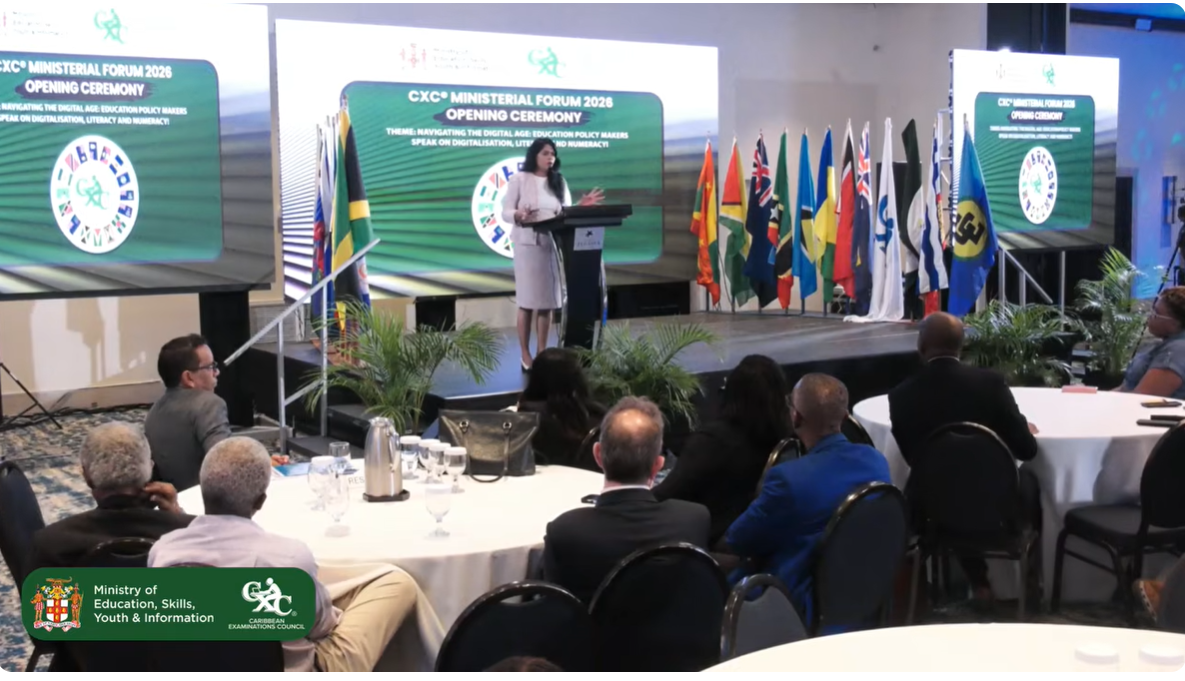
    Guyana is implementing sweeping educational reforms with the introduction of Grade Two and Four literacy assessments, Education Minister Sonia Parag announced at the Caribbean Examinations Council (CXC) Ministerial Forum in Jamaica. The initiative aims to ensure students achieve literacy before completing primary education, addressing what Minister Parag acknowledged as the region’s problem with “producing functionally illiterates.”

    The comprehensive strategy includes establishing community literacy tents where parents can assist children with homework, creating a collaborative learning environment that extends beyond classroom walls. Minister Parag, who also chairs CARICOM’s Council for Human and Social Development, revealed that numeracy assessments will follow in 2027.

    The conference, themed “Navigating the Digital Age: Rethinking Teaching, Learning and Assessment,” became a platform for Caribbean education leaders to address both the opportunities and challenges presented by artificial intelligence. While recognizing AI’s potential for personalized learning and immediate feedback, Minister Parag warned of risks including false imagery, plagiarism, data privacy concerns, and increased bullying. She advocated for responsible integration with “clear frameworks” focusing on ethics, data protection, and academic integrity.

    CARICOM Assistant Secretary General Alison Drayton emphasized the urgency of educational transformation, stating incremental changes are insufficient in the face of rapid technological advancement. She cautioned that delays risk widening existing inequities, particularly when combined with the lingering impacts of COVID-19 and annual hurricane disasters.

    The conference concluded with several key resolutions: assessment systems prioritizing fairness and authenticity, sustained investment in teacher development and digital infrastructure, and strengthened regional collaboration. CXC Chairman Sir Hilary Beckles highlighted the concerning decline of history as a compulsory subject over the past fifty years, noting the visible consequences of historical ignorance in contemporary society.

    All speakers emphasized that educational reform must be implemented through phased, consultative approaches rather than sudden, heavy-handed measures that could leave teachers and students feeling unprepared or excluded. The consensus emerged that Caribbean nations must collectively navigate digital transformation while preserving regional identity and cultural values.


  • Who Doesn’t Want Peace?

    Who Doesn’t Want Peace?

    A coordinated campaign of destabilization emerges from Miami whenever diplomatic progress appears between the United States and Cuba, according to recent investigative findings. Hardline elements with financial and political investments in maintaining hostilities have repeatedly demonstrated willingness to sabotage peace initiatives through calculated acts of provocation.

    The pattern became particularly evident during recent bilateral talks held in St. Kitts and Nevis, where representatives from Washington and Havana engaged in unprecedented dialogue. Simultaneously, a group of ten individuals allegedly trained and armed in Florida executed an attack on a Cuban Border Guard vessel attempting to infiltrate Villa Clara’s northern coast. This synchronization suggests deliberate timing to undermine diplomatic efforts.

    Further evidence of coordination emerged through graffiti campaigns across Havana’s municipalities, where more than a dozen individuals recruited in Panama executed counterrevolutionary messaging using rented vehicles. These actions appeared designed to manufacture the illusion of widespread popular discontent rather than organic demonstrations.

    The strategy employs multiple fronts: congressional lobbying for intensified blockade measures, media campaigns promoting misinformation, and financial support for destabilization activities. Investigations indicate that recent acts of vandalism in Morón, including arson attacks on media outlets and destruction of property, follow patterns consistent with external direction rather than genuine civil protest.

    South Florida-based operatives have openly advocated for aggressive measures against Cuba, with one congressman reportedly using language suggesting annihilation rather than diplomatic engagement. The consistent pattern reveals a well-funded machinery dedicated to perpetuating conflict through economic strangulation and manufactured unrest, directly contradicting ongoing governmental efforts toward normalized relations.

  • Under pressure from the United States, Costa Rica announces the closure of its embassy in Havana and limits relations with Cuba to consular matters

    Under pressure from the United States, Costa Rica announces the closure of its embassy in Havana and limits relations with Cuba to consular matters

    The Cuban government has issued a strong condemnation of Costa Rica’s unexpected decision to shutter its embassy in Havana and downgrade diplomatic relations. The move, communicated via diplomatic note on March 17th without prior consultation or justification, represents a significant deterioration in bilateral ties between the two nations.

    According to Cuba’s Ministry of Foreign Affairs, Costa Rican officials invoked an ‘alleged and unfounded principle of reciprocity’ when demanding that Cuba withdraw its diplomatic staff from San José while maintaining only consular and administrative personnel. The Central American nation further notified that effective April 1st, it would maintain relations with Cuba strictly at the consular level.

    The Cuban statement particularly criticized Costa Rican President Rodrigo Chaves Robles for what it characterized as ‘disrespectful statements’ made during a March 18th press conference. Cuban authorities accused Chaves of ‘crudely manipulating the history and reality of Cuba’ while ignoring the documented impact of the U.S. economic blockade on Cuba’s economic situation and living conditions—a fact previously acknowledged by Costa Rican governments.

    Havana described the decision as ‘arbitrary’ and ‘evidently adopted under pressure,’ suggesting it disregarded both national interests and regional solidarity. The Cuban government framed this development as Costa Rica’s latest alignment with U.S. policy objectives against Cuba, noting the country’s ‘history of subordination to U.S. policy against Cuba.’

    The statement positioned the embassy closure as part of a broader U.S. offensive to isolate Cuba within the Americas, making Costa Rica ‘a participant in its aggressive escalation against the Cuban Revolution.’ Despite these diplomatic tensions, Cuba expressed confidence that the move would ultimately fail, emphasizing the ‘unbreakable bonds’ between the Cuban and Costa Rican peoples, historically connected through figures like independence heroes José Martí and Antonio Maceo.

    The diplomatic note was formally released from Havana on March 18th, 2026, marking a new chapter in the complex relationship between the two American nations.

  • Column: Regels tegen spelbederf

    Column: Regels tegen spelbederf

    In a significant move to address time-wasting tactics, FIFA has announced stringent timing regulations for the upcoming 2026 World Cup. The new measures mandate that goalkeepers must release the ball within eight seconds during possession, while goal kicks and throw-ins must be executed within the same time limit. Violations will result in indirect free kicks for goalkeeping infractions and throw-in reversals for procedural delays.

    The world football governing body aims to maximize active play time, potentially moving toward a basketball-style ‘living clock’ system. These adjustments seek to enhance match fluidity and viewer engagement by reducing unnecessary interruptions. However, this initiative creates an interesting paradox: while FIFA attempts to minimize stoppages from time-wasting, its Video Assistant Referee (VAR) system frequently causes extended game pauses.

    VAR technology, introduced several years ago, has become indispensable in major competitions despite originally being intended as an advisory tool for on-field officials. The system has increasingly evolved into a decision-making authority, with referees regularly consulting pitch-side monitors to overturn initial calls. This technological intervention has fundamentally altered football’s spontaneous nature, with players now exhibiting hesitation after scoring due to potential VAR reviews.

    Controversially, FIFA will further expand VAR’s jurisdiction during the 2026 tournament to include second-yellow card offenses leading to red cards. This development raises concerns about additional game interruptions and subjective interpretations. Simultaneously, the delayed offside flag policy—where linesmen keep flags down for clear offside situations until play concludes—has drawn criticism for potentially exposing players to unnecessary injury risks.

    These cumulative changes necessitate thorough evaluation regarding their impact on both player experience and spectator enjoyment. The fundamental question remains whether technological precision should outweigh football’s traditional flow and emotional resonance.

  • Leisure : Did you know ? #8

    Leisure : Did you know ? #8

    The didgeridoo stands as one of humanity’s most ancient musical instruments, created by Aboriginal peoples of Northern Australia over 1,500 years ago. This remarkable wind instrument represents both cultural heritage and acoustic innovation, crafted traditionally from eucalyptus trunks naturally hollowed by termites.

    What makes the didgeridoo truly extraordinary is the unique playing technique required. Musicians employ circular breathing—an exceptional method where players inhale through the nose while simultaneously expelling air stored in their cheeks. This creates a continuous, uninterrupted sound that can be sustained for remarkable durations.

    Beyond producing its characteristic low-pitched drone, skilled players utilize vocal cords, throat manipulations, and tongue movements to mimic natural sounds including bird calls, animal noises, and environmental acoustics. The instrument holds profound spiritual significance within Aboriginal culture, serving as a vital component in ceremonial rituals and storytelling traditions.

    Despite its seemingly simple construction, the didgeridoo produces astonishing rhythmic complexity and sonic richness. In contemporary music, it has transcended its traditional roots to become integrated into diverse genres including jazz, electronic, world fusion, and meditation music. Its distinctive vibrational qualities and hypnotic tones continue to captivate global audiences, making it both an ancient artifact and modern musical phenomenon.

    This musical exploration originates from the Quiz-HaitiLibre educational platform launched in January 2026, which features comprehensive knowledge sheets accompanying its cultural quizzes. The platform offers dozens of free, registration-free games available in both French and English, with three difficulty levels covering topics from Haitian culture to global knowledge.

  • Red Cross expands emergency coverage for Holy Week 2026

    Red Cross expands emergency coverage for Holy Week 2026

    SANTO DOMINGO – In a major preparatory move for Holy Week 2026, the Dominican Red Cross, under the leadership of Bruno Benítez, has unveiled an unprecedented national safety initiative dubbed ‘Operation Awareness for Life.’ The comprehensive plan will deploy over 10,000 trained personnel across the nation to bolster emergency response capabilities during one of the country’s busiest travel periods.

    The operation’s infrastructure will be extensive, featuring a network of 790 strategically positioned first aid stations. Approximately 350 of these units will be established along highways and major thoroughfares, with additional stations deployed at popular beaches, toll plazas, and other identified high-traffic zones. To enhance coordination, authorities are establishing specialized provincial command centers. These hubs are designed to drastically improve emergency response times, streamline information management, and facilitate region-specific crisis control measures.

    Benítez emphasized the holistic integration of all operational tiers, noting that coordination centers, specialized crisis management teams, and robust communication networks will work in unison to guarantee real-time emergency intervention. Furthermore, he confirmed that the organization’s critical blood bank services will maintain full operational capacity throughout the holiday period. Beyond blood collection, Benítez took the opportunity to highlight the Red Cross’s broader mandate, which encompasses emergency medical care, large-scale disaster response, and community-based programs aimed at building long-term public resilience.

  • Finabank accepteert boete na jaren reputatieschade en krijgt €4,5 miljoen terug

    Finabank accepteert boete na jaren reputatieschade en krijgt €4,5 miljoen terug

    Suriname’s Finabank NV has reached a conclusive settlement with Dutch prosecutors, paying €124,500 to recover €4.5 million seized eight years ago in a money laundering investigation. The agreement ends years of legal uncertainty and reputational damage for the financial institution.

    CEO Eblein Frangie confirmed the bank will not pursue further legal action against the Dutch Public Prosecution Service (OM), choosing instead to finalize the matter and focus on business recovery. The settlement arrangement emerged after six months of negotiations, with funds expected to be returned within four weeks.

    The case originated in 2018 when Dutch authorities confiscated €19.5 million in cash from three banks—Hakrinbank, De Surinaamsche Bank, and Finabank—during transit from Suriname to China via the Netherlands. Despite initial suspicions of money laundering, no formal charges were ever filed, and the allegations remained unproven throughout the eight-year period.

    Frangie detailed the significant operational impacts during a press conference at Finabank’s headquarters. The prolonged investigation caused international clients, particularly in the oil and gas sector, to withdraw or hesitate doing business with the bank. Enhanced compliance checks slowed processes and created commercial stagnation.

    The CEO emphasized that the settlement payment does not constitute an admission of wrongdoing. “No lawsuit was ever initiated against us,” Frangie stated. “The funds were detained based on Dutch indicators. We have consistently complied with Caribbean Financial Action Task Force standards and all applicable Surinamese laws and regulations.”

    With the chapter now closed, Finabank will not seek damages from Dutch authorities. Instead, management will prioritize revitalizing operations that stalled during the lengthy investigation period.

  • PM make case for energy security as resilience to global shocks

    PM make case for energy security as resilience to global shocks

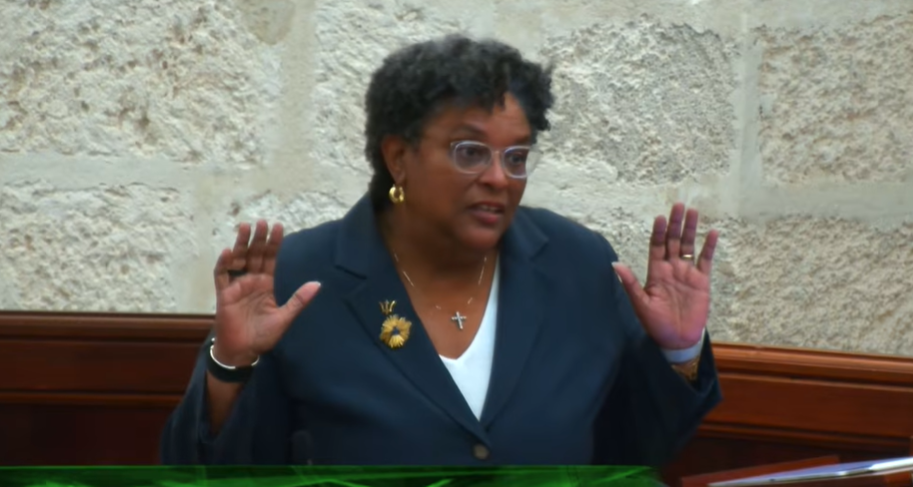
    Prime Minister Mia Mottley has declared an aggressive national initiative to drastically reduce Barbados’s reliance on imported fossil fuels, framing the transition to renewable energy as both an economic necessity and a tool for social empowerment. During a comprehensive 90-minute parliamentary address defending her administration’s budget, Mottley warned that global instability continues to expose the Caribbean nation to severe financial risk, citing the 2022 energy crisis triggered by Russia’s invasion of Ukraine as a cautionary example.

    The Prime Minister revealed that Barbados’s fuel import bill skyrocketed from $728 million in 2019 to approximately $1.122 billion in 2022 when oil prices surged to $120 per barrel. ‘What folly is this?’ Mottley questioned, emphasizing the paradox of a sun-rich nation spending over a billion dollars on imported energy. With fresh conflicts in the Middle East contributing to renewed market volatility, she cautioned that oil prices reaching $200 per barrel would present ‘no mathematical solution’ for the island’s economy.

    Mottley announced concrete measures to accelerate the energy transition, including significantly enhanced battery storage capacity and an urgent national colloquium on energy security scheduled for next month. The government will pursue ‘absolute speed and efficiency’ in acquiring necessary infrastructure to reduce fossil fuel dependence to ‘negligible amounts.’ The Prime Minister emphasized that this transition requires fundamental behavioral changes across all sectors—government, households, and businesses alike.

    Beyond energy security, Mottley framed renewable initiatives as instruments for ‘economic enfranchisement,’ ensuring that new energy generation opportunities serve as ‘a democratizing and an enfranchising tool for the creation of wealth.’ She simultaneously defended the budget’s social protection measures, highlighting expanded reverse tax credits for low-income earners, increased relief for pensioners, and the establishment of the Barbados Republic Child Wealth Fund.

    The Prime Minister acknowledged persistent pressures on middle-income earners while highlighting significant economic progress under her administration: eighteen consecutive quarters of growth, debt reduction from over 170% to just above 90% of GDP, and foreign reserves exceeding $3 billion. Mottley concluded that poverty eradication remains her government’s central mission, asserting that economic achievements ‘could never be enough as long as there are poor people’ and injustice persists.

  • Government unveils Puerto Plata land use plan, Cable Car upgrade

    Government unveils Puerto Plata land use plan, Cable Car upgrade

    PUERTO PLATA – In a significant announcement at the Puerto Plata Business Forum 2026, Minister José Ignacio Paliza revealed comprehensive development initiatives for the region, centering on a new Municipal Land Use Plan designed to foster sustainable urban expansion. This strategic blueprint aims to promote compact city development, safeguard natural resources, and enhance the quality of public services for residents.

    Complementing this urban vision, the government is set to initiate a tender process for the modernization of the iconic Puerto Plata Cable Car system. The planned upgrades are projected to significantly increase its passenger capacity and drastically reduce travel time, boosting both tourist accessibility and local transportation efficiency.

    Minister Paliza positioned these local projects within the broader national framework of the ambitious Meta RD 2036 plan. This national strategy targets a doubling of the Dominican Republic’s economy within a ten-year horizon. Paliza presented compelling economic indicators to underscore current momentum, including a national workforce exceeding 5.1 million people, the creation of 133,000 new jobs in 2025 alone, declining poverty metrics, and a substantial influx of foreign investment surpassing US$5 billion.

    Highlighting Puerto Plata as a paradigm of this national development model, Paliza cited the multifaceted Punta Bergantín project. This large-scale development encompasses luxury hotel accommodations, a new academic campus, and a state-of-the-art film production studio. Further underscoring the commitment to infrastructure, he detailed the Amber Highway project, a new transport corridor engineered to connect Santiago and Puerto Plata in under thirty minutes.

    Government authorities emphasized that these interconnected initiatives represent a cohesive, long-term strategy to elevate the nation’s global competitiveness, stimulate sustained economic growth, and fundamentally improve the quality of life for its citizens by the target year of 2036.

  • Mandatory dashcams, GPS for PSVs, AG urges

    Mandatory dashcams, GPS for PSVs, AG urges

    In a decisive parliamentary address during the Budget debate, Barbados Attorney General Wilfred Abrahams issued a forceful call for stringent new safety regulations requiring all public service vehicles (PSVs) to install dashboard cameras and GPS tracking systems. The Christ Church representative emphasized that previous governmental efforts to reform the sector through voluntary engagement had proven insufficient against persistent road safety violations and disciplinary breaches.

    Abrahams articulated growing concerns about escalating violence and dangerous driving practices within the transport sector, positioning these issues within broader national anxieties about public safety and criminal activity. “The hot topic is violence and criminality and trying to get Barbados back to what we know it’s supposed to be,” he stated, noting that the PSV sector increasingly operates under a “philosophy that the laws do not apply to us.”

    The Attorney General detailed the Mia Mottley administration’s exhaustive efforts to foster cooperation through dialogue, education, and negotiation. “We have talked about it for a long time. We have tried to encourage, we’ve tried to engage, we’ve tried to educate, we’ve tried to negotiate,” Abrahams recounted. “Nobody can now say that the government has not bent over backwards to meet the PSV sector where it is.”

    With voluntary measures failing to produce adequate compliance, Abrahams asserted that mandatory technological oversight represents the necessary next step. He specified that vehicles should be equipped with dual-facing cameras (forward and backward) alongside GPS tracking to ensure comprehensive accountability throughout operators’ routes. “They must be accountable for the persons they have in that van from the time they leave on their route to the time that they come back,” he emphasized.

    While carefully avoiding blanket condemnation of PSV operators, Abrahams maintained that the sector had reached an inflection point where regulatory enforcement had become unavoidable. “I am not laying blame… up to this point in time, we have tried,” he concluded, signaling a shift from persuasive approaches to mandatory compliance requirements.