作者: admin

  • Unions split Labour Day parades amid political row

    Unions split Labour Day parades amid political row

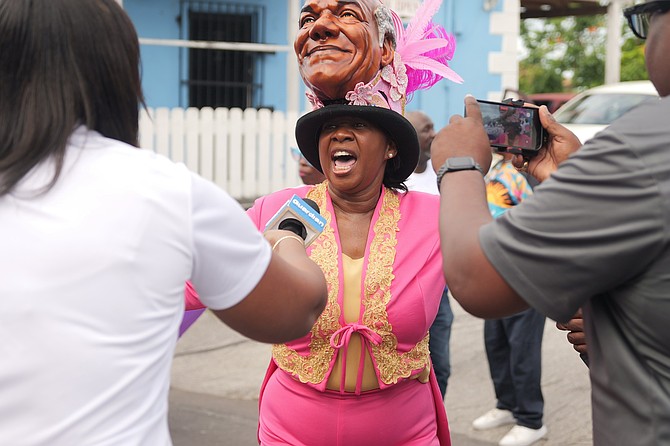
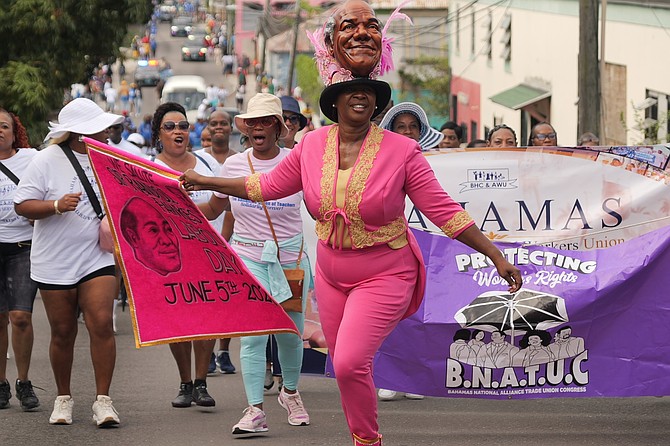
    Labour Day in the Bahamas brought deep divisions among organized labour on Friday, as two competing marches were held across New Providence. The split stems from ongoing friction over whether the annual workers’ celebration has been co-opted by partisan political interests, with conflicting visions for the holiday’s original purpose at the center of the disagreement.

    The long-standing traditional parade gathered participants at Windsor Park before proceeding along East Street into downtown Nassau. Thousands of union members, community supporters, and live musical acts joined the procession, alongside clear, large contingents of supporters from the nation’s two major political parties: the ruling Progressive Liberal Party (PLP), wearing their signature yellow, and the opposition Free National Movement (FNM) in their identifying red.

    Parallel to this main event, the Bahamas Trades Union Congress (TUC) and a coalition of its affiliated unions hosted a separate demonstration. Starting from the House of Labour on Wulff Road, the alternative march traveled west before turning north along Baillou Hill Road, concluding at the Southern Recreation Grounds. This marked the second consecutive year the TUC has opted out of the traditional parade route, a decision organizers framed as a deliberate act to preserve the legacy of labour pioneer Sir Randol Fawkes and protect Labour Day’s core historical meaning.

    TUC president Obie Ferguson, KC, has long argued that the growing visibility of political party presence has pulled focus away from the holiday’s original mission of honoring workers. Ahead of this year’s event, he instructed all TUC march participants to wear plain black trousers and official white Labour Day shirts, rather than any identifying partisan apparel.

    Criticism of partisan displays was echoed by outgoing Bahamas Public Services Union (BPSU) president Kimsley Ferguson, who noted this year’s event marked his final Labour Day parade as union leader before stepping down. “Labour Day is supposed to be for the workers of the country and not a show of political might or strength,” he said. “There’s no problem with political parties coming on to the parade, but come and support the workers, wear neutral colors, don’t bring party colors to a parade that’s supposed to be celebrating the workers of the country.”

    After nine years leading the BPSU, Ferguson will step down from his post when the union holds leadership elections in September. He announced he is leaving union leadership to pursue full-time Christian ministry, a calling he said he has already begun to answer part-time. “It’s a new chapter that I’m going to embrace, because God has now called me to go into ministry full time,” he explained. “I’m currently a pastor at a church, and so this is my last and final Labour Day parade as the President of Bahamas Public Service Union.”

    Speaking to the broader split within the national labour movement, Ferguson added: “I would say that the word union suggests one. If there’s a day and a time that we ought to unite, it would be today.”

    Not all stakeholders agree that the event has become overly politicized, however. Bahamas Labour Minister Pia Glover-Rolle pushed back against claims of partisan takeover, noting that intentional parade organizing keeps trade unions at the front of the procession while political parties are held to the rear. “The parade, in my opinion, has not been politicised, because if you look at the way the route is composed, you’ll see the unions out front, and then I see the political parties in the rear, they’re not mixing in, they’re only at the back supporting, and that’s what it’s about,” she said. “Political parties are supporting the workers, and the supporters of political parties are workers themselves, so I don’t think it’s politicised in any way.”

    Glover-Rolle added that the separation of unions and political groups in the parade order is intentional every year, and there is nothing inappropriate about partisan organizations showing public support for the nation’s workforce. “There’s a clear separation of the political parties and the trade unions. Every year it’s intentional that the political bodies stay closer to the rear and unions make their way through the parade, but it is a show of support. I don’t see anything wrong with political parties supporting the workers of our country.”

    Darron Woods, president of the Bahamas Hotel Catering and Allied Workers Union, echoed this more relaxed stance, saying his organization was not thrown off by the surrounding political debate. “That has become a tradition now, so it really doesn’t faze us anymore,” he noted.

    Opposition Leader Michael Pintard defended the FNM’s decision to wear official party colours this year, explaining that the party had previously complied with requests from the Fawkes family to avoid partisan apparel. He argued the ruling PLP broke a long-standing agreement to stay away from partisan displays, leaving the FNM with little choice but to assert their presence. “On multiple Labour Days, we have not worn party colors. We again complied with what was requested by Randol Fawkes family. This year, it’s clear to us that the PLP has violated that agreement,” he said Friday. “It has been of no effect, and so we want to stand to let the public know we are still here. We didn’t want to just melt in the crowd to let them know we’re still here and still standing.”

    Before the traditional parade continued into downtown, participants paused for a solemn memorial at Zion Baptist Church, located near the site of a 2018 Labour Day tragedy that claimed the lives of four women: Dianne Gray-Ferguson, Tami Williams-Gibson, Kathleen Rodgers-Fernander and Tabitha Bethel-Haye, who were killed when a parade truck struck the group. Wreaths were laid and prayers were offered before the procession resumed.

    Speaking at the memorial service, Prime Minister Philip “Brave” Davis reflected on the meaning of Labour Day, framing it as a permanent recognition of workers’ dignity, collective sacrifice, and shared solidarity. “We must remember that they were participating in what I call a seminal event, where workers come together to mark their solidarity for the dignity of work and to ensure that the rights of workers are continually upheld,” he said.

    Davis also recounted the long history of labour struggle that led to the creation of the national holiday, noting that Bahamian workers fought for decades for formal recognition, from the 1948 labour riots to the 1956 national strike that ultimately led to the establishment of the annual Labour Day celebration. “Without workers, you have no economy,” he emphasized. “And let’s continue to respect them, uphold their dignity, and ensure their rights are always protected.”
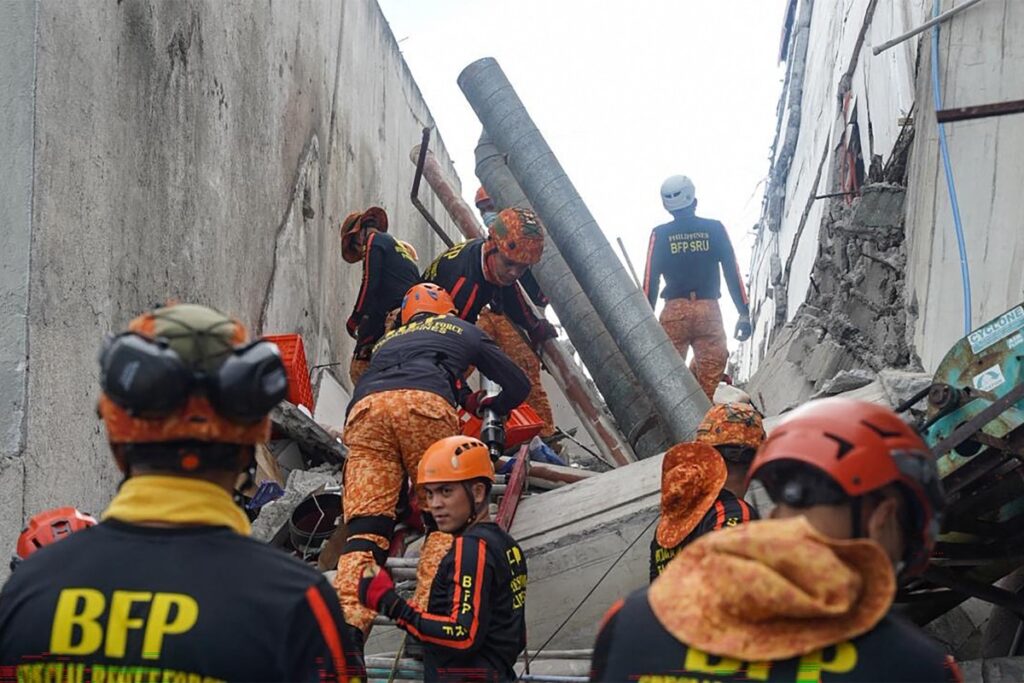

  • Major quake off Philippines kills at least 35, dozen still missing

    Major quake off Philippines kills at least 35, dozen still missing

    A massive 7.8-magnitude offshore earthquake that struck the southern Philippines on Monday has killed at least 35 people, injured 134 more, and left a dozen others missing, local and national disaster officials confirmed. The quake, which hit south of General Santos – a coastal city home to roughly 720,000 residents – triggered immediate tsunami warnings across the wider Southeast Asia-Pacific region and reduced multiple buildings to rubble.

    Within just two hours of the initial shock, the United States Geological Survey recorded a string of powerful aftershocks across the affected area, with the strongest registering a magnitude of 6.5, prolonging danger for local communities. In General Santos, the local command center has recorded 12 fatalities so far, with rescue efforts stretched thin across the disaster zone.

    As darkness fell on the city, Agence France-Presse reporters on the ground witnessed rescue workers digging through the collapsed concrete of a well-known local grocery chain with their bare hands, locked in a desperate race to reach two employees trapped under the debris. For 35-year-old security guard Morphy Angcad, the waiting has been agonizing: his sister is one of the two missing workers. Refusing an offered hotel room to stay at the site, he told reporters, “I don’t want to leave this site until I see the body of my sister… (but) I’m hoping against hope that she is still alive.”

    Dioslinda Deluvio, mother of the second missing employee Joey, shared her grief with AFP. Weeks before the disaster, her son had visited her and asked, “Ma, what is your plan for your life? Are you OK?” Now, she said, “All I can do is cry now, imagining the good things he did in the world.”

    A few kilometers from the collapsed grocery store, hundreds of residents who fled their damaged structures prepared to spend the night out in the open, terrified of further aftershocks that could topple unstable buildings. “I’ll be sleeping here outside even if it’s uncomfortable, because I’m scared there will be an aftershock,” 34-year-old sales clerk Johnson Alerta told AFP. “I feel safer here.”

    In Sarangani province, one of the hardest-hit local government areas, disaster chief Rene Punzalan reported that 14 people alone died in the coastal municipality of Glan, where a landslide triggered by the quake buried homes at the base of a mountain. “The landslide happened immediately after the earthquake, so many lives were lost,” Punzalan explained, adding that many remote communities have not yet been able to report casualty numbers. Outages have disrupted communication across large parts of the affected region, slowing the flow of information and complicating rescue coordination. “The greatest challenge is communication. The power was cut, so it’s hard to get updates,” he said.

    Social media videos verified by AFP have captured the full scale of the destruction: a busy General Santos shopping center housing a popular Jollibee fast food outlet completely flattened, an empty school building crumpled into a heap of concrete, and young schoolchildren screaming as they clung to their teachers while the ground violently swayed during the quake.

    After the quake struck, the Pacific Tsunami Warning Center issued an advisory warning that hazardous tsunami waves could reach coastlines across the Philippines, Indonesia, Palau, Taiwan, and Papua New Guinea. Philippine President Ferdinand Marcos Jr. immediately ordered an evacuation of all at-risk coastal communities, suspended classes across Mindanao – which was supposed to mark the first day of the school year Monday – and urged residents to prioritize safety over property. “Move to higher ground now. Do not wait,” he said. “Your life is more important than anything left behind.”

    By mid-afternoon Monday, all tsunami warnings had been canceled across the region. More than 2,000 people who evacuated their coastal homes following the advisory remain in evacuation centers, awaiting official clearance to return to their properties as authorities continue to assess structural and geological safety risks.

    The Philippines experiences near-daily seismic activity due to its location on the Pacific “Ring of Fire”, a seismically active arc that stretches from Japan through Southeast Asia across the entire Pacific basin. This latest major quake follows a string of deadly seismic events in recent years: in October 2023, two back-to-back quakes of 7.4 and 6.7 magnitude hit eastern Mindanao, killing at least eight people, just days after a 6.9-magnitude quake in central Philippines’ Cebu province claimed 76 lives.

  • Suspect in custody in Trinidad after body of missing 12-year-old found

    Suspect in custody in Trinidad after body of missing 12-year-old found

    PORT OF SPAIN, Trinidad – A tragic incident has sent shockwaves through a small coastal Trinidadian community after the body of a missing 12-year-old girl was recovered on a remote oil well access road, with a local man now in custody aiding law enforcement’s ongoing probe.

    The victim, identified as Mercedez Layne, was first reported missing to authorities on Saturday. According to official police statements, the preteen had stayed overnight at her grandfather’s home before he placed her into a private vehicle arranged to take her back to her own residence. What was supposed to be a routine short trip quickly turned into a nightmare, when the child never arrived at her destination.

    Alarmed by Mercedez’s disappearance, the girl’s mother and her grandfather traveled together to the Erin Police Station to file an official missing person report. Law enforcement immediately launched a coordinated search and investigation into the case. Following leads pulled from witness tips and a review of closed-circuit security camera footage, investigators were able to pinpoint the vehicle Mercedez was last seen riding in. The vehicle was later found abandoned; investigators processed the scene, documented the car with photographic evidence, and transported it to the Erin Police Station to be retained as evidence for the continuing inquiry.

    On Sunday, a routine work check led to the grim discovery of the young girl’s body. An employee of a local oil company was heading out to inspect an oil well when he came across the body of a young female, lying face down along the unpaved access road leading to the well site. The worker contacted the Erin Police Station immediately, and first responders rushed to the remote location. After processing the crime scene, the body was formally confirmed to be that of the missing 12-year-old.

    Local law enforcement confirmed to Caribbean Media Corporation that a 26-year-old man has been taken into custody in connection with Mercedez’s death, and remains in police custody as investigators continue to piece together the full circumstances of the case.

  • WATCH: Hundreds bid farewell to broadcaster Daniel Thompson

    WATCH: Hundreds bid farewell to broadcaster Daniel Thompson

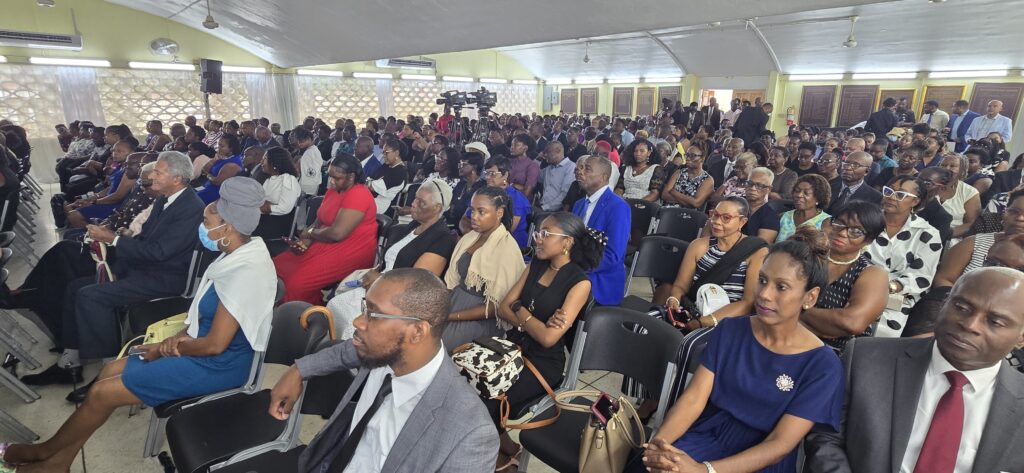
    KINGSTON, Jamaica — On a solemn Saturday, hundreds of grieving community members packed the Marjorie Meyer Hall at Shortwood Teachers College, coming together to celebrate the life and say goodbye to one of Jamaica’s most beloved broadcast voices, Daniel ‘DT’ Thompson, who served the RJR Gleaner Group for nearly three decades.

    A moving thanksgiving service was held to honor Thompson’s legacy, with heartfelt tributes pouring in from his colleagues at RJR Gleaner and peers across Jamaica’s media industry, who shared personal anecdotes and memories of his decades-long contributions to local radio.

    Thompson passed away on April 30 following a sudden heart attack, cutting short a career that shaped Jamaican public broadcasting for a generation. Over 28 years of service with Radio Jamaica, Thompson built his reputation as a versatile, reliable presence on the airwaves, working every possible time slot and leaving an indelible impression on countless station programs. He launched and hosted his own successful show, most recently contributed as a regular anchor and contributor to the station’s widely popular audience-participation call-in program *Hotline*, and earned widespread recognition for the fan-favorite “X and Y” feature he co-hosted alongside collaborator Emily Shields.

    Video footage of the memorial service was captured by photojournalist Llewellyn Wynter.

  • AMCHAMDR joins regional leaders at BFA 2026 Conference

    AMCHAMDR joins regional leaders at BFA 2026 Conference

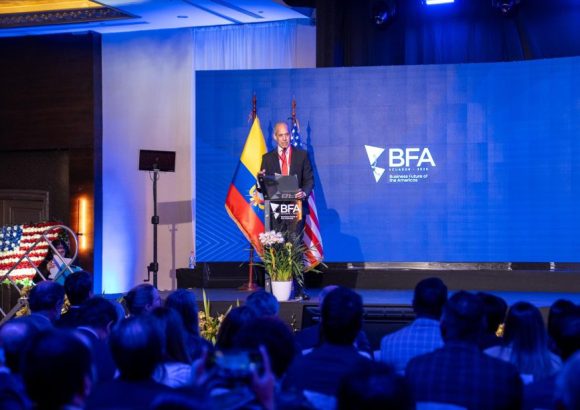
    The 2026 Business Future of the Americas (BFA) summit, one of the Western Hemisphere’s most high-profile collaborative business gatherings, has brought over 300 cross-sector leaders from more than 20 nations to Quito, Ecuador, with the American Chamber of Commerce of the Dominican Republic (AMCHAMDR) among the key participating delegations. This year’s convening, focused on tackling pressing topics ranging from cross-border trade to regional investment and hemispheric security, was hosted by AMCHAM Quito in strategic partnership with the U.S. Chamber of Commerce and the Association of American Chambers of Commerce in Latin America and the Caribbean (AACCLA).

    High-level stakeholders anchored the summit’s opening and core discussions, including Ecuadorian President Daniel Noboa, senior members of Ecuador’s national government, and official representatives from the U.S. Department of State and the U.S. Embassy in Ecuador. Central to the summit’s agenda was the goal of deepening robust economic ties between the United States and the broader Latin American region, while framing intentional public-private partnership as the most impactful engine for inclusive growth and long-term regional stability.

    In his keynote remarks, Edwin De los Santos, current AACCLA Chairman and former president of AMCHAMDR, underscored three non-negotiable pillars for lasting economic progress: consistent regional security, institutional trust that fosters stakeholder confidence, and unwavering adherence to the rule of law. All three, he emphasized, are foundational to attracting foreign direct investment and supporting equitable, sustainable development across the hemisphere. Beyond these core themes, targeted panel sessions delved into a range of timely, high-stakes topics: building more resilient global supply chains, strengthening cross-regional energy security, accelerating inclusive digital transformation, upgrading cross-sector cybersecurity infrastructure, and leveraging the growing influence of artificial intelligence to boost Latin America’s global competitive standing.

    William Malamud, Executive Vice President of AMCHAMDR, noted that every topic on the 2026 BFA agenda aligns directly with the Dominican chamber’s core long-term strategic priorities. He reiterated that sustained progress across the hemisphere depends on collective action to build secure, transparent, and consistently reliable investment climates in every market across the Americas. Malamud also pointed to a unique, time-sensitive opportunity for Latin America: as global corporations and governments reconfigure their global supply chain networks, the region is well-positioned to establish itself as a competitive, trustworthy global trade and manufacturing partner.

    The Dominican Republic’s delegation also included Rocío Velarde, general manager of Citibank N.A. in the Dominican Republic and a sitting member of AMCHAMDR’s board of directors, who contributed to the summit as an invited panelist. Through its active participation in the 2026 BFA summit, AMCHAMDR has reaffirmed its ongoing commitment to advocating for policies that elevate the Dominican Republic’s global competitiveness, while working toward a shared vision of a more integrated, secure, and broadly prosperous Western Hemisphere.

  • Police investigate viral video of Abaco man being slapped

    Police investigate viral video of Abaco man being slapped

    A disturbing video capturing a prolonged physical assault on an older man in Abaco has gone viral across social media platforms, triggering widespread public anger and prompting local law enforcement to launch a formal investigation, according to a report from the Tribune. The clip, which has been shared hundreds of times across major social networks, shows the victim – a man who appears to be in his 50s – remaining completely unresisting throughout the entire attack, never fighting back against his aggressors.

    In the graphic footage, one attacker grabs the victim by the front of his shirt to hold him in place, while delivering no less than 19 consecutive slaps to the man’s head and face. A second assailant joins the attack, adding his own slaps before landing a single hard punch to the victim’s stomach. Around 10 onlookers are gathered at the scene to watch the assault unfold; while one bystander makes a weak attempt to intervene, the two attackers ignore the effort and continue beating the victim.

    Shockingly, the person holding the camera to record the entire incident can be heard laughing uncontrollably from start to finish, and other bystanders in the background also join in the laughter. The disturbing behavior of both the attackers and the laughing onlookers quickly sparked fierce backlash after the video spread online, with social media users lining up to condemn the incident in comment sections.

    Local police official Sheria King has confirmed that law enforcement received an official complaint over the incident and is moving forward with an investigation to identify the attackers and hold them accountable for their actions. Social media commenters across the platform have directed widespread criticism at all parties involved, calling out the attackers as bullies and cowards for ganging up on an unresisting older man, while also condemning the person who filmed the attack for laughing rather than stepping in to stop it. Many users emphasized that the public humiliation and violence the victim suffered is no laughing matter, stressing that the entire incident exposes a disturbing lack of empathy among those involved.

  • BUT president urges minister to fix teacher shortages

    BUT president urges minister to fix teacher shortages

    The head of the Bahamas’ largest educators’ organization is pushing the country’s newly appointed Education Minister to confront deep-rooted, long-unresolved flaws in the public education system, warning that many critical problems have dragged on for generations despite repeated calls for reform from teaching professionals.

    Belinda Wilson, president of the Bahamas Union of Teachers, outlined the union’s top priorities during an interview on Guardian Radio’s popular morning talk show Morning Blend, where she drew particular attention to crippling inefficiencies in the Ministry of Education’s teacher recruitment pipeline that have left countless newly graduated educators stuck in bureaucratic limbo for months.

    Wilson shared that some newly qualified educators, who were supposed to receive classroom assignments at the start of the academic year, only received their official postings mere weeks before the school year came to a close – a stark example of the systemic delays that have plagued the ministry’s hiring process for years. Her public remarks come as educators across the country continue to sound the alarm over three core issues: persistent understaffing, crumbling school infrastructure, and unaddressed workplace concerns.

    The union leader recently held a formal meeting with new Education Minister Chester Cooper and his senior leadership team, which she described as a productive opening dialogue that covered the full scope of challenges facing the nation’s public education sector. During the meeting, Wilson presented Cooper with a comprehensive 20-page policy document that details both the strengths and critical weaknesses of the current education system, paired with concrete, actionable recommendations for systemic improvement.

    The discussion touched on everything from teacher placement protocols and curriculum updates to the employment status of Cuban educators working in Bahamian schools, school repair backlogs, plans for new campus construction, and the lack of internal communication that has slowed progress on key initiatives.

    Wilson painted a grim picture of staffing shortages across the entire public school network, which serves thousands of students spread across 164 campuses located on 24 of the Bahamas’ islands and cays. She explained that while substitute teachers are intended to only fill temporary gaps created by educator absences or extended leave, the system now relies heavily on retired teachers to work full-time as long-term supply instructors, because hundreds of permanent vacancies remain unfilled.

    One of the most persistent bottlenecks, Wilson emphasized, is the drawn-out timeline required to process and appoint newly graduated teaching candidates. Many students enrolled in education programs at the University of The Bahamas receive government-funded grants or scholarships, meaning the Ministry of Education is already aware of these candidates long before they complete their degrees. Even with this advance knowledge, Wilson said, graduates often wait months to receive their official appointment letters while civil servants collect transcripts, background check results, and other required documentation.

    To illustrate the scope of the problem, Wilson used a common enrollment scenario: for a cohort of 100 new teaching graduates invited to orientation in August ahead of the new school year, only 20 to 30 leave the orientation ceremony with a signed appointment letter in hand. The rest of the cohort is left in uncertain limbo while paperwork moves slowly through multiple layers of bureaucracy.

    “Every delay is blamed on another department: ‘Oh, we’re waiting for the public service. Oh, we’re waiting for police to complete vetting. Oh, we’re waiting for them to submit their diploma. Oh, we’re waiting for their transcript,’” Wilson said. “That entire bureaucratic backlog is enough to drive young teachers away.”

    She added that these unnecessary delays are deeply demoralizing for early-career educators, who invest four years in their professional training and are eager to begin working with students, only to be sidelined by avoidable administrative gridlock.

  • US imposes visa restrictions on Nicaraguans after activist death

    US imposes visa restrictions on Nicaraguans after activist death

    In a sharp rebuke to the Nicaraguan government of Daniel Ortega and Rosario Murillo, the U.S. State Department announced new visa restrictions on Monday targeting more than 100 Nicaraguan officials and their immediate family members. The punitive measure comes in direct response to the death of 73-year-old Brooklyn Rivera, a detained Indigenous political leader who died in government custody late last month, a case that has drawn international condemnation.

    Rivera, a respected former congressman and head of Nicaragua’s Miskito Indigenous community, was taken into custody by Ortega’s administration in September 2023. From the day of his arrest, the left-wing authoritarian government never publicly outlined the formal charges against him. It was not until months later, in November 2024, that local press reports confirmed Nicaraguan authorities had informed the UN Office of the High Commissioner for Human Rights that Rivera’s congressional immunity had been revoked to open an investigation into allegations of serious crimes including treason.

    During his detention, Rivera was denied access to both legal representation and his family, a status that led Amnesty International to categorize him as a prisoner of conscience. His declining health became a global point of concern after the Nicaraguan government released photos showing the severely emaciated Rivera connected to a ventilator, prompting the U.S. to formally call for his immediate release. On May 30, Rivera died in custody; the Nicaraguan Ministry of Health announced his death the following day, attributing it to organ failure caused by a bacterial infection stemming from a prior COVID-19 infection. He was buried within 24 hours without any of his family members present, a detail that amplified international outrage.

    Speaking from exile in Costa Rica, Rivera’s daughter Tininiska Rivera told AFP the intentionally released photos of her dying father were a deliberate show of force. “They don’t care how they’re perceived abroad, they just want to demonstrate their control and power inside Nicaragua,” she said last week. The United Nations Secretary-General Antonio Guterres issued a formal call for an independent investigation into Rivera’s death on June 2.

    In his official statement announcing the new visa restrictions, U.S. Secretary of State Marco Rubio held the ruling Murillo-Ortega regime directly accountable for Rivera’s “horrific death” as a political prisoner. “The United States will not ignore the Murillo-Ortega dictatorship’s responsibility,” Rubio emphasized. This latest action brings the total number of Nicaraguan officials and their family members subject to U.S. visa bans to more than 2,350, all sanctioned for their complicity in enabling the authoritarian rule of Ortega and his wife, Vice President and co-ruler Rosario Murillo. The State Department did not release the names of the 100+ newly targeted individuals.

    The current crisis between Washington and Managua is rooted in more than 17 years of Ortega’s rule. An 80-year-old firebrand Marxist who rose to prominence leading a revolution against a U.S.-backed autocrat in the 20th century, Ortega has retained power since 2007 through a series of elections widely decried as unfair and non-democratic by the international community. He has faced consistent accusations of brutal repression to crush all political dissent, a crackdown that has pushed the small, poor Central American nation into deeper international isolation. Nicaragua’s government is already subject to sweeping economic and political sanctions from both the United States and the European Union. Since the crackdown on opposition intensified, thousands of Nicaraguans have fled into exile, hundreds of perceived and actual political opponents have been jailed, and dozens have been stripped of their Nicaraguan citizenship.

  • Jamalco strengthens technical education at Porus High with $2m donation

    Jamalco strengthens technical education at Porus High with $2m donation

    In Manchester, Jamaica, a leading local mining firm has turned its commitment to community development into tangible action for the next generation. Jamalco, a prominent regional mining operator, has recently handed over more than $2 million worth of specialized tools and machinery to upgrade the woodwork and electrical laboratories at Porus High School, a campus that serves dozens of communities across the company’s operating footprint.

    In an official statement released this Monday, the company outlined that the new donation is designed to address a longstanding gap in the school’s technical training capacity. For years, Porus High offered dedicated coursework in woodwork and electrical trades, but insufficient equipment left instructors unable to deliver the hands-on practice required for students to master their craft and prepare for industry-recognized certification. With the new tools in place, the school will now be able to fully equip students working toward national and international credentials through the National Council on Technical and Vocational Education and Training (NCTVET) and City & Guilds examination frameworks.

    At the formal handover ceremony, Jamalco’s General Manager Shanice Neisbeth-Castle delivered a motivating address to the assembled students, urging them to leverage this new opportunity to build intentional futures. “Every single time you step into the woodwork and electrical labs, visualise what you will look like 10 years from now and what you will achieve because you worked hard at developing this skill,” she told the crowd.

    Moments after the ceremony concluded, Derrick Garnett, the school’s lead industrial techniques teacher, was already walking groups of curious students through the new woodwork equipment, pointing out specialized features that will allow them to take on more complex projects than ever before.

    Christopher Buckmaster, Jamalco’s Director of Human Resources, Security and Corporate Services, explained that the lab upgrade is far more than a one-off donation: it is a core part of the company’s long-standing mission to empower young people through accessible, high-quality education. “Our contribution reflects our commitment to equipping students with the tools they need to transform their own lives and shape a better future,” Buckmaster shared. “Without access to the right tools, students are limited in developing the practical skills and technical knowledge required for further education and the workforce. This investment is about building capacity, expanding opportunities, and boosting students’ confidence in using these resources.”

    Dr. Garth Anderson, chairman of Jamalco’s board of directors, emphasized the deep community ties behind the initiative, noting that a large share of Porus High’s student body hails from local communities directly surrounding the company’s operations, including Harmons, St Toolies, Rheeveswood, and a number of adjacent neighborhoods. “This donation represents Jamalco giving back to the communities it serves,” he said. “It is a meaningful contribution toward advancing technical skills and empowering our young people.”

    Rhoda-Moy Crawford, State Minister for Jamaica’s Ministry of Education, Skills, Youth and Information, served as the event’s keynote speaker, and praised the partnership between the private mining firm and the public secondary school. She highlighted that the investment comes at a critical moment for Jamaica’s push to expand skills-based training that drives national economic growth. “The strengthening of these laboratories comes at a time when there is increasing demand for skills-based training,” she said. “We value public-private partnerships like this, as they play a vital role in advancing both our students and our country.” Crawford also encouraged students to care for the new equipment and make the most of the expanded learning opportunities now available to them.

    Audrey Blake, Vice Principal of Porus High School, echoed that sentiment, laying out the school’s long-standing challenge of under-resourcing technical programs. “While the school has dedicated classrooms for woodwork and electrical studies, they were previously under-equipped for effective practical instruction and examination readiness,” Blake explained in her overview of the project. “Jamalco was approached to assist, and they have delivered in a meaningful way. This equipment will support lifelong learning and skills development for our students for years to come.”

  • Pope promises abuse victims Church will do more to change

    Pope promises abuse victims Church will do more to change

    MADRID, Spain – On the third day of his seven-day state visit to Spain, Pope Leo XIV held a pivotal closed-door meeting with six survivors of clergy-committed sexual violence, where he pledged the Catholic Church would deepen its institutional reforms to address the long-running abuse crisis that has shaken global confidence in the Church hierarchy, Vatican officials confirmed Monday.

    The hour-long gathering, held at the Vatican’s apostolic nunciature in Madrid, gave each survivor space to share their harrowing personal accounts of abuse and submit concrete recommendations to strengthen the Church’s response to these devastating cases. In a formal statement released after the meeting, the Vatican noted that Pope Leo committed to centering these proposals as a foundation for expanded action, with the goal of transforming the Church into a truly safe and spiritually healthy environment for all.

    Earlier the same day, speaking to a assembly of Spanish bishops, the pontiff described clergy sexual abuse as a devastating “scourge” that demands unflinching response: “We must meet this crisis with intentional listening, radical transparency, full accountability for perpetrators, just reparations for survivors, and a relentless commitment to prevention and a culture of care that puts vulnerable people first.”

    The meeting came amid public criticism from victim advocacy groups, who slammed the pontiff for excluding broader representation of survivors from the gathering. Speaking to AFP outside the nunciature, Juan Cuatrecasas, spokesperson for leading Spanish survivor organization Infancia Robada (Stolen Childhood), expressed deep disappointment: “We are disappointed that the pope, instead of listening to a sufficiently large and solid representation of victims, prefers to leave us out.”

    The scale of the abuse crisis in Spain is staggering: a 2023 official report from Spain’s national ombudsman estimated that at least 200,000 minors have suffered sexual abuse at the hands of Catholic clergy in the country since 1940. After decades of institutional denial and opacity from the Spanish Catholic Church, the national government led by Prime Minister Pedro Sanchez reached a landmark compensation agreement with the Spanish Church in March of this year, marking a major turning point for survivor justice.

    Pope Leo, who has repeatedly acknowledged the ongoing harm of the abuse scandal, reiterated Saturday that the crisis remains “an open wound” for the global Catholic community, which counts 1.4 billion adherents worldwide.

    Monday’s schedule also included a historic first: the 70-year-old, U.S.-born pontiff became the first pope to address the Spanish parliament, where his remarks received an extended standing ovation from lawmakers. In his address, he turned to pressing global issues, starting with the growing migration crisis that has reshaped European politics. He called for coordinated global action to address the “tragic drama” of forced migration, urging world leaders to create “safe and legal pathways” for migration and ensure all displaced people receive “a respectful welcome and real opportunities for integration.”

    His remarks align with the relatively liberal immigration stance of Prime Minister Sanchez, whose government has faced intense political pressure over the policy from the conservative Popular Party and far-right Vox, which is now Spain’s third-largest political party. The pope is set to travel to the Canary Islands later in his visit, a major Atlantic entry point for irregular migrants traveling from North Africa to Europe, where he will honor the thousands of migrants who have died during the dangerous ocean crossing.

    The pontiff also used the parliamentary address to make a forceful case for global peace, just hours after a deadly exchange of fire between Israel and Iran threatened to collapse a fragile regional ceasefire. Echoing his longstanding anti-war position – which has drawn fierce criticism from former U.S. President Donald Trump, alongside criticism of Sanchez – Pope Leo called for “patient dialogue” over armed conflict and escalating rearmament across Europe and the globe. “Weapons may impose a temporary silence but they can never build a genuine and lasting peace,” he told lawmakers.

    Closing his address, the pontiff reaffirmed the Catholic Church’s anti-abortion and anti-euthanasia stance, urging Spanish legislators to defend life “from conception to its natural end.” This position puts him at odds with Sanchez’s left-wing government, which has legalized euthanasia under regulated conditions and is pushing to enshrine abortion rights in the Spanish constitution.

    To cap off his full day of engagements, Pope Leo was scheduled to meet with the Madrid diocesan community at Real Madrid’s iconic Santiago Bernabéu Stadium. AFP correspondents on the ground reported that more than 80,000 supporters filled the venue an hour and a half before his expected arrival, singing hymns, waving flags of Spain, the Vatican and Latin American nations, and chanting “We are lions! We are lions!” – a playful reference to the name Leo, which means lion in Spanish.

    Thus far, the papal visit has drawn massive public turnout: event organizers reported that more than 1.5 million worshippers attended an open-air mass Pope Leo celebrated in central Madrid on Sunday.

    Upcoming stops on the visit include Barcelona on Wednesday, where the pontiff will bless the newly completed tower of the Sagrada Familia Basilica, Antoni Gaudí’s unfinished architectural masterpiece that recently became the tallest church in the world. The visit will conclude Thursday and Friday in the Canary Islands, where Pope Leo will be joined by Prime Minister Sanchez for formal engagements.