作者: admin

  • Yadier Molina reveals crashed jet in La Romana was en route to pick him up in Texas

    Yadier Molina reveals crashed jet in La Romana was en route to pick him up in Texas

    A deadly plane crash at the Dominican Republic’s La Romana International Airport has sent ripples of grief through the global baseball community, after former St. Louis Cardinals All-Star catcher Yadier Molina revealed the aircraft was traveling to Texas to collect him, his family, and friends before the group’s return flight to Puerto Rico.

    The crash unfolded on Sunday afternoon at the La Romana airport, when the Gulfstream G200 private jet, registered as N318JF, went down during operations at the facility, killing both pilots on board. Molina, who also served as manager of the Dominican Winter League’s Águilas Cibaeñas for the 2024-2025 season, broke his silence on the tragedy via an Instagram post shared with his hundreds of thousands of followers, confirming the jet’s intended mission and expressing profound sorrow over the loss of life.

    “My condolences to the pilots and their families. This plane was on its way to pick me, my family, and friends up in Texas to bring us back to Puerto Rico. Very sad about everything,” Molina wrote in the post. He added an expression of solidarity with the grieving families and loved ones left behind by the two crew members.

    Official investigations into the crash are still ongoing, and local authorities have not yet formally verified the jet’s planned route or released any detailed findings on what caused the accident. The incident has sparked widespread shock across international aviation circles, with tributes and condolences flooding social media platforms from members of both the aviation and baseball communities in the days since the crash.

    As the probe continues, unanswered questions remain about the technical or environmental factors that contributed to the fatal incident, which has struck a heavy chord among baseball fans across the Caribbean and the United States. The tragedy has underscored the sudden, unforeseen nature of aviation accidents, even as the baseball community rallies around the families affected by the loss.

  • U.S. Ambassador hosts Dominican delegation aboard USS Nimitz

    U.S. Ambassador hosts Dominican delegation aboard USS Nimitz

    A senior cross-government delegation from the Dominican Republic has conducted an official visit to the USS Nimitz (CVN-68), the U.S. Navy’s iconic nuclear-powered aircraft carrier, during the vessel’s 2026 Southern Seas deployment in the Caribbean. The trip marks a clear step forward in deepening longstanding bilateral cooperation and strategic security links between the Dominican Republic and the United States.

    The visit was jointly organized by Leah Campos, the U.S. Ambassador to the Dominican Republic, and senior leadership from U.S. Southern Command. The Dominican delegation brought together top civilian and military officials from across the country’s security and economic agencies, including Tourism Minister David Collado, Defense Minister Lieutenant General Carlos Antonio Fernández Onofre, National Drug Control Directorate President Vice Admiral José Manuel Cabrera Ulloa, and National Intelligence Directorate Executive Director Luis Soto, alongside senior members of the Dominican Armed Forces General Staff.

    The official program launched at San Isidro Air Base in the Dominican Republic, where the delegation gathered before being transferred by air to the anchored Nimitz. On arrival, the group was formally greeted by Captain Joseph J. Furco, the commanding officer of one of the U.S. Navy’s most strategically critical capital ships. Over the course of a comprehensive guided tour of the 100,000-ton vessel, Dominican officials held closed-door working meetings with senior U.S. naval commanders, and gained first-hand insight into the carrier’s advanced operational capabilities, day-to-day deployment protocols, and core strategic role within the broader U.S. Atlantic fleet.

    In remarks delivered during the tour, Ambassador Campos underscored the depth of the bilateral relationship between the two nations, stressing that ongoing collaboration across priority areas remains central to shared regional goals. “The bond between the United States and the Dominican Republic is unshakable,” Campos stated. “Our aligned work on security, cross-border trade, inclusive economic development, and people-to-people exchange lays the groundwork for a safer, more prosperous future for the citizens of both our countries.”

    She further noted that the high-profile visit to the Nimitz is a tangible demonstration of the United States’ sustained commitment to partnering closely with Dominican counterparts to tackle transnational shared challenges, from irregular migration to drug trafficking, and advance broader stability across the Caribbean and Latin American region.

    According to senior officials from both sides who participated in the event, the entire visit unfolded in an atmosphere of open goodwill and mutual cooperation. The engagement is expected to further solidify the decades-long friendship and strategic partnership that has defined relations between the United States and the Dominican Republic for generations.

  • Abinader guarantees support for flour industry to help stabilize bread costs

    Abinader guarantees support for flour industry to help stabilize bread costs

    On the occasion of the 37th Ordinary General Assembly of the Union of Medium and Small Flour Industries (UMPIH) held in Santo Domingo, Dominican Republic President Luis Abinader stood before industry stakeholders to restate his administration’s unwavering backing for the nation’s flour-processing industry. In his address, he outlined a continued package of government assistance, encompassing upgraded equipment access, targeted technical guidance, and coordinated public-private collaboration—all designed to preserve accessible bread prices for households across the country.

    Abinader emphasized that the domestic flour sector holds significant weight in the Dominican Republic’s broader economic ecosystem, noting that its stable operation directly impacts the food security and cost of living for millions of citizens. He committed to ongoing joint problem-solving between the government and flour producers, working collectively to navigate emerging industry challenges and guarantee a consistent, reliable supply of this staple food product. Beyond the flour sector, the president also expressed guarded optimism about the country’s overall economic trajectory, highlighting sustained expansion across key growth drivers including international tourism, export-focused free trade zones, and incoming foreign direct investment.

    Eduardo “Yayo” Sanz Lovatón, the nation’s Minister of Industry, Commerce and Micro, Small and Medium-sized Enterprises (MSMEs), expanded on the administration’s collaborative approach with the flour industry. He detailed that more than 500 targeted training programs focused on business automation have already been rolled out to small and medium flour producers, equipping them with tools to modernize operations and boost long-term competitiveness. Sanz Lovatón framed the domestic flour-processing sector as a strategically critical component of national development, noting that intentional government support will allow firms to scale their output while keeping bread prices fair and sustainable for consumers.

    During the course of the general assembly, UMPIH President José Radhamés Bruno extended public gratitude to the administration for its consistent backing of the sector. He also announced that this year’s gathering is dedicated to Rafael Sánchez, the organization’s pioneering historic leader. Fernando Pinales, president of the Dominican Confederation of Micro, Small and Medium Enterprises (CODOPYME), further commended Abinader for maintaining an open, transparent channel of dialogue between the government and small-scale food producers. In a closing recognition ceremony, President Abinader, Minister Sanz Lovatón, and National Institute of School Meals (INABIE) Executive Director Rafael Adolfo Pérez all received honorary plaques in acknowledgment of their key contributions to the growth and development of the Dominican flour industry.

  • President says Iran still at negotiating table after attacks on Israel halted

    President says Iran still at negotiating table after attacks on Israel halted

    TEHRAN, Iran – In a public statement posted to the social media platform X on Monday, Iranian President Masoud Pezeshkian has clarified Tehran’s position following a recent flare-up of cross-border hostilities with Israel, the first armed exchange between the two adversaries since a truce was reached back in April. After Iran halted its targeted attacks on Israel, Pezeshkian emphasized that the country maintains a balanced approach to national security, framing diplomacy and defensive readiness as two complementary pillars of Iranian state power. “Diplomacy and defence are the two wings of national power; we have neither left the battlefield nor the negotiating table,” the president wrote in his post. He added that Tehran will stand firm against all external pressure, stressing that the Iranian government will not back down in the face of any threat to the country’s national interests. The statement comes amid heightened regional tensions that have reignited international calls for renewed diplomatic efforts to prevent a wider escalation of conflict across the Middle East. By publicly committing to both continued dialogue and unwavering defensive preparedness, Pezeshkian’s administration has signaled it intends to pursue a dual strategy that preserves the option for negotiation while rejecting any attempts at intimidation from regional rivals.

  • Toll revenues reach RD$5.78 billion between January and May

    Toll revenues reach RD$5.78 billion between January and May

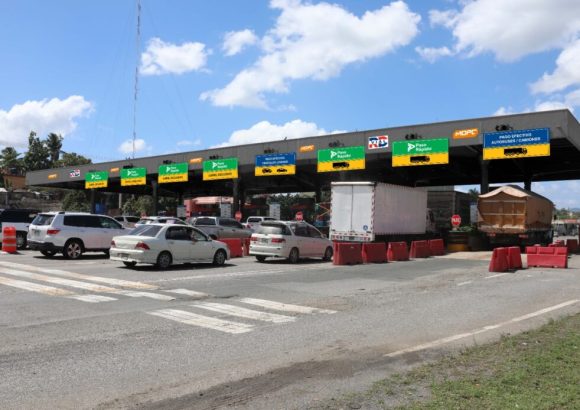
    In the Dominican Republic’s capital of Santo Domingo, the RD Vial Trust has released new revenue data showing strong growth in toll collections through the first five months of 2026, marking a steady stream of funding for the nation’s ongoing road infrastructure overhaul. The trust announced that total toll revenue hit RD$5.78 billion between January and May, generated by more than 42.3 million vehicle passages across the country’s 17 active toll stations.

    Hostos Rizik, the director of RD Vial, shared that monthly averages for both revenue and traffic have held consistent through the opening months of the year. Average monthly toll collections come out to more than RD$1.15 billion, while the network sees an average of 8.4 million vehicle crossings each month. Rizik emphasized that the vast majority of these toll funds are earmarked for financing, expanding, and building critical roadway projects managed by the Dominican Ministry of Public Works and Communications (MOPC).

    From January to April 2026 alone, total infrastructure investments drawn from RD Vial toll collections topped RD$3.08 billion. Looking back to 2021, cumulative infrastructure investments funded by the trust have reached approximately RD$59.3 billion, supporting major roadway upgrades and new constructions in every region of the country. Current active projects receiving funding include the Navarrete Bypass, which has secured RD$1.57 billion in allocations, a comprehensive improvement plan for Ecological Avenue with RD$777.2 million in funding, and upgrades to the Las Américas Highway with RD$560.2 million. Additional ongoing works are the La Otra Banda Bypass in the La Altagracia region and the Azua Bypass.

    Overall, the full portfolio of upcoming and active infrastructure projects overseen by RD Vial carries a total valuation of RD$38.7 billion. Flagship projects in the pipeline include the large-scale Amber Highway, which has an allocated budget of RD$32 billion, alongside plans for new overpasses along the busy Duarte Highway and the expansion of Sánchez Avenue. When breaking down revenue by individual toll plazas, the Duarte Highway facility outperformed all others in the five-month period, pulling in RD$784.2 million from more than six million vehicle crossings. It was followed in revenue by the Las Américas toll plaza and Section I of the Santo Domingo Ring Road.

    For the Dominican Republic, the national toll network remains a foundational, reliable source of funding for the ongoing modernization and expansion of the country’s road system, supporting long-term connectivity and economic development across the nation.

  • Carolina Mejía declares herself ready to take on the presidency

    Carolina Mejía declares herself ready to take on the presidency

    In a gathering of party leadership and grassroots supporters focused on accountability held in San Cristóbal, Carolina Mejía — general secretary of the Modern Revolutionary Party (PRM) and a leading contender for the party’s upcoming presidential nomination — has publicly reaffirmed her readiness to embrace new national political challenges and sustain her work to advance the Dominican Republic’s progress.

    Speaking directly to assembled PRM members at the event, Mejía pushed back against narratives that frame internal party ambition as a top priority, outlining that the organization’s core mission is rooted in two non-negotiable goals: protecting the PRM’s long-term institutional future and driving inclusive national development. She underscored that activists who have worked tirelessly to deliver the PRM’s electoral wins deserve equal access to the benefits of those victories, and restated her unwavering commitment to upholding the foundational values that have allowed the party to expand its influence and legitimacy across the country.

    Mejía reflected on her eight-year tenure as the PRM’s general secretary, a period during which she worked closely with party figure José Ignacio Paliza to build out the party’s national organizational infrastructure. She noted that this collaborative institutional strengthening directly paved the way for the PRM’s two consecutive presidential election victories, which have put incumbent President Luis Abinader in office. She also made a formal pledge to continue supporting the Abinader administration’s policy achievements, while working to build a more cohesive, connected political organization that bridges gaps between national leadership and local communities.

    The accountability event drew a cross-section of key political stakeholders from across the San Cristóbal region, including sitting local officials, national legislators, municipal government leaders, and grassroots party organizers. Mejía attributed the PRM’s steady national expansion not to top-down leadership alone, but to the consistent dedication of the party’s base: grassroots members, young activists, women organizers, and local community leaders. She closed by emphasizing that the loyalty and commitment of these on-the-ground actors will remain indispensable to both strengthening the PRM as an institution and moving forward transformative national development goals.

  • Bahamas urges citizens to avoid all non-essential travel to Cuba

    Bahamas urges citizens to avoid all non-essential travel to Cuba

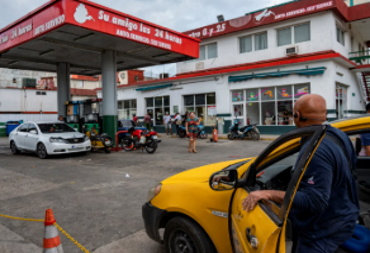
    Amid a deepening economic and infrastructure crisis driven by tightened U.S. sanctions, the government of the Bahamas has issued an urgent advisory urging its citizens to cancel all non-essential travel to neighboring Cuba. The official statement from Nassau outlines ongoing systemic disruptions across Cuba that have upended daily life for residents and created major risks for foreign visitors. These disruptions include persistent, widespread power outages, acute fuel shortages, broken-down public and private transportation networks, and limited access to basic necessities including food, medicine and essential services.

    The Bahamas Ministry of Foreign Affairs emphasized that conditions on the island can shift rapidly and without warning, advising Bahamian nationals already in Cuba or planning travel to maintain constant vigilance and stay updated on evolving local developments. Beyond safety warnings, the advisory also lays out strict entry requirements that all Bahamian travelers must follow to avoid immigration complications. All visitors must hold a valid passport with a minimum six-month validity remaining from their date of entry, at least one blank page for entry and exit stamps, pre-confirmed proof of accommodation, and a confirmed return or onward travel ticket. A Cuban entry visa, valid for stays of up to 90 days, is mandatory for all Bahamian citizens, and the government stressed that all visitors must adhere fully to Cuban immigration laws and regulations.

    A key part of the advisory focuses on Cuba’s unique financial landscape, which has been drastically altered by decades of U.S. trade embargo and recent sanctions expansions. Cuba operates almost entirely on a cash economy, with extremely limited access to international banking services. As of June 6, all international Visa and Mastercard transactions have been suspended across the country, meaning travelers cannot rely on foreign-issued credit or debit cards for in-person purchases or cash withdrawals at ATMs. The Bahamian government urges all visitors to bring enough cash, in either U.S. dollars or euros, to cover every expected expense for the full length of their stay. It also reminds travelers of strict currency declaration rules: any amount of cash exceeding 5,000 U.S. dollars must be declared to Cuban customs officials upon entry, and any amount above this threshold carried during departure must also be reported to local authorities. Failure to disclose excess cash can lead to an immediate seizure of all undeclared funds by authorities, the advisory warns.

    The advisory also urges Bahamian travelers to avoid all public demonstrations, protests and large public gatherings, and to comply with any instructions issued by local Cuban security and government officials at all times.

    The current crisis gripping Cuba stems directly from recent shifts in U.S. foreign policy toward the island and its long-time ally Venezuela. After the U.S. moved to oust Venezuelan President Nicolas Maduro from office in January, it imposed a new, stricter oil embargo on Cuba. For years, Venezuela had been Cuba’s primary, discounted supplier of crude oil, and the cutoff of this critical supply has created a crippling, nationwide crisis that has exacerbated all of the current infrastructure and supply chain problems.

    Cuba’s ambassador to the Bahamas, Marcof Sanchez, recently described the situation in his country as extremely severe during an appearance on a local Bahamian radio program. He called on Caribbean and regional nations to show solidarity with Havana in opposing what he framed as U.S.-led military and economic aggression against the island. Sanchez warned that any escalation of U.S. military aggression toward Cuba would have immediate, far-reaching negative consequences for the entire Caribbean region. He also reaffirmed the Cuban government’s long-standing position that it is open to holding respectful, constructive dialogue with the United States, which has maintained a sweeping trade and economic embargo against Cuba for more than six decades.

  • Senior clergyman urges funding and greater church role in disaster response

    Senior clergyman urges funding and greater church role in disaster response

    Against the backdrop of an incoming Atlantic hurricane season, a senior Jamaican faith leader has amplified a pressing demand for the national government to extend formal state funding to faith-based social outreach initiatives and formally integrate churches into the country’s national disaster response infrastructure.

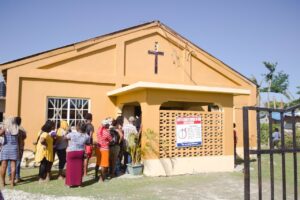
    Pastor Dr Donville Bell, chairman of the Word Power Ministry Board, laid out this call to action during the 18th annual Word Power Conference, hosted Saturday in St Catherine, where he highlighted the underrecognized, frontline role faith institutions have long played during national crises across the island.

    The Atlantic hurricane season officially launched on June 1, and forecasters have already projected that 2024 could bring another above-average, highly active season of storm activity. Bell stressed that despite a long track record of churches stepping in as critical first responders when disaster strikes, these trusted community institutions are routinely sidelined when emergency resources and formal planning are distributed.

    “Long before displaced or crisis-stricken families can reach a government service agency, the local church is their first point of contact,” Bell told conference attendees. “In moments of chaos and uncertainty, people turn to the faces and institutions they know and trust. For the vast majority of Jamaican communities, that trusted anchor is the church.”

    Bell pointed to the widespread devastation left by Hurricane Melissa as a clear case study of the irreplaceable work churches carry out. When entire communities were reeling from the storm’s destructive impact, faith institutions across affected regions opened their facilities as emergency shelters, distributed food and essential care packages, served thousands of hot meals, and provided much-needed emotional and spiritual counseling for families grappling with trauma and the loss of homes and property.

    “When Hurricane Melissa displaced hundreds of residents, the church acted without hesitation,” Bell recalled. “We formed informal partnerships with state agencies and local community groups to meet overwhelming need, but all too often, churches are expected to deliver this life-saving compassionate work without the sustained financial support or core resources required to scale these efforts.”

    Beyond disaster response, Bell noted that faith-based organizations have been competent, long-standing partners to the state in addressing a wide range of persistent social challenges, from deep-rooted poverty and community violence to youth delinquency, family breakdown, and ongoing social support. Yet despite the consistent government reliance on churches to deliver frontline community services, these institutions are frequently locked out of formal state funding streams and national disaster preparedness frameworks.

    “The government regularly calls on churches to back national social initiatives and community programs, but many congregations are expected to do this work with extremely limited resources, and in some cases no public funding at all,” Bell explained. “While we are deeply honored to serve our neighbors, even the most devout among us know it takes resources to provide consistent care. This work has grown even more difficult in recent months, as churches face spiking utility costs at the same time they are supporting local families grappling with steep cost-of-living increases. We have to end the unfair practice that directs the vast majority of social assistance funding to other local development partners, and instead ensure faith institutions have the adequate resources they need to keep serving on the front lines of community care.”

    Bell is calling on Jamaican policymakers to move quickly to formally add faith-based organizations to the country’s official hurricane preparedness and disaster management frameworks, ahead of what could be a damaging storm season.

    “We currently collaborate ad hoc with Municipal Corporations and the Social Development Commission when disaster strikes, but we need a formal seat at the table every time the country plans for natural hazards like hurricanes,” Bell said. “Integrating faith institutions into preparedness planning from the earliest stages will strengthen overall community resilience, improve emergency response outcomes, and reinforce social support systems in vulnerable neighborhoods year-round. It’s time to turn this long-overdue change into action now.”

  • Iberojet launches direct flights between Barcelona and Punta Cana for summer 2026

    Iberojet launches direct flights between Barcelona and Punta Cana for summer 2026

    Caribbean tourism’s leading sun-and-sea destination, Punta Cana, is set to gain a new direct air link to Europe this summer, as Spanish leisure carrier Iberojet prepares to launch its first nonstop service between Barcelona and the Dominican resort hub starting June 21. The new route, timed to expand connectivity between Spain and the Dominican Republic ahead of the 2026 peak summer travel season, will operate on a weekly Sunday schedule through the end of September, giving vacationers and other travelers a seamless, connection-free route to one of the Caribbean’s most sought-after getaways.

    This new Barcelona departure marks the third Iberian Peninsula gateway to the Dominican Republic in Iberojet’s growing route network, which already offers year-round nonstop flights from Madrid (Spain) and Lisbon (Portugal). By adding the Catalan capital to its route map, the airline is positioning itself to meet surging demand across three distinct traveler segments: international tourists seeking easy access to Punta Cana’s beaches, business travelers moving between the two markets, and Dominican diaspora members residing across Spain who want more convenient travel options to visit home.

    The new service carries particular significance for the large Dominican community based in Catalonia, who previously had to travel to Madrid or connect through other European hubs to reach the Dominican Republic. The nonstop route cuts out layover delays and extra travel time, creating a far more convenient journey between the two countries. Beyond serving resident communities, industry leaders expect the new flight to drive a measurable uptick in tourist arrivals to Punta Cana during the busiest summer travel months, supporting local hospitality and service businesses.

    As a subsidiary of Ávoris Corporación Empresarial, the travel division of global tourism group Barceló Group, Iberojet operates a contemporary fleet of Airbus commercial aircraft spanning wide-body models including the A350 and A330, plus the narrow-body A320 for shorter-haul services. Company representatives emphasized that the launch of the Barcelona-Punta Cana route aligns with the carrier’s long-term strategy to strengthen strategic air connections between the Dominican Republic and key source markets across Europe, cementing its position as a leading provider of transatlantic leisure travel to the Caribbean.

  • Three killed over deadly weekend

    Three killed over deadly weekend

    A wave of brutal, unprovoked gun violence shattered three families across The Bahamas over the 2024 Labour Day weekend, leaving grieving relatives searching for answers and justice after three men were killed in separate shooting incidents in New Providence and Grand Bahama.

    The first fatal attack unfolded shortly before 9 p.m. Friday in Grand Bahama’s Hunters neighborhood, near a local commercial establishment. Stafford Ferguson, a 44-year-old body repairman, father of four and resident of Freeport’s Caravel Beach community, was shot multiple times as he walked toward his parked 2009 burgundy Chevrolet Impala. He was rushed to a local hospital by emergency responders, but succumbed to his injuries at 11:35 p.m. that same night.

    According to police accounts of the shooting, a lone attacker dressed in all dark clothing approached Ferguson unexpectedly, opened fire, then fled on foot to a waiting getaway vehicle driven by an accomplice. Investigators have since taken two 34-year-old men into custody for questioning as they build their case, and the Ferguson family says they are satisfied with the progress law enforcement has made so far, despite being flooded with unconfirmed rumors about the killing.

    For the Ferguson family, the loss has been devastating. Khambrel Ferguson, Stafford’s brother, described his sibling as a gentle, hardworking peacemaker who dedicated his life to supporting his four children — two sons and two daughters between the ages of 4 and 21 — and often stepped in to de-escalate conflicts rather than encourage violence. “Stafford was a nice person. He was helpful to people. He was a humble person and never used to bother anyone. To see this situation happen is just shocking because somebody murdered him,” Khambrel told reporters. “We just looking for justice.” He added that the family’s matriarch has been completely overwhelmed by grief following the sudden death of her son, who was also the child of prominent local businessman Max Quant of Noula Investment Ltd.

    Ferguson’s killing was only the start of the deadly weekend of violence. Hours later, shortly before 11 p.m. Friday, a second fatal shooting was reported in New Providence’s Eneas Street neighborhood, off Meadow Street. ShotSpotter gunfire detection technology first alerted police to shots fired in the area, and moments later, an anonymous caller reported that an injured man lay unresponsive on the roadway.

    Responding officers from the Royal Bahamas Police Force’s Southern Division found the 23-year-old victim, dressed in a white t-shirt and blue jeans, lying in the street with multiple gunshot wounds. Emergency medical teams confirmed he was dead at the scene. One person has been taken into custody in connection with the attack, though the investigation remains ongoing.

    Preliminary investigative details show the victim had recently returned to New Providence after taking construction jobs on several of the country’s outlying Family Islands, including projects on Paradise Island, to support his two-year-old daughter. Just minutes before the attack, he had dropped his toddler off with her mother. Friends and family say the killing has come as a crippling blow, coming just one year after the family lost the victim’s grandmother.

    In a viral public social media post, the victim’s sister pushed back hard against online speculation that her brother was involved in gang activity or street violence, painting a portrait of a quiet, dedicated young father focused on providing for his little girl. “Our grandmother passed last July, and our sister and I did our best to make sure he did not fall victim to the streets and gangs. They took his life carelessly. He had his baby in his arms when he was shot. He begged for his life. They could have stopped at one when he fell and it jammed,” she wrote. “Instead, they continued to unjam and load on my baby brother. He was working on the cay and just came a couple of days prior to visit family, see his girl and his baby. God protected my niece. She is a toddler. How can you kill so senselessly. My God do people not have a heart anymore? Again, my brother was not a thug or a gangster and was NOT a part of any gang or the streets, that’s why it hurts so much. He was killed out of envy.”

    The victim’s godmother also took to Facebook Live to deliver an hour-long public appeal, begging anyone with information about the attack to come forward, even if that means turning in a family member. “You feel it harder because he was doing something,” she said. “He has a baby. You feel it harder because he is somebody’s child. His mother might be deceased, but he still has his older sister. He has his sisters, he has a brother, he has auntie, has uncle, and he have a crazy godmother.”

    The third and final fatal shooting of the weekend took place around 1:45 p.m. Sunday on Constitution Drive in New Providence. Police responding to reports of gunfire found a man in his early 30s dead from gunshot wounds at the scene, and two other adult men wounded in their lower legs. According to police, the three victims were gathered at an informal makeshift garage adjacent to their homes when two armed assailants approached the property gate carrying high-powered firearms, opened fire, and fled the area. No suspects have been publicly identified or taken into custody in this shooting as of the latest updates.

    Across both islands, the string of unprovoked, deadly attacks has left three families torn apart, all calling for accountability and answers for the senseless violence that cut short the lives of their loved ones.