作者: admin

  • Gregg climbs rally table after BCIC RB26

    Gregg climbs rally table after BCIC RB26

    The fifth running of the Barbados Rally2 Championship has already cemented its status as the most competitive iteration in the series’ history, with unprecedented parity among top contenders turning the title race into a nail-biting contest ahead of the final two rounds. After four completed rounds, the championship table reflects the sheer unpredictability of this season: three different drivers have already claimed round victories, and a total of six competitors have secured podium finishes. Most notably, just eight points separate the top three title hopefuls as the series enters its home stretch. Jamaican driver Kyle Gregg, piloting his Ford Fiesta Rally2, emerged as the biggest mover from the recent BCIC Rally Barbados 2026 double-header. A strong points haul across the two rounds catapulted him from fifth place in the overall standings up to third, reigniting his bid for the season crown.

    Gregg’s path to BCIC RB26 was far from smooth. Just one week before the event, a crash on his opening run at the First Citizens King of the Hill left him scoreless, dropping him from second to fifth in the championship and 12 points adrift of current leader Stuart Maloney, the 2022 series champion. With a maximum 66 points still up for grabs across the remaining rounds, the double-header at BCIC RB26 was a make-or-break weekend for Gregg, who knows what it is to compete at the sharp end of the standings: he finished third overall in the Barbados Motoring Federation (BMF) championship in 2024, and claimed second place behind fellow Jamaican Jeff Panton last season.

    The opening stage of BCIC RB26, the Friday night Riddara Bushy Park SuperSpecial, delivered its own share of drama. Mark Maloney, driving a Fabia RS Rally2, took the stage win, edging out his brother Stuart Maloney and Adam Mallalieu, who was also competing in a Ford Fiesta Rally2. Northern Ireland Tarmac champion Aaron McLaughlin, piloting a Volkswagen Polo GTI R5, crossed the line in fourth, though as an overseas guest competitor he was not eligible to score championship points. Fifth place went to Jeff Panton, five-time winner of Rally Barbados, while 2024 Rally2 champion Josh Read (Ford Fiesta Rally2) finished sixth.

    The Barbados Rally2 Championship will now go on a short break before returning to action on September 12, for the penultimate round of the season: the Rally of the Sun & Stars, the premier annual event hosted by the Motoring Club Barbados Inc. With the title race still hanging in the balance, all eyes will be on the top three contenders as they fight for every point to secure the 2026 crown.

  • Public statement: Chief Veterinary Officer on unathorised importation of horses

    Public statement: Chief Veterinary Officer on unathorised importation of horses

    Grenada’s Ministry of Agriculture, Lands and Forestry has issued an official public announcement detailing a high-stakes biosecurity incident that unfolded after an attempt to smuggle two horses into the country from St. Lucia without required legal authorization. Under Grenada’s Animal Disease and Importation Act (Cap. 15), the Veterinary and Livestock Division holds exclusive authority as the competent body for issuing animal import permits, and no approval was granted for this shipment, making the attempted cross-border movement a direct violation of national law.

    Following interception of the unauthorized shipment, official health verification from St. Lucia’s Chief Veterinary Officer confirmed a devastating finding: both horses tested positive for *Babesia spp.*, the parasite that causes equine babesiosis, a life-threatening tick-borne disease that is currently not present in Grenada. National biosecurity policy explicitly bars entry to any animal testing positive for the pathogen, as an outbreak would pose an immediate, severe threat to the country’s existing equine population.

    A full technical assessment confirmed that Grenada lacked the infrastructure and resources to safely manage the infected animals. The country has no operational quarantine facilities designed to house and isolate high-risk *Babesia*-positive animals, no specialized medications or equipment to treat the infection, and no external domestic partners able to step in to provide these critical resources. With no feasible, legally compliant pathway to admit, isolate or treat the horses on Grenadian soil, and with returning the animals to St. Lucia deemed unworkable, officials moved forward with mandated protective measures aligned with international standards.

    In line with national legislation, international biosecurity protocols, and formal recommendations from the Caribbean Animal Health and Food Safety Agency (CAHFSA), the two horses were humanely euthanized following accepted veterinary welfare standards, and their remains were immediately incinerated under full official supervision to eliminate all risk of infectious material spreading. The Ministry emphasized that these actions are not punitive or extraordinary: they represent standard sanitary procedure used globally to block the introduction of destructive transboundary animal diseases.

    Under Grenada’s existing legislation, the Chief Veterinary Officer is legally required to prioritize preventing the entry of foreign animal diseases, reject high-risk shipments, and order necessary measures to protect the health of the national herd, as well as broader public and economic health. Officials outlined the severe potential consequences of allowing the infected horses to enter the country: given the widespread presence of tick vectors across Grenada and the lack of mitigation infrastructure, the disease would almost certainly become established and endemic. This would lead to chronic infection and death among local equines, skyrocketing veterinary and disease control costs, and potential trade restrictions on Grenadian animal and animal product exports that would harm the national agricultural economy.

    The Ministry stressed that the decision to euthanize the horses was made exclusively on technical and legal grounds, not political considerations. The action complies fully with national law, adheres to globally recognized animal health and biosecurity best practices, and aligns with expert guidance from regional animal health authorities at CAHFSA. Moving forward, the Ministry reaffirmed its commitment to fair and consistent enforcement of animal import regulations, ongoing protection of Grenada’s disease-free animal population status, and transparent public communication about matters impacting national biosecurity. Members of the public with additional technical questions are directed to contact the Office of the Chief Veterinary Officer within the Veterinary and Livestock Division.

  • Listwa Kannaval returns to dig further into our culture

    Listwa Kannaval returns to dig further into our culture

    As one of the cornerstone events of Saint Lucia’s annual Carnival celebration, Listwa Kannaval is gearing up for its second iteration, creating a dedicated community space for cultural reflection, open dialogue and collaborative exploration of the island’s rich heritage.

    Scheduled to kick off at 7:00 p.m. on Wednesday, June 10, 2026, at the scenic Harbor Club venue, this year’s gathering centers on the provocative theme: “Rhythm, Language, and Identity: Does Our Music Define Us?”

    The core discussion will unpack the profound role that Saint Lucian music plays in shaping and reinforcing the island nation’s collective national identity. Attendees will trace the evolutionary arc of local sounds, starting from the roots of traditional folk music and calypso, through the rise of upbeat soca, to the distinct, homegrown Dennery segment genre that is unique to Saint Lucia.

    According to the official Carnival Planning and Management Committee, the conversation will place special emphasis on the central position of Kwéyòl in local musical expression. Organizers note that music acts as a powerful vessel for intergenerational storytelling, a function that in turn drives critical work in cultural preservation that would not be possible through other mediums.

    Headlining the event is Dr. Ronald T. Francis, a respected Saint Lucian scholar based at The University of the West Indies, Cave Hill Campus, where he teaches linguistics. Holding a PhD in linguistics, Francis’ research focuses on Atlantic Creoles, applied linguistics, corpus linguistics and world Englishes, with a specific focus on social justice, systemic discrimination, and cultural attitudes as they relate to Saint Lucian popular music. His decades of specialized work position him to bring nuanced, evidence-based insight to the event’s core theme.

    Following Francis’ keynote address, a diverse panel featuring working artists, music producers, cultural organizers and senior industry leaders will extend the conversation, bringing on-the-ground experience to the theoretical framework laid out in the presentation. The event will also reserve dedicated time for audience participation, inviting attendees from all backgrounds to share their own perspectives and experiences with Saint Lucian music and culture.

    As Carnival as a global cultural practice continues to evolve to meet the needs of modern communities, Listwa Kannaval fills a critical gap in the celebration’s programming by offering a structured space to ask probing, meaningful questions about what cultural identity means for Saint Lucians today. Event organizers emphasized that the event reaffirms a core truth: Carnival is far more than just a time for celebration and public festivity, it is also a cultural institution worthy of academic study, careful documentation, and deep, holistic understanding.

  • Family appeals for help in search for missing Gros Islet man

    Family appeals for help in search for missing Gros Islet man

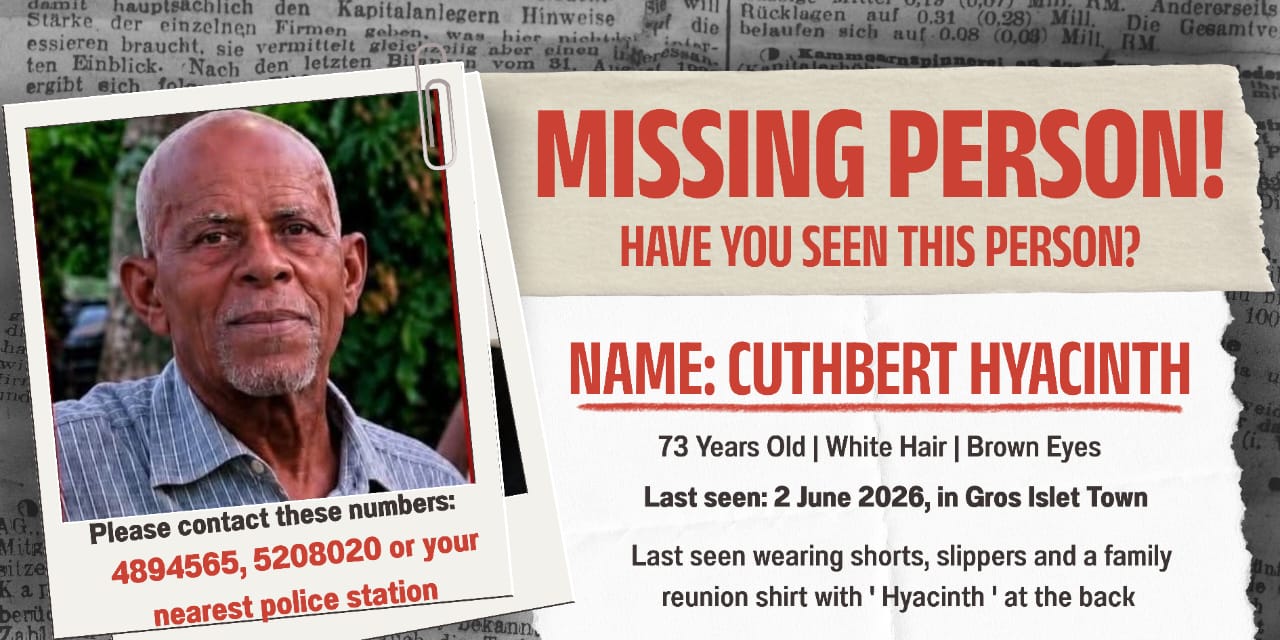
    A 73-year-old resident of Gros Islet, Saint Lucia, has been missing for more than a week, sparking a coordinated search effort by local community members and law enforcement. Lawrence Hyacinth, a resident of the Morne Giraud neighborhood, was last seen by his family at around 2 p.m. on Tuesday, June 2. When he left his home that afternoon, he was dressed in casual attire: shorts, slippers, and a commemorative family reunion t-shirt emblazoned with the name “Hyacinth” on the back.

    Relatives later confirmed that independent sightings by Hyacinth’s friends placed him in the area on the following Wednesday morning. This partial confirmation has left the family clinging to cautious hope, suggesting he may have traveled outside the boundaries of his immediate neighborhood rather than remaining close to home.

    Since Hyacinth was reported missing, volunteers from northern communities across the island have mobilized to comb through local areas in search of any trace of him. Dozens of family members, friends, neighbors and ordinary residents have volunteered their time to check wooded areas, local businesses, public gathering spots and abandoned properties, but as of yet, no credible clues to his whereabouts have emerged.

    Marylin Hyacinth, Lawrence’s sister, spoke publicly about the family’s urgent distress, noting that their anxiety is amplified by the 73-year-old’s pre-existing health conditions. “We are begging members of the public, especially bus drivers who travel across the island every day, to keep an eye out for him and reach out if they see anything that matches his description,” she said in an interview.

    She explained that Lawrence faces heightened risk due to his combination of medical issues: he lives with both dementia, which can impair his ability to navigate or communicate where he is, and diabetes, which requires consistent medication and blood sugar management. With each passing day that brings no update on his location, the family’s worry grows exponentially.

    Marylin Hyacinth confirmed that the family notified law enforcement immediately after realizing Lawrence was missing. “We filed a missing person report with police right from the start, and we have been checking in regularly for updates while continuing our own independent search efforts across the island,” she said.

    Beyond on-foot searches led by local volunteers, the family has launched a public awareness campaign to spread information about Hyacinth’s disappearance. They have distributed hundreds of flyers featuring a clear photograph of Lawrence and multiple family contact information to community centers, shops, and post offices in towns across Saint Lucia, in the hope that a member of the public may have seen him and can share critical information.

    Local police have confirmed they are supporting the search effort. Investigators have been reviewing public and private surveillance camera footage from areas near Hyacinth’s home and along common travel routes, though the investigation is still ongoing with no conclusions to date.

    The Hyacinth family is urgently appealing to anyone who has spotted Lawrence, or who has any information about where he may be staying, to contact them immediately. Anyone with relevant details can reach the family at three dedicated phone lines: 4894565, 5208020, or 4885646.

  • ’They didn’t do the police nothing…’

    ’They didn’t do the police nothing…’

    MONTEGO BAY, St James — A fatal early-morning police operation on the outskirts of Montego Bay has reignited long-simmering tensions over law enforcement use of force, after four men were shot dead Wednesday in an incident that has left grieving relatives crying foul and authorities defending the action as a necessary step to curb growing community violence.

    Patterns of conflicting narratives that have become all too familiar in Jamaican fatal police shootings are playing out once again: bereaved family members are adamant the men were unarmed workers carrying out their jobs, pointing to unprovoked excessive force as the cause of death, while official police accounts frame the incident as a targeted operation that devolved into an armed shootout with suspects tied to a wave of local violence. What makes this incident unusual is the sheer loss of life in a single confrontation.

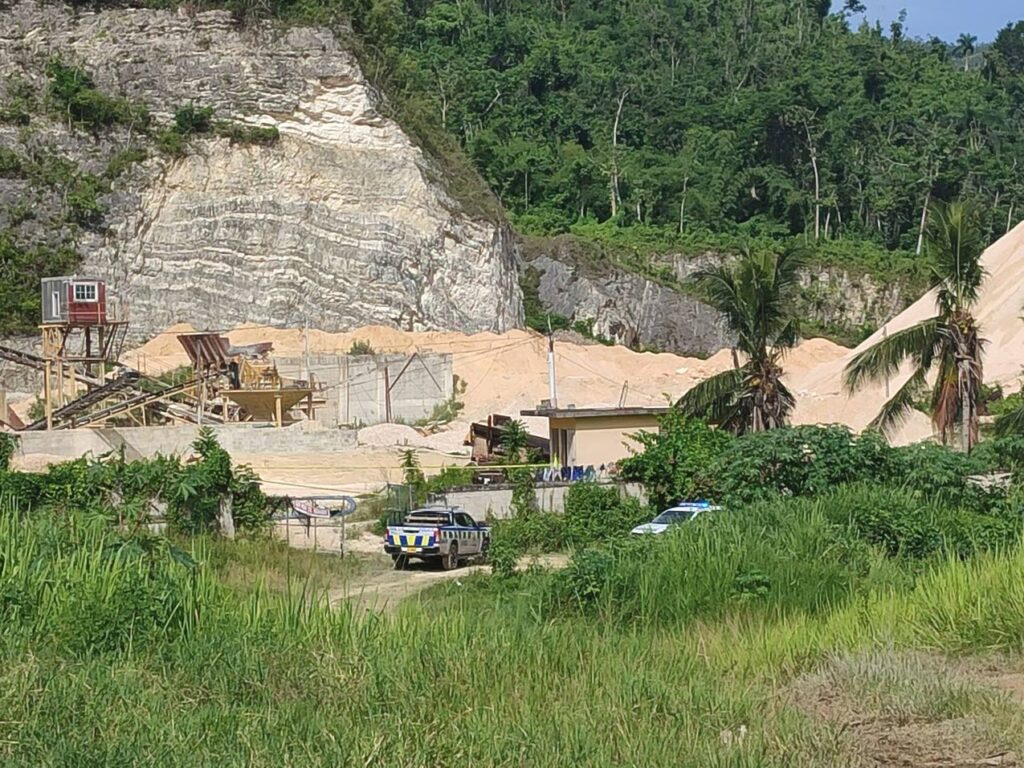
    The victims have been identified as Jahmar Ashman, 57-year-old Brian “Teezy” Fairclough, Brian’s son Brian “Teejay” Fairclough, and a fourth man who remains unidentified as of press time. The shooting unfolded at a marl quarry near the Retirement Dump area, according to official records.

    For Tameika Evans, partner of Jahmar Ashman, the tragedy has left her struggling to explain the loss to the couple’s two-year-old child, who remains unaware his father is dead. The toddler was seen eating candy near the crime scene Wednesday as police maintained a secured cordon around the area. Evans told local media the Jamaica Observer that Ashman and the younger Fairclough worked as night watchmen at the quarry. She received word of the shooting from her mother, who first noted a heavy police presence in the area, and law enforcement had already transported the bodies to hospital before Evans could arrive on scene.

    Near the crime scene, Tashoy Fairclough, the newly widowed wife of Brian Fairclough, told reporters she is terrified of the long-term impact her husband’s death will have on their two young children. The couple’s 10-year-old daughter is scheduled to sit her Primary Exit Profile (PEP) national exit exams Wednesday, and Fairclough said the child has been inconsolable, unable to focus on the test despite school officials arranging support. “All of this is police brutality; them a wicked and we need justice round here suh,” Fairclough said. She explained her husband worked as a tractor operator at the quarry and had been staying on site in a quarry building with his son and the two other men at the time of the raid. She described him as a peaceable man who avoided conflict.

    Gwendolyn Williams, who raised Brian “Teejay” Fairclough from infancy, echoed the family’s anger and worry. She said none of the four men deserved to die, and expressed concern that the young children left behind will now be forced to survive without their breadwinners. “Them dead and leave them little children to go to school, them shouldn’t kill them. They didn’t do the police nothing fi them kill them,” Williams insisted.

    But the Jamaica Constabulary Force (JCF) has pushed back against the claims, releasing an official statement outlining the context for the operation. According to the JCF, the operation was launched at approximately 5:40 a.m. Wednesday based on intelligence gathered during ongoing investigations into a recent string of violent incidents in the area, including a fatal shooting at the Retirement Dump on June 5. Investigators have linked multiple violent attacks to an ongoing turf conflict between groups involved in the local scrap metal trade operating out of the dump.

    The JCF statement noted that long-standing disputes between scrap metal and recyclable material collectors and sellers had escalated in recent weeks, triggering a cycle of violent reprisal attacks that pushed community tensions to dangerous levels. Wednesday’s targeted raid was designed to prevent further bloodshed, the force said, adding that intelligence indicated additional attacks were imminent. “Law enforcement personnel were deployed to the area as part of ongoing efforts to disrupt criminal activity, prevent additional loss of life, and restore public safety,” the statement read. All four men shot during the confrontation were transported to hospital, where they were subsequently pronounced dead, according to the JCF.

    Consistent with standard protocol for all fatal shootings involving Jamaica Constabulary Force members, the Independent Commission of Investigations (Indecom) has launched an independent probe into the incident.

    This fatal shooting marks the fourth high-profile incident involving fatalities during security force operations in Granville division since the start of 2024. On New Year’s Day, a four-year-old child and two adult men were killed during a police operation in the same community. On Mother’s Day, 17-year-old Tjey Edwards was fatally shot during an alleged confrontation with law enforcement. One week after Edwards’ death, Latoya “Buju” Bulgin was shot and killed by Constable Andrew Wilson while she was transporting people to a protest over Edwards’ death. The officer has since been charged with Bulgin’s murder and is currently awaiting trial.

    Indecom data shows the scale of growing fatal confrontations in the country: 14 people have been killed in alleged clashes with security forces across Jamaica since the start of June. Eleven of those deaths occurred between Tuesday and Wednesday of this week, including two separate quadruple fatal shootings.

  • DJ Amber celebrates honours

    DJ Amber celebrates honours

    Nearly 20 years after first stepping behind the radio microphone, one of Jamaica’s most beloved broadcasting figures, DJ Amber, has marked a career-defining milestone that goes far beyond personal accolade: it puts a long-overdue spotlight on the countless contributions of women shaping the nation’s media and entertainment industries.

    Amber was among the standout women recognized during the 10th annual Queens of Reggae Island Honour Ceremony (QORIHC) Awards, a celebration that elevates the work of trailblazing women across five key sectors: reggae music, media, entertainment, business, and grassroots community development. For the veteran broadcaster, the award carries extra weight, as it shines a light on a cohort of professional women whose labor often flies under the public radar.

    “Getting this show of public appreciation feels incredibly meaningful,” Amber shared in an interview after the ceremony. “Women working across media, broadcasting, music, and entertainment rarely get this level of formal recognition. So this is a double honor: I’m being recognized as a woman, and as an outstanding professional in my field, which makes it that much sweeter.”

    The recognition also serves as a sobering reminder of the persistent barriers women face in creative and media industries that have long been dominated by male leadership and ownership. “Across the board, this is still a male-dominated landscape,” Amber explained. “No matter if you work in film, music, or the arts, men still hold most of the power and most of the public recognition. That’s what makes QORIHC’s work so important—they consistently lift up the excellent work that women like me and my fellow honorees are doing.”

    Amber’s rise to become one of Jamaica’s most recognizable radio voices began at Linkz Radio in the coastal town of Savanna-la-Mar, before she made the jump to the nation’s iconic IRIE FM. There, her warm, approachable persona and down-to-earth conversational style helped her build a large, fiercely loyal listener base. She attributes that deep connection with audiences to her refusal to adopt a performative “on-air persona.”

    “I don’t put on a fake ‘radio voice’ when I get behind the mic,” she said. “I just talk to my audience like I would talk to my friends, my family, or someone I run into at the grocery store or on the street. That authenticity is what keeps people coming back.”

    What many listeners may not see is that Amber’s influence extends far beyond the airwaves. She has earned widespread acclaim for her off-air humanitarian work: organizing disaster relief campaigns for vulnerable communities hit by hurricanes and tropical storms, leading advocacy to protect public access to Jamaica’s world-famous beaches, and leveraging her platform to amplify conversations about pressing social issues that impact working-class Jamaicans.

    This commitment to public service grows out of a core belief that people in media have a unique responsibility to drive progress. “I truly believe media personalities have a responsibility to use their platforms to push for social change,” she said. “The media is the most powerful space we have to influence public opinion and support positive change across our society.” She credits her parents with instilling these values of service early in life, and says community outreach remains one of the most meaningful parts of her entire career.

    Even as she basks in the recognition from QORIHC, Amber has already turned her attention to what comes next. Beyond continuing her daily work on Jamaican radio, she plans to expand her growing business portfolio, explore new opportunities in reggae music production, and scale up her humanitarian outreach to reach more communities across the island. “I stay busy even when listeners don’t see or hear me on the air,” she joked.

    As she reflects on nearly 20 years in the industry and her latest honor, Amber hopes her career journey can inspire the next generation of women hoping to build careers in media and entertainment. Looking ahead to her legacy, she says: “When people hear my name 20 years from now, I’d love for them to remember me as a kind yet bold woman. I want to be remembered for having done all the good I could in this lifetime.”

  • World Cup, dark clouds

    World Cup, dark clouds

    After a four-year global wait, the world’s most anticipated sporting spectacle, the 2026 FIFA World Cup co-hosted by the United States, Mexico and Canada, is finally set to kick off, bringing unrivaled football fever to fans across every continent — including passionate supporters in Jamaica, whose national team the Reggae Boyz narrowly missed out on qualification for what many saw as a once-in-a-generation spot.

    This 2026 edition marks a historic turning point for the men’s World Cup, growing beyond its decades-old 32-team format to welcome a record 48 national sides to the global stage. The expansion has pushed the total number of tournament matches up to 104, and for the first time, emerging football nations including Cape Verde, Curaçao, Jordan and Uzbekistan will make their World Cup debuts, opening the door for more underrepresented regions of the world to compete at football’s highest level.

    But the historic expansion has not come without controversy. On the eve of the opening match at Mexico City’s iconic Estadio Azteca, FIFA President Gianni Infantino took the stage at a Mexico City press conference to push back against mounting criticism of two major issues facing the tournament: exorbitant ticket prices and widespread visa and entry denials linked to U.S. immigration policy.

    Infantino defended FIFA’s ticketing structure, which has drawn global outrage after some premium tickets were listed for more than $30,000. He pointed to the $60 base entry ticket, arguing that the price point is lower than the average entry cost for playoff matches across major U.S. professional sports, adding that the tournament’s overall average ticket price of under $500 also undercuts average prices for major U.S. sporting events.

    Infantino also downplayed the high-profile controversy surrounding Somali referee Omar Artan, who was denied entry to the U.S. last Saturday after arriving in Miami due to U.S. immigration security concerns. The U.S. State Department later claimed Artan had ties to suspected terrorist organization members, and FIFA has confirmed he will not officiate any matches during the tournament. Additionally, Infantino framed Iran’s participation in the tournament amid ongoing military tensions between Iran and the U.S. as a victory for football and FIFA’s mission of uniting nations through sport. Multiple individuals connected to Iran’s national team, including senior officials and fans, have already been denied entry to the U.S. as part of the Trump administration’s strict immigration crackdown.

    In a separate development Wednesday, U.S. President Donald Trump confirmed he plans to attend multiple World Cup matches during the tournament, though he declined to share specific details of his attendance.

    Tensions are running high on the ground in Mexico City, where the opening match between host nation Mexico and South Africa is scheduled to kick off Thursday. Protests against the Mexican government have already disrupted preparations, with demonstrators blocking a major avenue leading to Estadio Azteca on Tuesday. Riot police formed a barricade to prevent protesters from reaching the stadium grounds. Mexican President Claudia Sheinbaum has labeled the week of ongoing demonstrations a “provocation,” and assured the public Wednesday that security for the opening match is fully under control.

    Uncertainty has also come from unexpected quarters, with weather disrupting pre-tournament preparations. A severe thunderstorm carrying torrential rain and lightning hit Orlando, Florida on Wednesday, forcing a delay of England’s final warm-up friendly against Costa Rica. The weather disruption echoes similar issues that plagued the 2025 Club World Cup, where multiple matches were delayed or disrupted by extreme weather.

    Even as most teams have settled into their host bases across North America, another unexpected controversy has emerged surrounding underdog side Haiti, who face Scotland in their opening match in the coming days. FIFA ordered Haiti to completely redesign and replace their official team kits after it was discovered the shirts featured an illustration of the 1803 Battle of Vertières, the conflict that secured Haiti’s independence from colonial rule — a depiction that violates FIFA’s rules prohibiting political messaging on match equipment.

  • Neita Garvey pushes digital overhaul of municipal corporations

    Neita Garvey pushes digital overhaul of municipal corporations

    Jamaica’s Opposition has laid out an ambitious plan to drag the country’s municipal government systems into the digital age, arguing that long-overdue systemic change is critical to meeting the expectations of 21st-century citizens.

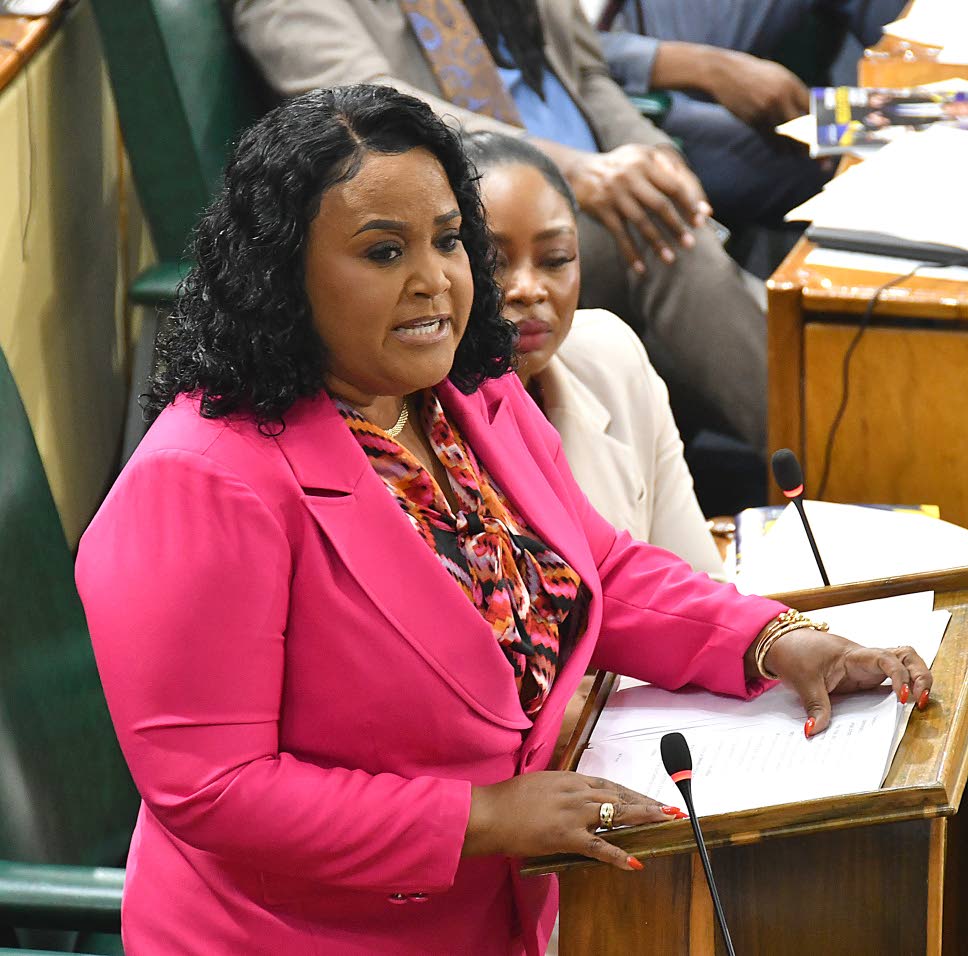
    Natalie Neita Garvey, the Opposition’s spokesperson on local government and Member of Parliament for St Catherine North Central, outlined the proposal during a sectoral debate in the House of Representatives on Wednesday. Dubbed the Smart Municipal Jamaica Initiative, the plan aims to fundamentally reshape how local authorities engage with residents, process administrative requests, and deliver core public services.

    Neita Garvey pointed to a stark disconnect between Jamaica’s digital integration in daily life and the outdated workings of municipal bodies. While Jamaicans now complete instant bank transfers, conduct cross-border business, and communicate with contacts across the globe entirely from mobile devices, most municipal services still rely on paper-heavy workflows and drawn-out, opaque administrative processes, she said.

    In a striking rebuke of the current system, Neita Garvey told lawmakers: “Bureaucracy should not feel like archaeology. Citizens should not have to excavate information.”

    Under the status quo, residents seeking permits, business licences, or municipal approvals are forced to travel from office to office just to get status updates, creating widespread frustration and costly delays for both individual applicants and local businesses, she explained.

    “Modern government must become visible, trackable, transparent, and responsive. This requires nothing less than a national programme of municipal digitisation,” Neita Garvey added.

    At the core of the proposal is the development of a single unified digital platform that connects all of Jamaica’s municipal corporations into one interoperable network. Through this centralized portal, residents would be able to submit applications for permits, licences, and approvals entirely online, track the progress of their requests in real time, pay required fees electronically, and receive automatic notifications about any updates to their cases.

    The plan also expands beyond core administrative services: Neita Garvey proposed adding features that allow residents to monitor the progress of local infrastructure projects, submit non-emergency service requests, take part in public policy consultations, and access all public municipal records through the same single portal.

    Crucially, Neita Garvey emphasized that municipal digitization cannot be implemented as a patchwork of independent, municipality-specific projects. Instead, she argued, the shift must be guided by a national framework with uniform technical standards and shared, interoperable technology to guarantee consistent service quality for all Jamaican residents, no matter which part of the country they live in.

    The digital overhaul forms part of a broader push to reform Jamaica’s local governance system, which Neita Garvey said remains overly reliant on central government approval and trapped by outdated administrative norms, even after decades of incremental reform attempts. Alongside digitization, she is calling for increased financial autonomy for municipal corporations, performance-based funding models, modernized revenue collection systems, and expanded opportunities for community participation in local decision-making.

    Closing her argument, Neita Garvey framed the reform as an urgent economic and governance priority, saying: “The question is not whether Jamaica can digitise local government. The question is whether Jamaica can afford not to.”

  • ‘Mystery patients’ to monitor public health facilities

    ‘Mystery patients’ to monitor public health facilities

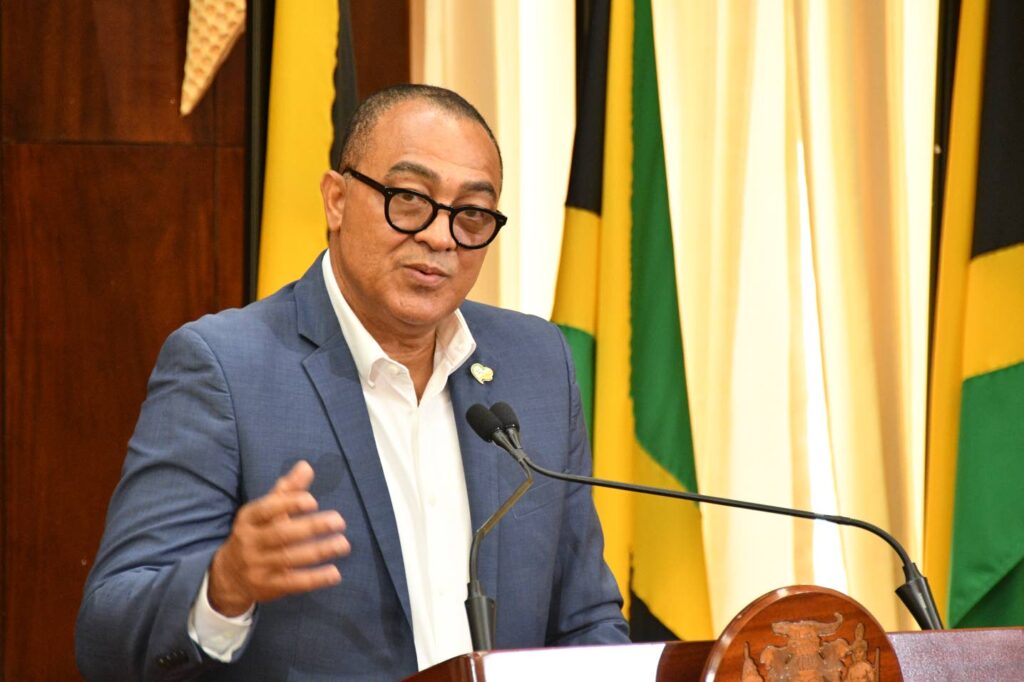
    Jamaica’s Ministry of Health and Wellness is launching a multi-pronged strategy to address longstanding public grievances over subpar customer service at government-run health facilities, Health Minister Dr Christopher Tufton confirmed Wednesday. Speaking at the opening ceremony of the Carol Picart Courtyard at Kingston’s Victoria Jubilee Hospital, Tufton framed the new measures as a complementary reform to ongoing government investments in facility construction and infrastructure upgrades, noting that physical improvements alone cannot deliver a stronger, more patient-centered health system.

    “We cannot build new buildings, equip them, and don’t have a different mindset. That’s the future of a reformed, improved health system,” Tufton told assembled health officials and industry stakeholders. “We need to focus on the people and on the attitude as to how we improve.”

    At the core of the new oversight framework is a program modeled after the private sector’s mystery shopper initiative, which will deploy so-called “mystery patients” to pose as ordinary care seekers in public health waiting areas and triage queues. These undercover observers will document staff availability, responsiveness and adherence to customer service standards, compiling detailed reports for ministry leadership. Tufton explained that the program is designed to capture unfiltered, real-world insights into daily operations, rather than the polished, prepared displays that often accompany pre-announced inspections.

    Complementing the mystery patient program is a brand-new internal investigations department created specifically to probe formal complaints of service failure. The specialized unit will dispatch independent investigators to affected facilities to collect witness statements, gather evidence and produce formal reports for both the Minister’s office and the Permanent Secretary’s office. Tufton emphasized that the unit will eliminate the longstanding culture of unaccountability for poor service, stating that “the days of people doing things with excuses, we have to bring that to an end.” All investigation findings will be reviewed by a governing board, which will issue disciplinary or corrective recommendations based on the evidence.

    Tufton also announced that unannounced spot checks by the Minister and other senior ministry officials will become a regular occurrence across all public health institutions. He joked that pre-announced visits often trigger temporary, surface-level improvements — from cleaned floors to suddenly compliant staff uniform policies — that disappear as soon as official visitors leave. Unannounced checks, by contrast, will reveal the true daily conditions patients face.

    The Minister stressed that the reforms are not intended as a rebuke of the health system’s overall workforce, acknowledging that the vast majority of patients receive adequate care and that the system serves more than three million patients annually across Jamaica, an enormous operational responsibility. He urged health staff not to become defensive, but to commit to incremental improvement. “I am not saying all of this to say that I am here to prosecute anyone,” he said. “It’s a huge portfolio that involves millions of Jamaicans. It’s a big task.”

    Even so, Tufton made clear that the ministry will not tolerate persistent poor performance that undermines billions in government investment into public health. For staff who lack proper service training, the ministry will provide additional retraining to bring their performance up to standard. But for staff who refuse to adopt patient-focused practices, Tufton said, the ministry will take firm action: “who refuses to learn, they may have to go somewhere where they like the job. Because obviously they don’t like the job if they refuse to learn.”

  • Williams gives breakdown of $67-billion Hurricane Melissa allocation to ministries

    Williams gives breakdown of $67-billion Hurricane Melissa allocation to ministries

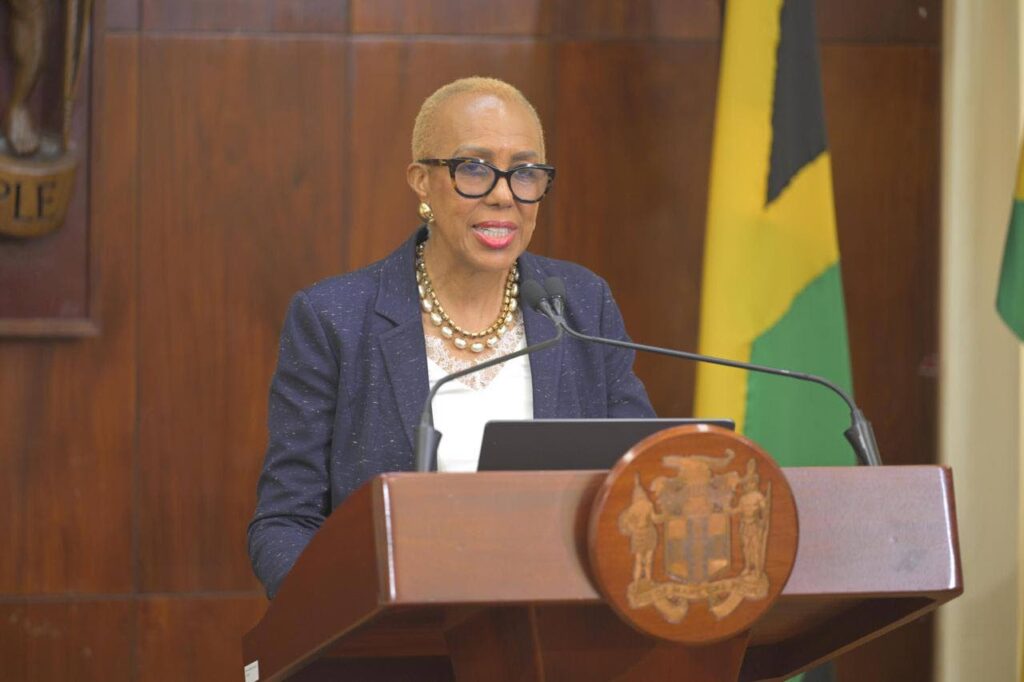
    Nearly six months after Hurricane Melissa battered sections of Jamaica, leaving widespread destruction of critical infrastructure and livelihoods in its wake, the island’s top finance official has publicly detailed how the government’s JMD $67 billion in emergency recovery funding is distributed across national ministries.

    Minister of Finance and Public Service Fayval Williams walked reporters through the full breakdown of the allocation during a post-Cabinet media briefing held Wednesday at Jamaica House in St. Andrew.

    During the most recent completed fiscal year, Jamaican lawmakers passed two supplementary budget measures – the third and fourth of the fiscal cycle – specifically to release the emergency recovery funds to the agencies leading restoration efforts, Williams explained. “I am here to just walk through, pretty quickly, where that went to and what ministries and how it got there,” she told assembled journalists.

    The third supplementary budget, the larger of the two measures, carried a total allocation of $53.6 billion in recovery funding. This included $189 million directed to the Office of the Prime Minister, and $3.4 billion earmarked for Jamaica’s linchpin tourism industry, overseen by the Ministry of Tourism. Williams noted the tourism funds are dedicated to repairing storm-damaged visitor-facing infrastructure and providing direct support to thousands of workers left out of work by the hurricane.

    The Ministry of Economic Growth and Infrastructure Development received one of the largest single allocations from the third supplementary, at $7.5 billion, targeted at clearing storm debris and repairing critical road networks damaged by the cyclone. By contrast, Williams’ own ministry, the Ministry of Finance and Public Service, received only $57 million from the recovery pool.

    Other major allocations in the third supplementary include $3.2 billion for the Ministry of Water, Environment and Climate Change, $1.2 billion for the Ministry of Labour and Social Security, and $2.3 billion to repair and restore storm-damaged education facilities across the island. The Ministry of Health received $1.965 billion, including a targeted $35 million grant for Kingston’s iconic Bellevue Hospital, while the Ministry of Culture, Gender, Entertainment and Sports got $280 million. The agriculture sector, which suffered widespread crop damage from the hurricane, received $3 billion through the Ministry of Agriculture, while the Ministry of Industry and Commerce got $20 million. The Ministry of Energy secured $1.5 billion for restoring power infrastructure, and the Ministry of Local Government and Community Development got $4.6 billion for local-level restoration projects.

    A large portion of the third supplementary allocation – $25 billion – takes the form of a loan to the Jamaica Public Service Company, the island’s primary electricity provider, to support full restoration of the national power grid damaged during the storm. Adding that loan to the $29.4 billion in direct ministry allocations brings the total third supplementary recovery package to $53.6 billion, Williams confirmed.

    The fourth and final supplementary budget carries the remaining $13.4 billion in recovery funding. Of that, $3 billion is allocated to the Ministry of Finance, $10 billion is dedicated to the Restoration of Owner or Occupant Family Shelters programme overseen by the Ministry of Labour, and the Ministry of Health and Wellness received an additional $400 million. When combined, the two supplementary budgets bring the total government recovery allocation to exactly $67 billion, matching the total amount approved by lawmakers for post-Melissa recovery.