作者: admin

  • Today is D-Day:  FIFA World Cup 2026

    Today is D-Day: FIFA World Cup 2026

    After years of anticipation, the 2026 FIFA World Cup – the largest edition in the tournament’s 96-year history – officially gets underway on June 11 in Mexico City, launching a six-week festival of football that will feature 104 matches across three host nations. The opening day’s schedule begins with a star-studded opening ceremony at Mexico City Stadium, headlined by Colombian pop icon Shakira and acclaimed Nigerian afrofusion artist Burna Boy, who will take the stage to perform the tournament’s official anthem “Dai Dai”. The ceremony is set to kick off at 11 a.m. local time, with two hours later the host nation’s team stepping onto the same pitch for their opening Group A clash against South Africa.

    Later the same day, the Group A action continues at Guadalajara’s Estadio Akron, where South Korea will face Czechia to round out the first day of tournament play. Ahead of the opening Mexico-South Africa fixture, statistical forecasts generated from 10,000 computer-simulated match outcomes give Mexico a 66% probability of securing three points to open their campaign, while South Africa holds just a 14% chance of an upset victory. Bafana Bafana head coach Hugo Broos did not shy away from the magnitude of the challenge ahead of kickoff, telling reporters that his squad is prepared to compete for every possession against what he described as the strongest side in Group A. He also noted that the energy of 85,000 cheering Mexican supporters in the stands creates an additional competitive edge that the host side will carry into the match.

    While the world turns its attention to the opening of the world’s most-watched sporting event, the lead-up to the tournament has not been free of controversy. Multiple protest movements have surged across Mexico City in the weeks and days before kickoff, with demonstrations organized by teachers, transport labor unions, small-scale farmers, and family members of missing persons. Protesters have blocked major roadways near Estadio Azteca and dismantled temporary World Cup installations around the capital, demanding policy changes including higher public sector wages, pension reform, and urgent government action on long-unresolved national social issues.

    A separate diplomatic controversy has also emerged in the lead-up to kickoff: a Somali referee appointed to officiate matches at the tournament has been barred from entering the United States, one of the three 2026 host nations. Citing anonymous sources, Agence France-Presse reports that a U.S. State Department official confirmed the entry denial was issued over alleged links to suspected members of terrorist organizations, a claim that has not been independently verified as of opening day.

    Beyond social and diplomatic tensions, the 2026 tournament also makes history as the most expensive World Cup ever staged. For the first time in the competition’s history, FIFA implemented dynamic ticket pricing, a model that increases match ticket costs as consumer demand rises. During the initial ticket sales window, the governing body received more than 500 million requests for tickets, pushing prices for some high-demand seats to unprecedented levels. The steep pricing has already had unintended economic consequences for local host communities: Reuters reports that projected waves of international football fans have failed to materialize, leaving hotels in host regions scrambling to cut room rates to fill vacancies, while overall cross-border flight bookings for tournament visitors remain well below pre-tournament projections.

    As the opening ceremony gets underway, football fans across the globe are now waiting to see if on-pitch action can overshadow the pre-tournament disputes, and whether the expanded 48-team format – which created the historic 104-match schedule – will deliver a memorable tournament that lives up to expectations.

  • Garvin LeBlanc graduates with fine arts degree, two awards, from Canadian university

    Garvin LeBlanc graduates with fine arts degree, two awards, from Canadian university

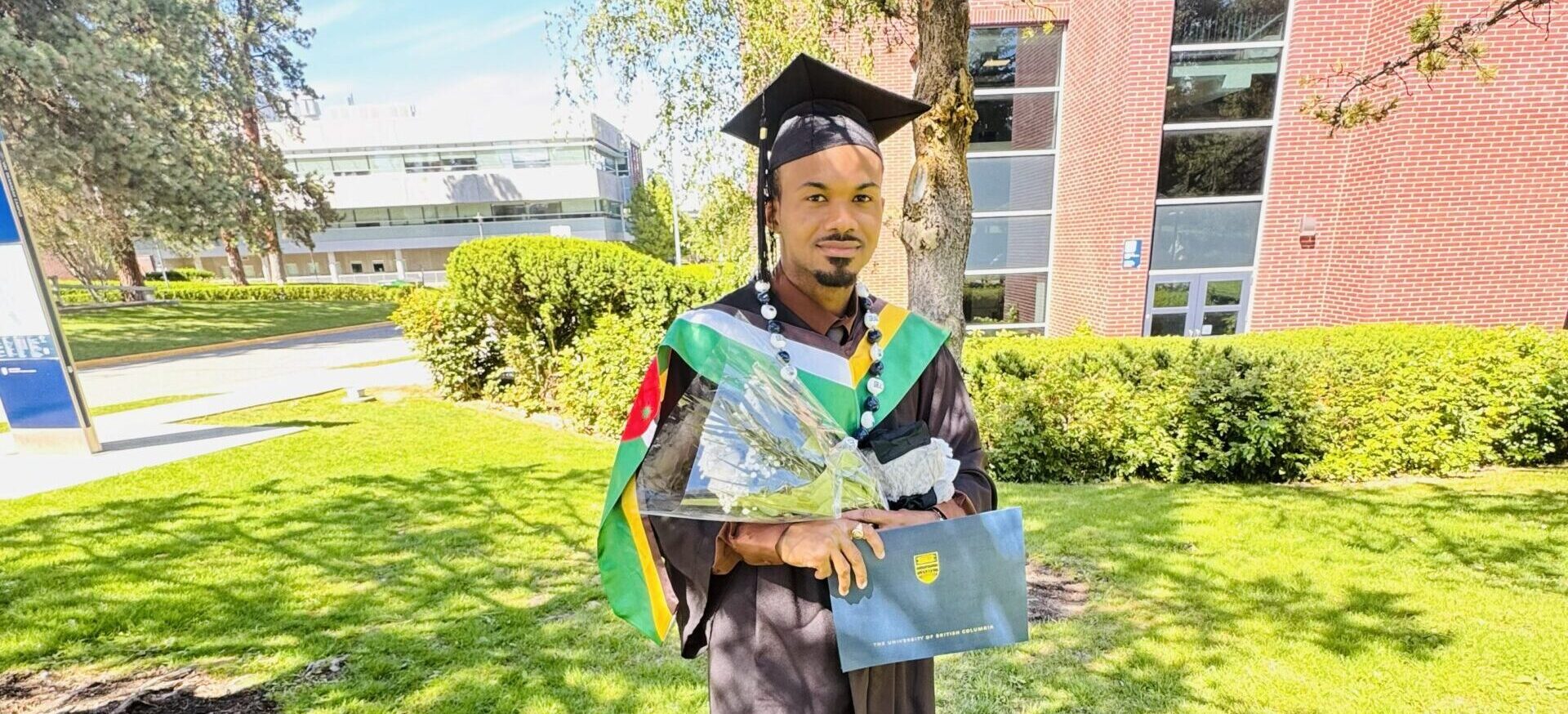
    A talented creative mind from Dominica, Garvin LeBlanc, has marked a major milestone in his artistic career, graduating with honors from the University of British Columbia Okanagan (UBCO) earlier this month, adding two esteemed industry awards to his growing list of achievements that extend far beyond academic requirements.

    At UBCO’s June 4 graduation ceremony held on its campus, LeBlanc walked away with a Bachelor of Fine Arts in Visual Arts, conferred with distinction. This achievement caps off a years-long academic journey that traces back to his childhood growing up in the Caribbean nation, raised in the Roseau area with deep family roots in Penville, Dominica’s northernmost small village.

    LeBlanc’s passion for the arts emerged early, nurtured by his childhood love of reading, writing, and sketching that steadily grew into a full-fledged commitment to creative practice. Over time, this passion narrowed into a specialized focus on media arts and design, setting him on the professional path he follows today.

    Before relocating to Canada to pursue his undergraduate degree, LeBlanc laid a strong foundation for his creative career back home: he completed studies in Architectural Technology at Dominica State College, graduating in 2017, and worked professionally as a digital media artist for a year before moving to Canada in 2018 to pursue advanced education in visual arts.

    His hard work and innovative vision did not go unnoticed by the UBCO community. During April’s final graduating exhibition *Odds and Ends*, LeBlanc was awarded the prestigious Asper Graduating Award in recognition of the exceptional quality of his digital media project work. He also received the Young Black Creative Award at the university’s Black Excellence Graduation Celebration, an honor that acknowledges both his outstanding creative talent and the meaningful positive impact he has made on campus.

    Looking back on his journey to graduation, LeBlanc attributes his recent string of successes to three core pillars: unwavering faith, consistent perseverance, and a strong, supportive community of family, mentors, and peers that lifted him up through every challenge. For emerging artists and creative professionals just starting their own paths, he shares a simple but powerful piece of advice: stay dedicated to honing your craft, chase excellence in every project, embrace every experience as an opportunity to learn, and trust in a higher power through every twist of the journey.

  • Codrington road fatality victim identified

    Codrington road fatality victim identified

    A fatal head-on collision between two oncoming vehicles on a Barbados roadway has claimed the life of a 55-year-old local man, who authorities have now formally identified. The crash unfolded shortly after 11 p.m. on Monday, June 8, along Codrington Road in the parish of St. Michael, according to official statements from local law enforcement. The deceased has been named as Juon Aloysius Heywood, a resident of Upper Durants Village, Holders Hill, in St. James.

    Police confirmed the incident involved two motor vehicles traveling in opposite directions when the impact occurred. First responders attended the scene shortly after the collision was reported, but Heywood could not be saved from the injuries he sustained in the crash.

    As of the latest update, law enforcement officials are continuing to piece together the full sequence of events that led to the fatal crash. Investigators have not yet released additional details on factors such as speed, road conditions, or potential impairment that may have contributed to the collision, as the active inquiry is still ongoing.

    To advance the investigation, police are issuing a public appeal for any members of the community who may have witnessed the collision, or who hold any relevant information that could help investigators establish clear circumstances around the incident, to come forward with their testimony. Anyone with details is asked to contact the District ‘A’ Police Station via either of the two dedicated phone lines: 430-7242 or 430-7246.

  • Visa requirement introduced for St. Kitts and Nevis, St. Lucia travellers to Ireland

    Visa requirement introduced for St. Kitts and Nevis, St. Lucia travellers to Ireland

    In an official move to align its immigration framework with broader European and United Kingdom policies, the Government of Ireland has confirmed that it will introduce mandatory visa requirements for nationals of three Caribbean and Central American nations — St. Kitts and Nevis, St. Lucia, and Nicaragua — starting next week. The policy shift, announced publicly by Ireland’s Department of Justice, Home Affairs and Migration on Thursday, just three days ahead of the measure’s June 15, 2026 implementation date, applies to all passport categories, including ordinary, diplomatic and service passports held by travellers from the three countries.

  • OPINION: Is the Caribbean paying for a climate crisis it didn’t create?

    OPINION: Is the Caribbean paying for a climate crisis it didn’t create?

    The moment a special emergency bulletin cuts into regular radio programming, a quiet, practiced urgency unfolds across a Caribbean household. Before the meteorologist finishes reporting the incoming threat, a mother is already counting canned goods in the pantry—stacking tuna, milk, and crackers against the coming storm. A sibling drags every pot, bucket, and empty container in the home to fill with fresh water. A grandmother tests the wick of the kerosene lamp and checks the charge on every solar light, while the father stands on the verandah studying the sky, the skill passed down to him from generations before. No one needs to say the words out loud: the whole family knows a hurricane is on its way.

    A generation ago, a catastrophic hurricane was a singular, generational event—one whose stories would be told for decades. Hurricane Gilbert, which tore through the Caribbean in 1988, fit that mold: a terrifying force that left widespread destruction, irreversible loss, and deep emotional scars, yet remained an extraordinary, one-of-a-kind disaster.

    Since 2016, however, devastating hurricanes have become a grim, routine reality for the region. The string of disasters paints a clear picture of the growing crisis:
    – In 2016, Hurricane Matthew reached Category 5 intensity at its peak before hitting Haiti as a Category 4 storm with 150 mph sustained winds. It was the strongest storm to hit the country in more than 50 years, killing more than 500 people, destroying 90 percent of Haiti’s crops, and leaving more than 120,000 families homeless.
    – In 2017, Category 5 Hurricane Maria wiped out infrastructure and assets worth 226 percent of Dominica’s total annual GDP, rolling back decades of hard-won development in just a few hours.
    – In 2019, another Category 5 storm, Hurricane Dorian, stalled over the Bahamas for two days, leaving the community of Marsh Harbour completely destroyed and families searching for missing loved ones for weeks after the storm passed.
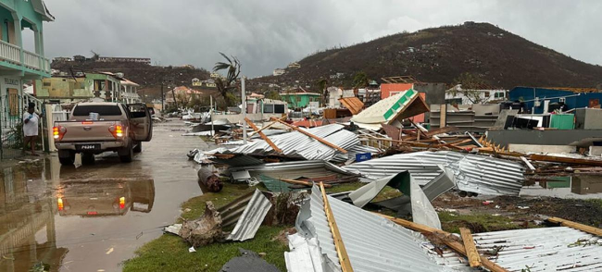
    – In July 2024, Hurricane Beryl made history as the earliest-forming Category 5 storm ever recorded in the Atlantic, forming before the official hurricane season even fully began. The storm hit Carriacou as a Category 5, stripping the island of nearly all vegetation and infrastructure, leveling agricultural fields across Jamaica, and leaving the entire region reeling and questioning what would come next.
    – In 2025, only 15 months after Beryl, yet another Category 5 storm, Hurricane Melissa, became the strongest Atlantic hurricane ever recorded, with maximum sustained winds of 185 mph. The storm claimed 95 lives, and its name was later retired by the World Meteorological Organization—an acknowledgment that some disasters are too devastating to reuse the name for future storms.

    So what has driven this sharp increase in catastrophic storms? The change was not caused by the Caribbean itself: the entire region contributes less than 0.1 percent of global greenhouse gas emissions. For two centuries, the global economy has benefited from fossil fuel-powered development, but the world’s ongoing, unchecked overreliance on carbon-emitting energy and widespread reluctance to transition to renewables is what has created the current climate crisis. The Caribbean had no part in making this choice, yet it is Caribbean communities that are forced to fill water buckets, rebuild shattered roofs, and bury victims after every disaster driven by a warming climate.

    The science behind the trend is clear and unambiguous: hurricanes draw their energy from warm ocean water. Decades of carbon pollution have trapped excess heat in the atmosphere, and 90 percent of that extra heat has been absorbed by the world’s oceans. The Caribbean Sea is now far warmer than historical averages, and every new storm that crosses it gains more destructive energy than storms that hit the region just a generation ago. A rapid attribution analysis from Climate Central confirms that human-caused climate change directly strengthened Hurricane Melissa’s winds, and the record warm ocean temperatures that powered the storm were made hundreds of times more likely by human carbon emissions.

    The human toll of this crisis stretches across every corner of the region. When Hurricane Maria hit Dominica in 2017, then-Prime Minister Roosevelt Skerrit shared live updates from inside the storm, his own roof torn away and floodwaters rising around him, as the island known as the “Nature Island of the Caribbean” fell apart around him. When Dorian stalled over the Bahamas for 48 hours, entire communities on Abaco and Grand Bahama islands were completely erased from the map. When Beryl tore through Carriacou, 90 percent of the island’s structures were damaged or destroyed—including family homes, schools, and the fishing boats that provide food and livelihoods for most local households. When Melissa made landfall, outer rainbands triggered deadly landslides in Haiti, Cuban authorities evacuated more than 735,000 people in a single night, and western Jamaica was left flattened, with crops submerged for the second time in less than two years. Across the region, critical infrastructure—hospitals, food supply chains, roads built and rebuilt repeatedly over decades—took yet another catastrophic blow.

    Caribbean communities, on the front lines of the climate crisis despite contributing almost nothing to it, have shown extraordinary resilience and composure in the face of repeated devastation that most of the world will never experience. But resilience is not a substitute for climate justice. Resilience alone cannot rebuild a destroyed hospital, and it is unfair to ask a region to “bounce back” over and over again while the root conditions that cause the destruction remain completely unaddressed. At a certain point, constant praise for the region’s strength becomes a convenient distraction from the urgent conversation about which nations and actors are responsible for the burden Caribbean people are forced to bear.

    That urgent conversation is rooted in the principle of climate justice: it demands that the world’s wealthiest, highest-emitting nations honor their long-standing climate finance commitments as an owed debt, not a charitable handout. In recent years, momentum for this cause has shifted dramatically in the region’s favor. In May 2026, the United Nations General Assembly voted to endorse an advisory opinion from the International Court of Justice (ICJ) on climate change—a opinion co-sponsored by Caribbean nations including Barbados and Jamaica. The ruling clarifies that all countries have binding legal obligations under international law to protect the global climate system, and that nations that fail to meet these obligations can be held legally liable for the harm they cause, and required to pay reparations to affected states.

    Translating this victory into tangible change for the Caribbean requires concrete action. It means loss and damage funding reaching small island developing states as outright grants, not new loans that trap nations in cycles of debt. It means the Caribbean gets a permanent, meaningful seat at every global negotiating table where climate policy decisions are made. It means all major emitting nations actually follow through on the national climate action plans they committed to under the Paris Agreement, cutting emissions rapidly and meaningfully. For Caribbean citizens, it also means remaining steadfast in advocacy, using our voices to demand justice for our region. Beyond educating ourselves on how climate change amplifies hurricane risk, we must hold our own leaders accountable to push the international community to act, and support the local and global organizations fighting for climate justice every day.

    It is true: the Caribbean is paying the price for a climate crisis we did nothing to create. But our experience is not just a warning to the rest of the world—it is evidence of the injustice at the heart of the global climate crisis. And the most powerful thing we can do right now is refuse to stay silent about the harm we have endured.

    This commentary is by Kayla Wright, a Jamaican youth advocate working at the intersection of public health, youth rights, and policy development across Jamaica and the wider Caribbean.

  • Legacy Isle shatters 35-year Eros Trophy record in commanding display

    Legacy Isle shatters 35-year Eros Trophy record in commanding display

    On a momentous Saturday, June 6, 2026, at Jamaica’s iconic Caymanas Park, thoroughbred racehorse Legacy Isle, owned by Rohan Crichton, cemented his place in the venue’s sporting history with a stunning, record-breaking victory in the annual Eros Trophy. The six-year-old American-bred bay horse delivered a dominant performance that left spectators and competitors stunned, erasing a 35-year-old track benchmark many had long considered unbreakable.

    Competing in the Graded Stakes/Open Allowance event open to runners three years old and older over seven furlongs (1,400 meters), Legacy Isle turned the tightly contested race into a solo showcase. Crossing the finish line, the official clock stopped at 1:22.3, split through intermediate markers at 23.1 seconds for the opening quarter, 45.1 seconds for the half-mile, and 1:09.1 for six furlongs. This single-tick improvement toppled the previous record of 1:22.4 set by the legendary racehorse Eros on September 21, 1991, sending shockwaves of excitement through the packed grandstands.

    The historic win was masterfully guided by two-time defending champion jockey Raddesh “Sneaky Fox” Roman, who executed a perfectly calibrated ride from start to finish. Under Roman’s steady handling, Legacy Isle conserved his early energy before beginning his forward push as the field passed the five-furlong (1,000-meter) marker. Once he seized the lead with full momentum remaining, no challenger was able to mount a serious response. As the race entered the final stretch, Legacy Isle extended his lead stride by stride, pulling away to a comfortable 3¼-length victory over the rest of the field. Second place went to Girvano, ridden by Tevin Foster, while Nautical Star with jockey Jordan Barrett finished third.

    In a post-race interview, Roman reflected on the flawless execution of his race plan, noting that the outcome felt certain long before the field reached the final turn. “I got a clean break out of the gate. I just wrapped him up and asked him to relax through the early stages. Leaving the half-mile pole, I let him find his stride, and when no other horse stepped up to challenge, I knew the race was already won,” Roman explained. The jockey added that he entered the contest with full confidence in Legacy Isle’s ability to rewrite the record books: “He is an incredibly talented animal, I went into today convinced he would break the record, and he delivered exactly what I expected. From the moment the starting gates opened, I knew we would be the ones standing in the winner’s circle.”

    Beyond the record-breaking result, the dominant performance has immediately positioned Legacy Isle as one of the top contenders for the season’s most prestigious local race, the Mouttet Mile, scheduled for December. Experts and connections alike view the Eros Trophy win as a definitive statement of the horse’s elite quality. Roman echoed this sentiment, confirming Legacy Isle’s status as one to watch in the upcoming marquee event: “He will definitely be one of the horses to beat in this year’s running of the Mouttet Mile.”

  • Parchment notches 200th career win on 2000 Guineas day

    Parchment notches 200th career win on 2000 Guineas day

    Jamaican horse racing entered the history books on Sunday, June 7, 2026, and amid the fanfare of one of the sport’s biggest annual fixtures, veteran reinsman Phillip Parchment carved out a personal milestone all his own.

    Parchment secured his 200th career victory on the track at Caymanas Park, steering the Donovan Plummer-trained horse Dark Matter to a first-place finish in the day’s fifth race. The achievement holds extra weight for the jockey, as it unfolded on 2000 Guineas Day, one of the most high-profile events on the Jamaican horse racing calendar.

    “It is a great feeling. It is very magnificent,” Parchment told reporters in his racing silks shortly after crossing the finish line. Speaking to the Jamaica Observer’s *The Supreme Racing Guide*, he added: “I have been hunting this 200 win for about four weeks now and it finally came on a big day, the 2000 Guineas race day.”

    Parchment’s path to the 200-win benchmark has been defined by relentless effort, patience and persistence across more than two decades in the sport. He launched his professional riding career in 2002, and his early years as an apprentice brought far slower progress than many of his peers. “I didn’t win much races as an apprentice rider. I won 28 races as an apprentice and then I went away and came back. Today I am on 200 winners and so I won 172 races as a jockey,” he explained.

    The seasoned rider emphasized that consistent hard work behind the scenes was critical to reaching this milestone, noting that top results depend on access to competitive horses and daily commitment to improving his craft. “You know, you have to get the rides to get the job done. If you are not getting the good horses, you are not going to win. I have been working hard in the mornings. I knew that [the milestone] will come but I have just to stay focus and keep on working,” he said.

    While 200 career wins stands as a landmark achievement in its own right, Parchment says the highlight of his career so far remains an iconic 2020 victory. When asked to name his greatest ride, he immediately pointed to his Jamaica Derby win aboard King Arthur, ridden for legendary late trainer Wayne DaCosta. “I have also won the Jamaica Two-Year-Old Stakes, Jamaica Oaks, Jamaica Guineas but overall the Jamaica Derby was my best one,” he said.

    That 2020 Derby win cemented Parchment’s reputation across the industry as a elite big-race competitor: a rider known for keeping his cool under high pressure, delivering powerful finishes when it counts, and earning the trust of the sport’s top training stables for the most important events on the calendar. With his 200th win now checked off, Parchment’s decades-long career continues on an upward trajectory.

  • Never Despair makes triumphant return after 16-month layoff

    Never Despair makes triumphant return after 16-month layoff

    Modern thoroughbred racing has grown accustomed to horses returning rested after month-long breaks between starts, with opening-out victories no longer considered a remarkable achievement. The truly extraordinary comeback comes when a racehorse steps back onto the track after more than half a year on the sidelines and crosses the finish line first—a dream realized by trainer Peter-John Parsard and his four-year-old bay colt Never Despair at Jamaica’s iconic Caymanas Park on June 7, 2026.

    Sidelined for a full 16 months by an injury that once put his entire racing career in jeopardy, Never Despair delivered a masterclass performance in his return, claiming an emphatic win in the four-furlong (800-meter) maiden condition race. Under the steady, confident guidance of jockey Jemar Jackson, the colt broke cleanly from the starting gate, shook off any potential race rust, and pulled away from the field to win by a length and a quarter, clocking a solid time of 49.4 seconds for the sprint. Moonlight Song, ridden by Richie Shakes, secured second place, while Super Storm with Bebeto Harvey rounded out the top three finishers.

    For Parsard, this win was far more than just checking off a maiden victory for his stable. It was a full validation of the patience, unshakable faith, and countless hours of work the entire team poured into the injured colt over a year and a half of recovery. Speaking to the Jamaica Observer’s *Supreme Racing Guide*, Parsard opened up about the journey that led to Sunday’s fairytale result. “He was a really talented horse. We had big hopes for him for the Classics last year but unfortunately he got a really bad injury,” the trainer explained. “It took us a lot of time and it took the owners a lot of patience to be able to get over the ailments that he had. Thank God he is fully healthy.”

    Parsard was quick to share the credit for the win with Jackson, who did far more than just guide Never Despair on race day. The jockey was a core part of the horse’s daily rehabilitation and training routine through the entire six-month build-up to his comeback. “Credit to the jockey, he rode a good race here. But he has been working the horse diligently for about six months. I was very glad to see him able to get the job done on him,” Parsard said.

    The trainer also admitted that Never Despair was not at peak race fitness heading into the event—but he did not need to be to outperform the rest of the field. “The horse ran beautifully. He was short of work and so we are hoping that he will have a little more scope and we will see what he can turn into. I was fairly confident that he was going to win the race. I knew he was going to be a little short in the end but thankfully he was able to get the job done,” Parsard noted.

    With his first win under his belt, Never Despair will next move up to compete in races for non-winners of two events. Parsard says he is keeping expectations realistic for the comeback colt, focusing on keeping him sound rather than chasing elite titles. “I mean, he is what he is, he is a condition horse and so I don’t think he has a very high ceiling. But I am sure he will be able to stay sound and win a lot of races,” he stated.

  • Plea talks collapse

    Plea talks collapse

    A high-profile double murder case with political ties in Jamaica has hit a critical legal impasse, pushing the matter toward a formal trial after a public disagreement between prosecution and defense teams over how the crime should be classified under national law. The case centers on Leoda Bradshaw, a former United States Navy culinary specialist who has remained in police custody since her arrest in October 2023. Bradshaw faces eight total charges: two counts each of conspiracy to murder, conspiracy to kidnapping, kidnapping, and capital murder, in connection with the 2023 abduction and killing of 10-month-old Serayah Paulwell — the infant daughter of Jamaican parliamentarian Phillip Paulwell — and the child’s mother, 27-year-old Toshyna Patterson. Three other co-accused individuals, including Bradshaw’s cousin Roland Balfour, alleged shooter David Smith, and Bjorn Black, have already pleaded guilty to their roles in the crime.

    The disagreement erupted during an expedited Supreme Court hearing held Thursday before Chief Justice Bryan Sykes. The case had originally been scheduled for a plea and case management hearing later this month, but the defense requested an earlier hearing to resolve the ongoing classification dispute. Director of Public Prosecutions Claudette Thompson, leading the prosecution, confirmed that her office has indicted Bradshaw on charges of capital murder, which falls under Section 2(1)(e)(i) of Jamaica’s Offences Against the Person Act. A recent amendment to this legislation sets a mandatory minimum 50-year prison term for capital murder convictions before a defendant becomes eligible for parole.

    Bradshaw’s defense team, however, has offered to have their client plead guilty to non-capital murder, which carries a shorter minimum sentence of 45 years before parole eligibility. Under Jamaican law, non-capital murder is defined under Section 2(2) of the same act. The defense has also formally notified the prosecution of its intention to request a Newton Hearing — a specialized legal procedure used when a defendant enters a guilty plea but disputes the specific facts of the crime as outlined by the prosecution. Since the agreed facts directly impact the final sentencing, a judge alone hears evidence and rules on which version of events is legally accurate.

    Lead defense counsel Deborah Martin explained to the court that Bradshaw had prepared a full detailed statement in advance of entering her guilty plea. After prosecutors reviewed the statement, they rejected Bradshaw’s account of events, noting it conflicted with testimony from other witnesses the prosecution plans to rely on during trial. The core disagreement centers on the specific factual details laid out in the indictment for the two murder counts, Martin confirmed, adding that “the defence cannot agree a particular that is in dispute…we do not see how to proceed.”

    Chief Justice Sykes noted in his remarks that the Jamaican legislature has explicitly drawn clear distinctions between categories of murder, including those that qualify for the death penalty. He pointed out that the prosecution had not yet moved forward with seeking the death penalty for Bradshaw, a major concession to the defendant. Thompson echoed this point in court, emphasizing that the Crown had deliberately chosen not to serve a Death Penalty Notice on Bradshaw, even though one had already been served on another co-accused in the same case. Thompson called the decision a “huge concession” and argued that the crime fits the legal definition of capital murder perfectly, saying “If there was ever a case that fits what the section intended, this would be it.”

    With no resolution reached on the classification dispute, Thompson confirmed that the case would proceed to trial, stating plainly “We are going to trial. We will have a plea and case management date. There will be a trial.” Chief Justice Sykes adjourned the hearing, scheduling the formal plea and case management hearing for June 24, where a final trial timeline will be confirmed. The full trial is currently set to begin on September 28.

    During Thursday’s proceedings, Bradshaw observed the discussion quietly, dressed in a belted buttercup gold midi shirt-dress, with short natural curls framing her face. Court documents outline that Patterson and her infant daughter were first reported missing on September 9, 2023. Prosecutors allege the pair were abducted and transported to Warieka Hills in St Andrew, where they were shot to death before their bodies were burned to conceal evidence.

  • Skvnk Fest 2026 scorches!

    Skvnk Fest 2026 scorches!

    Even with forecasted rain hanging over the day, thousands of automotive enthusiasts flooded Cinema 2 in New Kingston on Sunday, June 7, turning out in record numbers for the 2026 iteration of the highly anticipated Skvnk Fest car lifestyle event.

    Nick Lue, the creator and lead organizer of the festival, expressed heartfelt gratitude for the overwhelming public response in an interview with Jamaica Observer’s weekly Auto publication. “The show was a very heartfelt one for me… The team and I are more than happy for the tremendous turnout and happy the patrons could have enjoyed the festival incident-free,” Lue said.

    Marketeted from its inception as a reimagined, one-of-a-kind take on the traditional car show, Skvnk Fest 2026 delivered on that promise while weaving in beloved nostalgic touches that long-time fans of Skvnk Nation events immediately recognized. As guests entered the venue, they were greeted by a sprawling corridor of vendors offering everything from high-performance aftermarket automotive parts to opportunities for aspiring young racers to kickstart their careers in go-kart racing. Displays of custom pre-owned modified rides sat alongside a curated showcase of brand-new models from major industry player ATL Automotive Group, setting the tone for the diverse automotive showcase to come. Turning the corner into the main event space, attendees were met with a sweeping vista of meticulously cared-for vehicles that left car lovers in awe.

    Lue noted that the event received unanimous praise from guests, saying, “I’ll be totally honest. Not one person had anything bad to say. Everyone enjoyed the moment.” The only minor hiccup of the day was a welcome problem to have: an oversupply of show cars that strained the venue’s parking capacity. “Our only real issue was finding a place for all the cars to park. So many show cars, too small a space,” he admitted.

    The showcase catered to every type of motoring fan, with displays spanning every possible automotive genre. Guests could browse classic vintage models, modern production cars, factory-stock daily drivers, fully customized heavy-modified builds, and rugged off-road machines. Even motorcycle enthusiasts had a wide selection of two-wheeled builds to enjoy, matching the variety on four wheels. Beyond static displays, the event’s central stage hosted frequent live demonstrations, where drift drivers and motorcyclists wowed crowds with high-energy skill displays that earned roaring applause.

    In the closing moments of the festival, Lue took the stage to pull the cover off his personal project car: a modified BMW nicknamed Poizon, revealing its brand-new custom wrap to the crowd. The reveal immediately sparked a frenzy of smartphone photos from the assembled audience. Explaining the design choice, Lue said, “I’ve always liked the large camo style, so instead of the conventional army style we switched it up with the Skvnk lifestyle colours.” The full transformation of Poizon, which Lue has been documenting step-by-step on his personal YouTube channel, is now complete; the build also includes a carbon fibre bonnet and trunk, paired with a full frame top mount turbo kit. The vehicle serves as Lue’s daily driver, making the custom build even more impressive to attendees.

    With the 2026 edition of Skvnk Fest wrapped up and confirmed a runaway success, Lue says he has no immediate plans to turn the event into a fixed annual or bi-annual fixture on Jamaica’s automotive event calendar. Instead, he and his team are pivoting to develop a more mobile, community-focused iteration of the festival. “There are thoughts of it, for sure, but nothing concrete, Skvnk Fest, be it annual or bi-annual. We’re working on a school tour. I want to get more involved in the development of youth and culture,” Lue shared, outlining his vision for the next chapter of the Skvnk brand.