作者: admin

  • Indonesia vs. St. Kitts and Nevis: FIFA Series Prediction

    Indonesia vs. St. Kitts and Nevis: FIFA Series Prediction

    The Gelora Bung Karno Main Stadium in Jakarta prepares to witness a pivotal moment in Indonesian football history as the national team faces Saint Kitts and Nevis in the FIFA Series 2026 opener on March 27, 2026. This match marks the official debut of newly appointed head coach John Herdman, who takes the helm following Indonesia’s disappointing World Cup qualification campaign.

    Indonesia enters the tournament carrying the burden of recent poor form, having failed to secure a victory in their last three matches. The Garuda squad’s underwhelming performance—comprising one draw and two defeats—ultimately shattered their dreams of reaching the 2026 World Cup, prompting the leadership change that brought Herdman to replace Patrick Kluivert.

    The English tactician has implemented a fresh philosophical approach during his brief four-day training period, emphasizing attacking organization and dynamic gameplay. “The players have arrived with a positive spirit despite the short preparation time,” Herdman stated. He specifically addressed the need to eliminate predictability in Indonesia’s playing style while warning about the threats posed by their Caribbean opponents: “They possess a strong, fast, and direct profile; we must be prepared to neutralize their counter-attacking capabilities.

    Indonesia’s lineup will feature key players including Jay Idzes, Maarten Paes, and Rizky Ridho, with the return of defender Elkan Baggott providing additional stability to the backline.

    Conversely, Saint Kitts and Nevis arrives in Jakarta unburdened by expectations or FIFA ranking pressures. Despite sitting 33 places below Indonesia at 154th globally, coach Marcelo Augusto Silva Serrano remains defiant: “We don’t prioritize the numbers; we focus on the individuals within our squad.” The Brazilian coach further asserted that his players are accustomed to large stadium atmospheres and will not be intimidated by the GBK environment.

    This confidence was echoed by team standout Julani Archibald, who boldly declared: “We’ve come to ruin the party.” The Caribbean side seeks to improve their own recent form after failing to win their last two matches in November 2025.

    Beyond being Herdman’s inaugural match, this encounter represents a critical juncture for Indonesian football’s future direction. A victory would propel Indonesia into the FIFA Series 2026 final against the winner of the Bulgaria-Solomon Islands match. While Indonesia enjoys home advantage and ranking superiority, match outcome will likely hinge on attacking efficiency and defensive resilience against counter-attacks.


  • New Recycling Collection Service to Launch in Nevis Communities

    New Recycling Collection Service to Launch in Nevis Communities

    CHARLESTOWN, NEVIS – In a landmark environmental initiative, the Nevis Solid Waste Management Authority (NSWMA) has unveiled a comprehensive household recycling collection program set to launch island-wide starting April 6, 2026. This free service represents a significant advancement in Nevis’s sustainability infrastructure and waste reduction efforts.

    The innovative program will operate on a biweekly collection schedule with designated days assigned to each parish. Mondays will serve St. Paul’s Parish, Tuesdays will cover St. John’s Parish, Thursdays will accommodate St. George’s Parish, and Fridays will complete the cycle with collections in St. Thomas’ and St. James’ Parishes. A dedicated midweek Wednesday schedule has been established specifically for businesses and educational institutions.

    Accepted materials include plastic bottles, aluminum cans, and clean, flattened cardboard packaging. Residents are encouraged to maintain visible collection schedules within their households to ensure consistent participation in the program.

    NSWMA officials emphasize that the success of this initiative hinges on widespread community engagement. The program is strategically designed to substantially decrease landfill waste volumes while cultivating enduring recycling habits among residents. This systematic approach to waste management reflects the Authority’s commitment to creating a cleaner, more sustainable environment for future generations.

    The Authority has extended preliminary gratitude to all stakeholders and community members, characterizing the recycling initiative as a collective investment in Nevis’s ecological future and public health infrastructure.

  • CWI confirms fast bowler management plans ahead of busy international season

    CWI confirms fast bowler management plans ahead of busy international season

    Cricket West Indies (CWI) has unveiled a comprehensive player management strategy for three premier fast bowlers—Jayden Seales, Shamar Joseph, and Alzarri Joseph—ahead of an exceptionally packed international calendar. The organization’s deliberate approach prioritizes athlete health and performance optimization through carefully structured participation plans.

    Seales will become available for selection in the West Indies Championship starting April 9, with confirmed participation in the first two rounds. His continued involvement should Trinidad & Tobago Red Force advance to subsequent tournament phases will undergo assessment at that juncture.

    Shamar Joseph will enter competitive availability from April 13, with Guyana Harpy Eagles permitted to include him in managed practice sessions beforehand. Both bowlers will operate under structured loading plans developed by the Bowling Coach to ensure optimal preparation and integration.

    Alzarri Joseph will bypass the regional championship entirely after receiving a No Objection Certificate to fulfill Pakistan Super League commitments. His PSL participation forms part of a broader rehabilitation strategy following extended injury absence. CWI will meticulously monitor his workload throughout the tournament and during preparatory camps ahead of home series engagements.

    The strategic management reflects the unprecedented demands of West Indies’ upcoming schedule, featuring all-format contests against Sri Lanka, five ODIs versus New Zealand, and a two-Test series against Pakistan. Following home fixtures, players will transition to Caribbean Premier League competitions before embarking on tours to India and Bangladesh.

    Miles Bascombe, CWI’s Director of Cricket, emphasized the proactive nature of these measures: “Our fast bowlers represent invaluable assets requiring precise management across every format. These deliberate plans ensure their peak availability when competitive intensity reaches its maximum.”

    The organization reaffirmed its commitment to fielding optimal squads while balancing franchise cricket opportunities that complement broader performance objectives.

  • Tinubu, St Kitts And Nevis PM Meet, To Appoint Special Envoys

    Tinubu, St Kitts And Nevis PM Meet, To Appoint Special Envoys

    In a significant diplomatic development, Nigerian President Bola Ahmed Tinubu and St. Kitts and Nevis Prime Minister Terrance Michael Drew have mutually agreed to establish special envoy exchanges to enhance bilateral cooperation between their nations. The agreement was finalized during Prime Minister Drew’s official courtesy visit to the State House in Abuja on Thursday.

    The Caribbean leader revealed that the envoy appointments would serve as a strategic mechanism to advance diplomatic engagement and ensure existing agreements yield concrete outcomes. This framework is designed to facilitate broader collaboration between Nigeria, St. Kitts and Nevis, and the entire Caribbean Community (CARICOM) bloc.

    Prime Minister Drew emphasized the historical connections between the two nations, noting that many citizens of St. Kitts and Nevis trace their ancestral roots to Nigeria’s Calabar region. “This is our people. Our people in Saint Kitts and Nevis fundamentally came from Calabar here in Nigeria. So I always say we have come back home,” Drew stated during post-meeting discussions with journalists.

    The bilateral talks encompassed multiple sectors including educational exchange programs, agricultural development, food security initiatives, and cultural partnerships. Drew highlighted existing successful cooperation in healthcare, acknowledging that Nigerian-trained medical professionals have made substantial contributions to his nation’s development. “A lot of Nigerians have studied in my country, and they are doctors today. We have had a contingent of doctors who went to Saint Kitts and Nevis already,” he noted.

    Prime Minister Drew praised President Tinubu’s leadership and commitment to strengthening Africa-Caribbean relations, describing Nigeria as a nation of significant global importance while expressing gratitude for the gracious hospitality extended during his visit.

  • Medical Brigade returns to Cuba following Jamaica’s decision to end cooperation

    Medical Brigade returns to Cuba following Jamaica’s decision to end cooperation

    In a significant diplomatic development, Jamaica has abruptly terminated its long-standing health cooperation agreement with Cuba, resulting in the complete withdrawal of Cuban medical personnel from the Caribbean nation. The decision, confirmed by Jamaican authorities on March 4th, directly responds to sustained pressure from the United States government.

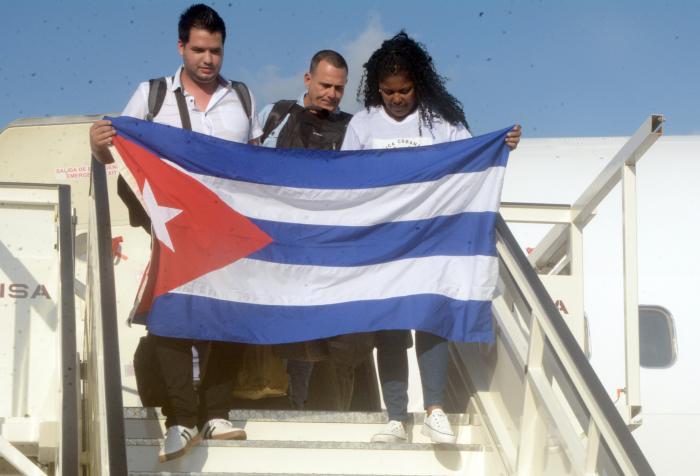
    The repatriation process concluded Thursday as the final members of the Cuban medical brigade arrived at José Martí International Airport in Havana. The returning professionals were greeted by high-ranking Cuban officials including Deputy Prime Minister Eduardo Martínez Díaz, Public Health Minister José Angel Portal Miranda, and other health sector leaders.

    First Deputy Minister of Public Health Tania Margarita Cruz Hernández delivered an emotional welcome address, praising the medical professionals for their service. “The humble will not forget that you were the first to reach places where no doctor had ever gone before,” she stated, emphasizing that Jamaica’s decision deprives its citizens of essential healthcare services from a nation with which Cuba shares deep bonds of friendship.

    The terminated program represented one of Cuba’s most successful international cooperation initiatives. Over the past three decades, more than 4,700 Cuban medical professionals have served in Jamaica, delivering extraordinary results including treatment for over 8.1 million patients, performance of 74,302 surgical procedures, assistance with 7,170 births, and the saving of more than 90,000 lives.

    Additionally, through the Operation Miracle program active since 2010, nearly 25,000 Jamaicans had their vision restored or improved. The Cuban Foreign Ministry characterized Jamaica’s decision as unilateral and regrettable, noting that it interrupts decades of fruitful collaboration between the two nations.

  • Exemplary fighters and human beings

    Exemplary fighters and human beings

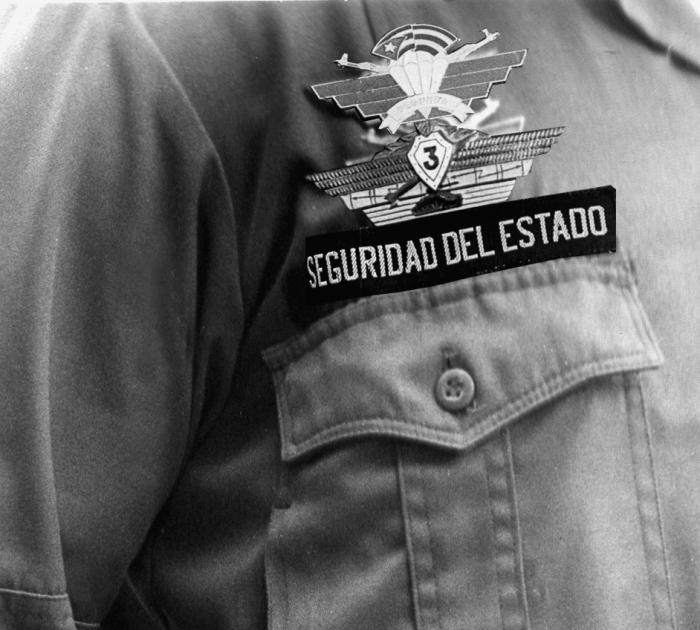
    Cuban President Miguel Díaz-Canel Bermúdez and Prime Minister Manuel Marrero Cruz have issued formal commendations to the nation’s State Security Forces, marking the institution’s 67th founding anniversary. The leadership recognition occurred on Thursday with both officials emphasizing the organization’s critical role in national defense.

    President Díaz-Canel, who also serves as First Secretary of the Communist Party’s Central Committee, expressed his admiration through social media platform X, stating: ‘I embrace our brave fighters of the State Security Organs, to whom we owe so much, for their defense of the homeland, almost always anonymous and risky.’ His message specifically acknowledged founders, leaders, officers, and personnel whose ‘heroic missions are part of the epic legend of the Cuban Revolution.’

    Simultaneously, Prime Minister Marrero Cruz, representing both the Cuban government and himself as a Political Bureau member, delivered a formal letter of congratulations. The communication praised security personnel for their ‘patriotism, bravery, dedication, sacrifice, and devotion’ in fulfilling what he characterized as honorable duties. The Prime Minister particularly highlighted how contemporary security challenges are being met with courage and commitment, noting that personnel ‘defend the legacy of the Commander-in-Chief in the year of his centennial.’

    The recognition extended to emphasizing the enduring influence of Army General Raúl Castro Ruz, whose teachings reportedly continue to shape the exemplary conduct of security forces. Marrero Cruz underscored that these values remain evident in both the professional and personal lives of security personnel, whom he described as ‘always standing with the people.’ The anniversary celebration reinforces the institutional importance of state security apparatus within Cuba’s revolutionary framework.

  • Facing the energy blockade: alternatives for sustainability

    Facing the energy blockade: alternatives for sustainability

    Cuba’s energy sector is navigating its most critical challenge in decades as the United States intensifies its six-decade economic embargo, creating unprecedented fuel shortages that have paralyzed power generation and forced nationwide energy rationing.

    According to First Deputy Minister of Energy and Mines Argelio Jesús Abad Vigoa, the country has been unable to receive contracted fuel shipments for over three months due to what officials term an ‘energy blockade.’ This has resulted in approximately 1,400 megawatts of power generation capacity remaining idle—including 1,100 MW in distributed generation and 330 MW at Mariel and Moa facilities—primarily due to crude oil shortages.

    The current energy mix relies heavily on domestic crude oil at thermoelectric plants, associated gas from oil wells, and renewable sources. This precarious combination has led to prolonged and disruptive power outages across the nation.

    Despite these challenges, Cuba has achieved modest progress in domestic production. The Cuban Petroleum Union reversed its production decline in 2025, reaching its highest output in seven years. New wells have shown promising results, increasing crude oil and natural gas production capacity.

    Significant investments in renewable energy include the completion of 52 solar photovoltaic parks providing over 1,000 MWp, generating up to 38% of daytime energy consumption. More than 10,000 solar systems have been installed for essential workers, with additional deployments for isolated communities and critical services.

    The industrial sector is undergoing structural transformation toward financial self-sufficiency and energy autonomy. Minister of Industry Eloy Álvarez Martínez reported six approved self-financing schemes allowing business groups to retain foreign currency earnings for operational needs. The sector has strengthened its 27 foreign-capital enterprises and developed internal alliances that facilitate raw material procurement.

    The water resources sector faces parallel challenges, with only 33% of the country’s 3,300 pumping stations utilizing solar or gravity-fed alternatives. National Institute of Water Resources President Antonio Rodríguez Rodríguez outlined plans to prioritize 480 critical stations serving large populations, while deploying electric vehicles and charging infrastructure to reduce fuel dependency.

    Ongoing infrastructure projects include 29 kilometers of new water supply systems and 3 kilometers of sanitation infrastructure expected to benefit 189,000 residents, though implementation remains contingent on fuel availability.

  • Column:Column: Bezuinigen of bezwijken: tijd voor harde keuzes

    Column:Column: Bezuinigen of bezwijken: tijd voor harde keuzes

    Suriname faces an escalating economic emergency as soaring fuel prices catalyze a chain reaction across all sectors, transforming from theoretical concern to tangible daily burden. The government’s temporary price cap—approximately SRD 53 for diesel and SRD 48 for gasoline—provides minimal respite while international pressures, particularly Middle East conflicts, continue driving prices upward.

    Transport companies and suppliers have already implemented rate increases, affecting land transportation, imported goods, and even emergency services like ambulance costs in Coronie. The crisis disproportionately impacts small businesses and vulnerable populations while driving food prices and construction costs to unprecedented levels.

    This economic shock echoes previous crises like COVID-19, yet the current response lacks equivalent urgency and decisive action. The government faces a credibility challenge: meaningful austerity must begin with visible reductions in public spending and operational efficiency. Structural changes like reinstating verifiable remote work policies could immediately reduce fuel consumption and foreign currency pressure.

    Effective resolution requires genuine multilateral consultation—not just top-down mandates. Engaging businesses, trade unions, and civil society organizations through platforms like the recently established Social Economic Council could yield implementable solutions with broader acceptance. Simultaneously, citizens must reconsider consumption patterns and reduce dependence on non-essential imports while investing in local production and self-sufficiency.

    The reality demands courageous political will from both coalition and opposition parties. Without leadership, consensus-building, and equitable burden-sharing, delayed action will inevitably worsen outcomes in this critical economic crossroads.

  • U.S. Senate reaches deal to end shutdown disrupting airports

    U.S. Senate reaches deal to end shutdown disrupting airports

    After weeks of disruptive budget gridlock that threw U.S. commercial air travel into chaos, U.S. Senate lawmakers announced a bipartisan agreement this Friday to bring an end to the partial federal government shutdown. The weeks-long funding gap had forced thousands of Transportation Security Administration (TSA) officers to work without pay starting in mid-February, creating a cascading staffing crisis marked by widespread absenteeism, sudden resignations, and critical understaffing at security checkpoints across the nation’s busiest airports. To cope with extended wait times that stretched for multiple hours in many hubs, airport operators repeatedly urged all passengers to arrive at least two to three hours ahead of their scheduled departure times to avoid missing flights.

    The political standoff that triggered the shutdown revolves around long-running disagreements over U.S. immigration enforcement. Democratic legislators have pushed for sweeping reforms to Immigration and Customs Enforcement (ICE), an agency that has faced sustained national criticism over controversial detention and deportation practices. Under the terms of the Senate-approved deal, core components of the Department of Homeland Security (DHS) — including TSA, the U.S. Coast Guard, and the Federal Emergency Management Agency (FEMA) — will receive guaranteed federal funding through 2026. Notably, both ICE and U.S. Border Patrol were excluded from this funding package as part of the compromise to break the gridlock. The bipartisan legislation will now advance to the U.S. House of Representatives for a final vote before it can be sent to the president’s desk for signature.

    In an emergency response to the airport staffing shortage, federal officials temporarily reassigned trained ICE agents to assist TSA personnel with airport security screening. However, this urgent contingency measure quickly drew sharp pushback from lawmakers and immigration advocacy groups, who argue that ICE officers lack the specialized training required to conduct civilian aviation security operations, creating unnecessary public safety risks. Amid growing public pressure, former President Donald Trump also announced plans to sign an executive order that would immediately restore back pay for all TSA workers affected by the funding lapse once the shutdown ends.

  • CWI to manage workload of fast bowling trio

    CWI to manage workload of fast bowling trio

    In a strategic move to safeguard its premier fast bowling resources, Cricket West Indies (CWI) has unveiled a meticulously crafted management plan for pace spearheads Jayden Seales, Shamar Joseph, and Alzarri Joseph. This initiative is designed to navigate an exceptionally congested international calendar, prioritizing long-term athlete health and peak performance.

    Detailing the phased reintegration, CWI confirmed that Jayden Seales will be available for the West Indies Championship from April 9th, participating in the first two rounds. His continued involvement beyond that is contingent on Trinidad and Tobago Red Force’s progression in the tournament. Shamar Joseph is slated for competitive selection from April 13th, with the Guyana Harpy Eagles permitted to include him in controlled practice sessions beforehand. Both players will operate under structured loading regimens developed by the bowling coach to ensure optimal preparation.

    Conversely, Alzarri Joseph will be absent from the domestic championship. CWI has granted him a No Objection Certificate (NOC) to honor his contractual obligations in the Pakistan Super League (PSL). This engagement is recognized as a critical component of his rehabilitation strategy, facilitating a return to top-tier cricket following a significant injury layoff. His workload and fitness will be subject to continuous monitoring throughout the PSL and subsequent preparatory camps.

    The overarching philosophy, as stated by CWI, is to balance franchise cricket opportunities with the demands of the national performance program. This approach is deemed essential ahead of a formidable home season, which includes an all-format series against Sri Lanka, a five-match ODI contest versus New Zealand, and a two-Test battle against Pakistan. The subsequent Caribbean Premier League (CPL) and away tours to India and Bangladesh further underscore the necessity for robust player management.

    Miles Bascombe, CWI’s Director of Cricket, emphasized the deliberate nature of these plans: “Our fast bowlers are among our most valuable assets… The plans we have put in place are deliberate — we are being proactive and precise so that they are fit, available, and at their sharpest when it counts most.” CWI expresses confidence that this structured and proactive management will ensure the fast bowling unit remains in peak condition throughout a historic period for Caribbean cricket.