作者: admin

  • Haiti is disproportionately suffering the impacts of climate change

    Haiti is disproportionately suffering the impacts of climate change

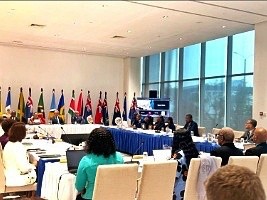
    At the 124th Special Meeting of the CARICOM Council for Trade and Economic Development (COTED) in Georgetown, Guyana, Haiti’s Environment Minister Valéry Fils-Aimé delivered a powerful plea for climate justice, highlighting the severe and disproportionate burden his nation bears from global environmental crises. The high-level assembly, which convened environment ministers from across the Caribbean alongside international donors and partner institutions, served as a critical platform to forge a unified regional stance ahead of the pivotal COP31 climate negotiations.

    Minister Fils-Aimé framed climate change not as a distant threat but as an immediate and relentless daily reality for the Haitian populace. He detailed how each climate-related catastrophe poses a direct challenge to survival, systematically eroding the nation’s infrastructure, devastating livelihoods, and severely compromising community security. This constant state of vulnerability, he argued, is profoundly unjust given Haiti’s negligible contribution to global CO2 emissions.

    The minister’s address centered on three core demands essential for building national resilience. First, he advocated for radically simplified and equitable access to international climate finance, arguing that existing mechanisms are often too bureaucratic for the world’s most vulnerable nations. Second, he pushed for the urgent implementation of concrete adaptation measures, specifically championing large-scale reforestation projects, the sustainable management of natural resources, and critical investments in green infrastructure. Finally, his speech was a clarion call for strengthened regional solidarity within CARICOM, emphasizing that a collective voice is paramount in upcoming global forums.

    In his concluding remarks, Fils-Aimé urged member states to rally behind a definitive ‘survival agenda.’ This agenda, focused squarely on adaptation, accessible finance, and climate justice, is designed to ensure Caribbean nations present a powerful, consolidated front in international dialogues, demanding that those who pollute the least are no longer forced to pay the highest price.


  • Petroleum Products – Price Setting, Installation of Advisory Council Members (video)

    Petroleum Products – Price Setting, Installation of Advisory Council Members (video)

    In a strategic response to fluctuating global oil markets, the Haitian government has formally inaugurated a specialized Advisory Council to oversee petroleum product pricing mechanisms. The establishment ceremony, presided over by Economy and Finance Minister Serge Gabriel Collin on March 29, 2026, at the Prime Minister’s Office, marks a significant step toward market stabilization.

    The newly formed council represents a tripartite collaboration between government entities, labor unions, and petroleum industry stakeholders. Its nine-member composition includes three representatives from labor unions (Montès Joseph, Jacques Anderson Desroches, and Méhu Changeux), three government delegates (Vladimyr Monval, Steeve Polycarpe, and Jean Nerva Siméon), and three industry specialists from oil companies and distribution associations (Mildred Noisy, David Turnier, and Jean Jackson Marseille).

    This advisory body assumes critical responsibilities including continuous monitoring of pricing mechanism implementation, rigorous assessment of product quality standards and regulatory compliance, and development of policy recommendations to enhance petroleum market governance. The council is mandated to deliver periodic reports to relevant governmental authorities.

    A cornerstone of the new framework involves a comprehensive pricing structure that transparently incorporates importation costs, tax and duty components, logistical expenses, and reasonable operator profit margins. This approach aims to balance market sustainability with consumer protection.

    During the installation proceedings, Minister Collin and Social Affairs Minister Marc-Élie Nelson jointly emphasized the government’s dual commitment to safeguarding economically vulnerable populations and supporting industries most affected by price fluctuations, particularly within the ongoing humanitarian crisis context. The initiative represents a structured effort to mitigate the impact of international oil price volatility on Haiti’s domestic economy.

  • Dominican government authorizes new international airport in Montecristi

    Dominican government authorizes new international airport in Montecristi

    The Dominican government has officially sanctioned the development of Montecristi International Airport through presidential decree 146-26, marking a significant infrastructure advancement for the nation’s northwestern region. President Luis Abinader formally authorized the project, which will be entirely financed through private investment while maintaining operational oversight by the state.

    This strategic initiative is designed to enhance international air transport capabilities and serve as a catalyst for economic revitalization in the northwest territories. The airport will function under a commercial investment model, representing a public-private partnership approach to infrastructure development.

    Aviation authorities confirm the facility will feature comprehensive operational services including immigration processing, customs clearance, health protocols, and security measures—all engineered to meet stringent international aviation standards. The development aligns with the government’s broader vision to transform Montecristi into a strategic center for tourism expansion, logistics operations, and industrial growth.

    Economic analysts project the airport will generate substantial employment opportunities while attracting increased foreign tourism and business investment to previously underserved regions. The enhanced connectivity is expected to create synergistic effects across multiple sectors, potentially reshaping the economic landscape of the Dominican Republic’s northwestern provinces.

  • Dominican Republic and Switzerland move toward social security agreement

    Dominican Republic and Switzerland move toward social security agreement

    BERN, SWITZERLAND – Significant progress has been made in bilateral negotiations between the Dominican Republic and Switzerland concerning two pivotal agreements, as confirmed by Dominican Labor Minister Eddy Olivares Ortega. The high-level discussions, held at Switzerland’s Federal Department of Foreign Affairs, centered on finalizing a social security pact and a pending readmission agreement.

    The cornerstone of the talks was a proposed social security treaty designed to protect the pension and welfare rights of migrant workers. This landmark agreement would enable citizens from both nations to amalgamate their contribution periods accrued in each country. This mechanism ensures that individuals who have worked in both jurisdictions will not forfeit their entitlements, thereby streamlining access to retirement pensions and health insurance benefits.

    In a parallel development, Minister Olivares, accompanied by Dominican Ambassador Pablo Valentín, received confirmation that a revised readmission agreement is now prepared for formal signing. Swiss authorities have completed their internal review processes and are awaiting the final endorsement from the Dominican government to proceed.

    The broader diplomatic dialogue also encompassed a comprehensive review of Swiss-Dominican relations. Both parties explored avenues for enhanced cooperation in critical domains including labor regulations, sustainable economic development, and multilateral engagement. Swiss officials particularly acknowledged the Dominican Republic’s robust institutional framework and its strong economic trajectory under the administration of President Luis Abinader, noting his government’s commitment to reinforcing democratic governance. The nation’s active role in the International Labour Organization was also a key point of discussion.

  • Digesett integrates accident zones into Waze to boost road safety

    Digesett integrates accident zones into Waze to boost road safety

    SANTO DOMINGO – In a groundbreaking move to combat traffic accidents, the Dominican Republic’s General Directorate of Traffic Safety and Land Transportation (Digesett) has launched a strategic technological initiative. Partnering with WazeDom, the local partner for the navigation app, Digesett has mapped and integrated data on high-risk accident zones directly into the Waze platform.

    This integration, which became active at the start of the week, empowers the application to deliver real-time audio and visual alerts to motorists as they approach these identified danger spots. Drivers will now receive a specific warning: ‘Critical zone nearby, reduce speed.’ This direct intervention is engineered to proactively modify driver behavior by prompting reduced speeds and increased vigilance in areas with a historically high incidence of collisions.

    The initiative represents a core component of Digesett’s broader national strategy for road safety, which synergizes advanced technology, data analytics, and public education campaigns. Government authorities have highlighted the indispensable role of digital navigation tools in building a safer transportation ecosystem. They assert that leveraging apps like Waze is crucial for not only preventing accidents but also for enhancing overall traffic mobility throughout the nation. While embracing this technological aid, officials concurrently reiterated the imperative for all drivers to adhere to traffic regulations and remain acutely aware of all in-app safety notifications.

  • 911 System expands AI strategy with U.S. support at NVIDIA GTC 2026

    911 System expands AI strategy with U.S. support at NVIDIA GTC 2026

    SAN JOSÉ, California – In a significant advancement of international technological cooperation, the Dominican Republic’s National Emergency and Security System 911 engaged in strategic dialogues at the prestigious NVIDIA GTC 2026 conference. This participation, facilitated through support from the United States Embassy in Santo Domingo, marks a pivotal step in enhancing the Caribbean nation’s digital infrastructure and regional security capabilities.

    The delegation, spearheaded by Executive Director Randolfo Rijo Gómez, conducted high-level negotiations with NVIDIA leadership, including Vice President Calista Redmond. These discussions built upon existing bilateral technological initiatives coordinated through the embassy’s Narcotics Affairs and Law Enforcement Section (INL), with particular emphasis on artificial intelligence development, system interoperability, and next-generation emergency response mechanisms.

    This collaborative effort operates within the framework of a formal agreement established between the Dominican Republic’s Ministry of the Presidency and NVIDIA Corporation. Critical infrastructure enhancements, notably through NAP Caribe, have substantially boosted the nation’s data processing capacities and digital framework. The integration of sophisticated analytics and AI technologies continues to position the Dominican 911 System as one of Latin America’s most advanced emergency response platforms, while simultaneously fortifying security and innovation partnerships between the Dominican Republic and the United States.

  • Iran ‘raakt’ Amerikaanse AWACS-vliegtuigen en tankvliegtuigen

    Iran ‘raakt’ Amerikaanse AWACS-vliegtuigen en tankvliegtuigen

    In a significant escalation of the ongoing US-Israel military campaign against Iran, Tehran has demonstrated formidable asymmetric warfare capabilities by successfully targeting critical American air defense assets across the Middle East. According to multiple defense sources, Iranian forces have damaged or destroyed radar systems, THAAD missile defenses, and Reaper drones at US bases in Saudi Arabia, UAE, Bahrain, Jordan, and Kuwait throughout February and March.

    The most devastating strike occurred Friday at Prince Sultan Air Base in Saudi Arabia, approximately 96 kilometers southeast of Riyadh. Iranian rockets and drones reportedly damaged multiple KC-135 aerial refueling tankers and an E-3 Sentry AWACS (Airborne Warning and Control System) aircraft. Air & Space Forces Magazine confirmed the attack left at least 15 American personnel wounded, with five in serious condition, though neither US military officials nor Saudi authorities have formally commented.

    Satellite imagery published by Iran’s Press TV appears to show extensive damage to aircraft at the base following the attacks. If verified, this represents the second assault on the facility within a week, following a March 13 incident that damaged five KC-135s according to Wall Street Journal sources.

    Military experts emphasize the strategic significance of targeting the E-3 Sentry, a modified Boeing 707/320 aircraft that serves as the US Air Force’s primary airborne battle management system. Retired Colonel John Venable told WSJ the attack “harms the US ability to see what’s happening in the Gulf and maintain situational awareness.” Heather Penney, former F-16 pilot and research director at Mitchell Institute for Aerospace Studies, noted the loss “is incredibly problematic given how crucial these battle managers are for everything from de-escalating airspace conflicts to targeting and delivering lethal effects.”

    The AWECS platform, operational since 1977, provides surveillance across all altitudes and weather conditions with a radar range exceeding 375 kilometers. With only 16 E-3s in service, the US had deployed six to bases in Europe and the Middle East during the current conflict.

    Beyond aerial attacks, Iran has effectively blockaded the Strait of Hormuz—transit point for 20% of global oil shipments—driving crude prices above $100 per barrel, a 40% increase since hostilities began. The Pentagon is reportedly preparing a $200 billion supplemental budget request to replace damaged systems amid concerns about dwindling missile inventories.

    Casualty estimates indicate at least 13 US military fatalities and approximately 200 wounded since the conflict began one month ago. Iranian health authorities report at least 1,900 killed and over 18,000 wounded nationally.

  • Antigua PM says election will be held in April

    Antigua PM says election will be held in April

    Prime Minister Gaston Browne has formally initiated the process for national elections in Antigua and Barbuda, confirming he has advised Governor General Sir Rodney Williams to dissolve Parliament ahead of polls scheduled for next month. The announcement came during a parliamentary session where Browne detailed his constitutional approach to the dissolution process.

    Citing Section 60, Subsection 1 of the Antigua and Barbuda Constitution Order 1981, which grants the Governor General authority to prorogue or dissolve Parliament upon the Prime Minister’s recommendation, Browne outlined his careful timing considerations. He revealed that while the government could have proceeded with immediate dissolution that would have set elections for April 17th, he opted for a more measured approach to avoid placing the opposition United Progressive Party (UPP) at a significant disadvantage.

    ‘As a Christian man, I believe in mercy,’ Browne stated, explaining his decision to allow additional preparation time for the opposition. ‘I’ve been advised to give them a few more days to allow them to get their house in order, because clearly, even though they are making articulations to the extent that they are ready, they still do not have a full slate as yet.’

    The government has scheduled Parliament’s dissolution for Wednesday, April 1st, 2026, with the formal election writ potentially issued the same day. Browne indicated that the Cabinet will determine the exact timing during their meeting next week, noting that if the writ is issued on April 21st, elections would follow 21 days later, including holidays and Sundays, placing the vote around April 22nd.

    Browne emphasized that the opposition would not receive more than an additional week for preparation, hoping they would ‘utilize Holy Week to bring their party together, to get some love in their hearts, and to get in a state of readiness.’ The process follows the Representation of the People Act 2001 as amended by Statutory Instrument Number 6 of 2010, with subsequent correspondence to the Governor General specifying nomination dates and the final election timetable.

    The upcoming elections follow the January 2023 general election where Browne’s Antigua and Barbuda Labour Party (ABLP) secured nine seats against the UPP and an independent candidate, with the recent by-election victory of ABLP’s Randy Baltimore strengthening the ruling party’s position.

  • Trump’s signature to appear on US dollars in first for sitting president

    Trump’s signature to appear on US dollars in first for sitting president

    In an unprecedented departure from longstanding tradition, the US Treasury Department has announced that former President Donald Trump will become the first sitting president to have his signature featured on American banknotes. The controversial move places Trump’s signature alongside that of Treasury Secretary Scott Bessent on newly minted currency, breaking with the customary practice of featuring only treasury officials’ signatures.

    The initiative, characterized as part of America’s 250th anniversary commemorations, has ignited immediate political controversy. Treasury Secretary Bessent defended the decision, stating, ‘There is no more powerful way to recognize the historic achievements of our great country and President Donald J. Trump than US dollar bills bearing his name.’

    The first batch of $100 bills featuring the dual signatures is scheduled for production in June, with additional denominations to follow. These will replace notes currently bearing the signatures of Treasury officials from the Biden administration.

    This development represents the latest effort by Trump’s political apparatus to associate his name with government programs and national symbols. The administration has simultaneously approved commemorative 24-karat gold coins featuring Trump’s likeness as part of anniversary celebrations.

    The decision terminates a tradition dating back to 1861 wherein only the US Treasurer’s signature appeared on currency. Current Treasurer Brandon Beach attempted to strike a conciliatory tone, affirming that US currency would ‘continue to stand as a symbol of prosperity, strength, and the unshakable spirit of the American people.’

    The announcement has drawn sharp criticism from political opponents, including California Governor Gavin Newsom, who seized the opportunity to critique Trump’s economic record: ‘Now Americans will know exactly who to blame as they’re paying more for groceries, gas, rent, and health care.’

    Historical context notes that this marks the second instance of Trump’s name appearing on government disbursements, following its inclusion on COVID-19 relief checks during the pandemic.

  • WATCH: Outrage after excavator filmed driving on main road without trailer

    WATCH: Outrage after excavator filmed driving on main road without trailer

    A viral social media clip depicting an excavator traveling under its own power along a public roadway has triggered widespread public indignation throughout Antigua and Barbuda. This incident has amplified long-standing grievances regarding infrastructural damage attributed to heavy machinery operating directly on paved surfaces, bypassing mandated transport protocols.

    The controversy has reignited accusations of insufficient regulatory enforcement against equipment operators, despite persistent official complaints concerning substandard road conditions and the substantial financial burdens of public maintenance. For years, community members and civic advocates have vocalized opposition to the practice of driving tracked vehicles like excavators and backhoes on roadways, highlighting how their immense weight and metal treads precipitate accelerated pavement deterioration.

    This erosion of public infrastructure ultimately transfers significant repair costs to the national treasury and local taxpayers. The circulation of this latest visual evidence has intensified demands for governmental intervention, compelling authorities to implement stricter oversight measures. There is growing public pressure for a comprehensive crackdown to ensure all heavy-duty equipment is properly transported via trailer, thereby safeguarding road integrity and public investment in national infrastructure.