作者: admin

  • WATCH: Simon calls Bolans housing project ‘a complete disaster’ over drainage concerns

    WATCH: Simon calls Bolans housing project ‘a complete disaster’ over drainage concerns

    Opposition Parliamentarian Kelvin “Shugy” Simon has launched a severe critique against the Bolans housing development, demanding an immediate independent inspection of what he characterizes as a catastrophically flawed project. The Member of Parliament for St. Mary’s South issued a formal statement outlining profound concerns regarding drainage systems, public safety, and the overall planning integrity of the development.

    Simon asserted that critical deficiencies were visibly apparent even prior to the handover of keys to prospective homeowners. He described the entire project as plagued by inadequate infrastructure from its inception, creating conditions that compromise both safety and basic livability for future residents.

    “The housing development in Bolans represents a complete disaster in public project execution,” Simon declared. “Families deserve residences constructed with meticulous care, professional foresight, and robust infrastructure—not dwellings burdened with impending problems from day one.”

    The parliamentarian extended his criticism beyond the specific development to issue a broader challenge to governmental accountability. He emphasized that electoral victory does not constitute a blank check for substandard performance on public works initiatives, characterizing the government’s mandate as a profound responsibility rather than unconditional approval.

    Simon’s demands include three specific actions: an immediate independent technical inspection of the entire Bolans development, a comprehensive review of all drainage and infrastructure systems by neutral experts, and a commitment to transparent communication with citizens regarding findings and remedial actions.

    Concluding his statement with a powerful appeal, Simon emphasized: “The people of this nation deserve superior standards of public service. The community of Bolans warrants substantially better than what this project has delivered.”

  • Antigua Sailing Community Camaraderie Embraces the Young & Not-So-Young

    Antigua Sailing Community Camaraderie Embraces the Young & Not-So-Young

    The sailing community of Antigua is abuzz with anticipation for the upcoming Antigua Sailing Week, with a compelling narrative unfolding between a young record-holder and a seasoned racing veteran. Carrack Jones, a 17-year-old local sailor, is preparing to captain a youth crew in the newly formatted event, drawing on experience far beyond his years. His remarkable journey began at age 14 when he set a world record by solo sailing an Optimist dinghy 100 nautical miles across open ocean from Antigua to St. Maarten in a grueling 31-hour voyage—a feat that profoundly shaped his seamanship and self-assurance.

    Jones now transitions from small boats to competitive racing, having already notched three Antigua Sailing Week appearances and a recent victory in the Jolly Harbour Yacht Club Valentine’s Regatta’s racer cruiser division. This year, he will helm the family boat, Blue Peter, with a crew of 8-10 sailors all under 18, including his brother Tyson. The team is enthusiastically supported by sponsorship from Absolute Properties and is prepared to take time off school for the event, a regular sacrifice in Jones’s dedicated sailing career.

    His mentor and occasional teammate, Bernie Evan-Wong, represents the enduring spirit of Caribbean sailing. A participant since 1982 who has missed only five Antigua Sailing Weeks, Evan-Wong is a stalwart of the regional circuit. His current vessel, High Tension, is a testament to his passion; he spent six months rebuilding the Mumm 36 after it was derelict from hurricane damage. The restoration proved successful, with the boat immediately achieving third-place finishes in the Valentine’s Regatta, Nelson’s Cup, Antigua 360, and the St. Maarten Heineken Regatta.

    Both sailors express excitement for the new ‘racing and cruising’ format, which will involve daily journeys to different coastal locations and living aboard. Jones, with intimate knowledge of Antigua’s waters, anticipates challenges primarily from wind and currents around Cade’s Bay, Green Island, and Half Moon Bay. Evan-Wong, weighing whether to sail High Tension or a more comfortable boat like his Cal 40 Huey, praised the event’s superior on-water management and shoreside organization compared to other regattas.

    Beyond competition, the story highlights a cherished mentor-protégé relationship. Evan-Wong, who has known Jones since infancy, actively fosters youth sailing talent, recognizing the sport’s need for new generations. Their dynamic blends fierce on-water rivalry with deep camaraderie ashore—a hallmark of their sport. For both, the ultimate goal remains the same: a profound love for sailing and the unparalleled joy of competing in their home waters.

  • Emanuel Peters assists with grading of Gray’s Hill and Nut Grove roads

    Emanuel Peters assists with grading of Gray’s Hill and Nut Grove roads

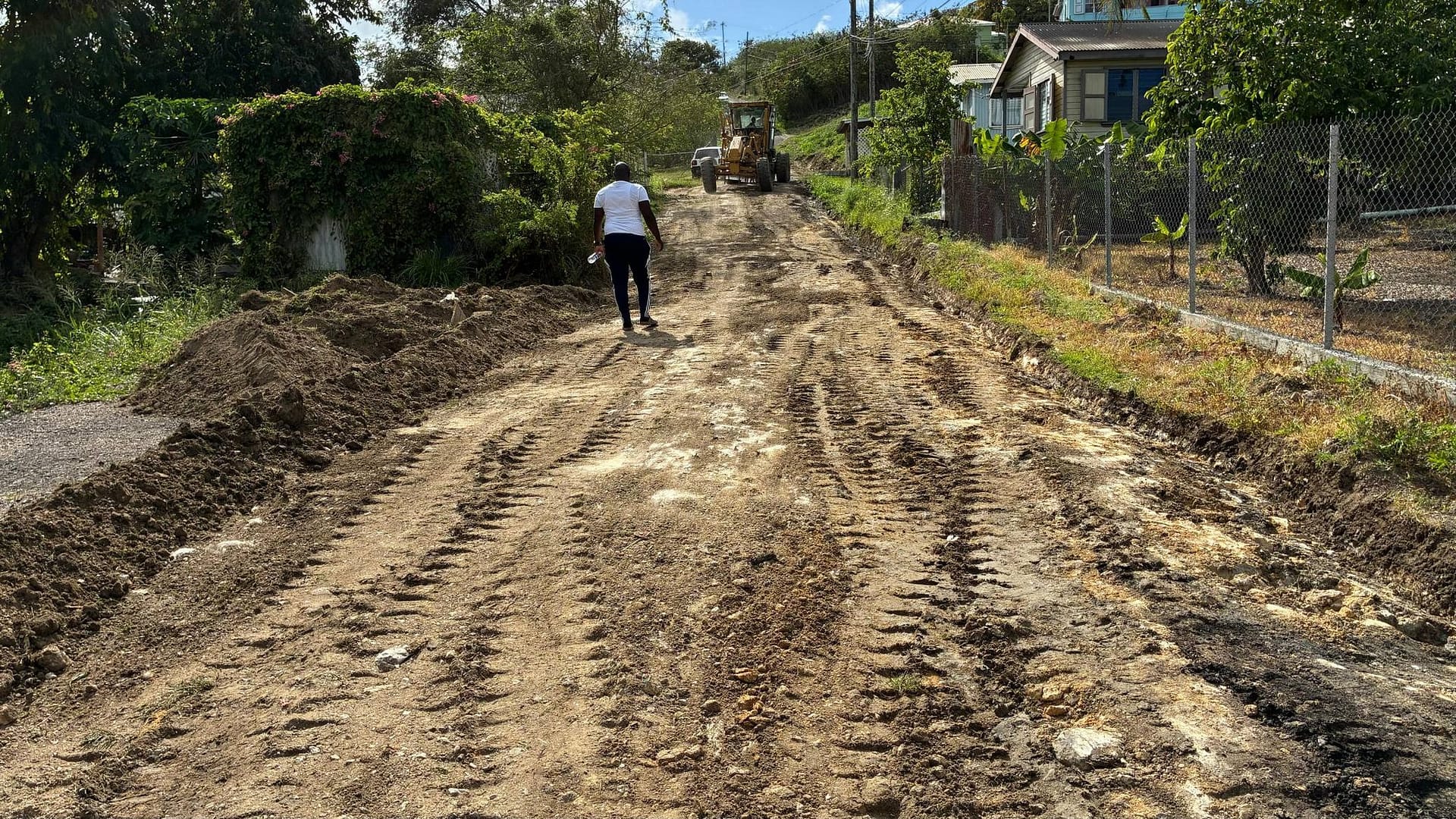
    Emanuel Peters, the United Progressive Party (UPP) candidate for St. John’s Rural South, has revealed his direct involvement in organizing and executing recent road grading operations in the Gray’s Hill and Nut Grove communities. Peters asserts that this infrastructural improvement was undertaken entirely without financial or logistical support from national government bodies, including the Ministry of Public Works.

    In an official statement, Peters framed the initiative as a necessary response to the dire condition of local roads, a persistent issue that severely impacts residents’ daily lives and mobility. He emphasized that the primary objective was to deliver tangible, practical improvements by enhancing accessibility and transit conditions for the community.

    Peters characterized the project as an expression of his constituent responsibility, stating that his team proceeded independently after determining that government assistance was not forthcoming. This action, he noted, reflects his broader commitment to prioritizing actionable results and community service over political rhetoric.

    The state of roadways in St. John’s Rural South has been a chronic source of grievance among locals, with many areas suffering from deteriorated surfaces and infrequent maintenance, which often hampers reliable access for vehicles and emergency services alike.

  • Column: Het kruis van de lijdende mens

    Column: Het kruis van de lijdende mens

    As Christians worldwide enter Holy Week and Muslims conclude Ramadan, the tragic timing of the Middle East conflict’s eruption during these sacred periods reveals a painful paradox. While wars have historically been waged in religion’s name, suffering itself recognizes no faith—it permeates every street, household, and broken soul regardless of religious or ethnic background.

    The cross carried by Jesus—Christianity’s ultimate symbol of unconditional sacrifice—weighs no less heavily than the burdens borne by millions of innocent civilians today. Children orphaned by violence, mothers weeping amidst the rubble of their homes, and families abandoning lifetimes of memories in search of safety remain trapped between the iron fists of world leaders whose egos blind them to unfolding human tragedies.

    While those in power sleep securely in comfortable palaces, untouched by bombings or gunfire, ordinary men, women, and children huddle in dark shelters with empty stomachs and hearts filled with terror. Uncertain of survival and unable to envision peaceful futures, their eyes reflect both despair and hope—a paradoxical burden no human should bear.

    This Holy Week, traditionally a period of reflection and compassion, demands actions that transcend symbolic gestures. It calls for concrete deeds to break cycles of violence, for while wars persist and egos overshadow humanity, innocent suffering continues unabated.

    The heartbreaking transformation of our world into battlegrounds stems not from necessity but from the stubbornness of few. Those who believe themselves victorious instead crush lives, shatter families, and destroy dreams. The true casualties are measured not in political losses but in children’s tears, orphans’ silence, and entire peoples’ forgotten existence.

    Christian teachings find meaning in injustice and pain, yet contemporary society remains silent as millions carry their crosses. History demonstrates that power without compassion proves destructive, and true victory emerges not from imposed dominance but from restored peace and protected innocents. The price is invariably paid not by war-initiating leaders but by ordinary people seeking only to return to their homes, families, and lives.

    As Erich Maria Remarque profoundly observed: ‘War will never claim the guilty, but always the innocent.’ This Holy Week must serve not merely as historical remembrance but as present-day call to action—choosing humanity over ego, advocating peace over conflict. Only then can we hope for a world where ordinary people no longer suffer from the powerful’s mistakes.

  • Over 70 killed in Haiti gang attack

    Over 70 killed in Haiti gang attack

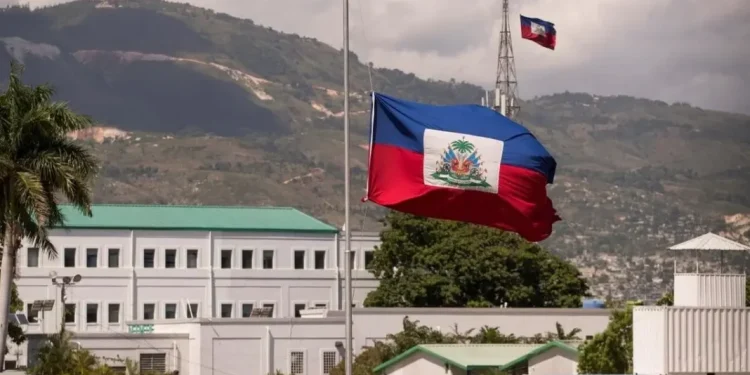
    In the troubled Caribbean nation of Haiti, a brutal mass killing carried out by a notorious armed faction has unleashed devastation in a rural community north of the capital Port-au-Prince, leaving dozens of civilians dead and hundreds of families homeless.

    The coordinated attack unfolded in Jean Denis, a small settlement located in Haiti’s strategic Artibonite region, when fighters from the powerful local armed group Gran Grif launched a surprise pre-dawn assault on the community Sunday. In a well-planned move to block outside intervention, the attackers immediately sealed off all major access routes leading into the village, digging trenches and erecting makeshift barricades to slow the response of Haitian security forces.

    Antonal Mortimé, an official with the Port-au-Prince-based human rights organization Collectif Défenseurs Plus, told reporters that preliminary on-the-ground investigations have confirmed at least 70 fatalities from the attack – a number that includes multiple child victims. Around 30 other people were wounded in the indiscriminate shooting, and nearly 50 residential homes were set ablaze during the violence. The destruction has forced more than 6,000 terrified residents to flee their homes to seek safety in nearby towns and camps for internally displaced people.

    Witness accounts shared with local media, paired with graphic videos circulating on Haitian social media platforms, show heavily armed gunmen roaming the streets of Jean Denis firing randomly into homes and public spaces. Multiple local residents have publicly criticized the Haitian National Police for a delayed response to the emergency, saying the delay left the community vulnerable to the sustained attack.

    When the violence first broke out, Haitian government authorities released a lower initial casualty count, confirming only at least 16 people killed and 10 injured. Officials have acknowledged that the gang’s barricades and trench obstacles successfully slowed advancing police units, giving the attackers extended time to carry out the killings and arson before they withdrew from the area. Police forces eventually pushed the gunmen out of Jean Denis, and law enforcement officials say search operations are still ongoing to track down the perpetrators and reestablish stable security for any residents who wish to return to the community.

  • Onderzoek vervolging ex-ministers legt spanning bloot tussen politiek en rechtsstaat

    Onderzoek vervolging ex-ministers legt spanning bloot tussen politiek en rechtsstaat

    Suriname’s National Assembly has established a parliamentary investigation committee to examine impeachment requests against three former ministers, initiating a process with profound legal and political implications. This preliminary phase has already evolved into a critical test for both parliamentary credibility and the nation’s rule of law.

    The committee’s formation revealed underlying coalition tensions when ABOP faction leader and Assembly Vice President Ronnie Brunswijk insisted on chairmanship, declaring he could not function under NDP’s Ebu Jones. Ultimately, NDP faction leader Rabin Parmessar was appointed chair instead.

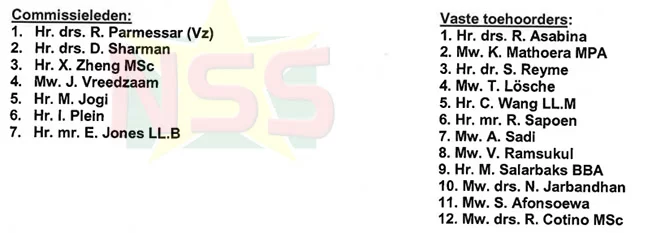
    Comprising seven assembly members with twelve permanent observers, the committee convenes Monday to examine the Prosecutor General’s case against former ministers Bronto Somohardjo, Riad Nurmohamed, and Gillmore Hoefdraad. While formally an exploratory phase without substantive judgments, the committee will conduct hearings and analyze documents.

    In reality, the stakes are considerably higher: this committee must demonstrate that political interests won’t override a process touching the core of judicial integrity. Additional members include Dew Sharman (VHP), Xiabao Zheng (PL), Jennifer Vreedzaam (NDP), Mahinder Jogi (VHP), Ivanildo Plein (NPD), and Ebu Jones (NDP).

    The chairmanship debate highlights the sensitivity of these proceedings. Brunswijk’s exclusion from leadership was institutionally appropriate given his previous vice presidency alongside Somohardjo and Nurmohamed in the former coalition, which would have created apparent conflicts of interest.

    However, ABOP’s complete absence from the committee—providing neither members nor permanent observers—complicates matters politically and institutionally. While the party could contribute during public deliberations, its absence from preparatory work undermines broader decision-making legitimacy.

    Coalition unity remains elusive regarding the Prosecutor General’s request:
    – Pertjajah Luhur: Faction leader Somohardjo publicly supports prosecution, including in his own case
    – NPS: Advocates allowing the Prosecutor General to proceed with investigations
    – ABOP: Maintains ambiguous positioning
    – NDP, A20, and BEP: Have not established formal stances

    This lack of consensus increases the likelihood that political considerations may outweigh legal arguments.

    The opposition VHP party has notably positioned itself in favor of granting the prosecution request, despite Nurmohamed being a prominent party member.

    At the heart of the tension lies Article 140 of Suriname’s Constitution, which establishes a special procedure for political officials unlike ordinary citizens subject to direct criminal prosecution. This provision requires parliamentary approval before prosecution can proceed, effectively making politics the gatekeeper of judicial process.

    This constitutional framework creates three fundamental implications:
    – Inequality before the law for political officials
    – Political considerations influencing criminal prosecution
    – Judicial process dependency on parliamentary decision-making

    Growing criticism suggests Article 140 may require amendment or abolition as it conflicts with fundamental principles of legal equality.

    Current developments reveal systemic vulnerabilities. The chairmanship debate, coalition partner absence, and internal divisions reinforce perceptions that political interests could influence proceedings, shifting focus from substance to process integrity. The coming weeks will prove decisive not only for three former ministers but for Suriname’s entire judicial system.

    Should the process:
    – Proceed meticulously and convincingly → it will strengthen public trust
    – Descend into political conflict → it will damage judicial integrity

    The investigation committee has transcended technical exercise to become both a political test for parliament and a mirror reflecting the functionality of Suriname’s rule of law. Beyond three former ministers, this process will inevitably reveal how power, decision-making, and conflict of interest have operated in practice—questioning not only individual accountability but broader political structures.

    One certainty emerges: this process will have consequences. As facts sharpen, multiple heads will inevitably roll—political, administrative, or otherwise. The central question becomes not only who faces prosecution, but who remains standing when the full picture emerges.

  • MITUR launches Holy Week 2026 events in Santo Domingo’s Colonial City

    MITUR launches Holy Week 2026 events in Santo Domingo’s Colonial City

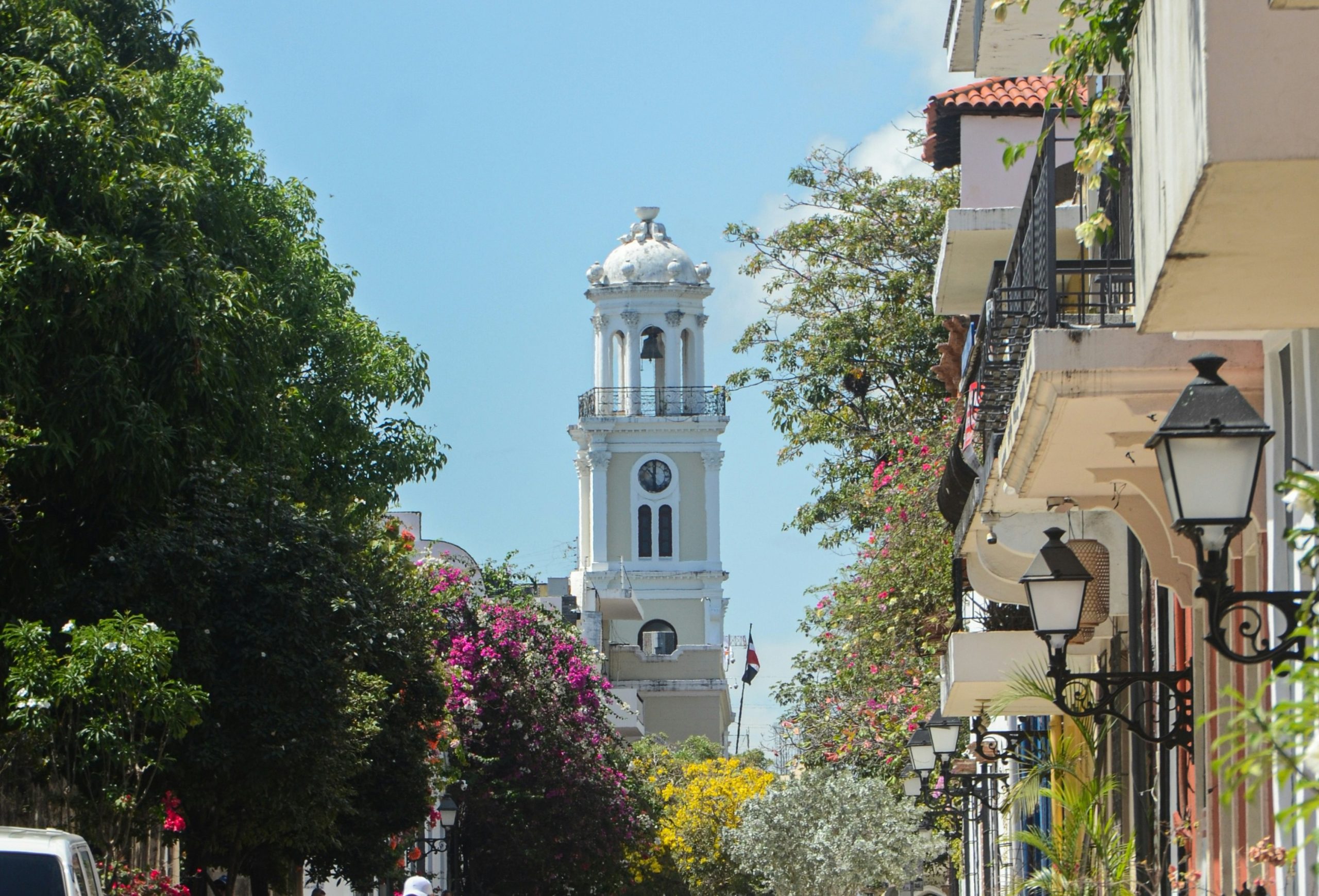
    SANTO DOMINGO – In a strategic move to position the Dominican Republic as a premier cultural destination, the nation’s Ministry of Tourism (MITUR) has officially unveiled ‘Turizoneando Semana Santa 2026,’ an expansive program of events scheduled for Holy Week from March 27 to April 5. The initiative is designed to captivate both domestic and international visitors by offering a rich tapestry of experiences in the historic Colonial City of Santo Domingo.

    This meticulously curated agenda masterfully blends profound religious observances with vibrant cultural entertainment. Traditional ceremonies, including solemn masses, the Stations of the Cross, religious processions, and the Sermon of the Seven Last Words, will be held alongside dynamic concerts, immersive gastronomic experiences, and family-oriented open-air activities. The program leverages the city’s most iconic historical sites as its backdrop, with events set within the Catedral Primada de América, Parque Colón, Parque Duarte, and the atmospheric Ruinas de San Francisco.

    The week-long schedule is packed with significant highlights aligned with the liturgical calendar. It commences with Palm Sunday celebrations, progresses through Holy Thursday liturgies and Good Friday’s poignant processions and concerts, and culminates in the Easter Vigil on Holy Saturday, followed by joyous Easter Sunday events featuring live dramatizations and musical performances. By integrating faith, history, and entertainment, MITUR aims to significantly boost Santo Domingo’s appeal as a safe, family-friendly destination during the holiday period. The initiative is a cornerstone strategy to promote local cultural heritage, showcase national gastronomy, and stimulate economic activity through sustainable tourism.

  • RFI Theatre Prize 2026 : Call for Submissions Open

    RFI Theatre Prize 2026 : Call for Submissions Open

    Radio France International (RFI) has officially opened submissions for its prestigious 13th annual RFI Theatre Prize 2026, continuing its mission to discover and promote exceptional theatrical talent from French-speaking regions worldwide. The competition specifically targets emerging playwrights aged 18-46 from Francophone Africa, Lebanon, Haiti, the Caribbean, Indian Ocean nations, and the Middle East, creating a unique platform for voices from the Global South.

    Submissions will remain open until midnight on April 27, 2026, with applicants required to submit original, unpublished French-language plays containing at minimum 15 numbered pages. In a notable inclusion policy, the competition also welcomes nationals from eligible countries who have resided in France for less than four years and hold valid residence permits or refugee status, acknowledging complex political circumstances that might otherwise exclude talented writers.

    The selection process will identify approximately twelve shortlisted works based on literary merit, dramatic quality, and creative originality. These finalists will proceed to jury evaluation ahead of the ultimate winner announcement scheduled for September 2026 in Limoges during the ‘Les Zébrures d’automne’ festival organized by ‘Les Francophonies – Des écritures à la scène’.

    Beyond the prestige of the award itself, the RFI Theatre Prize offers comprehensive professional development support including: a creative residency at Villa Saint Louis Ndar in Senegal; a stage development residency at Centre Dramatique National de Normandie-Rouen; financial grant from Société des Auteurs et Compositeurs Dramatiques (SACD); writing residencies in Limoges and Paris through Institut français and Théâtre Ouvert; RFI media promotion and broadcast opportunities; and a public reading during the Avignon Festival’s ‘Ça va, ça va le monde!’ series.

    Prospective applicants must carefully review competition guidelines and thoroughly proofread their submissions before sending completed texts with registration forms to prix.theatre@rfi.fr. Official rules and entry forms are available for download through RFI’s partnered platforms.

  • Energy and data: International project boosts university resilience in Cuba

    Energy and data: International project boosts university resilience in Cuba

    In a significant stride toward energy independence, the University of Camaguey in Cuba is poised to undergo a major technological transformation through the installation of a comprehensive photovoltaic system with energy storage capabilities. This initiative forms part of the broader PULSE-C project, an international academic partnership connecting European nations with Cuban institutions to advance both energy and digital transitions within higher education.

    The four-year endeavor, operating under the European Union’s ERASMUS+ program framework, specifically targets the enhancement of operational continuity for the university’s most critical infrastructure. According to Dr. Eduardo Sierra Gil, Director of Science, Technology and Innovation at the University of Camaguey, the solar energy system will provide essential power security to vital facilities including the Electroenergetics Testing Laboratory (LEPEL) and the institution’s Data Hub.

    “This project represents more than just technological implementation—it embodies institutional resilience,” explained Dr. Sierra Gil. “By integrating solar panels with advanced storage systems, we guarantee uninterrupted operation of our most strategic services regardless of external power disruptions.”

    The international collaboration brings together academic expertise from Belgium, the Netherlands, Spain, and multiple Cuban universities, with coordination handled domestically by the Central University “Marta Abreu” of Las Villas. Beyond immediate infrastructure benefits, the initiative serves as both a practical and pedagogical model for renewable energy implementation, demonstrating reduced environmental impact while providing hands-on learning opportunities for students in related disciplines.

    Funded through a partnership between the European Education and Culture Executive Agency (EACEA) and the Flemish Interuniversity Council (VLIR-UOS), the project highlights higher education’s expanding role in driving sustainable development. For the University of Camaguey—the first university established following the Cuban Revolution—this initiative marks a concrete advancement toward energy sovereignty and digital modernization within academic institutions.

  • The blockade limits the full performance of the Cuban economy

    The blockade limits the full performance of the Cuban economy

    Cuban Foreign Minister Bruno Rodríguez Parrilla has launched a vehement condemnation against the United States, accusing the nation of escalating its long-standing economic pressure into what he describes as a “fierce blockade” against Cuban fuel supplies. The diplomatic offensive was delivered via the minister’s official Twitter account, accompanied by visual evidence of the post.

    In his social media statement, Rodríguez Parrilla characterized the US economic campaign against Cuba as a sustained 67-year war designed to systematically cripple the nation’s development. The Foreign Minister detailed how these measures intentionally restrict Cuba’s operational capabilities, damage economic foundations, impede productive growth, eliminate revenue streams, and block access to international markets and technological advancements.

    Rodríguez Parrilla further articulated that such “asymmetric, abusive, and ruthless aggression” represents disproportionate action against a government that US critics frequently label as incompetent. The Minister turned this criticism on its head, suggesting instead that the intensity of the economic assault demonstrates Washington’s recognition of Havana’s resilient governance structures.

    The Cuban diplomat concluded his statement with a striking assertion: the very persistence and severity of US economic measures acknowledge the strength and viability of Cuba’s socialist system. He maintained that America resorts to such brutal tactics precisely because of Cuba’s proven commitment to social justice principles and international solidarity, which continues to withstand decades of external pressure.