作者: admin

  • Central Bank, BARP partner to advance digital literacy for seniors

    Central Bank, BARP partner to advance digital literacy for seniors

    Barbados is taking a major step toward inclusive digital financial transformation, as the Central Bank of Barbados and the Barbados Association of Retired Persons (BARP) have formalized a new collaborative partnership focused on empowering the island nation’s senior population. The newly signed Memorandum of Understanding, finalized this week, paves the way for a targeted digital literacy initiative designed to give older adults the practical skills they need to engage confidently with modern digital financial systems.

    At the core of the training program is preparation for BiMPay, Barbados’ upcoming national instant payment system scheduled to launch to the public on June 12. Beyond instruction on using this new platform, the program will also cover fundamental skills for navigating a range of essential digital financial tools that are increasingly central to daily commerce and personal finance management. The multi-pronged initiative has four key goals: to enable seniors to complete routine financial transactions independently via BiMPay, to deliver immersive, hands-on training using dedicated digital devices, to narrow the intergenerational digital divide, and to expand meaningful financial inclusion for older Barbadians. The partnership also reinforces institutional collaboration between the Central Bank and BARP, advancing national digital modernization targets while driving early awareness and adoption of the new BiMPay system.

    Dr. Kevin Greenidge, Governor of the Central Bank of Barbados, emphasized that inclusive growth is a non-negotiable foundation of the country’s digital transition. “Digital transformation must work for everyone. As we introduce systems like BiMPay, we must ensure that our seniors are not left behind, but are instead equipped with the knowledge and confidence to benefit fully from these advancements,” Greenidge stated. “This partnership with BARP allows us to take a practical, hands-on approach to bridging that gap and strengthening financial inclusion.”

    Under the terms of the agreement, the Central Bank will take the lead on program implementation. The institution will sponsor and supply tablets to enable hands-on practice for participants, develop a comprehensive, age-adjusted BiMPay training curriculum customized to meet the needs of older learners, and deploy experienced technical staff and dedicated BiMPay specialists to lead interactive training sessions across the program.

  • Greene Explains What ‘Renaissance’ Means to Him as ABLP Unveils People-Centred Agenda

    Greene Explains What ‘Renaissance’ Means to Him as ABLP Unveils People-Centred Agenda

    As the island nation of Antigua and Barbuda enters an election cycle, the incumbent Antigua and Barbuda Labour Party (ABLP) has launched its re-election campaign with a bold, forward-looking national development framework branded as the “Renaissance” agenda. Speaking at the official campaign kickoff event, ABLP chairman E.P. Chet Greene broke down the core values and practical goals of the new initiative, framing it as far more than a political slogan, but a foundational shift in how the party will govern if returned to office.\n\nGreene explained that the concept of Renaissance represents a deliberate transition to a new era of governance rooted in national renewal and strengthened, collaborative engagement between the government and the public. “Renaissance is a period that we’re now entering into — that period of renewal, refreshing, of advancing the development thrust of Antigua and Barbuda,” he told attendees.\n\nCentral to the framework is its explicit people-centric design, Greene emphasized, rejecting any characterization of the agenda as empty political rhetoric. Instead, he positioned the Renaissance as a actionable guiding principle that will shape every policy decision the party makes, prioritizing tangible improvements to the daily lives of all Antigua and Barbuda citizens. “It’s not just an abstract. It’s not a phrase. It’s the real touchstone of our local community,” Greene said.\n\nBuilding on the policy progress the current ABLP administration has already delivered, the Renaissance agenda will direct continued targeted investment and expansion across four of the nation’s most critical sectors: public healthcare, accessible education, affordable housing, and the key economic pillar of tourism. Greene noted that while the incumbent government has racked up measurable achievements over its term, there is still critical work to be done to move the nation forward. “We have achieved and accomplished much, but the work continues — and a new burst of energy, a new commitment, a new building of a relationship with the people… is what this Renaissance is all about,” he said.\n\nTo illustrate the party’s ongoing progress in the education space, Greene highlighted the expansion of the University of the West Indies’ local footprint in Antigua and Barbuda, an initiative designed to expand access to higher education for domestic students and build a stronger, more skilled national workforce aligned with the nation’s long-term economic goals. This kind of progress embodies the core of the Renaissance vision, he added: a fundamental renewal of governance and thinking that puts public good first. “We’re looking at that kind of rebirth — a newness of thinking, a newness of doing things — all for the benefit of Antigua and Barbuda,” Greene said.\n\nThe Renaissance theme has been positioned as the centerpiece of ABLP’s re-election platform, with Greene closing by urging all eligible citizens to see themselves as active stakeholders in the nation’s next chapter of growth. Repeating the core value that underpins the entire agenda, he emphasized: “The most important thing in this Renaissance is this people-centric approach.”

  • Health Ministry Warns of Growing Measles Outbreak in the Americas

    Health Ministry Warns of Growing Measles Outbreak in the Americas

    A public health emergency is unfolding across the Americas, with Belize’s Ministry of Health and Wellness (MoHW) sounding the alarm over a rapidly accelerating measles outbreak that has already surpassed three-quarters of 2025’s total case count in just the first three months of 2026. As of early April 2026, the vast majority of confirmed infections and 11 recorded fatalities linked to the outbreak are concentrated in neighboring Guatemala and Mexico, regional public health authorities confirmed. Officials warn that case numbers are projected to rise steadily in the coming weeks, putting unvaccinated populations across the broader region at heightened risk.

    Measles, a highly contagious viral infection, poses severe risks of long-term health complications for those who contract it. The virus spreads through respiratory droplets, and infected individuals can transmit the pathogen as early as four days before a defining rash develops, and for four days after the rash appears. Initial symptoms, which emerge between one and three weeks after exposure, include high fever, runny nose, and inflamed red eyes, before a characteristic rash spreads from the hairline across the chest, back, limbs and entire body.

    Despite the alarming spread of the outbreak, public health officials emphasize that measles is entirely preventable through proven, safe vaccination. The combined measles-mumps-rubella (MMR) vaccine offers robust protection against all three diseases, with two doses conferring lifelong immunity for most recipients. In Belize, 2025 data shows 87.9% coverage for the first dose of the MMR vaccine, but even this coverage level leaves a meaningful share of the population vulnerable. Health authorities warn that 90% of unvaccinated people who come into contact with the measles virus will develop an infection, underscoring the urgent need to close vaccination gaps to stop the outbreak’s spread.

  • Electoral Office introduces centralized voter confirmation services in Roseau

    Electoral Office introduces centralized voter confirmation services in Roseau

    The Electoral Office of the Commonwealth of Dominica has unveiled a voter-centric reform program designed to expand access to critical electoral services, reinforcing the institution’s stated commitment to transparent, inclusive, and accessible governance ahead of upcoming electoral processes.

    The cornerstone of this new initiative is a centralized voter confirmation service based in Roseau, the island nation’s capital. The program specifically targets voters who remain registered in constituencies outside the capital but have since moved to the Roseau area for residence or employment, eliminating the longstanding burden of traveling back to their original home districts to complete mandatory voter confirmation.

    To deliver this service, the Electoral Office will operate weekly confirmation clinics at the Windsor Park Sports Stadium, a central, easily accessible location in Roseau. Under the operational plan, one out-of-capital constituency will be served each week on a rotating basis, allowing eligible voters from that constituency to complete their confirmation procedures on-site without added travel costs or time off work.

    Clear documentation requirements have been established to streamline the process for all participants. Voters who hold official government-issued identification can complete their check-in by presenting one valid form of ID — including a Dominica passport, national social security card, or valid driver’s license — along with one witness to verify their identity. For voters who do not hold a standard official ID, the Electoral Office has introduced adjusted, flexible requirements to remove barriers to participation. Chief Election Officer Anthea Joseph explained that eligible voters without standard ID can instead submit a passport-sized photograph, a signed statement confirming the image is an accurate likeness of the applicant, a first schedule document notarized by a Justice of the Peace, notary public, or commissioned postal officer, and their original birth certificate.

    The rotating weekly constituency service schedule is scheduled to launch in the second week of April 2026. The Electoral Office has issued a public call encouraging all eligible voters who qualify for this centralized service to take advantage of the new convenience to complete their confirmation process well ahead of any upcoming electoral events to ensure their voting eligibility remains intact.

    Members of the public with questions about the initiative, documentation requirements, or the weekly constituency schedule can reach the Electoral Office directly through two dedicated public hotlines: 767-617-9595 and 767-275-8164. Additional audio resources with full details on the initiative from Joseph and schedule information from Electoral Office representative Prisca Julien are also available via the Dominica News Online platform for public reference.

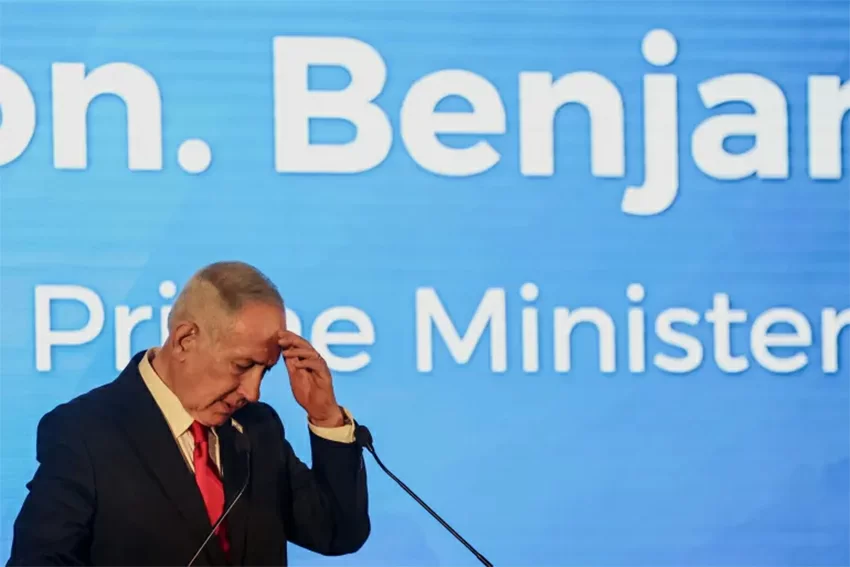
  • Overwinning verkwanseld: Israël reageert op Trumps staakt-het-vuren met Iran

    Overwinning verkwanseld: Israël reageert op Trumps staakt-het-vuren met Iran

    Dated 08 April, a new analysis from regional and global security experts paints a stark picture of the Middle East power shift following 40 days of cross-border conflict between Israel and Iran: even with clear military successes on the battlefield, Israel has emerged strategically weakened, while long-time rival Iran has gained stronger regional standing, ahead of a proposed two-week ceasefire brokered by Pakistan and announced by former U.S. President Donald Trump this week.

  • Erdington Pastor Charged After Man Drowned During Baptism

    Erdington Pastor Charged After Man Drowned During Baptism

    Nearly three years after a 61-year-old church member drowned during a baptism ceremony in Birmingham, England, the leading pastor of the congregation has been formally charged with criminal manslaughter by gross negligence, British prosecutors confirmed this week.

    The victim, Robert Smith, a 61-year-old resident of Brixton, London, passed away on October 8, 2023, after the incident unfolded at a private residential property on Slade Road in the Erdington district of Birmingham. According to court documents and local law enforcement reports, Smith had traveled from his London home to Birmingham specifically for the baptism ceremony, and had been an active participant in Life Changing Ministries, the local congregation organizing the event, for four years prior to the tragedy.

    The ceremony, which was held in a small custom-built pool on the property’s garden, was originally intended to be broadcast live to the congregation’s remote followers on the church’s official Facebook page. Witness and platform records confirm that the live stream was abruptly cut off mid-ceremony immediately after the drowning incident, and the recording was permanently removed from the platform shortly after.

    The Crown Prosecution Service (CPS) announced this past April 8, 2026 that 48-year-old Cheryl Bartley, the senior pastor of Life Changing Ministries who led the baptism and is a local Erdington resident, has been charged with one count of gross negligence manslaughter. Bartley is scheduled to make her first court appearance at Birmingham Magistrates’ Court on May 14, where initial procedural hearings will begin to outline the prosecution’s case and set future trial dates.

    Local law enforcement has not released additional details about the specific circumstances of the drowning, nor has the congregation released a public statement responding to the charges in the weeks leading up to the scheduled court appearance.

  • An open letter to the Prime Minister on voter registration and confirmation

    An open letter to the Prime Minister on voter registration and confirmation

    A public letter addressed to the Prime Minister of Dominica from prominent activist Gregor Nassief has reignited debate over the country’s troubled new electoral reform framework, exposing deep flaws in voter registration, confirmation and ID card distribution that have left tens of thousands of eligible citizens disenfranchised. This marks Nassief’s fourth public intervention on electoral reform issues, following a year of persistent gridlock that has eroded public trust in the island nation’s democratic process.

    In March 2025, Dominica’s House of Assembly passed three landmark electoral reform bills designed to overhaul the country’s voter registration system and introduce mandatory national voter ID cards. Yet on the same day the legislation was signed into law, continuous voter registration — a core process that allows newly eligible voters to add their names to the electoral roll at any time — was illegally suspended. The suspension lasted 355 consecutive days, ending only on March 9, 2026, cutting off more than a full year of new voter sign-ups.

    This shutdown directly impacted local elections held across the country, including the March 23, 2026 Roseau City Council poll, where no new eligible voters were able to register or participate in the 369 days leading up to the vote. The island’s existing voter roll has long been plagued by inaccuracies: 2019 data shows roughly 75,000 names were listed on the roll, though International IDEA estimates Dominica’s total resident voting-age population is only around 55,000, with thousands of deceased people and long-term emigrants still included on the register. As of April 2026, only around 14,000 eligible voters — roughly 25% of the total eligible population — have submitted applications for registration or voter confirmation. Of that group, just 4,000 applicants have received final confirmation, representing barely 7% of all eligible Dominicans. Six months into the six-month confirmation period, which launched on October 15, 2025, not a single approved applicant has received their legally mandated voter ID card.

    Nassief, who submitted his own registration application on March 9, 2026, says he has yet to receive approval a full month later, and he is far from the only citizen stuck in bureaucratic limbo. Nassief pushes back forcefully against claims Prime Minister made during a March 25, 2026 press conference, where the leader dismissed delays as inconsequential to election outcomes, blamed citizens for failing to participate in the process, and framed the slow rollout as “important progress” derailed only by a last-minute ID card design change.

    Nassief refutes the Prime Minister’s claim that shutting out new voters cannot alter election results, pointing to the 2026 Roseau City Council race where opposition candidate Lenny Jno Baptiste lost Ward 1 by just eight votes, a margin that could easily have been flipped by disenfranchised new voters. He also rejects the claim that citizens have failed to “avail themselves” of the confirmation process, noting that the system itself was unavailable to new registrants for nearly a year, and even now, half of all applicants remain unapproved with no IDs in hand.

    The letter also challenges the Prime Minister’s constitutional argument that he is required to call a general election on schedule regardless of the confirmation process’s failures. Nassief notes that no provision of Dominica’s constitution compels an early election before the new electoral framework, which the current government championed, is fully implemented and trusted by the public. Calling an election prematurely, he argues, is not a constitutional requirement but a political choice that would proceed without a fully functional, legitimate system. Framing the year-long disenfranchisement of new voters as “water under the bridge,” as the Prime Minister did, shows a dangerous disregard for democratic norms, while the Prime Minister’s public insistence that the confirmation process will end definitively on October 14, 2026 undermines the Electoral Commission’s statutory independence, which allows the body to extend the process by 90 days if necessary.

    Nassief lays out six concrete recommendations to restore public confidence in Dominica’s electoral system: first, he calls for the resignation of all five current Electoral Commission members, who have lost public trust, to make way for a new body that can command cross-societal support. Second, he urges the government to provide the new commission with full independence, sufficient resources and extended timelines to fix operational failures and complete registration and confirmation in line with the government’s own standard of being “timely, efficient and transparent.” Third, he calls for a full review of all recent village and city council elections to determine whether they were legitimate, with new elections called if widespread disenfranchisement invalidates the original results. Fourth, he supports a fully nonpartisan public education campaign co-led by the Electoral Office and civil society to encourage all eligible voters to participate regardless of partisan affiliation. Fifth, he calls on the Prime Minister to publicly affirm the Electoral Commission’s right to extend the confirmation period if needed to ensure all eligible voters can complete the process. Finally, he demands a clear public commitment that no general election will be called until the new system is fully functional and public confidence has been restored.

    Nassief concludes that Dominica does not need further legal debates over executive authority to call elections; it needs a moral commitment from the Prime Minister that no poll will proceed until the legislated reform framework is fully operational and trusted by the public. Choosing to prioritize legitimacy over expediency, he argues, is the only way to ensure any future Dominican government rests on the free, unobstructed will of the people.

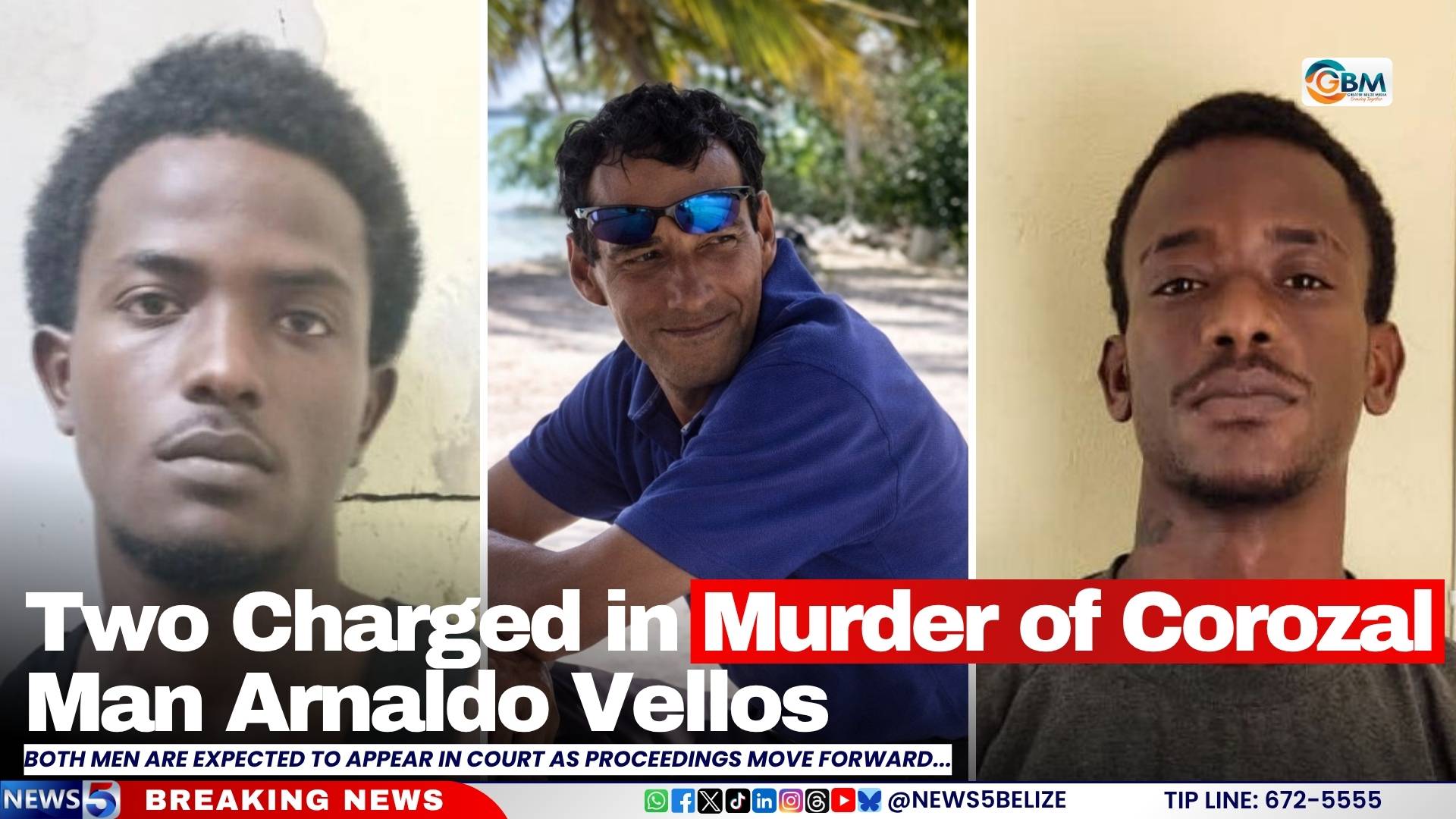
  • Two Men Charged in 2025 Murder of Arnaldo Vellos

    Two Men Charged in 2025 Murder of Arnaldo Vellos

    More than five months after 31-year-old Arnaldo Andres Vellos was gunned down near his Corozal Town residence, law enforcement officials have secured murder charges against two local men in connection with the high-profile killing. According to official police updates, 20-year-old Brandon Alexander Sanker and 23-year-old Kevon Wayne Armstrong made their first formal court appearance on Tuesday, where both entered pleas to a joint charge of murder. The case carries an additional count for Sanker, who also faces an allegation of attempted murder linked to the same October 2025 shooting incident.

    The fatal shooting unfolded on Halloween 2025 in the Finca Solana neighborhood of Corozal Town. First responders were dispatched to the area after receiving multiple emergency calls reporting gunfire, arriving on scene to find Vellos with multiple gunshot wounds just steps from his home. Emergency medical crews immediately transported the victim to a local medical facility, but he succumbed to his injuries shortly after admission.

    In the immediate aftermath of the killing, Assistant Commissioner of Police Hilberto Romero, who leads the country’s National Crime Investigation Branch, publicly confirmed that investigators were working on the theory that the shooting was tied to illegal drug activity. Law enforcement officials have consistently characterized the attack as a pre-planned, targeted killing, and have noted that both accused suspects were already known to authorities prior to their arrest in the murder case.

    The arrest of Sanker marks his second run-in with the law this week. Separately from the murder prosecution, he is also facing charges for illegal possession of a firearm and ammunition in an unrelated incident. That case also names two minor defendants who were arrested alongside Sanker in connection with the weapons offense.

    As of the latest update, no further details about potential motive or upcoming court hearings have been released to the public, and the investigation remains active as police continue to piece together the full sequence of events leading up to Vellos’s death.

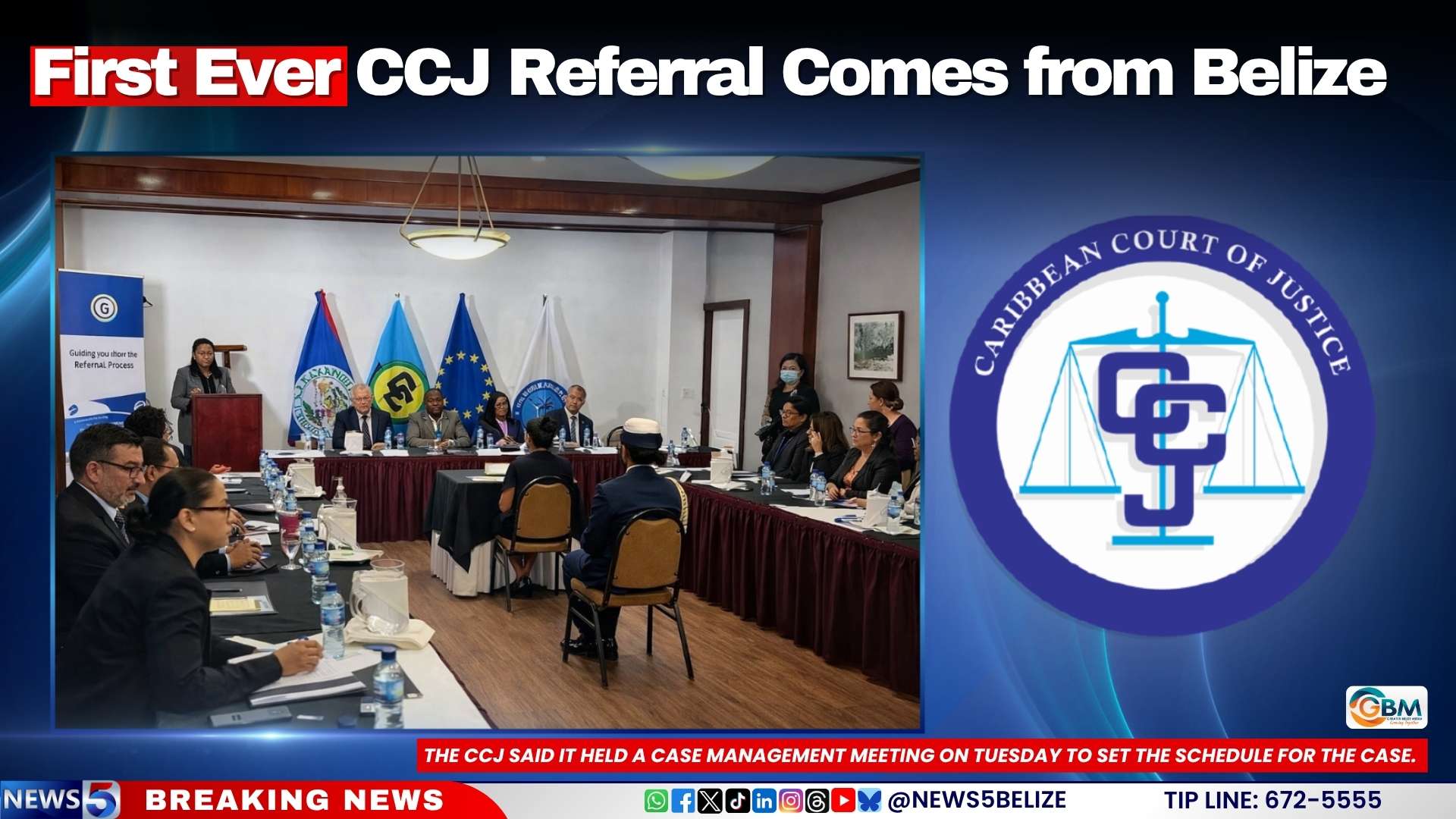
  • First Ever CCJ Referral Comes from Belize

    First Ever CCJ Referral Comes from Belize

    In a quiet development that reshape the landscape of Caribbean legal cooperation, the small Central American Caribbean nation of Belize has logged an unprecedented milestone for regional judicial integration. For the first time since the Caribbean Court of Justice (CCJ) established its formal jurisdiction, a national court from a CARICOM member state has activated the long-dormant referral mechanism to request the CCJ’s guidance on interpreting regional trade and corporate law.

    The groundbreaking referral grows out of a high-stakes domestic business and constitutional dispute launched earlier by eight claimants, prominent among them local investor Anwar Barrow and Aquity Holdings Limited. The claimants have brought their challenge against two of Belize’s top government regulatory bodies: the national Financial Services Commission (FSC) and the Office of the Attorney General.

    At the core of the legal conflict are two key grievances put forward by the claimants. First, they argue that the FSC incorrectly calculated and imposed a merger fee during the consolidation of 13 separate companies owned by the group. Second, they are challenging a long-standing government policy that mandates domestic corporations with foreign majority shareholders pay all regulatory fees exclusively in U.S. dollars. The claimants contend both actions violate fundamental constitutional guarantees, including their right to equal legal protection and freedom from discriminatory regulatory practices.

    On March 3 of this year, the Belize High Court formally opted to send the unresolved questions of law to the CCJ for authoritative interpretation. The request for guidance covers provisions of Belize’s national Companies Act as well as CARICOM’s regional rules aimed at curbing anti-competitive business practices. Prior to this referral, no CARICOM member nation had ever utilized this formal referral process since the framework was established, marking a major turning point for regional judicial cooperation.

    In a public statement released this week, the CCJ confirmed that it held a mandatory case management meeting this past Tuesday to outline procedural timelines and rules for the landmark dispute. The official hearing on the interpretation questions is scheduled to proceed on May 19, 2026, and will be conducted via video conference to accommodate legal teams based in Belize and the CCJ’s base in Trinidad and Tobago.

    The CCJ further clarified its role in the process, emphasizing that it will only deliver a binding interpretation of the relevant laws, rather than a final ruling on the entire dispute. “Once the CCJ has given its interpretation, the proceedings are resumed by the referring court or tribunal, which will then apply the ruling to the facts of the dispute pending before it and deliver judgement,” the court explained in its official statement. The final outcome of the original constitutional challenge will therefore remain in the hands of the Belize High Court, once the CCJ has provided its critical legal guidance on the contested points of regional and national law.

    Legal observers across the Caribbean have noted that this first referral sets a critical precedent for future regional judicial cooperation, potentially opening the door for more member states to utilize the CCJ’s resources to resolve complex cross-cutting legal questions that touch on both national and CARICOM rules.

  • FOD president wants proactive approach in tackling gun violence

    FOD president wants proactive approach in tackling gun violence

    Two deadly shootings that unfolded over Barbados’ Easter weekend have amplified already growing fears over the nation’s accelerating gun violence crisis, prompting senior lawmaker and attorney Karina Goodridge to push for sweeping policy changes: a nationwide zero-tolerance mandate for homicide and the immediate launch of a proactive early warning system to stop attacks before they occur. In a firm, clear statement released to the public Wednesday, Goodridge — who also serves as president of the civic organization Friends of Democracy — argued that the small island nation can no longer afford to downplay the threat or treat it as an abstract concern, as brutal killings increasingly take place in crowded public spaces, carried out by perpetrators acting in open defiance of the law.

    Goodridge emphasized that Barbados is confronting a shifted, dangerous landscape that demands urgent action: as of the Easter weekend, the country had already logged at least 18 homicides for the year, a sharp upward trajectory that she called alarming. Many of these killings have happened in broad daylight, in areas packed with bystanders, and in contexts that offer no logical explanation for the violence. “Each life lost is a tragedy… [and] a stark reminder that complacency is no longer an option,” she said.

    Her call to action follows three separate shooting incidents that took place on Easter Monday alone, which left two men dead and multiple other people injured, pushing community anxiety over the growing violence to new heights. Goodridge pushed back against the common framing of these killings as isolated, disconnected events, arguing that what Barbados needs instead is a unified, preventive national strategy that addresses violence at its roots.

    “The time has come to adopt a zero-tolerance approach to homicide. Violence, especially gun violence, has ripple effects that permeate society,” she explained, noting that the damage of a single attack extends far beyond the immediate victims and their families, tearing at the fabric of entire communities. Drawing on lessons from neighboring Caribbean nations, Goodridge pointed to successful interventions in Trinidad and Tobago, where law enforcement has leveraged data-driven policing and rapid response frameworks to anticipate criminal plots and break them up before violence can occur. She argued that Barbados can adapt these proven models to fit its own context, building systems that can detect, prevent, and disrupt violent acts before they lead to tragedy.

    At the center of Goodridge’s proposal is the creation of a holistic early warning system that integrates three key pillars: active community engagement, intelligence-led policing, and targeted enforcement. Key measures she outlined include boosting sustained police presence in areas identified as high-risk for violence, using data-driven crime mapping to spot emerging patterns of criminal activity, and running coordinated, multi-agency operations to remove illegal firearms from communities across the country.

    The senator stressed that enforcement measures alone cannot reverse the trend of rising violence. She called for complementary social programs that address the root causes that drive violent crime, including unaddressed mental health challenges, widespread substance abuse, and a lack of positive mentorship for at-risk young people. Highlighting one of the most recent Easter weekend attacks — the fatal shooting of 22-year-old Raul Clarke in Oistins — Goodridge said the tragedy serves as a stark warning of the immediate danger that unregulated illegal firearms pose to public safety, adding that “Barbados cannot wait for tragedy to strike again.”

    “Removing illegal guns, combined with community vigilance and social interventions, is a proven formula for reducing violent crime and safeguarding lives. Every confiscated weapon is a potential life saved,” she argued. Digging into the deeper drivers of the current violence epidemic, Goodridge noted that core social and familial breakdowns — including inadequate parenting support, unaddressed mental illness, and rampant substance misuse — are at the root of the crisis. To tackle these issues, she called for closer collaboration between families, schools, and local community organizations to instill core values of respect and personal accountability in children from a young age.

    Goodridge also emphasized that supporting frontline law enforcement officers is a non-negotiable part of any effective strategy, noting that officers need timely compensation, ongoing specialized training, and dedicated mental health resources to carry out their work effectively. “Supporting our police with timely payments, adequate training, and mental health resources is not optional – it is essential for effective enforcement and deterrence,” she said. In addition to supporting law enforcement, she urged national and local authorities to prioritize transparency and ongoing public engagement, proposing regular town hall meetings and deeper formal partnerships between police and community groups as core components of a national crime prevention strategy.

    Goodridge concluded that Barbados must build a national culture where violence of any kind is never accepted, and where citizens feel both safe from harm and empowered to report potential threats to authorities before violence occurs. Warning that continued inaction will only allow the crisis to escalate further, she noted that the country has the resources and capacity to address the problem decisively — but collective political, social, and community will is required to make meaningful change. “What is required now is resolve: political, social, and communal,” she said.