
Santo Domingo – The Dominican government has moved forward to extend its critical fertilizer subsidy initiative, striking new cooperative agreements with both large and small agricultural input and raw material importers to back the program. The administration has committed more than RD$1.09 billion in fresh funding, which will keep the subsidy active for domestic producers through the end of August, with core goals of lowering farmer production costs and shielding consumers from unexpected food price hikes. The new agreements were formally signed during a ceremony hosted at the Dominican Ministry of Agriculture, with Agriculture Minister Francisco Oliverio Espaillat in attendance alongside leadership from participating importing firms. When combined with previous allocations for the program, the total government investment in fertilizer subsidies now climbs to RD$2.151 billion. This expanded funding significantly strengthens ongoing efforts to support the country’s agricultural community amid widespread global economic volatility that has sent input prices swinging sharply in international markets. Per official guidance from the Ministry of Agriculture, the subsidy program serves three urgent, interconnected priorities: it keeps retail fertilizer prices accessible for small and large producers alike, it shores up the nation’s overall food security framework, and it prevents dramatic jumps in the cost of the country’s basic consumer food basket. Government officials further emphasized that the Dominican Republic stands out among regional economies as one of only a handful that deliver direct agricultural subsidies of this magnitude. This level of commitment is designed to buffer both domestic agricultural producers and end consumers from the volatile swings that have disrupted global fertilizer and food markets in recent years. The newly signed agreements formalize a structured public-private partnership built to guarantee a consistent flow of fertilizer raw materials across the country. A key objective of this collaboration is to pre-empt supply shortages and ensure producers have full access to critical inputs during the busiest peak agricultural growing seasons. Under the terms of the deal, the first agreement covers the country’s major fertilizer importers, which are responsible for meeting the vast majority of the nation’s total domestic demand. The second agreement brings 11 smaller independent importing firms into the program, a move intended to expand private sector participation and prevent over-concentration of supply in the market. Both government authorities and private industry representatives have underscored the far-reaching positive impacts of the extended program. Beyond its immediate near-term goals of stabilizing prices and avoiding shortages, stakeholders note the initiative will support sustained agricultural output, preserve overall consumer price stability, boost the long-term global competitiveness of the Dominican agricultural sector, and keep essential food staples affordable for households across the income spectrum.
作者: admin
-

FL Technics receives FAA Certification for aircraft maintenance facility in Punta Cana
Global aircraft maintenance provider FL Technics has officially entered the Dominican Republic’s aviation market after winning key approval from the U.S. Federal Aviation Administration to deliver full maintenance, repair, and overhaul (MRO) services out of its newly built Punta Cana base.
The Part 145 Repair Station Certificate, one of the most rigorous certifications in global aviation maintenance, was issued after the FAA completed a months-long comprehensive audit of FL Technics’ new facility. Regulators verified every operational detail of the site, from the company’s standardized maintenance protocols and the precision of its technical equipment to the professional qualifications of its staff and the layout of its infrastructure, confirming it meets all international safety and performance standards.
With this regulatory greenlight, FL Technics can now serve commercial airlines and aircraft leasing companies that operate throughout the Caribbean and broader Latin American region. U.S.-based carrier JetBlue has already signed on as the facility’s first commercial customer, underscoring immediate industry demand for high-quality MRO services in the area.
Spanning 20,000 square meters, the purpose-built Punta Cana facility is engineered to deliver full base maintenance services for two of the world’s most widely used narrow-body aircraft families: the Airbus A320 series and Boeing 737 series, which make up the bulk of fleets for regional and U.S. airlines operating across the Americas.
As the facility ramps up operations, FL Technics is building a local Dominican workforce from the ground up, with ongoing support and training provided by veteran MRO experts from the company’s global network. The firm has outlined a clear long-term plan to gradually hand over full operational leadership of the base to local Dominican aviation professionals as the team gains experience.
This FAA certification comes on the heels of a separate approval from the Dominican Institute of Civil Aviation, clearing all regulatory hurdles for the company’s launch. The project is a core part of FL Technics’ long-term strategic investment in the Dominican Republic, with major expansion already mapped out. The company plans to grow the facility from its current five maintenance bays to 20 over the coming years, with the ultimate goal of establishing Punta Cana as a leading regional MRO hub serving U.S. carriers and local airlines across North, Central, and South America.
-

Public Health intensifies surveillance and warns of sanctions for hygiene violations in food establishments
In the wake of viral social media videos claiming unsanitary operating conditions at a food service establishment in Santo Domingo, the Dominican Republic’s Ministry of Public Health has moved quickly to verify the claims, confirming that its ongoing national network of permanent sanitary surveillance remains active to protect consumer public health across all food preparation and retail sites nationwide.
After the unsubstantiated allegations circulated widely across digital platforms, public health officials immediately launched formal inspection protocols, launching a full on-site evaluation that covered every key area of health compliance: from the facility’s physical infrastructure and general cleaning standards to its waste management protocols and pest prevention systems.
When the technical inspection team concluded its assessment, it found no critical safety violations, no visible evidence of pest infestations, and confirmed that the business met all legally mandated national health standards at the time of the official visit. To extend the verification process, the ministry also conducted random unannounced inspections at other nearby food businesses in the same area, and no immediate public health hazards were uncovered at those locations either.
Beyond the direct inspection of the targeted establishment, health authorities held a coordination meeting with senior management of the shopping center that hosts the business to walk through existing sanitation and integrated pest control protocols. The meeting reinforced the shared responsibility that commercial property owners and food operators hold to maintain consistent adherence to national hygiene rules.
In a formal statement reiterating its commitment to public safety, the Ministry of Public Health emphasized that all food service operations across the country bear primary responsibility for upholding strict sanitary conditions through regular deep cleaning, routine disinfection, temperature-appropriate safe food storage, and continuous proactive pest prevention measures.
The institution also made clear that it will continue expanding and strengthening its sanitary surveillance efforts across every region of the country, and that it will not hesitate to impose full legal sanctions on any establishment found to be in violation of health rules that put the public at risk of foodborne illness or other health hazards.
-

Why airlines still charge Dominican citizens the tourist card fee?
A new wave of public debate has swept the Dominican Republic after the Ministry of Finance and Economy unveiled a $10 increase in international departure taxes for all travelers, including citizens, residents, and foreign visitors. At the heart of this renewed discussion is a long-running unresolved issue: the automatic $10 tourist card fee still applied to Dominican nationals at the time of airline ticket purchase, more than a year after a landmark court ruling ordered the fee be scrapped entirely for citizens of the country.
The roots of the current gridlock stretch back to 2022, when Resolution 217-2022 first formalized that Dominican citizens should no longer be required to pay the tourist card fee. Yet, due to persistent technical gaps in major airlines’ global billing systems, the charge has remained embedded in automatic ticket pricing, forcing affected Dominican passengers to go through a separate claims process to request a refund from the General Directorate of Internal Taxes (DGII).
Multiple legal challenges have failed to speed up the process of reform. In 2023, a coalition of major global carriers including JetBlue, Copa Airlines, Delta Air Lines, American Airlines, and Air France brought an appeal against the new fee framework to the Superior Administrative Court, only to see their challenge rejected. That same year, Dominican citizens launched a constitutional challenge against the DGII’s refund regulations governing the tourist card fee.
The Dominican Constitutional Court ultimately sided with citizens, ruling that Dominican nationals cannot be classified as tourists in their own country, and thus the fee violates their legal rights. However, in a decision that has drawn widespread criticism, the court chose to suspend the immediate implementation of its ruling, granting state agencies an extended timeline to update outdated tax and billing infrastructure.
According to the Civil Aviation Board (JAC), full operational elimination of the automatic tourist card fee for citizens requires close coordination between the National Congress and the DGII, since the Constitutional Court’s ruling supersedes all existing administrative regulations. Though the final judgment was handed down in December 2023, the official implementation window only opens on May 18, 2026, following formal notification to all relevant tax and judicial bodies.
From that opening date, the Dominican government will have a two-year period to build and roll out a new system that blocks automatic collection of the tourist card fee from Dominican citizens. Parallel to this technical overhaul, the National Congress is expected to pass the targeted legislative reforms needed to bring national law into alignment with the Constitutional Court’s ruling.
For the entire multi-year transition period, the unpopular “pay first, claim later” system will remain in effect. The court justified the extended delay by noting that airlines lack a reliable mechanism to verify passenger nationality at the point of ticket purchase, meaning immediate automatic exemption would require disruptive overhauls of airline ticketing infrastructure that cannot be completed quickly.
Public frustration has boiled over in recent weeks following the government’s announcement of the new $10 departure tax hike, a core part of the administration’s anti-crisis economic plan to boost state revenue. Finance Minister Magín Díaz projected that the tax adjustment will generate between 7 billion and 8 billion Dominican pesos as part of the government’s broader revenue-raising strategy. While the new departure tax applies to all passengers leaving the country, Dominican citizens will retain their right to claim refunds for the erroneously charged tourist card fee until the full legal and technical overhaul is completed in 2028.
-

Human rights groups urge end to migration checks in Dominican public hospitals
On a Monday in Santo Domingo, the Dominican Republic, a broad coalition of human rights and civil society organizations delivered a clear demand to the country’s executive leadership at the National Palace. Led by the Migration and Human Rights Collective (CMDH), the coalition submitted a petition boasting more than 1,000 citizen signatures calling for the full repeal of a controversial migration protocol currently enforced at the nation’s public hospitals.
Implemented by state authorities, the protocol grants medical and immigration officials authorization to verify the immigration status of foreign patients under specific circumstances. For coalition members and supporting groups, this policy has triggered a dangerous ripple effect across the country’s public health system: undocumented migrant patients now avoid seeking life-saving medical care out of well-founded fear of being targeted for immigration enforcement. This avoidance not only delays urgent treatment for individual patients but also creates measurable risks to the broader Dominican public’s health, organizers argue.
At the core of the coalition’s advocacy is a firm principle: public hospitals must remain safe spaces that guarantee universal access to care, with medical treatment provided regardless of a patient’s immigration documentation status. Representatives emphasized that the burden of the current policy falls disproportionately on the most vulnerable populations, including expectant mothers, young children, and patients requiring emergency life-saving intervention.
The delegation that delivered the petition brought together representatives from a diverse cross-section of Dominican civil society, including Pablo Mella from the Montalvo Center, Abraham Apolinario of Caritas Archdiocese, Lía Concepción and Yildalina Tatem from CMDH, and independent journalist Ana Mitila Lora. In total, more than 70 national and international organizations have thrown their support behind the repeal initiative, ranging from prominent faith-based groups like Cáritas Arquidiocesana and civil society groups such as Participación Ciudadana, Casa Abierta, CIPAF, CONAMUCA, CE-MUJER, and Foro Ciudadano, among others.
CMDH spokespersons specifically highlighted the disproportionate harm the policy inflicts on patients of Haitian descent. The visible presence of immigration enforcement personnel within hospital grounds, they explained, fosters a pervasive climate of fear that pushes many migrant patients to delay care until their conditions become life-threatening. “A delivery room is not the place to implement migration policy,” coalition members stated, reiterating their warning that the protocol threatens both individual patient lives and the stability of the Dominican Republic’s public health system.
While the coalition explicitly recognizes the Dominican government’s sovereign authority to set and enforce national migration regulations, organizers maintain that the country’s commitment to fundamental human rights demands that immigration enforcement never come between patients and life-saving care. The coalition is calling on the administration to withdraw the controversial protocol entirely, remove all immigration enforcement activities from public hospital premises, and launch a structured inclusive dialogue with health care providers and civil society groups. The goal of this dialogue, organizers say, would be to craft alternative policies that fairly balance the state’s legitimate interest in migration regulation with the non-negotiable protection of all people’s right to access life-saving health care.
-

U.S. Embassy: Americans in the Dominican Republic can obtain emergency passports
SANTO DOMINGO — The United States Embassy in the Dominican Republic has rolled out a new clarification of its emergency consular services, highlighting a dedicated emergency passport program for U.S. citizens who find themselves without valid documentation amid urgent international travel plans.
The announcement, shared publicly via the embassy’s official Instagram account, outlines clear guidelines for Americans residing in the Caribbean nation or visiting as tourists who have had their passports lost, stolen, damaged, or have accidentally let their travel documents expire ahead of a planned trip. To access the emergency passport service, applicants are required to first book an appointment through the U.S. Embassy’s official website, and bring any available pieces of personal identification, documentation that can prove U.S. citizenship, and formal evidence confirming their scheduled international departure within the next 14 days. Embassy officials stress that the service is exclusively reserved for urgent scenarios requiring imminent cross-border travel, and is not available for non-emergency documentation requests.
Beyond the emergency passport program, the embassy also issued a public reminder to all U.S. citizens in the Dominican Republic about its 24-hour, seven-day-a-week emergency assistance hotline. This round-the-clock service is designed to respond to severe, life-altering or high-priority events involving American citizens, including reported deaths, arrests, unexpected hospitalizations, and missing person cases. To reach the emergency response team, citizens can call the dedicated hotline at 809-567-7775. In a key clarification, embassy officials emphasized that this hotline is restricted solely for emergency reporting, and cannot be used to answer routine questions related to standard passport processing, visa applications, or other non-urgent consular services. Routine inquiries should be directed through the embassy’s official website and regular public service channels, officials added.
-
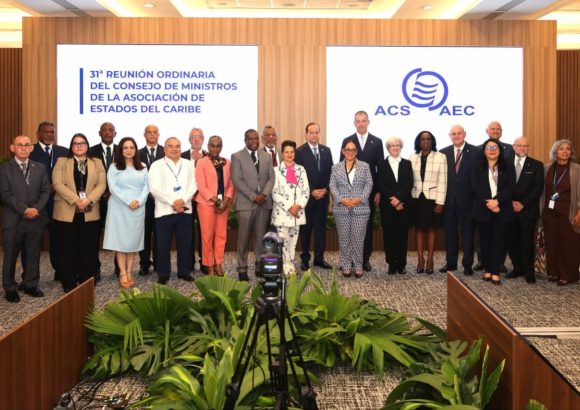
Dominican Republic to chair Caribbean Trade Development Committee for 2026–2027
At the 31st Ordinary Meeting of the Council of Ministers of the Association of Caribbean States (ACS), held this week in Panama City, regional representatives voted to appoint the Dominican Republic as chair of the organization’s Special Committee on Trade Development and External Economic Relations for the 2026–2027 term.
The Dominican delegation at the gathering was headed by Carmen Elena Ibarra Toledano, who attended the meeting on behalf of Dominican Foreign Minister Roberto Álvarez. In its new leadership role, the Caribbean nation will lead and coordinate cross-regional initiatives to expand trade flows and deepen economic integration across the ACS’s 25 member states and dependent territories. As the only regional integration body that spans the entire Greater Caribbean, the ACS relies on its specialized committees to advance collaborative policy and development goals across the bloc.
The selection of the Dominican Republic for the chairmanship is widely interpreted as a clear signal of the bloc’s recognition of the country’s longstanding active engagement in Caribbean regional affairs. It also highlights the Dominican Republic’s consistent commitment to multilateral collaboration, inclusive economic integration, and equitable sustainable development across the Greater Caribbean. This new appointment adds to the country’s existing leadership portfolio within the ACS, where it currently serves as vice chair of the organization’s Special Committee on Disaster Risk Reduction. The dual roles are expected to reinforce the Dominican Republic’s growing influence and strategic leadership position across the entire regional bloc.
-

MITUR and Arajet showcase Dominican Republic tourism at Miami Marlins game
MIAMI, Florida – The Dominican Republic has upped the ante on its tourism marketing push in the United States, launching a targeted promotional activation at Miami’s LoanDepot Park during a recent Major League Baseball matchup between the San Francisco Giants and the Miami Marlins. The collaborative effort between the nation’s Ministry of Tourism (MITUR) and low-cost Caribbean carrier Arajet brought Dominican travel and culture directly to thousands of in-stadium baseball fans, with iconic Dominican Hall of Fame pitcher Juan Marichal headlining the event as the guest of honor.
Attendees at the activation got a hands-on introduction to everything the Caribbean nation has to offer, from its postcard-perfect white-sand coastlines to its vibrant cultural traditions and world-renowned culinary scene. Interactive activities, themed competitions, and high-value giveaways kept crowds engaged, with top prizes including free round-trip airline tickets on Arajet and complimentary multi-night stays at Dominican resorts. Beyond the fan-facing activations inside the stadium, MITUR and Arajet also hosted an invitation-only industry reception for U.S. travel agents, tour operators, media personalities, digital travel influencers, and leading tourism stakeholders. The private event centered on highlighting the nation’s expanding portfolio of diverse attractions and the growing network of direct air links connecting the U.S. to popular Dominican destinations.
This activation marks the second time MITUR, Arajet, and the Miami Marlins have partnered on a tourism outreach campaign, signaling the nation’s long-term commitment to growing its share of the U.S. leisure travel market. Dominican tourism officials stressed that the United States has long held its position as the single largest source of international visitors to the country, a status that makes targeted strategic promotions and expanded air connectivity two of the most critical pillars for driving consistent tourism sector growth and long-term sustainable economic development across the nation.
-
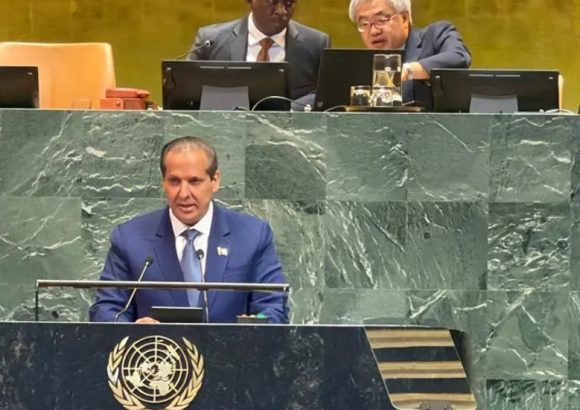
Health Minister highlights Dominican efforts to strengthen HIV response at UN Meeting
During a high-stakes United Nations High-Level Meeting on HIV/AIDS hosted at UN Headquarters in New York, the Dominican Republic has publicly restated its dedication to advancing a sustainable, cross-sector integrated, and community-focused approach to addressing the global HIV crisis. Health Minister Víctor Atallah, who represented the Caribbean nation at the 90th Plenary Session of the gathering, delivered a pragmatic address that balanced acknowledgment of global progress with a candid assessment of unmet goals.
Atallah noted that while the global fight against HIV/AIDS has yielded notable gains over the past decades, the internationally agreed 2025 treatment and prevention targets have not been reached on schedule. This shortfall, he emphasized, makes it urgent for the global community to confront deep-seated challenges that continue to hinder progress. Among the most pressing barriers he outlined are shrinking international financial contributions to global HIV initiatives, systemic inequities in access to high-quality HIV care and treatment services across different income groups and regions, and the ongoing societal stigma and legal discrimination that prevent many at-risk people from seeking testing and care.
The minister stressed that an effective, long-term response requires an honest accounting of both the victories already secured and the gaps that remain unaddressed. Only through this balanced assessment, he argued, can nations build a more equitable global response that leaves no community behind.
Shifting to the Dominican Republic’s domestic action plan, Atallah laid out the three core pillars of the nation’s updated national HIV strategy. First, the country is prioritizing the full elimination of vertical transmission of HIV, syphilis, and hepatitis B from mother to child, a key milestone for ending generational spread of the viruses. Second, the government is working to integrate all essential HIV services into national primary healthcare systems, as part of a broader push to expand universal health coverage for all Dominican residents. Third, the strategy targets gaps across the entire HIV care continuum, with the goal of improving patient retention in care and increasing rates of viral suppression among people living with HIV.
In closing, Atallah reaffirmed the Dominican Republic’s unwavering commitment to meeting the widely adopted international 95-95-95 targets. These global benchmarks are designed to ensure that 95% of people living with HIV know their status, 95% of those diagnosed receive sustained antiretroviral treatment, and 95% of people on treatment achieve durable viral suppression, a key marker of individual health and reduced transmission risk.
-

COMMENTARY: OECS at 45 – A Caribbean success worth celebrating
As the Organisation of Eastern Caribbean States (OECS) marks its 45th founding anniversary this year, it offers a timely opportunity to reflect on the real-world progress delivered by one of the Caribbean’s most ambitious regional integration projects. What started as a compact agreement between a handful of tiny Caribbean territories has grown into a powerful example of what small nations can achieve when they prioritize collective action over individual effort.
Founded officially on June 18, 1981, under the Treaty of Basseterre, the OECS was built on a deceptively simple core principle: that shared resources, coordinated policy, and unified action would produce far greater outcomes for residents than each territory could secure working alone. Four and a half decades later, that founding premise has been thoroughly proven correct.
Today, the OECS has expanded beyond its original membership to include 11 territories: Antigua and Barbuda, Dominica, Grenada, Montserrat, Saint Kitts and Nevis, Saint Lucia, Saint Vincent and the Grenadines, Anguilla, the British Virgin Islands, Martinique, and Guadeloupe. Together, this diverse grouping has built one of the most successful and functional models of regional integration in the entire developing world, outpacing many far larger regional blocs in delivering practical, on-the-ground results for ordinary citizens.
Among the OECS’s most transformative landmark achievements is the 2011 launch of the OECS Economic Union. This framework has unlocked unprecedented freedom for residents of member states: people can now move, live, work, and launch businesses across participating territories with far fewer barriers than existed before. In many key measures of functional integration, the OECS has made more progress than much larger regional bodies with far bigger budgets and broader mandates.
Another long-standing success story is the Eastern Caribbean Currency Union, overseen by the Eastern Caribbean Central Bank. Through decades of cascading crises — including devastating Atlantic hurricanes, the 2008 global financial collapse, and the widespread economic and social disruptions of the COVID-19 pandemic — the Eastern Caribbean dollar has maintained exceptional stability, protecting the purchasing power and economic security of millions of residents across the bloc.
Beyond economic and monetary integration, the OECS has also emerged as a leader in coordinated action on a range of cross-border priorities, from public health collaboration and bulk pharmaceutical procurement to systemic education reform and building collective climate resilience. Its coordinated response to shared global challenges has served as a powerful demonstration of the impact small states can deliver when they pool limited resources and specialized expertise.
The more recent addition of Martinique and Guadeloupe to the grouping has brought a valuable new dimension to regional cooperation, helping bridge long-standing linguistic and cultural divides that have split the Caribbean for centuries. This expanded, more inclusive vision of shared Caribbean identity may ultimately stand as one of the most significant long-term developments in the organization’s 45-year history.
That said, the OECS is not without unmet challenges and areas for improvement. Public awareness of the organization and its work remains stubbornly low across the bloc: millions of residents benefit from OECS programs and initiatives every day, but few recognize the organization as the driving force behind those gains. Progress on integrating the private sector across member territories has also lagged far behind the advances made in intergovernmental cooperation, and the organization has yet to build robust, sustained engagement with younger generations to secure the future of the regional integration project.
These challenges will only grow in urgency as the OECS confronts a new wave of pressing 21st-century priorities, from regulating artificial intelligence and advancing digital transformation to shoring up fragile food systems, scaling up renewable energy infrastructure, and accelerating climate adaptation across vulnerable small island territories.
Even with these unaddressed hurdles, the overall 45-year track record of the OECS remains overwhelmingly positive. The organization has proven that regional integration delivers the greatest value when it prioritizes practical, tangible results over empty, lofty declarations. It has built durable, functional institutions, delivered critical cross-border public services, and expanded economic and personal opportunities for millions of citizens across its member territories.
At 45 years old, the OECS stands as one of the Caribbean’s most successful examples of cooperation in action. Its decades of experience offer a vital lesson for regional integration efforts across the globe: integration only succeeds when it moves beyond rhetorical rhetoric and delivers concrete, visible benefits to ordinary people. That lesson may ultimately prove to be the OECS’s most enduring contribution to the Caribbean’s ongoing story.