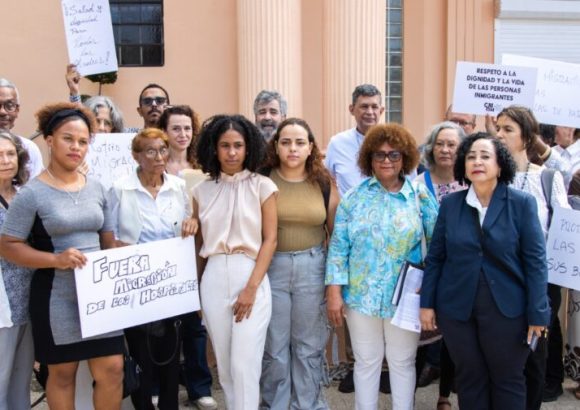
On a Monday in Santo Domingo, the Dominican Republic, a broad coalition of human rights and civil society organizations delivered a clear demand to the country’s executive leadership at the National Palace. Led by the Migration and Human Rights Collective (CMDH), the coalition submitted a petition boasting more than 1,000 citizen signatures calling for the full repeal of a controversial migration protocol currently enforced at the nation’s public hospitals.
Implemented by state authorities, the protocol grants medical and immigration officials authorization to verify the immigration status of foreign patients under specific circumstances. For coalition members and supporting groups, this policy has triggered a dangerous ripple effect across the country’s public health system: undocumented migrant patients now avoid seeking life-saving medical care out of well-founded fear of being targeted for immigration enforcement. This avoidance not only delays urgent treatment for individual patients but also creates measurable risks to the broader Dominican public’s health, organizers argue.
At the core of the coalition’s advocacy is a firm principle: public hospitals must remain safe spaces that guarantee universal access to care, with medical treatment provided regardless of a patient’s immigration documentation status. Representatives emphasized that the burden of the current policy falls disproportionately on the most vulnerable populations, including expectant mothers, young children, and patients requiring emergency life-saving intervention.
The delegation that delivered the petition brought together representatives from a diverse cross-section of Dominican civil society, including Pablo Mella from the Montalvo Center, Abraham Apolinario of Caritas Archdiocese, Lía Concepción and Yildalina Tatem from CMDH, and independent journalist Ana Mitila Lora. In total, more than 70 national and international organizations have thrown their support behind the repeal initiative, ranging from prominent faith-based groups like Cáritas Arquidiocesana and civil society groups such as Participación Ciudadana, Casa Abierta, CIPAF, CONAMUCA, CE-MUJER, and Foro Ciudadano, among others.
CMDH spokespersons specifically highlighted the disproportionate harm the policy inflicts on patients of Haitian descent. The visible presence of immigration enforcement personnel within hospital grounds, they explained, fosters a pervasive climate of fear that pushes many migrant patients to delay care until their conditions become life-threatening. “A delivery room is not the place to implement migration policy,” coalition members stated, reiterating their warning that the protocol threatens both individual patient lives and the stability of the Dominican Republic’s public health system.
While the coalition explicitly recognizes the Dominican government’s sovereign authority to set and enforce national migration regulations, organizers maintain that the country’s commitment to fundamental human rights demands that immigration enforcement never come between patients and life-saving care. The coalition is calling on the administration to withdraw the controversial protocol entirely, remove all immigration enforcement activities from public hospital premises, and launch a structured inclusive dialogue with health care providers and civil society groups. The goal of this dialogue, organizers say, would be to craft alternative policies that fairly balance the state’s legitimate interest in migration regulation with the non-negotiable protection of all people’s right to access life-saving health care.