作者: admin

  • Russia Launches Massive Drone and Missile Strike on Ukraine, Killing 18

    Russia Launches Massive Drone and Missile Strike on Ukraine, Killing 18

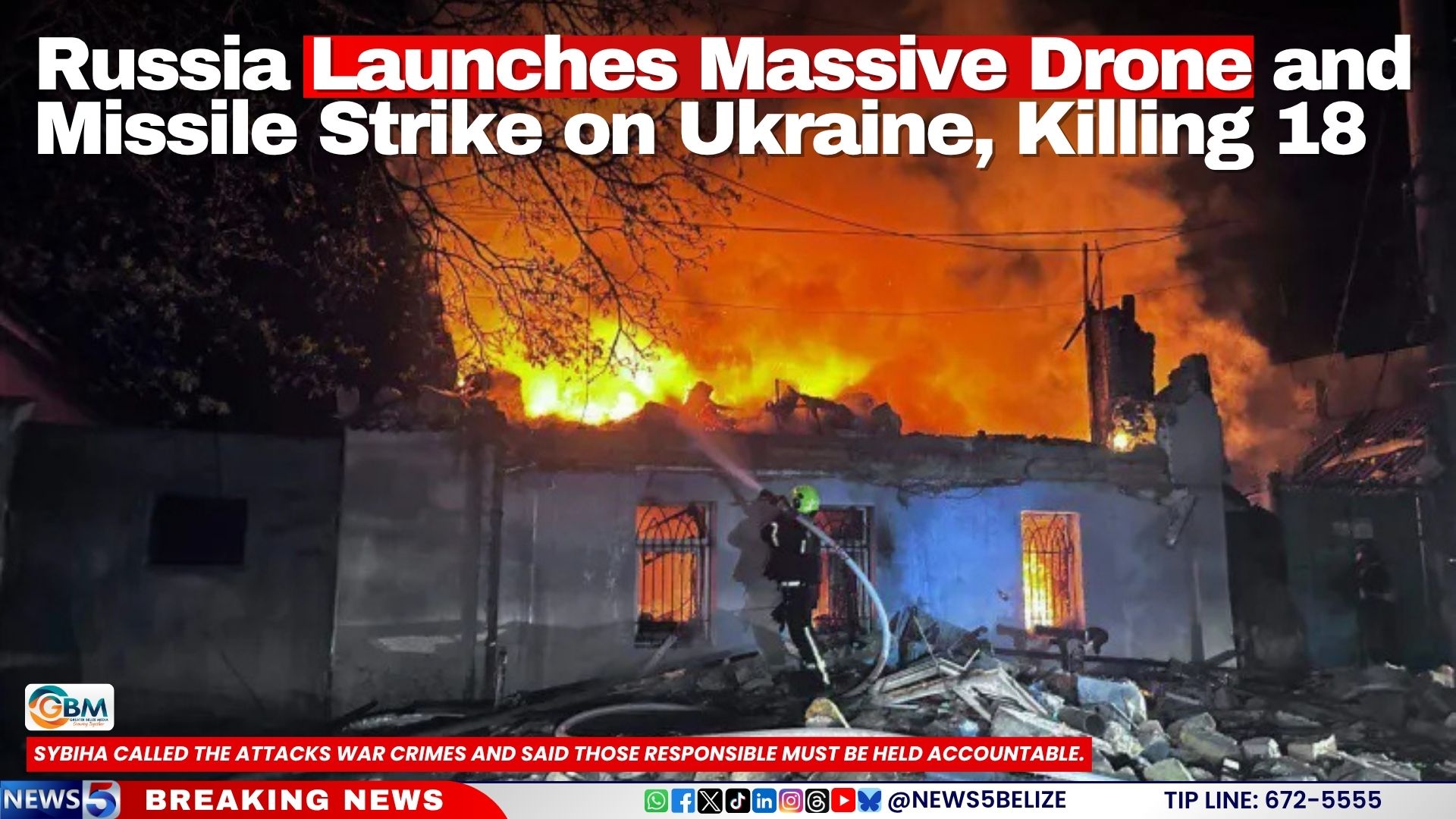
    Just days after a limited 32-hour Orthodox Easter ceasefire initiated by Moscow, Russia has unleashed one of the most extensive combined drone and missile assaults on Ukrainian territory in 2026, leaving at least 18 people dead — including one child — and wounding more than 100 others across multiple regions, Ukrainian national and local authorities confirmed to CNN on Thursday.

    According to reports from Ukraine’s State Emergency Service and local administrative bodies, the 118 recorded injuries came as Russian projectiles destroyed and damaged dozens of civilian residential buildings, igniting large blazes in communities across the country. The Ukrainian Air Force documented that over the 24-hour period ending early Thursday morning, Russian forces launched a staggering 659 unmanned aerial drones alongside 44 conventional and ballistic missiles. The assault was carried out in sequential waves, with strikes hitting major Ukrainian population centers including the capital Kyiv, Kharkiv in the northeast, the southern Black Sea port of Odesit, central Dnipro, and southeastern Zaporizhzhia.

    Ukrainian Foreign Minister Andrii Sybiha characterized the large-scale attack as a deliberate act of terrorism against civilian populations. He noted that the assault deployed nearly 700 aerial assets alongside dozens of ballistic and cruise missiles, with civilian infrastructure and residential areas serving as the primary targets, in an official post published to the social platform X. Sybiha also classified the attack as a clear war crime, stressing that all individuals responsible for planning and carrying out the assault must be held legally accountable for their actions.

    In Kyiv, the assault claimed four lives, among them a 12-year-old boy whose remains were recovered from the rubble of a fully collapsed residential building. The State Emergency Service recorded at least 48 injuries in the capital alone. A chief executive of a local Kyiv construction firm confirmed that one strike detonated within close proximity of an under-construction residential complex, wounding six on-site workers, two of whom remain in critical condition and were undergoing emergency surgery as of Thursday.

    Regional casualty reports confirm three fatalities and 34 injuries in the central Ukrainian city of Dnipro, while at least one civilian was killed in the southeastern Zaporizhzhia region. Ukrainian President Volodymyr Zelensky issued a formal condemnation of the attack in the hours after the barrage, accusing the Kremlin of doubling down on its commitment to full-scale war. He emphasized that the unprovoked overnight assault on civilian targets proves Moscow does not qualify for any easing of the international sanctions imposed over its full-scale invasion of Ukraine, and confirmed reports of fatalities in Odesa, Kyiv and Dnipro.

    The attack marks a rapid end to the temporary ceasefire that Putin announced ahead of Orthodox Easter, a 32-hour pause in hostilities that came in response to an earlier proposal for a holiday ceasefire put forward by Zelensky.
  • Calls for growth, inclusion take centre stage at Junior Jazz opening

    Calls for growth, inclusion take centre stage at Junior Jazz opening

    The 2026 edition of Junior Jazz, Saint Lucia’s flagship youth creative event, officially launched Wednesday at the scenic Sandals Halcyon Beach Resort, where organizers and local leaders centered two key themes: the untapped potential of the island’s creative economy and the urgent need for long-term, systemic support for young emerging artists, alongside the event’s proven power to foster inclusion for neurodiverse young people.

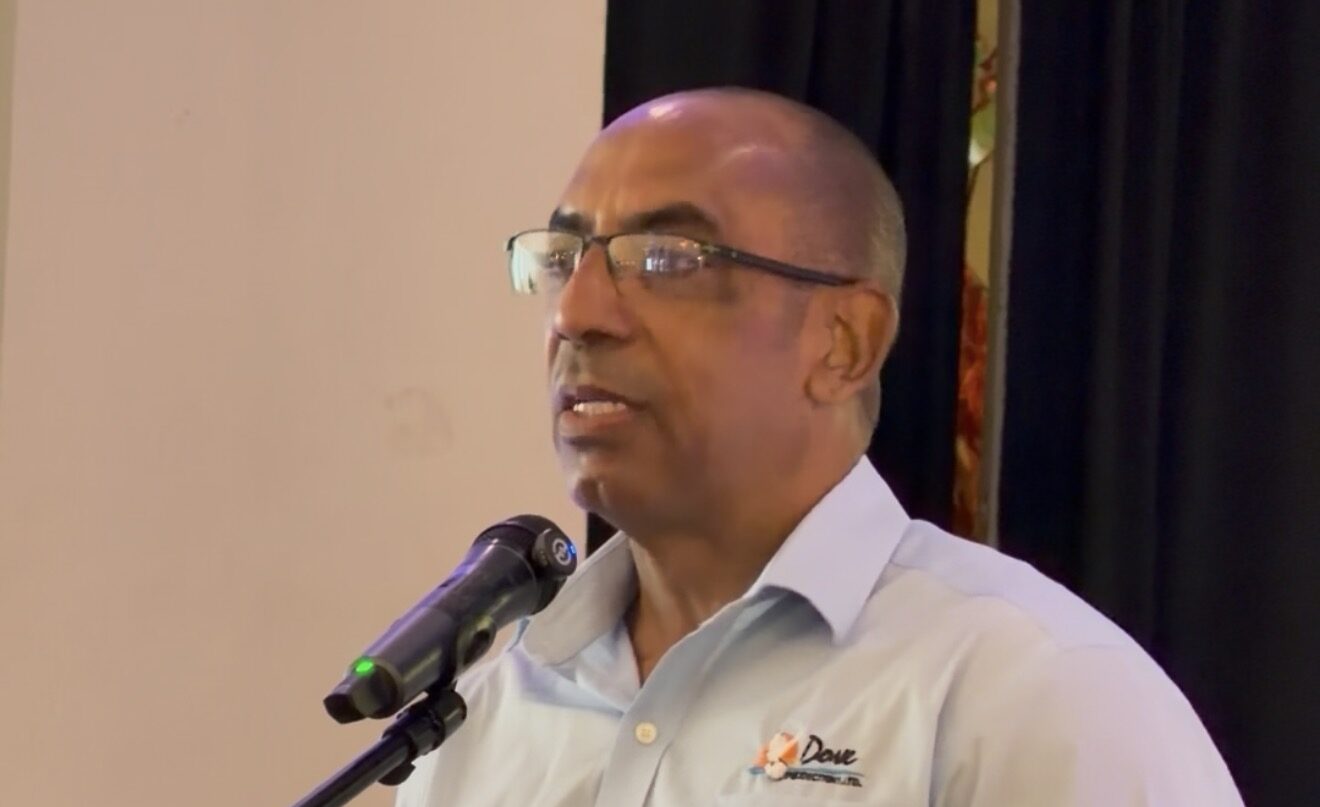
    As founder of Dove Productions, the organization behind the initiative, Colin Weekes opened his remarks by celebrating Junior Jazz’s proven track record as a transformative launchpad for young creative talent across Saint Lucia. Calling the annual gathering a “brilliant event” that opens doors for youth who dream of creative careers, Weekes used his address to push stakeholders across government, private industry and the non-profit sector to look beyond the immediate success of the annual gathering and plan for long-term sustainable growth.

    Drawing from his own decades-long journey in the creative sector, Weekes shared a personal anecdote to illustrate the persistent structural gaps that still hold young Saint Lucian creatives back. From the time he was a primary school student, he said, his only ambition was to work behind the camera, but when he graduated from St Mary’s College, there was no clear pathway or professional infrastructure to help him turn that passion into a viable livelihood. Today, he argued, that gap has not been fully closed.

    Weekes questioned whether local and national stakeholders have built the robust, year-round support systems needed to help young creatives build lasting careers. Annual events like Junior Jazz are a critical starting point, he emphasized, but they are not enough to sustain a growing creative industry. “The creative industry cannot be left on its own,” he stated, pushing for more consistent programming, training opportunities, and professional development opportunities spread throughout the year instead of isolated, once-a-year events. “We need more than a gig. We need avenue, we need platform,” he said.

    Beyond access to programming, Weekes called for broader efforts to legitimize creative careers as viable, full-time professions. A key part of this work, he noted, is building financial infrastructure that allows creatives to access loans and other financial support using their skills as collateral. “We need to be able to go to the bank and say, I am a creative and I want to use my skill to have a livelihood,” he explained, framing financial access as a critical step toward building a sustainable, independent creative sector in Saint Lucia.

    Following Weekes’ remarks, Castries Mayor Geraldine Lendor-Gabriel offered a deeply personal perspective on the event’s impact, tying Junior Jazz’s mission to autism awareness and social inclusion for neurodiverse young people. As a parent of a child on the autism spectrum, Lendor-Gabriel shared how the Junior Jazz platform and access to formal music training transformed her son’s developmental journey.

    When her son first started exploring music, he began learning the keyboard, but through the opportunities provided by Junior Jazz, he has since mastered multiple instruments, including bass and tenor pan. “This event and music made that difference in my son’s life,” she said, crediting both the program’s supportive community and her son’s innate passion for his rapid growth.

    The mayor emphasized that her son’s success is not an isolated case, noting that countless other neurodiverse children on the spectrum hold untapped creative talent that is often overlooked in traditional academic and social settings. For young people who struggle to thrive in conventional education environments, initiatives like Junior Jazz provide a critical, welcoming space to build skills, confidence, and a sense of belonging. “There are a number of other children who are also on the spectrum who also have that gift,” she said, positioning Junior Jazz as a vital model for inclusive youth development across the island.

  • Antigua and Barbuda Strengthens Sweet Potato Research Under Regional Climate-Resilience Project

    Antigua and Barbuda Strengthens Sweet Potato Research Under Regional Climate-Resilience Project

    A landmark four-year regional initiative focused on upgrading sweet potato cultivation and safeguarding critical crop genetic diversity across the Caribbean is accelerating progress, bringing together agricultural stakeholders from five nations through a dedicated practitioner network led by technical experts. The Next Generation Sweet Potato Production in the Caribbean Project, led by the Inter-American Institute for Cooperation on Agriculture (IICA), operates in partnership with national agriculture ministries in Antigua and Barbuda, Jamaica, and Saint Lucia, alongside the Caribbean Agricultural Research and Development Institute (CARDI), to address longstanding gaps in regional food security and climate adaptation.

    As part of the project’s capacity-building roadmap, recent collaborative training with the International Potato Center (CIP) brought 73 agricultural experts from academic institutions, government technical agencies, and both public and private agricultural sectors together for a hybrid program of theoretical instruction and hands-on field work. The training centered on building core skills for identifying unique sweet potato varieties, documenting their morphological traits, and cataloguing these genetic resources for future preservation and use.

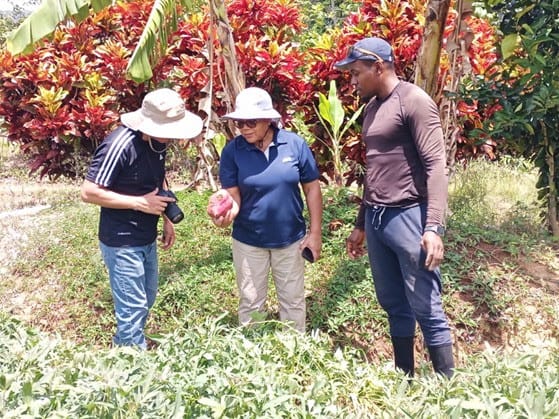
    Participants began their learning journey with five interactive virtual modules, where they mastered the 30 globally standardized descriptors used to catalog key sweet potato characteristics, ranging from leaf morphology and vine growth patterns to root structure and other genetic traits. After completing the theoretical portion, practitioners applied their new skills in on-the-ground field exercises across four participating member countries, working alongside lead specialists like Dr. Robles to validate identification and characterization practices in Jamaican growing sites.

    For small island nations across the region, the project is already delivering measurable expansion of local genetic resources. In Antigua and Barbuda, for example, agricultural officials currently have 73 distinct sweet potato accessions formally documented. Through the project’s partnership with CIP, an additional 19 unique varieties will be added to the national collection, significantly broadening the country’s sweet potato genetic base to support more resilient breeding programs.

    Beyond expanding collections, the initiative prioritizes equipping local agricultural professionals with the specialized skills needed to maintain, utilize, and protect these irreplaceable genetic resources long-term. It also works directly with smallholder and commercial farmers to support adoption of high-yield, climate-resilient sweet potato varieties that can withstand rising temperatures, erratic rainfall, and other climate impacts increasingly affecting Caribbean agriculture. Ultimately, these coordinated efforts are targeted at strengthening both food and nutrition security across all participating nations, where sweet potatoes serve as a staple carbohydrate and key source of dietary nutrients.

    The project receives core funding from the Benefit-sharing Fund of the International Treaty on Plant Genetic Resources for Food and Agriculture, administered through the Food and Agriculture Organization of the United Nations (FAO), with additional co-financing support from the European Union. Moving forward, the four-year initiative will continue to deepen regional collaboration, facilitate cross-border knowledge sharing, and strengthen the growing Community of Practice dedicated to advancing sustainable, resilient sweet potato production across the Caribbean.

  • COMMENTARY: CARICOM and the New Normal in International Politics

    COMMENTARY: CARICOM and the New Normal in International Politics

    The Caribbean Community (CARICOM) finds itself navigating one of the most challenging periods in its institutional history, as long-simmering regional tensions amplified by shifting global geopolitics push the 15-nation bloc to its breaking point. When St. Kitts and Nevis assumed the rotating six-month chairmanship of CARICOM’s supreme governing body, the Conference of Heads of Government, this past January, it inherited a bloc fractured by deepening divides over core foreign policy principles at a time of unprecedented global upheaval.

    Under the terms of CARICOM’s founding constituent treaty, the Conference of Heads of Government holds ultimate decision-making authority over the bloc’s agenda, with the rotating chair tasked with advancing collective regional priorities for their term in office. For Prime Minister Terrance Drew, who leads St. Kitts and Nevis and serves as the current chair, the weight of regional fragmentation has shaped every dimension of his leadership from day one. The bloc is currently split along sharp lines over divergent responses to the so-called “Trump Corollary” to the Monroe Doctrine, a high-stakes U.S. foreign policy framework that has created a months-long diplomatic impasse within CARICOM.

    This schism comes as the entire global international order undergoes a seismic transformation — a shift not seen on this scale since the collapse of the Soviet Union and the end of the Cold War, which erased the bipolar global system and paved the way for the decades-long unipolar era that is now drawing to a close. For small developing states that make up CARICOM, this global realignment has created acute pressure to align with competing great power blocs, straining the collective diplomatic coherence the bloc has spent decades building.

    The majority of CARICOM member states have approached the Trump Corollary with deep suspicion and caution, anchoring their positions in the bloc’s long-standing foundational principles: commitment to multilateral dialogue, respect for sovereign international cooperation, and independence in foreign policy decision-making for small states. But a smaller faction of members has broken ranks to offer unapologetic, full-throated support for the U.S. framework.

    The most high-profile split came in response to the recent escalation of tensions between the U.S.-Israeli alliance and Iran, which only recently settled into a fragile, uncertain ceasefire after weeks of spiraling direct conflict. Trinidad and Tobago drew widespread controversy across the region when it openly aligned with Washington’s position on the conflict, while neighboring Barbados took an early, contrasting stance, publicly calling for all parties to exercise restraint as Middle East tensions reached a boiling point. For Drew and his chairmanship, bridging this deepening foreign policy divide and restoring CARICOM’s collective diplomatic voice will be the defining test of his term, as the bloc grapples with whether it can maintain unity amid a rapidly changing global order.

    This report was originally published by the Jamaica Gleaner on April 16, 2026.

  • Nayoka Clunis improves hammer throw national record

    Nayoka Clunis improves hammer throw national record

    CHARLOTTESVILLE, U.S. — Jamaican track and field star Nayoka Clunis has etched her name deeper into the country’s athletics record books, breaking her own women’s hammer throw national record to claim gold at the Virginia Challenge on Friday. Clunis delivered a winning throw of 72.03 meters, outperforming her prior national best mark of 71.83 meters set just one month prior in Arizona this 2025 outdoor season. Impressively, the Jamaican qualifier notched three separate throws that cleared the 70-meter barrier on the day, putting her inside the world’s top 20 rankings early in the outdoor competitive calendar. Beyond Clunis’ standout performance, a host of other Jamaican athletes competing at U.S. collegiate track and field meets across the country turned in career-best results over the same competition Friday.

    At the University of Florida’s Tom Jones Memorial, Purdue University’s Britannia Johnson surged to a fifth-place finish in the women’s hammer throw with a new personal best of 56.49 meters, beating her previous top mark of 55.64 meters. Her twin sister Britannie Johnson also competed, notching a throw of 52.39 meters. Clemson University’s Brandon Pottinger took top honors in the men’s high jump competition at the meet, clearing 2.12 meters to claim the win.

    At the same time, University of Texas sprinter Carleta Bernard clocked a wind-aided 22.68 seconds in the invitational women’s 200-meter race, with wind speeds registering at 2.9 meters per second, above the allowable threshold for official records. Her teammate Abigail Wolfe posted a valid 23.38 seconds with a 0.7 meters per second wind in the same event.

    Over at the Bill Schmidt Invitational, Fabrienne Foster of the University of North Texas secured second place in the women’s hammer throw while breaking her own personal best by a wide margin. Foster threw 54.82 meters, beating the 51.84-meter personal best she set just one weekend earlier at a meet hosted by Texas A&M University. She surpassed her old career best three separate times during Friday’s competition.

    Alliyah McNeil turned in a strong all-around performance at the meet, taking gold in the women’s high jump with a clearance of 1.81 meters, followed by a silver medal finish in the women’s long jump with a 5.86-meter effort recorded in neutral wind conditions. Trezeguet Taylor claimed the women’s 200-meter title with a wind-aided 23.82 seconds (3.3 meters per second), while Tahj Hamm placed fourth in the men’s 200-meter with a 21.19-second clocking, also wind-aided at 2.8 meters per second.

    At the Aggie Invitational hosted by North Carolina A&T University, Shakiel Dacres of East Carolina University took the top spot on the men’s discus throw podium with a 52.39-meter winning effort. Rounding out the week’s results for Jamaican athletes, Obrian Bowen of Umpqua Community College won the men’s triple jump at the Raider Invitational, hosted by Southern Oregon University, with a season-best leap of 14.02 meters.

    The photo accompanying this report captures Clunis reacting to her performance at the 2025 World Athletics Championships in Tokyo, Japan, taken by photojournalist Garfield Robinson on September 14, 2025.

  • St James police get tough on motorcyclists following motorcycle boost

    St James police get tough on motorcyclists following motorcycle boost

    ST JAMES, Jamaica — Law enforcement in St James has ramped up targeted enforcement against motorcyclists violating Jamaica’s Road Traffic Act, launching a multi-pronged operation that combines expanded patrol capabilities with coordinated action to cut road fatalities and disrupt criminal movement.

    A key upgrade to the division’s enforcement capacity comes with the addition of five brand-new motorcycles to the St James Police Division’s traffic department. The new fleet, paired with additional patrol vehicles and extra deployed personnel, has significantly expanded the unit’s ability to monitor streets across the parish and respond quickly to violations.

    “We have been augmented by additional motorcycles and motor vehicles and also personnel so that has basically improved our capabilities,” Superintendent Lynroy Edwards, the division’s Operations Officer, told reporters during a press briefing in Sam Sharpe Square on Friday morning.

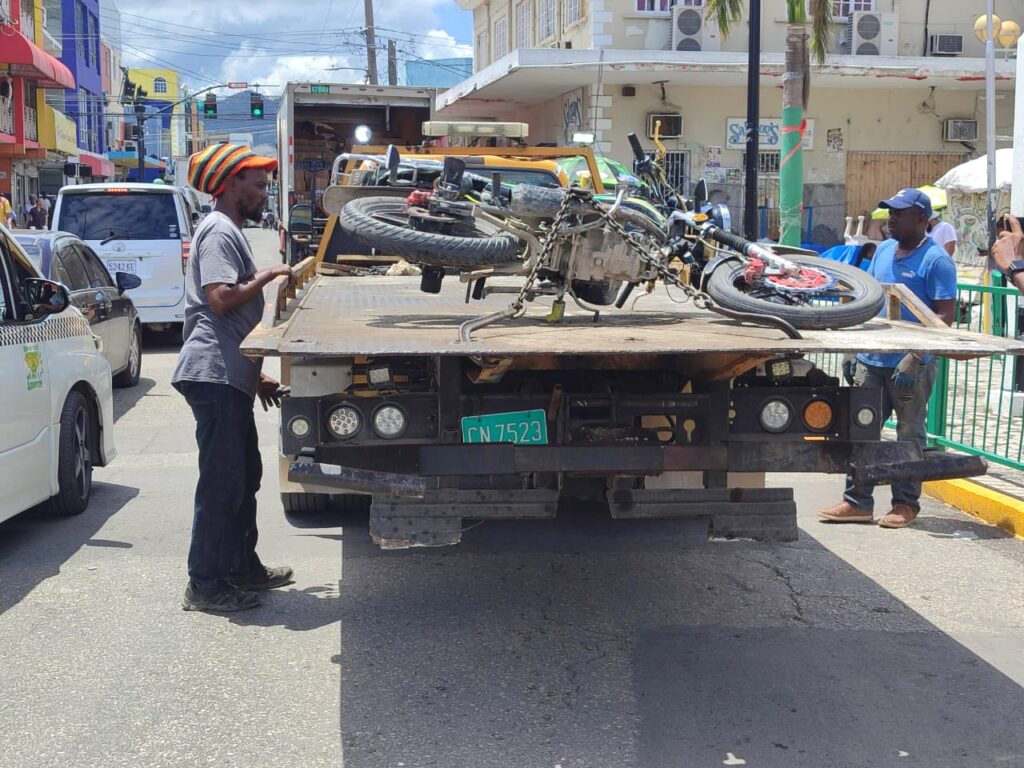
    Edwards made the announcement on the sidelines of an active enforcement operation in downtown Montego Bay, where officers pulled over dozens of motorcyclists to verify vehicle registration, licensing, and compliance with road safety rules. The operation is part of a nationwide initiative led by the Public Safety and National Enforcement Branch (PSTEB) that aims to reverse persistent trends in road fatalities across the island. As part of this national push, St James police are prioritizing enforcement across all high-risk categories of Road Traffic Act violations.

    Beyond improving road safety, the crackdown also serves as a key tool in the division’s long-running fight against violent crime. Over recent years, St James has made significant progress in reining in violent criminal activity, but law enforcement officials note that persistent work remains to consolidate those gains. Many organized criminals and fugitives in the parish use motorcycles to move quickly between communities and carry out illegal acts, taking advantage of the vehicles’ ability to navigate narrow residential streets and avoid heavy traffic checkpoints.

    “Our motorcyclists, our quick response teams, we target hardcore criminals who move around on motorcycles and even motor cars, they are our focus as well,” Edwards explained.

    While the high-visibility operation in the city centre drew public attention on Friday, the enforcement blitz actually launched at the start of the week. As of Friday, the operation has already yielded notable results: more than 70 non-compliant motorcycles have been seized by authorities, and at least 13 people have been taken into custody on related charges, Corporal Ellington Clarke of the St James Police reported to the Observer Online.

    On Thursday alone, officers fanned out across both the central business district of St James and rural outposts, seizing 20 additional motorcycles for violations ranging from unregistered vehicles to unlicensed operation. Nine arrests were made during that single day of action, and multiple traffic tickets were issued to other riders found in violation of safety rules, Clarke added.

  • Jamaica in talks with other countries on unified platforms for digital payments, says Holness

    Jamaica in talks with other countries on unified platforms for digital payments, says Holness

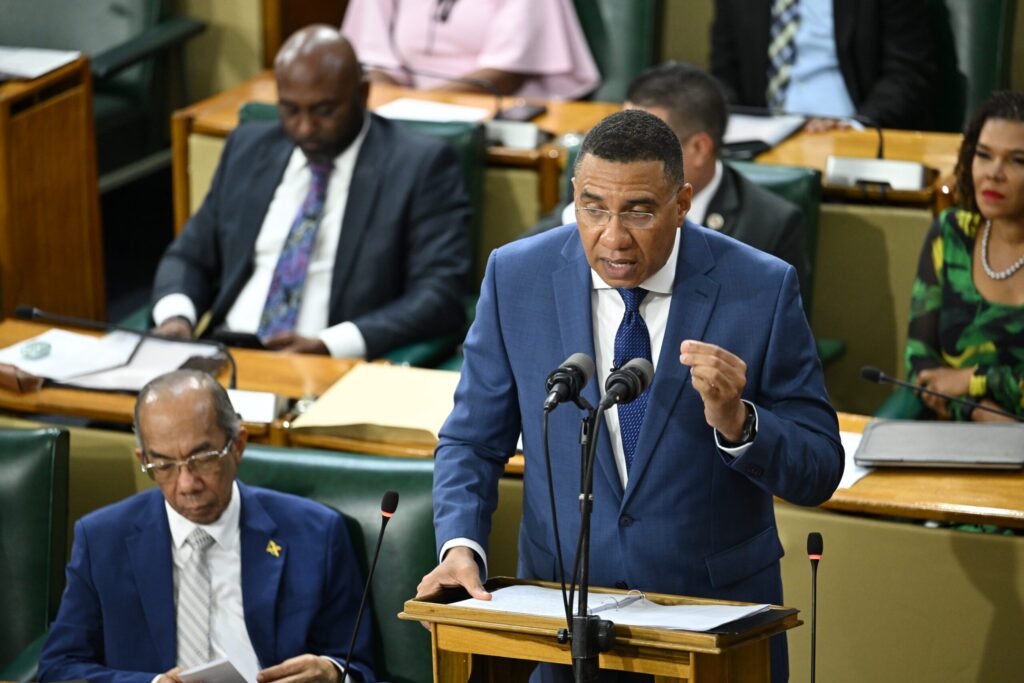
    KINGSTON, Jamaica — Jamaica is actively engaged in diplomatic and technical discussions with multiple countries — including India — as it works to build a unified digital payment infrastructure aimed at expanding access to cashless transactions across the island nation, Prime Minister Dr. Andrew Holness announced Thursday.

    Holness made the disclosure during the Recover Better Conference, a one-day action-focused summit hosted by the Jamaican Consulate General in New York that centers on strengthening the country’s post-disaster recovery and long-term economic resilience. The conversation came as the prime minister addressed audience questions about the current state of mobile banking penetration in Jamaica.

    The core goal of expanding digital payment access, Holness emphasized, is to reduce the share of Jamaicans who remain locked out of formal financial services, commonly referred to as the unbanked population. He noted that a surprising gap separates Jamaica’s economic standing from its digital payment performance: many nations with lower per capita gross domestic product than Jamaica have achieved far higher rates of digital payment adoption, even among residents who do not hold traditional commercial bank accounts.

    “While Jamaica boasts a higher share of banked adults than many peer economies, that share still falls short of our national goals, and the rate of active digital payment use remains stubbornly low,” Holness explained. “That is the core challenge we are working to address.”

    As one of a small handful of countries globally to launch a central bank digital currency, Jamaica already has experience with digital financial innovation through its JAMDEX CBDC project. But Holness openly acknowledged that the initiative has not gained the widespread public and commercial adoption that government leaders initially projected.

    Two major bottlenecks are holding back faster growth, the prime minister explained. First, the country’s established banking sector has been slow to make the full capital investments required to support widespread digital payment rollout. Upgrading infrastructure to support cashless transactions — including installing widespread point-of-sale terminals at retail locations, issuing contactless payment cards to account holders, and updating backend processing systems — represents a major upfront capital commitment that banks have been reluctant to absorb quickly.

    Second, Jamaica currently lacks a unified interoperability platform that allows multiple independent digital payment systems to transact with one another seamlessly. While policymakers support a competitive market with multiple private and public payment providers, a shared connecting layer is required to ensure users can send and receive payments across different services without friction, Holness noted.

    To solve this interoperability gap, Jamaica has already entered into preliminary discussions with Indian officials to explore adopting India’s proven unified payment platform architecture, the prime minister confirmed.

    Jamaica does already have a basic infrastructure connecting all of the country’s automated teller machines, but Holness said the network requires additional capital investment to expand access and support full digital payment interoperability. Government officials are currently in talks with domestic banks to secure the funding needed to upgrade this existing framework.

    Additionally, the Bank of Jamaica has established a regulatory sandbox to allow digital payment providers to test new services and secure regulatory approval in a controlled environment. Even with this supportive policy in place, however, Holness admitted that the approval and scaling process for new mobile payment systems has proceeded far slower than anticipated.

  • Haiti, Dominican Republic to reopen direct air links in May

    Haiti, Dominican Republic to reopen direct air links in May

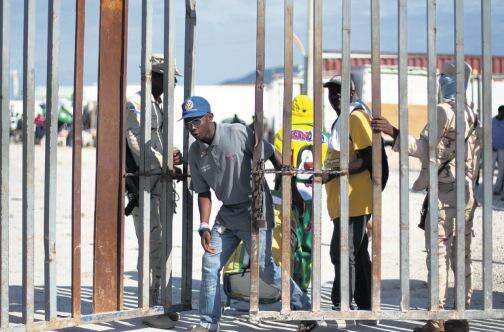
    In a significant step toward mending cross-border ties, the neighboring Caribbean nations of Haiti and the Dominican Republic have jointly announced that direct air travel between the two countries will resume in May. This development comes more than two years after the Dominican Republic shut down its airspace to flights originating from Haiti, a decision driven by rapidly worsening gang violence across the border.

    The two countries, which share the island of Hispaniola, laid out their shared vision for the resumption in an official joint statement released Friday. They emphasized that restoring direct air connections will act as a catalyst to revitalize bilateral economic cooperation and strengthen overall diplomatic relations between the two neighbors.

    Haiti, long recognized as the poorest nation in the Western Hemisphere, has grappled with a catastrophic, years-long security crisis that has paralyzed much of the country. Armed gangs currently exert control over the vast majority of Port-au-Prince, Haiti’s capital, where regular reports of horrific violence including targeted murders, sexual assault, and high-profile kidnappings have become a grim daily reality. The widespread instability prompted Dominican authorities to close their airspace to all passenger and cargo flights departing from Haiti in March 2022 (correcting the original timeline reference error in input), a move that deepened existing tensions between the two states.
    Relations between Haiti and the Dominican Republic have remained strained for years, even beyond the airspace closure. Currently, Dominican authorities are in the process of constructing a 174-kilometer (108-mile) reinforced concrete barrier along the countries’ shared 380-kilometer (236-mile) border, a project designed to curb irregular migration and cross-border criminal activity that has further complicated bilateral ties.

  • Jaii Frais slapped with gun, wounding charges in Big Wall shooting

    Jaii Frais slapped with gun, wounding charges in Big Wall shooting

    A high-profile carnival shooting incident in Jamaica has resulted in multiple criminal charges being filed against well-known podcaster Jhaedee Richards, popularly known by his stage name Jaii Frais. The violence unfolded on a Sunday at the widely attended Big Wall carnival party, erupting from a heated physical altercation between Richards and associates of prominent dancehall artist 450, among them the deejay’s manager and producer, Jahvel ‘Jahvy Ambassador’ Morrison. When the gunfire subsided, three people, including Richards, a member of 450’s entourage, and an American tourist who was merely an innocent bystander at the event, had all sustained gunshot wounds. Richards has remained in police custody continuously since the shooting occurred.

    Last week, the Kingston and St Andrew Parish Court issued a formal deadline requiring law enforcement to either formally charge Richards or release him from detention by 6 p.m. Friday. Just hours after that court appearance, authorities followed through on the order, moving to file four separate felony charges against the podcaster. The charges are: shooting with intent to cause harm, wounding with intent, illegal possession of a prohibited firearm, and using a dangerous weapon to commit a felony. Richards is currently being represented by experienced defense attorneys Isat Buchanan and D’ondre Buchanan, who have confirmed that the charges were formally filed in line with the court’s deadline.

    Legal representatives for the podcaster announced that they are preparing to file an application for bail on Richards’ behalf. As of the latest updates, no date has yet been scheduled for Richards’ first court appearance to enter a plea and respond to the charges against him. Morrison, 450’s manager who was involved in the initial altercation, has also remained in police custody since the shooting incident. He has retained prominent top defense attorney Peter Champagnie to handle his legal case, which is still progressing through the system alongside Richards’ proceedings.

  • Additional arrests made in $80 million phishing scam case

    Additional arrests made in $80 million phishing scam case

    KINGSTON, Jamaica — Law enforcement authorities have taken two additional individuals into custody as part of a sweeping investigation into an $80 million phishing fraud scheme targeting customers of Jamaica’s National Commercial Bank (NCB). The early-morning arrest operation, carried out on Wednesday, April 15, was led by the Major Organised Crime and Anti-Corruption Agency (MOCA) in collaboration with local law enforcement partners from the Jamaica Constabulary Force (JCF).

    Officers took 26-year-old Shanielle Smith, a resident of Nannyville in Kingston, and 24-year-old Brandon Billings, from Twickenham Park in St Catherine, into custody at their respective residences. The pair is alleged to be active members of a transnational organized criminal ring that carried out a sophisticated, multi-year cyber fraud campaign, stealing a collective $80 million from NCB account holders between April 2022 and December 2023. The syndicate used deceptive phishing and smishing tactics to trick victims into surrendering sensitive personal and financial information, which was then exploited to drain accounts.

    Following the arrests, investigators seized multiple pieces of physical and digital evidence linked to the scheme from the suspects’ homes. Both Smith and Billings were subsequently transported to MOCA headquarters for processing, where they were formally charged with receiving stolen property and engaging in financial transactions with assets derived from criminal activity.

    In an official statement released after the operation, MOCA Director of Communications Major Basil Jarrett reiterated the agency’s commitment to rooting out all those involved in the massive fraud. “MOCA is unrelenting in pursuing those responsible for this theft,” Jarrett said, noting that cyber-enabled fraud schemes have been elevated to a top priority for the agency amid a steady rise in such crimes across Jamaica’s criminal landscape. He also extended formal thanks to JCF partners for their coordinated support that made the latest arrests possible.

    As the investigation continues to unfold, Jarrett issued a public warning for all Jamaican residents to maintain heightened vigilance when conducting online activities. He urged community members to immediately report any suspicious activity surrounding financial transactions to MOCA’s confidential tip line at 888-MOCA-TIP.