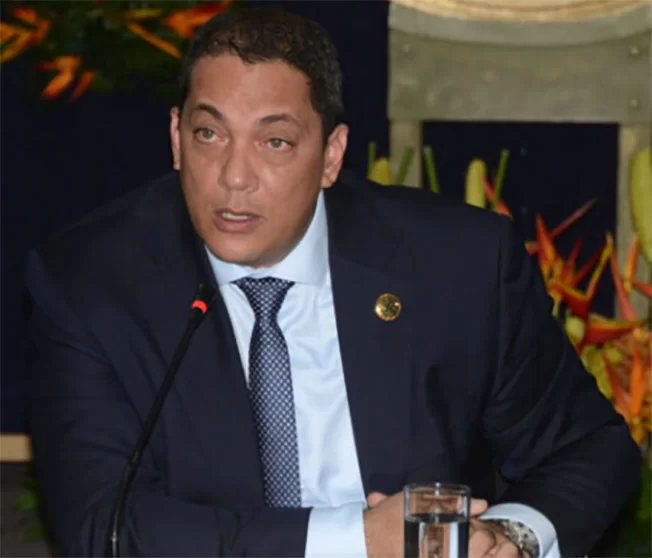
Robert van Trikt, the former Governor of the Central Bank of Suriname, has been summoned as a suspect in a new criminal investigation by the Public Prosecution Service (OM). He is required to appear before the examining magistrate on Wednesday, November 26. The allegations against Van Trikt include violating legal regulations, such as entering into agreements on behalf of or at the expense of the state or a state institution, as outlined in Article 13 of the Anti-Corruption Act. Additionally, he is accused of embezzlement of funds or valuable securities and fraud committed by a public official, involving a breach of a special duty or the misuse of power, opportunity, or means provided by his position. Van Trikt, who was previously convicted in a high-profile case related to the Central Bank of Suriname, is currently appealing this conviction. The appeal process is nearing completion, with Van Trikt having presented his final arguments, though the Court of Justice has yet to issue a ruling. Murwin Dubois, one of the lawyers involved in the case, expressed skepticism about the new investigation, suggesting it may be related to the use of cash reserves in 2019 during Van Trikt’s tenure. Dubois emphasized that multiple reports over the past five years have found no issues with the cash reserves. He also raised concerns about the principle of ne bis in idem, which prohibits prosecuting an individual twice for the same offense, noting that the new summons is based on the same legal provision as the ongoing case. Dubois questioned the basis of the judicial investigation, pointing out that no legal authority, including the Court of Audit, has raised concerns about the use of the cash reserves, even in the Central Bank’s annual report for the relevant period.
作者: admin
-

Spanish language drive launched as students, teachers prepare for Panama immersion
Barbados has taken a significant step toward enhancing Spanish proficiency and fostering cultural ties with Latin America through a groundbreaking initiative. Fifteen secondary school students and several teachers are preparing for a two-week language and cultural exchange in Panama, marking the start of a national campaign to embed Spanish across various sectors. This effort is part of the US$100,000 ‘Enhancing Capacities to Communicate in Spanish’ project, supported by the Development Bank of Latin America (CAF) under its SOMOS (Spanish Opens More OpportunitieS) program. The initiative aims to promote bilingualism, cultural understanding, and a comprehensive national strategy for Spanish language learning. At a high-level dialogue held at Wyndham Sam Lord’s Castle, government officials agreed to establish an inter-ministerial working group to coordinate the rollout and develop a national strategy. Resources will be allocated in the 2026 national budget for staff training and public education campaigns. Finance Minister Ryan Straughn emphasized the project’s importance, stating, ‘The Ministry of Finance will fully support these initiatives for the future of Barbados.’ The exchange program will include daily Spanish lessons, cultural excursions, and innovation workshops for students, while teachers will engage in advanced professional development with Panamanian institutions. Dr. Stacy Richards-Kennedy, CAF’s regional manager for the Caribbean, highlighted the program’s focus on people-centred growth, noting that bilingualism opens doors to trade, tourism, and innovation. Pablo Bartol, CAF’s social and human development manager, underscored the project’s role in fostering Caribbean-Latin American integration. Additional measures include a national diagnostic study and a roadmap for policy development. Minister of Educational Transformation Chad Blackman announced plans to introduce Spanish from early childhood, emphasizing the importance of language in shaping children’s worldviews.
-
Urgent call for check dams after Charles Rowe Bridge flood death
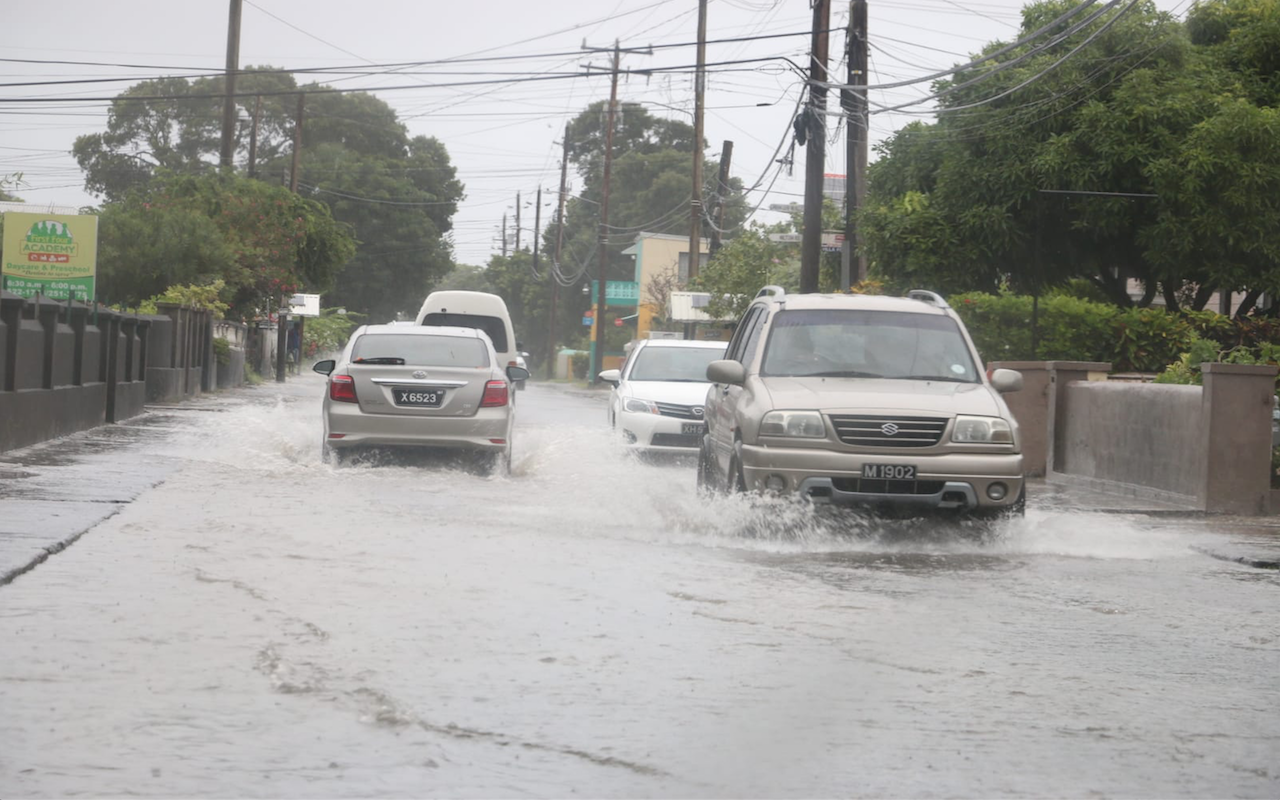
In the wake of Sunday’s devastating flood in St. George, which claimed one life and caused extensive damage to vehicles, a prominent engineering consultant is advocating for immediate government intervention to construct ‘check dams’ in the gullies leading to Charles Rowe Bridge. Andrew P. Hutchinson, director of A H Consulting Inc., emphasized that traditional solutions like soakaways are insufficient for managing the high volumes of runoff during extreme storms. Instead, he proposed building small check dams at intervals within the gullies to retain runoff, reduce peak flow, and recharge aquifers. Hutchinson stressed the importance of using digital hydrological models to ensure the effectiveness of these structures. He highlighted the urgent need for such measures to mitigate the economic and social impacts of future flooding events. The flood, which resulted from an intense rainfall event with a recurrence interval of 15 years, affected a watershed of 2,765 acres, including several urban and rural communities. Hutchinson warned that without proper drainage and mitigation strategies, similar incidents could recur, especially during the Atlantic hurricane season. The tragic death of Terry Kellman, who was swept away by floodwaters, underscores the human cost of such disasters. Meanwhile, insurers are preparing for significant motor claims as the floods caused widespread vehicle destruction across the island. Historical flood events in Barbados, such as the Jordan Flood of 1901 and the Speightstown flood of 1984, serve as reminders of the island’s vulnerability to extreme weather.
-

Column: Het vervolgingsrecht van OM – prerogatief of bron van ongelijkheid?
A concerning pattern has emerged within Suriname’s judicial system, as highlighted by the country’s Court of Audit. Over three consecutive years—2021, 2022, and 2023—the Court has documented significant irregularities in government operations. These are not mere administrative oversights but systemic violations, including the unlawful allocation of land, which have been explicitly labeled as illegal.
-

CTUSAB says no to Transport Board sell-off
The Congress of Trade Unions and Staff Associations of Barbados (CTUSAB) has strongly criticized the government for its decision to privatize the public transport sector, accusing it of neglecting its duty to provide essential services. The controversy stems from a Ministry of Transport and Works letter, signed by Permanent Secretary Jehu Wiltshire, which outlines plans to dissolve the Transport Board and transfer ownership of electric buses to former employees. The proposal includes severance packages for current workers, with ex-employees given priority to become owner-operators, supported by low-interest financing. The government also pledged to subsidize electricity costs for bus charging and partially fund battery replacements. CTUSAB expressed surprise and dismay at the lack of consultation with the Social Partnership, a key stakeholder group, labeling the move as disrespectful and a dereliction of responsibility. The union highlighted existing issues in the private transport sector, such as inconsistent service and limited operating hours, and urged the government to invest in expanding the public bus fleet and strengthening regulations. CTUSAB warned that focusing solely on profitability risks undermining public mobility, particularly for vulnerable groups. As an alternative, the union proposed a capacity-building program to enhance management, leverage technology, and optimize route planning using data-driven strategies.
-
Although it will take time, the East will recover
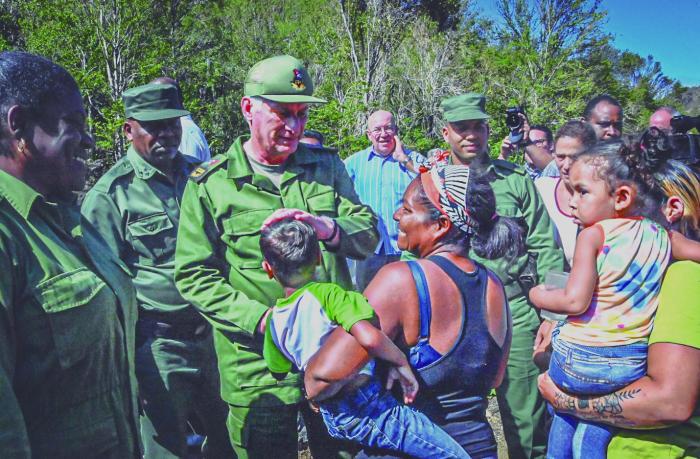
Cuban President Miguel Díaz-Canel Bermúdez has been actively overseeing recovery efforts in the provinces of Santiago de Cuba and Granma, following the extensive damage caused by Hurricane Melissa. During his fourth visit to Santiago de Cuba in 22 days, Díaz-Canel inspected the collapsed bridge over the Baconao River, which serves as a crucial access point to the communities of María del Pilar and 13 de Marzo. The bridge was severely damaged by unprecedented flooding, with 18 of its 24 pipe passages blocked by debris washed down from the hillside. Local leader Luis Arias recounted the harrowing experience of the storm, noting that the region accumulated over 310 millimeters of rain in just three days.
Díaz-Canel emphasized the need for a definitive solution to the recurring issue of flooding in the area, instructing construction and water resources authorities to revisit the Baconao dam project, an initiative originally championed by former leader Fidel Castro in the 1980s. The President also addressed the restoration of essential services, including electricity and water supply, which are expected to be fully operational by the end of November. In the town of Baconao, Díaz-Canel praised the resilience and unity of the local population, urging them to continue their efforts in the recovery process.
In Granma, the President visited the municipality of Yara, where he commended the community’s disciplined response to the hurricane, which prevented any loss of life. He highlighted the importance of solidarity and mutual aid in overcoming the challenges posed by the disaster. Local authorities reported significant damage to housing, agriculture, and infrastructure, with efforts underway to provide affected families with essential supplies and resources. Díaz-Canel also acknowledged the support received from friendly countries and the private sector, emphasizing the need for continued collaboration to expedite recovery.
Throughout his visits, Díaz-Canel called for unity, discipline, and effective communication to ensure a swift and comprehensive recovery. He reiterated the government’s commitment to addressing the immediate needs of the affected populations while also working on long-term solutions to mitigate the impact of future natural disasters.
-
In response to El Toque’s manipulations: plan against plan
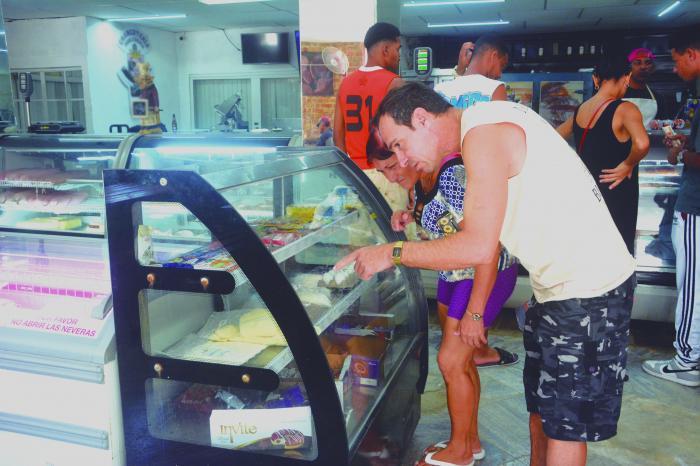
The fluctuating value of the U.S. dollar in Cuba’s informal market is creating widespread economic instability, directly impacting micro, small, and medium-sized enterprises (MSMEs) and the general population. These fluctuations have led to unpredictable pricing for essential goods, making it increasingly difficult for Cubans to afford basic necessities.
-
Caribbean at risk from illicit glass eel trade, CARICOM security agency warns
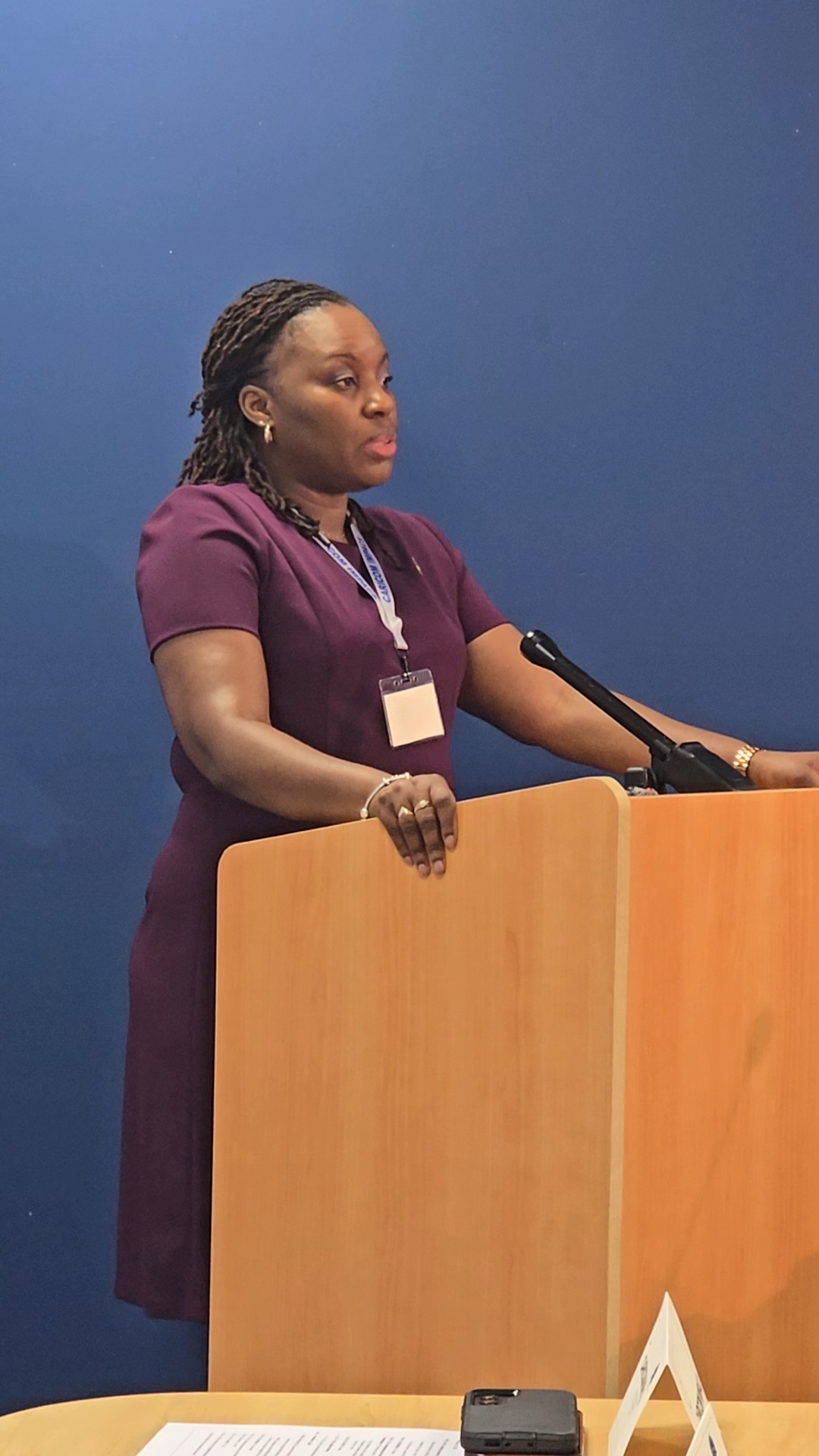
The Caribbean is grappling with a dual crisis of environmental degradation and organized crime, driven by the illegal trafficking of juvenile eels, commonly known as glass eels. The Caribbean Community (CARICOM) Implementation Agency for Crime and Security (IMPACS) has raised alarms about this illicit trade, which threatens both the region’s fragile ecosystems and its security networks. At a recent two-day regional workshop on glass eel trafficking, held at the Joint Regional Communications Centre in Wildey, Nadine Bushell, Assistant Director of Projects at CARICOM IMPACS, emphasized the critical need to combat this trade to protect natural resources and dismantle the financial networks supporting other serious crimes. Glass eels, a transparent juvenile stage of several eel species, are highly valued in the global market, making them a lucrative target for criminal organizations. Bushell highlighted that these criminal actors exploit gaps in knowledge about natural resources and environmental crime to evade detection. Eels play a vital role in biodiversity and aquatic ecosystems, serving as both a food source in their juvenile stage and as predators once fully grown. Bushell stressed that protecting natural resources is essential for achieving long-term reductions in crime, as environmental crimes often converge with other serious offenses like narcotics trafficking, gun smuggling, and human trafficking. She called for regional collaboration and partnerships to combat these crimes, aligning with the principles of mutual security through partnership. Dr. David Soud of Auxilium Worldwide, which is collaborating with CARICOM IMPACS and Canada, noted that efforts to counter the illicit trade could be influenced by an upcoming decision in Samarkand, Uzbekistan, on whether all eel species will be listed as endangered under the Convention on International Trade in Endangered Species (CITES). Such a listing would add layers of documentation and verification, making traceability more achievable. However, Dr. Soud warned that criminal networks are highly adaptable and will continue to find ways to profit and launder money, regardless of the decision. The workshop aims to strengthen regional law enforcement and security networks to more effectively disrupt illicit glass eel trafficking, addressing what Dr. Soud described as an environmental, economic, and transnational organized crime threat that endangers not only the Caribbean but the entire world.
-
IMF ziet harde waarschuwing voor Suriname op weg naar 2028
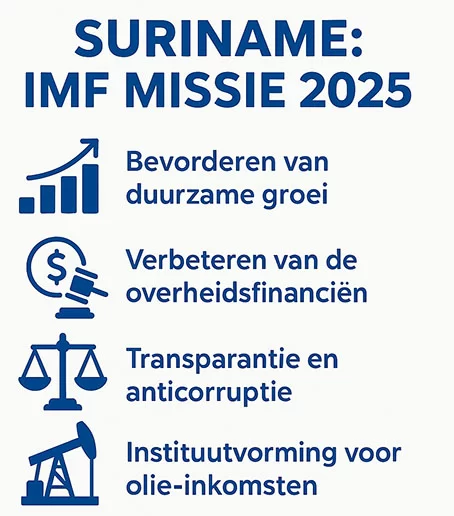
Suriname, marking fifty years of independence, stands on the brink of a historic turning point, according to the International Monetary Fund (IMF). In its Staff Concluding Statement following the annual Article IV mission, the IMF highlights the nation’s progress in stabilizing its economy and strengthening institutions. However, with the imminent commencement of large-scale oil exploitation, the IMF emphasizes the urgent need for swift and targeted reforms to responsibly manage future revenues and improve citizens’ quality of life. The report warns that the hard-earned economic stability is showing signs of strain.
The IMF mission focused on economic developments, fiscal policy, the foreign exchange market, the role of state-owned enterprises, and preparations for expected revenues from the offshore oil field Block 58. While Suriname has a unique opportunity to transform its economy for future generations, the IMF cautions that delays in reforms could squander this potential.
Economic growth has remained modest but stable, with 1.7% in 2024 and 1.3% in 2025, projected to rise to nearly 4% by 2026. Despite a disappointing gold production this year, the development of the Block 58 oil project remains on track. The project’s construction phase will lead to increased imports and current account deficits from 2026 to 2028, financed by foreign investments. Oil production is expected to begin in 2028, potentially doubling the economy by 2030.
However, macroeconomic stability is under threat. Although Suriname achieved primary fiscal surpluses between 2022 and 2024, 2025 saw a deterioration due to election-related spending and a surge in overdue payments to suppliers. This has depleted government cash reserves and increased pressure on the exchange rate. Inflation rose from 6% to over 10% in 2025, prompting the Central Bank of Suriname to intervene in the foreign exchange market while allowing money supply growth to exceed targets.
The IMF stresses the need for robust fiscal discipline in 2026–2027, recommending measures such as restoring budgetary discipline, maintaining clear spending limits, strengthening public finances, and addressing supplier arrears. Social spending in education, healthcare, utilities, and infrastructure should be increased gradually to ensure effective implementation.
Key recommendations include restoring automatic electricity tariff indexing, phasing out subsidies, and reallocating resources to social programs and investments. The IMF also calls for stronger tax collection, addressing gold smuggling, and enhancing governance to ensure oil revenues benefit the population. Transparency in state-owned enterprises, stricter monetary policies, and operationalizing a legal framework for bank resolution are also urged.
The IMF concludes that timely and consistent reforms are essential for Suriname to leverage its oil revenues for sustainable development. The coming years will be pivotal in shaping the nation’s economic future.
-
Rock remanded to Dodds Prison on rape charge
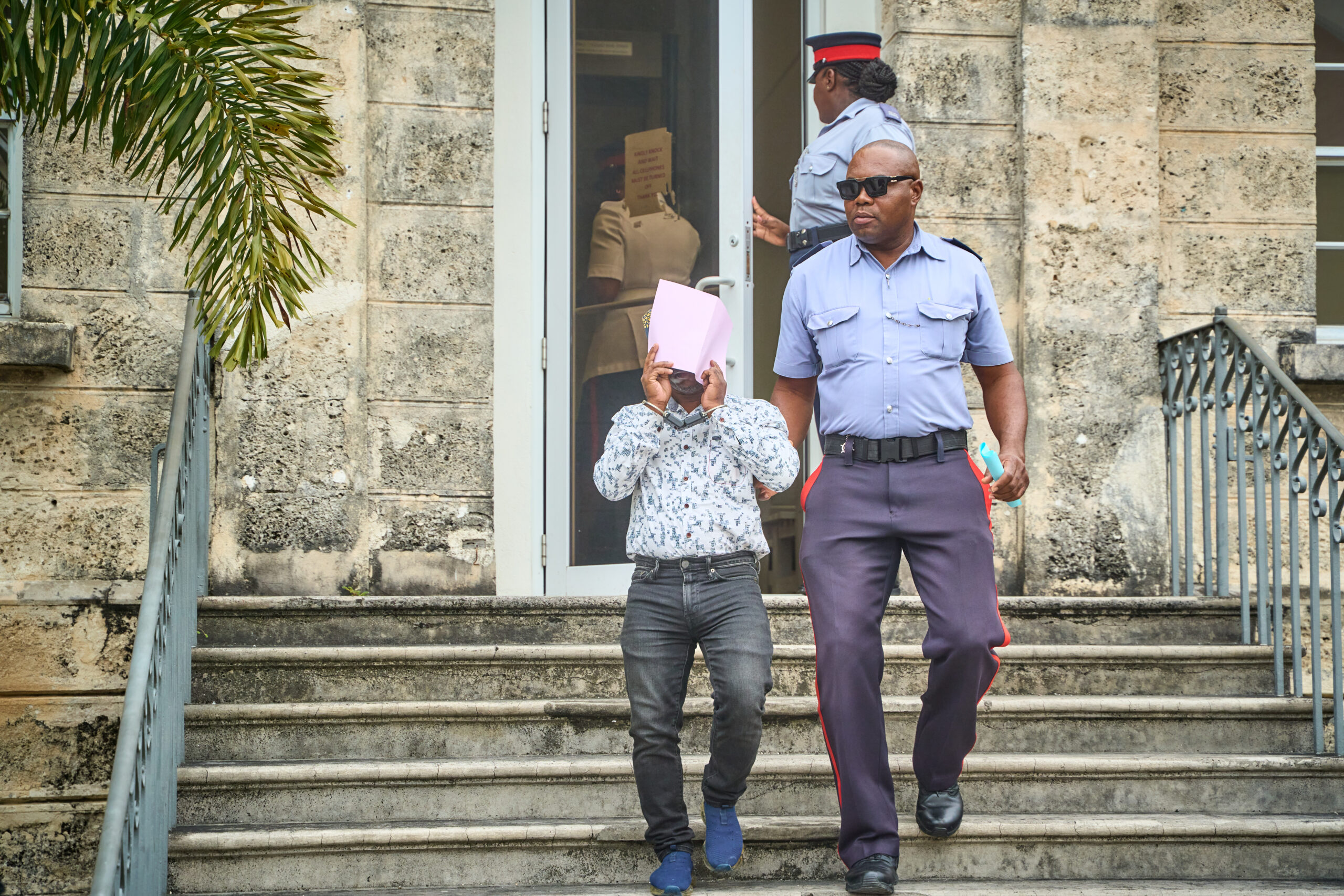
A 36-year-old photographer, Remy Reco Rock from Small Land, Bridge Gap, St Michael, has been remanded to Dodds Prison following charges of raping a male minor two years ago. Rock appeared in the District ‘A’ Traffic Court, where he was not required to enter a plea for the indictable offence. The alleged crime is said to have occurred between September 1 and October 3, 2023. During the hearing, Station Sergeant St Clair Phillips, the prosecutor, raised several objections to granting bail. These included the compelling strength of the evidence, the fact that Rock was already on bail for a similar offence, and concerns that witnesses could be interfered with if he were released. Magistrate Alison Burke ultimately denied bail. Rock, represented by attorney Ensley Grainger, is scheduled to return to court on December 18 for further proceedings.