作者: admin

  • Luchtvaartmaatschappijen gaan over tot prijsverhogingen en aanpassingen

    Luchtvaartmaatschappijen gaan over tot prijsverhogingen en aanpassingen

    The global commercial aviation industry is facing an unprecedented financial shockwave, triggered by a dramatic spike in jet fuel prices fueled by escalating geopolitical conflict between the United States and Iran. Over the past several weeks, the cost of a barrel of jet fuel has skyrocketed, jumping from a stable range of $85 to $90 to between $150 and $200 – an increase that has upended cost projections for airlines across every region. For an industry where fuel expenses typically account for as much as 25% of total operating costs, this sudden surge has delivered a heavy blow to already fragile profit margins, forcing carriers around the world to implement urgent, sweeping adjustments to their operations and pricing strategies.

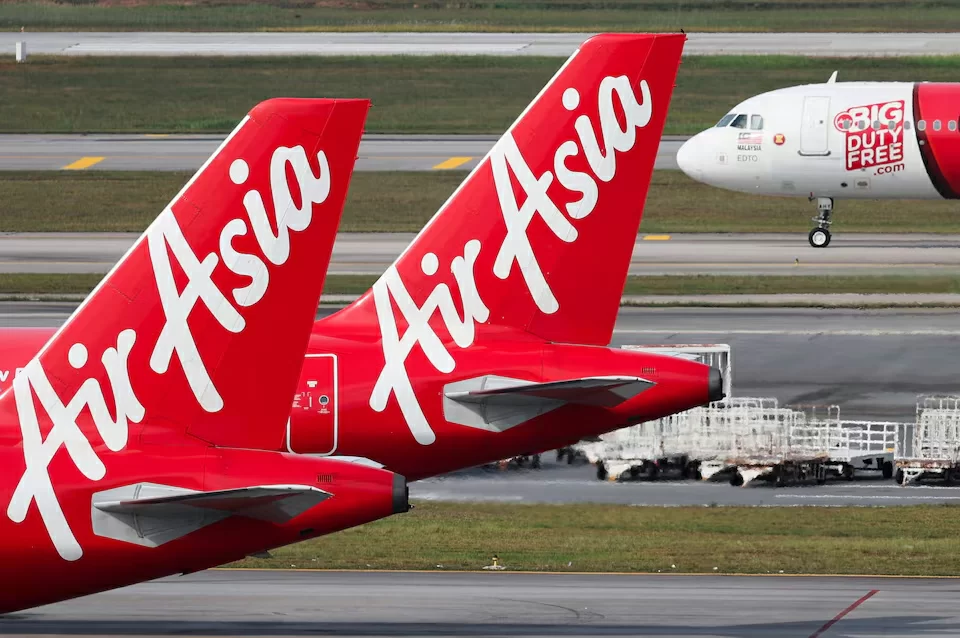
    Major airlines from every continent have moved quickly to mitigate growing losses, with a wide range of cost-cutting and revenue-raising measures now being rolled out. Greek carrier Aegean Airlines has warned that higher fuel costs and suspended services to the Middle East will deliver a visible hit to its first-quarter financial results. Long-haul budget operator AirAsia X, a subsidiary of Malaysia’s Capital A, has cut overall flight capacity by 10% and introduced a new 20% fuel surcharge on tickets. Air Canada has announced it will eliminate four daily flights to New York between June and October, directly citing elevated fuel expenses as the driving factor.

    European aviation giant Air France-KLM is raising long-haul round-trip fares by approximately €50 per ticket, while partner airline KLM will cut 160 short-haul European flights over the next month. Air India has shifted to a distance-based fuel surcharge model, replacing the previous fixed surcharge system that no longer covers the full extent of rising fuel costs. The Airline Operators of Nigeria has issued an ultimatum, threatening a total suspension of all domestic and international flights unless government officials intervene to lower local jet fuel prices.

    Air New Zealand has reduced flight frequencies across its network for May and June, implemented across-the-board fare hikes, and suspended its full-year profit guidance entirely. Indian startup carrier Akasa Air has introduced a new fuel surcharge ranging from $2 to $14 on both domestic and international routes. Two major U.S. carriers, Alaska Air and American Airlines, have sharply increased checked baggage fees to offset growing fuel outlays, a move that has been mirrored by fellow U.S. giant Delta Air Lines, which is also cutting overall network capacity and lowering its annual profit forecast.

    UK-based budget carrier EasyJet has warned that it will report a larger first-half operating loss than initially projected due to unplanned extra fuel costs, and has announced broad ticket price increases to counter the pressure. Germany’s Lufthansa is accelerating the retirement of 22 older aircraft from its fleet and cutting back on short- and medium-haul flight capacity, responding both to higher fuel prices and recent costly labor strikes. Australia’s Qantas Airways has upwardly revised its fuel cost projection for the second half of 2026 and delayed a planned share buyback program to preserve cash. A number of other major U.S. carriers including Southwest Airlines have followed the trend of raising baggage fees to pass a portion of higher operating costs onto consumers. Virgin Atlantic and Virgin Australia have both introduced new fuel surcharges and adjusted base fares to limit growing losses.

    Across Asia, many leading carriers have also taken aggressive action: China Eastern Airlines, Cathay Pacific, Korean Air and Vietnam Airlines have rolled out a range of measures, from raising fuel surcharges and cutting underperforming routes to requesting government financial support to weather the crisis.

    Persistent elevated jet fuel prices have put the entire global aviation sector under intense strain. While a small number of carriers that locked in fuel hedging contracts at lower price points have been able to maintain stable ticket prices for the time being, most other airlines have been forced to pass increased costs directly onto passengers. The coming months will be a critical test for the global aviation industry, which remains mired in deep uncertainty over how long the US-Iran conflict will last and how long jet fuel prices will stay at these historically high levels.


  • Sir Richie Richardson Charity Golf Day a Resounding Success

    Sir Richie Richardson Charity Golf Day a Resounding Success

    On April 11, 2026, the highly anticipated Sir Richie Richardson Charity Golf Day concluded with resounding success, bringing together hundreds of stakeholders from across North America, Europe and the Caribbean to support community-focused causes. Former cricket executive and golf advocate Sir Richie Richardson has publicly extended his sincere gratitude to every sponsor, participant and volunteer that contributed to the event’s positive outcomes.

    Unlike standard competitive golf tournaments, this annual gathering was designed to combine friendly on-course competition with collective charitable action, drawing amateur and semi-professional golfers from the United States, Canada, the United Kingdom, St Kitts and Antigua, alongside corporate partners and local community supporters. Over the course of the day, attendees built new connections, enjoyed world-class Caribbean golf courses, and advanced a shared mission of lifting up marginalized and promising young people across the region.

    Thanks to widespread generous donations and enthusiastic participation from all groups involved, the tournament exceeded its initial fundraising goals, bringing in both critical financial support and widespread public awareness for four key community initiatives. All proceeds from the 2026 event have been allocated to programs focused on youth empowerment and educational advancement. Two core beneficiaries are the Striving for Excellence Golf Academy, a training program that supports young Caribbean golfers, and the Kiwanis Bright Minds Project, a regional education initiative that provides scholarships and learning resources to low-income students.

    A portion of funds has also been allocated to support Kimesha Anthony, Antigua and the Caribbean’s former top-ranked women’s golfer, a move that reinforces the event’s longstanding commitment to nurturing homegrown athletic talent across the region.

    In a statement following the tournament, Sir Richie Richardson emphasized the transformative impact of continued community partnership. “Your partnership and generosity continue to make a meaningful difference in the lives of many,” he said. “We are truly grateful and look forward to your ongoing support as we work together to strengthen our community.”

    One of the most memorable highlights of the 2026 tournament came from the final results, which saw two academy trainees take the top overall team prize. As President of the Striving for Excellence Golf Academy, Sir Richie shared that he was deeply moved by the outcome. “I was overwhelmed with emotion when it was announced that the overall winning team included 15-year-old Clairmont Carringt and 16-year-old Lovanjo Weekes, both of whom are under the tutelage of Coach Bobby James,” he reflected.

    The 2026 event’s success underscores the power of cross-regional collaboration and shared purpose to drive tangible community change. Organizers have already begun planning for the 2027 Charity Golf Day, with plans to expand participation and increase funding for the supported initiatives in the coming year.

  • Paliza returns to Montellano with aid; they deliver supplies, food, and emergency vouchers to those affected.

    Paliza returns to Montellano with aid; they deliver supplies, food, and emergency vouchers to those affected.

    In the wake of destructive recent rainfall that triggered widespread flooding across parts of the Dominican Republic’s Puerto Plata province, top government officials have launched a coordinated large-scale relief operation to support displaced and affected families in Villa Montellano. Leading the assistance mission this Friday was José Ignacio Paliza, the country’s Minister of the Presidency, who personally supervised the distribution of critical aid supplies and emergency support to residents impacted by the disaster.

    The relief drive, centered at the Montellano Recreational Club, was organized under the direction of Puerto Plata’s governor and the General Directorate of Strategic and Special Projects (PROPEEP), with on-the-ground support from uniformed military and police personnel. The operation extends far beyond basic food distribution, integrating multi-agency support to address the full scope of damage caused by the heavy rains. A fully functional mobile medical unit was set up to provide free urgent and primary care to local residents, while two major government ministries have commenced infrastructure recovery work: the Ministry of Housing and Construction (MIVED) has started repairs and reconstruction on damaged residential properties, and the Ministry of Public Works is actively rehabilitating rain-damaged roads and public infrastructure across the municipality.

    Per official data released by the Ministry of the Presidency, the total value of food and household goods being distributed to affected families exceeds 80 million Dominican pesos. The relief package includes a wide range of essential household items such as mattresses, cooking stoves, gas tanks, blenders, dining sets, tables and chairs, alongside both raw cooking ingredients and prepared ready-to-eat meals. In addition to physical supplies, 2,190 eligible households in Villa Montellano are receiving direct financial support via the government’s Emergency Bonus, distributed through the national Supérate Social Development Directorate. Paliza oversaw the bonus distribution during a visit to the local Isaura Tucker school as part of Friday’s mission.

    Addressing gathered community members, Paliza emphasized that the government’s relief effort is being carried out free of political discrimination, focused entirely on supporting recovery for all residents in need. “A comprehensive effort has been made to support the recovery of Montellano, above all, without political bias and without elements that distort a moment that requires the nobility of all,” Paliza said. He also delivered a message of calm and reassurance to the affected population, noting that the government would maintain a persistent on-the-ground presence until the community returns to normal operations. “Spread the word of calm, because the government is here and we will continue to help everyone,” he added.

    This latest intervention reinforces the Dominican government’s ongoing commitment to direct support for disaster victims in Villa Montellano, where severe flooding has left hundreds of families facing uncertainty and displacement. Officials have confirmed that additional updates on government and community-led recovery efforts will be released in coming days as work continues to restore normalcy to the affected region.

  • Suriname neemt voorzitterschap CARICOM-ministerraad over; voorbereiding afgerond

    Suriname neemt voorzitterschap CARICOM-ministerraad over; voorbereiding afgerond

    Georgetown, Guyana – Preparations for Suriname’s upcoming assumption of the rotating chairmanship of the Caribbean Community (CARICOM)’s Council of Foreign and Community Relations (COFCOR) have been successfully wrapped up during a gathering of senior regional officials hosted at the CARICOM Secretariat in Georgetown.

    In May, Suriname will officially succeed the outgoing presidency, taking over the leadership gavel for a 12-month term during the 29th COFCOR ministerial meeting, scheduled to take place on May 20 and 21 in Paramaribo, Suriname’s capital. Senior representatives from across CARICOM’s 15 member states gathered at the preparatory session to finalize the agenda and key priorities for the upcoming high-stakes regional gathering.

    The preparatory meeting was led by Ambassador Miriam Mac Intosh, Director of Foreign Policy at Suriname’s Ministry of Foreign Affairs, International Trade and Cooperation. In her opening remarks, Mac Intosh underscored COFCOR’s central role within the CARICOM framework, noting that the body serves as the core coordinating platform for foreign ministers across the bloc to align regional policy positions and co-develop collective regional strategies.

    Key topics already locked into the agenda for the May ministerial summit include a deep review of CARICOM’s ongoing international partnerships, covering existing and future collaboration with global and regional stakeholders such as Canada, Saudi Arabia, the African Union, the United Kingdom, Japan, Morocco, Singapore and the United Arab Emirates. Discussions will prioritize expanding technical exchange and strengthening mutually beneficial partnerships with these third parties. Additional agenda items include assessing the implications of the UN80 initiative, a comprehensive update on the ongoing humanitarian and security crisis in Haiti, and the outcomes and follow-up actions from global and regional gatherings including the Summit of the Americas.
    Mac Intosh emphasized that rising global geopolitical tensions and growing fragmentation in the international order have made unified collective action from the CARICOM bloc more critical than ever. She reaffirmed that CARICOM member states must remain steadfast in upholding shared core values including democratic governance, the rule of law, and a commitment to inclusive multilateral cooperation to advance regional interests.

    As the incoming president, Suriname has outlined three core priorities for its one-year term: strengthening regional unity among CARICOM member states, deepening cross-bloc collaboration on shared priorities, and preserving the bloc’s consistent, credible voice in global international fora. The outcomes of the Georgetown preparatory meeting will form the foundational framework for all final decision-making at the full ministerial session in Paramaribo next month.

  • Personeelstekort luchtverkeersleiders blijft problemen geven

    Personeelstekort luchtverkeersleiders blijft problemen geven

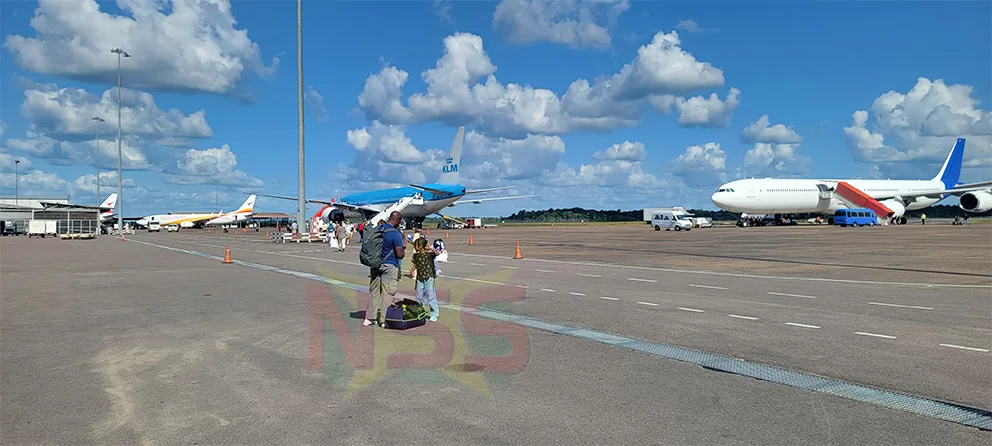
    A years-long staffing crisis in Suriname’s air traffic control sector has boiled over into major travel disruptions this month, with widespread cancellations and delays hitting operations at Johan Adolf Pengel International Airport, the country’s primary air gateway. The disruptions are not the result of a formal strike, but rather air traffic controllers refusing to continue taking on unplanned extra shifts to cover persistent understaffing, industry representatives have confirmed.

    International aviation standards require a control tower team of between 4 and 5 air traffic controllers to maintain safe operations. Currently, Suriname’s air navigation system only has two controllers on duty at any given time. With staffing already stretched to breaking point, even a single unexpected absence during a shift is enough to grind flight operations to a halt.

    The Suriname Air Traffic Controllers Association (Satca), which represents the country’s air traffic control workforce, first warned of growing systemic pressure on staff last week. The scale of the shortage is staggering: the sector requires 80 fully trained controllers to meet operational demand, but only 25 are currently active in service. This leaves each existing worker covering the workload of three full-time positions, a burden that has been building for decades without meaningful intervention.

    The ongoing disruptions are already carrying tangible economic costs. On Friday alone, tons of cargo—including high-value fresh fish exports—were unable to depart the country, threatening producer revenues and Suriname’s trade reputation. Compounding the uncertainty, a number of current controllers have recently taken accrued leave to use up accumulated vacation days, leaving even fewer staff to cover daily operations with no clear timeline for restoring full staffing capacity.

    Satca leaders emphasized that controllers have upheld their end of a January agreement reached with Suriname’s president, maintaining constructive engagement and fulfilling all core responsibilities over recent months. To date, however, none of the promised critical improvements to working conditions and systemic gaps have been delivered. Key unaddressed issues include an unfair pay structure that sees less responsible roles in the sector often earn higher compensation than air traffic controllers and operational managers, with a promised pay adjustment still not implemented. Backlogged overtime pay has only been partially disbursed, with the entire processing stalled since March 2023. Trainee candidate controllers still receive just 5,000 Surinamese dollars a month, with no salary improvements after five months of training. Existing job allowances no longer reflect the extreme weight and complexity of air traffic control work. Recent recruitment rounds have failed to attract enough qualified candidates, further worsening staffing pressures. Mandatory medical certifications required for license renewals have not been carried out since 2023, leaving many controllers’ active status in limbo. And critical operational equipment is long overdue for replacement and modernization.

    Satca has warned that controller willingness to continue covering staffing gaps with extra shift work is rapidly eroding under current conditions. The association stresses that voluntary extra shifts cannot act as a permanent, unlimited solution to systemic understaffing. For more than 15 years, active controllers have compensated for staffing shortfalls by taking on extra shifts and working unpaid or backlogged overtime, but successive Surinamese governments have failed to implement long-term, sustainable fixes to the crisis.

    Satca attributes the ongoing failure to address the crisis to mismanagement of leadership appointments in the sector: senior roles are currently filled based on non-technical criteria rather than being awarded to candidates with hands-on operational expertise. The association notes that effective leadership of the sector requires direct operational knowledge, ideally from a current or former active air traffic controller.

    The association calls the current situation, where unqualified leadership, organizational failures and crippling work pressure are tolerated, unacceptable, particularly given past aviation accidents where gaps in communication and organization contributed to deadly disasters. For Satca, the safety of air traffic control is a non-negotiable priority that cannot be compromised for any reason.

  • Residential construction is growing unstoppably in Punta Cana

    Residential construction is growing unstoppably in Punta Cana

    Against all industry warnings and existing market conditions, large-scale real estate development is not slowing down — it is accelerating — in Punta Cana/Bávaro, the Dominican Republic’s already oversaturated top tourist hub. The region’s residential tourism sector, which caters to second-home buyers and long-term vacationers, has maintained steady moderate demand in recent years, sparking a wave of new construction that shows no immediate signs of stopping. Today, new announcements of high-unit residential developments are a frequent occurrence, with many projects being sited in previously undeveloped third-tier locations that once would have been overlooked by major investors.

    The most recent high-profile project to be unveiled comes from a Spanish development firm, which is set to construct roughly 900 apartments and a 100-room hospitality property behind Almacenes Unidos. In fact, the majority of new development groups entering the Punta Cana/Bávaro market in recent months hail from Spain, and their leadership remains confident that their offerings stand out from the thousands of existing units already available.

    This construction boom is moving forward despite consistent advice from real estate experts that developers should hit pause on new residential projects. Industry analysts have long flagged widespread oversupply across Punta Cana/Bávaro and the broader eastern Dominican coast, a warning that developers have chosen to ignore. According to industry sources familiar with regional development pipelines, roughly 30,000 new residential units — including both apartments and standalone villas — are planned for completion in the short term, with some market insiders suggesting the actual total could be even higher.

    The most ambitious of all these planned projects comes from development firm Larimar, which has announced plans to build 10,000 new homes in a remote inland area far from the region’s popular beaches and central tourist corridors. Access to the project site is already limited, requiring travelers to pass through the town of Verón along narrow, already congested routes. While the region has experienced rapid population and tourism growth in recent years, the breakneck pace of new housing construction has not been matched by parallel expansion of critical public infrastructure. Road networks, water systems, and other basic utilities needed to support tens of thousands of new residents have not kept pace, creating a growing gap between development and infrastructure capacity. Adding to market concerns, overall demand for residential units in the region has begun to stagnate, raising questions about the long-term sustainability of the current construction boom.

  • The UN acknowledges the efforts of the PNH in Haiti

    The UN acknowledges the efforts of the PNH in Haiti

    A new joint United Nations report released in 2026 has formally acknowledged significant operational progress made by Haiti’s national police force (PNH) in its ongoing campaign against armed gang violence, even as it issues a stark warning that hard-won security gains could be reversed without consistent international backing and continued political commitment from Haitian leaders.

    The PNH has publicly welcomed the UN assessment, which highlights the tangible on-ground efforts and incremental advances achieved by the force amid one of the world’s most complex and volatile security environments. The police institution expressed particular satisfaction that the report gives long-overdue international recognition to the work of its specialized tactical units and every rank-and-file officer serving across the country. PNH officials noted that this formal recognition will help international stakeholders gain a clearer, more accurate understanding of the daily operational risks and structural challenges the force confronts as it works to restore state control over gang-held territory.

    According to the PNH, the progress documented in the UN report stems directly from the strategic vision and unwavering institutional support provided by Haiti’s national government, whose firm commitment to stabilizing national security has allowed the police to secure the resources needed to expand and strengthen its presence across all regions of the country. Beyond counter-gang operations, the force has also ramped up internal anti-corruption measures and crackdowns on transnational kidnapping and weapons smuggling, leading to multiple high-profile seizures of illegal arms and ammunition at northern Haitian ports and along the country’s land borders, all conducted in strict adherence to international human rights standards, the PNH confirmed.

    The joint 2026 report, produced by the UN Integrated Office in Haiti (BINUH) and the Office of the UN High Commissioner for Human Rights (OHCHR), outlines that intensified counter-gang operations led by Haitian security forces have successfully reclaimed significant swathes of territory in the capital Port-au-Prince, and have established a more visible, consistent police presence in previously gang-held communities. Even as it recognizes these advances, the report emphasizes that the progress remains inherently reversible without sustained international financial, logistical and political support, coupled with enduring political will from Haiti’s governing institutions.

    Security forces including the PNH, the Haitian Armed Forces (FAd’H), the specialized Gang Repression Force (FRG), and Vectus Global – an American private security firm founded by former Blackwater head Erik Prince – have retaken pockets of territory from gangs, but heavily armed criminal groups still maintain control over most strategic supply routes that are critical to their weapons trafficking and extortion operations. The report confirms that intensified operations have put unprecedented pressure on gang networks, forcing these groups to adapt their criminal tactics to evade crackdowns. While the shifting pressure has created what the report calls “glimmers of hope” in some urban areas, gangs have responded by expanding their extortion and kidnapping operations into rural regions including the Artibonite and central Haiti, while retaining control or influence over key maritime and road routes that fund their activities.

    In a formal statement responding to the UN report, the PNH reaffirmed its unwavering commitment to carrying out its mandate with professionalism, dedication and a steadfast sense of duty, prioritizing the safety of the Haitian people and the restoration of lasting national peace above all other objectives.

  • The food situation continues to deteriorate in Haiti

    The food situation continues to deteriorate in Haiti

    In an official presentation hosted at Port-au-Prince’s Montana Hotel on April 16, 2026, Haiti’s National Food Security Coordination (CNSA) released updated Integrated Food Security Phase Classification (IPC) data that paints a deeply concerning picture of the country’s ongoing food crisis, even as it notes limited, localized progress. The new analysis projects that between March and June 2026, Haiti’s annual lean season, more than 5.83 million people – equal to 52% of the population evaluated in the study – will experience acute food insecurity severe enough to qualify as IPC Phase 3 (Crisis) or higher. Compared to the CNSA’s September 2025 projection, which estimated 5.91 million people would fall into these high-risk phases, this marks a small improvement. Similarly, the number of people projected to face the most severe Phase 4 (Emergency) conditions has fallen slightly from 2 million to 1.9 million, or 16% of the analyzed population. However, CNSA analysts warn that these marginal gains are far too small to reverse the overall downward trajectory of food security across the Caribbean nation. The limited improvements can be traced to three key factors: a slowdown in Haiti’s rampant annual inflation, generally favorable growing conditions during the winter agricultural cycle, and improved access to movement along a small number of key roadways. Inflation has cooled from 31.9% in September 2025 to 22.1% as of February 2026, but global market shocks have erased much of this progress. The recent outbreak of conflict in the Middle East and subsequent blockade of the Strait of Hormuz have sent major disruptions rippling through the global food supply chain, with immediate, negative consequences for Haiti, which relies heavily on imported food staples. When compared to the most recent six-month period from September 2025 to February 2026 – when 5.7 million people faced Phase 3 or higher food insecurity – the upcoming lean season will bring a clear net deterioration in conditions for Haitian households. Two primary drivers are fueling this deepening crisis: escalating armed violence across the country and lingering damage from last year’s major hurricane. Today, armed non-state gangs control approximately 90% of the Port-au-Prince metropolitan area. Chronic violence has crippled Haiti’s already fragile economy, blocked the movement of critical food supplies and civilians, and pushed thousands of vulnerable Haitians into desperation, with many forced to join armed groups just to secure enough food to feed their families. In October 2025, Hurricane Melissa made landfall in southern Haiti, bringing catastrophic torrential rain, widespread flooding, and deadly landslides that destroyed homes, infrastructure, and cropland across the Grand Sud region, portions of the west coast near Petit-Goâve and Port-au-Prince, and the southeastern department. The ongoing economic collapse has compounded hardship for communities still recovering from the storm’s damage. Of the 30 administrative areas evaluated in the latest IPC analysis, 10 remain classified as Phase 4 Emergency. These high-risk zones include two districts in the Northwest Department, three zones in the Artibonite Department outside Gonaïves, the Lower Plateau, all internally displaced person camps, the island of La Gonâve, the Belle-Anse district in the Southeast Department, and the low-income neighborhoods of Port-au-Prince including Cité Soleil. Every other region of the country is projected to remain in Phase 3 Crisis for the March-June 2026 period. In response to these findings, the CNSA has outlined three core priority actions for national and international stakeholders. First, emergency life-saving interventions are immediately required for all Phase 4 areas. These responses must prioritize supporting the poorest and hardest-hit households to meet their basic food needs, close critical consumption gaps, and prevent the total, permanent loss of household livelihoods. Second, targeted support to rebuild livelihoods is critical to strengthen long-term resilience. Successive climate and economic shocks have eroded household ability to recover from crises, so rapid support to restore productive assets – including the distribution of agricultural inputs, livestock support, rural credit, direct material aid, and cash transfers – is essential to support the 2026 spring planting season and help families restore their independent income streams. Finally, the CNSA emphasizes the urgent need to connect emergency food response to long-term development and peacebuilding efforts. Chronic limited access to basic services and long-standing governance gaps continue to worsen food insecurity for Haitian households. Tying together emergency relief, development programming, and peacebuilding work is the only way to create sustainable, transformative improvements in food and nutrition security and build lasting stability in the country’s most affected regions.

  • FLASH : Reopening of airspace between Haiti and the Dominican Republic

    FLASH : Reopening of airspace between Haiti and the Dominican Republic

    In a landmark high-level working session held on April 17, senior diplomatic delegations from Haiti and the Dominican Republic reached a key agreement to reopen shared airspace between the two Caribbean nations, marking a major step forward in bilateral cooperation after years of restricted cross-border air travel. The talks, which built on a nine-point bilateral framework laid out in a 2021 joint declaration signed by Haiti’s late former President Jovenel Moïse and Dominican Republic President Luis Abinader, brought together top foreign affairs officials from both sides to advance dialogue on core shared priorities for the neighboring states.

    The Haitian delegation, led by that country’s Minister of Foreign Affairs Raina Forbin, included several senior diplomatic representatives: Haiti’s ambassador to the Dominican Republic Emmanuel Fritz Longchamp, Chief of Staff Winnie Hugot Gabriel, Director of Political Affairs Jean-Claude Lappé, and Director of Dominican Affairs Yves Rody Jean. The meeting underscores the current Haitian government, led by Prime Minister Alix Didier Fils-Aimé, has made strengthening constructive bilateral dialogue a top priority, with a stated commitment to approaching all shared issues through a lens of mutual respect for national sovereignty and collaborative problem-solving.

    Heading the Dominican Republic’s contingent was that nation’s Minister of Foreign Affairs Roberto Álvarez, joined by Vice Minister of Multilateral Foreign Policy Rubén Silié, Vice Minister of Bilateral Foreign Policy Francisco Caraballo, Dominican ambassador to Haiti Faruk Miguel, Director of Strategic Studies and Analysis Emil Chireno, Legal Director Boni Guerrero, and Counselor Jatzel Román. Over the course of the working session, both sides held open, constructive exchanges on three core topics at the top of the bilateral agenda: cross-border security cooperation, migration management, and bilateral trade. The talks centered on refining joint mechanisms to strengthen border control and surveillance while advancing practical, mutually beneficial solutions to the two nations’ most pressing shared challenges.

    The most significant outcome of the meeting is the formal agreement to reopen airspace between Haiti and the Dominican Republic, which will restore scheduled commercial air links between Cap-Haitien International Airport and all participating Dominican airports starting May 1, 2026. Officials from both sides noted the policy shift is designed to ease cross-border movement of people, stimulate stagnant economic ties between the neighbors, and deepen people-to-people connections that have been limited by years of airspace restrictions.

    Beyond the airspace agreement, delegations from both nations publicly thanked the international community for its ongoing support for efforts to stabilize Haiti’s security landscape, specifically highlighting the role of the United Nations and the French Gang Suppression Force (GSF) in actions aimed at restoring public security and institutional stability to Haiti, which has grappled with widespread gang violence and political upheaval in recent years.

    To wrap up the session, both sides reaffirmed their shared commitment to keeping open communication channels active, and framed continuous bilateral dialogue as the primary path to resolving future areas of disagreement or shared concern. The talks will be followed up with future high-level technical working groups to advance the understandings reached during this session, all within a framework of mutual respect, good neighborliness, and adherence to international law.

  • Surinaamse vrouwen verliezen van Belize na sterke eerste helft

    Surinaamse vrouwen verliezen van Belize na sterke eerste helft

    In a CONCACAF women’s tournament qualifying clash held on April 17, Belize picked up a well-earned 2-0 win over Suriname’s women’s national football team, capitalizing on their opponents’ lack of finishing quality to claim three points in the regional qualification campaign.

    The first 45 minutes of the encounter proved to be a tightly contested, evenly matched affair. Suriname put in a solid defensive performance and managed to keep the balance of play neutral, preventing Belize from carving out many high-danger clear-cut chances. When the halftime whistle blew, both sides went into the break locked at 0-0, with all to play for in the second half.

    The deadlock was finally broken in the 69th minute, when Belize was awarded a penalty that they converted to take a 1-0 lead. Just a short span of time after opening the scoring, Belize doubled their advantage, putting the result of the match beyond doubt in the process.

    While Suriname ultimately left the pitch with a disappointing defeat, the team did show glimpses of promising quality throughout the 90 minutes. There were multiple phases of play where Suriname matched Belize competitively, and the side did create several goal-scoring opportunities of their own. However, they failed to convert any of these chances into goals, a shortcoming that ultimately cost them in the final result. Belize, by contrast, proved far more clinical in front of goal, turning their few clear opportunities into a comfortable victory.

    This fixture forms part of Suriname’s ongoing qualifying journey, a campaign where the side is focused on developing its competitive quality and testing its strength against other top regional opponents. Following the defeat, Suriname’s technical staff has confirmed they will conduct a full review and analysis of the match, with particular focus placed on improving the team’s finishing efficiency and their performance in high-stakes decisive moments of future games.