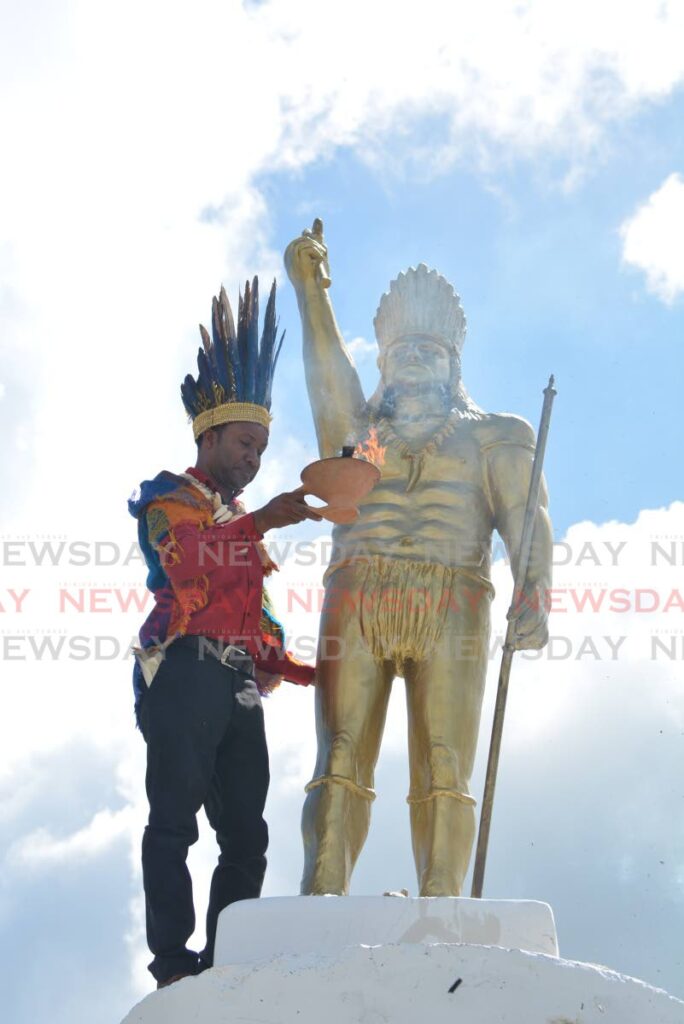
The First Peoples of Moruga have made a powerful statement of their ancestral land claim with the unveiling of a majestic golden statue of Amerindian Chief Utayaney on San Fernando’s historic Harris Promenade. The event, held on November 18, coincided with the 37th anniversary of San Fernando’s city status and marked a significant step in recognizing the indigenous heritage of the region. San Fernando Mayor Robert Parris announced plans to transform the Promenade into a “monument park,” inspired by similar spaces in Jamaica and Barbados, emphasizing the importance of the First Peoples among the existing monuments. Grand Chief Eric Lewis of the First Peoples of Moruga expressed both pride and sorrow, noting that the recognition came over 500 years after the displacement of his ancestors. Lewis lamented the ongoing marginalization of indigenous communities, stating, “We are not welcomed in society. We are ostracised, still sidelined, still put on the back burner.” He highlighted the historical injustice of European settlers taking their land and erasing their contributions. Lewis drew parallels with Chief Utayaney, who once led 300 warriors in defense of their land, and vowed to continue the fight for recognition through education and awareness. The event also featured remarks from Alderman Villiana Ramoutarsingh, who emphasized the importance of accurately teaching the history and culture of the First Peoples. Senior Superintendent Subash Ramkhelawan, head of the Whiteland Police Youth Club, which sculpted the statue, pledged to use the country’s 100 police youth clubs to promote indigenous heritage awareness. Kiran Singh, President of the Greater San Fernando Chamber, called for long-overdue recognition of the First Peoples, pledging the chamber’s full support. The ceremony, held in the refurbished amphitheater of the Harris Promenade, included a smoke ceremony and blessings, symbolizing the enduring presence and dominance of the First Peoples on their ancestral lands.
作者: admin
-

Maxi drivers ‘hopeful’ after meeting with police
In response to a recent surge in robberies targeting public transport vehicles along the Priority Bus Route (PBR), Route Two maxi taxi drivers are optimistic about newly proposed security measures. These initiatives were developed following discussions between the Route Two Maxi Taxi Association and law enforcement officials, including the head of the transit police. The collaboration aims to address the safety concerns of both drivers and passengers. On November 19, a distressing incident occurred when five men, one armed with a knife, boarded a maxi taxi near Bon Air West. They robbed the driver of $300 and stole personal belongings from terrified passengers before escaping. Brenton Knight, president of the Route Two Maxi Taxi Association, revealed that the association is preparing to implement undisclosed security measures, emphasizing the need for careful planning. He also supported the police’s recommendation for drivers to install dash cams, which could provide crucial evidence in criminal investigations. Assistant Commissioner of Police Rishi Singh highlighted the potential of such footage to aid in solving crimes. Meanwhile, Homeland Security Minister Roger Alexander acknowledged the challenges faced by the transit police, which he claimed had been neglected over the past nine years. Despite these issues, Alexander noted a significant reduction in robberies along the PBR, with only one reported this year compared to ten in the previous year.
-
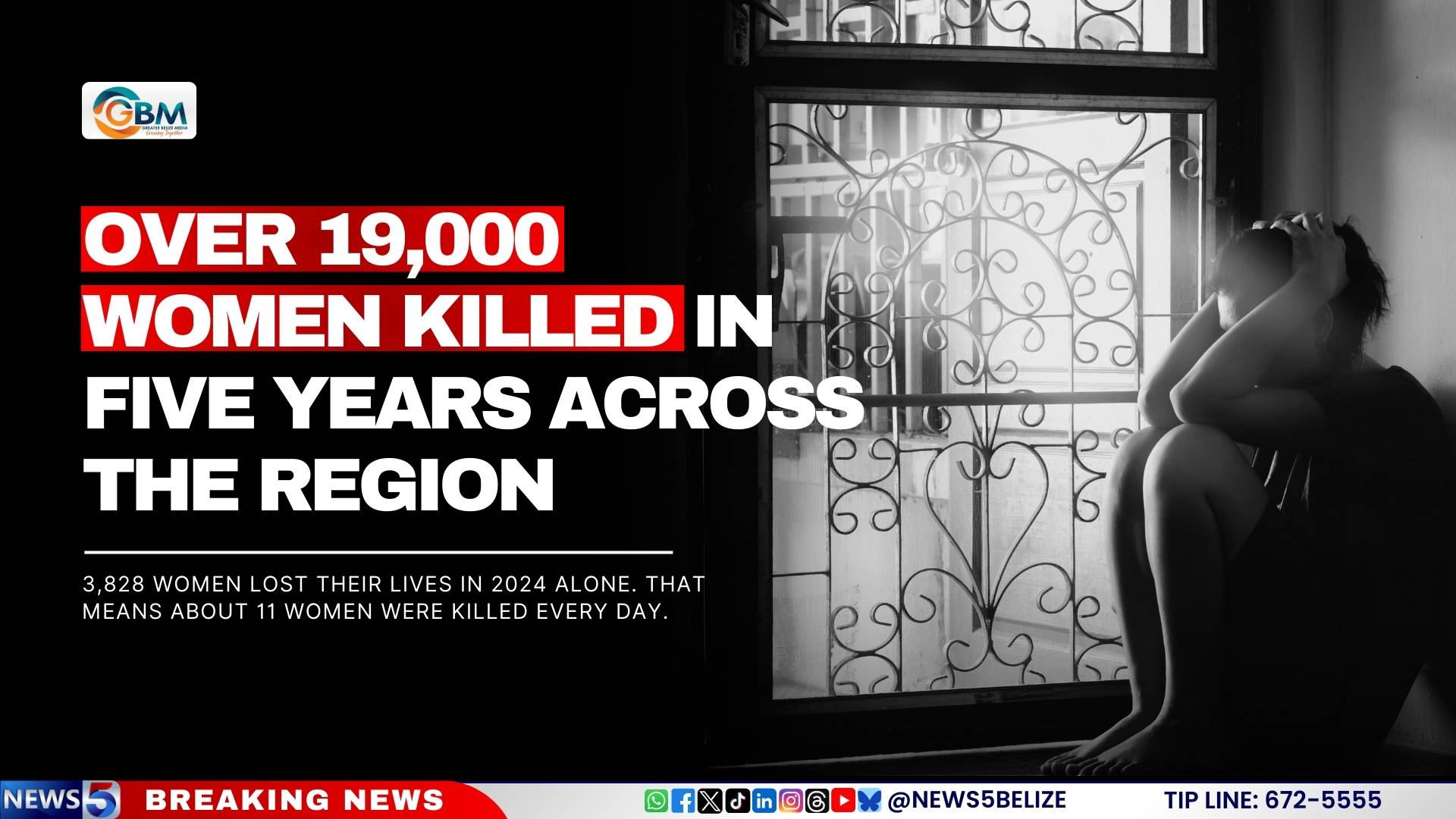
Over 19,000 Women Killed in Five Years Across the Region
A recent United Nations report has unveiled a harrowing reality of gender-based violence in Latin America and the Caribbean, with over 19,000 women killed in the past five years. The Economic Commission for Latin America and the Caribbean (ECLAC) disclosed that 3,828 women lost their lives in 2024 alone, averaging approximately 11 deaths per day. The majority of these murders were perpetrated by current or former intimate partners, highlighting the pervasive issue of domestic violence in the region. Honduras, Guatemala, and the Dominican Republic recorded the highest femicide rates, while Chile reported the lowest. In Belize, the Crime Observatory documented nine femicides in 2024, including a recent incident where a Coast Guard officer allegedly stabbed a woman multiple times, leaving her hospitalized. This incident occurred on the eve of the global ’16 Days of Activism’ campaign against gender-based violence. ECLAC’s Executive Secretary, José Manuel Salazar-Xirinachs, condemned the statistics as ‘unacceptable levels of gender-based violence’ and called for urgent governmental action. He emphasized that femicide is not merely a criminal issue but a profound human rights crisis that hinders societal progress and equality. Although most countries in the region have enacted laws to combat gender-based violence, the UN has cautioned that enforcement remains inconsistent and inadequate.
-

Jamaica confirms leptospirosis outbreak after Hurricane Melissa
The Jamaican government has confirmed a significant outbreak of leptospirosis, a bacterial disease transmitted through contaminated water and soil, following the devastation caused by Hurricane Melissa. Health and Wellness Minister Dr. Christopher Tufton reported that nine cases have been confirmed, with 28 suspected cases and six suspected deaths linked to the outbreak between October 30 and November 20. The hurricane, a Category 5 storm, struck Jamaica on October 28, causing widespread flooding, landslides, and nearly $9 billion in damages, which created ideal conditions for the spread of the disease. Leptospirosis, which thrives in environments contaminated by the urine of infected animals such as rats, dogs, and livestock, has been recorded in multiple parishes, including St. Elizabeth, St. Catherine, and Hanover. Symptoms of the disease range from flu-like conditions such as fever and muscle aches to severe complications like kidney failure, jaundice, and meningitis. Dr. Tufton emphasized that the outbreak poses a significant public health risk, particularly to farmers, emergency responders, and residents involved in cleanup efforts. Authorities are managing the situation through a coordinated response, including the distribution of antibiotics in hospitals and support from the Pan American Health Organization (PAHO). Public health inspectors are working to monitor cases, educate communities, and urge residents to avoid floodwaters. Dr. Tufton noted that the current outbreak far exceeds the typical number of cases observed in previous years, highlighting its unusual scale. Residents are advised to seek medical care if symptoms arise and to take precautions to minimize exposure to contaminated environments.
-
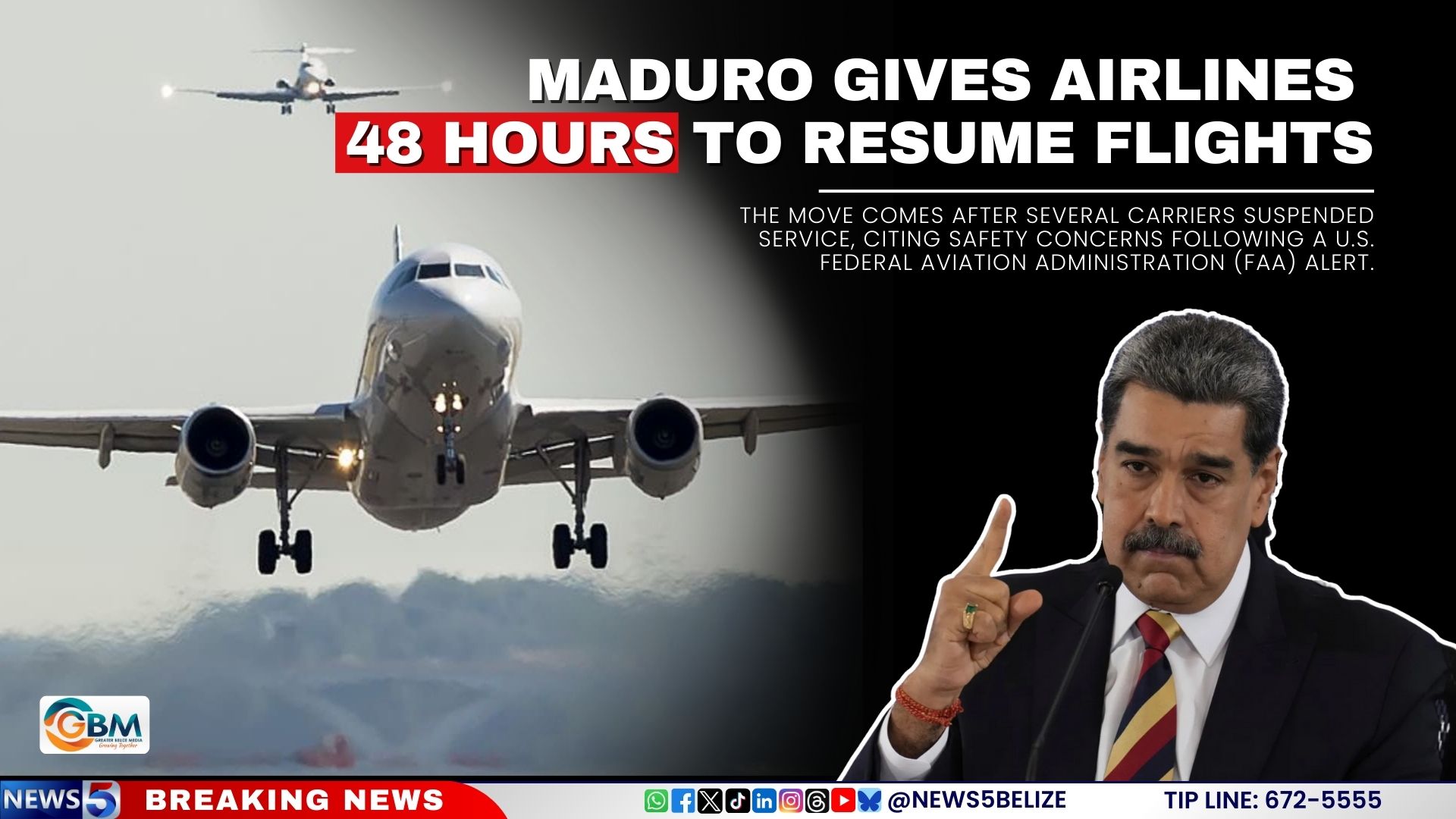
Maduro Gives Airlines 48 Hours to Resume Flights
Venezuela’s aviation authority has imposed a stringent 48-hour deadline on international airlines to resume flights to the country, threatening to revoke their traffic rights if they fail to comply. This directive follows the suspension of services by several carriers, including Iberia, Turkish Airlines, and Avianca, in response to a U.S. Federal Aviation Administration (FAA) safety alert. The FAA’s warning highlighted escalating security risks and increased military activity in Venezuela’s Maiquetía Flight Information Region, urging pilots to exercise extreme caution during all phases of flight, including overflights, arrivals, and departures. While local carriers such as Caribbean Airlines have temporarily halted operations to evaluate risks, Venezuelan airlines continue to operate unaffected. The International Air Transport Association (IATA) has emphasized the need for improved coordination between authorities and airlines, cautioning that Venezuela’s ultimatum could exacerbate the already critical reduction in air connectivity. Meanwhile, the U.S. has escalated tensions by designating Venezuelan President Nicolás Maduro and his allies as members of a foreign terrorist organization, paving the way for stricter sanctions and potential military actions. Maduro has vehemently denied all allegations.
-
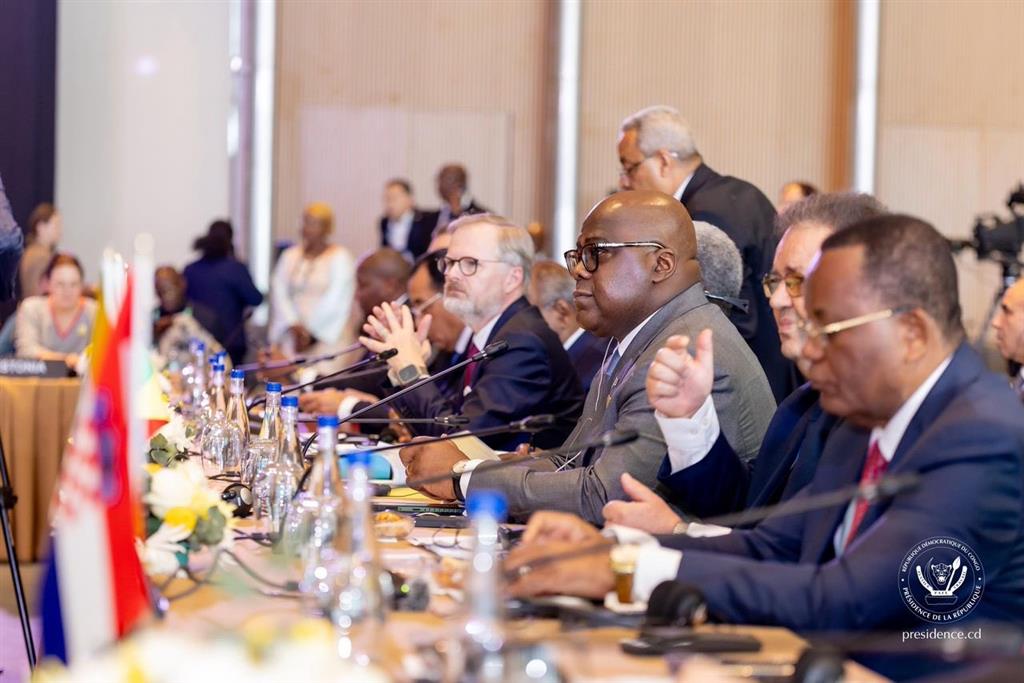
DRC calls for more balanced and progressive AU-EU partnership
During his participation in the debate on Peace, Security, Governance, and Multilateralism, President Félix Tshisekedi of the Democratic Republic of Congo (DRC) emphasized the critical need to address pressing issues that hinder prosperity and development. Speaking at the AU-EU Summit, Tshisekedi highlighted that peace and security are foundational to any discussion on trade, investment, and human mobility. He described the current situation in the DRC as a ‘critical emergency,’ marked by massacres, sexual violence, forced displacement, and persistent insecurity. Tshisekedi argued that sustainable economic agendas and migration projects cannot succeed if they overlook these human tragedies. He called for a renewed commitment to multilateralism, stressing the importance of transparency, cooperation, and genuine solidarity in addressing global challenges. The president expressed optimism that the summit would mark a turning point in AU-EU relations, fostering concrete actions that prioritize peace, human dignity, and shared prosperity in their collaborative efforts.
-

PAHO: Violence against women remains a serious problem in the America
Violence against women and adolescent girls remains a deeply entrenched issue in the Americas, according to a recent report by the World Health Organization (WHO). The findings, released in conjunction with the International Day for the Elimination of Violence against Women on November 25, highlight the alarming lack of progress in addressing this pervasive problem. Data spanning from 2000 to 2023 reveals that despite heightened awareness and the implementation of multisectoral policies and health service interventions, the reduction in violence has been minimal. Intimate partner violence continues to be the most prevalent form of abuse, with rates showing little change over the past two decades. Britta Baer, an advisor at the Pan American Health Organization (PAHO), emphasized that the stigma and shame surrounding sexual violence often deter victims from reporting incidents, suggesting that the actual figures are likely far higher than those documented. This underscores the urgent need for more effective strategies and societal shifts to combat this enduring crisis.
-

Venezuela-Cuba Friendship Movement pays tribute to Fidel Castro
In a heartfelt tribute to the late Cuban Commander-in-Chief, Fidel Castro, a prominent solidarity organization hailed him as a ‘universal reference of dignity, justice, and resistance.’ The statement emphasized Castro’s pivotal role not only in spearheading a revolution that reshaped the lives of millions in Cuba but also in serving as a guiding light for dignity across Latin America and the globe. His unwavering commitment to sovereignty and independence, the organization noted, demonstrated that unity, consciousness, and solidarity can achieve monumental victories. Castro’s influence transcended national boundaries, inspiring movements against imperialism, exploitation, and inequality worldwide. In Venezuela, his legacy endures through collaborative projects, life-saving medical brigades, youth education programs rooted in liberation principles, and the enduring bond of brotherhood between Cuba and Venezuela. Nine years after his passing, the organization reaffirmed its dedication to preserving his vision and advancing the creation of a more just, humane, and united world. The Movement underscored that Castro’s teachings on genuine friendship and solidarity remain inseparable from the fight for emancipation, sovereignty, and dignity.
-
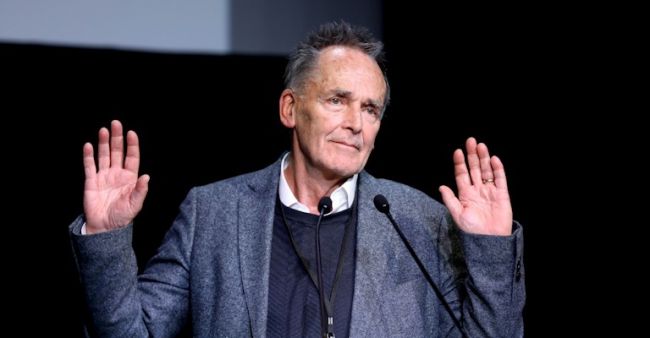
US plan for Ukraine recognizes Russian victory, says MEP
In a significant development, Sahra Wagenknecht, a representative of the alliance Reason and Justice, has called on the European Union (EU) to initiate direct diplomatic talks with Russia. This comes after years of the EU rejecting such engagements. Wagenknecht emphasized that Russia is nearing victory in the ongoing conflict, a sentiment echoed in the US’s recent strategic plans. She criticized the EU for its inconsistent approach, accusing it of attempting to ‘dictate terms’ despite years of obstructing meaningful negotiations. Wagenknecht also highlighted the need for European sovereignty, advocating for independence from US directives on continental security.
Geopolitical analysts across Europe have interpreted the US’s latest document as a tacit acknowledgment of the failure of the Ukrainian strategy and its Western backers. After four years of unproductive confrontation, the document underscores the exhaustion of the Western hegemonic project in Ukraine. This has prompted European capitals to reconsider their strategic relationship with Moscow, especially in light of increasing unilateralism.
This parliamentary assessment marks an unprecedented recognition of the ineffectiveness of sanctions and military escalation. It opens the door for independent European policies that prioritize collective security over transatlantic warmongering interests.
The US administration has previously announced the development of a plan for a negotiated resolution to the Ukraine conflict. However, it stated that the details of the plan are not yet ready for disclosure, as the work is still in progress.
On Monday, Russia confirmed that it has not received any official information about potential negotiations involving the United States, Ukraine, and European countries in Geneva. Nonetheless, Moscow reiterated its openness to maintaining contacts and engaging in talks with the US.
-
Panamanian social organizations pay tribute to Fidel Castro
Various organizations and individuals worldwide have recently commemorated the enduring legacy of Fidel Castro, the revolutionary leader who shaped Cuba’s history. Through social media platforms, groups have shared videos and messages emphasizing the solidarity movement with Cuba, a nation that has faced a U.S. blockade for over six decades with unwavering resistance and dignity. Among these groups, the Broad Front for Democracy (FAD), the National Solidarity Coordination, and the Asociación Martiana de Cubanos Residentes en Panama have highlighted the continued relevance of Castro’s work and ideology. In Panama, the Cuban embassy is set to host a photographic exhibition showcasing the profound impact of this iconic statesman. Fidel Castro, born on August 13, 1926, and passing on November 25, 2016, is celebrated for his pivotal role in advancing Cuba’s revolutionary process, steering the nation toward socialism, and fostering unity among its people. Cuban President Miguel Díaz-Canel, along with other high-ranking officials, has reiterated the vitality of Castro’s revolutionary ideals and the enduring influence of his leadership. On social media platform X, Díaz-Canel emphasized the immortality of Castro’s ideas, urging skeptics to witness the ongoing resonance of his legacy. The hashtag #FidelViveEntreNos (Fidel Lives Among Us) has become a rallying cry, symbolizing the lasting impact of Castro’s vision on Cuba and the world.