作者: admin

  • President eind mei naar Brazilië; samenwerking wordt verdiept

    President eind mei naar Brazilië; samenwerking wordt verdiept

    Suriname is set to take a major step forward in its bilateral relationship with Brazil, with President Jennifer Simons scheduled to pay an official working visit to the South American nation at the end of May. During the trip, Simons will hold high-level talks with her Brazilian counterpart, Luiz Inácio Lula da Silva, with the core goal of strengthening collaborative ties between the two neighboring countries.

    According to Melvin Bouva, Suriname’s Minister of Foreign Affairs, International Trade and Cooperation (BIS), preparations for the high-profile visit are currently progressing smoothly. Multiple key priority topics will top the agenda for the presidential discussions, including cross-border management, coordinated responses to transnational criminal activity, and most prominently, expanded economic cooperation and bilateral trade.

    Bouva confirmed through Suriname’s official Communication Service that the groundwork for deeper collaboration has already been laid in prior diplomatic engagements. Past face-to-face meetings between the two sides in 2025, plus a recent telephone consultation between the two heads of state, have set a clear foundation for the upcoming talks. The visit is expected to produce concrete, actionable agreements that will deepen the overall bilateral partnership.

    For Suriname, food security is one of the most critical policy priorities on the discussion agenda. Brazil is widely viewed as a key strategic partner for Suriname in this area, thanks to Brazil’s world-leading agricultural sector and its established capacity for regional collaborative development.

    Improving cross-border connectivity between the two countries also ranks as a high priority for Suriname’s administration. The Surinamese government emphasizes that enhanced connectivity is a foundational requirement for unlocking shared economic growth, expanding trade volumes, growing the tourism sector, and upholding regional security for both nations.

    Beyond one-on-one bilateral cooperation, Suriname and Brazil already maintain aligned cooperation within multilateral international organizations, where the two countries frequently coordinate and adopt shared policy positions on regional and global issues.

  • Throne Speech summary: Key policy priorities ahead of Budget address

    Throne Speech summary: Key policy priorities ahead of Budget address

    Less than 24 hours ahead of Prime Minister Philip J. Pierre’s annual Budget Address, the government of Saint Lucia has unveiled its sweeping policy priorities for the incoming term, delivering the first Throne Speech since the administration’s re-election. The ceremonial address was delivered on behalf of the Governor General by Deputy Governor General His Excellency Felix Finisterre, covering five core policy domains that span institutional reform, social development, public health, climate action, and economic infrastructure.

    Opening the governance and institutional reform package, Finisterre announced that the administration will ramp up national discussions on constitutional reform, including a formal review of Saint Lucia’s current Head of State governance arrangements. The government will also redraw constituency electoral boundaries to ensure fairer political representation, and continue ongoing audits of the country’s popular Citizenship by Investment Programme, with the explicit goal of keeping the scheme aligned with global transparency, accountability, and compliance standards. A long-awaited milestone is scheduled for this year: the operationalization of the national Sovereign Wealth Fund, which received legislative approval in 2023. The fund will be directed toward two core priorities: climate change mitigation and adaptation projects, and broad-based national economic development. To modernize standards for public officials, the government will also revise the existing Integrity in Public Life Act to bring it in line with contemporary global best practices for government transparency.

    On the social and people-centric policy front, the administration outlined targeted changes to address gaps in access and opportunity. The Education Act will undergo a full review, with a specific focus on tackling chronic student absenteeism, boosting school retention rates, and expanding provisions for early childhood education and special education needs. Updated national building codes will also be drafted to remove longstanding accessibility barriers for Saint Lucia’s disabled community. After years of discussion, a national Diaspora Bill will move forward in 2024, with formal legislative negotiations set to begin this year to advance the bill toward final enactment. Additional public resources will also be allocated to grow the youth economy and create more opportunities for young workers.

    To expand and improve Saint Lucia’s public healthcare system, the government will introduce three landmark pieces of legislation this term: the Universal Health Coverage Bill, the Mental Health Bill, and the Medical Laboratories Bill, all designed to expand access to care and lower out-of-pocket costs for patients. Work will also continue on the long-delayed completion and commissioning of the new St Jude Hospital.

    Climate action and agricultural transformation form another core pillar of the administration’s agenda. New legislation will be introduced to crack down on illegal dumping and the unregulated construction of unsightly roadside structures across the island. Lawmakers will also debate bills targeting fossil fuel consumption and scaling up alternative renewable energy development, with the Electricity Supply Bill scheduled for final enactment this year. The National Hydro-meteorological Services Bill will also be introduced as part of the 2024 legislative agenda, to improve the country’s ability to monitor and respond to extreme weather events. To boost water security, the government will ramp up public education campaigns to encourage wider adoption of residential and commercial rainwater harvesting. A full overhaul of national agricultural policy is also planned to strengthen Saint Lucia’s domestic food security and reduce reliance on imported food staples.

    To strengthen the country’s justice and legal sector, Finisterre confirmed that a broad package of justice reform legislation will be enacted, covering a wide range of modernization priorities. The legislative package includes the Witness Protection (Special Measures) Bill, Fingerprints Bill, Plea Bargaining Bill, Electronic Crimes Bill, Anti-Criminal Organisation Bill, Status of Children Bill, Justice of the Peace Bill, and Forensic Evidence (DNA) Bill. Both the long-outdated Criminal Code and the Evidence Act will also undergo comprehensive revisions to align with modern legal practices.

    For economic governance, the government will update the Public Procurement Act to better match the unique needs of Saint Lucia’s current domestic economic climate. In response to ongoing global volatility driven by geopolitical conflicts that have pushed up global crude oil prices, Finisterre confirmed that the administration is preparing targeted policy measures to offset the negative impact of rising costs on household essentials, including transport fuel, cooking gas, and staple food products.

    On the infrastructure and development front, the government laid out a clear timeline for several major national projects. The new Halls of Justice complex is on track to be completed by 2025, while the long-planned redevelopment of Hewanorra International Airport, Saint Lucia’s primary gateway for international tourism, is scheduled to break ground this year. Bid submissions for the airport project are already complete and currently under evaluation by government authorities. To address the growing national shortage of affordable housing, the National Insurance Scheme will launch a new housing development project in Roseau. Planning work is already well advanced, with final road layouts and lot mapping underway, and required environmental and social impact assessments already completed. Work is also set to begin on the new Vieux Fort Administrative Complex and Amphitheatre, with revised architectural designs already finalized.

  • Florida student arrested for group chat ‘joke’ about Netanyahu containing alleged bomb threats

    Florida student arrested for group chat ‘joke’ about Netanyahu containing alleged bomb threats

    A 23-year-old Florida International University student has landed in legal custody after what she claims was a poorly judged joke sparked widespread panic and triggered a swift law enforcement response. Gabriela Saldana was taken into police custody on April 16 following reports from multiple members of a 215-person WhatsApp group, where she had shared messages referencing potential explosive threats at a campus venue, according to MSN reporting.

    The troubling messages were shared during a group discussion about an upcoming event scheduled to take place on April 10 at the Ocean Bank Convocation Center, the university’s major indoor event facility. Beyond the venue reference, Saldana’s messages included a mention of Israeli Prime Minister Benjamin Netanyahu, as well as controversial political imagery tied to the university’s Capstone program. Law enforcement officials interpreted the term “bonbons,” used in one of Saldana’s messages, as coded language referring to bombs, alongside other suggestive phrasing included in her posts.

    Alarmed by the threatening content, multiple group members rushed to contact local law enforcement to report the messages, leading directly to Saldana’s arrest later that month. During her initial bond court hearing held the same day of her arrest, Saldana defended her actions, telling the court the entire incident was nothing more than a “dumb joke,” local Miami outlet WSVN-TV confirmed.

    Presiding bond court judge Mindy S. Glazer acknowledged Saldana’s statement that the exchange was intended as humor, but pushed back on the claim in court remarks. “To an objective person it is not a joke,” Glazer stated, noting that threatening language tied to potential violent harm creates legitimate public fear regardless of the sender’s intent. As of the latest reporting, no further updates on Saldana’s upcoming court proceedings or potential charges have been publicly released.

  • Mohameds tell CCJ not opposed to extradition request, but want fair issuance of Authority To Proceed

    Mohameds tell CCJ not opposed to extradition request, but want fair issuance of Authority To Proceed

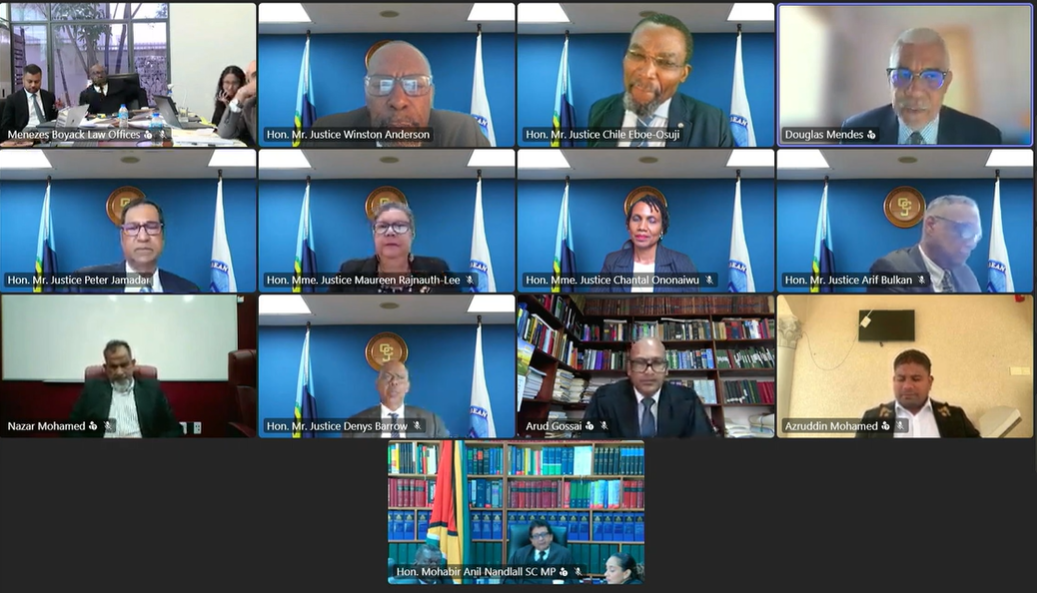
    On Tuesday, the Caribbean Court of Justice (CCJ) convened a high-stakes hearing for an appeal brought by Guyanese father-son businessmen Nazar Mohamed and Azruddin Mohamed, who are wanted by United States authorities. The pair is challenging the Authority to Proceed (ATP) issued by Guyana’s Home Affairs Minister Oneidge Walrond, which cleared the way for their extradition proceedings to move forward.

    Contrary to common assumptions in extradition challenges, the Mohameds do not oppose the extradition request itself. Their core argument centers on a claim of political bias tainting Walrond’s ATP decision, and they are calling for the current order to be set aside and reassigned to an impartial, unaligned decision-maker. Speaking on the pair’s behalf to the court, lead defense counsel Fyard Hosein clarified that the challenge does not seek to block the extradition process entirely, only to ensure it is overseen by a decision-maker free from perceived political prejudice.

    When questioned by CCJ Judge Peter Jamadar on whether remitting the ATP decision to an independent alternative official would resolve their concerns, Hosein confirmed that this outcome would be acceptable. He further added that the defense would not object to the ATP being issued by the Director of Public Prosecutions or a Permanent Secretary, so long as the new decision-maker is free of bias and follows all applicable legal protocols.

    The two businessmen are scheduled to stand trial in a Florida federal court on charges of mail fraud, wire fraud, and money laundering tied to their gold trading operations. Prior to their appeal to the CCJ, they have already unsuccessfully challenged Walrond’s ATP before Guyana’s magistrate court, High Court, and local Court of Appeal. The Mohameds argue that Walrond, Attorney General Anil Nandlall, and Vice President Bharrat Jagdeo made public statements labeling them as criminals and attacking them long before the ATP was issued, because the pair are known political opponents of the current administration.

    During the hearing, Justice Chile Eboe-Asuji noted that the regional court had reviewed social media recordings of statements made by one of the Mohameds accusing the Guyanese government of corruption. He raised the question of what the pair could reasonably expect from government officials after such open provocation. In response, Hosein pushed back, emphasizing that the court’s focus must remain on the bias of the decision-maker, not political tensions between the parties.

    CCJ President Dr. Winston Anderson raised a key procedural question: if the current Home Affairs Minister delegated the ATP authority to another cabinet minister, would the risk of bias not still persist. Defense counsel Roysdale Forde responded that the Fugitive Offenders Act explicitly permits delegation of this responsibility to a non-ministerial public officer, which would resolve that concern. Forde echoed earlier arguments from Hosein, noting that senior government officials including Jagdeo and Nandlall had made public comments about the extradition months before the ATP was ultimately issued on 30 October 2025 — just one day before the Mohameds were arrested and brought before the court.

    Forde stressed that the case hinges on protection of fundamental legal rights, explaining that raising the bias challenge after the magistrate issues a ruling on committal, during the habeas corpus phase, would have resulted in unreasonable delay for the pair.

    Representing the government of Guyana, attorney Douglas Mendes argued that the Mohameds had already waived their right to challenge the minister’s authority on bias grounds. Mendes noted that the pair sent two formal letters to the Home Affairs Minister, on 6 October and 13 October 2025, well before the ATP was issued, while already aware that an extradition request was pending. Mendes explained that extradition processes inherently include an executive, or high political, component, and the Home Affairs Minister holds statutory discretion to issue or deny the ATP, as well as the final extradition order.

    Mendes contended that a member of the executive cabinet must be involved in the ATP decision, rather than delegating the authority to a non-political public officer, who would lack the ability to exercise required political judgment and be held accountable to parliament. If bias against the current minister were confirmed, Mendes argued that the only appropriate remedy would be for the President to reassign the portfolio or appoint an acting Home Affairs Minister temporarily, rather than delegating to a public officer. He added that even if bias were proven, the Mohameds are not entitled to any additional relief, as the court system already has mechanisms to address bias claims through the judicial phase of the process.

    Appearing personally before the court, Attorney General Anil Nandlall argued that fair trial principles do not apply to extradition committal proceedings, since no formal criminal charges have been brought in Guyana. This position was immediately questioned by Justice Arif Bulkan, who requested legal authorities to support the claim in light of Guyana’s constitutional guarantee of a fair hearing. Nandlall pushed back, noting that politicians may hold personal biases but can still act fairly and in compliance with the law, adding that the government’s only bias is in favor of its policy of processing legally complete extradition requests once all statutory criteria are met.

    At the close of the hearing, CCJ President Winston Anderson announced that no decision date has been set, and the existing interim stay on the magistrate court’s committal proceedings will remain in effect. He reiterated that the court is fully aware of the need to resolve extradition cases in a timely manner.

  • Judge Recuses Himself in Stroll v. Global Bank Case as Matter Nears Conclusion

    Judge Recuses Himself in Stroll v. Global Bank Case as Matter Nears Conclusion

    In a sudden twist that has delayed a long-awaited resolution in one of the business world’s most closely watched legal battles, Justice Renee Williams has stepped down from presiding over the high-stakes dispute between prominent businessman Jack Stroll and the Global Bank of Commerce — a development that comes as the case appeared to be on the cusp of a final decision.

    Williams notified legal teams representing both parties that he would no longer lead the proceedings, offering only unspecified personal reasons as justification for the recusal. No additional details about the circumstances behind his departure have been released to the public, leaving court observers and stakeholders to speculate about what prompted the last-minute change.

    Following Williams’ exit, judicial administrators have reassigned the entire case to Justice Birnie Stephenson. To give the newly appointed judge sufficient time to familiarize himself with the complex history of the dispute, all proceedings have been adjourned until July 23. Court officials have also issued a formal order requiring legal counsel to compile a complete, chronological timeline of all past actions and filings related to the case, to streamline Stephenson’s review process. In the interim, the court has confirmed it will not accept any new motions or additional applications from either side as it sorts out the next steps for moving the dispute toward resolution.

  • Dominica revokes citizenship of second son of Iranian political adviser

    Dominica revokes citizenship of second son of Iranian political adviser

    The Caribbean island nation of Dominica has taken the unusual step of revoking citizenship from Abolfazl Shamkhani, the younger son of the late Iranian political adviser Ali Shamkhani. This move marks the second time in eight months that a member of the high-profile Shamkhani family has lost their citizenship obtained through Dominica’s controversial Citizenship by Investment (CBI) program.

    According to an official document obtained by the Organized Crime and Corruption Reporting Project (OCCRP), the revocation order was formally signed on March 27, 2026 by Daren Pinard, Dominica’s State Minister. Dominican authorities have formally accused Abolfazl of failing to disclose critical material information when he secured citizenship through the CBI pathway back in 200, applying under the false alias “Sami Hayek”. Under local regulations, Abolfazl retains the right to file a formal request for an official inquiry into the revocation order within a 25-day window from the notification date.

    This action follows a nearly identical decision taken against Abolfazl’s older brother, Hossein Shamkhani, who was stripped of his Dominican citizenship back in August 2025. As first reported by Dominica News Online at the time, Hossein had also obtained his citizenship through the same investment program operating under an assumed name, “Hugo Hayek”. Just weeks before Hossein’s citizenship was revoked, Western governments had imposed sweeping sanctions on him, alleging that he oversaw a multibillion-dollar transnational oil smuggling network that generates illicit revenue for both the Iranian and Russian governments.

    The U.S. Treasury’s Office of Foreign Assets Control (OFAC) has publicly outlined that members of the Shamkhani family systematically use investment-based citizenship programs to obtain second passports, allowing them to hide their direct connections to Iran while carrying out large-scale international commercial activities that violate global sanctions regimes.

    An independent OCCRP investigation published in March 2026 uncovered that the two brothers collectively own at least four high-end luxury villas in Dubai, with a combined estimated value of nearly 29 million U.S. dollars. All of these properties are registered under the false Dominican aliases the brothers used to obtain their citizenship. Cross-referenced corporate records also link the alias “Sami Hayek” to a Cyprus-based investment fund, while both brothers share ties to a Turkish chemical manufacturing company that was later added to OFAC’s sanctions list.

    On March 6, 2026, the U.S. Department of Justice filed civil forfeiture complaints seeking to seize more than 15.3 million U.S. dollars in assets that prosecutors have linked directly to the Shamkhani network. Court documents name Abolfazl as the manager of multiple corporate entities tied to his older brother’s sanctioned operations, though Abolfazl himself has not yet been personally sanctioned or criminally charged by U.S. authorities.

    In a policy shift implemented just days before Abolfazl’s revocation order was signed, Dominica moved to suspend all new citizenship applications from Iranian nationals through its CBI program, with the new rule taking effect on March 24. Under the updated policy, Iranian nationals are only eligible to apply for CBI citizenship if they have maintained residency outside Iran for a minimum of 10 consecutive years, hold no tangible assets within Iranian borders, and have not conducted any commercial activity with Iranian entities over that period.

    Since June 2024, Dominican authorities have revoked a total of 68 CBI passports on the grounds of fraud or intentional misrepresentation on applications. Data shows that Iranian applicants account for six percent of these revocation cases.

    Dominica’s CBI program, which grants citizenship in exchange for qualifying investment into the country, has recently faced growing international pressure and heightened scrutiny from both the United States and the European Union. In response to concerns over misuse of the program for illicit activity, Washington has implemented new visa restrictions on Dominican citizens traveling to the United States, while Brussels has issued formal warnings that the operation of the program as currently structured could lead to Dominica being removed from the EU’s visa-free travel scheme.

  • Market Vendor Packs Up & Relocates

    Market Vendor Packs Up & Relocates

    For more than ten years, Herman Freisen has been a familiar face at Belize City’s Michael Finnegan Market, building his business connecting small-scale farmers from Little Belize directly to local consumers. But in a sudden turn of events, new restrictions imposed by the Belize City Council have pushed the veteran vendor out of his longtime spot, forcing an unexpected relocation that threatens the livelihoods of more than a dozen agricultural producers he works with.

    Freisen told local reporters that prior to the new rule, he was allowed to sell his stock of fresh produce through both wholesale and retail transactions at the market, with weekend retail sales making up a critical portion of his monthly revenue. “On Saturdays we used to come and sell retail to the people. But now they cut it and said we cannot sell any more retail,” Freisen explained in an interview.

    The restriction, which limits Freisen to only wholesale operations at the site, did not come with a transition period to help him adjust. He requested a short grace period to notify his regular customers of the upcoming change, but his appeal was denied. With no option to continue his existing business model at Michael Finnegan Market, Freisen made the decision to move his entire operation to the city’s Pound Yard Market, completing the relocation just last week.

    The vendor pushed back against unconfirmed complaints that triggered the restriction, noting that his pricing for fresh produce has consistently aligned with what other vendors at the market charge. Beyond the disruption to his own income, Freisen emphasized that the change will hit the more than 12 Little Belize farmers who rely on him to sell their harvest to consumers. Without retail sales to move their produce, the farmers face a significant drop in revenue that could jeopardize their small operations.

    Local outlet News 5 has contacted Belize City Mayor Bernard Wagner to request the council’s reasoning for the new restriction and comment on Freisen’s case. A response is anticipated following the council’s caucus meeting scheduled for the same day the story broke, and viewers are invited to tune into News 5 Live at 6 p.m. local time for further updates on the developing situation.

  • Students Carry King’s Baton Along Belize City’s Seawall

    Students Carry King’s Baton Along Belize City’s Seawall

    As the global countdown to the 2026 Glasgow Commonwealth Games continues, Belize has added its own unique, community-focused chapter to the historic King’s Baton Relay, blending youth engagement, environmental stewardship, and centuries-old cultural celebration into a memorable event held along Belize City’s iconic coastline on Tuesday, April 21.

    The day’s activities centered on young people carrying on the relay tradition, with student athletes from Saint Catherine’s Academy taking on the leg of the journey, running the baton along the city’s scenic seawall to the iconic Baron Bliss Lighthouse. Following the celebratory relay, the group shifted focus to environmental action, launching a organized coastal clean-up initiative led by the school’s Oceana Wavemakers Club, a youth group dedicated to marine conservation.

    Leticia Westby, a board member of the Belize Olympic and Commonwealth Games Association, explained that the pairing of the relay with a clean-up was no accident. The dual activity was designed to tie global sporting unity to local environmental responsibility, with a core goal of removing plastic waste from Belize’s coastal ecosystems to protect ocean health for future generations.

    The King’s Baton Relay is a centuries-old tradition that precedes every edition of the Commonwealth Games, requiring the ceremonial baton to travel through all 74 member nations and territories of the Commonwealth in the months leading up to the opening ceremony. Belize’s stop on the global tour showcases not only the country’s commitment to the Commonwealth sporting movement, but also its distinct national and cultural identity, reflected in the custom design created for the country’s leg of the journey.

    Local Belizean artist Keion Griffith was commissioned to craft the one-of-a-kind design for Belize’s segment of the relay. The baton’s artwork integrates iconic national symbols: Belize’s official national flag, the world-famous Great Blue Hole, ancient Mayan ruins, and imagery representing the country’s rich sporting and cultural legacy. One of the most meaningful inclusions is a reference to Pok-ta-Pok, the traditional ancient Mayan ballgame that remains a beloved cultural practice in Belize today.

    Westby emphasized the importance of highlighting this indigenous cultural heritage on the baton. “The Mayans have been in Belize or have been on this side of the world from before Christ, and they still remain, and we are still playing the game of Pok-ta-Pok,” she said, noting that Belize claimed the world championship title for the traditional sport just a few years ago.

    To cap off the week of relay-related cultural and community activities, event organizers have planned a public exhibition match of Pok-ta-Pok this coming Friday at Jardin Pachamama Field in Orange Walk, inviting community members to experience the ancient sport firsthand and celebrate Belize’s enduring indigenous roots.

    The event in Belize demonstrates how the Commonwealth Games’ traditional relay has evolved to incorporate modern priorities like youth empowerment and climate action, while also creating space for nations to showcase their unique cultural identities to the global community.

  • Florida to Execute Inmate Today Convicted in 1990 Murder

    Florida to Execute Inmate Today Convicted in 1990 Murder

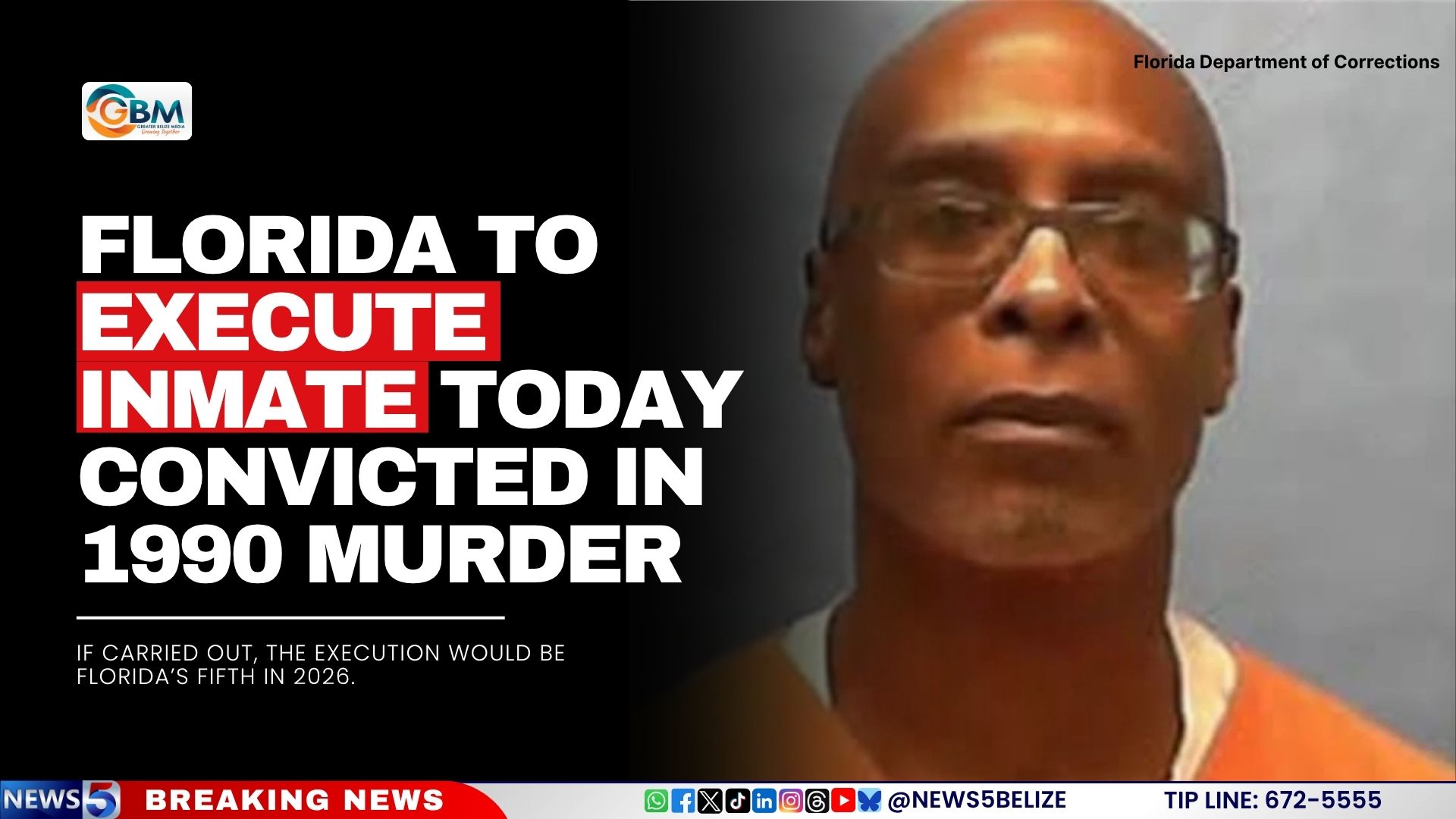
    On the evening of April 21, 2026, the U.S. state of Florida is set to carry out the execution of 58-year-old Chadwick Scott Willacy, a man convicted of a brutal 1990 homicide that shook the community of Palm Bay. The convicted inmate will receive a lethal injection at Florida State Prison, located near Starke, at 6:00 p.m. local time, marking the fifth state-sponsored execution in Florida this year.

    Willacy’s conviction dates back to 1991, when a jury found him guilty on four counts: first-degree murder, residential burglary, robbery, and arson. Initially, the jury issued a 9-3 recommendation for the death penalty, which the court handed down. Following a court-ordered re-sentencing in 1995, a second jury reaffirmed the capital punishment verdict with an 11-1 vote in favor of death.

    Court documents lay out the gruesome details of the crime that took Willacy’s victim, 50-year-old Marlys Sather, in September 1990. Sather, a local resident, returned to her Palm Bay home midday during her lunch break and interrupted Willacy mid-burglary. Prosecutors’ case files show Willacy attacked Sather immediately, striking her skull with a blunt object that caused a fatal fracture. He then bound her hands and feet, attempted to strangle her with a telephone cord, before dousing her body in gasoline and setting her on fire. An official autopsy later confirmed Sather was still alive when the fire was ignited, and her official cause of death was listed as smoke inhalation.

    After the attack, authorities say Willacy fled the scene with Sather’s vehicle, multiple personal belongings, and her ATM card, which he used to withdraw cash from her bank account. Sather’s body was not discovered until hours later, when concerned family members went to check on her after she failed to return to her job after lunch.

    In the lead-up to the scheduled execution, Willacy’s legal team pursued multiple last-ditch appeals to have the death sentence overturned. The Florida Supreme Court rejected his most recent round of appeals last week, and as of April 21, final appeals were still pending before the U.S. Supreme Court.

    This execution comes amid a marked increase in the use of capital punishment in Florida over the past two years. If carried out as scheduled, it will be the fifth execution the state has conducted in 2026. In 2025 alone, Florida put 19 people to death, the highest annual number of executions the state has carried out since the U.S. Supreme Court reinstated states’ right to use capital punishment in 1976.

    According to the Florida Department of Corrections, all state executions are carried out via lethal injection using a three-drug protocol: the first acts as a sedative to render the inmate unconscious, the second is a paralytic agent to relax muscle groups, and the third stops cardiac function. Following this execution, Florida already has another lethal injection scheduled for April 30.

  • Young Man Charged with Attempted Murder

    Young Man Charged with Attempted Murder

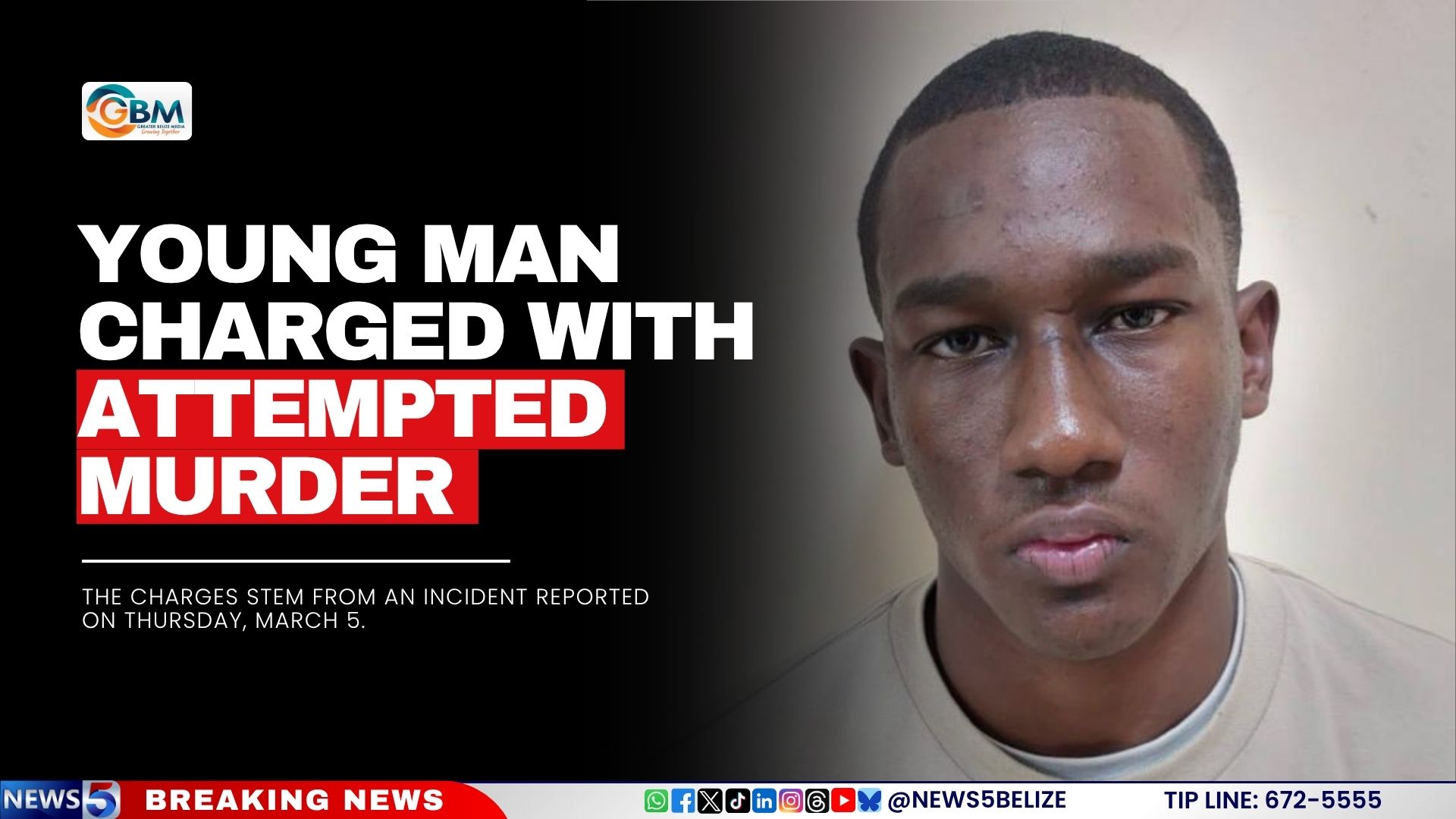
    Nearly two months after a late-night shooting left a 26-year-old man wounded in Belize City, law enforcement officials have formally filed attempted murder charges against an 18-year-old local resident tied to the incident.

    The accused, identified as James Saldano, a resident of Belize City, faces three total criminal counts in connection with the attack: attempted murder, use of deadly means of harm, and grievous harm. The charges were announced by Belizean police on April 21, 2026.

    The violent incident that sparked the charges unfolded on the evening of Thursday, March 5. Just after 11:30 p.m. that night, first responders from the Belize Police Department were dispatched to Karl Heusner Memorial Hospital, where the victim, 26-year-old Tyrel Andrewin, was already receiving treatment for multiple gunshot wounds.

    In a formal statement to investigators following the attack, Andrewin detailed the circumstances of the shooting. He told officers he was sitting inside a parked Hyundai sedan on Plues Street when another vehicle, part of a multi-car caravan, pulled up alongside his car. According to Andrewin’s account, a passenger from that approaching vehicle drew a firearm and fired multiple shots directly toward him, inflicting the injuries that led to his hospital visit.

    As of the announcement of the charges, police have not released additional details about a possible motive for the attack, nor have they indicated whether other suspects are being sought in connection with the shooting. The case remains an active investigation as legal proceedings against Saldano move forward.