
The submission provided for news processing only contains social media sharing prompts, an image link, and no core journalistic text that describes the event, background, or key information of a report. Without the main body of the original news content, it is impossible to conduct a complete analysis, in-depth rewriting, or accurate contextual framing of a specific news event. This incomplete input fails to provide the fundamental information required to meet the news processing and rewriting objectives outlined in the requirements.
作者: admin
-

Blackheart shifts to U20 format, with $60,000 up for grabs
For nearly three decades, the Blackheart Football Tournament has stood as a cornerstone of senior-level competitive football across Saint Lucia. But in a landmark break from its 29-year history, the 2026 edition of the tournament will welcome only under-20 players, marking a transformative pivot designed to grow the next generation of football stars on the Caribbean island.
Organized by tournament sponsor Blackheart, the format change responds to a critical unmet need in Saint Lucia’s local football ecosystem. Since the tournament launched as a senior competition back in 1997, grassroots youth football has long lacked the structured support and high-profile showcase opportunities available to established senior players. For Blackheart Chief Executive Officer David “Shakes” Christopher, the decision to restructure the tournament was not just a change of rules—it was a necessary investment in the future of the island’s sport.
“Youth athletes have far more foundational needs than senior players who have already built their careers,” Christopher explained in comments ahead of the tournament kickoff. “Young players need dedicated support systems to grow, and that’s exactly what this new format is designed to deliver.”
This year’s restructured tournament has also raised the bar for incentive, offering a total prize pool of $60,000 to competing teams. The breakdown of rewards allocates $30,000 to the first-place squad, $15,000 to runners-up, $10,000 to the third-place team, and $5,000 to the fourth-place finisher. All prize winnings are earmarked to further ongoing youth football development initiatives across the island, extending the event’s impact far beyond the final whistle.
Yet for Christopher, the value of the new under-20 format extends well beyond the financial rewards on offer. Organizers have already held preliminary discussions to create clear development pathways for standout participating teams and players, including opportunities to compete in higher-profile regional tournaments—most notably competitive events hosted in Guyana.
“This isn’t just about taking home a cash prize,” Christopher noted. “Young players get the chance to go up against top regional talent in Guyana, test their skills against some of the best young players in the area. That opportunity to take a small first step and turn it into a big leap in their career is the real reward here. It gives them a foothold to grow that they wouldn’t get anywhere else.”
For local football fans eager to see the new format in action, the event will officially get underway with a pre-tournament warm-up festival on May 1 at the popular Marchand Grounds venue. Following the opening celebration, round-robin and knockout fixtures are scheduled to run from May 16 through to the final championship match on June 20, giving weeks of high-stakes youth football action for supporters across the country.
-
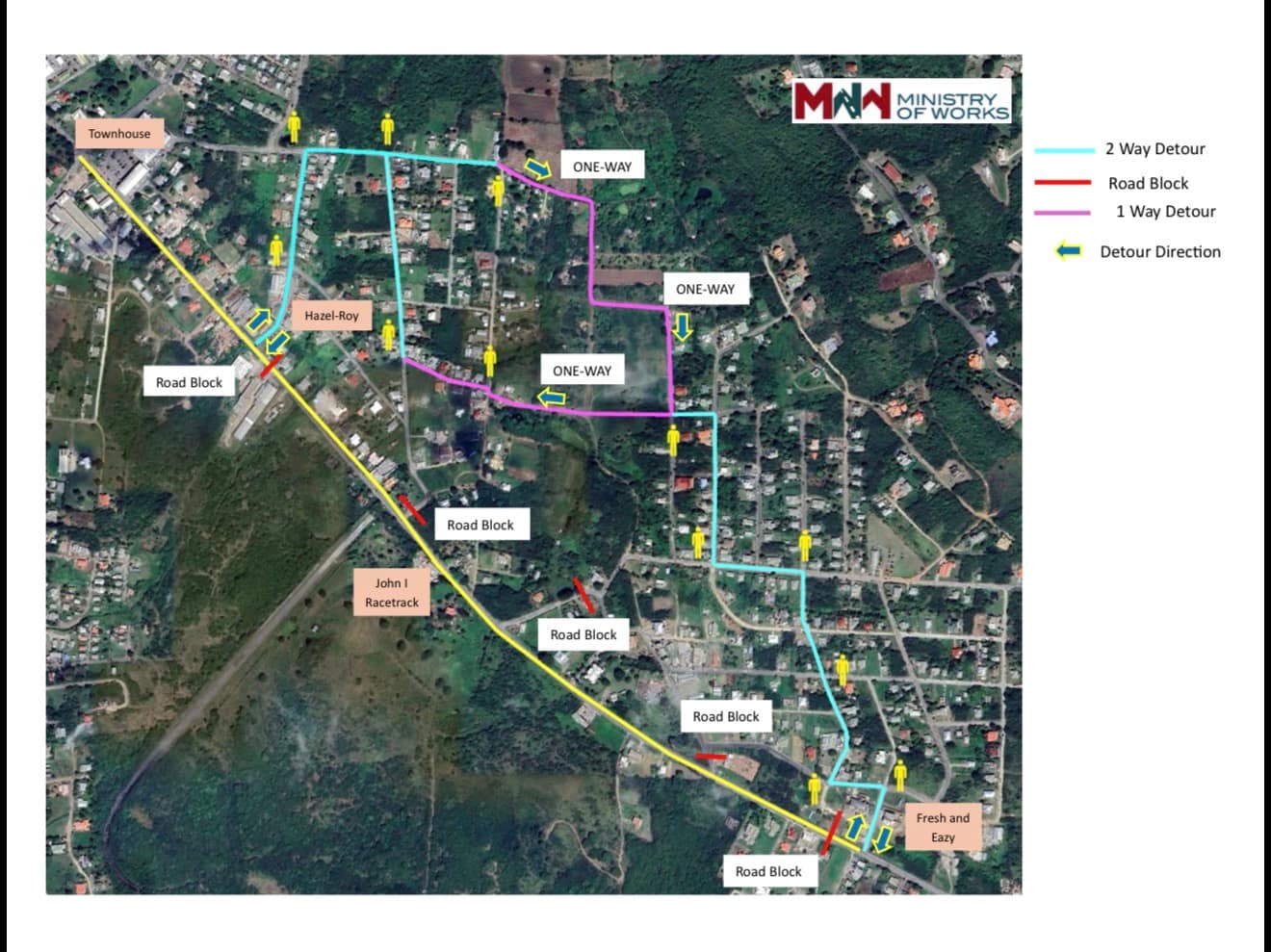
NOTICE: Works at FADI Building Supplies and Eazy Supermarket
The Ministry of Works of Antigua and Barbuda has issued an official public advisory announcing the resumption of major infrastructure rehabilitation works on a key section of All Saints Road, stretching from FADI Building Supplies to Fresh and Eazy Supermarket. The overnight construction and associated traffic detour will go into effect starting at 7:00 p.m. on Wednesday, April 22, 2026, and will conclude by 7:00 a.m. the following morning.
To accommodate the construction activities, traffic management measures have been put in place for both outbound and inbound commuters. For motorists traveling out of town, drivers are required to make a left turn at the Hazelroy’s intersection on All Saints Road before following the marked detour route outlined on official project maps. For those heading into town, the detour requires a right turn at the Fresh and Eazy Supermarket junction, then continuing along the pre-approved marked path.
On-site traffic controllers, also referred to as flag persons, will be stationed throughout the detour zone to help direct vehicle flow and reduce congestion. Commuters are advised that specific segments of the alternate route are designated as one-way traffic zones, consistent with markings on the official project map. Clear directional signage has been installed along the entire detour to guide drivers traveling in both directions.
In light of heavy-duty construction equipment operating in close proximity to the work zone, transportation authorities strongly urge all motorists to comply fully with on-site instructions and posted signage to maintain safe passage for all road users. Crucially, the advisory confirms that all local businesses along the affected stretch of road will remain open for regular operations throughout the construction period.
This infrastructure upgrade forms part of the broader All Saints Road Project, a government-led initiative aimed at improving the island’s transportation network. Project coordinators are asking all local residents, commuters and business stakeholders to proactively adjust their travel schedules ahead of time to account for potential minor delays during the overnight work window.
Any members of the public with questions about the road works or detour arrangements can contact the Project Implementation Management Unit directly via telephone at 562-9173 for further information.
-
Caribisch gebied moet zich klaarstomen voor drogere, warmere jaren
As a powerful El Niño weather pattern develops across the Pacific basin, regional climate scientists are sounding an urgent alarm: the entire Caribbean must accelerate preparations for an extended stretch of hotter, drier conditions spanning 2026 and 2027. The joint warning comes from two leading regional climate research bodies, the Caribbean Institute of Meteorology and Hydrology (CIMH) and the Climate Studies Group Mona at the University of the West Indies (UWI CSGM), which outline that the shifting climate conditions triggered by El Niño will carry far-reaching, serious risks for water access, agricultural production, public health, and the regional economy.
Cedric Van Meerbeeck, a senior climatologist at CIMH, explained that El Niño will almost certainly drive extended periods of below-average rainfall paired with increasingly oppressive, humid heat across the Caribbean. This combination amplifies the likelihood of multiple overlapping extreme events: severe droughts, long-lasting heatwaves, increased wildfire risk, and marine heatwaves that can trigger widespread coral bleaching across the region’s fragile reef ecosystems. Historical precedent underscores the severity of these risks: past major El Niño events, including the 2009-2010 and 2014-2016 cycles, brought crippling drought and record-breaking extreme heat that caused widespread damage to local ecosystems and disrupted daily life for communities across the region.
The potential impacts of the coming El Niño are broad and interconnected, cutting across every core sector of Caribbean societies. The agricultural industry, which relies on consistent rainfall and stable temperatures to maintain output, faces a high risk of significant production losses that threaten regional food security. Water and energy infrastructure will also come under intense strain: demand for electricity for cooling will surge, while many Caribbean nations rely heavily on hydropower or freshwater for energy generation, creating a supply-demand gap that could lead to widespread outages. Public health risks are also projected to rise, with deteriorating water quality, increased transmission of vector-borne diseases, and a spike in heat-related illnesses putting additional pressure on local healthcare systems.
Professor Michael Taylor, leading researcher at UWI CSGM, emphasized that the Caribbean is now facing what he calls a “multi-hazard regime”, where heat, drought, and marine stressors interact and amplify one another, creating risks greater than the sum of their individual parts. Addressing these interconnected threats requires an integrated, cross-sector coordinated response and strengthened collaborative action across all national and regional stakeholders, he added.
From an economic perspective, the coming El Niño is also expected to disrupt three core pillars of the Caribbean economy: tourism, commercial fishing, and maritime shipping. Global climate-driven disruptions could throw regional trade and supply chains off balance, driving up costs for consumers across the Caribbean. A recent example of this vulnerability already played out on the global stage: severe drought disrupted operations at the Panama Canal, a critical transport artery for goods moving through the Caribbean and along the U.S. East Coast, highlighting the far-reaching ripple effects of water scarcity in the region.
To address these growing risks, climate experts are calling on national governments, private sector businesses, agricultural producers, and local households to take the projected threats seriously and begin proactive preparation measures immediately. Forecasters note that El Niño projections typically gain significant accuracy starting in May 2026, giving stakeholders a narrow window to act before conditions begin to worsen. Later that month, CIMH will host the annual Caribbean Climate Outlook Forum (CariCOF) during the week of May 24, where regional climate scientists will share updated projections and guidance with national and international stakeholders, ahead of the coming wet and Atlantic hurricane seasons.
David Farrell, Director of CIMH, stressed that timely, actionable climate data is the foundation of effective decision-making to reduce disaster risk. He highlighted the strategic expansion of CIMH’s services focused on water resource management, marine ecosystem monitoring, and Earth observation, all of which are helping to strengthen regional early warning systems for extreme weather. “Proactive measures are absolutely essential to reduce the impact of extreme weather events on vulnerable sectors and communities across the Caribbean,” Farrell said.
Farrell added that strengthening early warning infrastructure and expanding public access to clear, timely climate information are critical to boosting the region’s overall resilience to a changing climate and increasingly frequent extreme weather events. CIMH currently works in close partnership with national governments across the Caribbean and international development partners to advance these resilience-building efforts.
-

Manhood Series Seminar 2026 launches “RISE UP” initiative in Dominica
A targeted new community development program is set to roll out in Roseau next month, as the 2026 Manhood Series prepares to launch its ‘RISE UP’ initiative – a pair of complementary events designed to foster purpose-driven masculinity, strengthen family structures, and build stronger local communities.
The first of the two events, which shares the initiative’s name ‘Manhood Series Seminar 2026 – RISE UP’, is scheduled for Saturday, April 25, running from 9:00 AM to 3:00 PM at the UWI Open Campus Roseau location. Tailored specifically for young male participants, the day-long seminar will center on three critical core themes: nurturing mental wellness and personal clarity, building effective leadership skills both within family units and broader society, and cultivating the ability to deliver intentional performance even when facing high-stakes pressure.
Program organizers note that the seminar is crafted to push attendees to confront common societal challenges that hold many young men back, encouraging them to reject limiting narratives and adopt a framework of disciplined, purpose-centered manhood that serves both themselves and their communities.
A week and a half later, on Saturday, May 2, the series will host its second complementary event: the Parent Support Seminar – Manhood Series 2026 (Vol. 3), also held at the UWI Open Campus Roseau site during the same 9:00 AM to 3:00 PM time window. Helmed by Dr. Kevin Laurent, this session is focused on the adults who shape young men’s development: it is open to all parents, legal guardians, and caregivers of any gender, and will deliver actionable, practical strategies to help adults raise disciplined, self-assured young men, strengthen parental leadership within the home, and navigate the unique complex challenges that define modern parenting in the 2020s.
Taken together, the two seminars form a core part of a larger community movement to strengthen local families and collective community well-being by investing in two interconnected pillars: the development of young men themselves, and the support systems that guide their growth. Organizers have stressed that independent media coverage will be a critical component of the initiative’s success, helping to spread its core message and open up inclusive national conversation around three underdiscussed topics: effective community leadership, healthy modern masculinity, and intentional parenting.
-

Environmental Groups Reject Port Expansion
In a high-stakes clash over coastal development and conservation, a coalition of environmental organizations has pushed back against the conditional greenlighting of a major expansion project at the Port of Belize, raising urgent alarms about unaddressed ecological and regulatory threats.
Earlier this April 2026, the National Environmental Appraisal Committee (NEAC) voted to approve Port of Belize Limited’s dual Cargo Expansion and Cruise Port Development initiative, attaching a strict set of performance requirements to the green light. Just 24 hours ahead of NEAC’s decision, the Belize Coalition to Save Our Natural Heritage — an alliance of multiple leading environmental groups — submitted a formal letter to NEAC Chair Milagro Matus demanding the cruise port portion of the project be scrapped entirely.
The coalition emphasizes that even the updated 2026 Environmental Impact Assessment (EIA) submitted by the developer fails to resolve major environmental and policy vulnerabilities that put Belize’s coastal ecosystems at risk. Regulators have centered their approval conditions on rigorous oversight of core high-risk activities: strict limits on dredging operations, mandatory protocols for sediment handling, enforceable pollution reduction measures, and ongoing long-term monitoring of the artificial mangrove island planned to hold dredge disposal material. Following NEAC’s announcement, the Belize Department of the Environment clarified that the developer will be required to submit a formal Environmental Compliance Plan before work can begin, and a joint inter-agency enforcement team will be deployed to conduct continuous on-site checks throughout construction.
At the top of the coalition’s list of objections is the proposal to build an artificial mangrove island in the Sibun Bight using material excavated during dredging. Activists point out that critical geotechnical and structural stability surveys for the island have not yet been completed. Without this core data, there is no verifiable evidence that the artificial island can withstand extreme weather events, accelerating sea-level rise driven by climate change, and constant coastal wave action. The coalition argues that all developer claims about the project’s long-term resilience remain unproven and purely speculative without this foundational research.
The group’s letter also flags additional cumulative pollution risks that have been underaddressed in the project’s assessment. These include existing and new pollution loads from discharge produced by Belize Water Services’ settling ponds, as well as ongoing air and noise pollution generated by frequent cruise ship dockings in Belize City. The combined impact of these multiple pollution sources, activists warn, could cause lasting harm to local marine habitats and coastal communities that depend on a healthy ecosystem for tourism and fishing.
Full additional details on the coalition’s opposition and the project’s path forward are set to be shared during News 5 Live’s 6 p.m. broadcast.
-
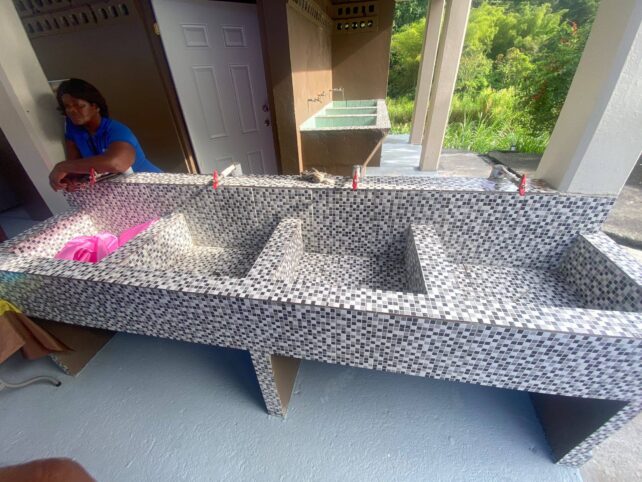
Community hygiene at Silver Lake receives boost with rehabilitation of washroom facility
The small, close-knit community of Silver Lake in Roseau, Dominica, is celebrating a long-awaited upgrade to its core public infrastructure: a fully rehabilitated public washroom facility, delivered at a total project cost of over EC$33,000. The transformative project was spearheaded by a collaborative partnership between the Rotary Club of Dominica and the Community Policing Team of the Commonwealth of Dominica Police Force, turning a crumbling, decades-old facility into a modern, hygienic public space built to serve local families for generations, according to an official statement released by the Rotary Club.
First constructed in 1982, the original washroom had suffered from decades of wear and tear, leaving it badly in need of comprehensive renovations long before the project broke ground. The successful restoration is more than just an infrastructure upgrade—it reflects a shared commitment among partnering organizations to lifting quality of life, upholding public dignity, and advancing community health in one of Roseau’s most active neighborhoods. Last Thursday, community members, senior government officials, and police representatives gathered for an official handover ceremony to mark the completion of the milestone project.
During the ceremony, Honourable Rayburn Blackmoore, Dominica’s Minister for National Security and Legal Affairs, commended the cross-sector collaboration as a blueprint for effective civic action. “This is exactly how partnerships between civil society and public institutions should work—delivering real, tangible improvements that directly benefit everyday citizens,” Blackmoore remarked. Honourable Chekira Lockhart-Hypolite, Parliamentary Representative for Roseau South, echoed that praise, emphasizing that strategic investments in local community infrastructure lay the foundation for stronger, more resilient neighborhoods. Police Commissioner Lincoln Corbette also reaffirmed the Dominica Police Force’s ongoing commitment to rolling out community-centered public safety and development initiatives across the island.
Rotary Club of Dominica’s President expanded on the deeper meaning of the project beyond construction work. “This is not just a project of bricks and mortar. This rehabilitation is about restoring dignity, protecting public health, and nurturing shared community pride for every resident of Silver Lake,” the President said.
The handover event saw high turnout from local residents, many of whom shared open gratitude for the much-needed upgrade to a public amenity they use daily. Attendees also noted that the project aligns perfectly with the decades-long public service mission of the Rotary Club of Dominica, which has operated continuously since it received its official charter in 1974. The club forms part of Rotary International District 7030, a regional network that stretches across the Caribbean from St. Kitts to Suriname, uniting more than 3,200 Rotarians across 75 local member clubs all committed to community development work.
With the revamped washroom now open and operational, Silver Lake residents are set to enjoy cleaner, safer, and more dignified living conditions. The successful outcome of the project stands as a powerful reminder of what can be accomplished when civil society organizations and public institutions work together toward a shared community goal. Those seeking additional information on the Rotary Club of Dominica and its ongoing projects can visit the organization’s official website at www.rotary-dominica.org.
-

“This is the Place for You”: Belize Book Fair Calls on All Readers & Writers
As nations around the globe prepare to mark World Book and Copyright Week, Belize has stepped forward with a vibrant two-day literary gathering designed to nurture the country’s reading culture and lift up homegrown creative voices. Scheduled to run across Wednesday and Thursday, the 2026 Belize Book Fair is being organized by the Belize Book Sector Network, and is being hosted at the iconic House of Culture in the heart of Belize City.
For attendees, the event offers far more than a simple display of printed works. Visitors will have the chance to browse a curated, extensive collection of publications created entirely by Belizean writers and creators, schedule one-on-one meetings with the authors behind their favorite books, and participate in a series of structured panel conversations covering three critical topics for the local literary ecosystem: expanding access to literacy, growing the domestic publishing industry, and strengthening copyright protections for local creators.
Panel sessions kicked off on the morning of the first day, wrapping up the first day’s programming at 3 p.m., with all discussion and exhibition activities continuing through the second day of the fair. In opening comments, Felene Cayetano, president of the Belize Book Sector Network, highlighted the steady growth the book fair has experienced since its launch, noting that this year’s iteration benefits from a more streamlined, expansive, and well-organized programming schedule than any previous edition.
Cayetano emphasized that the fair is intentionally designed to welcome a wide cross-section of attendees, not just dedicated published authors or lifelong book enthusiasts. From casual readers who pick up a book a few times a year to emerging writers still honing their craft, and even small business owners looking to break into the publishing industry, all community members are encouraged to attend. “This is the place for you,” Cayetano said, extending an open invitation to all Belizeans with an interest in the written word.
-

Why Was Corozal Man Murdered?
A violent fatal shooting has shaken the quiet community of Corozal Town, leaving local resident Santos Antonio Escobar, 55, dead and law enforcement officials working to uncover the circumstances behind the killing that unfolded on a Tuesday evening.
The incident took place in the Rainbow Town neighborhood, specifically along 5th Street North, shortly after 8:30 p.m. Multiple residents in the area told local authorities they heard more than 18 rounds of gunfire ring out in the residential block. In the immediate moments after the shooting, witnesses spotted a white vehicle moving slowly away from the crime scene, a detail that has become a key early lead for investigating officers.
Preliminary accounts of the attack outline a sudden, public act of violence: Escobar had only just returned to his home from Belmopan, and was gathered outside his residence catching up with family members when an unidentified male suspect approached the group. Before bystanders could react, the suspect opened fire on Escobar, inflicting multiple life-threatening gunshot wounds.
In a frantic attempt to save his father’s life, Escobar’s son immediately drove the injured man to the nearest medical facility, Corozal Community Hospital. Despite the rapid response to get him care, medical staff at the hospital confirmed Escobar was pronounced dead shortly after his arrival.
As of the latest update, law enforcement officials have not released any confirmed information about a potential motive for the killing. Investigators are currently working through witness statements, examining physical evidence collected from the crime scene, and following up on tips from community members to identify the shooter and determine why the attack was carried out. Local residents have been urged to contact police with any additional information that could assist the ongoing investigation.
-
More Support for vulnerable families, elderly and disabled
During the recent presentation of the 2026/2027 national budget to the House of Assembly, Prime Minister Philip J. Pierre of Saint Lucia has outlined a bold, equity-centered package of social protection and inclusion measures designed to uplift vulnerable populations, curb violent crime, and drive inclusive national development through targeted public investment.
Reaffirming the administration’s core commitment to closing social gaps and ensuring full participation for all members of Saint Lucian society, Pierre’s budget combines expansions to existing support programs with a slate of new, community-focused initiatives addressing longstanding social challenges.
A centerpiece of the new plan is the Public Assistance Programme (PAP), a targeted cash transfer scheme that currently delivers critical financial support to roughly 3,500 low-income households across the island. To maintain the program’s effectiveness and ensure support reaches those who need it most, the Ministry of Equity has launched a comprehensive eligibility review, updating beneficiary rolls to reflect changing community needs.
Public safety, particularly the prevention of crime and violence among at-risk young people, is another top priority outlined in the budget. Working in cross-sector partnership with the Saint Lucia Social Development Fund, local non-governmental organizations, and faith-based community groups, the Ministry of Equity is developing grassroots interventions that go beyond traditional law enforcement to address the root causes of criminal involvement, especially among young men. As part of this strategy, the government will revive neighborhood youth and sports clubs to give young people structured, positive after-school outlets that reduce the likelihood of antisocial behavior.
Addressing the ongoing crisis of gun violence that has disrupted communities across the island, Pierre acknowledged the severe harm the issue has inflicted on Saint Lucian society. To counter the trend, the government will ramp up targeted, community-embedded public safety efforts, coordinating closely with community policing units and partner organizations to prevent violence and support at-risk neighborhoods.
The budget also places new focus on supporting aging populations through the development of a so-called “silver economy” and expanded elder care infrastructure. The Ministry of Equity and Ministry of Health are nearing completion of a new residential elder care facility in Soufrière, and will expand training for healthcare workers to better manage age-related conditions such as dementia. Additional funding will also be directed to organizations supporting people living with Alzheimer’s and other neurodegenerative conditions.
A series of legislative reforms are also on the agenda to align national laws with modern equity standards. The government will conduct a review of existing legislation governing the age of sexual consent and the legal definition of childhood to create more consistent, protective frameworks. Planned updates to the Adoption Act will also streamline the adoption process and make it more inclusive, particularly for prospective parents living with disabilities.
A landmark development highlighted by Pierre is the upcoming national rollout of the National Disability Registry, a new centralized database that will generate reliable, disaggregated data to inform more equitable policy design, improve social service delivery, and guide inclusive national budgeting. Work is also ongoing to update national disability legislation to bring it in line with international human rights standards, advancing goals of equality, dignity, and accessibility for disabled Saint Lucians. Other upcoming priorities for the financial year include establishing a dedicated accessible government department for people with disabilities and expanding core social protection services across the island.
To fund this expanded social agenda, the government has increased total social investment allocations from $7.5 million in the 2025/2026 fiscal cycle to $9 million for 2026/2027, representing a 19.3 percent budget increase. Pierre emphasized that this uplift reflects the administration’s growing commitment to centering social investment and community support in national planning. Thirty-eight percent of the total social budget will be directed to the Department of Equity, with a large portion earmarked for operational support at elder care facilities including the Marian Home and the St Lucia Home.
Additional funding will also flow to key cultural and national heritage institutions, including the Saint Lucia National Trust and the National Archives, to preserve national identity and expand public access to the country’s cultural heritage. In the justice sector, sustained support for the Legal Aid Authority will guarantee that low-income residents retain fair, equal access to legal recourse.
Youth and sports organizations, including local youth and sports councils, the Saint Lucia Cadet Corps, and the national Scout movement, will also receive expanded resourcing as part of the government’s strategy. Pierre framed this investment as a deliberate effort to strengthen the core social fabric that binds Saint Lucian communities together, laying the groundwork for long-term, inclusive national growth.