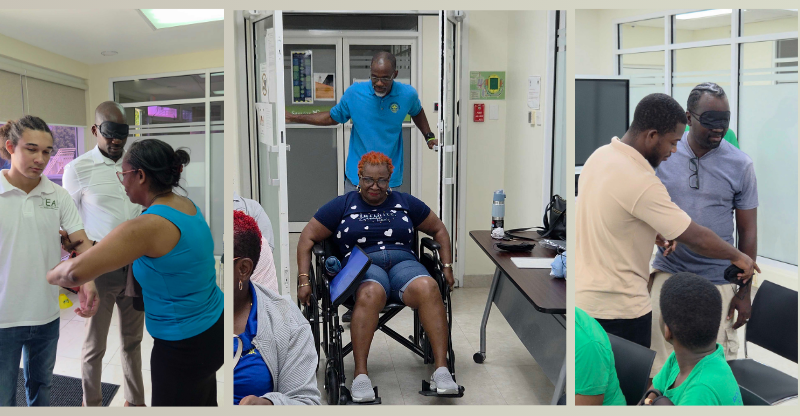
At a specialized inclusive leadership training held Saturday at Barbados’ Usain Bolt Sports Complex, Human Rights Commissioner Kerry Ann Ifill delivered a compelling call to action for the island nation’s Boy Scout leaders, challenging them to move beyond outdated frameworks of managing physical limitations and build a culture of intentional, daily social inclusion for people living with disabilities.
Opening her address to participating scout leaders, Ifill emphasized a core truth that is often overlooked in mainstream conversations about accessibility: people with disabilities hold the same core dreams, skills, and ambitions as every other member of society. To help attendees understand the lived experience of disability, the training included an immersive simulation exercise: some participants navigated the space blindfolded to mimic visual impairment, others used wheelchairs to experience mobility restriction, and a third group wore earplugs to limit auditory input. Reflecting on the activity afterward, Ifill was clear that these temporary, controlled scenarios can never fully capture the nuance, complexity, and daily barriers that come with living with a disability long-term.
Ifill pushed back against the common harmful habit of defining people solely by their physical challenges, arguing that disabled people deserve to be recognized first for their full identity and citizenship. Speaking from personal experience, she shared: “I’m not just a blind person. I’m not just a woman with a disability. I’m a woman too, with the same needs, wants, desires, abilities, capacities, and capabilities as the rest of the women in this room. I’m a citizen of Barbados, just like all of the rest of you.”
To ground her argument in a tangible example, Ifill told attendees that she would be sworn in that same evening as the new president of her Rotary Club at a formal installation dinner held at Savannah Beach Hotel. She recounted a light-hearted but revealing anecdote from that morning: she had turned to an artificial intelligence assistant to learn what the traditional presidential regalia collar looks like, because no one in the club had thought to describe it to her in accessible terms. The moment, she noted, demonstrates that even well-meaning, supportive communities can unintentionally overlook the unique accessibility needs of disabled members.
Against the backdrop of Barbados’ shifting demographic landscape – marked by a rapidly aging population and high rates of chronic non-communicable diseases, many of which lead to long-term physical impairment – Ifill warned that disability will eventually touch nearly every household and individual across the country. She urged scout leaders to embed inclusive values into youth programming, teaching young scouts to welcome, adapt to, and celebrate difference rather than framing disability as an unbeatable barrier to participation.
Before closing, Ifill praised the assembled scout leaders for their commitment to this work, noting that the inclusive training program itself is a critical step toward broader societal change. “The work that you do through this project is change-making,” she said.