作者: admin

  • CCC loses High Court Challenge To Reinstated Teacher

    CCC loses High Court Challenge To Reinstated Teacher

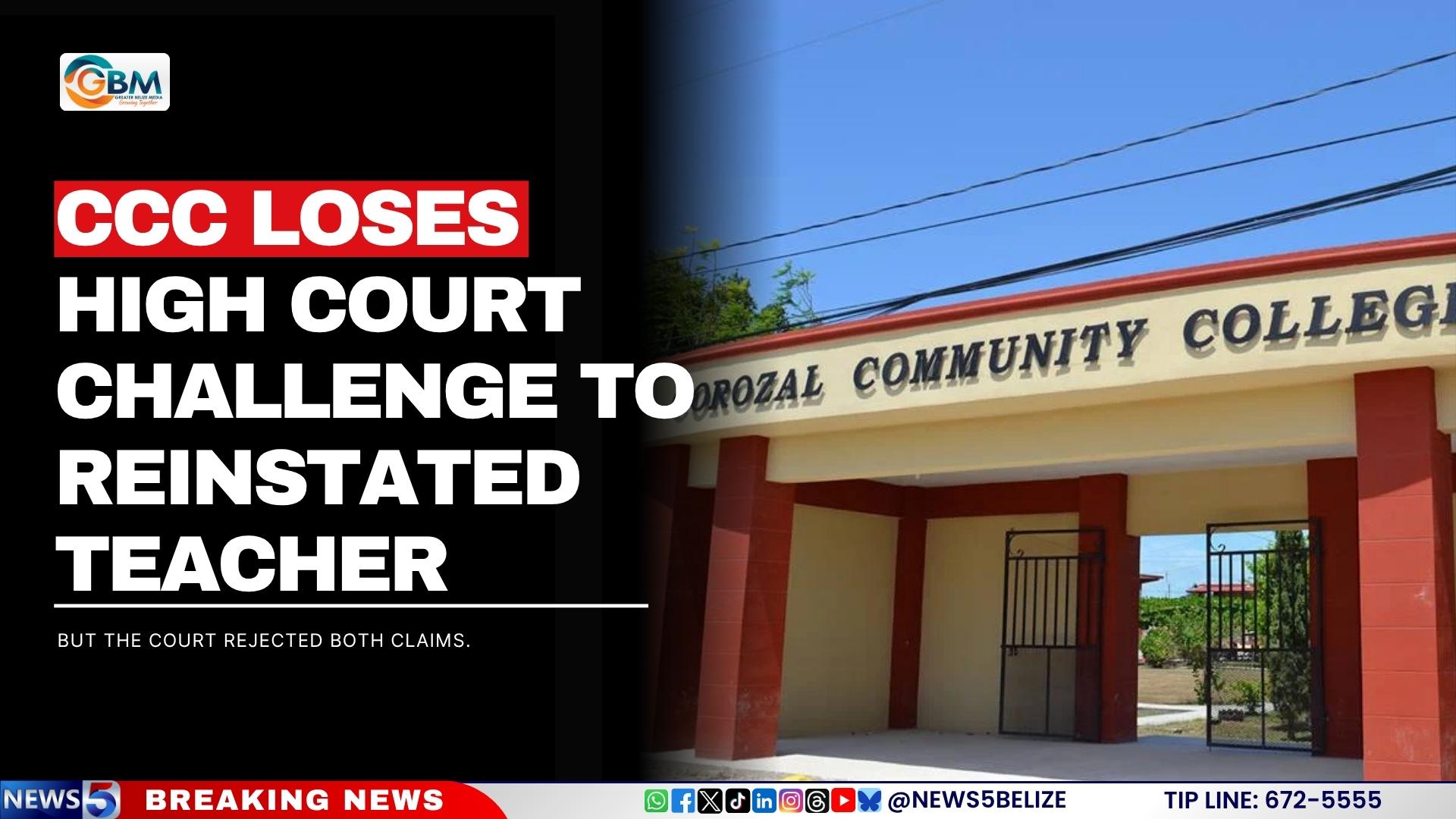
    In a landmark ruling delivered in late March 2026, the Belizean High Court has thrown out a legal challenge launched by Corozal Community College (CCC) seeking to overturn a disciplinary tribunal’s decision that reduced a teacher’s penalty from dismissal to a lesser sanction. The outcome leaves the teacher’s reinstatement firmly in place, and has set clear new guidance on the legal standing of unincorporated educational institutions in domestic litigation.

    The case stems from a 2025 disciplinary action against Renan Ruiz, a teacher at CCC who was originally fired by the Belize Teaching Service Commission following a finding that he sent inappropriate messages to minor students during out-of-school hours. Ruiz appealed the dismissal to the Teaching Service Appeals Tribunal (TSAT), which in September 2025 revised the penalty. While the tribunal explicitly confirmed that Ruiz’s conduct was unacceptable and violated professional teaching standards, it ruled that permanent termination was an excessively harsh punishment. Instead, TSAT imposed a penalty of one and a half months’ lost pay and required Ruiz to complete mandatory professional counselling, clearing the way for his return to the classroom.

    Unwilling to accept the tribunal’s ruling, CCC launched a judicial review challenge, bringing the case before High Court Justice Rajiv Goonetilleke. The college based its challenge on two core legal arguments: first, that TSAT had acted irrationally by slashing the original dismissal penalty, and second, that Ruiz’s initial appeal to the tribunal contained fatal procedural errors that should have invalidated his case entirely.

    Justice Goonetilleke rejected both of CCC’s claims out of hand after hearing arguments in the case on March 18 and 20, 2026. On the allegation of irrationality, the justice ruled that the tribunal’s reasoning was legally sound and fell well within the discretionary authority granted to TSAT under education law. “The tribunal’s view cannot be said to be so unreasonable as to be irrational,” Goonetilleke wrote in his formal judgment, noting that the panel had carefully weighed the circumstances of the case and properly evaluated whether a lesser penalty aligned with the severity of Ruiz’s misconduct.

    The court also dismissed CCC’s procedural argument, which claimed Ruiz had filed his appeal outside the required 30-day window and that discrepancies on his appeal form invalidated the submission. Evidence presented during the hearing confirmed that Ruiz submitted all required documentation within the statutory deadline after receiving formal notice of his dismissal. Discrepancies between different copies of the appeal form were fully explained to the court, and the explanation was deemed credible, with no finding of procedural irregularity recorded in the judgment.

    Beyond rejecting the college’s substantive arguments, the ruling also addressed a foundational legal issue: CCC’s status as an unincorporated educational institution. The court confirmed that as an unincorporated body, CCC holds no separate legal personality, meaning it does not have the legal standing to bring or defend lawsuits in its own official name. While Justice Goonetilleke noted that this finding was not strictly required to dismiss the challenge, he relied on a 2024 Court of Appeal precedent involving the Claver College Extension to address the issue when ruling on litigation costs.

    The judge further found that CCC had failed to comply with mandatory procedural rules for bringing a representative action on behalf of its staff and governing body. As a result of the dismissed application, the court ordered CCC to pay all litigation costs awarded to Ruiz, and granted nominal costs of $1,000 to the Teaching Service Appeals Tribunal. In a key final provision, the court ruled that if CCC fails to satisfy the cost award, Ayonie Briceno — the individual who submitted the supporting affidavit for CCC’s challenge — can be held personally liable for the unpaid amount.

  • U.S. Nominates New Ambassador to Belize; Senate Confirmation Pending

    U.S. Nominates New Ambassador to Belize; Senate Confirmation Pending

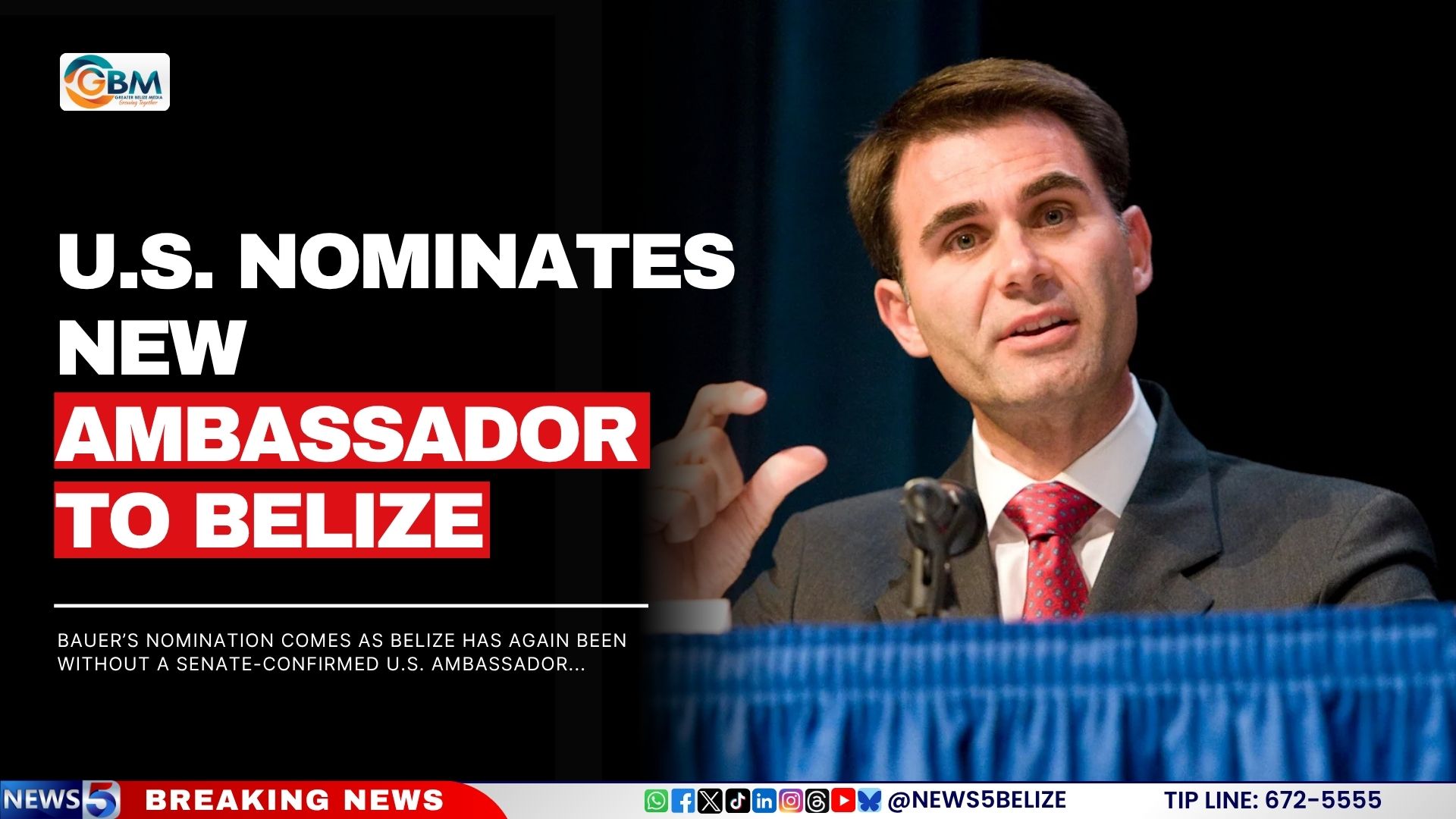
    A new chapter in U.S.-Belize diplomatic relations is set to unfold after the White House officially announced the nomination of Rudolph Bauer, a native of South Carolina, to the post of Ambassador Extraordinary and Plenipotentiary of the United States to Belize, according to official public records from Washington. The nomination document has already been transmitted to the U.S. Senate, where it will enter a mandatory review and approval process that includes committee hearings and a full chamber vote before the appointment can take effect.

    Under long-standing U.S. federal law governing ambassadorial appointments, all presidential nominees for top diplomatic posts are first routed to the Senate Foreign Relations Committee. The panel conducts thorough evaluations of the nominee’s professional background, policy expertise, and qualifications for the role before advancing the nomination to the entire Senate for a final up-or-down vote. Bauer can only be sworn in and take up his official duties at the U.S. Embassy in Belmopan, Belize’s capital, if he secures a majority confirmation vote from the full Senate.

    Bauer’s nomination fills a long-running vacancy that has left Belize without a permanent, Senate-confirmed U.S. ambassador for months. Since the last confirmed envoy departed the post, all diplomatic operations at the U.S. Embassy in Belmopan have been overseen by an interim Chargé d’Affaires, a temporary appointment that is common during prolonged gaps in confirmed leadership.

    A review of recent U.S. diplomatic history in Belize reveals that such gaps in permanent ambassadorial representation have become an intermittent pattern. The last confirmed U.S. ambassador to Belize was renowned figure skater and public figure Michelle Kwan, who held the post from December 2022 until her departure in January 2025. Before Kwan, Carlos Moreno served in the role from 2014 to 2017, and Vinai Thummalapally held the appointment between 2009 and 2013. Following Moreno’s exit in 2017, the country entered an extended stretch without a confirmed ambassador, and this pattern of intermittent vacancies has continued in the years since.

  • MTW to remove unauthorised billboards on highways

    MTW to remove unauthorised billboards on highways

    Barbados’ Ministry of Transport and Works (MTW) has launched a crackdown on unregulated outdoor advertising cluttering public road infrastructure, announcing a mandatory removal order for unauthorized billboards and sidewalk sandwich boards that have increasingly appeared along local highways in recent months.

    Jason Bowen, MTW’s Deputy Chief Technical Officer for Design Services, confirmed in an official statement that ministry authorities have been monitoring the spread of these unpermitted advertising structures across public right-of-way areas. The ministry is now giving business owners a 30-day window to voluntarily take down any unauthorized advertising materials placed on sidewalks, traffic islands, road verges, official road signs, and other public street furniture. Only advertising structures that have received prior formal approval from MTW will be allowed to remain in place.

    The enforcement action is backed by existing national legislation: Section 13 of the Highway Act, Chapter 289, explicitly grants MTW’s Chief Technical Officer the legal authority to remove and dispose of any object or material intentionally placed on any highway in Barbados without proper authorization. Business owners that fail to comply with the voluntary removal order will not only face financial penalties but also be held responsible for covering all costs associated with the ministry’s enforced removal.

    MTW has also issued guidance for businesses seeking to use sandwich boards and similar small-format advertising materials. The ministry advises all operators to only place such advertising on private land after securing approval from property owners, and strictly avoid placing any commercial signage on public road-related property to prevent running afoul of the Highway Act. This crackdown comes as part of the ministry’s ongoing efforts to maintain clear, safe road infrastructure and reduce visual clutter that can distract drivers and block pedestrian pathways.

  • Update on Public Service regularisation and wage negotiations

    Update on Public Service regularisation and wage negotiations

    On April 22, the Government of Grenada released a comprehensive public update on two cornerstone initiatives of its public sector transformation agenda: the ongoing public service employment regularisation exercise and multi-year wage negotiations with major public sector unions. The administration reaffirmed its commitment to guiding all processes through the core principles of fairness, full transparency, and long-term fiscal and institutional sustainability.

    ### Steady Advancement in Public Service Regularisation
    Launched to resolve decades of unaddressed employment irregularities across the public sector and strengthen formal job security for public servants, the regularisation programme has recorded substantial measurable progress as of March 31, 2026. To date, 1,240 public officers have completed the transition to formal, regularised employment roles. This milestone includes 410 regularised teaching positions, 286 confirmed appointments for frontline public workers across critical sectors including law enforcement, correctional services, nursing and other core public services. The government has also established 537 entirely new mission-critical positions to fill long-standing gaps in public service delivery and recognise roles that were previously unbudgeted or unformalised.

    Additional outcomes of the ongoing initiative include the transition of 80 public service trainees into full-time formal employment, 132 targeted salary upgrades to resolve long-standing pay stagnation for undercompensated workers, and interim placement arrangements for 232 employees pending the final approval and establishment of their formal mission-critical roles. Government officials noted that the structured regularisation process is designed to embed greater equity, consistent employment standards, and long-term workforce stability across the entire public sector.

    ### Update on Multi-Year Wage Negotiations With Unions
    The government’s national negotiating team has maintained consistent, active engagement with public sector unions since collective bargaining launched in October 2024. While the administration has already reached finalized wage agreements with several smaller collective bargaining units, discussions remain ongoing with the Grenada Public Workers’ Union (GPWU) and the Grenada Technical and Allied Workers’ Union (GTAWU), the two largest public sector unions in the country.

    The government’s standing final wage offer remains a three-year phased salary adjustment package: a 4% across-the-board salary increase in 2026, a second 4% increase in 2027, and a 5% increase in 2028. This tiered proposal is designed to deliver sustained, incremental income growth for public workers over the three-year period, and is paired with expanded professional allowances, improved employee benefits, and enhanced social protection provisions for public servants.

    To date, the GPWU and GTAWU have not accepted the government’s current proposal, but both parties have committed to keeping negotiations active. Scheduled working meetings continue to address outstanding sticking points, most notably discussions around additional fringe benefits, with both sides aiming to reach a mutually agreeable balanced resolution within Grenada’s established industrial relations legal framework.

    ### Reform Rooted in Broader Public Sector Transformation
    Government stakeholders emphasized that the ongoing regularisation and negotiation processes must be viewed as core components of a wider, long-term public sector transformation agenda. This broader package of reforms includes three key pillars beyond wage adjustments: modern pension reform that will introduce a flexible defined contribution pension system to strengthen long-term retirement security for public workers; the ongoing employment regularisation process to transition casual and contract workers into stable, formal employment arrangements; and the rollout of a new Integrated Performance Management System (IPMS) to boost accountability, consistent performance standards, and continuous improvement across government departments.

    ### Government Reaffirms Core Guiding Principles
    Lyndonna Hillaire-Marshall, Permanent Secretary in the Department of Public Administration and Deputy Chair of the Government Negotiating Team, underscored that the current proposal balances competing priorities: delivering meaningful improvements to public servants’ wages, benefits, and working conditions, while protecting Grenada’s broader macroeconomic stability and long-term fiscal health. The entire process remains guided by three non-negotiable core principles: fairness to all public sector workers, responsible fiscal management that avoids unsustainable spending, and long-term sustainability that benefits both current public servants and future generations of Grenadians.

    The administration once again reiterated its commitment to constructive, good-faith dialogue with all represented unions and called for accelerated final discussions to resolve remaining outstanding points. The negotiation process remains active, structured, and focused on delivering outcomes that deliver tangible benefits to public officers while advancing the shared national interest of the people of Grenada. This update was released through the Office of the Prime Minister of Grenada.

  • Government Seeks Families of Three Unclaimed Bodies Ahead of Public Burial Deadline

    Government Seeks Families of Three Unclaimed Bodies Ahead of Public Burial Deadline

    Local government authorities have launched an urgent public appeal to locate the family members of three unclaimed deceased individuals, as the legal deadline for a mandatory public burial draws near. The bodies were recovered over the past three months from different locations across the region, with initial investigative work failing to turn up any identifying documents or next of kin contacts. Two of the individuals were found in undeveloped rural areas, while the third was discovered at a public transit hub after passing away unexpectedly, according to a statement released by the county coroner’s office. Over the past several weeks, officials have run the individuals’ DNA through multiple national missing person databases, checked local police reports, and canvassed nearby communities, but no matches have been identified to date. Under state law, unclaimed bodies must be interred at public expense in a municipal cemetery 90 days after they are officially taken into custody by the coroner, if no family comes forward to claim the remains. The current 90-day window for the three deceased will expire in two weeks, prompting authorities to issue a broader public appeal to reach any potential relatives that may have lost contact with the individuals. “We understand that this is a sensitive matter, but our primary goal is to give these people a dignified resting place that honors their identity, if possible,” said a spokesperson for the county government. “If any member of the public has information that could help us connect these remains to their family, we urge them to contact our office immediately. Even small tips, such as reports of a missing friend or relative matching the general descriptions we have released, can make a huge difference.” Officials have released limited general descriptions of the three individuals to protect the integrity of the search: one is an older male estimated between 65 and 75 years old, one is a middle-aged female between 40 and 50, and the third is a younger male believed to be in his late 20s to early 30s. No further personal details are being released publicly to prevent misidentification, but full information is available to any potential next of kin that reach out to the coroner’s office. If no family members come forward by the deadline, the county will arrange for a public burial at the municipal cemetery, with a simple ceremony to honor the deceased. The county has covered the cost of storing and processing unclaimed remains for decades, a responsibility that falls to local governments when no next of kin can be located across most of the state.

  • Belize Pushes Regional Security at ONE Caribbean Dialogue

    Belize Pushes Regional Security at ONE Caribbean Dialogue

    In a high-level gathering focused on advancing collective progress across the Caribbean region, Belize has positioned regional security as a top priority at the ONE Caribbean Ministerial Dialogue, hosted in Port of Spain, Trinidad and Tobago in April 2026. The gathering brought together heads of delegations, senior government officials, and key development stakeholders from across the bloc to assess progress made since the initiative’s launch and map out a strategic roadmap extending to 2029.

    Belize’s official delegation to the dialogue featured two prominent figures: Narda Garcia, Chief Executive Officer of the Prime Minister’s Office, and Cinnamon Bottaro, Belize’s sitting representative on the Inter-American Development Bank (IDB) Board of Directors. As the institutional backbone of the ONE Caribbean program, the IDB launched the flagship regional cooperation initiative in 2024, bringing together eight core member nations including Belize, Jamaica, Guyana, Barbados, The Bahamas, Suriname, and Trinidad and Tobago to tackle shared challenges through coordinated action.

    The initiative is structured around four interconnected priority pillars that address the most pressing concerns facing Caribbean nations: building climate resilience and improving disaster risk management, enhancing cross-border citizen security, driving inclusive private sector growth, and strengthening regional food sovereignty. Throughout the dialogue, Garcia took a leading role in moderating and guiding thematic discussions centered on citizen security, a core priority for Belize. Her work focused on forging consensus around strategies to counter transnational organized crime, expand protections for at-risk vulnerable communities, and upgrade regional cybersecurity infrastructure to counter growing digital threats. She emphasized that shared security challenges can only be effectively resolved through coordinated regional partnership, rather than isolated national action.

    Beyond its leadership on security issues, Belize maintained an active presence across all four of the initiative’s thematic working sessions, reinforcing its longstanding commitment to deepening regional integration. To date, Belize has already realized tangible benefits from its participation in ONE Caribbean, including targeted technical and planning support for critical national infrastructure projects. This support has enabled updates to Belize’s National Transport Master Plan and the development of its first comprehensive Domestic Airports Master Plan, laying the groundwork for more connected, sustainable mobility across the country.

    Dialogue participants also highlighted Belize’s underrecognized strategic role in strengthening regional food security. With its abundant agricultural resources and geographic position, the country holds significant potential to expand intra-Caribbean agricultural trade, helping to reduce regional reliance on extra-hemispheric imports and stabilize food supplies for vulnerable populations across the bloc. As the ONE Caribbean initiative enters its next phase through 2029, Belize’s active engagement and leadership on key priority areas is expected to continue shaping the region’s cooperative agenda for years to come.

  • Nieuwe RvC Canawaima een feit

    Nieuwe RvC Canawaima een feit

    PARAMARIBO, Suriname – April 23 – A key leadership transition has been completed at one of Suriname’s key transportation-linked management entities, with the formal installation of a new Supervisory Board (Raad van Commissarissen, RvC) at Canawaima Management Company N.V. taking place during the firm’s Annual General Meeting of Shareholders.

    The official installation ceremony was attended by multiple high-ranking domestic officials, confirming the legitimacy of the new leadership lineup. According to an official announcement from the Communication Service of Suriname, the event was graced by Raymond Landveld, Minister of Transport, Communication and Tourism of Suriname, alongside Verno Prijor, Acting Director of Transport, and Lenie Josafath, President-Commissioner of the Shipping Corporation of Suriname (Scheepvaart Maatschappij Suriname).

    Following the formal appointment process completed at the general meeting, the new three-member Supervisory Board has been confirmed to take up its governance responsibilities immediately. Seopershad Naraindeth will serve as the board’s President-Commissioner, while Jayant Prakash Raghoebir and Fandi Enzo Bogor have been installed as ordinary board members. Canawaima Management Company N.V. operates in a sector closely linked to Suriname’s transportation and logistics industries, which falls under the oversight of Minister Landveld’s portfolio, making the new board’s work relevant to the country’s ongoing infrastructure and tourism development plans.

  • Condom Prices to Rise Because of US/Iran War

    Condom Prices to Rise Because of US/Iran War

    The ongoing geopolitical conflict between the United States and Iran has rippled beyond traditional energy and security sectors, creating unexpected disruption in a critical global consumer and public health supply chain. The world’s leading condom producer, Karex Bhd, has confirmed it will implement steep price increases of between 20 and 30 percent, a move directly tied to supply chain breakdowns sparked by the regional conflict.

    In an official statement shared with stakeholders, Karex Chief Executive Officer Goh Miah Kiat explained that the price adjustment is a necessary response to skyrocketing production and logistics costs that the firm can no longer absorb internally. As the world’s largest condom manufacturer, Karex churns out more than five billion units annually, serving a wide range of high-profile clients that include top global retail brands Durex and Trojan, as well as major public health entities such as the UK’s National Health Service and United Nations sexual and reproductive health aid programs.

    Goh detailed that the US-Iran conflict has upended key logistics routes and raw material markets across the Middle East, a critical transit and processing hub for the core inputs required for condom manufacturing and packaging. Essential materials including synthetic rubber, nitrile, aluminum foil, and silicone oil have both dropped in availability and jumped in cost, creating massive cost pressures for the Malaysia-based manufacturer.

    Compounding the supply-side strain is an unexpected 30 percent surge in global condom demand this year. Much of this increased demand stems from pre-emptive restocking after shipping delays depleted existing inventory, particularly in low- and middle-income developing nations that depend almost entirely on international imports and aid programs to meet their sexual health needs.

    Logistical bottlenecks have also dramatically extended delivery timelines for Karex’s key markets in Europe and North America. Where shipments previously took roughly one month to reach destination ports, current delivery times have nearly doubled to almost two months. This backlog has left large volumes of product stuck in transit, even as widespread shortages impact communities in high-need regions.

    While Karex currently maintains enough finished inventory to meet demand over the coming months, company leadership has launched efforts to scale up production capacity to close the gap between supply and elevated global demand. Even so, executives have issued a warning that if geopolitical instability in the Middle East continues to disrupt global supply chains, additional price hikes could be on the horizon in the near future.

  • US says two killed in boat strike as toll climbs over 180

    US says two killed in boat strike as toll climbs over 180

    A recent lethal airstrike carried out by the United States military against a suspected drug-trafficking vessel has pushed the cumulative death toll from Washington’s year-long anti-“narco-terrorist” campaign across Latin America to at least 182, according to official statements and independent counting. The strike, which took place on Friday, left two people dead aboard the targeted boat, US Southern Command — the military body overseeing all American operations in the Latin American and Caribbean region — confirmed in a public post on the social platform X. In its announcement, the command echoed the standardized language it has used to justify dozens of similar lethal operations launched since the campaign launched in September last year, claiming intelligence assessments verified the vessel was traveling along well-documented smuggling corridors in the Eastern Pacific and actively engaged in drug-trafficking activities. According to a tally compiled by Agence France-Presse, this strike marked at least the seventh such lethal operation carried out by US forces in April alone. Despite repeated claims that targeted vessels are linked to drug smuggling networks categorized as terrorist organizations by the US government, the Trump administration has yet to release conclusive, public evidence to back up these assertions. The lack of transparent proof has sparked fierce debate over the legal standing of the cross-border campaign. International legal scholars and global human rights organizations have raised sharp criticism, arguing that most of these strikes qualify as extrajudicial killings. Many of those killed, they contend, were unarmed civilians who did not pose any immediate, active threat to US national security, raising serious questions about the moral and legal legitimacy of the ongoing campaign.

  • Palestinians to vote in first elections since Gaza war

    Palestinians to vote in first elections since Gaza war

    For the first time since the outbreak of the latest Gaza war, Palestinian voters across the Israeli-occupied West Bank and the central Gaza district of Deir el-Balah are casting ballots Saturday in long-awaited municipal elections, a vote shaped by a limited political landscape and broad public apathy toward the ability of the process to deliver meaningful change.

    Figures from the Ramallah-headquartered Central Elections Commission (CEC) show roughly 1.5 million registered voters will participate across the West Bank, joined by an additional 70,000 registered voters in Deir el-Balah. Unlike broader national elections, the vast majority of competing candidate lists are either aligned with Palestinian President Mahmoud Abbas’s secular nationalist Fatah party or running as independent candidates. Notably, no lists are fielded by Hamas, Fatah’s long-standing political rival that controls roughly half of the Gaza Strip.

    Across most West Bank municipalities, Fatah-backed tickets face off against independent slates led by candidates from smaller opposition factions, including the Marxist-Leninist Popular Front for the Liberation of Palestine. In dozens of districts, however, the lack of competition has already preordained results: in major population centers including Nablus and Ramallah, the seat of the Palestinian Authority (PA), only one candidate list was submitted, allowing that ticket to claim victory automatically without any voter turnout.

    Many voters echo deep skepticism about the election’s ability to improve daily life under Israeli occupation. Mahmud Bader, a private business owner from the northern West Bank city of Tulkarem, where two adjacent refugee camps have been under full Israeli military control for more than a year, said he planned to cast a ballot despite expecting no tangible improvements. “Whether candidates are independent or partisan, it has no effect and will have no benefit for the city,” Bader told AFP. “The Israeli occupation is the one that rules Tulkarem. This vote is just an image shown to international media — to pretend we have functioning elections, a state, or independence.”

    Logistical challenges also shape the vote in war-ravaged Gaza. The CEC confirmed polling stations in the West Bank will operate from 7:00 a.m. local time (0400 GMT) through 7:00 p.m., but stations in Deir al-Balah will close two hours earlier at 5:00 p.m. The adjustment is designed to allow vote counting to finish before sundown, a necessary workaround given chronic widespread power outages across the war-damaged strip.

    International observers have framed the vote as a rare step forward for democratic engagement amid ongoing conflict. UN Middle East coordinator Ramiz Alakbarov praised the CEC for pulling off a “credible process” under extreme constraints. “Saturday’s elections represent an important opportunity for Palestinians to exercise their democratic rights during an exceptionally challenging period,” Alakbarov said in an official statement.

    This vote marks the first electoral contest held in Gaza since the 2006 legislative elections, which were won by Hamas. The Islamist group has controlled most of Gaza since 2007, splitting Palestinian governance between the Hamas-led strip and the Fatah-governed West Bank. Jamal al-Fadi, a political scientist based at Cairo’s Al-Azhar University, told AFP the PA’s decision to limit Gaza balloting exclusively to Deir el-Balah is a deliberate pilot test to assess public opinion in the post-war context, when no comprehensive public opinion polling has been conducted.

    The selection of Deir el-Balah was also rooted in practicality: the district is one of the few areas of Gaza where a large majority of the original population has not been displaced by the more than two-year-long conflict between Hamas and Israel, al-Fadi explained. The 90-year-old Abbas, who has held the Palestinian presidency for more than two decades without holding a new presidential election, has repeatedly promised to hold national legislative and presidential votes that have yet to be organized.

    For some first-time voters, the election carries symbolic weight even amid its limitations. Farah Shaath, 25, said she was eager to cast her first ever ballot Saturday. “Although it is unlike any election in the world, it is a confirmation of our continued existence in the Gaza Strip despite everything,” Shaath said.

    Organizing the Gaza vote has also required navigating competing security claims. CEC spokesman Fareed Taamallah told AFP that the commission has recruited polling staff from local Palestinian civil society groups and contracted a private security firm to guard the 12 polling centers in Deir el-Balah. But an anonymous CEC source based in Gaza told AFP that Hamas police have insisted on taking responsibility for securing the electoral process, planning to deploy unarmed plainclothes security personnel around all polling sites.