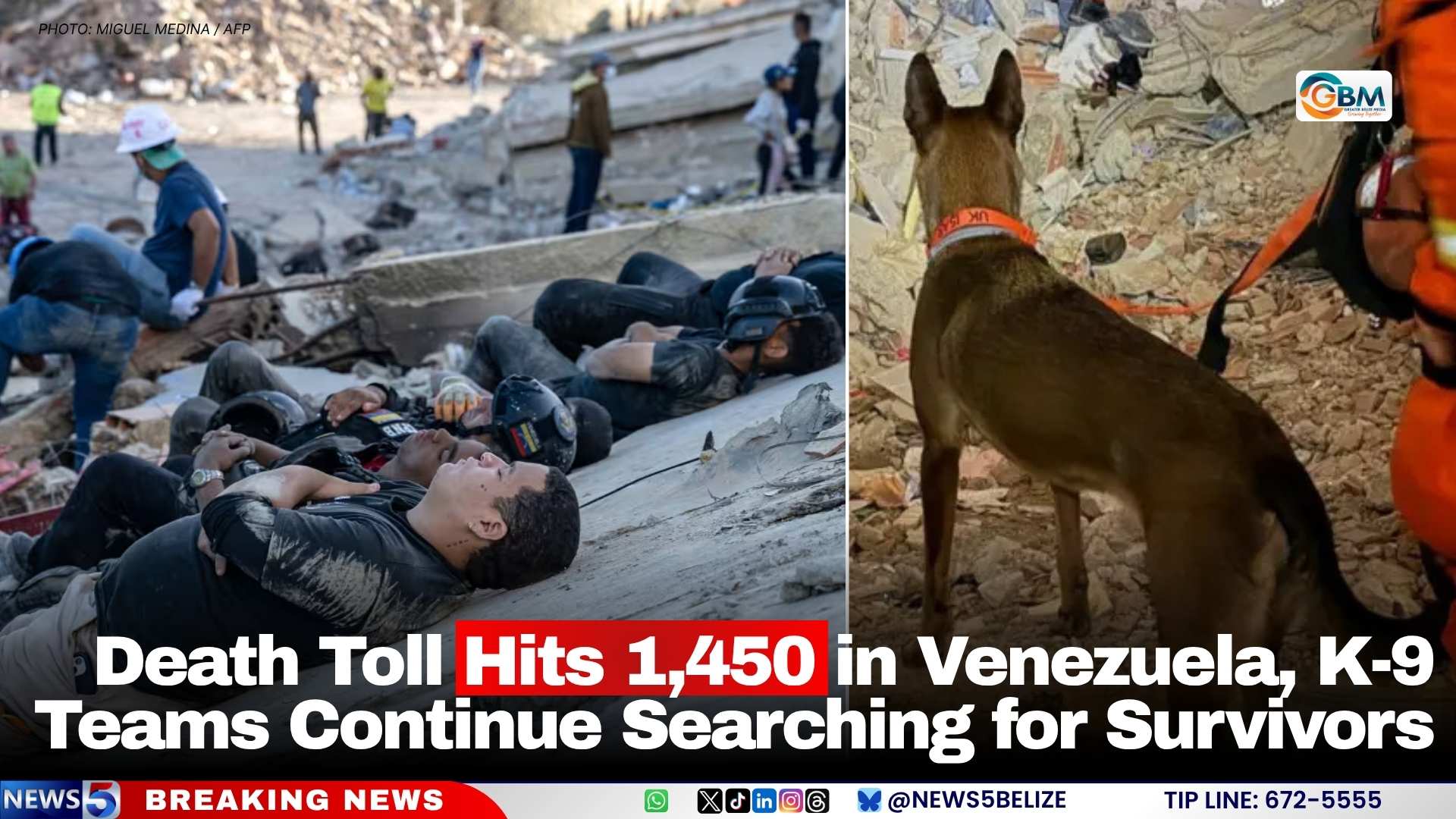
Almost a week has passed since a pair of powerful earthquakes struck Venezuela, leaving a trail of catastrophic destruction and loss of life in their wake. As official data confirms the death toll has climbed to 1,450, the critical 72-hour window for rescuing living survivors has now closed — but international and local rescue crews have refused to end their search operations across flattened urban and rural landscapes.
Alongside the rising number of fatalities, the disaster has left 3,150 people injured and more than 12,700 residents displaced from their homes. Tens of thousands of people remain unaccounted for, leaving anxious families across the country and globe waiting for updates on missing loved ones. Among the confirmed dead are three United States citizens, according to reports from NBC News, and more than 300 American nationals have reached out to the U.S. State Department to request emergency support following the disaster.
A multinational coalition of emergency response teams has deployed to the affected region to support local rescue efforts, bringing with them a suite of advanced detection tools and specialized personnel. Teams from the United Kingdom, United States, Netherlands, Switzerland, and Colombia have joined the search, with K-9 units trained in disaster response emerging as one of the most reliable assets for locating possible survivors trapped beneath rubble. These specially bred and trained canines are capable of detecting human scent through up to 10 meters of compacted debris, according to BBC reporting, and alert their handlers to potential signs of life with a distinct, forceful, and sustained bark. The teams also rely on cutting-edge technology to complement the work of sniffer dogs, including acoustic sound detectors, thermal imaging cameras, and high-resolution technical imaging devices that can penetrate deep layers of collapsed building material.
In the wake of the disaster, Venezuela’s Acting President Delcy Rodríguez has announced interim measures to support those displaced by the quakes, including the establishment of temporary emergency camps. The government has also launched a presidential commission tasked with conducting a full assessment of damaged infrastructure to guide long-term recovery efforts. Despite these steps, public frustration has been growing rapidly among affected communities on the ground. Many local residents have criticized the national government’s disaster response as unacceptably slow, leaving vulnerable communities waiting for critical aid and support days after the earthquakes struck.
Even as hopes of finding more survivors fade, rescue teams say they will continue combing through wreckage, driven by the commitment to bring closure to grieving families and potentially pull off what many consider an increasingly unlikely miracle.