作者: admin

  • Vliegtuigongeluk in Colombia eist 15 levens, onder wie politicus

    Vliegtuigongeluk in Colombia eist 15 levens, onder wie politicus

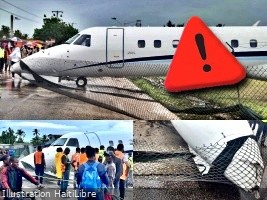
    A domestic flight operated by Colombia’s state airline Satena ended in tragedy Wednesday when a Beechcraft 1900 turboprop aircraft crashed in the mountainous northeastern region near the Venezuelan border, claiming all fifteen lives aboard. The ill-fated aircraft had departed from Cucuta Airport around midday en route to Ocana when air traffic controllers lost contact just twelve minutes after takeoff.

    Among the victims was regional parliament member Diogenes Quintero, who was traveling with members of his political team. The passenger manifesto also confirmed Carlos Salcedo, a congressional candidate preparing for March elections, was aboard the flight. Aviation authorities noted the aircraft’s emergency locator transmitter failed to activate, complicating initial rescue efforts.

    The crash site, located in the El Tarra municipality within the Catatumbo River basin, represents one of Colombia’s most challenging regions—a zone dominated by rugged terrain, extensive coca cultivation, and active presence of armed guerrilla factions including the National Liberation Army (ELN) and dissident groups of the Revolutionary Armed Forces of Colombia (FARC).

    Satena Airlines has launched a full investigation into the accident but has not yet determined the probable cause. Aviation experts suggest the combination of difficult mountainous topography and potentially adverse weather conditions may have contributed to the disaster. Local media footage showed the severely damaged fuselage surrounded by emergency response teams working in the hazardous environment.

    This incident marks one of Colombia’s deadliest aviation accidents in recent years and has raised serious questions about flight safety in remote conflict zones where illegal armed groups maintain strong operational presence.

  • How Kareem Musa Spends $180K of His Constituency Development Funds

    How Kareem Musa Spends $180K of His Constituency Development Funds

    Belize’s Minister of Immigration and Caribbean Shores Area Representative Kareem Musa has provided detailed insights into the allocation of his Constituency Development Fund (CDF), totaling $180,000 annually. The disclosure comes amid growing public scrutiny regarding governmental spending transparency.

    Minister Musa clarified that CDF expenditures serve dual purposes: direct support for individual constituents and broader community enhancement initiatives. On the personal assistance front, funds have been channeled toward critical needs including housing materials, emergency medical expenses, and funeral support for bereaved families. For collective community benefit, the financing has facilitated comprehensive park rehabilitations and infrastructure upgrades across the constituency.

    “Every one of the five or six parks within our electoral district has undergone complete refurbishment,” Minister Musa stated, emphasizing the tangible community impact.

    Addressing transparency concerns raised by activist Jerry Enriquez through a Freedom of Information Act (FOIA) request, Musa confirmed that comprehensive expenditure documentation has been systematically forwarded to central government institutions. “All financial receipts have been duly submitted to both the Cabinet Secretary’s office and the Ministry of Finance,” Musa explained, adding that these records remain accessible through proper official channels.

    The CDF system provides monthly allocations to area representatives across political parties, with funding levels calibrated according to constituency dimensions. Official data from the Elections and Boundaries Department indicates the Caribbean Shores constituency contained 4,475 registered voters as of December 2025.

  • REOI: Consulting Services — Firms selection

    REOI: Consulting Services — Firms selection

    The Grenadian government, in partnership with the United Nations Development Programme (UNDP) and backed by Global Environment Facility funding, has initiated a significant environmental conservation project. This initiative focuses on comprehensively revising the nation’s Protected Areas System Plan, originally established in 2009, while simultaneously finalizing draft management plans developed during the 2017-2019 R2R Project.

    The consulting assignment, scheduled from March 16 to June 12, 2026, requires specialized expertise in environmental management, natural resources conservation, and spatial planning. Interested firms must demonstrate substantial experience working with governmental agencies on environmental policies, donor-funded public sector projects, and stakeholder engagement processes, particularly within Caribbean or Small-Island Developing States contexts.

    Evaluation criteria emphasize technical competence in environmental science, natural resources management, and heritage preservation. Applicants must provide evidence of previous successful assignments, including case studies and client references validating their qualifications and performance quality.

    The selection process will follow the Consultant Qualification Selection method outlined in Procurement Regulations. Consulting firms may form associations or joint ventures to strengthen their applications, with clear indication of partnership structures and liability arrangements.

    Submission requirements include digital PDF documents not exceeding 25 pages, presented on company letterhead with comprehensive profiles, recent project experiences, and valid business documentation. All expressions of interest must be submitted electronically through the Central Procurement Unit’s e-procurement platform and specified email addresses before February 4, 2026, at 11:59 PM Eastern Caribbean Time.

  • Powering the future: Solar energy at Woburn Methodist School

    Powering the future: Solar energy at Woburn Methodist School

    In a significant stride toward educational sustainability, the Sandals Foundation has unveiled a state-of-the-art solar energy system at Woburn Methodist School in Grenada. The EC$33,350 renewable infrastructure project marks a transformative investment in Caribbean educational resilience, formally commissioned during a ceremonial handover event attended by school officials, community partners, and education stakeholders.

    Heidi Clarke, Executive Director of the Sandals Foundation, emphasized the critical nexus between energy security and educational development: “Education stands as a paramount catalyst for national progress. Consistent energy access amplifies digital instruction, enhances teacher readiness, and fortifies institutional sustainability. This solar transition embodies both practical utility and visionary planning—bolstering present-day learning while future-proofing educational institutions.”

    The newly installed solar array directly supports technology-integrated pedagogy, ensuring uninterrupted computer-based learning, stable internet connectivity, and multimedia teaching capabilities. Principal Richard Japal noted the growing importance of reliable electricity in modern education systems: “As regional schools evolve into digital access points, energy resilience becomes fundamental to preparing students for a dynamically changing global economy.”

    Beyond academic applications, the project amplifies community-wide benefits. Woburn Methodist School functions as a hurricane shelter and community hub for meetings, training programs, and development initiatives. This infrastructure enhancement strengthens local disaster resilience while advancing national energy security objectives.

    District Education Officer Curleen Aban-Marshall highlighted the multidimensional impact: “This initiative transcends mere technical installation—it represents a transfer of hope, sustainability, and empowerment. Students now gain firsthand exposure to renewable energy systems, aligning perfectly with Grenada’s national mission for environmental stewardship and climate resilience.”

    The Woburn installation joins an expanding network of solar-powered institutions established by the Sandals Foundation across the Caribbean, collectively advancing sustainable infrastructure for schools, community centers, and medical clinics throughout the region.

  • GTA Chairman among public life officials who failed to declare assets

    GTA Chairman among public life officials who failed to declare assets

    Grenada’s Integrity Commission has publicly identified several prominent public officials for their failure to submit mandatory asset declarations as required by national law. The list includes Randall Dolland, Chairman of the Grenada Tourism Authority, two medical practitioners, and multiple police officers of varying ranks.

    The Commission’s notice, published in the January 23, 2026 Government Gazette and signed by Chairman Gillian Bristol, reveals these officials have neglected their legal obligation to declare assets, liabilities, income, and interests since the government transition in 2022. This disclosure marks a significant enforcement action under Grenada’s Public Life Act.

    Notably, Dolland continues to serve as GTA chairman despite his original three-year appointment technically expiring in 2025. The National Democratic Congress Administration initially appointed Dolland to this position, with his board tenure formally commencing on August 8, 2022. While no official reappointment notice has been gazetted, verification with the GTA confirms his continued service in the role.

    The published notice explicitly outlines the legal consequences for non-compliance, including potential fines up to EC$200,000 or imprisonment for up to five years. The Commission maintains authority to seek court orders compelling compliance through ex parte applications.

    Grenada’s Public Life Act designates numerous government-affiliated positions as ‘public life’ roles subject to these transparency requirements, including senators, parliament members, commission appointees, and statutory board chairpersons. The legislation aims to maintain accountability and prevent corruption among officials holding public trust.

  • UWP set to explain ’10-Pillar Plan’ to public at rally on Sunday

    UWP set to explain ’10-Pillar Plan’ to public at rally on Sunday

    The United Workers Party (UWP) of Dominica is organizing a significant political gathering termed the ‘National Unity Rally,’ scheduled for February 1, 2026, in the village of Grand Fond. Party Leader Dr. Thomson Fontaine characterized the event as a strategic effort to consolidate member support and outline the party’s forward-looking agenda.

    Dr. Fontaine emphasized the rally’s dual purpose: to energize party members for full participation in the ongoing voter confirmation process and to foster greater political engagement in preparation for impending general elections. While the election date remains undetermined, the UWP leadership stresses the critical importance of maintaining campaign readiness.

    A central component of the rally will be the formal presentation of the UWP’s comprehensive ’10-Pillar Plan for Shared Prosperity’ – an economic framework addressing multiple national concerns. The plan specifically targets economic revitalization with focused strategies for agriculture, manufacturing, and tourism sectors alongside social development initiatives.

    The policy blueprint directly addresses pressing national issues including youth violence mitigation and wage improvement demands. Dr. Fontaine indicated the rally would maintain an optimistic tone, focusing on hopeful messaging and presenting the Dominican public with concrete policy alternatives that differentiate the UWP’s governance approach.

    The afternoon event, commencing at 2:00 PM, anticipates attendance from supporters across all constituencies, representing a significant mobilization effort by the opposition party as it positions itself for potential leadership.

  • Business magnate Noel Cadasse dies at 80

    Business magnate Noel Cadasse dies at 80

    The Caribbean nation of Saint Lucia is mourning the loss of distinguished entrepreneur and public servant Noel Samuel Cadasse, who passed away peacefully at his Canadian residence at the age of 80. The prominent business leader, whose remarkable journey began in the coastal village of Anse La Raye, built an impressive legacy across multiple industries before his eventual migration to Canada.

    Cadasse’s business acumen first emerged through his representation of regional insurance providers, eventually culminating in the establishment of his own successful venture, First National Insurance Company. His entrepreneurial spirit extended beyond insurance into diverse sectors including bakery operations and tourism development. His most notable contribution to Saint Lucia’s hospitality industry was the creation of Caribees Hotel at La Panse, one of the first locally owned and operated hotels during its era.

    Beyond his commercial achievements, Cadasse dedicated significant effort to public service, serving as a former senator and contributing his expertise to numerous organizational boards. His leadership extended to chairing Saint Lucia’s Gaming Control Commission, where he helped shape regulatory frameworks for the industry.

    Following his relocation to Canada with his family, Cadasse continued to demonstrate his business prowess while gradually transitioning toward retirement. His reflective memoir, “Ebb and Flow – The Life Journey of Noel Cadasse,” captured the essence of his extraordinary personal and professional evolution.

    The British Crown recognized his substantial contributions to community development, infrastructure, and economic growth by awarding him the prestigious Office of the Order of the British Empire (O.B.E) during the 2025 King’s Birthday Honors. Cadasse is survived by his wife Julia and their children, leaving behind a legacy that continues to inspire future generations of Saint Lucian entrepreneurs.

  • Barbados secures top Caribbean passport spot for 11th consecutive year

    Barbados secures top Caribbean passport spot for 11th consecutive year

    Barbados has solidified its position as the Caribbean’s premier passport powerhouse, securing the region’s top spot for an unprecedented 11th consecutive year according to the newly published Henley Passport Index 2026. The island nation’s travel document now claims 19th place globally, providing Barbadian citizens with visa-free or visa-upon-arrival privileges across 162 international destinations.

    The latest rankings reveal a clear hierarchy within the Caribbean travel mobility landscape. The Bahamas follows closely in second position regionally (20th globally with 150 destinations), trailed by St Vincent and the Grenadines (22nd global rank, 156 destinations), St Kitts and Nevis (23rd globally, 155 destinations), and Antigua and Barbuda (24th worldwide, 154 destinations).

    While Eastern Caribbean nations demonstrate remarkable passport strength, the report indicates varying levels of travel freedom across the broader region. Saint Lucia maintains a respectable 29th global position with access to 145 countries, though several other Caribbean territories face substantial mobility limitations in the current global landscape.

    On the worldwide stage, Singapore continues to dominate passport power rankings for 2026, with its citizens enjoying unprecedented access to 192 global destinations without prior visa requirements. The consistent performance of Barbados highlights the nation’s strategic diplomatic relations and international standing, providing significant advantages for both business and leisure travel within the global community.

  • ECTEL Digital Inclusion Survey shows gaps in skills development

    ECTEL Digital Inclusion Survey shows gaps in skills development

    A comprehensive Digital Inclusion Survey conducted by the Eastern Caribbean Telecommunications Authority (ECTEL) has uncovered a critical skills gap in the region, despite significant advancements in broadband connectivity. The official findings were unveiled on January 28, 2026, during a high-profile gathering at the Bougenvelia Conference Room in Rodney Bay, Saint Lucia, attended by telecommunications executives, policy makers, and media representatives.

    The extensive research, conducted throughout 2024 across ECTEL’s member states including Dominica, Grenada, St Kitts and Nevis, and Saint Lucia, revealed a paradoxical situation. While access to digital infrastructure has dramatically improved since 2014, the majority of users—approximately 60%—possess only basic digital literacy skills. Advanced technical competencies remain exceptionally rare, with fewer than 5% of users demonstrating intermediate or advanced capabilities.

    ECTEL Managing Director David Cox emphasized the significance of these findings in an exclusive statement: ‘The survey’s primary objective was to collect comprehensive data on digital technology usage patterns across these nations. We’ve gathered crucial insights regarding public perception of service costs, accessibility barriers, and usage behaviors that will directly inform future regulatory frameworks.’

    Cox acknowledged the substantial progress in broadband penetration but highlighted persistent challenges: ‘Connectivity has indeed jumped considerably since 2014, indicating that markets are progressing in the right direction. However, significant concerns remain regarding service quality and affordability. Price continues to represent a substantial barrier for many citizens seeking to utilize internet services effectively.’

    The research identifies a fundamental transition from addressing the physical digital divide to confronting a more complex capability divide. While most households now possess laptops as their primary ICT device, residents predominantly consume digital content rather than create it or engage in sophisticated economic activities through digital platforms.

    ECTEL, in collaboration with National Telecommunications Regulatory Commissions and regional governments, is now developing targeted strategies to enhance digital literacy, improve service quality, and reduce cost barriers. These initiatives aim to transform the Eastern Caribbean into a more digitally inclusive society where technological access translates into meaningful economic and social advancement.

  • Taiwan Looking to Build Electric Buses in Belize

    Taiwan Looking to Build Electric Buses in Belize

    Belize is positioning itself as a potential center for electric transportation in Central America through exploratory discussions with leading Taiwanese green technology firms. The Ministry of Transportation, under the leadership of Minister Dr. Louis Zabaneh, has initiated high-level talks with two prominent electric vehicle manufacturers from Taiwan.

    In recent diplomatic engagements, Minister Zabaneh convened with Francisco Hwang, Market Development Manager of Master Corporation, a premier Taiwanese electric bus manufacturer. During their meeting last Friday, Hwang articulated a strategic vision for Belize to evolve into a regional operations hub, expressing concrete interest in supplying electric buses to the Central American nation.

    Earlier in January, ministerial officials conducted parallel discussions with Dr. Fred Cheng, Chief Operating Officer of Imeier Green Technology Corporation, alongside representatives from TRON E, a Taiwanese enterprise specializing in advanced electric vehicle battery systems. Cheng revealed that his organization is contemplating not merely vehicle sales, but potentially establishing manufacturing infrastructure within Belize itself.

    Transport Ministry officials characterized these negotiations as preliminary explorations that demonstrate Belize’s commitment to adopting global sustainability benchmarks. These developments form part of a comprehensive governmental initiative to modernize national transit systems while transitioning toward environmentally conscious, climate-resilient transportation alternatives that align with international environmental protocols.