作者: admin

  • Preschoolers among students in ‘Early Pages Programme’

    Preschoolers among students in ‘Early Pages Programme’

    In a significant boost to early childhood education, St. Vincent and the Grenadines has launched the Early Pages Programme through a collaborative partnership between Hands Across the Sea and the Mustique Charitable Foundation. This groundbreaking initiative specifically targets preschool education by delivering over 5,000 brand-new books and educational materials to 20 preschool centers across the nation.

    The comprehensive donation, valued at approximately US$40,000, reaches 17 government-operated and three private early childhood centers. The program represents a strategic expansion beyond the organization’s traditional focus on primary and secondary education, marking a deliberate shift toward foundational literacy development.

    During a formal handover ceremony at the National Public Library in Kingstown on Friday, education officials emphasized the transformative potential of early literary exposure. Literacy Link representative Enna Bullock articulated the program’s core mission: “We want preschoolers to receive the treasures found in libraries and literacy initiatives in preparation for kindergarten.” She highlighted how the program seamlessly integrates with the ministry’s existing early childhood curriculum by making literacy an explicit component of the preschool environment.

    Chief Education Officer Kay Martin Jack acknowledged Hands Across the Sea’s enduring impact on educational development, noting that literacy development begins long before primary education and establishes the foundation for lifelong learning. The initiative also provided additional resources to 14 schools (12 primary and 2 secondary) to support recovery from Hurricane Beryl’s impact on educational infrastructure.

    Education Officer Jane Farrell from the Ministry’s Early Childhood Department expressed enthusiasm about the program’s timing and potential to cultivate authentic reading engagement among the nation’s youngest learners. Beneficiary representatives including Rochelle Tannis of Bequia Anglican Early Childhood Centre and Joy Haynes of Barrouallie Government School conveyed appreciation for the resources that will create literacy-rich environments for exploration and development.

    This donation extends Hands Across the Sea’s 18-year partnership with St. Vincent and the Grenadines, which has now distributed over 145,000 books throughout the Eastern Caribbean nation.

  • 3.7 Magnitude Earthquake Recorded North-Northeast of Antigua

    3.7 Magnitude Earthquake Recorded North-Northeast of Antigua

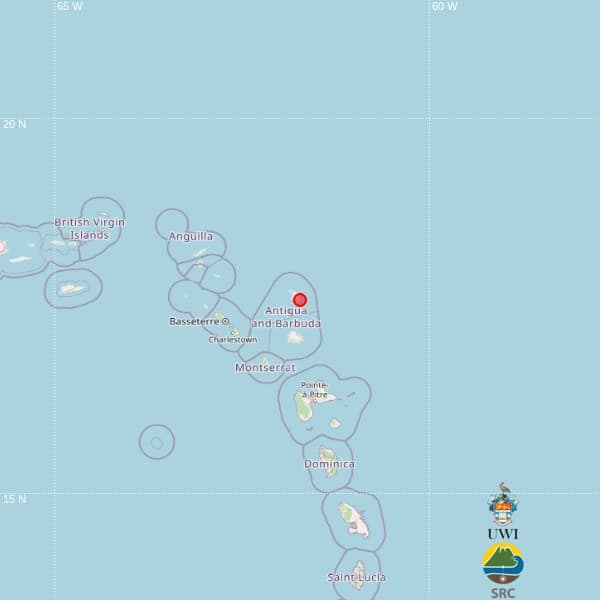
    A minor seismic event registering a preliminary magnitude of 3.7 struck the northeastern Caribbean region in the early hours of Friday, January 31st. According to automated monitoring systems operated by the University of the West Indies Seismic Research Centre, the tremor occurred at 4:46 a.m. local time (08:46 UTC) with an estimated focal depth of 12 kilometers.

    The epicenter was precisely geolocated at coordinates 17.58 degrees north latitude and 61.73 degrees west longitude, placing it approximately 53 kilometers north-northeast of St. John’s, Antigua and Barbuda. The seismic activity was also detected 102 kilometers northeast of Brades, Montserrat, and approximately 115 kilometers east-northeast of Basseterre, Saint Kitts and Nevis.

    Initial assessments from regional monitoring authorities indicate no immediate reports of structural damage, injuries, or significant impact on local communities. The Seismic Research Centre emphasized that preliminary magnitude and location data are automatically generated by sophisticated computer algorithms and remain subject to potential revision following comprehensive scientific analysis by their expert seismologists. Such minor tremors are considered common occurrences within the seismically active Caribbean region, where tectonic plate interactions frequently generate detectable but typically harmless seismic activity.

  • Magnitude 3.7 Earthquake Recorded Near Antigua Early Saturday Morning

    Magnitude 3.7 Earthquake Recorded Near Antigua Early Saturday Morning

    A minor seismic event measuring 3.7 on the Richter scale occurred in proximity to the Caribbean nation of Antigua and Barbuda during the early hours of Saturday morning. The earthquake’s epicenter was located near the islands, though precise geographical coordinates remain unspecified in initial reports.

    The tremor, while measurable by seismic instruments, appears to have caused minimal disruption to the twin-island nation. Early indications suggest no significant structural damage or injuries resulting from the geological activity. Earthquakes of this magnitude typically produce noticeable shaking of indoor items and rattling noises but rarely cause substantial damage to well-constructed buildings.

    The Eastern Caribbean region, where Antigua and Barbuda are situated, experiences frequent seismic activity due to its position along the boundary of the Caribbean and North American tectonic plates. This geological setting makes minor tremors a relatively common occurrence throughout the region.

    Local authorities and disaster preparedness agencies routinely monitor such seismic events, though no tsunami warnings were issued following this particular incident. Residents reported feeling mild vibrations but otherwise described the event as passing without major concern.

    The timing of the earthquake—during early morning hours—likely contributed to the limited public reaction, as many residents were asleep when the tremor occurred. Seismologists continue to monitor the region for potential aftershocks, though none have been reported thus far.

  • Kia Kirwan Takes First Runner-Up at Miss OECS 2026 Pageant

    Kia Kirwan Takes First Runner-Up at Miss OECS 2026 Pageant

    In a dazzling display of grace and intellect, Kia Kirwan has achieved the distinguished position of first runner-up at the Miss OECS 2026 Pageant. The highly anticipated event, which showcases the cultural richness and emerging talent from the Organization of Eastern Caribbean States, concluded with Kirwan’s remarkable accomplishment placing her just steps away from the coveted crown.

    Kirwan’s journey through the competition was marked by her exceptional performance across multiple segments, including the traditional evening gown presentation, a probing question-and-answer segment that tested contestants on current regional affairs, and a vibrant cultural display that highlighted the unique heritage of her represented territory. Her articulate responses and poised demeanor throughout the competition earned her widespread acclaim from the panel of international judges and audience members alike.

    The pageant, which serves as a significant platform for promoting tourism, cultural exchange, and youth empowerment across the Eastern Caribbean, drew contestants from all member states. Kirwan’s achievement is not merely a personal victory but is celebrated as a national triumph, bringing positive recognition to her home country and inspiring a new generation of young women across the region to pursue their ambitions with confidence and grace.

    While the title of Miss OECS 2026 was awarded to another deserving delegate, Kirwan’s first runner-up finish establishes her as a formidable ambassador for the OECS. In this role, she is expected to undertake a series of diplomatic and charitable engagements throughout the year, focusing on key regional issues such as environmental conservation, education advocacy, and community development.

  • National debt at $3.5b as ULP gov’t spent ‘like a drunken sailor’ in 2025

    National debt at $3.5b as ULP gov’t spent ‘like a drunken sailor’ in 2025

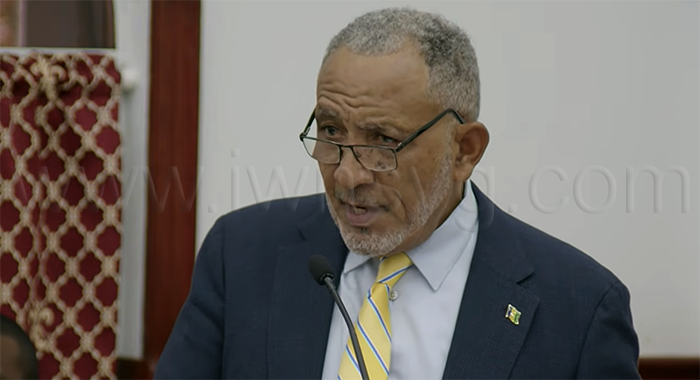
    Prime Minister Godwin Friday has disclosed a staggering national debt of EC$3.54 billion (US$1.31 billion) as of December 31, 2025, painting a dire fiscal picture during his presentation of the 2026 Estimates of Revenue and Expenditure to Parliament on Thursday. The revelation came as Friday’s New Democratic Party administration, elected in a landslide victory on November 27, 2025, took office after unseating the Unity Labour Party that had governed for nearly 24 years.

    The debt figure represents a substantial EC$400 million more than previously estimated by the new government and shows a 13% increase compared to the same period in 2024. Friday characterized the previous administration’s spending patterns as irresponsible, stating they had spent “like a drunken sailor” during the election year.

    Breaking down the debt structure, domestic debt reached EC$993 million, marking a 1.1% year-on-year increase, while external debt surged to EC$2.55 billion, representing an alarming 18.7% increase. A particularly concerning element was the public sector overdraft, which ballooned to nearly EC$200 million despite parliamentary authorization limiting it to EC$85 million.

    The 2026 budget of EC$1.89 billion, approved by lawmakers, represents a 2% increase over the 2025 budget. It includes recurrent expenditure of EC$1.31 billion and capital expenditure of EC$577.2 million. Financing will come from current revenue of EC$906.9 million and capital receipts of EC$978.7 million.

    Friday emphasized the severe debt servicing burden, revealing that 39.5 cents of every tax dollar collected will be allocated solely to debt repayment, totaling EC$358 million for 2026. This includes interest payments of EC$120.7 million, amortization of EC$215.4 million, and sinking fund contributions of EC$22 million.

    The Prime Minister defended his government’s approach, stating they must first address the cost-of-living crisis while gradually cleaning up the fiscal mess inherited from the previous administration. The disclosure has sparked intense parliamentary debate about the nation’s economic future and the challenges facing the new government.

  • Sapoen: Laat Grondwet keuze open voor hoogste instantie; ook investeringen in basis

    Sapoen: Laat Grondwet keuze open voor hoogste instantie; ook investeringen in basis

    In a landmark address to De Nationale Assemblee, Assembly Member Raymond Sapoen (NDP) positioned ongoing deliberations on judicial and prosecutorial reforms within the broader framework of constitutional governance. Emphasizing the Constitution’s role as the supreme law safeguarding civil rights and separation of powers, Sapoen characterized the current parliamentary deliberations as ‘historic’ for involving all state powers in modernizing Suriname’s justice system.

    Regarding the proposed cassation (supreme judicial) instance, Sapoen acknowledged widespread legal community support for a third judicial tier beyond appeals. He referenced societal concerns about judicial verdicts’ quality, independence, and reliability as drivers for reform. However, he criticized the explanatory memorandum accompanying the proposals as insufficient, stressing that such transformative changes require detailed justification regarding necessity and integration into Suriname’s legal architecture.

    Notably, Sapoen advocated for constitutional flexibility by defining the supreme judicial body as a ‘highest judicial instance’ for legal violation reviews without pre-committing to a specific model. This approach retains options for regional solutions like the Caribbean Court of Justice (CCJ), potentially with specialized Surinamese civil law chambers, though he emphasized this requires thorough study and political preparation.

    The parliamentarian raised substantive questions about proposed amendments to Article 139 concerning the Court of Justice’s oversight of case processing, demanding clarity on alternative supervisory models. He also highlighted constitutional inconsistencies in appointing prosecutors-general, noting discrepancies between constitutional provisions and 2024 judicial status legislation that must be resolved with constitutional primacy.

    On retirement age, Sapoen supported reinstating the pension age of 65 for standing magistrates (including prosecutors-general) as a systemic correction to reestablish functional distinction between prosecution and judiciary rather than personalizing the debate.

    While expressing theoretical support for a College of Prosecutors-General to mitigate concentration risks in small societies, he criticized the proposal’s lack of justification for member numbers and advocated odd-numbered compositions for decisiveness.

    Sapoen concluded by emphasizing that cassation establishment must not divert resources from strengthening first and second instance courts, maintaining that institutional capacity building remains a perpetual government obligation.

  • RFHL records US$89m in first quarter profits

    RFHL records US$89m in first quarter profits

    Republic Financial Holdings Limited (RFHL) has demonstrated robust financial performance in its first fiscal quarter, reporting substantial growth across key metrics. Chairman Yashmid Karamath revealed the Group achieved $89 million in profit attributable to equity holders for the three-month period ending December 31, marking a significant $7 million (8.9%) increase compared to the $82 million recorded during the same period in the previous financial year.

    The financial institution’s total assets reached $19.6 billion as of December 31, representing a $1.1 billion (6%) expansion over December 2024 figures. This asset growth was primarily driven by increased lending activity across RFHL’s subsidiary network, despite persistent economic headwinds in certain operational markets.

    Karamath attributed the strong quarterly results to ‘steady core earnings, supported by stable asset quality and disciplined cost management.’ He emphasized the Group’s ‘robust capital and liquidity positions’ which provide a solid foundation for sustained future expansion.

    Reflecting this positive performance, RFHL’s board declared a quarterly interim dividend of $0.08 per share, maintaining the same distribution rate as the previous year. The dividend will be payable on February 27, 2026, to shareholders of record as of February 13, 2026.

    Regarding strategic direction, Karamath highlighted the Group’s continued advancement of key initiatives focused on strengthening operational efficiency, enhancing customer experience, and investing in digital transformation capabilities. ‘We remain focused on sustainable growth,’ he stated, ‘ensuring that innovation and expansion align with our long-term value creation objectives and our commitment to sound governance.’

    The Chairman expressed gratitude to RFHL management and staff for their professionalism and dedication, and thanked shareholders for their ongoing trust. He also acknowledged the contributions of former Chairman Vincent A. Pereira, recognizing his ‘exemplary leadership, commitment and outstanding service to the Board and the organisation during his tenure.’

  • Even with fuel shortages, Cuba will not be defeated by the empire

    Even with fuel shortages, Cuba will not be defeated by the empire

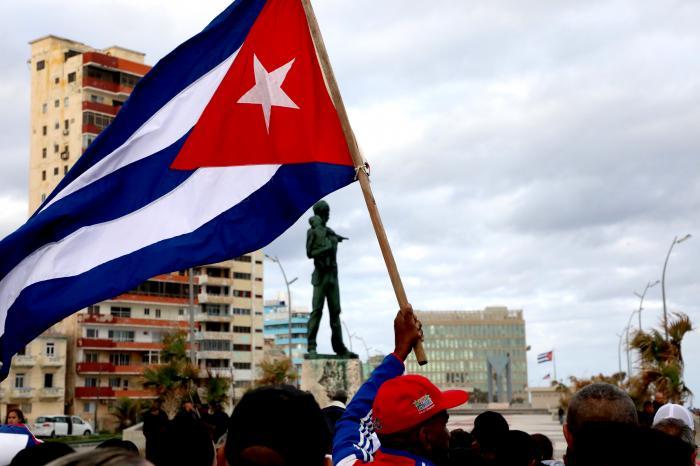
    Cuban President Miguel Díaz-Canel Bermúdez delivered a forceful condemnation of escalating United States aggression against his nation during an extraordinary session of Havana’s Provincial Party Committee on Friday. The First Secretary of Cuba’s Communist Party Central Committee characterized recent U.S. actions as part of a coordinated campaign to destabilize the island nation through economic warfare and military threats.

    Díaz-Canel specifically referenced Thursday’s executive order by former President Donald Trump imposing tariff sanctions on oil suppliers to Cuba, describing it as a malicious attempt to ‘deprive us of fuel, something necessary for any country to develop its economy.’ He framed this within a broader pattern of aggression that began with January’s invasion of Venezuela and the ‘kidnapping’ of its legitimate leadership.

    The Cuban leader presented a detailed analysis of what he termed the ‘Trump corollary to the Monroe Doctrine’—a policy of imposing peace through force that he argued consistently produces chaos rather than stability. He drew direct parallels between current U.S. foreign policy and historical fascism, stating that ‘the president of the Empire is behaving like Hitler, with a criminal policy of contempt that aims to take over the world.’

    Díaz-Canel emphasized Cuba’s resilience despite decades of pressure, noting that even Trump had indirectly acknowledged the nation’s endurance by stating that ‘not much more pressure can be exerted’ against Cuba. This admission, argued the President, effectively debunks the narrative of Cuba as a ‘failed state’ and confirms that the country’s economic challenges stem primarily from external pressure rather than internal failures.

    The address highlighted Cuba’s preparation for potential military confrontation, referencing the heroic resistance of 32 Cuban combatants who died opposing the U.S. invasion of Venezuela on January 3. ‘The Empire has to calculate what an attack on Cuba would cost it,’ warned Díaz-Canel, emphasizing that the nation’s military, government, and united population remain prepared to confront any aggression with determination.

    Despite the escalating tensions, the Cuban president reaffirmed his nation’s commitment to peaceful dialogue conducted ‘on equal terms, with respect, and without preconditions.’ He announced plans to pursue international complaints against the latest coercive measures through global forums while continuing to work with allied nations and the international community.

  • Cuba condemns and denounces new escalation of U.S. economic blockade

    Cuba condemns and denounces new escalation of U.S. economic blockade

    The Cuban Revolutionary Government has issued a forceful condemnation of what it characterizes as a dangerous escalation in United States policy aimed at imposing a total fuel blockade against the island nation. This response comes following an executive order signed by the U.S. President on January 29, 2026, which declares a national emergency and authorizes trade tariffs against countries supplying petroleum products to Cuba.

    The Cuban statement describes the executive order as containing “an extensive list of lies and defamatory accusations,” particularly rejecting the assertion that Cuba represents an “unusual and extraordinary threat” to U.S. national security. The government maintains this justification demonstrates “contempt for the truth, public opinion, and government ethics” in pursuing aggression against Cuba.

    According to the Cuban analysis, this policy represents a consolidation of economic pressure measures initiated during the Trump administration, now extending to include “blackmail, threats, and direct coercion of third countries” to prevent fuel from reaching Cuban shores. The government characterizes this approach as embodying “a dangerous way of conducting U.S. foreign policy by force” that seeks to guarantee American “imperialist hegemony.”

    The statement frames the executive order as a violation of international law and the Proclamation of Latin America and the Caribbean as a Zone of Peace. It further asserts that after 67 years of failed attempts to undermine Cuba’s revolutionary process, the U.S. government now threatens regional security and stability.

    Cuba reaffirms its historical willingness to engage in diplomatic dialogue based on principles of international law, sovereign equality, and mutual respect. The government emphasizes that Cuba poses no threat to U.S. national interests or citizen welfare, noting that American visitors have consistently been treated with “respect and hospitality.”

    The declaration concludes with a commitment to confront this “new attack with firmness, equanimity, and the certainty that reason is absolutely on our side,” invoking the revolutionary slogan “Homeland or Death, We Shall Overcome!”

    The statement positions this development as a critical test for the international community, challenging nations to determine whether they will accept such coercive economic measures or stand in solidarity against aggression and impunity.

  • VS-Iran spanningen: diplomatiek offensief om oorlog te voorkomen

    VS-Iran spanningen: diplomatiek offensief om oorlog te voorkomen

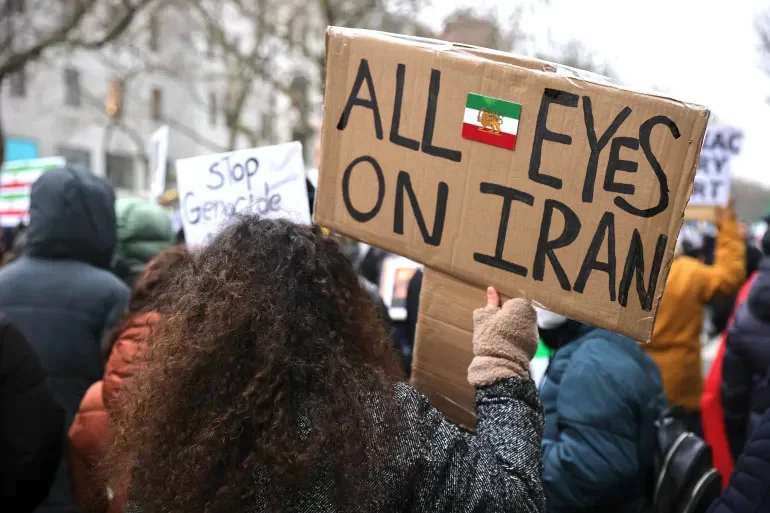
    As tensions between the United States and Iran approach critical levels, nations across the Middle East and beyond are engaging in urgent diplomatic maneuvers to prevent catastrophic military escalation. The situation has intensified following President Donald Trump’s renewed threats of military intervention unless Iran accepts stringent limitations on its nuclear program and ballistic missile development.

    The current crisis stems from massive protests that erupted across Iran in late 2025, initially sparked by deteriorating economic conditions but gradually evolving into broader challenges to the Islamic Republic’s governing structure. In response to the unrest, Tehran has demonstrated military preparedness, with officials declaring their forces “200 percent ready” to defend the nation despite international mediation attempts.

    Iran’s military capabilities have expanded significantly with the recent announcement of 1,000 new strategic drones, including attack drones and systems designed for reconnaissance and cyber operations targeting land, air, and maritime objectives. This development follows last year’s American strikes on Iranian nuclear facilities, which occurred just before planned peace negotiations with Israel.

    Diplomatic channels have activated across multiple fronts. Iranian officials have engaged in high-level talks with Turkey, including discussions between Foreign Minister Abbas Araghchi and President Recep Tayyip Erdogan. Pakistan, Egypt, Saudi Arabia, and the United Arab Emirates have all participated in telephone diplomacy aimed at preserving regional stability. India dispatched a special delegation to Tehran, while China used United Nations platforms to advocate for national sovereignty and condemn military adventurism.

    Russia has emphasized the critical importance of negotiated solutions, warning that military action would further destabilize the already volatile region. European powers have taken a different approach, focusing primarily on condemning Iran’s harsh treatment of protestors while remaining cautious about addressing war risks. France explicitly rejected military intervention and called for supporting the Iranian people through peaceful means.

    The European Union implemented new sanctions targeting 15 Iranian individuals and six entities for serious human rights violations, following similar designations by the United States, Canada, and Australia that labeled Iran’s Revolutionary Guard Corps as a terrorist organization. Tehran condemned these measures as hypocritical, particularly citing Western inaction regarding Israeli operations in Gaza.

    Despite these extensive diplomatic efforts, regional experts remain skeptical about their effectiveness in reducing US-Iran tensions. Professor Adnan Hayajneh of Qatar University noted that American policymakers predominantly listen to domestic considerations rather than regional voices, increasing the likelihood of military confrontation.