作者: admin

  • US Marine planes cause stir in Tobago

    US Marine planes cause stir in Tobago

    Two U.S. Marine Corps Boeing C-17A Globemaster III military transport aircraft departed from ANR Robinson International Airport in Tobago yesterday morning following a brief presence on the island. The aircraft, identified by tracking codes RCH660 (01-0192) and RCH661 (99-0165), originated from Marine Corps Air Station Cherry Point in North Carolina and were returning to the United States. While only one aircraft appeared on public flight tracking service FlightRadar24, departing at 5:53 a.m., open-source intelligence sources confirmed both aircraft had transited through the airport.

    Prime Minister Kamla Persad-Bissessar addressed the presence of U.S. military personnel in Trinidad and Tobago, confirming that marines remain in the country for training exercises with the Trinidad and Tobago Defence Force. She characterized the aircraft’s mission as assistance with ‘a bit of roadway’ at the airport but provided no specific details about the nature of this assistance.

    The Prime Minister explicitly denied any connection between the military aircraft and escalating tensions between the United States and neighboring Venezuela. ‘It is not a military force as such; they are not here on the ground, we are not about to launch any campaign against Venezuela,’ Persad-Bissessar stated emphatically. ‘Trinidad and Tobago has not been asked to be a base for any war against Venezuela.’

    The departure occurred just one day after U.S. General Dan Caine, a top military officer, met with the Prime Minister. While Persad-Bissessar confirmed the meeting, she insisted there were no discussions about Venezuela during their conversation.

    The C-17 Globemaster III, described by the U.S. Air Force as its ‘most flexible’ cargo aircraft, is capable of rapid strategic delivery of troops and various types of cargo to both main operating bases and forward deployment areas. Social media posts throughout yesterday documented sightings of the large aircraft departing Tobago.

  • Dominican Communities Mourn 23-Year-Old Killed in St. John’s Scooter Crash

    Dominican Communities Mourn 23-Year-Old Killed in St. John’s Scooter Crash

    A devastating pre-dawn incident on Popeshead Street in St. John’s has resulted in the tragic death of Joshua Alexander, a 23-year-old Dominican national residing in Light Foot. The fatal collision occurred approximately at 2:00 AM on Sunday when Alexander’s black scooter reportedly veered out of control, striking a concrete wall and adjacent sidewalk in close proximity to the Pita Pocket establishment.

    Emergency response teams arriving at the scene discovered no vital signs from the victim. Medical professionals subsequently formally pronounced Alexander deceased at 3:16 AM despite resuscitation efforts. The Royal Police Force of Antigua has initiated a comprehensive investigation into the circumstances surrounding the accident, though preliminary evidence suggests no other vehicles were involved in the incident.

    The tragedy has triggered profound mourning within Dominican expatriate communities across both Antigua and Wesley, where Alexander was recognized as a vibrant young member. Law enforcement authorities have publicly extended their deepest sympathies to the grieving family while continuing their examination of contributing factors that might have led to the loss of control. The investigation remains active as officials work to determine whether road conditions, mechanical failure, or other elements played a role in this fatal outcome.

  • Debunking some myths shaping Saint Lucia’s energy laws

    Debunking some myths shaping Saint Lucia’s energy laws

    In a striking analogy highlighting institutional conflict of interest, Saint Lucia’s energy sector faces critical scrutiny over whether electricity providers should dictate energy policy. This situation mirrors allowing drug dealers to write drug laws—a fundamentally flawed approach that stifles progress, limits employment opportunities, and prevents consumer investments from yielding financial returns during economically challenging times.

    While residents face restrictions on residential and commercial solar installations, the island’s primary utility provider LUCELEC has strategically expanded its own solar capabilities. The company has developed a 3MW solar farm in La Tourney Vieux-Fort and installed a 75kW rooftop system at its Cul-de-Sac headquarters, simultaneously investing in its solar subsidiary Energise.

    Despite abundant sunshine, Saint Lucian families continue grappling with exorbitant energy costs. The authentic impediments to solar adoption are structural rather than technical, perpetuated by LUCELEC’s substantial influence over energy policy through repeatedly debunked arguments.

    Myth 1: Grid Destabilization Concerns
    The notion that excessive solar integration causes blackouts persists despite evidence from smaller grids achieving remarkable stability. Kauaʻi in Hawai’i, serving 70,000 residents, operates at nearly 70% renewable energy—primarily rooftop solar—through sophisticated grid management including smart inverters, grid-forming batteries, demand response mechanisms, and community collaboration. The genuine challenge involves modernizing infrastructure rather than limiting solar potential.

    Myth 2: Cost-Shifting to Non-Solar Customers
    Contrary to claims that solar users avoid fair grid contribution, research from Lawrence Berkeley Lab and Brookings Institution demonstrates solar adoption reduces peak demand, decreases infrastructure requirements, and lowers generation costs. These substantial benefits frequently remain unacknowledged in policy deliberations. Evidence-based legislation must recognize solar’s comprehensive value for creating balanced energy futures.

    Myth 3: Financial Inaccessibility Argument
    The perception of solar as prohibitively expensive contradicts reality: if households can pay electricity bills, they can afford solar. Photovoltaic technology has been commercially available in Saint Lucia for over fifteen years, with prices declining below $5 per watt for specific projects. Local financial institutions offer financing options eliminating upfront costs, with monthly payments frequently matching or outperforming conventional utility bills. Commercial systems typically achieve return-on-investment within three to five years, delivering decades of subsequent savings.

    Myth 4: Baseload Power Necessity Fallacy
    The outdated concept requiring constant fossil fuel generation is superseded by modern grid flexibility. Australia—an industrialized island nation—anticipates sourcing over 75% of energy from solar and wind by 2030 without cross-border electricity dependence. Distributed solar networks combined with battery storage and smart grid technology effectively balance energy systems, eliminating baseload power requirements.

    Myth 5: Utility Policy Dominance Justification
    LUCELEC’s policymaking influence stems from governmental capacity gaps rather than inevitable monopoly rights. Recent policies favor obsolete technologies and protect the utility’s diminishing generation role rather than facilitating renewable transition. Establishing an independent committee guided by empirical evidence and national interests should determine energy policy, with LUCELEC providing technical consultation without legislative authority.

    Citizen investments warrant equal protection to monopoly interests. As Barbados Prime Minister Mia Mottley articulated regarding abundant solar and wind resources, “Why should we be paying the price for energy when we have those gifts in abundance?” Embracing this perspective enables Saint Lucia to forge equitable, sustainable energy futures through regulatory modernization and renewable adoption.


  • Antigua & Barbuda Honours Top Industry Performers at 2025 Tourism Awards

    Antigua & Barbuda Honours Top Industry Performers at 2025 Tourism Awards

    The Antigua and Barbuda Hospitality & Tourism Association (ABHTA), in collaboration with the Ministry of Tourism and the Antigua and Barbuda Tourism Authority (ABTA), orchestrated a magnificent celebration of industry excellence on November 29th, 2025. The event, formally titled the ‘Mirror Ball Gala: A Time to Reflect and Shine,’ served as the prestigious platform for the annual Tourism Awards, recognizing the nation’s most outstanding contributors to its vital tourism sector.

    The gala evening was a profound occasion to both reflect on past achievements and shine a spotlight on the individuals driving the industry forward. A diverse array of awards were presented across multiple categories, highlighting excellence from frontline service to executive leadership.

    Recipients of the coveted ABHTA Awards included Albev Wade from Blue Waters Resort & Spa, named Employee of the Year, and Sophia Welch of Mill Reef Club, who earned Supervisor of the Year. The Rising Star of the Year accolade was awarded to Shemaiah Gordon of Royalton Antigua, while Leon Norville from Sandals Grande Antigua was celebrated as Young Hotelier of the Year. Culinary expertise was prominently featured, with Kahendi Jackson of Hermitage Bay named Young Chef of the Year and Jean-Pierre Tuitt of Jumby Bay Island honored as Chef of the Year.

    The Ministry of Tourism bestowed its own set of distinctions. Sandy Ramsaran (Sandals Grande Antigua) received the Customer Service Excellence Award, Jahlyn Turner (Antigua & Barbuda Department of Immigration) was named Port Frontline Employee of the Year, Philbert John Baptiste (South Coast Horizons) won Tour Guide of the Year, and Ian Richards (United Taxi Company Antigua Ltd) earned the Transportation Service Provider of the Year title.

    Special recognition was given to women shaping the tourism landscape. Annette Michael was honored for an incredible 33-year legacy of exemplary service and leadership. Cleo Henry, EMBA, CHE, CGSP, was celebrated for her outstanding contributions to workforce development, training, and tourism leadership.

    In a poignant moment, a posthumous Lifetime Achievement Award was presented to honor the enduring legacy of Mr. Alexandre de Brito e Cunha, remembered as a visionary leader and long-standing pillar of the ABHTA.

    The association extended its deepest gratitude to all event partners and sponsors whose support was instrumental in creating an unforgettable night of reflection, celebration, and immense national pride.

  • De koning komt

    De koning komt

    Surinamese parliament member Michael S. Marengo has expressed profound concerns regarding the Dutch king’s upcoming state visit to Suriname, questioning the official itinerary’s failure to acknowledge regions most impacted by colonial exploitation and slavery.

    The visit, scheduled to commemorate 50 years of Surinamese independence (Srefidensi) and the unique historical ties between the Netherlands and its former colony, arrives at a moment of heightened sensitivity surrounding colonial reckoning. Marengo contends that while symbolically significant, the planned program demonstrates a troubling lack of recognition for the nation’s painful past.

    Central to the criticism is the omission of the district of Para from the royal itinerary. Marengo emphasizes that Para represents far more than just a geographic region; it serves as the cultural heartland for a substantial portion of Suriname’s Indigenous communities—the original inhabitants of the land. Furthermore, it remains home to the highest concentration of descendants of enslaved Africans and contains the majority of surviving plantations from the colonial era.

    The lawmaker finds it “extremely inappropriate and disappointing” that these historically burdened places, emblematic of both immense suffering and remarkable resilience, are excluded from the king’s agenda. This oversight, he argues, signals a deficiency in acknowledging those communities most devastated by historical systems, particularly the trans-Atlantic slave trade.

    Adding to the consternation, the king’s schedule includes stops at former plantations currently operated by, among others, foreign Dutch nationals. Marengo suggests this choice prioritizes the perspective of those who continue to benefit from historical structures of power, rather than centering the voices of descendants who bear the lasting scars and burdens of that era.

    Marengo asserts that a visit to Para would constitute a powerful gesture of respect and moral responsibility. Engaging directly with Indigenous villages and communities of Maroon descendants would demonstrate the Kingdom of the Netherlands’ willingness to confront the painful chapters of shared history, moving beyond superficial ceremony.

    The parliamentarian calls for genuine appreciation and visible recognition for all groups central to Suriname’s history and identity, urging that the royal visit transcend a mere half-hour symbolic meeting. He frames this as a historical responsibility born from centuries of domination, injustice, and economic exploitation, concluding that Suriname—and particularly the groups still experiencing the legacy of 500 years of oppression—deserves nothing less than dignified, sincere, and tangible recognition.

  • UDP Chairmanship Race Heats Up

    UDP Chairmanship Race Heats Up

    The United Democratic Party’s national convention has evolved into a contentious battleground as three prominent figures vie for the influential position of party chairman. This high-stakes leadership contest has exposed significant internal divisions within the political organization, challenging its fundamental promise of unity.

    John Saldivar, making a political comeback following years of controversy, positions himself as the experienced candidate capable of revitalizing the party. “The organization requires my expertise, capabilities, and the strategic knowledge I possess regarding political organization and grassroots mobilization,” Saldivar asserted. He emphasized his comprehensive understanding of both electoral victories and defeats, presenting himself as the ideal candidate to restore the party’s street-level presence.

    Sheena Pitts enters the race with the endorsement of incoming leader Tracy Panton, countering narratives of internal discord. “I have not observed the turmoil being referenced,” Pitts stated to News 5 correspondents covering the event. She positioned herself as the unifying figure committed to reconciliation within party ranks.

    The political landscape intensified with Roosevelt Blades receiving public support from Mesopotamia representative and key party financier Lee Mark Chang. This endorsement triggered a series of contentious WhatsApp exchanges among delegates, revealing allegations of greed, betrayal, and political maneuvering centered around the chairmanship role.

    Blades dismissed the emerging controversy, stating, “I possess the winning strategy having managed numerous successful convention campaigns and elections within the UDP.” He emphasized the critical need to reengage youth voters and modernize party operations if elected.

    With Tracy Panton’s endorsement as party leader secured without opposition and other senior positions uncontested, the chairmanship vote has become the primary focus of political observers. The convention’s outcome will determine whether the party emerges strengthened or further divided by internal conflicts.

  • Colombian president says oil is ‘at the heart of’ US pressure campaign on Venezuela

    Colombian president says oil is ‘at the heart of’ US pressure campaign on Venezuela

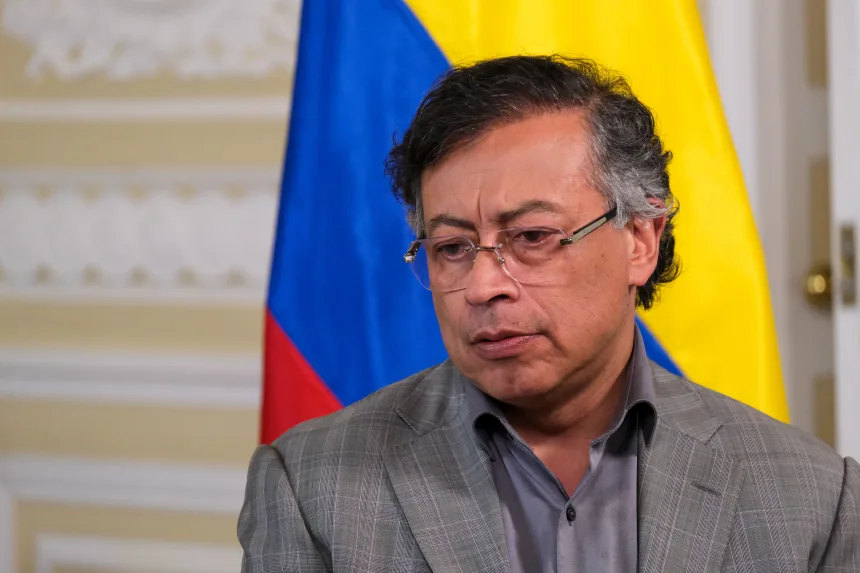
    Colombian President Gustavo Petro has launched a scathing critique of the Trump administration’s Venezuela policy, asserting that Washington’s true motivation centers on accessing Venezuela’s vast oil reserves rather than combating drug trafficking or promoting democracy.

    In an exclusive CNN interview, Petro characterized oil as “at the heart of the matter,” noting Venezuela possesses the world’s largest proven petroleum reserves. “That’s a negotiation about oil. I believe that is Trump’s logic. He’s not thinking about the democratization of Venezuela, let alone the narco-trafficking,” Petro stated, challenging the official U.S. justification for increased military presence in the Caribbean and Pacific.

    The Colombian leader dismissed Venezuela’s significance in global drug trafficking, citing United Nations Office on Drugs and Crime data showing the country produces no cocaine and handles only a minor portion of international drug flows. Instead, Petro emphasized Colombia’s dominant role in both production and interdiction, claiming his government has seized more cocaine than any administration in history.

    The relationship between Petro and Trump has deteriorated significantly since the Colombian leader returned to the White House. Tensions escalated when the U.S. State Department revoked Petro’s visa following his UN General Assembly speech where he urged American soldiers to disobey Trump and “not to point their rifles at humanity.”

    Further complications emerged in October when the U.S. Treasury sanctioned Petro, alleging his involvement in the global drug trade—accusations the Colombian president vehemently denies. The sanctions followed Trump’s threat to halt all U.S. payments and subsidies to Colombia, claiming Petro “does nothing to stop” drug production.

    Petro attributed the administration’s stance to personal animosity, suggesting Trump views him as “a subversive thug, a terrorist” due to his past membership in the M-19 guerrilla movement during the 1970s and 1980s.

    Despite these high-level tensions, U.S. officials maintain that bilateral relations with Colombia remain strong. Secretary of State Marco Rubio emphasized that administration issues are specifically with Petro rather than Colombian institutions, noting the enduring partnership between the two nations will outlast the current leadership.

  • Motorcycle death in Antigua reported on social media to be Dominican

    Motorcycle death in Antigua reported on social media to be Dominican

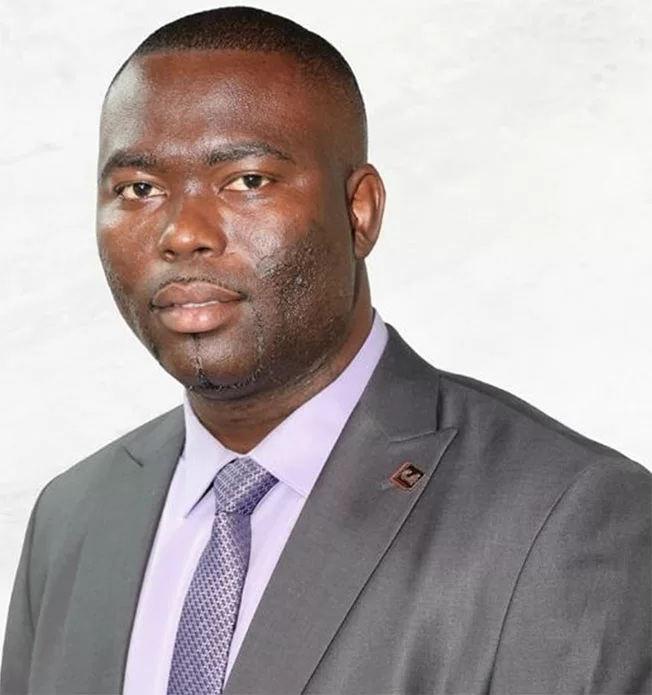
    Antiguan authorities have launched a formal investigation into a tragic motorcycle accident that resulted in the death of a 23-year-old man on Popeshead Street in the early hours of November 30th. The victim has been officially identified as Joshua Alexander, a resident of Light Foot, Antigua.

    According to preliminary police reports, the incident occurred when Alexander was traveling at excessively high speeds along Popeshead Street. Authorities state he lost control of his vehicle, leading to a violent collision with a wall and sidewalk on the eastern side of the roadway.

    Emergency medical personnel responded promptly to the scene but found no signs of life. Alexander was officially pronounced deceased at 3:16 AM despite resuscitation efforts.

    The accident has garnered significant attention on social media platforms, with circulating images and unverified claims that the deceased was of Dominican origin. While these reports remain unconfirmed by official sources, local media outlets have committed to seeking clarification from relevant authorities regarding the victim’s background.

    This incident marks another tragic addition to Antigua’s road traffic statistics, highlighting ongoing concerns about road safety and speeding violations. The investigation continues as authorities work to determine the exact circumstances surrounding the fatal crash.

  • Negotiations on Destiny SSZ Agreement Near Completion, says Premier Brantley

    Negotiations on Destiny SSZ Agreement Near Completion, says Premier Brantley

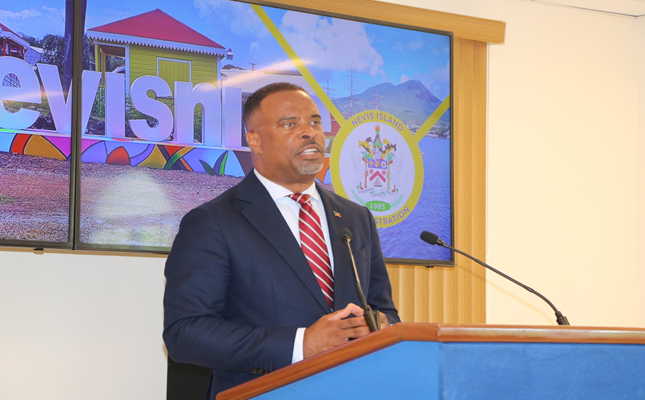
    CHARLESTOWN, NEVIS – In a significant development for the Caribbean island, Nevis Premier Mark Brantley has announced that negotiations for the landmark Destiny Special Sustainability Zone (SSZ) are approaching their final stages. During his November 25th press conference, the Premier confirmed that substantial progress has been made in discussions between the Nevis Island Administration (NIA) and project developers.

    Premier Brantley revealed that recent communications indicate both parties have reached unprecedented alignment on the agreement’s terms. ‘I believe that I saw, only this weekend, a response which suggests that the parties are now closer than they were to this,’ Brantley stated, expressing optimism about finalizing the deal before year’s end.

    The negotiation process has demanded extraordinary commitment from the Nevis government, with Cabinet members dedicating extensive time—including weekends—to ensure thorough consideration of all aspects. Brantley emphasized the administration’s determination to conclude deliberations promptly, noting, ‘I am not inclined to continue indefinitely having these discussions. It’s either that we take a decision or we do not.’

    Public consultation has played a pivotal role in shaping the government’s position, with Brantley acknowledging that citizen feedback significantly influenced the negotiation strategy. While core developer commitments remain unchanged, the Premier hinted at additional proposals under discussion that could further benefit the public, though specifics remain confidential pending finalization.

    The Destiny SSZ project represents one of the most extensively debated development initiatives in Nevis’s recent history, generating substantial public discourse about the island’s future direction. Brantley reaffirmed that the administration’s ultimate objective remains securing optimal outcomes for current residents and future generations, ensuring the agreement creates sustainable opportunities for all Nevisians.

  • Venezuela revokes access for six international airlines Link:

    Venezuela revokes access for six international airlines Link:

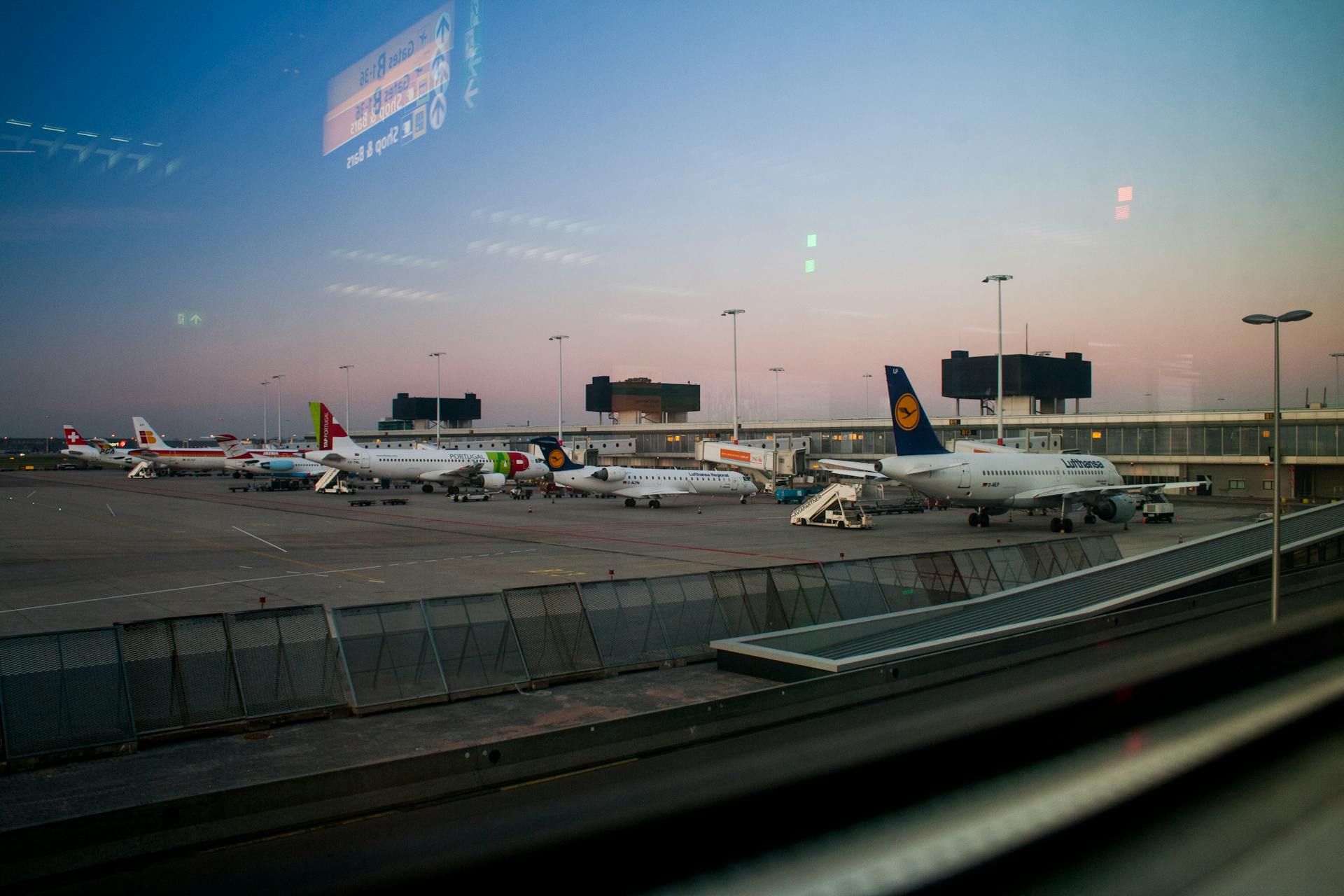
    In a significant escalation of international aviation tensions, the Venezuelan government has formally revoked flight concessions for six major international carriers. The National Institute of Civil Aeronautics (INAC) announced via social media that Iberia, TAP Portugal, avianca, LATAM Colombia, Turkish Airlines, and GOL Airlines have lost their operational rights in Venezuelan airspace. The decision, published in Official Gazette No. 43264, notably excluded local carrier Caribbean Airlines from the sanctions.

    The aviation authority justified its action by alleging these airlines ‘joined the actions of state terrorism promoted by the United States government’ when they previously suspended services to Venezuela. This dramatic move follows last week’s ultimatum from Caracas demanding airlines resume operations or face permanent exclusion from the Venezuelan market.

    The revocation leaves Panama-based COPA Airlines among the very few international carriers maintaining connectivity to Venezuela. The International Air Transport Association (IATA) has expressed grave concerns, warning this decision will further isolate a nation already suffering from severely limited air connections within the region.

    This development comes shortly after the U.S. Federal Aviation Administration (FAA) issued a safety advisory cautioning pilots about operating within Venezuelan airspace. The Notice to Airmen (NOTAM) specifically referenced deteriorating security conditions and increased military activity around Venezuela, prompting numerous airlines to preemptively cancel services citing passenger safety concerns.