作者: admin

  • UWI Five Islands Campus New Guild Council Begins Tenure

    UWI Five Islands Campus New Guild Council Begins Tenure

    The University of the West Indies Five Islands Campus has formally welcomed its new student Guild Council for the 2026/2027 academic year, marking not just a routine leadership handover but a fresh, purpose-driven commitment to elevating the student experience and upholding the core values of the student governing body. The incoming leadership team opened its public address by grounding its new term in gratitude, pausing to recognize the profound contributions of the outgoing council and every generation of student leaders that preceded it.

    The outgoing Guild Council’s tenure was defined by unwavering dedication, remarkable resilience, and consistent commitment to amplifying student needs. Through periods of challenge and celebrated milestones, its members worked tirelessly to advocate for student interests, strengthen campus community bonds, and drive meaningful institutional growth. Their work has left a solid foundation that the new council is privileged to build upon, the incoming team emphasized. Every prior Guild administration has left an indelible mark on the institution, weaving together the legacy of student voice and service that shapes the Guild today. Standing on the work of those who came before them, the new council says it does not take the weight of this responsibility lightly.

    Unlike narratives that frame new leadership as a complete break from the past, the 2026/2027 council frames its role as building on a long legacy of service. The team embraces both the achievements and hard-earned lessons of previous terms, and has committed to moving the Guild forward with radical integrity, clear purpose, and full accountability to the student body.

    At its core, the Guild exists to champion the needs and interests of every student on campus, advance their educational, personal, and social growth, and encourage active, meaningful participation in all areas of campus life. The new council has made a public pledge to keep these foundational principles at the center of every decision it makes.

    For the coming academic year, the council’s core mandate is clear: Rebuild the Guild and Restore Trust. The leadership team emphasizes that trust is never demanded, but earned—through consistent transparency, dependable action, full accountability, and authentic, ongoing engagement with the students the organization serves. Rebuilding the Guild will involve strengthening its internal structures, boosting its visibility across campus, and reinforcing a simple truth for every student: the Guild is not just a bureaucratic campus organization, it is your collective voice, your dedicated advocate, and your partner in shaping the campus experience.

    The new council brings a bold yet grounded vision for its term. Its members imagine a campus where every single student feels seen, heard, supported, and empowered to make an impact. They aim to build a Guild that leads proactively, rather than reacting to issues after they arise—one that anticipates emerging student needs and responds with creative solutions, compassion, and decisive action.

    Key priorities for the term include increasing overall student participation in campus governance and activities, fostering greater unity and connection across the student body, strengthening collaborative ties with campus administration, and expanding partnerships with other student Guilds and organizations across the region. The council notes that meaningful, lasting progress only comes through open dialogue, cross-group partnership, and collective effort from the entire campus community.

    In a direct address to the UWI Five Islands student body, the council reaffirmed that the Guild exists first and foremost for students. “We are honoured by your trust, inspired by your confidence, and humbled by the responsibility you have entrusted to us,” the statement reads. The team has pledged to listen closely to student concerns, advocate fearlessly for student interests, and serve faithfully throughout the coming academic year. Members commit to celebrating student wins, pushing for progress on pressing student needs, and working around the clock to ensure every student has the support and opportunities they need to thrive during their time on campus.

    The foundation for progress has already been laid by generations of past leaders, and the mantle of leadership has officially been passed. Carrying gratitude for the work of the past, confidence in what the campus community can achieve together, and a shared commitment to rebuilding the Guild and restoring student trust, the new leadership is ready to move forward alongside the entire student body. The council closed its address with a shared hope: that the 2026/2027 academic year will bring widespread progress, lasting unity, and exceptional achievement for all members of the UWI Five Islands Campus community.

  • Grenada launches major regional tourism and health programme

    Grenada launches major regional tourism and health programme

    Grenada has marked a major milestone for its critical tourism sector, becoming the 13th Caribbean nation to adopt the Caribbean Public Health Agency (CARPHA)-led Regional Tourism and Health Programme (THP). This region-wide initiative is designed to reinforce the long-term resilience, environmental sustainability, and global competitiveness of Caribbean tourism through targeted investments in cross-sector health security. The official launch of the programme took place on 28 May 2026 at Grenada’s Radisson Grenada Beach Resort, kicking off local implementation that will upgrade the island nation’s ability to track and address public health risks tied to travel and tourism. Through upgraded surveillance infrastructure, early threat detection systems, and coordinated multi-agency response protocols, THP will equip Grenada to respond faster to emerging public health events that could disrupt its tourism economy. Speaking at the launch ceremony, Minister of Health Hon. Philip Telesford, who officially inaugurated the programme, framed the initiative as both a critical public health safeguard and a high-impact strategic investment in Grenada’s economic future. “Tourism accounts for more than a quarter of Grenada’s gross domestic product and is one of our largest employers,” Telesford noted. “This new surveillance system acts as a persistent watchman, enabling us to identify potential public health threats at their earliest, most manageable stage. This effort is far more than a standard public health intervention: it is a strategic step to boost Grenada’s appeal as a travel destination, strengthen our industry’s ability to withstand shocks, and improve our overall preparedness.” Minister Adrian Thomas, who holds portfolios for Tourism, the Creative Economy and Culture, added that THP forms a core component of a broader national strategy to develop a healthier, safer, and more shock-resistant tourism sector. He extended recognition to CARPHA and the wide network of national and regional collaborating partners whose ongoing work has supported Grenada’s efforts to raise health and safety standards across every segment of its tourism industry. Thomas emphasized that the global COVID-19 pandemic laid bare the deep, inseparable connection between public health outcomes and tourism sector performance. “Uncertainty around health, safety, and food security can erode traveler confidence, deter cross-border travel, undermine investor trust, alter cruise line itineraries, threaten local jobs, and cut national revenue,” he explained. “We must maintain our commitment to training frontline tourism workers, strengthening surveillance systems for hotels and visitor sites, upgrading food safety and environmental health standards, integrating reliable health response planning to support our growing sports tourism goals, and ensure the Grenada tourism brand retains its reputation as a trusted, competitive, and resilient global destination.” Grenada’s Chief Medical Officer Dr. Shawn Charles also welcomed the launch of THP, stressing that timely detection and rapid response are non-negotiable for mitigating public health threats. “The ability to quickly detect, respond to, and report health-related incidents is critical to limiting disease transmission, stopping outbreaks from escalating, and protecting local communities,” Dr. Charles stated. “The Ministry of Health welcomes the standardized sharing of real-time data on health events across the tourism sector, and we are fully prepared to guide and support the rollout of evidence-based control measures as needed.” The launch ceremony also included addresses from Keston Daniel, CARPHA’s Visitor-Based Surveillance Coordinator, as well as Stacey Liburd, Chief Executive Officer of the Grenada Tourism Authority (GTA), and Arlene Friday, Chief Executive Officer of the Grenada Hotel and Tourism Association (GHTA). All three stakeholder leaders emphasized that the programme will play a key role in strengthening domestic and international confidence in Grenada’s tourism industry, and enhancing the destination’s long-standing reputation for safety and proactive preparedness. Parallel to the launch ceremony, a CARPHA delegation conducted an in-country working mission from 25 to 29 May 2026. During the mission, the team visited eight local tourism facilities to roll out training and introduce the Tourism Health Information System (THiS), a custom-built web-based platform that enables early reporting and real-time monitoring of public health events specifically for tourism properties. Six of the eight visited facilities have already completed registration on the THiS platform, bringing the total number of registered tourism entities across Grenada to 19. In addition to onboarding facilities to the new surveillance platform, the CARPHA delegation held working sessions with surveillance and environmental health officers from Grenada’s Ministry of Health to discuss the upcoming implementation and national rollout of two additional regional surveillance systems: the Caribbean Vessel Surveillance System and the Tourism and Mass Gathering Surveillance System. Both systems will further expand Grenada’s national public health surveillance capacity, creating a more robust, interconnected network of safeguards to protect both visitors and local communities.

  • Belize’s Weather Tech Is More Advanced Than You Think

    Belize’s Weather Tech Is More Advanced Than You Think

    As the 2026 Atlantic hurricane season officially kicks off on June 1, the Central American nation of Belize has announced major upgrades to its weather monitoring infrastructure, positioning it as one of the best-prepared countries in the Caribbean and Central American region for storm tracking, according to the country’s top meteorological official.

    Chief Meteorologist Ronald Gordon confirmed in a Monday morning interview on the public affairs program *Open Your Eyes* that Belize’s expanded, high-density weather observation network now outpaces many peer nations in the region, delivering far more accurate and granular data to forecasters tracking developing Atlantic storm systems. When asked whether the country is ready to face the next five months of cyclone activity, Gordon stated that the nation’s monitoring capacity is fully prepared to handle whatever storms develop.

    A key new addition to the country’s monitoring infrastructure is a purpose-built Storm Surge Monitoring station housed at the Belize Fisheries Department. Unlike general wind and rainfall tracking tools, this new station is specifically designed to measure the rising coastal flood waters that come with major hurricanes – a critical upgrade, as historical data shows storm surge, rather than high wind, is the deadliest hazard associated with Atlantic hurricanes.

    The new technology is not limited to government forecasters, Gordon emphasized: everyday Belizeans can now access hyper-local, real-time forecast data through the official Belize Weather app, available for download on both Android and Apple iOS devices. However, Gordon noted that the biggest remaining challenge is not building accessible forecasting tools, but encouraging the public to rely on these verified official resources instead of unvetted information shared on social media and unofficial platforms. During hurricane events, misinformation from unaccountable sources can spread rapidly, creating unnecessary confusion and putting lives at risk when communities need to make time-sensitive safety decisions.

    “We are tasked and are responsible for providing weather forecasts for Belize. Therefore, we are accountable,” Gordon said. “If you’re looking at some other person out there, that person is not accountable.”

    Forecasters from the U.S. National Oceanic and Atmospheric Administration (NOAA) are predicting a below-normal 2026 hurricane season, with an expected range of 8 to 14 named storms forming across the Atlantic basin. Of those, 3 to 6 are projected to strengthen into full hurricanes. The milder forecast is tied to the expected development of El Niño ocean conditions in the Pacific, which typically suppress Atlantic hurricane activity through increased wind shear that disrupts storm formation.

    While the overall seasonal outlook is milder than average, meteorologists stress that even one major hurricane making landfall can cause devastating damage, and all coastal communities in Belize should remain prepared throughout the five-month season that runs through November.

  • Liberty Caribbean prepared for 2026 hurricane season

    Liberty Caribbean prepared for 2026 hurricane season

    As the 2026 Atlantic Hurricane Season approaches, regional telecommunications provider Liberty Caribbean – parent company of major brands Flow, Liberty Business and BTC – has formally announced it is fully prepared to maintain connectivity and support local communities when the season officially kicks off on June 1.

    With more than 100 years of operating experience across the Caribbean archipelago, the firm has made continuous investments to upgrade its emergency preparedness, network resilience and rapid response capabilities, positioning it to support residential customers, government agencies and entire communities through potential weather-related crises. The company’s announcement comes one year after Hurricane Melissa caused widespread damage across Jamaica, a disaster that highlighted just how critical resilient communications infrastructure and fast emergency response are for Caribbean nations.

    “Hurricane Melissa reminded us once again that connectivity is far more than technology. In moments of crisis, it becomes a lifeline for families, businesses, emergency responders, and governments,” explained Inge Smidts, Chief Executive Officer of Liberty Caribbean. “The lessons from that experience have further strengthened our resolve and accelerated our investments in network resilience, operational preparedness, and recovery capabilities across the region. We remain committed to ensuring our customers and communities can rely on us when it matters most.”

    Over the past 12 months, Liberty Caribbean has rolled out a series of targeted resilience upgrades across its multiple market footprints. In Jamaica, this has included large-scale investments in an enhanced next-generation mobile network, expanded spectrum capacity, diversified transport routes, hardened physical network infrastructure, expanded backup power systems, and additional network redundancy measures, all designed to boost service reliability and cut down recovery time after storms. Beyond infrastructure upgrades, the company has also run regular large-scale emergency simulation drills, updated fuel and logistics contingency plans, and coordinated closely across cross-functional teams in every operating market to guarantee rapid mobilization when extreme weather hits. Most recently, Flow Grenada completed a full emergency response drill in February 2026, with a second exercise scheduled immediately after the start of the season in June.

    Smidts emphasized that while no communications network can be completely immune to damage from extreme weather events, the company’s core priority remains building stronger, more adaptive and more resilient systems that can support Caribbean communities through both disruptions and post-storm recovery. “Our teams have worked tirelessly to modernise our infrastructure, strengthen operational readiness, and improve how we respond during emergencies. While no network is immune to extreme weather events, our focus remains on building stronger, smarter, and more resilient systems capable of supporting the Caribbean through disruption and recovery alike,” Smidts added.

    According to the latest 2026 Atlantic hurricane season forecast from the U.S. National Oceanic and Atmospheric Administration (NOAA), the season that runs from June 1 through November 30 has a 55% chance of being below average in activity, a 35% chance of being near average, and only a 10% chance of seeing above-normal storm activity. NOAA projects the season will bring between 8 and 14 named storms, defined as systems with sustained winds of at least 39 mph (63 km/h). Of these, 3 to 6 are expected to strengthen into hurricanes with winds of 74 mph (119 km/h) or more, and 1 to 3 of those are forecast to become major hurricanes (Category 3, 4 or 5) with winds exceeding 111 mph (178 km/h). By comparison, an average Atlantic hurricane season sees 14 named storms, seven hurricanes, and three major hurricanes.

    “We understand the responsibility that comes with serving the Caribbean. Our commitment extends beyond connectivity alone. It is also about supporting the resilience of the communities we serve and standing beside them before, during, and after times of crisis,” Smidts said.

    Lincoln Baptiste, Country Manager for Flow Grenada, noted that upgrades put in place after the impact of Hurricane Beryl have put the territory in a strong position. “We are confident in the upgrades made to the network and provisions made after the impact of Hurricane Beryl. Although we do not wish for a repeat of such natural disasters we are prepared for any disaster that may impact Grenada, Carriacou & Petite Martinique,” Baptiste said.

    To wrap up its preparedness announcement, Liberty Caribbean and Flow are urging all residential and business customers across the region to review their own personal and operational hurricane preparedness plans, and to stay updated on weather forecasts and official alerts throughout the 2026 season.

  • Davis, Jack win Three-Hand competition

    Davis, Jack win Three-Hand competition

    The Barbados National Dominoes Association’s annual Three-Hand Championship concluded with stunning upset victories and dominant performances, as two individual champions and one top-tier team claimed their crowns after competing against more than 150 registered participants across the island. In the women’s individual division, Camille Jack delivered a masterclass in domino strategy from her very first round, establishing an unassailable lead early in the competition. By the final table, she had built an insurmountable six-point gap over her closest competitor, with Sherry Ann Dawson securing the runner-up position and Shirlan Brathwaite rounding out the top three. The men’s division told a far more dramatic story: Kirk Davis got off to a rocky start, trailing early leader Mark Layne for most of the competition, with Derick Morris also holding a position ahead of Davis for much of the tournament. When Davis’ chances of claiming the title seemed all but gone, the competitor found his rhythm, putting together a string of high-scoring rounds that allowed him to surge past both of his leading opponents and take the men’s national crown. Layne ended the tournament as men’s runner-up, while Morris claimed third place. The standout team competition, the Super Royale Three-Hand final, saw the Peace and Love squad put on a cohesive, high-performance display that propelled them to the top spot over competing teams Eastbourne and De Law. Team member David Blenman turned in a standout individual performance for the champions, notching 16 points to contribute to Peace and Love’s overall final score of 85. Eastbourne, the second-place finishers, ended the contest with a cumulative total of 75 points. Meanwhile, De Law, which had shown strong promise in the early rounds of the team competition, failed to maintain its momentum in the final and finished third with a total score of 70. Looking ahead, the upcoming Emerson Mellows tournament is scheduled to kick off this Sunday, with matches set to be hosted at venues across Barbados.

  • Single-Lane Traffic to Continue on Sir Sydney Walling Highway

    Single-Lane Traffic to Continue on Sir Sydney Walling Highway

    Drivers and commuters traveling across Antigua and Barbuda’s key arterial routes are reminded that adjusted single-lane traffic management will remain in place to support critical ongoing infrastructure rehabilitation works, according to an official advisory from the Project Implementation Management Unit (PIMU) under the nation’s Ministry of Works.

    The long-running upgrade works are concentrated along the Sir Sydney Walling Highway, where construction crews have shifted focus to base preparation and asphalt resurfacing operations. These activities are advancing eastward from the Glanvilles area, with daily work commencing at approximately 8:00 a.m. local time.

    Transport officials have issued clear guidance for all road users to approach the work zone with extreme caution, noting that large, heavy-duty construction machinery is operating in close proximity to the active travel lane. Safety protocols require drivers to reduce speed, follow on-site directional signage, and adhere to instructions from traffic control personnel to prevent accidents.

    Crucially, all commercial establishments located along the affected stretch of highway will remain fully open for business throughout the duration of the repair works, ensuring that local economic activity continues uninterrupted.

    The project is being executed by C.O. Williams Ltd., the private construction firm contracted for the scheme. The company has issued a formal statement apologizing to the public for any travel disruptions or inconvenience caused by the ongoing works. The upgrade is a core component of Antigua and Barbuda’s national Second Road Infrastructure Rehabilitation Project, a government-led initiative designed to extend the service life of the country’s key road networks and improve overall transport safety.

    Stakeholders, including daily commuters, freight operators, and leisure travelers, are encouraged to review and adjust their travel schedules in advance, as minor to moderate delays should be expected when passing through the work zone. For any questions or additional information about the project or traffic arrangements, members of the public can contact the C.O. Williams project office directly via telephone at 562-9573.

  • UPDATE: APUA Confirms Fuel Leak at Former Friars Hill Facility

    UPDATE: APUA Confirms Fuel Leak at Former Friars Hill Facility

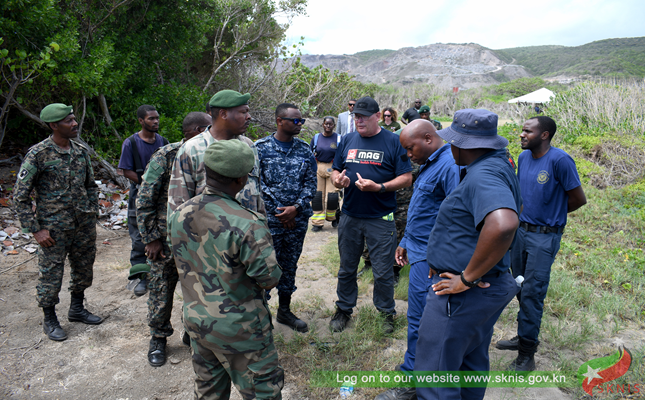
    A confirmed fuel leak from an abandoned storage tank at the former Friars Hill Facility in Antigua has triggered a coordinated multi-agency emergency response, led by the Antigua Public Utilities Authority (APUA).

    Once the leak was detected, APUA moved rapidly to activate internal emergency protocols and immediately notified a broad network of relevant government and regulatory bodies to join the assessment and mitigation effort. Partner agencies including the National Office of Disaster Services (NODS), Antigua and Barbuda Police Force, Central Board of Health, Development Control Authority (DCA), Antigua and Barbuda Fire Department, National Solid Waste Management Authority, West Indies Oil Company (WIOC), Department of Public Health, and Department of Environment have all deployed personnel to the site to support containment operations.

    Crews are currently working around the clock to install critical containment barriers designed to stop the spread of leaked fuel and reduce any potential harm to local ecosystems and nearby residential communities. As of the latest update, investigations into the root cause of the leak and full mapping of the spill’s total size remain ongoing, with no definitive conclusions released to the public.

    Local authorities have issued a public advisory urging motorists traveling along Friars Hill Road and residents living in adjacent neighborhoods to remain vigilant and follow all safety guidance posted by response teams throughout the duration of cleanup operations. APUA has reiterated its commitment to resolving the incident in full compliance with public safety and environmental protection standards, noting that it will continue to closely monitor site conditions and share new updates with the public as additional details are confirmed. The authority has also expressed gratitude for the public’s patience as response teams work to bring the situation under control.

  • LETTER: Urgent Need for Affordable Rental Housing Legislation for Working Citizens

    LETTER: Urgent Need for Affordable Rental Housing Legislation for Working Citizens

    A concerned citizen from Antigua and Barbuda has issued an open appeal to Prime Minister, the entire cabinet, and members of parliament, demanding urgent legislative intervention to tackle the country’s worsening affordable rental housing crisis. The appeal frames access to reasonably priced rental accommodation not as a privilege for high-income groups, but as a core basic necessity that all working citizens deserve regardless of their earnings.

    For a growing share of Antigua and Barbuda’s hardworking labor force, especially those earning the national minimum wage, market rental rates have slipped far out of reach in recent years, the petitioner argues. Safe, stable housing is universally recognized as a foundational requirement for human flourishing: it underpins personal dignity, keeps families intact, supports good physical and mental health, enables educational attainment, and sustains consistent economic productivity. When full-time workers cannot cover their rent, it undermines core principles of fairness and social equity, putting the overall well-being of national society at risk.

    Today, the problem hits low-wage workers in essential sectors the hardest. Employees in hospitality, retail, security, cleaning, caregiving and other frontline industries are routinely forced to allocate a disproportionate share of their limited earnings to housing costs. In a large number of cases, rent eats up more than 50% of a minimum wage worker’s monthly pay, leaving barely any funds left for other critical needs including groceries, transportation, utility bills, medical care, children’s education, or emergency savings.

    To address this systemic failure, the petitioner has laid out six targeted policy and legislative solutions for the government to adopt. First, develop new affordable rental housing projects through collaborative public-private partnerships. Second, offer financial or regulatory incentives to private property owners who rent units at below-market rates to low-income workers. Third, launch targeted rental assistance programs to support vulnerable working families that are struggling to cover housing costs. Fourth, implement rent stabilization policies in neighborhoods and regions that have seen uncontrolled, excessive rental price inflation. Fifth, update national housing regulations to mandate that all new residential developments set aside a share of units for affordable rental purposes. Sixth, introduce mandatory regular reviews of the national minimum wage to ensure it keeps pace with actual housing and living costs across the country.

    The appeal emphasizes that affordable rental housing is far more than just an economic policy issue: it is a question of social justice and long-term national development. A nation can only prosper when its core workforce can live with dignity, security, and confidence in the future. From teachers and nurses to hotel staff, cashiers, security guards and maintenance workers, low-wage essential workers form the backbone of Antigua and Barbuda’s economy. Their contributions to national prosperity deserve recognition through guaranteed access to housing they can afford, the petitioner argues.

    Concluding the appeal, the citizen urges the government to treat the ongoing affordability crisis with the urgent attention it demands. Current rental conditions are unsustainable for thousands of working people, and for minimum wage earners, the status quo is unnecessarily punitive and unreasonable. Deliberate, meaningful legislative action and practical, on-the-ground solutions are needed to turn affordable rental housing from an out-of-reach dream into a tangible reality for all working Antiguans and Barbudans. The petitioner closes by thanking officials for their time and expressing hope for decisive action to protect the welfare and dignity of working people across the twin-island nation.

  • ‘I Played Dead’: How a Dying Woman’s Final Statement Got Elmer Nah Convicted

    ‘I Played Dead’: How a Dying Woman’s Final Statement Got Elmer Nah Convicted

    In a landmark murder trial that has gripped Belize, former Belize Police Department officer Elmer Nah has been found guilty of three counts of murder and one count of attempted murder, closing a more than three-year-long case built on extraordinary evidence from a fatally wounded victim. The convictions stem from a brutal New Year’s Eve 2022 attack in Belmopan that claimed the lives of Jon Ramnarace, David Ramnarace, and Vivian Ramnarace, and left a fourth victim, Yenie Alberto—David Ramnarace’s common-law partner—with life-altering injuries.

    The sequence of violence unfolded shortly after 7:30 p.m. on December 31, 2022, when the Ramnarace family’s dog began barking unexpectedly. Jon and David Ramnarace stepped outside to investigate the disturbance, followed by Vivian Ramnarace (Jon’s wife) and Alberto. A masked gunman never was in this case: the attacker, clad entirely in dark clothing, approached the home unmasked and opened fire in a 25-second assault captured entirely by the family’s home security system. Jon and David were killed instantly; Vivian was shot multiple times and Alberto, hit in the abdomen, managed to escape through the home’s back entrance to get help.

    Vivian Ramnarace survived the initial gunfire but ultimately died on January 15, 2023, from complications caused by her gunshot wounds. What made her survival between the attack and her death extraordinary, however, was the critical evidence she collected and shared with authorities before she died. Even with four life-ending gunshot wounds, she managed to retrieve her mobile phone, alert a neighbor, contact family via WhatsApp, and call emergency services before first responders arrived. Less than 48 hours after the attack, while recovering in intensive care at Belize City’s Karl Heusner Memorial Hospital, she gave a formal, detailed statement to police that would become the linchpin of the prosecution’s case.

    In her statement, which was admitted to court as hearsay evidence due to her passing before trial, Vivian recalled that she saw the attacker for a combined 8 to 10 seconds: first 15 feet away outside the home, illuminated by streetlamps and the family’s Christmas decorations, and again 8 feet away inside the home under kitchen lighting. She told investigators the gunman wore no mask, allowing her to see his face clearly. She described him as a 5’6” light-complexioned young man in full dark clothing, with a small light-emitting device mounted on his head. Most critically, she told police she recognized him from media coverage: he was the nephew of former senior police superintendent Marco Vidal, a former officer who had been publicly charged in a 2021 drug trafficking plane landing case. That description, the court ruled, was an unmistakable reference to Elmer Nah, who fit every detail of the account and had been widely featured in Belizean media and social media following his 2021 drug charge.

    Later that same day, still bedridden in her hospital room, Vivian participated in a photo array procedure. After reviewing 12 photos of men with similar physical characteristics, she immediately and without hesitation pointed to photo number 10: a photo of Elmer Nah.

    Nah’s defense team launched an aggressive challenge to the identification evidence, arguing that extreme duress had compromised Vivian’s ability to accurately identify her attacker, that her comment “it looked like Number 10” betrayed uncertainty, that the failure to conduct a formal in-person identification parade made the identification unreliable, and that no physical evidence—including DNA, fingerprints, or gunshot residue—linked Nah to the crime scene. The defense also noted that Nah has a prominent tattoo stretching from his wrist to his knuckles on one hand, which was not visible on the shooter in the grainy surveillance footage.

    Presiding Justice Nigel Pilgrim rejected every one of the defense’s arguments, upholding the conviction in a ruling that relied heavily on the consistency between Vivian’s account and the surveillance footage she had never seen before giving her statement. Justice Pilgrim identified nine specific points where Vivian’s written description matched the video record exactly: the timing of the dog’s barking, the order in which family members stepped outside, the attacker’s fast approach, the sequence in which victims were shot, the attacker forcing open the front door, the light on his head, the outdoor light sources she described, and the indoor kitchen lighting.

    On the question of her phrasing “it looked like Number 10”, Justice Pilgrim noted that this reflected common colloquial speech patterns in Belize, and came immediately after an unprompted, firm identification of the photo. On the tattoo, he ruled the surveillance footage was too grainy to confirm whether a tattoo was present or not. On the absence of a formal identification parade, he accepted the prosecution’s explanation that Vivian was bedridden in intensive care and physically incapable of attending, and cited binding judicial precedent holding that such parades are unnecessary when a witness has already provided a full, specific identification that allows police to apprehend a suspect.

    Even without additional circumstantial evidence, Justice Pilgrim ruled, the combination of Vivian’s hearsay statement and corroborating surveillance footage was enough to confirm Nah’s guilt beyond a reasonable doubt. That said, multiple pieces of circumstantial evidence further supported the conviction. When police arrived at Nah’s home on Messam Street—just five to seven minutes’ walking distance from the Ramnarace residence—shortly after the attack, they found him standing at his front door wearing a lit headlamp, exactly matching the light source Vivian described and visible on the attacker in the surveillance footage. The court also found Nah deliberately lied about his whereabouts during the critical 7 p.m. to 8 p.m. window when the killings occurred. Initially, Nah told police he was at the nearby Wei Li bar during that time, but bar surveillance footage showed no sign of him between 5 p.m. and 8:30 p.m. By the time of trial, Nah changed his account, claiming he visited the bar after 9 p.m., a shift the court ruled was a deliberate fabrication to create a false alibi.

    The defense called multiple witnesses to corroborate Nah’s alibi, including his cousin Amin Nah, his common-law wife Epifania Caliz, and former colleague Dervin Sambula. Justice Pilgrim rejected all alibi testimony, noting that Amin and Caliz are close family members with a clear incentive to lie for Nah, and that Nah’s proven lie about his whereabouts had already destroyed his credibility. Even if Sambula’s claim that Nah sounded calm during an 8:30 p.m. phone call was accepted at face value, the justice ruled, it could easily be explained by Nah’s confidence that his crime would not be discovered. The court declined to give weight to forensic evidence linking a pair of rubber boots seized from Nah’s pickup to a boot print found at the Ramnarace home, noting the forensic analysis only confirmed a class match, not a definitive individual match.

    Nah maintained his innocence throughout the trial, arguing in his dock statement that he was at home with family when the attack happened, that he had been washing tennis shoes in his yard and mistook the gunshots for New Year’s Eve firecrackers, and that he later went to collect his sheep on a dirt bike with his cousin. Those claims were entirely rejected by the court.

    A sentencing hearing is scheduled for June 18, 2026. Under Belizean law, a murder conviction carries a mandatory sentence, so Nah will face a fixed punishment for his crimes.

  • Wildlife Rescue Monkey Dies After Sudden Collapse in Rehabilitation

    Wildlife Rescue Monkey Dies After Sudden Collapse in Rehabilitation

    For wildlife conservation teams working to return injured native species to their natural habitats, every small victory is hard-won, and every loss cuts deep. That harsh reality was driven home in late May 2026, when a beloved rescued howler monkey named Georgie died suddenly during the final stages of his rehabilitation in Belize, just months after he beat overwhelming odds to survive a devastating parasitic infestation.

    Georgie’s journey to recovery began in 2025, when he was first brought to the Belize Wildlife & Referral Clinic. The young howler monkey had been infested by thousands of New World Screwworm maggots, the parasitic larvae of Cochliomyia hominivorax — a species that feeds on the living tissue of warm-blooded animals. Infestations as severe as Georgie’s are rarely survivable, and even animals that do pull through often face long-term, hidden health complications, including permanent vascular and neurological damage.

    Against all expectations, Georgie pulled through after nine months of round-the-clock intensive medical treatment at the clinic. His remarkable progress earned him a transfer to Wildtracks, a Belize-based rehabilitation organization that specializes in preparing the country’s two native howler monkey species for release into protected natural forests. For months, caretakers at the facility reported steady, encouraging improvement: Georgie was active, participated in the signature howling sessions that define howler monkey social life, and even engaged in social bonding with female monkeys at the sanctuary.

    “At that time, all looked well, he transferred into rehab, enjoyed howling sessions and flirting with the females at Wildtracks,” the Belize Wildlife & Referral Clinic shared in a social media post announcing Georgie’s death.

    But nearly 10 months into his rehabilitation, as teams were finalizing plans for his long-awaited release back to the wild, tragedy struck. Georgie collapsed suddenly and began experiencing severe seizures. Veterinary staff fought frantically to save him, but the monkey could not be resuscitated. Caretakers currently suspect that a stroke caused his sudden death, though official results from a necropsy are still pending to confirm the underlying cause.

    The loss has hit the conservation community in Belize hard. For many on the Wildtracks team, Georgie’s death ranks among the most difficult losses the rehabilitation program has ever faced. Even so, staff say they take small comfort in the knowledge that Georgie spent his final months surrounded by care.

    “Just as our hopes for an eventual return to the wild were growing, Georgie showed us the real risks of long-term consequences of severe injuries,” the clinic noted in its statement, echoing a quiet truth that all wildlife rehabilitation teams must confront: even after survival, recovery does not always erase the damage done by severe trauma and illness. “In a statement, staff said they took solace in knowing Georgie spent his final months surrounded by monkeys and people who cared.”